If Germany’s largest car company hopes to survive, it will have to change rapidly, because it can no longer afford to treat its supercar brands like vanity projects.
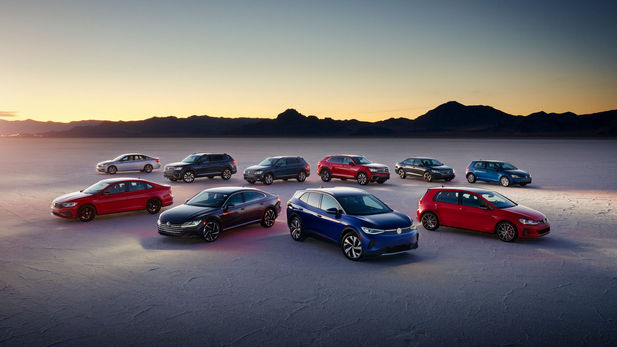
There is no automotive conglomerate with a more compelling portfolio of products than the Volkswagen Group. From the Amarok to the Up, and everything in between, the group's organogram is unrivalled.
Volkswagen (VW) was not always dominant, mind you. In the early 1990s, it was struggling to rival Japanese compact cars from Toyota and Honda for design inspiration and build quality.
By the early 2000s, however, it owned Bugatti, Bentley and Lamborghini. Perhaps most impressively, VW had elevated the Golf to a popular premium product, something that most marketing experts once considered impossible…
Building the empire
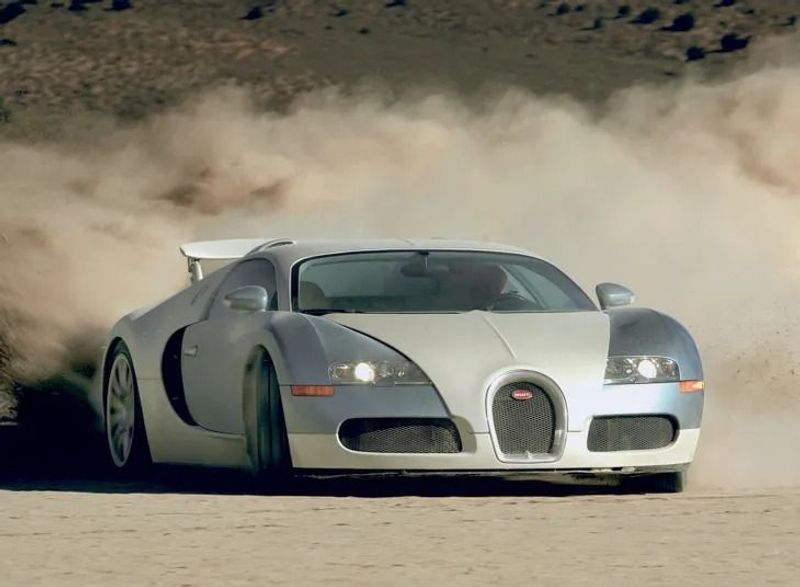
The Veyron project was taken on to create something the world would be in awe of.
The story of VW’s ascent centres on a single engineer: Ferdinand Piëch. The grandson of Porsche’s founder – who was also named Ferdinand – Piëch was a brilliant engineer without any discernable people skills. He obsessed about perfection in all aspects of engineering and product, like no other car company boss ever had – or ever will again.
Issues that made no obvious difference to other car company CEOs were unacceptable to Piëch. He is the reason why contemporary Volkswagen models have such neatly packaged interior wiring. And if you ever saw how untidy wiring was allowed to dangle from underneath dashboards and glove boxes before Piëch became influential, you’ll appreciate his demanding commitment to detail.
Piëch’s desire was for VW to dominate the global automotive market, but not merely by virtue of outright sales numbers. He wanted to build the best cars. And instead of crushing rivals, he wished to create an empire – an automotive dynasty, where affordable volume cars would subsidise outrageous hypercar projects, the kind that would have no prospect of making any money.
Ruthless but inspired, Piëch successfully built the VW empire, but, quite poignantly, the German multinational is now – a mere year after his passing – moving in a different direction than he envisioned.
Can supercar brands pay their own way for VW?
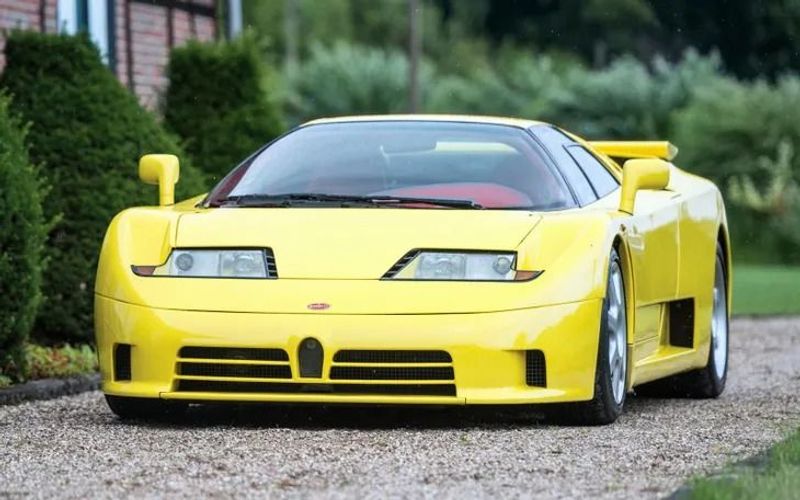
Prior to VW's takeover of Bugatti, the EB110 was the brand's attempt to revive the name.
The Veyron was by far Piëch’s most famous project. As a Porsche descendant, Piëch respected the lineage and history of storied brands. After Bugatti's doomed revival in the early 1990s, VW bought the French carmaker in 1998. Piëch's goal was to create modern Bugattis that would be every bit the contemporary vision of the company’s founder, Ettore Bugatti.
Impossible was never a concept in Piëch’s mind, much less his vocabulary. The Veyron engineering team was simply given a set of outrageous design parameters and strict deadlines. Anyone who hesitated was replaced. Piëch's management style makes the celebrated South Africa-born Elon Musk look like a snowflake by comparison.
The outcome of Piëch’s brutal supervision of Bugatti was the Veyron. To many, it remains the pinnacle of internal-combustion hypercar design. But now it appears that VW’s most exclusive brand has outlived its relevance and purpose. The fact is that Bugatti was always going to struggle to make the transition from internal-combustion hypercars to hybrids and, eventually, battery power.
So much of its brand cachet, mystery and Olympian sense of engineering achievement is directly related to its models' W16 engines and, in particular, the uniqueness of this configuration and its multiple cylinder count. Piëch’s genius was to test the theory of a narrow-angle V6 in VW’s VR6 motor, allowing a volume car to subsidize R&D costs, eventually making the W16 engine viable.
Selling the W16 engine brand, to a battery car company?
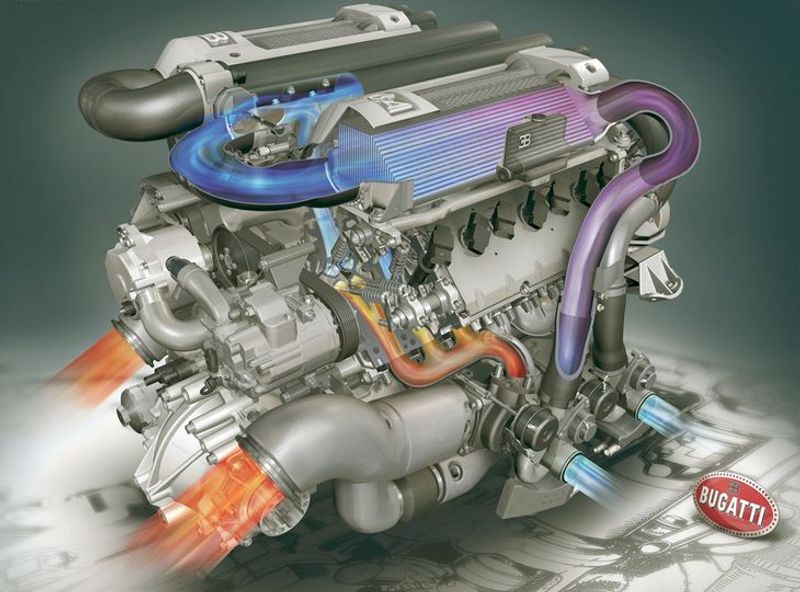
The W16 configuration packed 4 turbochargers together claiming 1 000 bhp (745 kW) in a conservative state of tune.
Unfortunately, a battery-powered design will never, but never, be able to match the drama and fury of a Veyron’s W16 engine. The Veyron justified its stratospheric asking price by virtue of the exclusivity of its power output, engine layout and performance. Hypercars are truly unrivalled in terms of linear acceleration and driveability. Much the same can be said of the Chiron.
However, Bugatti no longer has a monopoly on insane acceleration… Rimac and, to a lesser degree, Tesla proved that battery-powered vehicles could be sickeningly fast too. Beyond its dramatic sound signature, an internal combustion supercar no longer has the monopoly on performance, and that presents a huge problem for VW’s most prestigious brands.
The brutal truth is that Bugatti no longer has a viable business case. Evidence of this is that its most talented employees are already leaving, ostensibly in anticipation of the inevitable sale of Bugatti.
Stephan Winkelmann has returned to Lamborghini after only two years as CEO at Bugatti. Winkelmann is highly regarded and was expected to finish his career at Bugatti, yet VW’s most senior management could not see the fulfilment of that professional journey for him, preferring to reinstate him at Lamborghini.
An even more telling development is VW’s decision to redeploy Stefan Ellrot, Bugatti’s technology and development boss. Ellrot is leaving the hypercar brand to become chief technical officer at Volkswagen – he will be responsible for the flagship brand's compact cars, which of course are being electrified at a rapid rate.
Had Bugatti been on stable footing, with its future product strategy well secured, it would not be losing key staffers. The most likely scenario is Bugatti eventually being sold to Rimac and then rebranded as an electric hypercar brand. Bugatti needs a futureproof powertrain to survive and Rimac could use the Molsheim assembly facility, which is highly customisable and has a pool of skilled technical labour.
The issues afflicting Bugatti are nearly all transferable to Lamborghini, multiplied by the larger scale of VW’s Italian asset. After missing its 2020 emission target, VW has been stung with a R1.8-billion fine, something that can’t be allowed to happen each year going forward – and the company’s supercars brands are compounding the problem.
What does all this mean for your VW?
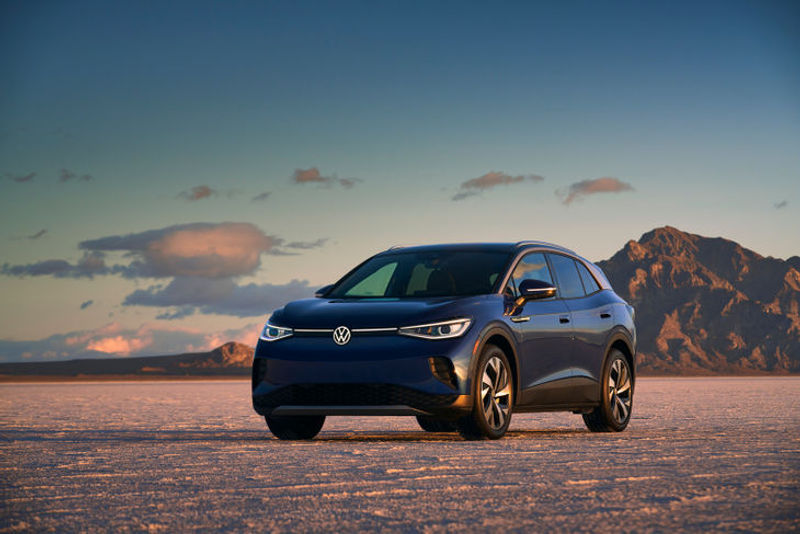
This all means that the VW groups finest engineers over the last 25 years are now being deployed on its everyday cars.
The struggle for VW to keep all those luxury brands that were acquired during Piëch's reign relevant will have very little influence on your next Golf or T-Cross.
No components or engineering techniques are shared between VW’s volume passenger cars and Bugatti or Lamborghini models. The only transfer of any skill or technique within the VW Group was German management discipline and engineering quality control, which measurably benefitted Lamborghini and Bugatti.
The automotive fantasy of Piëch is no longer sustainable for the survival of VW as a whole. The company's current CEO, Herbert Diess, understands that to secure the future of VW, and by implication Audi and Porsche, he needs to forget about protecting so-called vanity brands such as Bugatti, Lamborghini and even Bentley.
No VW boss will ever match Piëch’s ruthlessness, but Diess has shown a willingness to replace senior engineering staff who underperform. Deploying people from Bugatti closer to VW’s traditional passenger car development, allows the best engineers to influence cars that most customers can actually buy.
Toyota has displaced VW as the world’s largest car company by virtue of a strong performance in arguably the most difficult trading year on record. In 2020, Toyota sold 9.53 million vehicles; VW managed 9.31 million. Within those numbers, Toyota has not extended its R&D budgets to deliver a fleet of new electric vehicles; specifically, EVs that cost huge sums of money to produce, but don't generate any profits – yet.
With its robust global bakkie and SUV business, Toyota continues to generate strong profits with relatively unsophisticated platforms and no pressure to produce electric powertrains. VW does not have this luxury – its customers mostly live in cities and regions where there are regulations that strongly encourage the uptake of electric vehicles.
The future for VW will be battery-powered vehicles. Modest in size and undramatic in appearance, these future VW electric cars are the antithesis of anything that Bugatti or Lamborghini produces.
Electric powertrains and data, instead of pluperfect shutlines and amazingly sonorous V10-, V12- or W16 engines, will determine VW’s survival. The great irony in all of this, as Bugatti fades in relevance and importance to VW’s overall business, is that Ettore Bugatti had a personal electric vehicle, for use on his estate, way back in 1931.
Related content:
GWM P Series could be the perfect Chinese bakkie
Why new car prices could soon fall
BMW Opens Up About 4 Series Design
Why the Ford ST brand died in SA