Supercab. Extra cab. Cab and a half. No other type of bakkie has as many aliases as the extended cab, so why is the variant so widely misunderstood – and underappreciated?
The evolution of bakkies from work crew vehicles to family cars has been remarkable. The sales numbers tell 1 story, but how it has influenced the broader car market is not often fully appreciated.
With apex double cabs now priced where German premium marques’ business-class sedans are, many South Africans who were once the ideal target customers for an Audi A4, BMW 3 Series or Mercedes-Benz C-Class are now probably drivers of Toyota, Ford or several other bakkie brands’ double cabs.
But is the best-value bakkie a hybrid? And not one with a hybrid powertrain, but a bakkie that is a hybrid between a single- and double cab? See also: SA’s best- and worst-selling bakkies in H1 2024
The issue with double cabs
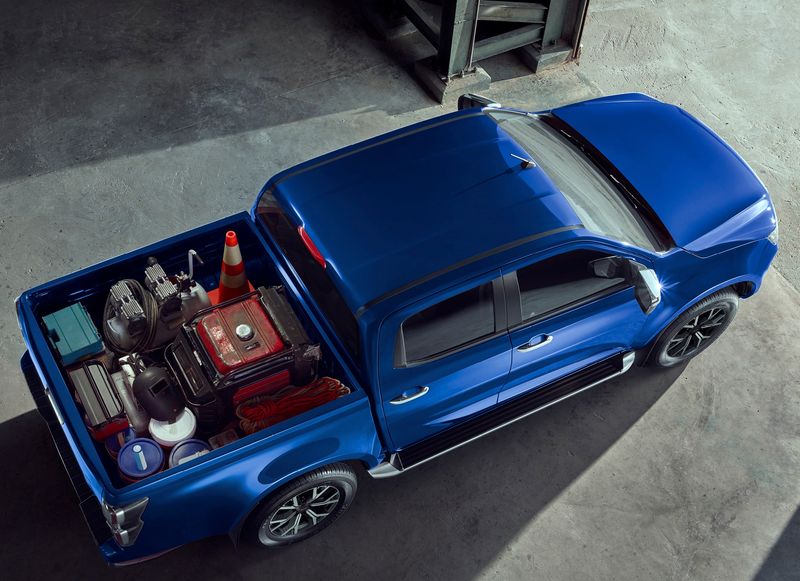
For all the sales success of double-cab derivatives, 5-seat bakkies demand several compromises. The fundamental design of a double cab has been adapted to the passenger-car role, but it has never been fully transformed. That means that some very typical bakkie attributes remain, creating several issues.
Bakkies are built to carry heavy items in their load boxes, especially over poorly surfaced roads. That’s why they have been valued as farm, construction and mining-crew vehicles for many decades.
When you engineer a vehicle to carry loads of up to 1 tonne on its rear axle, that vehicle needs to have a decidedly firm suspension setup. But for all the driving moments when it’s unladen, you will be driving a vehicle that’s dramatically overdamped and less comfortable than it could be.
What’s the heaviest load an urban double-cab will be required to transport under normal circumstances? Some school sports- or grocery bags during the week? Mountain bikes on the weekend? Two Labradors to the doggie park? Whenever you’re not using a double-cab bakkie’s full load rating, you’re suffering the discomfort of harsh ride quality from the rear axle because it’s overdamped for the application.
The suspension firmness issue is just one of the double-cab bakkie’s design and application compromises. The others are storage and security – inside the cabin and the load box.
Rear seats – or no rear seats?
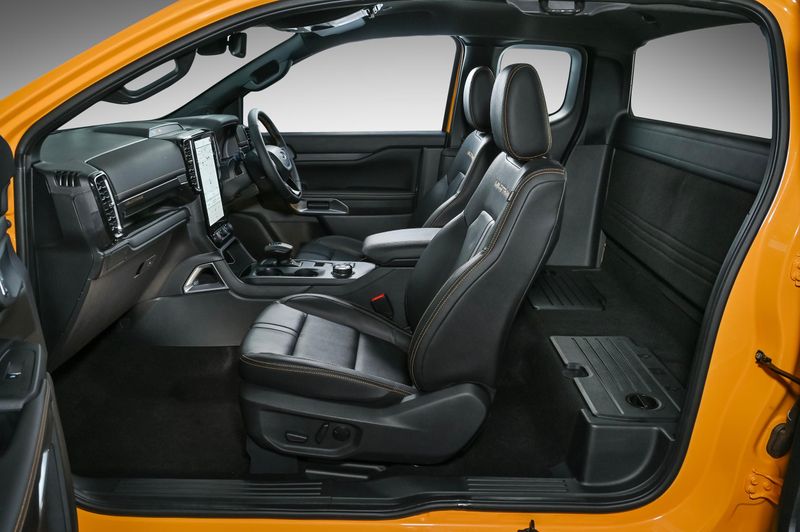
Some double-cab bakkies feature luxury trim with excellent front seats. However, the rear bench seat will always be a source of uncomfortable accommodation for aft passengers. Why?
A shallow floor, large transmission tunnel and lack of rear-seat adjustment are all consequences of mounting a conventional 4-door cab on a ladder-frame chassis.
In a monocoque SUV, the rear seats are notably more comfortable because they can be reclined, and set at a comfier angle. That’s just not possible with the limitation of a body-on-frame double-cab bakkie.
Even the comfiest bench seat, with advanced padding and stitching, will be compromised with its seating and legroom geometry because of the floor and rear bulkhead limitations of a body-on-frame build. Monocoque double-cab bakkies like Hyundai’s Santa Cruz solve this issue, but they’re hardly mainstream and not on the horizon for the South African market in the short to medium term.
Is a big bakkie with a small load box a bad idea?
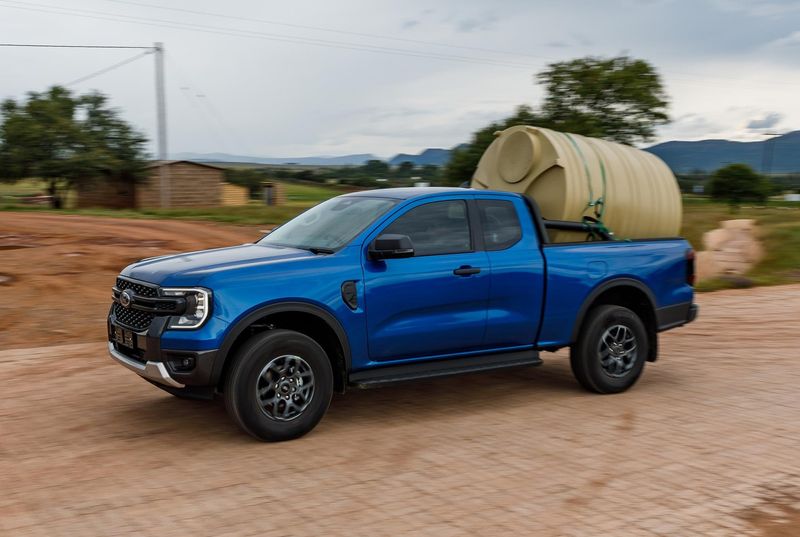
A bakkie’s most distinguishing feature is its open load box. The larger it is, the more useful it becomes.
By their very nature, double cabs have much shorter load boxes than their single- and extended-cab counterparts. And that means a lot of embarrassment when you agree to help a friend “move house”, or collect something for the furniture store, only to discover it doesn’t fit because the load box is too small.
The bakkie’s most defining feature is its load box, where the double-cab bakkie often fails at being a proper bakkie when you most need it to be a utility vehicle.
If a bakkie can’t do bakkie things, is it still all that useful? That’s a question extended-cab owners never need to ask. They don’t suffer that moment of bakkie misery – the shameful discovery that the rare table that they probably paid too much for on Facebook marketplace doesn’t fit in their bakkie’s load box.
See also: Ford Ranger SuperCab (2024) Review
Extracurricular kit bags and some nursery plants easily fit in a double cab’s load box. But try to fit some mountain bikes in the back. Or those timber bits you “urgently” need for a weekend home improvement project. When you’ve owned a double-cab bakkie, you discover how limiting the stubby load box is.
The better bakkie configation
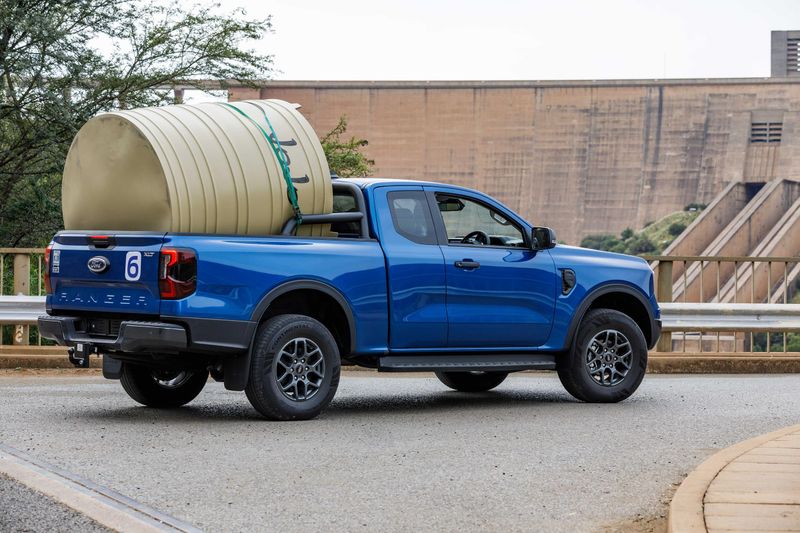
Enter the extended cab. It’s everything you need for a multi-role bakkie – but without the compromises. Double cabs try to be passenger cars, but they’ll always be much less comfortable than SUVs or sedans.
Find a new/used Ford Ranger SuperCab listed for sale on Cars.co.za
With an extended cab, there’s no pretending. It’s technically a 4-door vehicle (with reverse-opening tiny rear doors), but without rear seats, so there’s no sense of creating discomfort for 2 or 3 rear occupants.
See also: Ford Ranger SuperCab (2024) Review
Then there’s the security benefit that people who don’t own an extended cab are unaware of. A crucial weakness of the double-cab bakkie is the vulnerability of its cab for small- to mid-size item storage.
If you’re road-tripping with a double cab and stop at a shopping centre or venue, everything of value you’ve packed in the cab will have to be carried inside with you. Either that or someone has to remain with the bakkie. Why? Because there are no covered or shielded storage solutions inside a double cab.
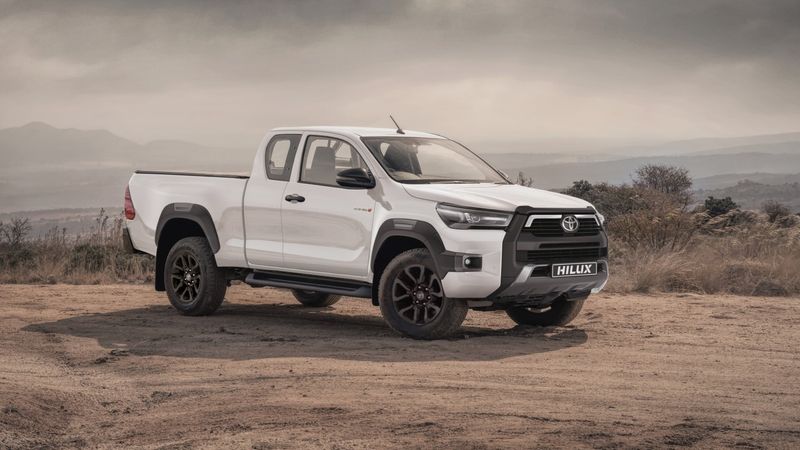
Find a new/used Toyota Hilux Xtra Cab listed for sale on Cars.co.za
With an extended cab, it’s different… You have an excellent cargo storage area behind the seats that is perhaps equipped with lockable storage bins. These are brilliant for storing valuables, which means that you can park your bakkie for lunch without taking every laptop bag and personal item with you.
Why a ‘selfish’ bakkie makes sense
Double-cab bakkies are marketed as being the “complete family car” for South Africans. Rugged enough to traverse those adventurous driving routes that create memorable vacations. But also useful enough to collect things from the hardware store and comfy enough to serve as a conventional family car.
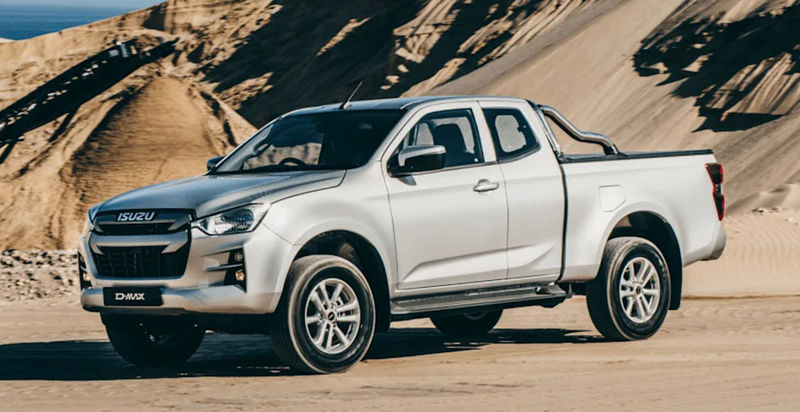
Expectations and reality can differ wildly, however. Double-cab bakkies (of the 4×4 variety) are rugged enough to explore Southern Africa’s isolated and rewarding locations, but they’re often not that great at, well, being bakkies. Their load-box dimensions are impractically small. And they’re equally terrible as family cars because the rear-seat comfort is awful, and there’s no safe in-car storage space, requiring the annoying habit of taking everything of value with you when you park anywhere in public.
Search for a new/used Isuzu D-Max Extended Cab listed for sale on Cars.co.za
Why not live your truest bakkie life?
There was a time when motorists saw the coupe as a symbol of individual freedom – a “selfish” personal car made for driving enjoyment and road trips; the antithesis of the “responsible” family sedan. That’s what the extended cab has become for the buyer who dares to break with convention and buy one.
With an extended-cab bakkie, you live your truest bakkie life, as it were. The vehicle has a long enough load box to make you the Saturday morning bakkie logistics hero (when friends need to move bulky things) and, because it doesn’t have rear seats, you’ll never be asked to be the weekend-away Uber XL.
Related content:
Mercedes-Benz’s East London plant needs to move beyond C-Class
Is SA’s best double-cab bakkie a BMW?
How will car dealerships survive in the EV era?
Toyota’s diesel drama, forklifts and Japan’s engine testing history
Puma by name – Fiesta by nature?
Who really rules the bakkie world?
Fuel price therapy – what should we do?
Lance Branquinho

Lance Branquinho is a Namibian-born writer and photographer who has won numerous motoring journalism awards. He once smuggled parts to South America, in a minor contribution to help Giniel de Villiers finish on the podium at the Dakar. He fears for the eventual collapse of the air-cooled Porsche 911 market – and keenly awaits, in vain, the return of the brand's 928.