Toyota is worth R5.5 billion. Mercedes-Benz? Only R1.4 billion. So, what led to the world’s biggest car company committing a… diesel-engine testing error?
Anything you do is deeply newsworthy when you are the leading global and local car brand. This is why Toyota’s recent engine certification issue has been hotly debated throughout the motoring world.
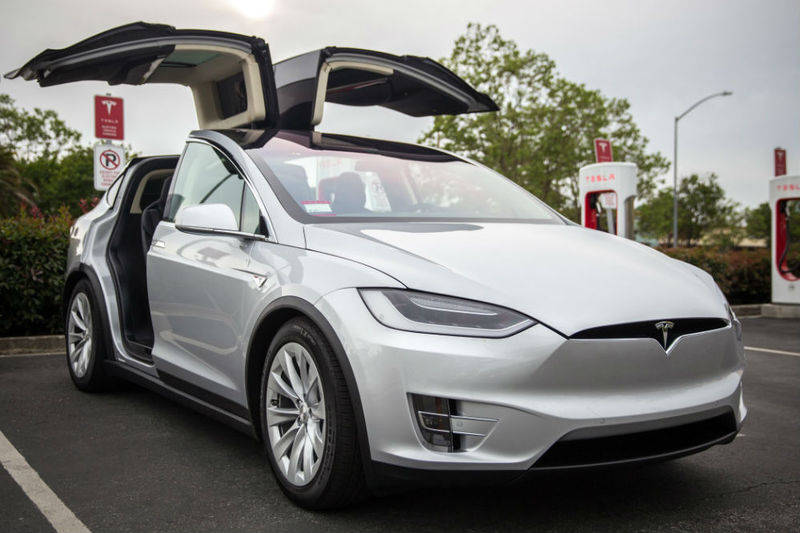
Toyota and Tesla are 2 very different, but arguably the most influential, car companies. One is the world’s most successful car company by sales, and the other is the world’s most valuable car company by equity valuation. Both are wildly successful, but very dissimilar in their approach to technology and R&D.
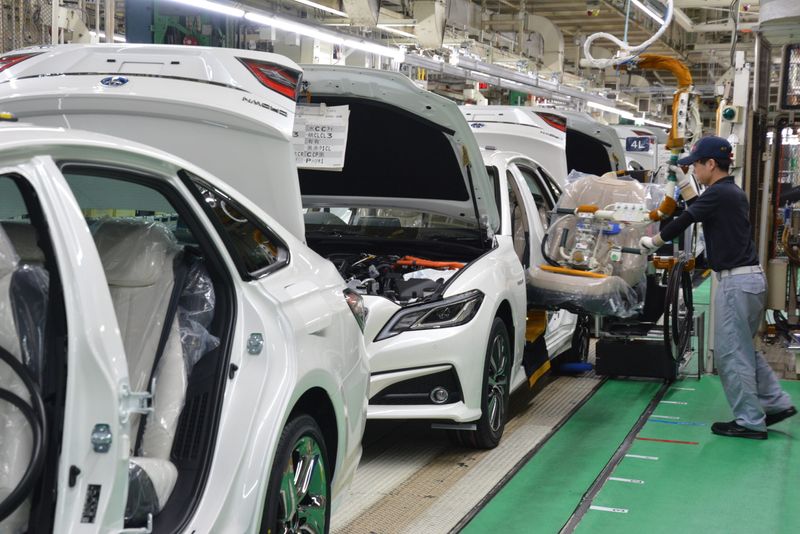
Engineers at Tesla are challenged to innovate with secondary considerations to R&D budget ceilings and potential regulatory issues. At Toyota, the development principle is conservative – to create and produce vehicles that are not the fastest, most powerful, or feature-laden, but certainly among the most reliable.
But perhaps the most remarkable difference between the world’s 2 most important car companies is their position on powertrains. Tesla is, quite obviously, the preeminent electric vehicle (EV) innovator. Toyota? It is widely criticised for a hawkish view on EVs, a bias toward petrol-electric hybrids and the reality of its enormous production of diesel engines.
The irony is that although they are the most opposing car companies imaginable, Toyota and Tesla both do things very well – and have terrifically loyal customers. The Model Y is the world’s best-selling passenger car, despite only being available in a limited distribution of markets. Toyota? You can’t argue with its ranking of 2nd and 3rd in passenger cars.
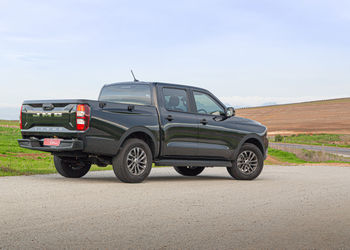
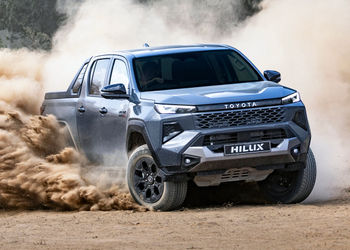
But what happens when Toyota gets it wrong? The story of this year, thus far, is Toyota’s diesel-engine certification failure. And it is an incident that is of significance to South Africans, because the Toyota 2.8-litre turbodiesel (GD-6) engine is locally produced and sold in many Hilux bakkies and Fortuner SUVs.
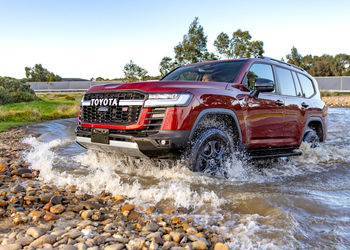
Even the venerable Land Cruiser 70-Series, more symbolic of durability than virtually any other Toyota model, now features a 2.8-litre engine option; in conjunction with an automatic transmission, no less…
What went wrong for Toyota?
Like the VW emissions issue of 2015 (commonly referred to as Dieselgate), it’s all about software and engine control parameters. And importantly, the problem is not at Toyota Motor, but rather at Toyota Industries. What’s the difference? Toyota Industries is an industrial vehicle specialist (mostly forklifts) and, since the early 2000s, it has also developed diesel engines for Toyota passenger vehicles.
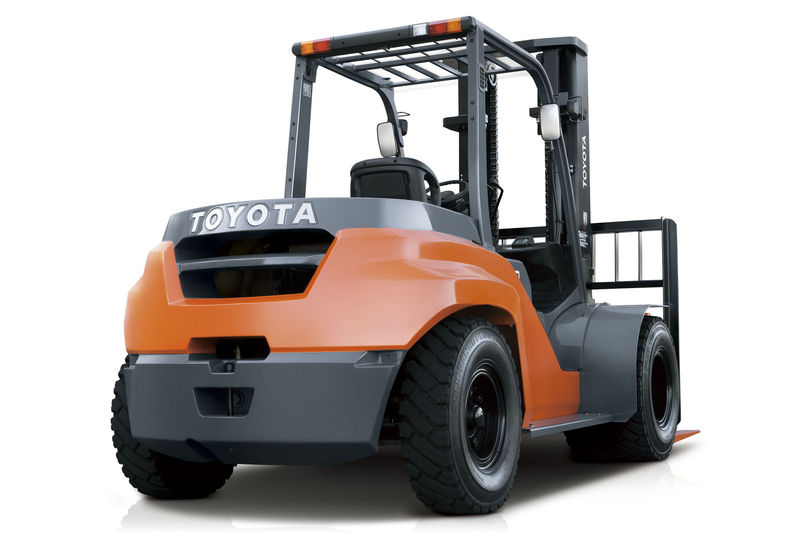
You know those Toyota forklifts you see in warehouses? That’s Toyota Industries’ main business, not passenger cars. However, given the sustained growth of the Aichi-based manufacturer’s bakkie and SUV business, the pressure on Toyota Industries has only escalated due to the need for more diesel engines.
Its experience with heavy-duty diesel engines and commercial customers makes Toyota Industries an obvious choice to develop diesel engines for Toyota bakkies and SUVs. But the volumes that Toyota passenger vehicle customers now demand have become problematic for an entity accustomed to producing smaller batches of forklift engines.
The issue is that Toyota Industries engineers and product managers used software to reduce the variance in sampled power across test unit engines, including the popular 2.8-litre turbodiesel. That list of Toyota engines also includes 2 other powerplants of particular importance to Toyota bakkie and SUV customers: the 2.4-litre “2GD” turbodiesel 4-cylinder and 3.3-litre “F33A” twin-turbodiesel V6.
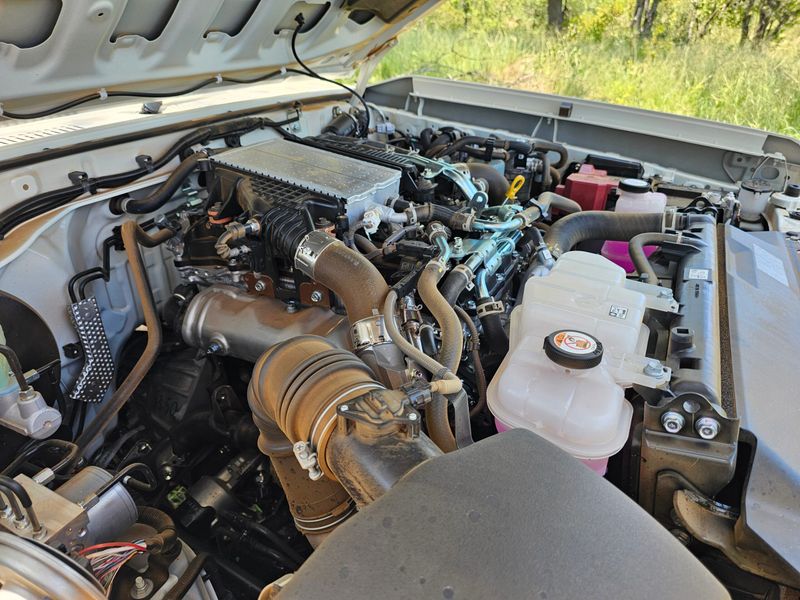
Toyota’s official position speaks of diesel-injection adjustments. “It was discovered that upon conducting the tests, there was such conduct as adjusting the fuel injection amount to make the data better-looking with respect to output values and torque curve,” the company said in a statement.
Power variance and certification issues are not something new for the Japanese car industry. There are several examples of claimed power outputs differing from the engines that are bolted into customer cars. Markets have different certification testing methods, depending on many variables, including fuel quality.
But how much should a process error in software methodology during testing matter to consumers?
The Japanese history of power-rating ‘interpretation’
During the late 1980s, when the Japanese car industry was building towards global dominance, powertrain engineers realised that small gains for high-performance engines would become very expensive. To preserve the Japanese car industry’s R&D resources, instead of diluting them with an intra-brand power war, car companies in Japan agreed to an “engine power truce”.
For a long time, the Japanese car industry adhered to a peak power ceiling of 206 kW. The Japanese automotive agreement on an engine power limit started in 1989 and ended in 2005. But although it prevented Japanese supercars from being produced officially, the product history was very different – and telling of how vague the idea of “certification” became for Japanese engine-power testing.
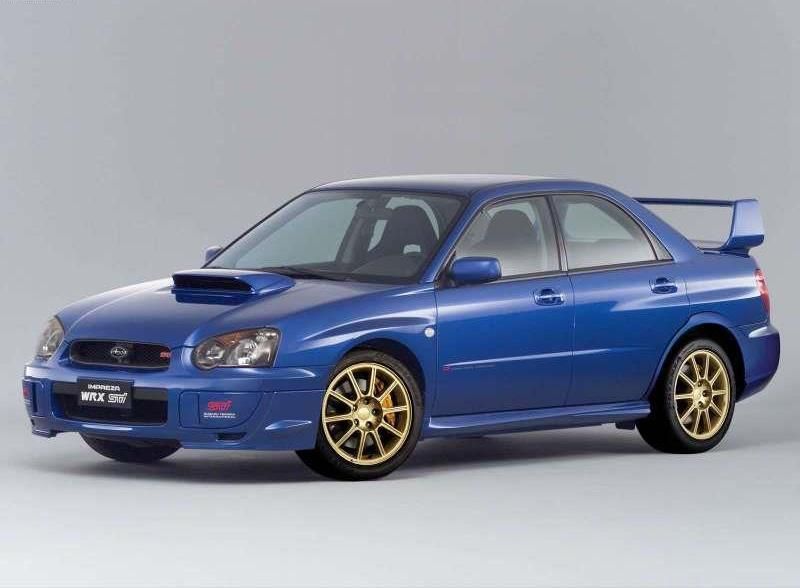
The fact is that despite a 206-kW handicap during the 1990s, Japanese car manufacturers still managed to produce models with real-world performance the measure of, and at times superior to, the best European rivals with vastly more “certified” power. Clearly, the power ratings of Japanese performance cars were being significantly underreported.
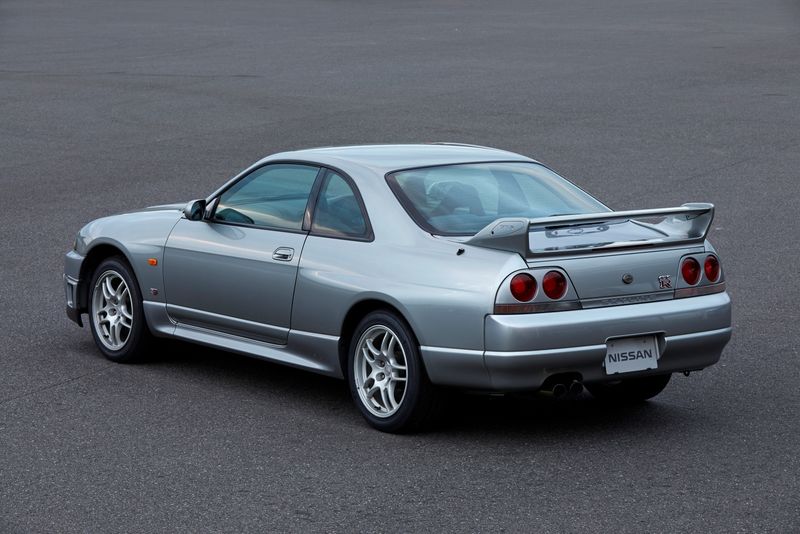
The R33-generation Nissan Skyline GT-R’s real-world performance never correlated to a 206-kW peak power output. The same was true for Mitsubishi’s Lancer Evos and Subaru’s Impreza WRX STis of the late 1990s. For a decade and a half, when the German car industry was weak, Japanese brands allegedly limited themselves in terms of agreed power output – but it was theoretical.
And as with any agreement between rivals, its integrity depends on self-policing, which, if you compare any of the 1990s Japanese performance cars with their American or European rivals, was quite “casual”.
Power ratings don’t equal durability – or do they?

A Toyota engine is very rarely the most powerful in its class. For many years, Ford’s Ranger and VW’s Amarok have offered more powerful engines in their bakkies than those from Toyota in the Hilux.
For all the braaiside arguments about a few kilowatts or newton-meters of torque, the reality is that people don’t buy bakkies based on perceived power ratings and claimed performance. Pre-owned Hilux prices prove that, as Toyota’s diesel-powered bakkies still command an unrivalled premium in the market.
What is the implication for Toyota engines?
Bakkies are chosen on the merit of their engine durability. Toyota engines, especially the 2.8-litre 4-cylinder turbodiesel (such as the GD-6), are well-proven. Millions of kilometres devoid of mechanical maladies by South African farmers, field technicians, and weekend adventurers are evidence of that.
Sceptics will say that if Toyota made a certification error with power output, does that imply other certification tests are also in doubt? The irony of it all is that in a world where Toyota is criticised for its lack of EVs, the enormous demand for diesel vehicles has created pressures that triggered a breakdown of discipline in the powertrain division.
Related content:
Puma by name – Fiesta by nature?
Who really rules the bakkie world?
Fuel price therapy – what should we do?
When big tyres do bad things to good bakkies
Can Land Rover thrive without the Land Rover brand?
Is LPG worth its near 40% fuel-cost saving?
Lance Branquinho

Lance Branquinho is a Namibian-born writer and photographer who has won numerous motoring journalism awards. He once smuggled parts to South America, in a minor contribution to help Giniel de Villiers finish on the podium at the Dakar. He fears for the eventual collapse of the air-cooled Porsche 911 market – and keenly awaits, in vain, the return of the brand's 928.