Did you know that the brand that sells the most bakkies across the globe does not sell the world’s most popular pick-up? Where does South Africa rank among the bakkie-mad nations of the world? Global new bakkie sales statistics offer interesting insights!
In a world rich with data pipelines and visualisation, people argue with great conviction about everything and anything that can be compared. And when the subject of debate is motor vehicles (especially bakkies), things can become very statistical.
There’s no better way to unmask brand bias and marketing fallacy than sales statistics, especially when trying to convince someone which bakkie brand is best. And which country could have the most knowledgeable bakkie buyers…
We’ve analysed the data, and some of the answers about the most successful bakkie models (and most dedicated bakkie markets) may surprise you…
The bakkie business is huge
How big is the overall global bakkie market? Last year, it totalled 5.65 million units, and although that’s less than 10% of total worldwide new-vehicle sales, the proportional market concentration of bakkies is very high. There are many fewer bakkie models and derivatives than there are all other passenger cars, such as hatchbacks, sedans, crossovers, SUVs and MPVs.
In a global market where the cost of EV adoption is proving massively costly for most legacy car companies, bakkies are the profit heroes. They’re cheap to manufacture, customers expect very little in the way of advanced technology, plus they’re saddled with very little R&D- and supplier cost pressure.
The bakkie market also trades strongly through cycles of economic stagnation or recessions, because, unlike passenger cars, bakkies serve a much broader customer base, including the mining, construction, logistics, tourism and agriculture sectors. Not everyone runs out of money when interest rates are high, which is one of the reasons why bakkie sales are such an accurate barometer for economic health.

The bakkie brand hierarchy
Bakkie brand rankings are where actual sales numbers unravel traditional biases. According to global sales stats, Ford (1.18 million) and General Motors (1.08 million) remain the top two biggest bakkie brands, thanks to their dominance of the world’s most active bakkie market: North America.
Toyota’s global reach, thanks to Hilux, makes it the 3rd-most purchased bakkie brand with 1.03 million, followed by Stellantis (844 000). The drop-in in sales volume from 4th to the rest of the top 10 is very significant. Isuzu ranks 5th with 330 000, and Nissan is 6th, with 244 000; the former’s performance is quite impressive because, unlike Toyota and Nissan, it doesn’t sell any bakkies in the American market.
The Chinese brands’ presence is notable. Great Wall Motor is the 7th most successful bakkie brand by volume (196 000), besting Japanese legacy brand Mitsubishi, which is ranked 8th with 178 000. Despite only having a single bakkie model and very little historical context in the pick-up market, Volkswagen manages to be the world’s 9th biggest bakkie brand, but its sales are fewer than 6 figures (83 000).
An interesting detail of the global top 10 bakkie brands? Despite its enormous success in South Africa and a rapidly improving product range, Mahindra is not on the list; it has quite a limited global presence.
These are the best bakkies – according to sales data
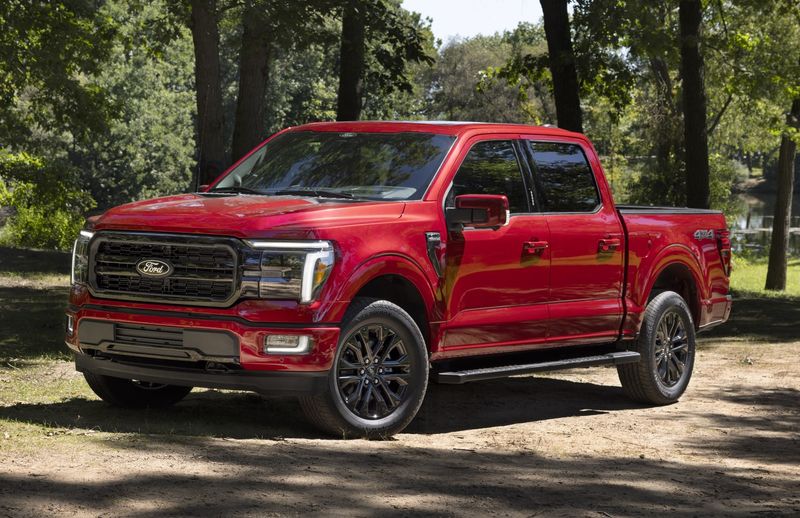
Ford might be the most purchased global bakkie brand, but it doesn’t produce the most successful model. It’s often assumed that Ford’s F-150 is still the world’s best-selling bakkie and car, but it hasn’t been either for the last few years.
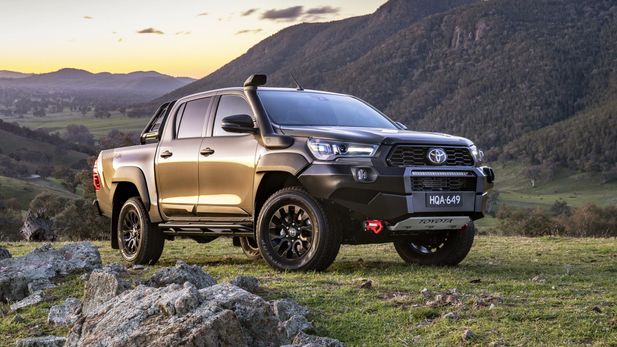
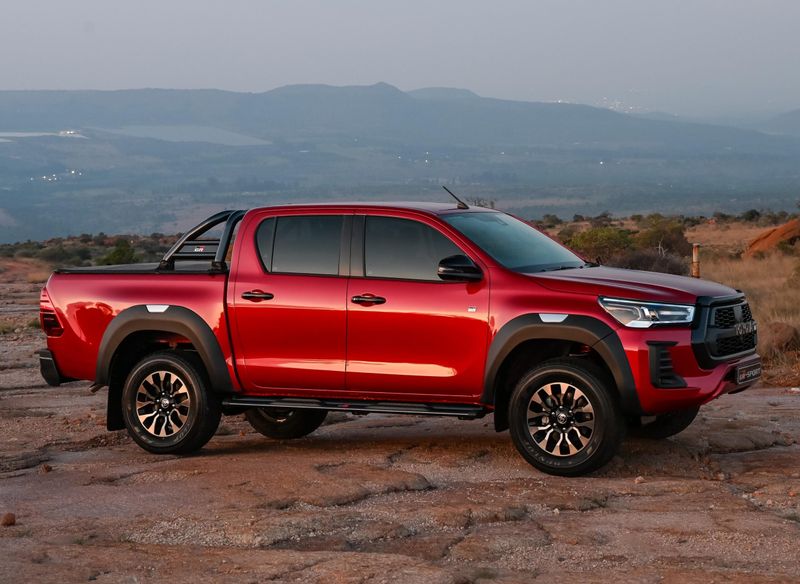
Yep, the Toyota Hilux is the world’s best-selling bakkie, which will come as no surprise to South Africans. American bakkies rank 2nd (F-150), 3rd (Ram 1500) and 4th (Silverado 1500). The rankings from 6th to tenth are more relatable to South African bakkie fans and contain several surprises.
You’d expect the Ford Ranger to have a considerable presence in any global bakkie sales ranking, but it sits behind the Isuzu D-Max, which is the world’s 6th most popular bakkie model. Another Toyota pick-up product ranks 7th (Tacoma), followed by GMC’s Sierra 1500 in 8th and the Silverado 2500 in 10th.
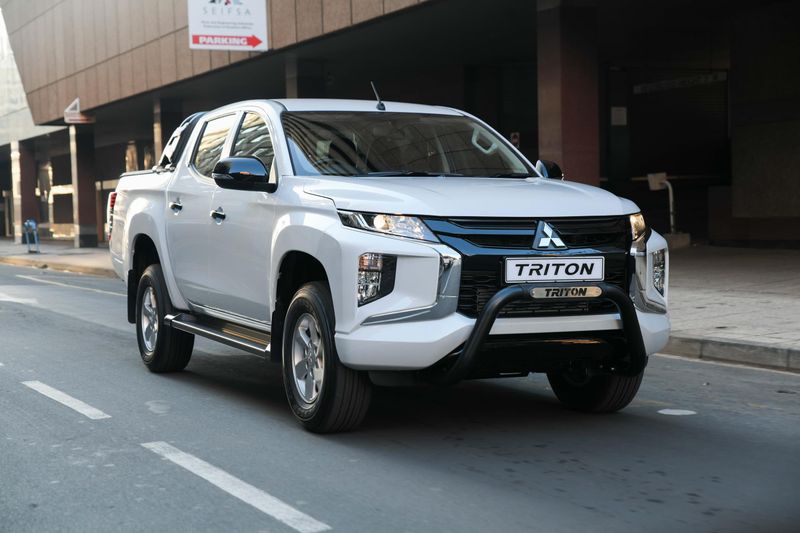
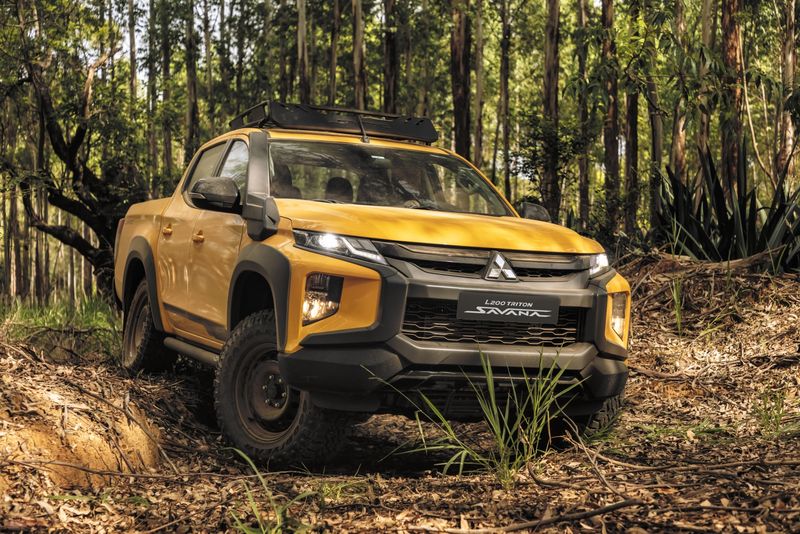
What about the 9th most popular global bakkie? That ranking deserves a special mention, because it is a bakkie that’s available in South Africa, but in our market, it sells in relatively tiny numbers. The world’s 9th-most successful bakkie model is the Mitsubishi L200, known locally as the Triton, which easily bests the Nissan Navara, despite being such a marginal product in the awareness of South African buyers.
How important is South Africa?
We know America is the world’s most important bakkie market, with Ford the most-bought brand and Hilux the most popular bakkie model. But where does South Africa rank in the global bakkie hierarchy?
Regarding total sales, South Africa ranks 8th; it trails Mexico and is slightly ahead of Iran. The market most like South Africa in terms of comparative model mix, terrain type and buyer profile is Australia – the world’s 6th-largest bakkie market. It sells slightly more than twice as many new bakkies as South Africa.
There’s an argument to be made that African bakkie owners know more about using single- and double-cabs for their true purpose, than any other market. The ruggedness of a bakkie, as a lifestyle and utility vehicle, enables it to cope with our continent’s adverse conditions and uncompromising road networks. In Africa, bakkies face sterner tests or endure greater hardships than in America, Europe or most of Asia.
Countries in which bakkies are more important than in SA
Mzansi has a very mature bakkie market. Whether they own hardcore utility vehicles or luxury double-cabs that operate almost exclusively as family vehicles, South Africans are deeply committed bakkie owners; many upper-middle-class family car buyers prefer a double-cab to a crossover, SUV or MPV.
But South Africa is not the most bakkie-obsessed market in the world – heck, it’s not even in the top 10. What’s more, the countries that buy more bakkies as a proportion of total vehicle sales, are not quite what you’d expect. Canada, Argentina and Uruguay all have bakkie markets which are 23% of those nations’ total vehicle sales totals. Impressive, but then there’s Ethiopia, at 29% and Ghana, with 34%.
Watch our Bakkie Buyer’s Guide 2023!
In Yemen, bakkies are 37% of the total new-vehicle market. Thailand has a new vehicle car parc in which nearly half of all vehicle deliveries are bakkies (47%) – the same percentage as Uganda.
But which are the world’s most bakkie-dominated new-vehicle markets? They are both African. In Kenya, 50% of new vehicle sales are bakkies and the country that buys most bakkies as a proportion of new vehicle sales? That will be Malawi, where 53% of new vehicle registrations are for bakkies.
The truth takeaways from global bakkie sales stats? Ford is the apex brand, Hilux is the apex bakkie, and African countries buy more bakkies as a concertation of their total market sales than any other.
Related content:
Fuel price therapy – what should we do?
When big tyres do bad things to good bakkies
Can Land Rover thrive without the Land Rover brand?
Is LPG worth its near 40% fuel-cost saving?
How much will 9th-gen Hilux be like the Tacoma?
Would you buy a brand-new ‘old’ Toyota bakkie?
Lance Branquinho

Lance Branquinho is a Namibian-born writer and photographer who has won numerous motoring journalism awards. He once smuggled parts to South America, in a minor contribution to help Giniel de Villiers finish on the podium at the Dakar. He fears for the eventual collapse of the air-cooled Porsche 911 market – and keenly awaits, in vain, the return of the brand's 928.