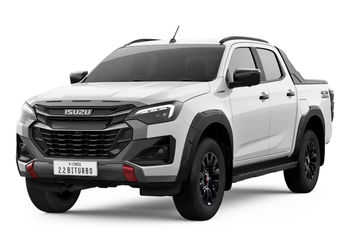
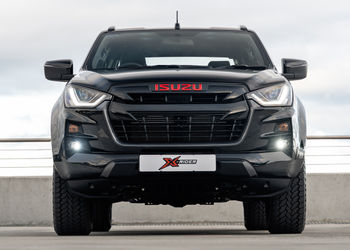
Few automotive brands are quite as committed to diesel powerplants as Isuzu, but the brand lacks a 6-cylinder engine to compete with those of its rivals’ flagship bakkies. However, an Isuzu D-Max with a 6-cylinder mill might well happen – thanks to Mazda.
Japanese automotive manufacturers are uncommonly good at engine innovation. They might not always make engines that produce the best specific power outputs (something German brands have been obsessed with), but never underestimate Japanese powertrain development or engineering ingenuity.
Examples? There are so many. Think of the durability of Japanese engines in legendary off-road vehicles such as the Toyota Land Cruiser and Nissan Patrol. And the Lexus LF-A’s joint-venture Toyota/Yamaha 4.8-litre V10, arguably the most significant naturally-aspirated engine this century.
The Japanese car brands produce astoundingly good tiny engines too. When Ferrari was trumpeting its F355’s amazing 5-valve per cylinder technology in the mid-1990s, Toyota democratised it with the 20-valve 4A-GE 1.6-litre engines in the Corolla RSi and RXi – again, thanks to Yamaha.
Indeed, Japanese engineers are great at designing daring powertrains. Isuzu, however, is rather different to its peers: its global product range consists of bakkies and associated ladder-frame platform SUVs that are powered by workhorse turbodiesel engines. By virtue of its position, Isuzu faces a unique challenge.
In theory, if you believe government regulators and futurists, diesel will not be around as a vehicle powertrain option for much longer. That’s bad news for Isuzu, isn’t it?
Durable diesel
In Europe, diesel engines are being phased out of every automotive sector in which they are not deemed essential. So what can Isuzu do? There is a school of thought that believes that it should do nothing.
Isuzu’s most important global customers are in markets with negligible diesel fuel regulatory issues. It doesn’t sell any bakkies in North America, but has a huge presence in Africa, Asia and Australia. And in all of those markets, diesel fuel powertrains are at minimal risk of being regulated out of existence.
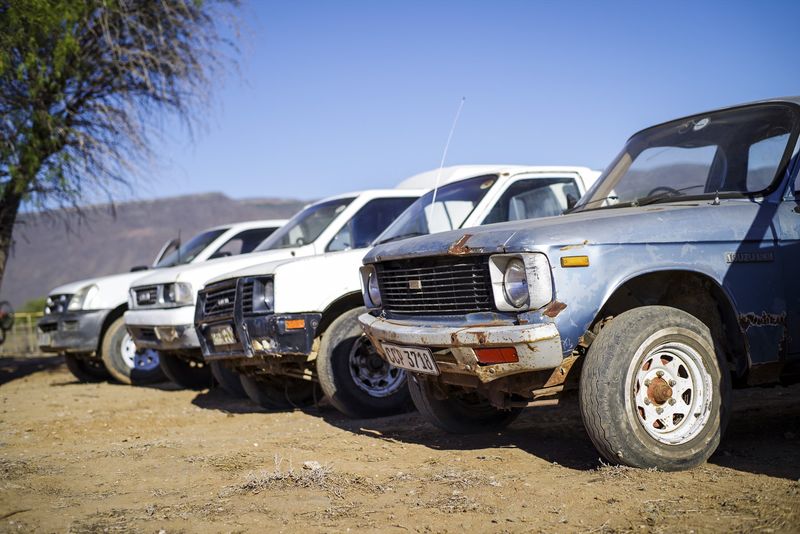
And then there is the issue of customer perception. Isuzu engines are less potent than those that Ford, Volkswagen and Toyota offer in their apex Ranger, Amarok and Hilux bakkies. But to many of Isuzu’s ardent followers and legacy customers, absolute power/torque is not the highest priority – durability is.
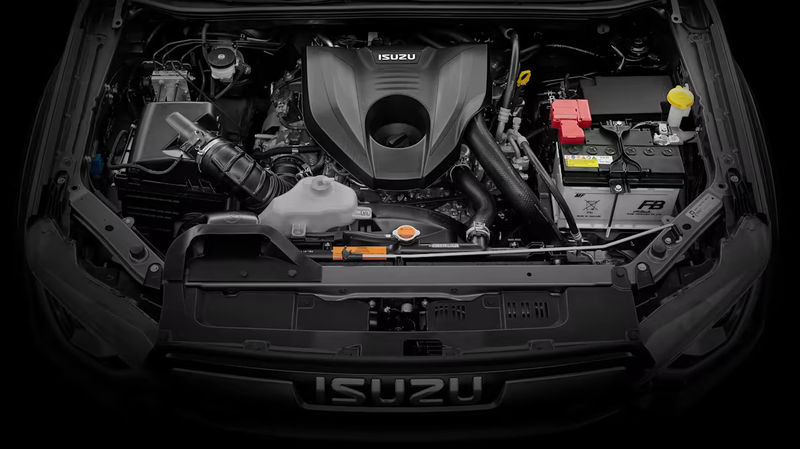
Isuzu produces more diesel engines per year than anyone else. The brand is renowned for stabilised supply chains, component integration and machining tolerances for its narrow portfolio of diesel engines. The possibility of getting a “Friday afternoon” 3.0-litre 4-cylinder turbodiesel from an Isuzu plant is low, because the manufacturing complexity across Isuzu’s global business and powertrain matrix is low.
In the business of engine manufacturing, repetition equals perfection… Isuzu builds a very narrow diesel powertrain portfolio, at scale, hence the enviable assembly quality of the brand’s powertrains.
The D-Max needs a halo engine
So everything is fine in the world of Isuzu and its futureproofing of diesel engines? Well, no, not quite. Like all automotive companies, Isuzu must engineer and react in context to its rivals. If Toyota or Ford significantly adjust their powertrain offerings in the Hilux or Ranger during the next few years (the latter appears the most likely to do that), it will require a response from Isuzu.
But if Isuzu is a dedicated diesel engine manufacturer, how will the brand respond to the need for bakkie engine hybridisation or electrification? Expect the response to be typically Japanese: collaborative.
Isuzu’s current technology partner is Mazda, which owes Isuzu quite a lot for the joint-venture platform sharing that has facilitated the development and introduction of the current-generation BT-50. Isuzu has generously shared its D-Max platform, engine and suspension componentry with Mazda. But what can Mazda offer Isuzu in return, concerning futureproofed powertrains for D-Max? Quite a lot, actually.
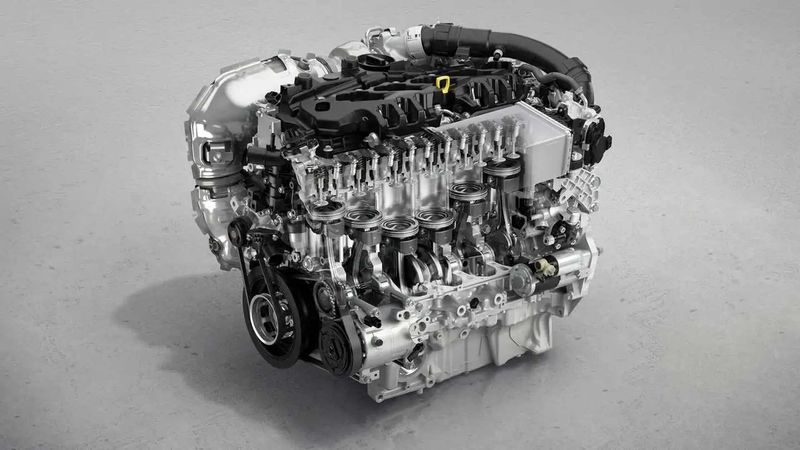
Mazda is masterful at engine innovation, and we don’t mean only rotaries. Compression ratios and combustion efficiency are an obsession for Mazda’s powertrain engineers. And among all the impressive R&D sourcing from Mazda’s Hiroshima engineering bureau, there’s a 6-cylinder diesel engine, which could be future payback to Isuzu.
New 6-cylinder diesel engines don’t happen anymore. The German car companies used to wow us every few years with amazing new 6-cylinder diesel engines that deliver immense power, performance and low cruising-speed fuel consumption.
But diesel is dead in Germany; its manufacturers have shelved their 6-cylinder turbodiesel R&D projects. And that makes the Mazda Skyactiv-D T3-VPTS turbodiesel fascinating and, possibly, crucial for Isuzu.
Can an inline-6 work for D-Max?
If D-Max is to truly compete in the R1-million bakkie market, it needs more punch. Toyota has shown what is possible with the 2.8-litre GD6 engine and enhanced its outputs from 130 kW at launch (in 2016) to 165 kW, in the latest GR-S derivative. Ford and Volkswagen have chosen 6-cylinder solutions for their apex double-cabs, with the 184 kW 3.0-litre V6 turbodiesel serving in the Ranger and its Amarok cousin.
What Isuzu could do, is utilise the Mazda CX-60’s 3.3-litre inline-6 turbodiesel in its D-Max. It’s a credibly powerful engine, with a peak output of 187 kW/500 Nm. Diesel consumption should be very competitive too. Imagine the enthusiastic market reception to a 187 kW 6-cylinder-powered D-Max double cab…
So, what are the potential compatibility issues? Well, the Mazda Skyactiv-D T3-VPTS is an inline-6 engine, which requires clever packaging. But with a bakkie engine bay, that’s less of an issue. If Toyota can fit a 4.0-litre V6 in a Hilux longitudinally, surely Isuzu can build a 3.3-litre inline-6 into the D-Max?
Isuzu needs a 6-cylinder – not batteries
In Isuzu’s key markets, the diesel engine still matters to bakkie and SUV owners. That will remain the case for many years to come, because in those markets (Africa, Asia and Australia), the demand for battery-powered bakkies doesn’t exist at any scale to disrupt Isuzu’s future.
Ironically, by avoiding the lucrative North American market for as long as it has, Isuzu doesn’t need to compete against the F-150 Lighting or Rivian RT1 with a bakkie EV of its own.
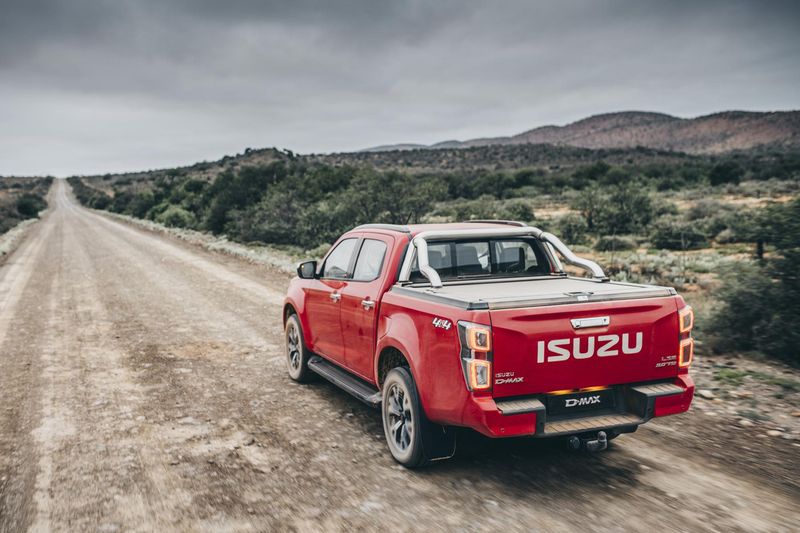
Isuzu’s only issue is that its 3.0-litre turbodiesels aren’t quite powerful enough to compete with the apex bakkie engine offerings from Ford, Toyota and Volkswagen. Mazda’s 3.3-litre inline-6 turbodiesel is a theoretically viable solution to that issue.
Toyota and Yamaha have proved that when Japanese engineers from different companies work together, great things happen in the realm of engine development. And loyal fans of the Isuzu brand deserve to have access to a 6-cylinder turbodiesel-powered D-Max – even if it has a “borrowed” powertrain.
Related content:
Why you don’t need a double-cab 4×4 with low range
What bakkie might Stellantis build in SA?
Green hydrogen could save South Africa’s car industry
Why no more Akio Toyoda at Toyota?
Lance Branquinho

Lance Branquinho is a Namibian-born writer and photographer who has won numerous motoring journalism awards. He once smuggled parts to South America, in a minor contribution to help Giniel de Villiers finish on the podium at the Dakar. He fears for the eventual collapse of the air-cooled Porsche 911 market – and keenly awaits, in vain, the return of the brand's 928.