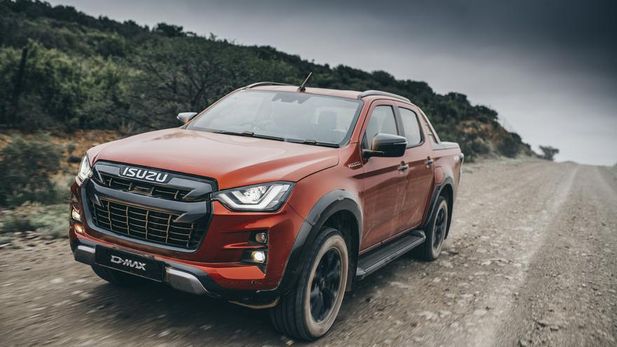
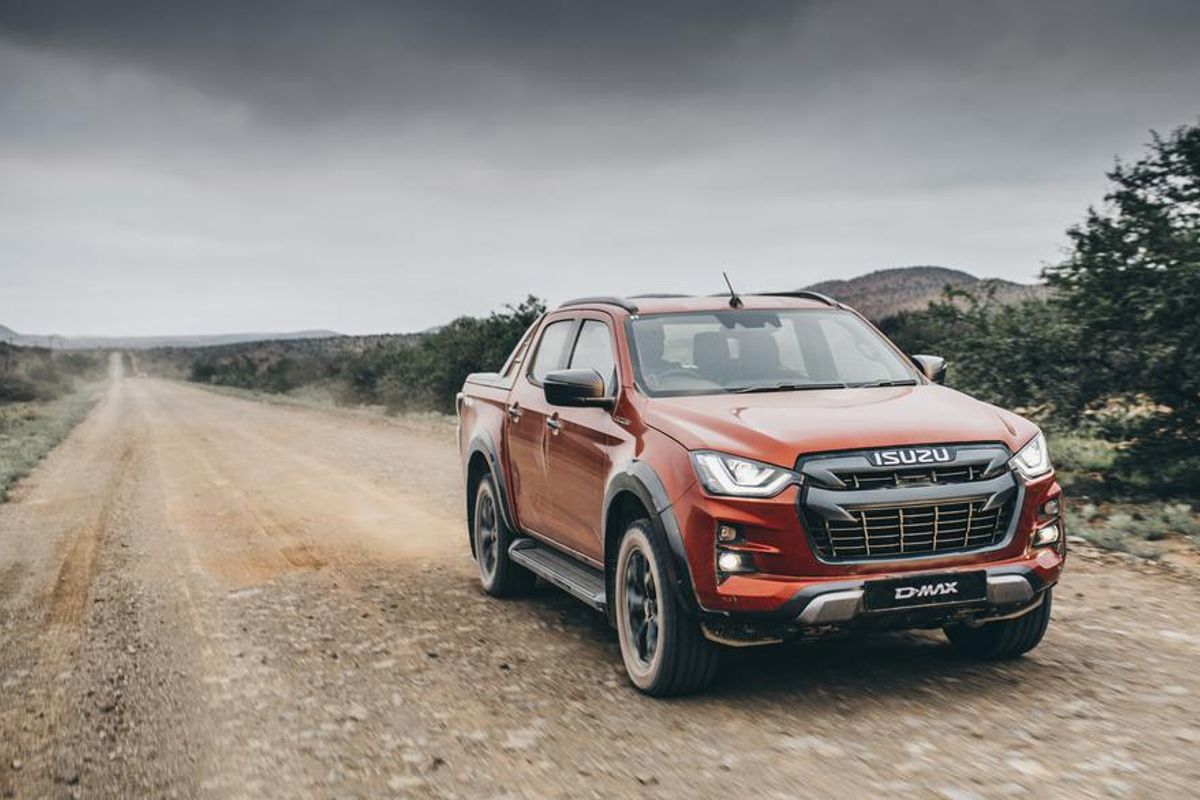


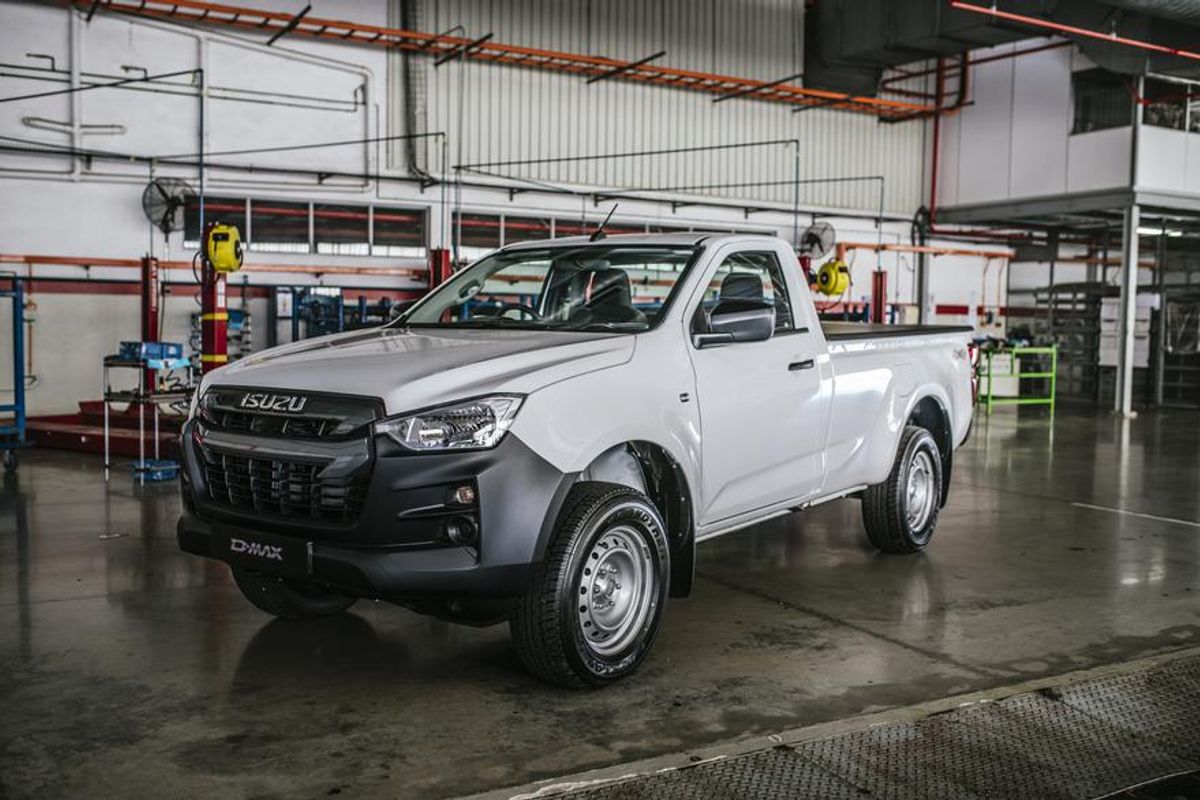
We’ve had to wait a while for Isuzu’s new D-Max to go on sale in South Africa, but the Japanese brand has finally launched the 7th-generation D-Max on local soil. Cars.co.za journalist, Gero Lilleike, had the opportunity to experience the new D-Max at its local launch in Gqeberha, Eastern Cape. Does the new D-Max have what it takes to shake up the double-cab bakkie market?
The introduction of the new, locally-assembled D-Max is a big deal for Isuzu South Africa. The bakkie is built right here in Gqeberha, not only for South African customers but for customers all over Africa – and the world. Isuzu’s business is underpinned by its diesel-engine technology and the firm is the largest diesel engine producer in the world, having produced well over 80-million oil-burning engines to date.
Isuzu has a strong reputation for reliability and, as such, the outgoing D-Max was one of the best-selling bakkies in South Africa alongside the Toyota Hilux and Ford Ranger. Now, with the new D-Max finally in local Isuzu showrooms and with no fewer than 24 derivatives available across 3 body styles (Single Cab, Extended Cab and Double Cab), there’s a D-Max to suit every need and budget, whether it be as a workhorse or leisure vehicle.
Isuzu D-Max Moves Upmarket
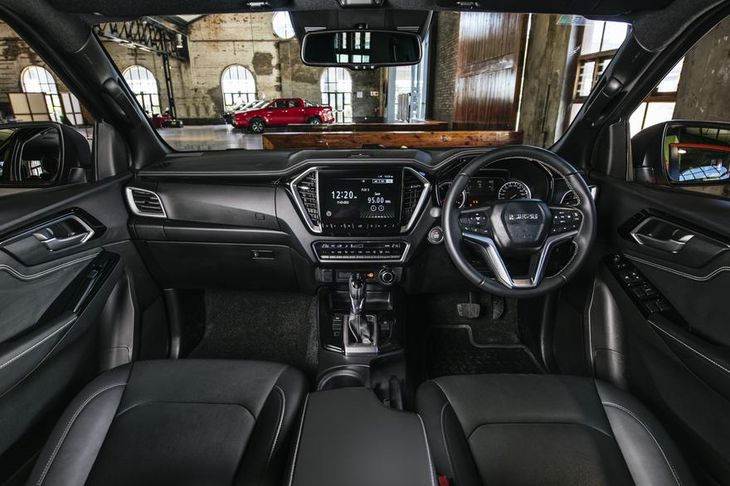
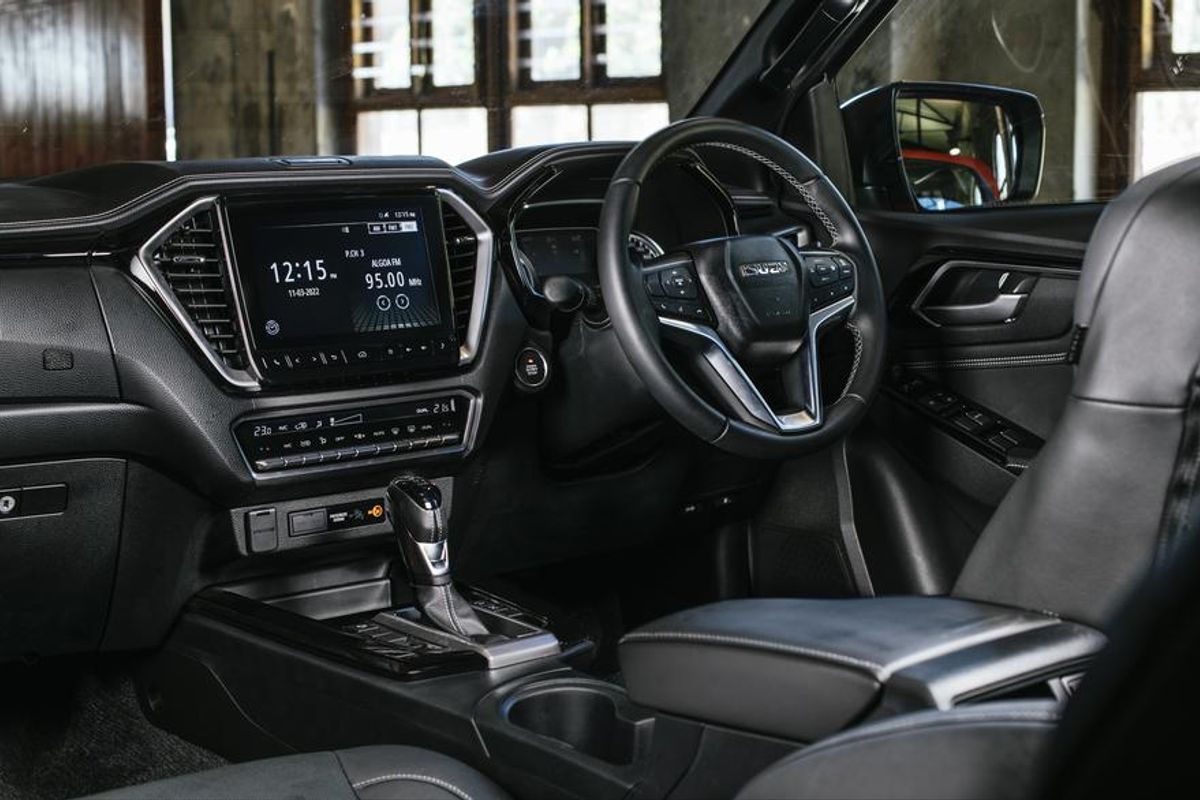
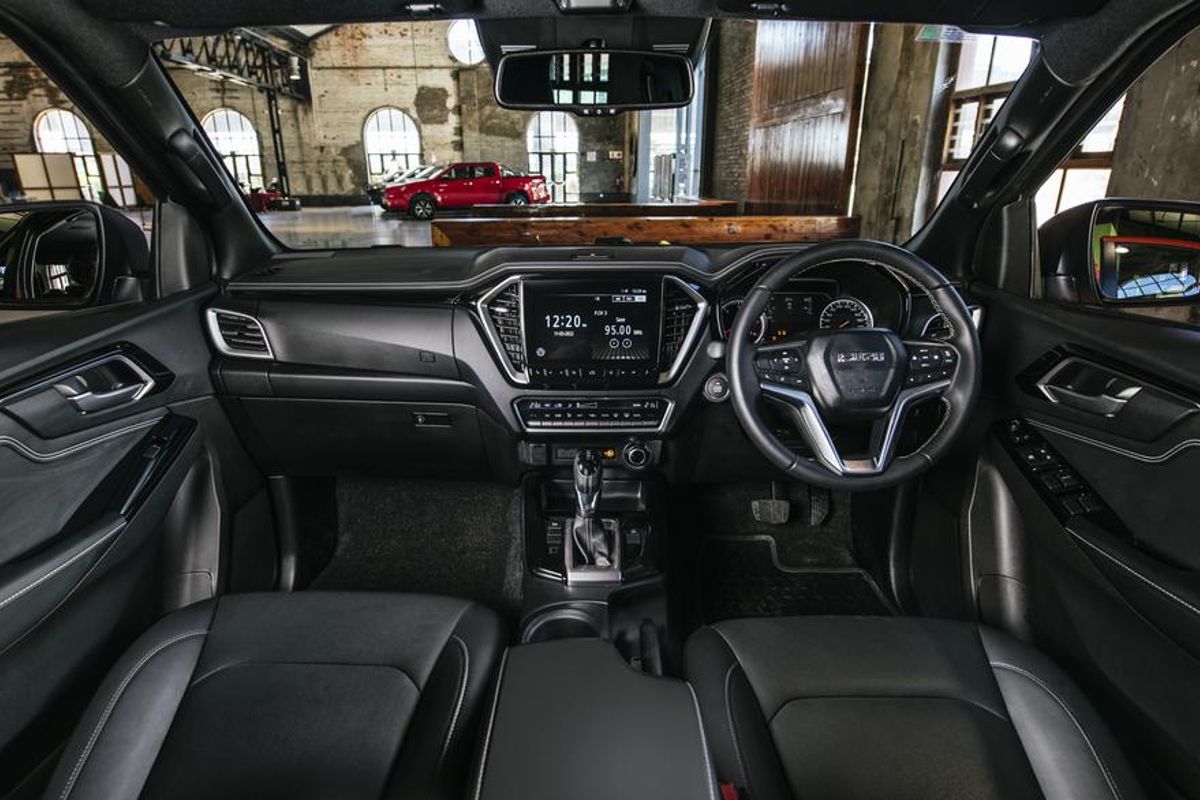
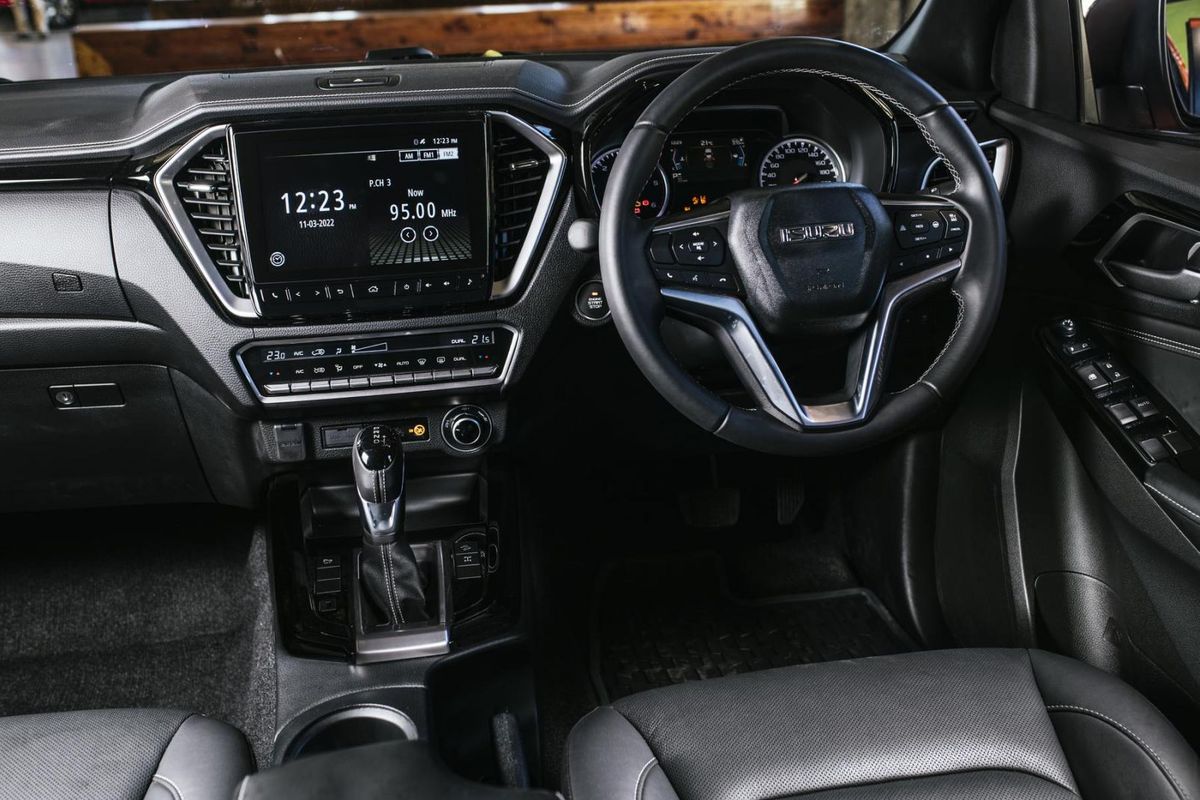
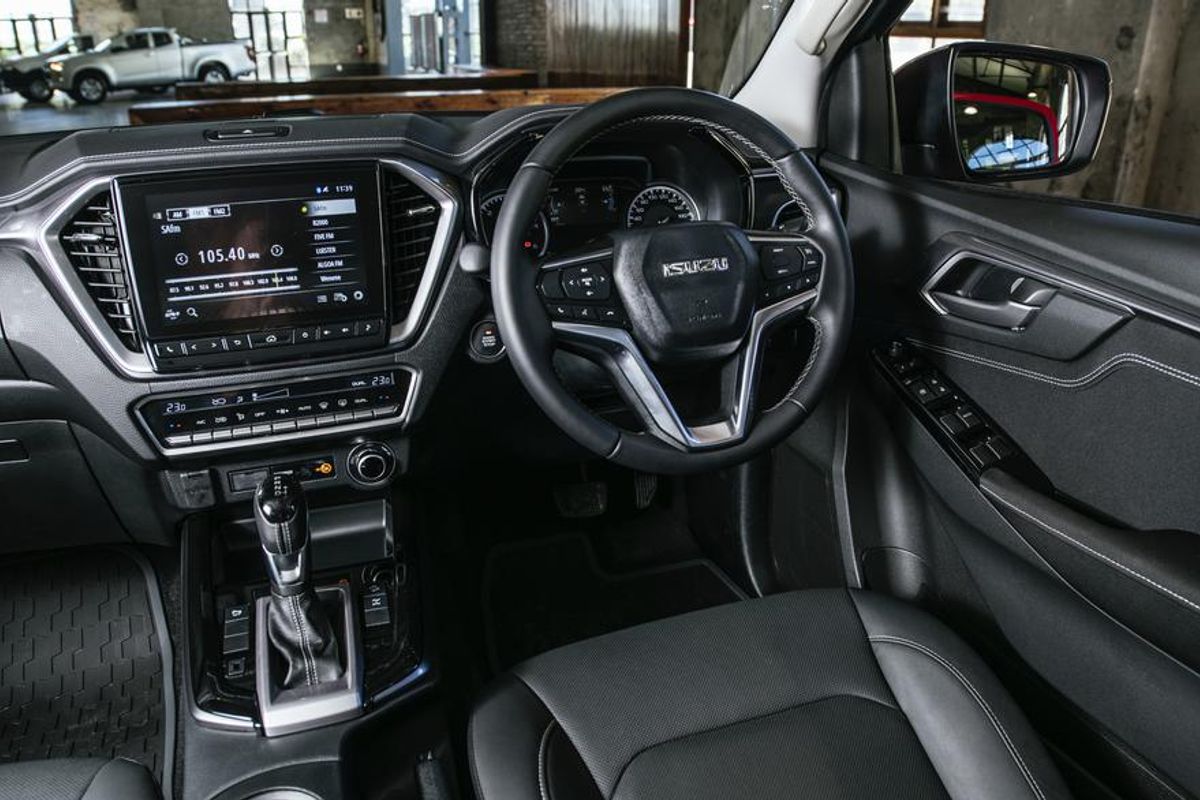
The D-Max’s interior execution is a huge improvement over the outgoing D-Max.
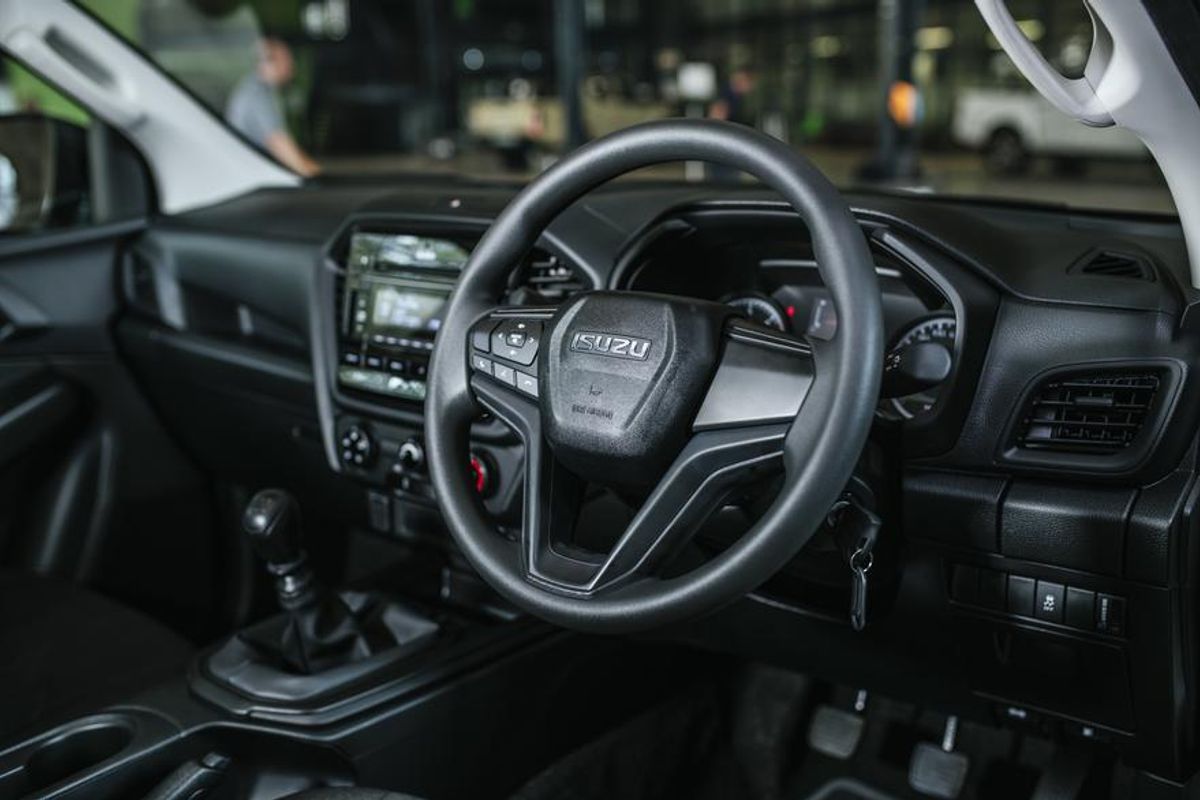
While the outgoing D-Max’s capability as a workhorse has never been in question, the Japanese bakkie was widely criticised for being too utilitarian to compete in the hugely popular “leisure double-cab” market.
Well, with the new D-Max, Isuzu has well and truly upped the ante in terms of interior execution, refinement, specification and safety in an effort to ensure that the bakkie can make a meaningful impact in this cut-throat segment.
The D-Max shares its cabin architecture with the 7-seater Isuzu MU-X Adventure SUV, which came to market in late 2021, and the cabin represents a marked improvement over that of the previous-generation D-Max.
Range-topping derivatives are trimmed in leather upholstery and soft-touch surfaces, while the fascia design exudes a modern look and feel. Moreover, potential D-Max buyers will be pleased to know that perceived interior build quality, as well as general fit-and-finish, are much improved over those of the outgoing generation.
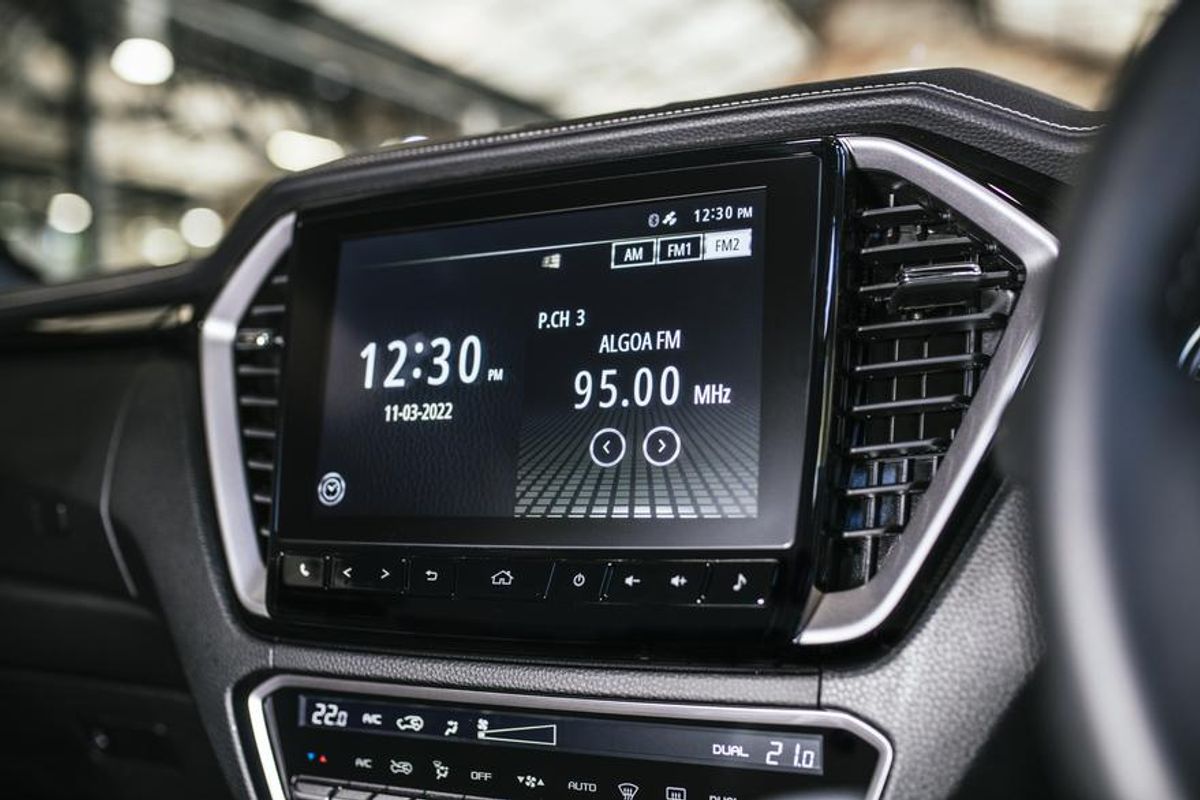
The new infotainment system ranges from 7- to 9-inches in size (depending on the trim level) and while it’s a rudimentary system in terms of its menu layout, it does offer Android Auto and Apple CarPlay compatibility, which many buyers will find useful. The system, however, is not class-leading and is no match for the SYNC2 system found in the current Ford Ranger, for example.
The newly-designed seats are extremely comfortable and supportive, the latter courtesy of generous bolstering. The steering column is adjustable for rake and reach, which makes it easy for drivers of all sizes to get comfortable behind the ‘wheel.
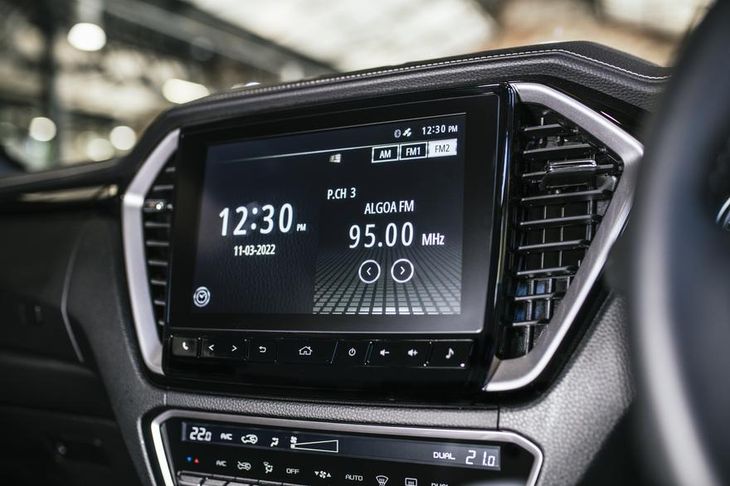
Isuzu’s new infotainment system is Android Auto and Apple CarPlay compatible.
Isuzu has also ramped up the D-Max’s safety equipment; the range-topping V-Cross derivative is equipped with Isuzu’s Intelligent Driver Assistance System (IDAS), which uses a stereo camera mounted behind the windshield to scan the environment ahead for vehicles, pedestrians, bicycles, obstacles and lane markings.
IDAS includes features such as adaptive cruise control, blind-spot alert, lane-keep assist, lane-departure warning, driver-attention assist, autonomous emergency braking, turn-assist, pedal misapplication mitigation and forward collision warning. Up to 8 airbags are fitted, including a centre airbag in the V-Cross only (an industry first), which prevents the front passengers from colliding with each other in the event of an accident.
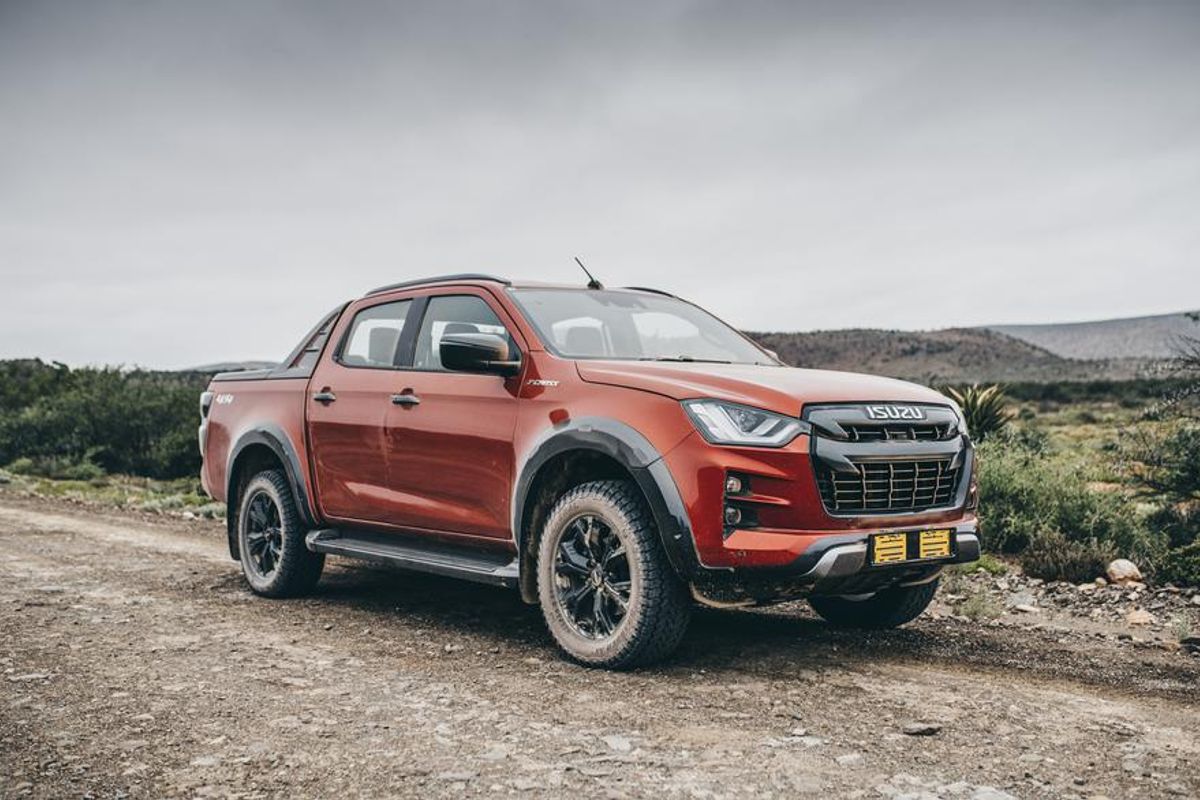
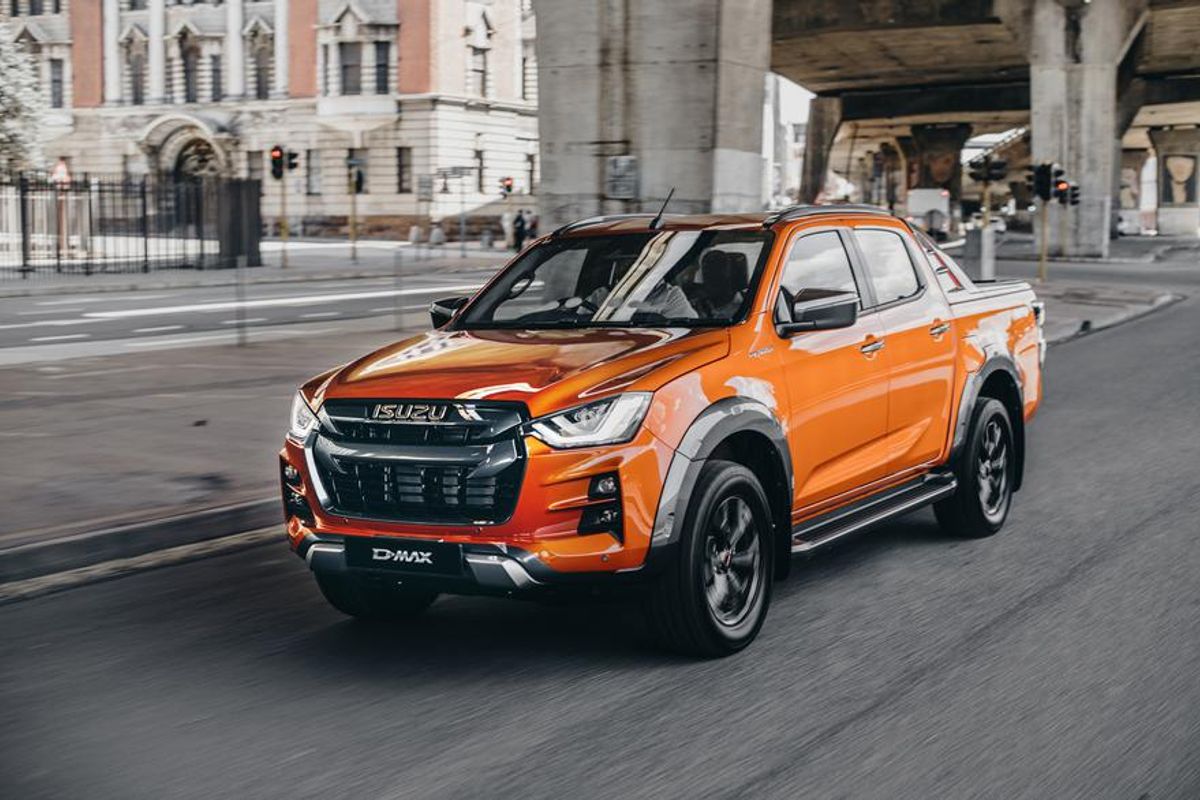
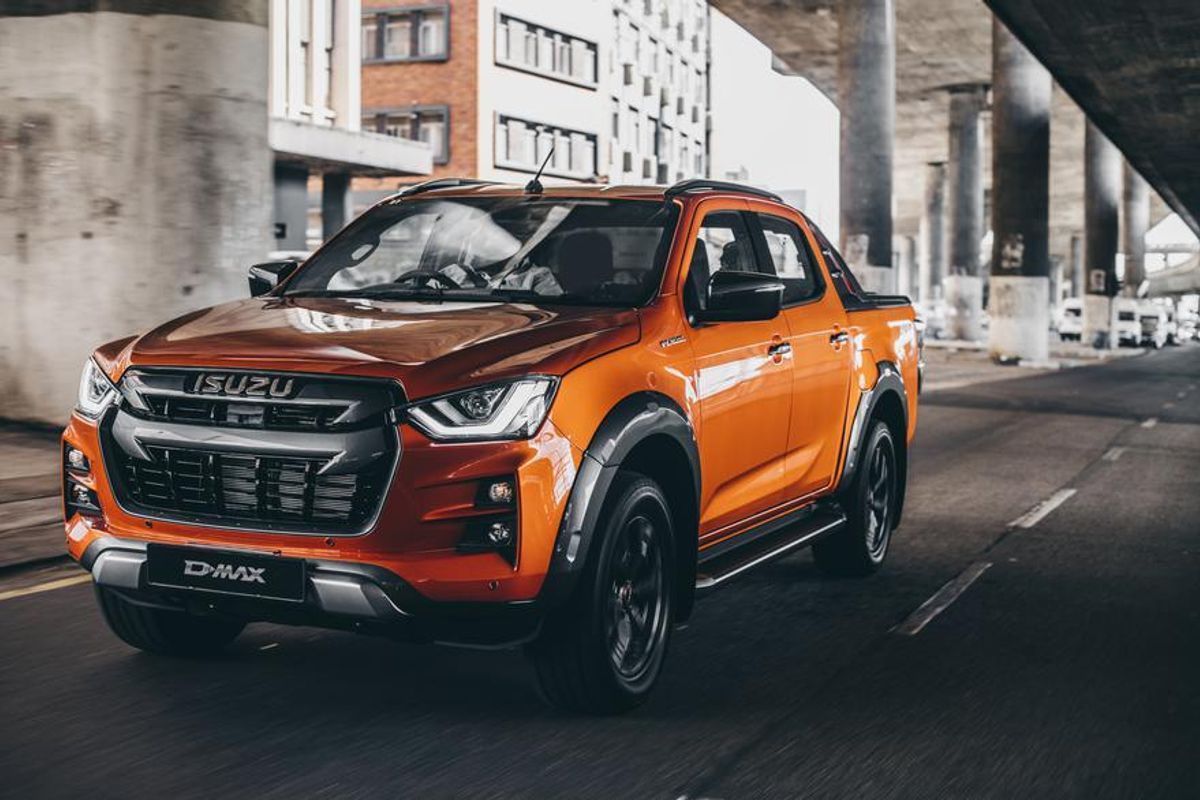
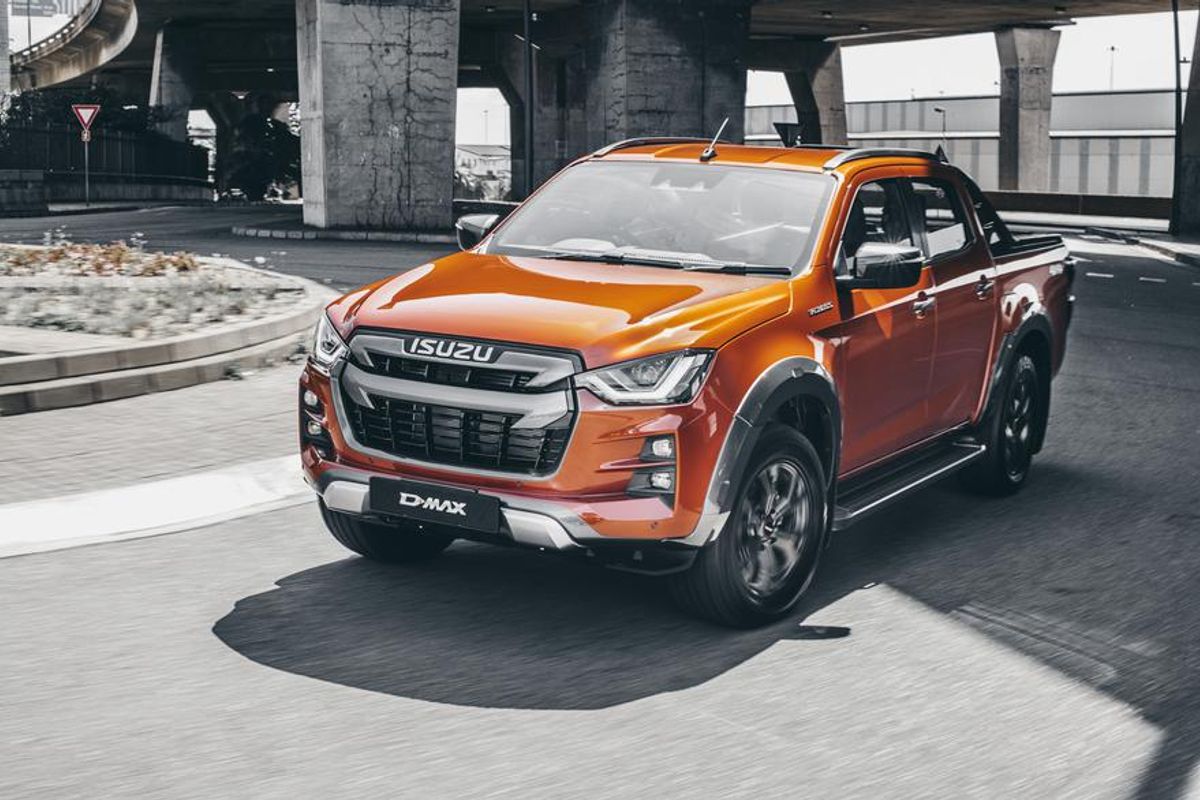
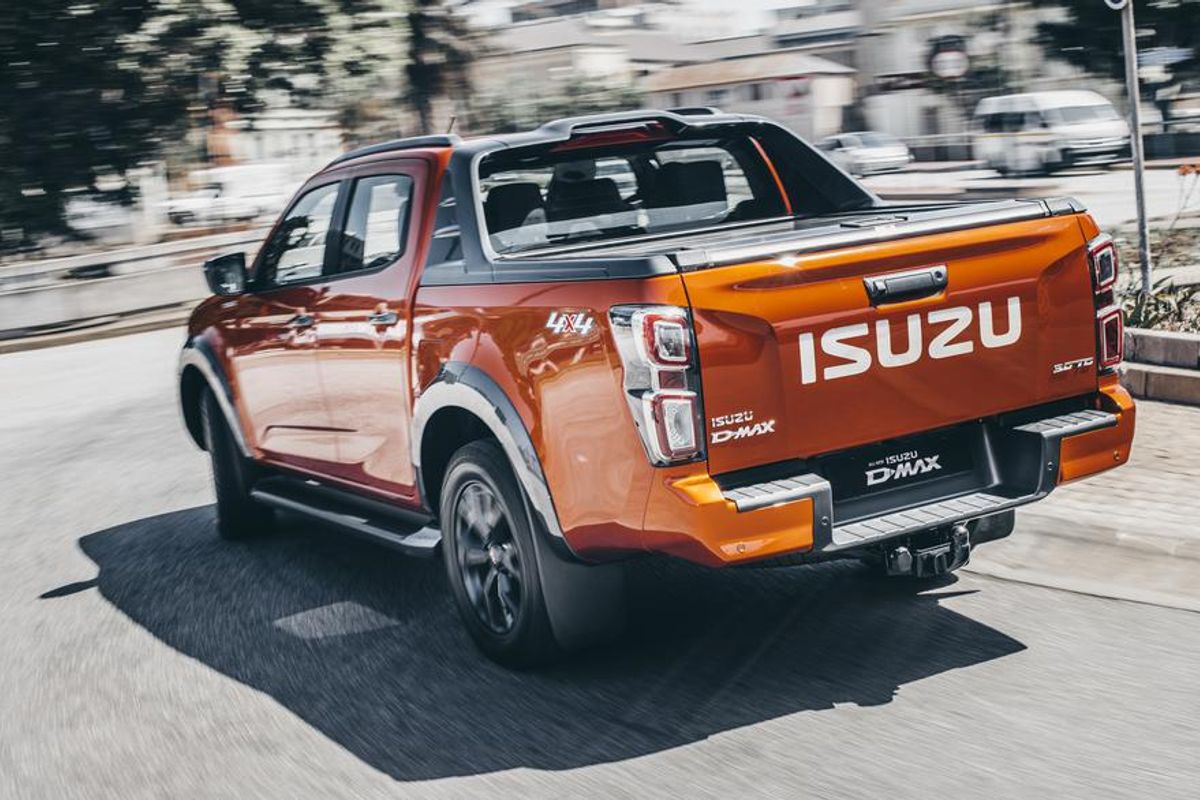
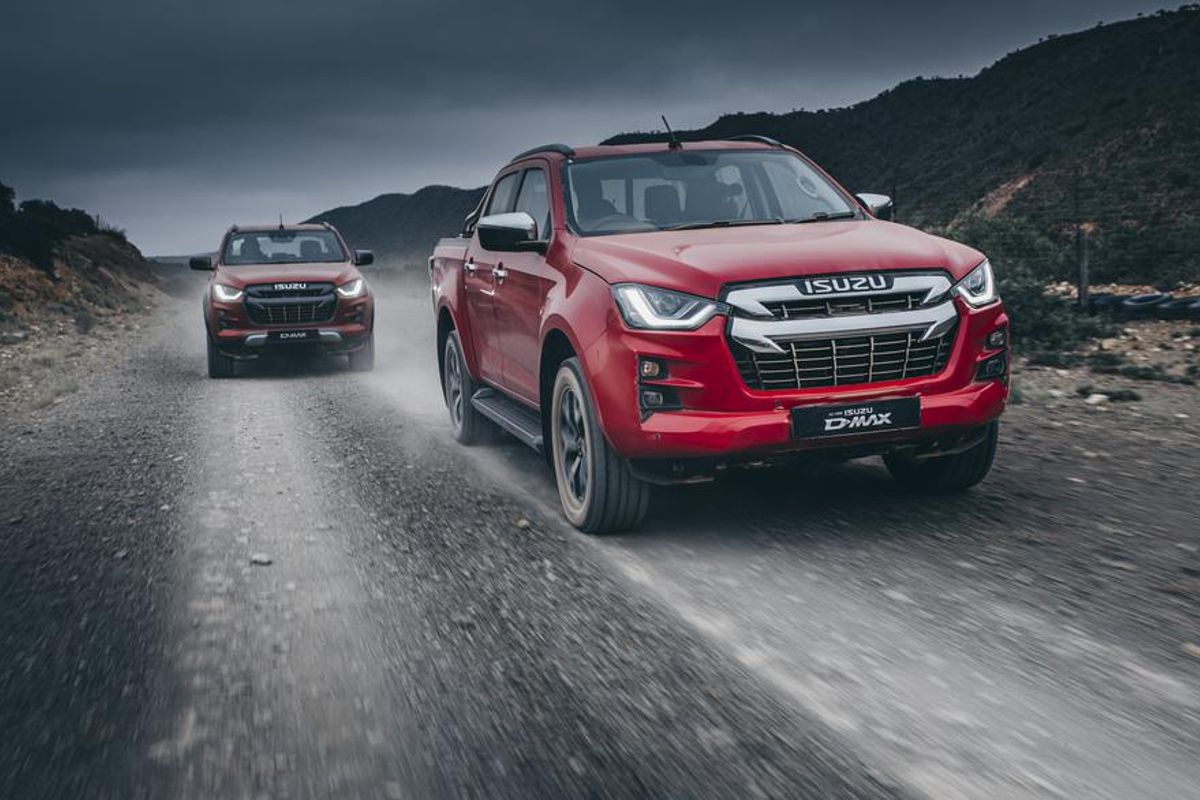
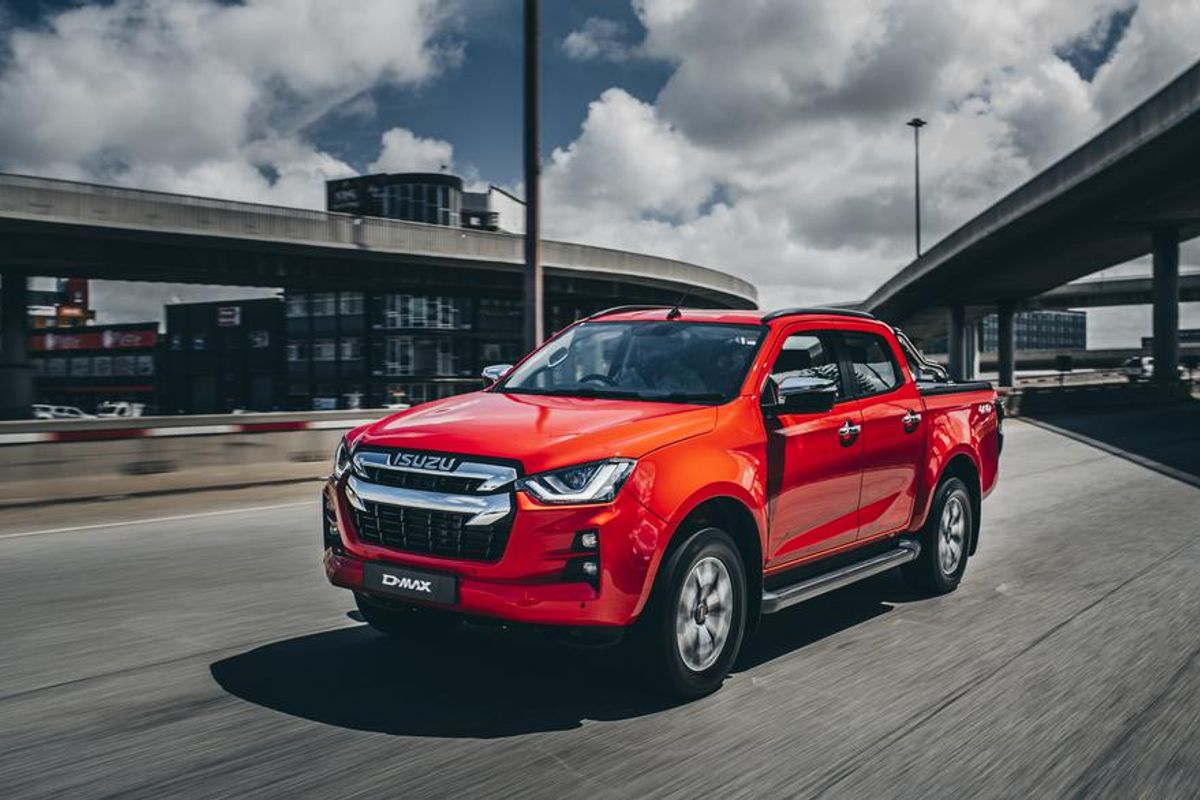
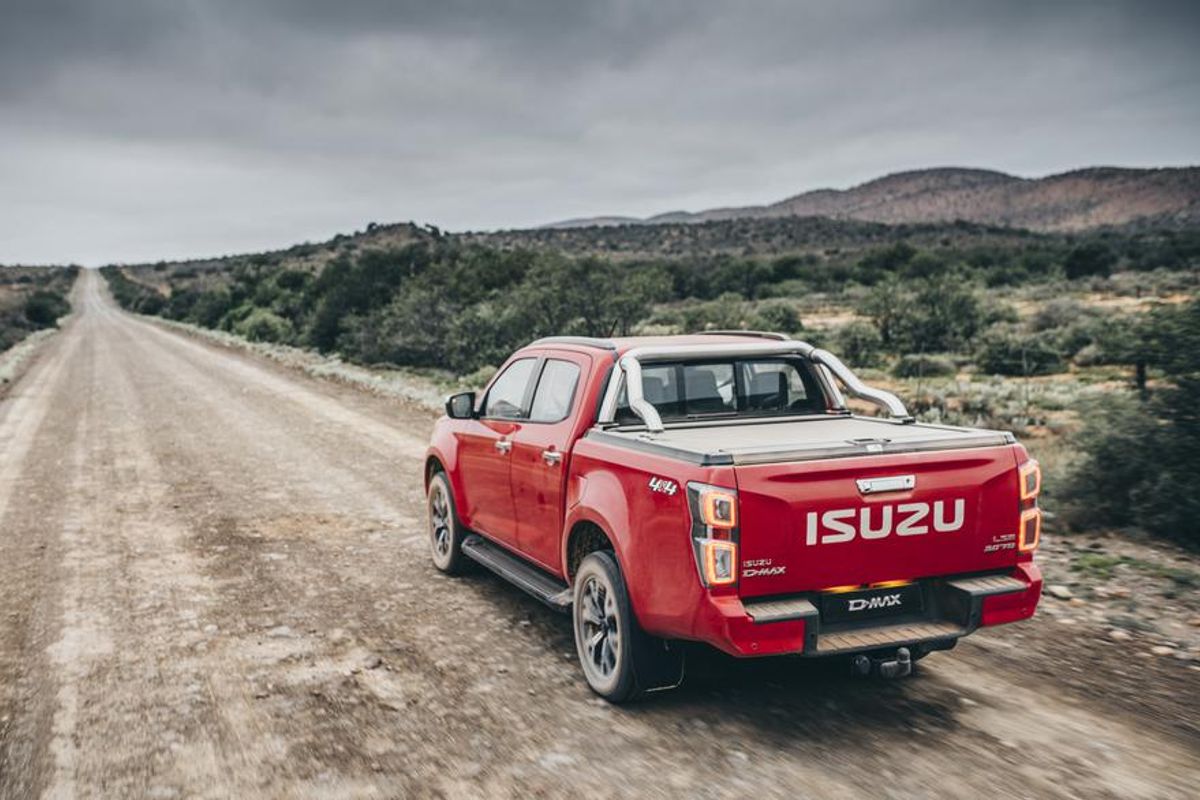
Interior execution aside, the new D-Max exhibits significantly more kerb appeal thanks to a muscular exterior design with a bold grille and “dragon eye” LED headlight design. Isuzu also offers a range of accessories to further enhance the look of the vehicle – when the D-Max is fully kitted, it’s undoubtedly one of the most striking bakkie offerings now available in South Africa.
See specification and pricing for the Isuzu D-Max range
What’s the Isuzu D-Max like to drive?
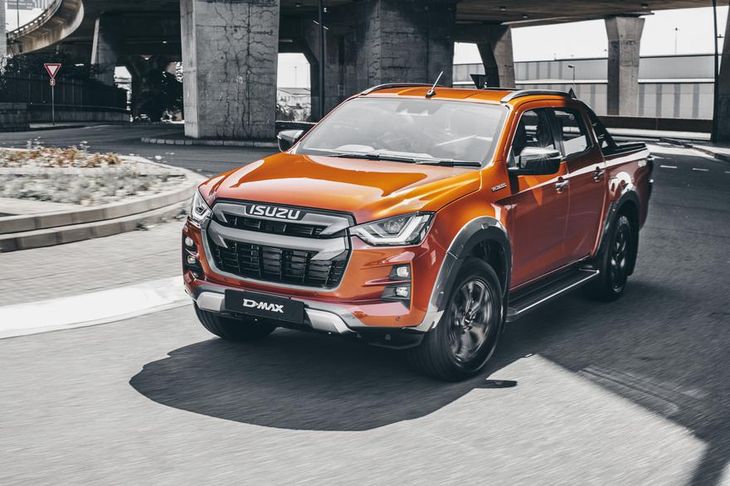
The new D-Max’s ride quality and refinement are notably improved over its predecessor.
The big news for the new Isuzu D-Max is the inclusion of a new 110 kW/350 Nm 1.9-litre turbodiesel engine, which is offered alongside the familiar (but updated) 140 kW/450 Nm 3.0-litre turbodiesel. We’ve already tested it in the new MU-X.
Both engines are paired with either a 6-speed manual or 6-speed automatic transmission (across all 3 body styles) and are available in either 4×2 or 4×4 configuration. As such, the new D-Max really does cater for a diverse clientele.
Isuzu had both extended cab and double cab derivatives – in various trim grades – for us to assess on the launch. The launch route comprised about 250 km of highway driving, as well as about 80 km of gravel travel.
The first leg of the drive was conducted in the D-Max 1.9TD LS Double Cab. We had barely driven 10 km and it was already abundantly clear that the D-Max’s ride quality was notably improved over that of its predecessor courtesy of a new 3-blade rear leaf spring suspension (previously 5) and, undoubtedly, the exhaustive local development programme that the Japanese marque conducted before commencing production of the new bakkie in Gqeberha.
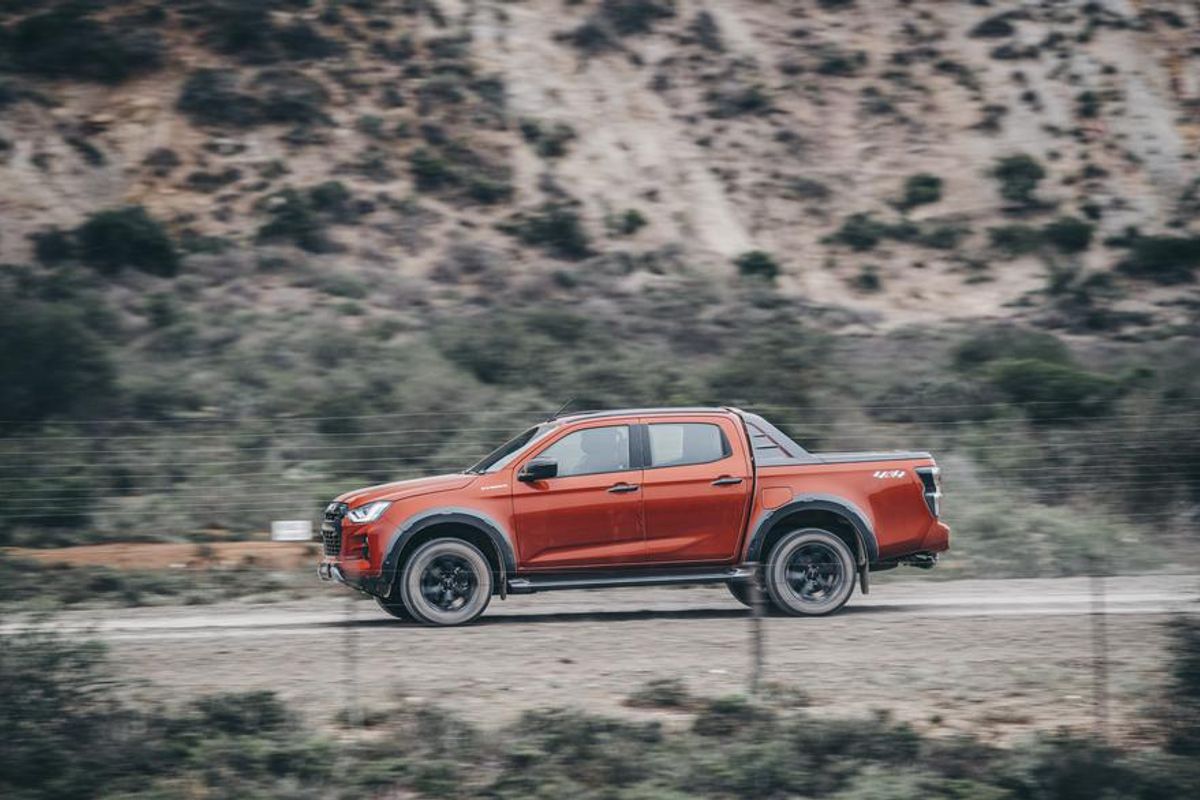
This will undoubtedly go a long way to win favour with buyers in the leisure double-cab segment. The D-Max took the poor road surfaces of the Eastern Cape in its stride and managed to deliver not only a comfortable driving experience… it also remained composed when cornering briskly on roads that had no shortage of dips and undulations.
The performance of the new 1.9-litre turbodiesel engine was rather impressive too – it offered reasonably strong acceleration up to highway speed and just about sufficient punch for executing overtaking manoeuvres, plus we also found the 6-speed automatic transmission very well matched to this engine’s characteristics. We were also impressed by how quiet and refined this engine was, even during high engine loads, which is a testament to Isuzu’s diesel-engine prowess as well as sufficient measures to suppress noise, vibration and harshness (NVH) in the new D-Max. As an example, this engine is far more refined and tractable than the 1.9-litre turbodiesel engine we recently tested in the Peugeot Landtrek.
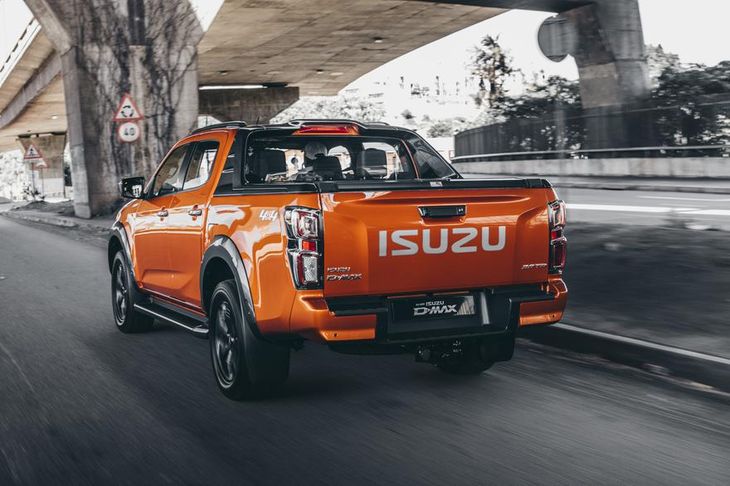
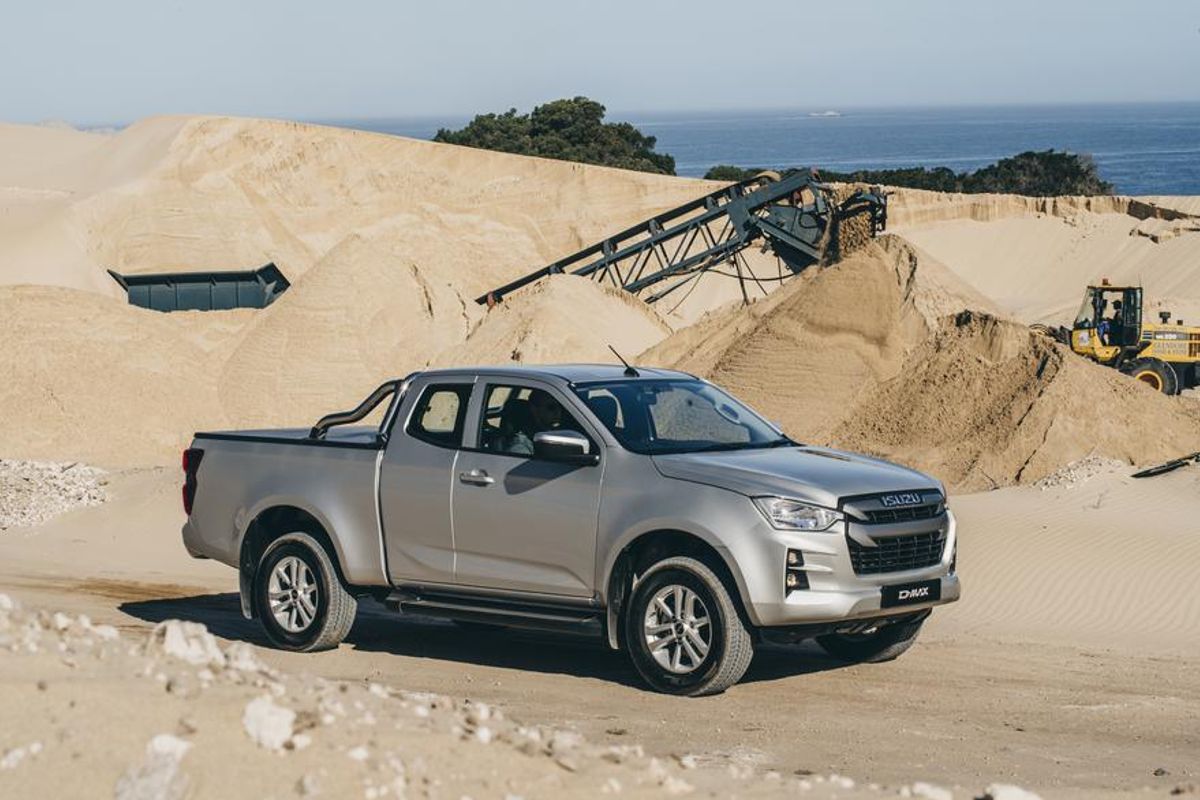
The D-Max is offered with 2 engines and 3 body styles in either 4×2 or 4×4 guise.
As far as towing capability is concerned, the 1.9-litre diesel engine has a maximum braked trailer capacity of 3 100 kg and a payload of 1 000 kg, while the 3.0-litre D-Max offers a tow capacity of 3 500 kg and a 1 200 kg payload.
We also spent some time driving the 3.0-litre D-Max LSE automatic Extended Cab and, from the outset, it felt noticeably punchier and willing to get a move on than its 1.9-litre counterpart. It must also be noted that the steering feel is quite light, which is useful in urban driving situations… but still relatively responsive to inputs at speed. Overall, the D-Max displayed noteworthy road manners in less-than-ideal driving conditions with poor road surfaces and strong crosswinds.
This performance was again highlighted when “tar became gravel” and, unsurprisingly, the D-Max felt right at home in the dirt with a comfortable disposition that deserves applause. Unfortunately, we didn’t have time to drive the D-Max 4×4 on launch (we will be testing the D-Max 4×4 soon), but enthusiasts may be happy to know that 4×4 derivatives are equipped with the familiar 4×4 shift-on-the-fly dial in the centre console, which provides easy access to 2H, 4H and 4L modes (to suit prevailing road conditions), as a well as a rear differential lock. Wading depth has also increased to 800 mm (previously 600 mm). More so, features such as hill-start assist and downhill assist are also standard on 4×4 derivatives.
Summary
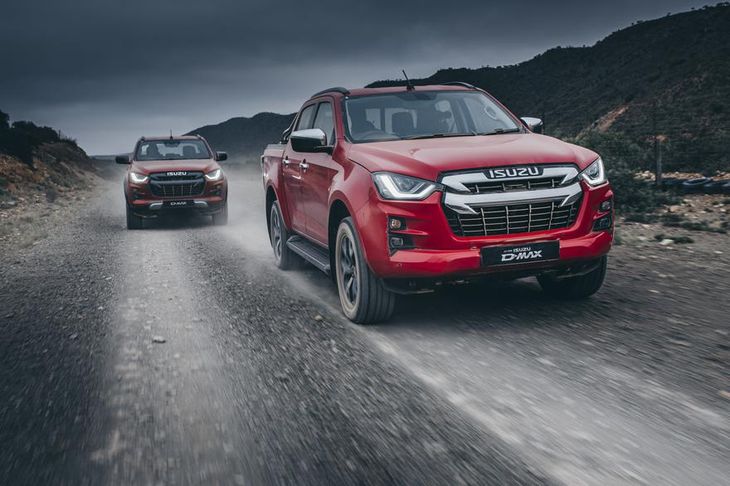
The new D-Max is likely to attract new clientele and will appeal to a broad audience with a variety of needs.
The execution of the new-generation D-Max represents a significant leap forward for one of South Africa’s most beloved bakkie models. Not only does it look the part, but the D-Max’s cabin is now on par with what’s on offer in the segment. The D-Max’s enhanced refinement (both in-car and on-road) is a major highlight and prospective buyers are likely to appreciate the newcomer’s sharper road manners too.
While the D-Max’s on-paper range-topping engine outputs fall marginally short of what’s available in the Toyota Hilux and Ford Ranger line-ups, its real-world performance is competitive and is unlikely to disappoint. Besides, the smaller-capacity (1.9-litre) turbodiesel engine is an excellent entry point into the range – it should please fleet buyers and motorists who don’t need the additional towing and payload capacity that the 3.0-litre derivatives offer.
With a competitive pricing structure, as well as a 5-year/120 000km warranty and roadside assistance, 5-year/90 000 km service plan and 5-year anti-corrosion warranty, the D-Max is likely to sustain – and probably improve upon – its local sales success. We will have the Isuzu D-Max on test soon, so be sure to look out for a more thorough evaluation in the near future.
Buy an Isuzu D-Max on Cars.co.za
How much does the Isuzu D-Max cost in South Africa?
| 1.9 Ddi Single Cab HR | R401 700 |
| 1.9 Ddi Single Cab HR L | R421 000 |
| 1.9 Ddi Single Cab HR L AT | R439 200 |
| 1.9 Ddi Single Cab 4×4 L | R506 200 |
| 1.9 Ddi Single Cab 4×4 L AT | R528 800 |
| 1.9 Ddi Extended Cab HR | R433 600 |
| 1.9 Ddi Extended Cab HR L | R448 500 |
| 1.9 Ddi Extended Cab HR LS | R477 000 |
| 1.9 Ddi Extended Cab HR LS AT | R496 200 |
| 3.0 Ddi Extended Cab HR LSE AT | R595 100 |
| 3.0 Ddi Extended Cab 4×4 LSE AT | R670 300 |
| 1.9 Ddi Double Cab HR L | R498 900 |
| 1.9 Ddi Double Cab HR L AT | R517 100 |
| 1.9 Ddi Double Cab HR LS | R520 800 |
| 1.9 Ddi Double Cab HR LS AT | R537 500 |
| 1.9 Ddi Double Cab 4×4 L | R575 900 |
| 1.9 Ddi Double Cab 4×4 LS AT | R629 300 |
| 3.0 Ddi Double Cab HR LSE AT | R716 400 |
| 3.0 Ddi Double Cab 4×4 LS | R679 400 |
| 3.0 Ddi Double Cab 4×4 LS AT | R697 200 |
| 3.0 Ddi Double Cab 4×4 LSE AT | R771 100 |
| 3.0 Ddi Double Cab V-Cross HR AT | R760 100 |
| 3.0 Ddi Double Cab V-Cross 4×4 AT | R814 700 |
Related Content
Double-Cab 4×4 Bakkie Buyer’s Guide (2021)
Old Isuzu D-Max to soldier on alongside new bakkie
How will the Russia-Ukraine War affect SA car buyers?
[helpful]
Gero Lilleike

Gero Lilleike is a published writer and photographer with most of his work appearing in the fields of travel and motoring. Gero has worked as a motoring journalist for Cars.co.za for the past 8 years and takes every opportunity to go on an adventure whether it be offroad or in the ocean. For Gero, a car's worth is measured by how many surfboards it's able to carry.