Engineering teams might work agonising hours to gain a slight advantage over each other, but brand value will always trump technical spec.
Brand perception and -association are potent influences. So many car buyers purchase models that resonate with a sense of metaphor or, to put it another way, are seen to represent traits/values that they align with. Brand matters. And often, it matters more than actual Rand value or technical specification.
Read: GWM Tank 300 International Launch Review
And that’s where emerging brands have a problem. It’s trend-setting to be an early adopter, but it’s one thing to risk being the first buyer of a R14k smartphone. When it’s a R400k car, that’s something else.
The buyer’s remorse of discovering that their alternative choice of smartphone isn’t quite what they hoped that it would be, is low. And the device is easily replaceable. However, when you’ve bought that R400 000 lemon of a car, the frictional cost and remorse of disengaging from it are significant.

The anti-Chinese car bias no longer exists
Perception is the foundation of automotive branding… and it’s often divorced from reality. Many luxury brands would be undone if brand value was attached to a car’s core function – reliability and durability. Industry reliability surveys suggest there are few expensive and elite brands at the top of the rankings.
Tank 300 vs the rivals it needs to beat
This brings us to the issue of Chinese-made cars and South African customers. For a long time, models produced by Chinese manufacturers (especially bakkies), weren’t bought out of choice, but desperation. The vehicles’ prices were so reasonable that many 1st-time buyers purchased poorly designed and -built Chinese-made bakkies, instead of second-hand single- and double-cabs produced by Japanese brands.
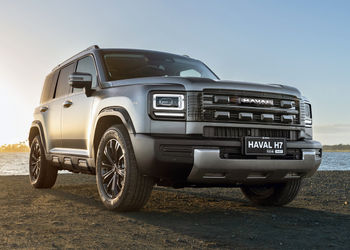
But that has all changed. The 2022 local market sales figures show the developing influence of Chinese brands has grown into a crushing presence. Haval is now South Africa’s 9th-largest vehicle brand.
Building on the Haval brand momentum
What GWM has accomplished with Haval in South Africa is very telling. Possibly the best validation for any car brand is to be accepted by customers with the means to buy a model from a legacy car brand. And I’ve seen Havals roll along the meticulous brickwork roads of many expensive security estates.
But what next? Is Haval the limit of conquest for GWM’s multi-brand strategy? Or could it take more customers away from legacy car brands in South Africa? The ambition is certainly there.
Design is a great product differentiator and a foundational element of a brand. It’s why the Audi Q7, Bentley Bentayga, Porsche Cayenne and Volkswagen Touareg attract different customers – even though they share underpinnings and components. An even more acute example is Hyundai and Kia, whose models are near-identical, but design has differentiated them to suit divergent customer preferences.
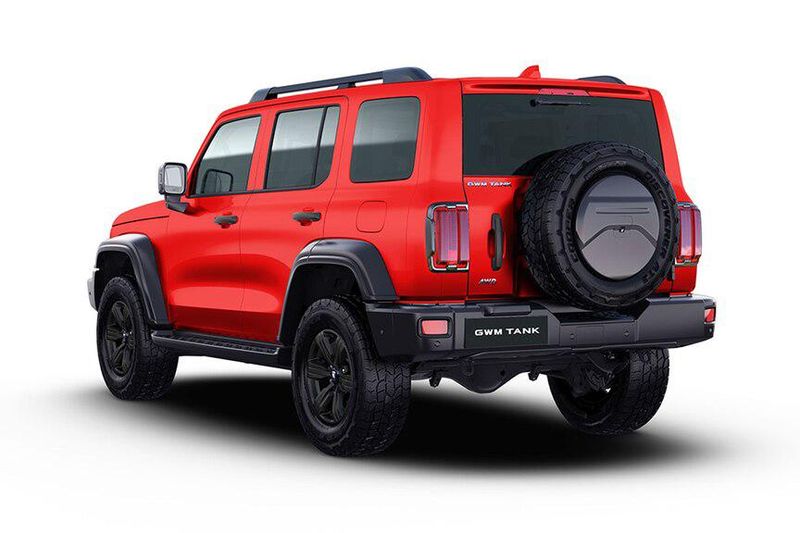
Has GWM built a much bigger Jimny?
Simplicity has an enduring appeal. Buyers will pay a premium for models with unique proportions and design, even if they are compromised vehicles to drive and own. Suzuki’s Jimny is an example of this.
The tiny Japanese SUV is, paradoxically, a brilliant inner-city car and slow-speed technical-terrain 4×4, but quite awful as a highway cruiser and touring vehicle. But have you tried to order one? Inventory is always exhausted within the Suzuki dealer network, and pre-owned Jimnys demand crazy premiums.
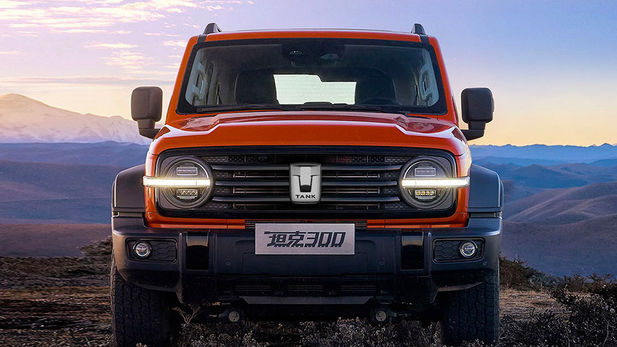
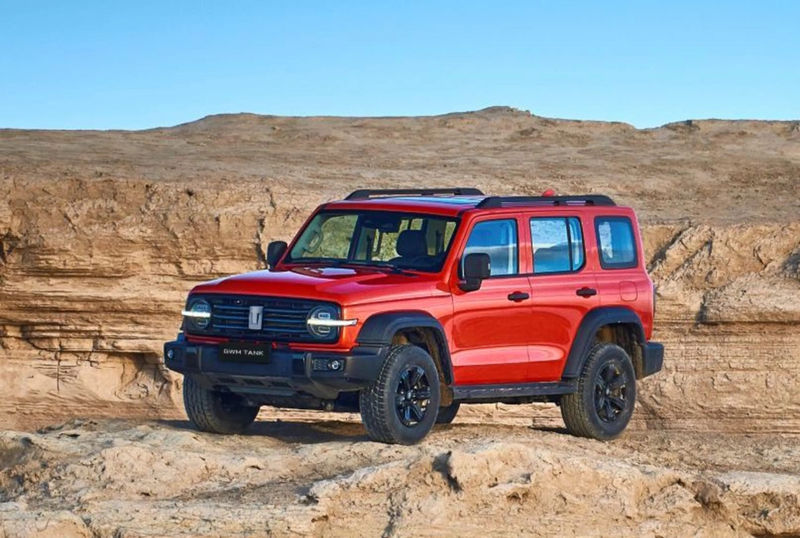
GWM’s product people have paid attention to Jimny’s success globally. The Chinese automotive giant’s product planners noticed that a mechanically simple off-road vehicle with a traditional 2-box design holds strong appeal. That’s why the GWM Tank 300 exists. And it’s coming to South Africa this year.
It combines the chunky design and styling details that make Jimny so disarming, in a larger package, with better cabin architecture. It has a much more potent (turbopetrol) engine too, as well as an 8-speed ZF automatic transmission, which should make the GWM Tank 300 a less fatiguing long-distance cruiser.
No diesel engine – but is that really an issue?
The GWM Tank 300 that Cars.co.za recently sampled in Australia was powered by a 180 kW/380 Nm 2.0-litre 4-cylinder turbopetrol engine mated with a 78 kW/268 Nm electric motor (for combined outputs of 258 kW and 615 Nm). But the market in which GWM is positioning Tank 300, as a Fortuner alternative, is almost entirely diesel-powered. Is not having a turbodiesel engine an oversight on GWM’s part?
Well, if the price gap between the (probably generously specified) Tank 300 and its dearer chief rival is large enough, you can compensate for the turbopetrol’s greater fuel thirst with all that money you’ll save on the GWM’s purchase price. Traditionally, Chinese brands price their wares very competitively.
Another point on the GWM Tank 300‘s lack of a turbodiesel engine is that Suzuki Auto SA has never offered the Jimny in anything but petrol guise, but has suffered no customer pushback. Customers who’re attracted to the diminutive 4×4 appear less concerned about engine configuration and fuel type.
And then there is the issue of availability. Suzuki has made interventions to stabilise and improve the stock availability of the Jimny and added India as a production hub. But the waiting list remains long.
However, the likelihood of GWM having production constraints with Tank 300 is unthinkable, because, as we’ve seen before, nobody can increase production to meet demand quite like the Chinese brands.
Why GWM’s sub-brand play is working
Sub-brands work if car companies are adequately bold with them.
When Lexus entered America with LS400, there wasn’t a Toyota-badged product that had a comparable specification – not even close! This was the opposite of what Volkswagen did with the Phaeton first-class sedan two decades ago (when the VW Group already had the Audi A8 and Bentley Continental in its armoury). That misstep showed the limits of cross-branding vehicles that are virtual mechanical twins. Despite its technical superiority, the Phaeton failed dismally to usurp the A8 in the limousine market.
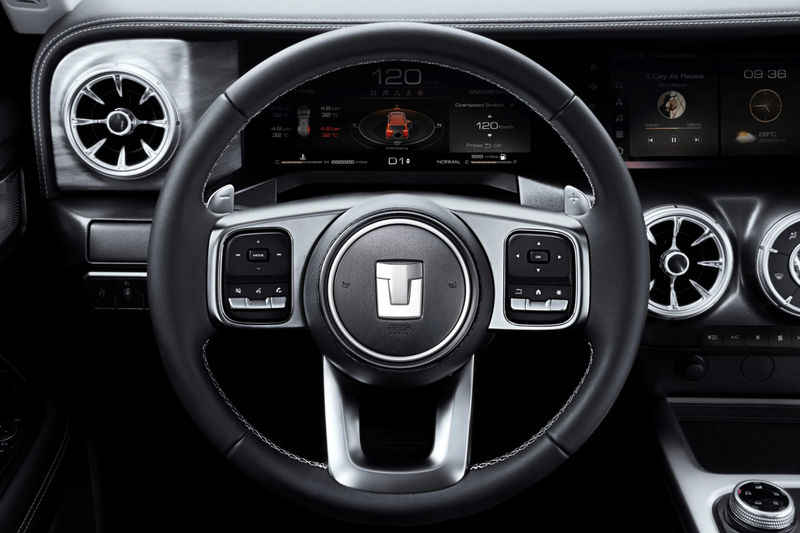
Haval has a very different front-end design, grille, roofline and proportions to GWM’s larger legacy SUVs. Careful of being lulled into overconfidence and design laziness by their runaway success with recent Haval models, GWM’s designers knew the H6’s relatively intricate grille and panel shapes would not work on a 2-box off-roader. Hence the GWM Tank 300‘s highly original design, with no carry-over panels.
Sub- and cross-brands aren’t easy to get right. VW has executed some shared-platform models well – but bungled others (the ultimate cannibalisation of the Audi A1 by the Polo and the Phaeton failure are 2 examples). Chinese car companies are studious in their research and learn from their rivals’ mistakes.
Will the 5-seat configuration count against it?
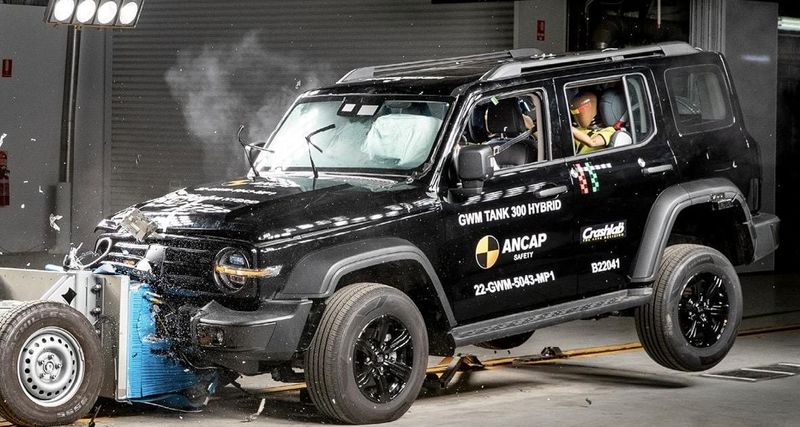
The Tank 300 is very different in appearance and execution from GWM’s other SUVs. It also occupies a potentially lucrative market space in the local market between the upcoming Jimny 5-door and Fortuner.
It doesn’t have 7 seats, though. But considering how few owners utilise the Fortuner’s 3rd-row seating, we can hardly imagine the GWM Tank 300’s 5-seat configuration will be an issue to prospective buyers.
The coolness factor of the undeniably stylish Chinese off-roader will further enhance GWM’s brand cachet in South Africa, but its other vehicle introduction for this year might be even more symbolic.
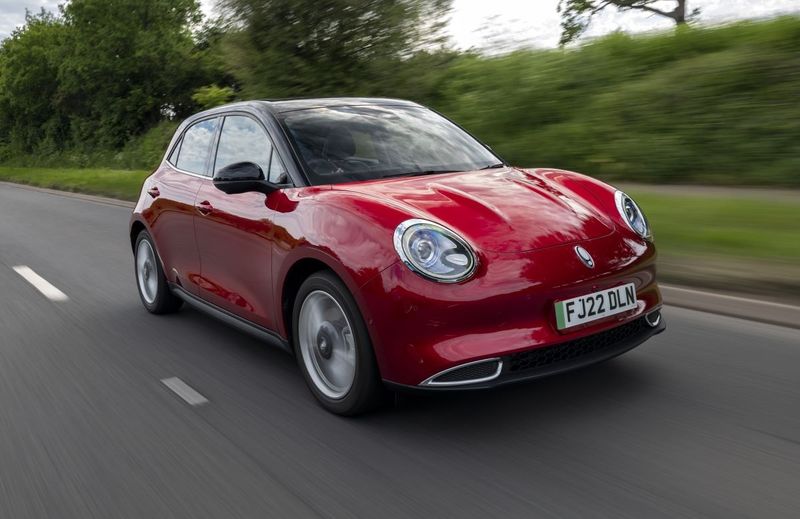
China defines the global electric vehicle market, in terms of consumption and production. And GWM’s Ora (including its Ora Sport variant), replete with its disarming styling and sensible battery speciation, could finally become the electric vehicle to gauge true South African battery-vehicle demand.
Could GWM become a top-5 car brand in SA?
Low sales volumes of German luxury brands’ R1m+ electric vehicles are no indication of how receptive South Africans are towards the idea of battery power, as opposed to petrol or diesel. However, Ora could create a truer demand barometer for South African motorists’ interest in owning electric cars.
China’s automotive industry is positioning itself for global domination. And GWM’s SA product strategy, with P-Series, Haval and the addition of Tank and Ora, are all powerful product chess moves to that end.
Building and sustaining a brand in the hyper-competitive automotive space is tough. It’s why innovative European brands, such as Volvo and Land Rover, are now owned by Indian and Chinese car companies.
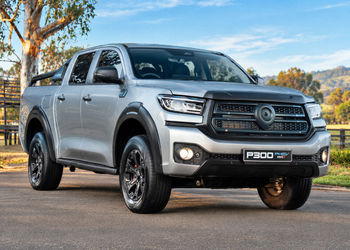
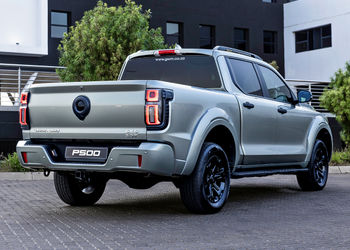
With the P-Series double-cab and Haval’s Jolion and H6 models, GWM has established a value brand presence in our market under the auspices of Haval Motors SA. By 2030, local car enthusiasts might look back at 2023 as the pivotal year for GWM’s South African product strategy.
Once you have established a strong brand, it’s all about product frequency. And GWM has a remarkable product pipeline in waiting.
Related content:
Can Jaguar save itself – or not?
Why your next bakkie shouldn’t have side mirrors
Will Chinese cars stay cheap forever?
Stage 6: A major threat to SA’s auto industry
GWM’s Ora Cat EV could offer 500 km range for only R600k
Lance Branquinho

Lance Branquinho is a Namibian-born writer and photographer who has won numerous motoring journalism awards. He once smuggled parts to South America, in a minor contribution to help Giniel de Villiers finish on the podium at the Dakar. He fears for the eventual collapse of the air-cooled Porsche 911 market – and keenly awaits, in vain, the return of the brand's 928.