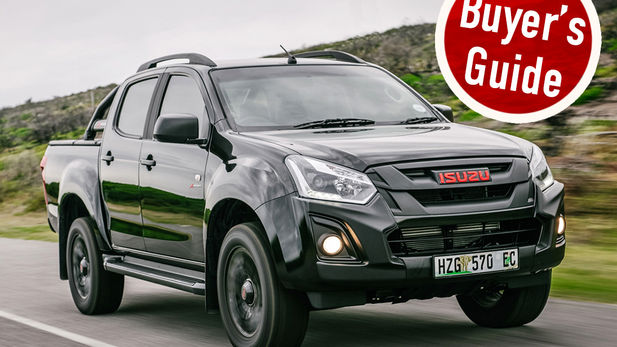
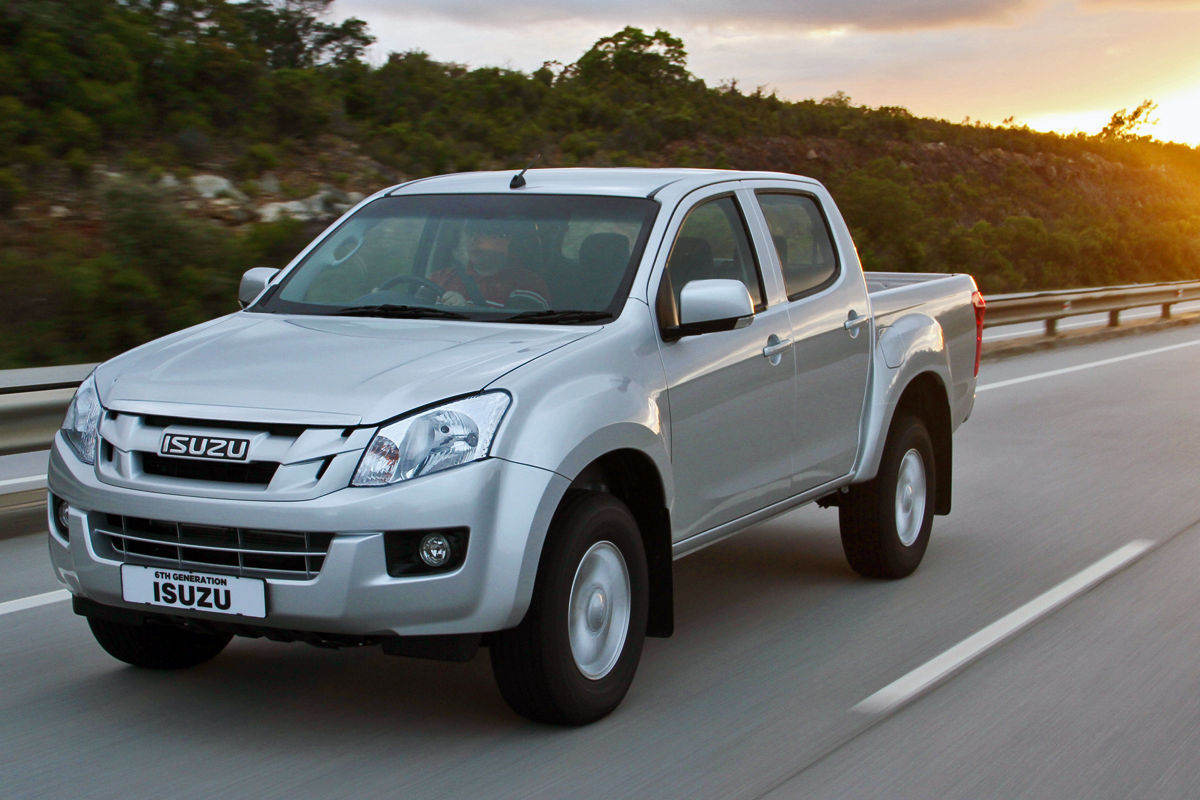
Though Hilux and Ranger are likely the first nameplates to spring to mind when talking bakkies these days, the Isuzu KB – latterly known as the D-Max – has a strong following in SA. Here’s what to look out for on the used market.
Isuzu Motors first began producing vehicles in South Africa way back in 1972 as part of its capital alliance with General Motors. Though the company’s first one-tonner built in the Eastern Cape was actually badged as the Chevrolet LUV, the bakkie became known as the Isuzu KB by the end of that decade.
Fresh versions of Isuzu’s bakkie – which quickly gained a loyal fanbase thanks to its rock-solid reputation for durability – punctuated South Africa’s bakkie timeline over the next few decades. Interestingly, the KB badge was retained for the local market during almost all of that time, even when most other countries shifted to the D-Max moniker.
In this buyer’s guide, we’ll focus on the RT-generation model (and particularly the double-cab versions), which was introduced locally in 2013 and finally switched to the D-Max nameplate in 2018. Around the end of 2021, production technically ended at the company’s factory in Gqeberha (formerly Port Elizabeth) as the new-generation model came online, though the RT lives on today as the prolonged lifecycle D-Max Gen 6.
Isuzu KB model line-up at launch
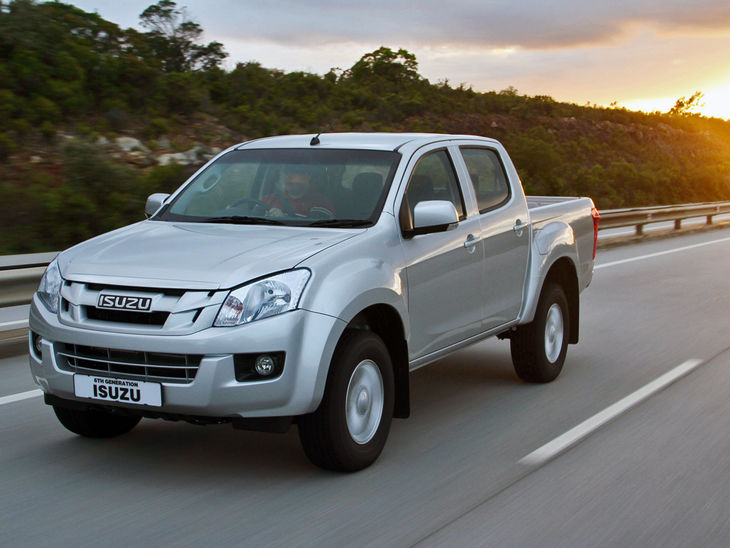
This generation of the KB hit the local market at the end of the first quarter of 2013.
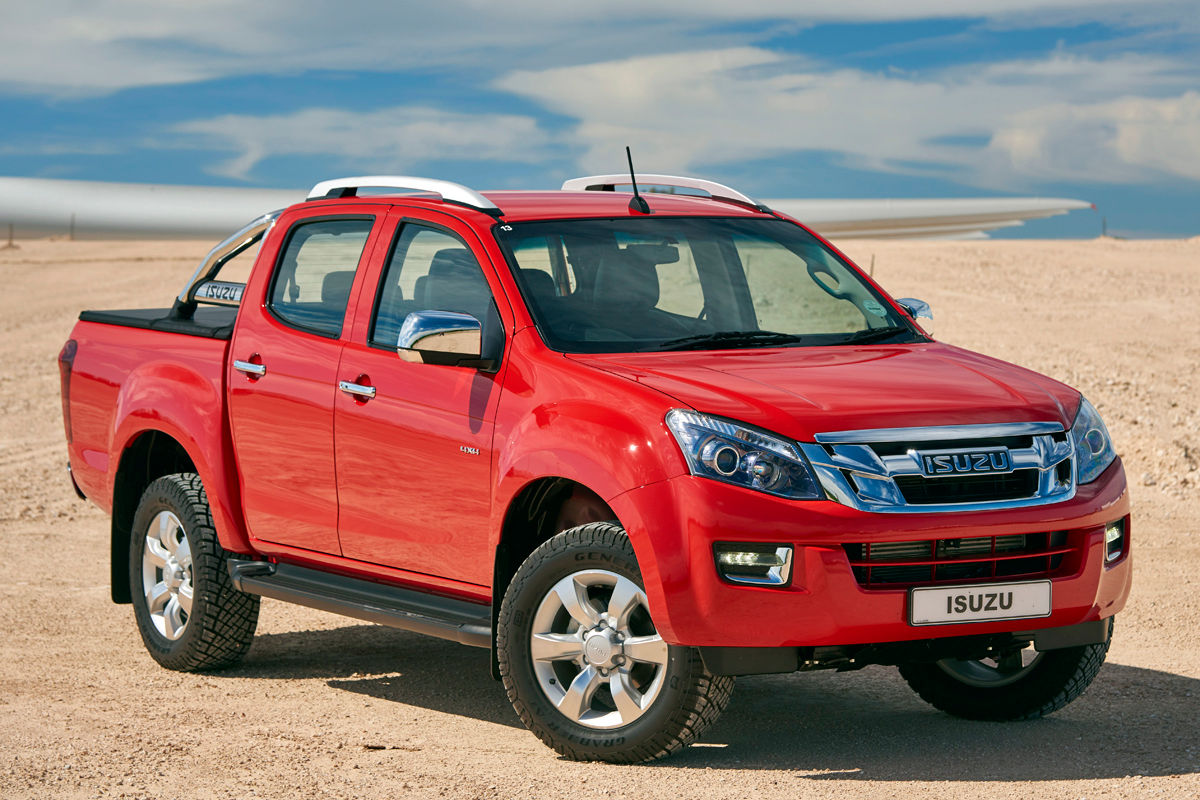
The RT-generation bakkie was revealed in Japan back in 2011 after being conceived in collaboration with General Motors as a sibling to the Chevrolet Colorado (though it’s widely thought the American firm led the development process for this particular model). It hit the market in South Africa as the Isuzu KB nearly two years later in March 2013.
As many as 26 derivatives were available at launch. The range comprised the three familiar body styles (single, extended and double cab) as well as 4×2 and 4×4 configurations, while specification grades included Base, Fleetside, LE and LX. Interestingly, just one variant – the flagship KB 300 LX double cab in 4×2 guise – was available with an automatic transmission at launch. The initial engine line-up consisted of the following 4-cylinder options:
- 2.4-litre petrol (112 kW/233 Nm) 5-speed manual
- 2.5-litre turbodiesel (58 kW/170 Nm) 5-speed manual
- 2.5-litre turbodiesel (85 kW/280 Nm) 5-speed manual
- 3.0-litre turbodiesel (130 kW/380 Nm) 5-speed manual
- 3.0-litre turbodiesel (130 kW/380 Nm) 5-speed auto
Of course, the locally produced KB benefitted from a smattering of updates over the next eight years or so. In June 2013, for instance, Isuzu gave buyers of the top-spec KB 300 LX double-cab derivatives the option of downgrading from leather upholstery to cloth, lopping R9 500 off the price in the process.
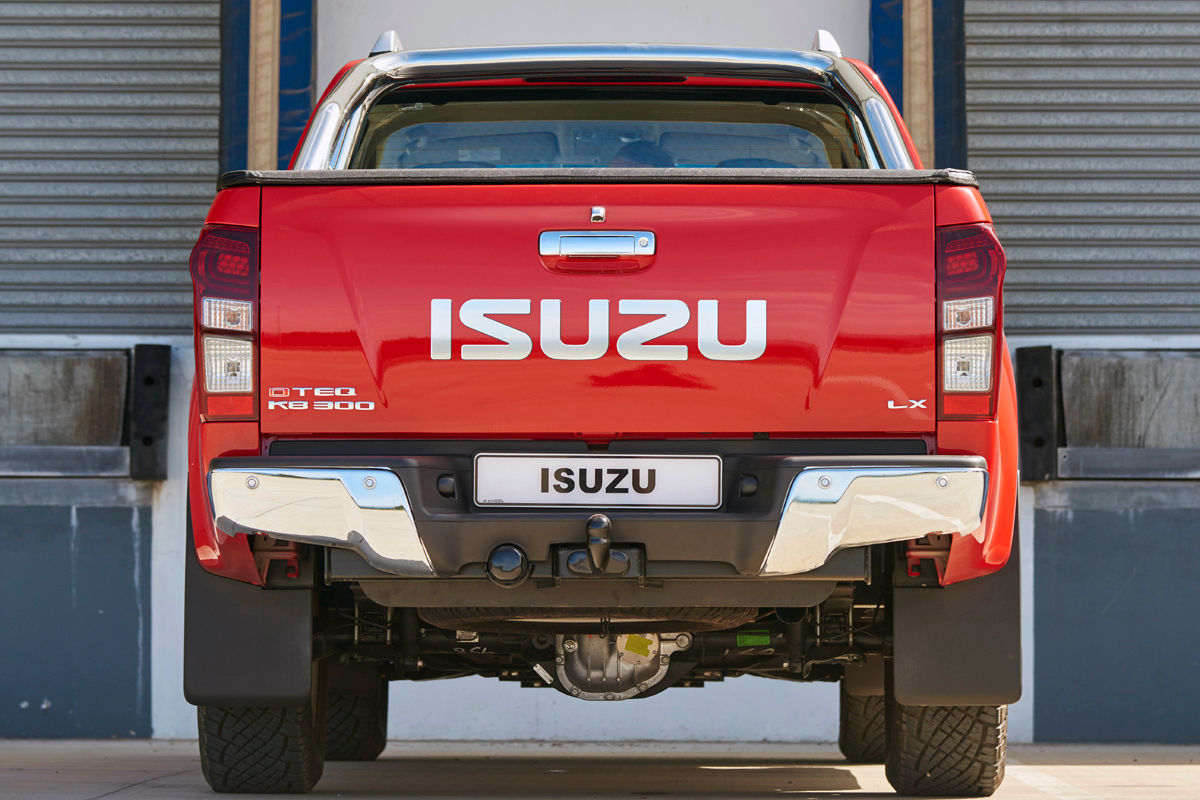
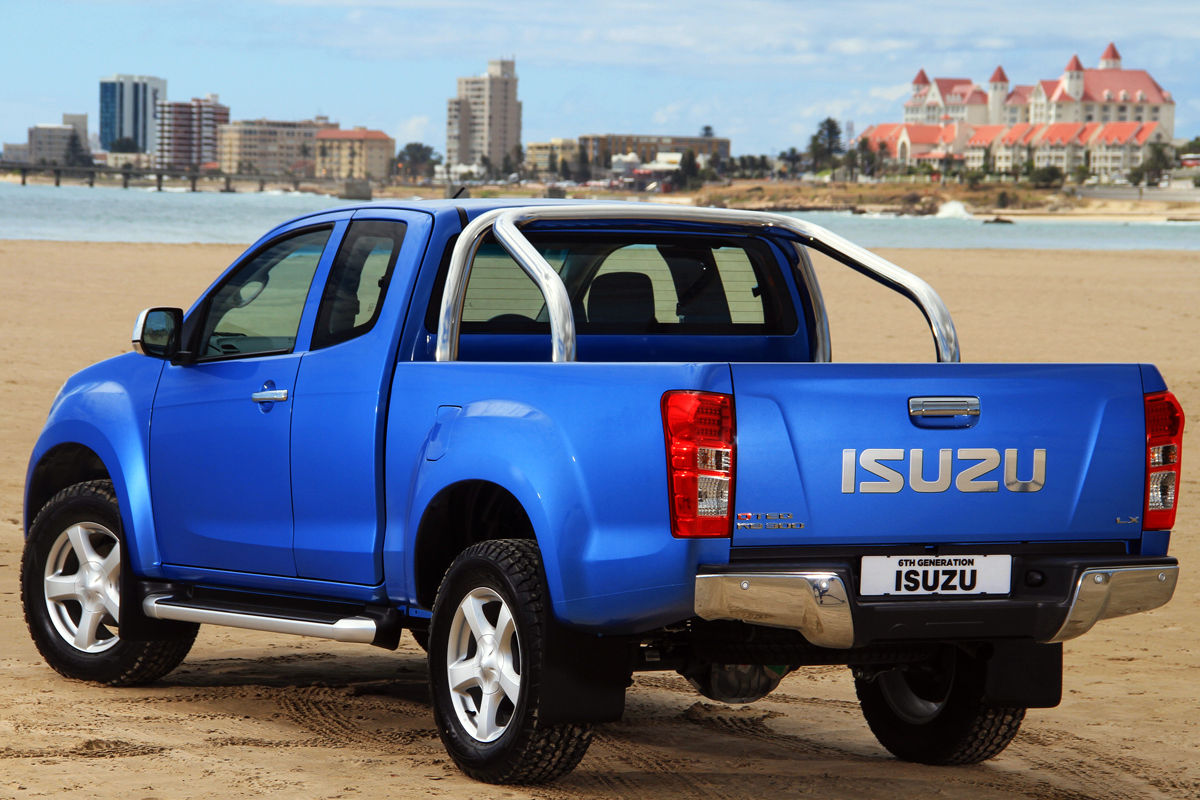
August 2014, meanwhile, saw the announcement of the first special-edition version of this KB, celebrating the fact more than 20 000 units had been sold locally in just short of 18 months. A mere 500 units of the Midnite Edition double cab were built, each employing the top-spec 3.0-litre D-TEQ engine and boasting darkened exterior components, including a black sportsbar with decals.
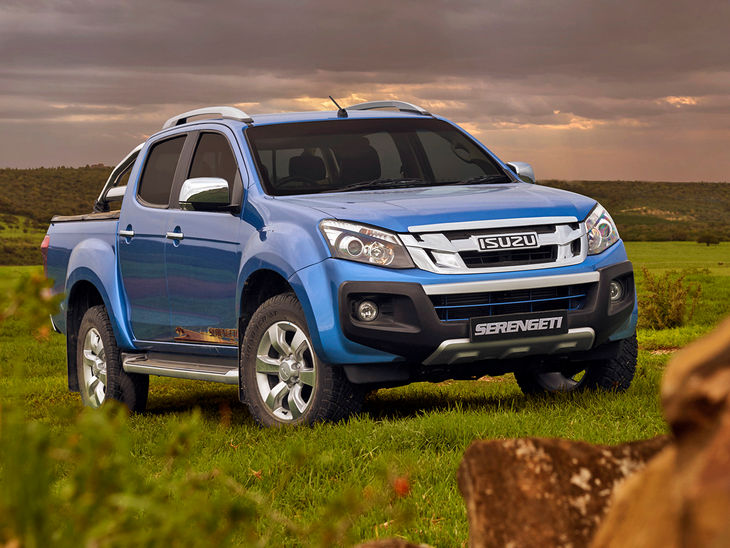
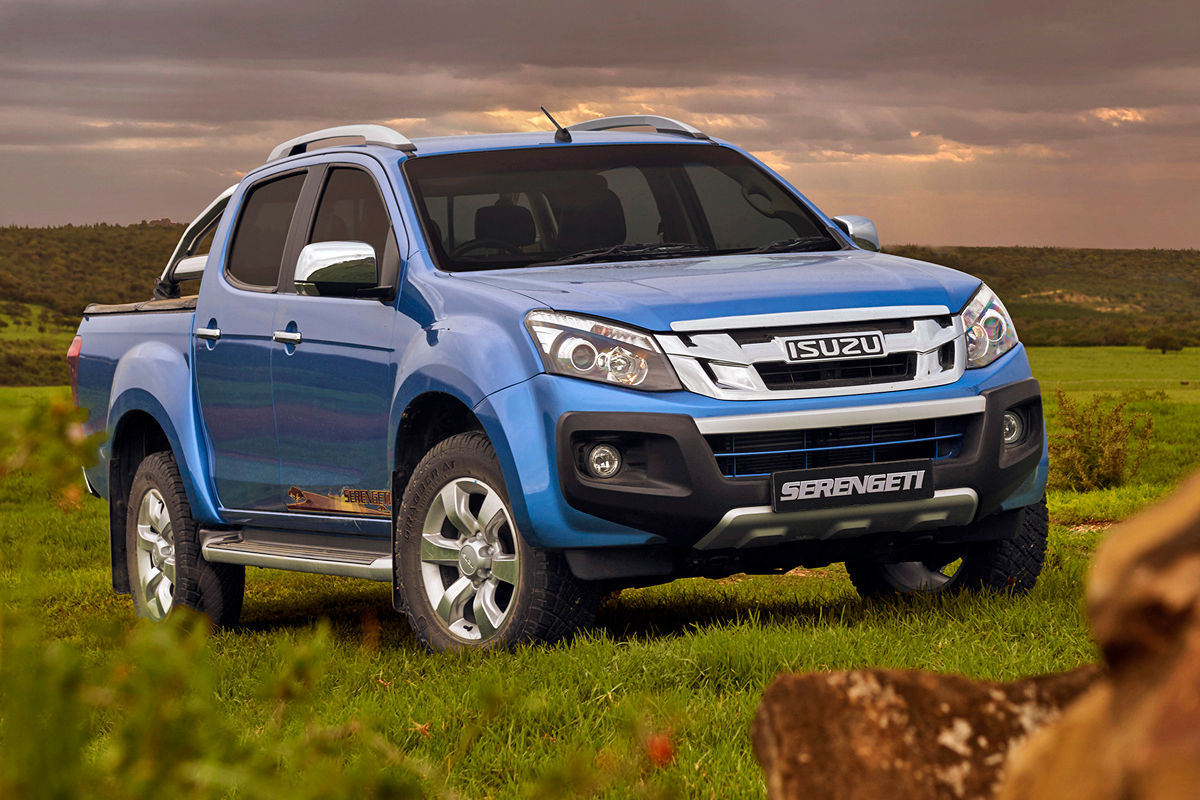
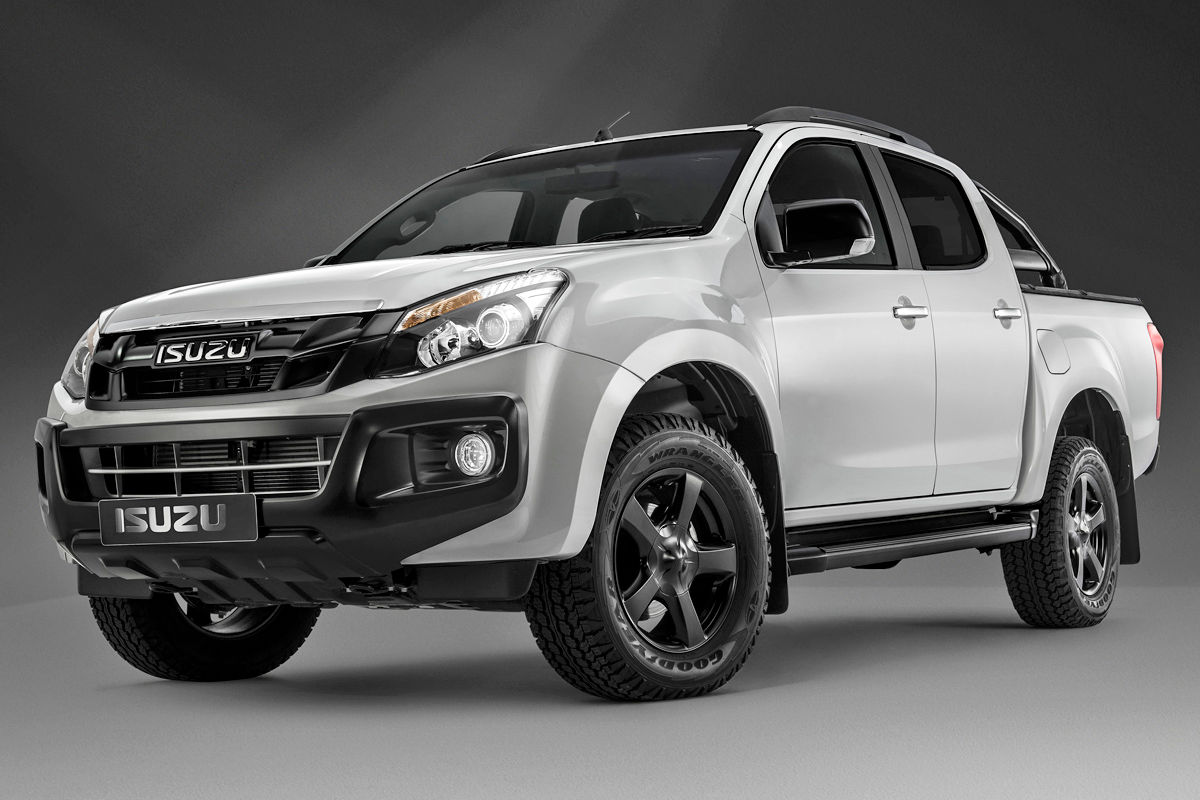
Note the Serengeti Special Edition’s silver-accented bumper guard, blacked-out B-pillar and chrome sportsbar.
The following month, Isuzu rolled out a few minor cosmetic and practicality updates, while also taking the opportunity to “streamline” the KB range to 18 derivatives. The Serengeti Special Edition followed in June 2015 (again based on the flagship KB 300 LX double cabs), before yet more running changes were introduced in September of that year. These included the addition of a 4×4 version of the self-shifting KB 300 LX double cab and the range-wide upgrade from the 85 kW/280 Nm 2.5-litre oil-burning engine to a version generating 100 kW and 320 Nm. In addition, all but the base single cabs now shipped with stability control.
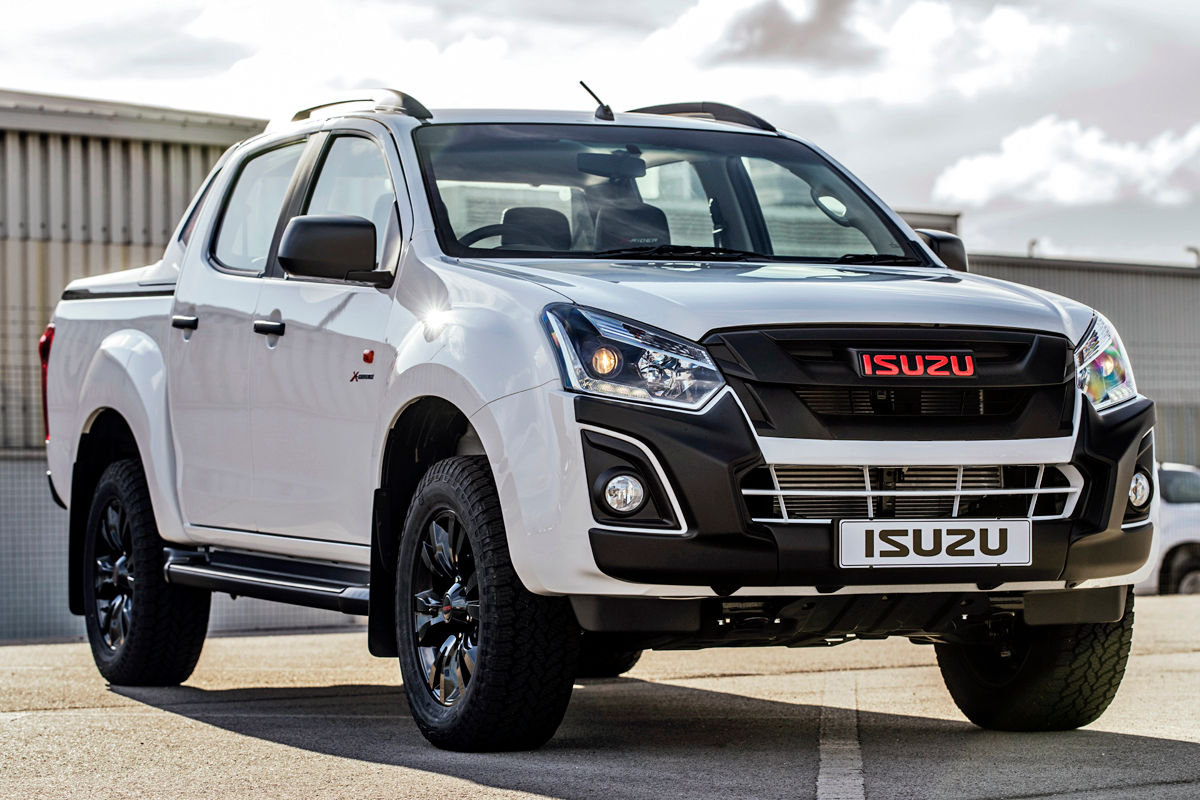
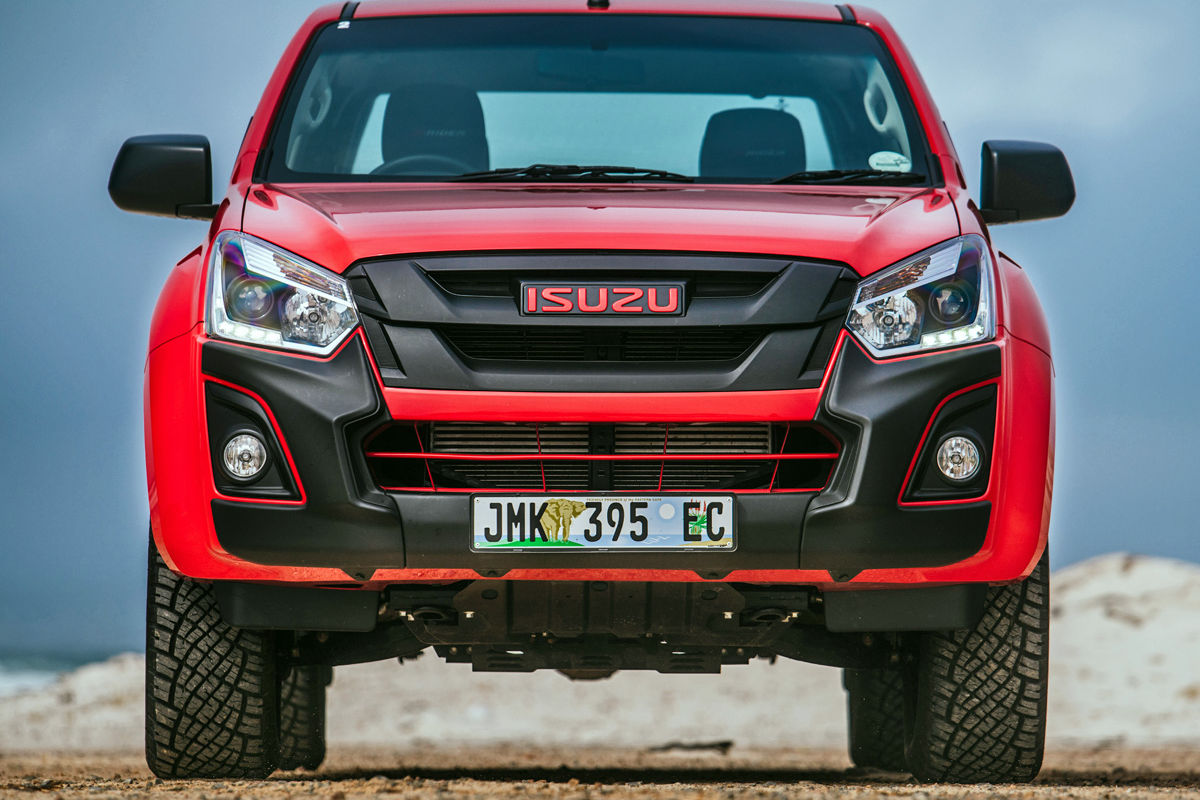
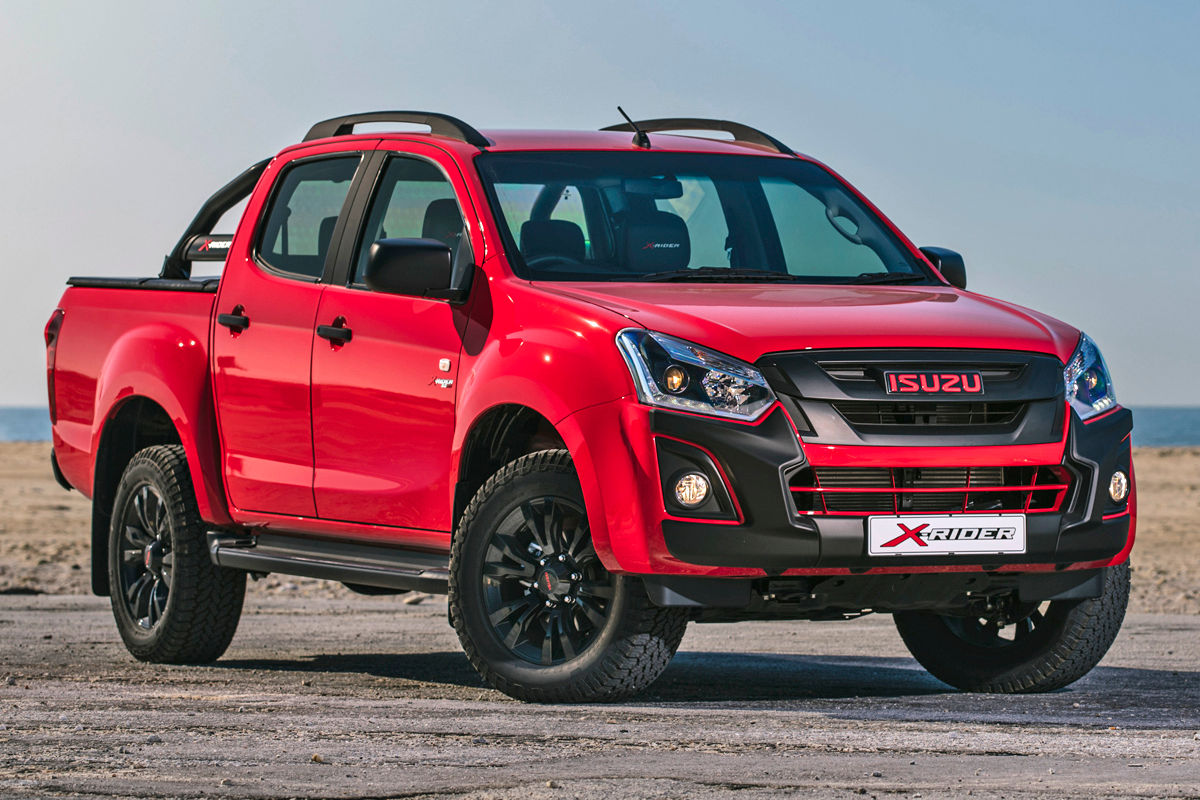
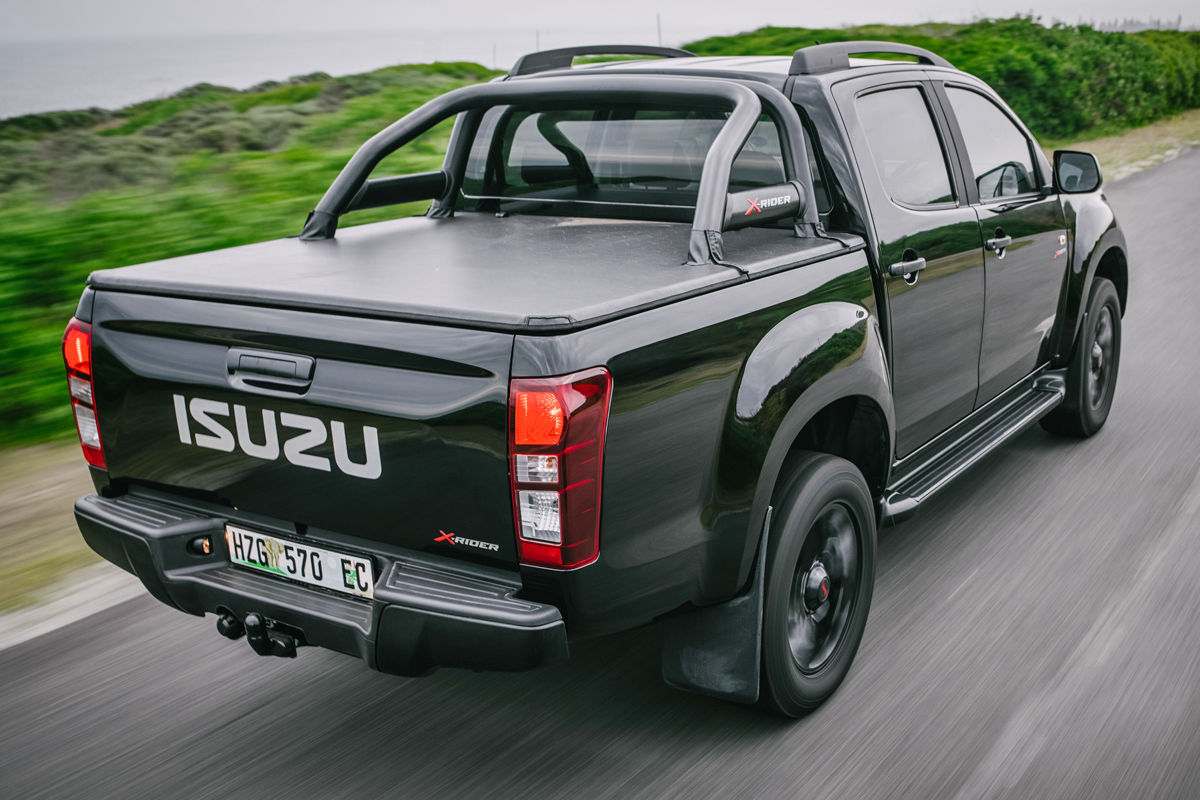
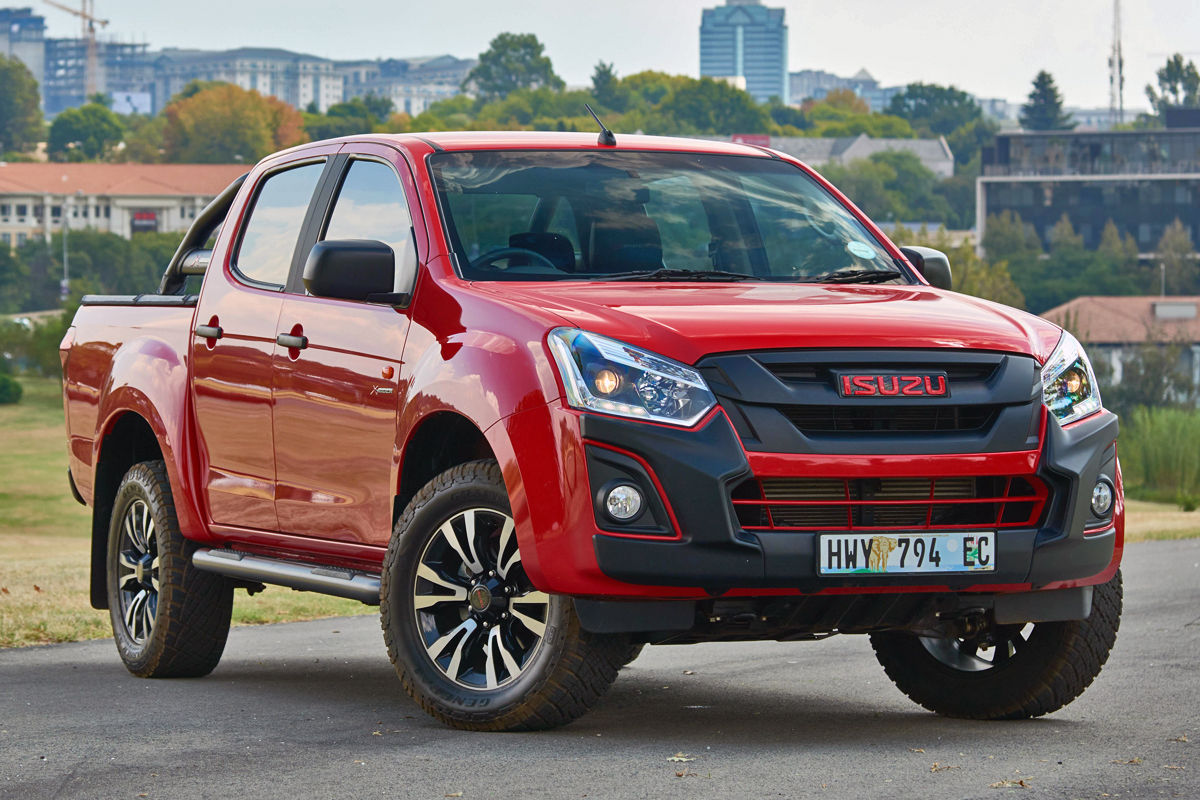
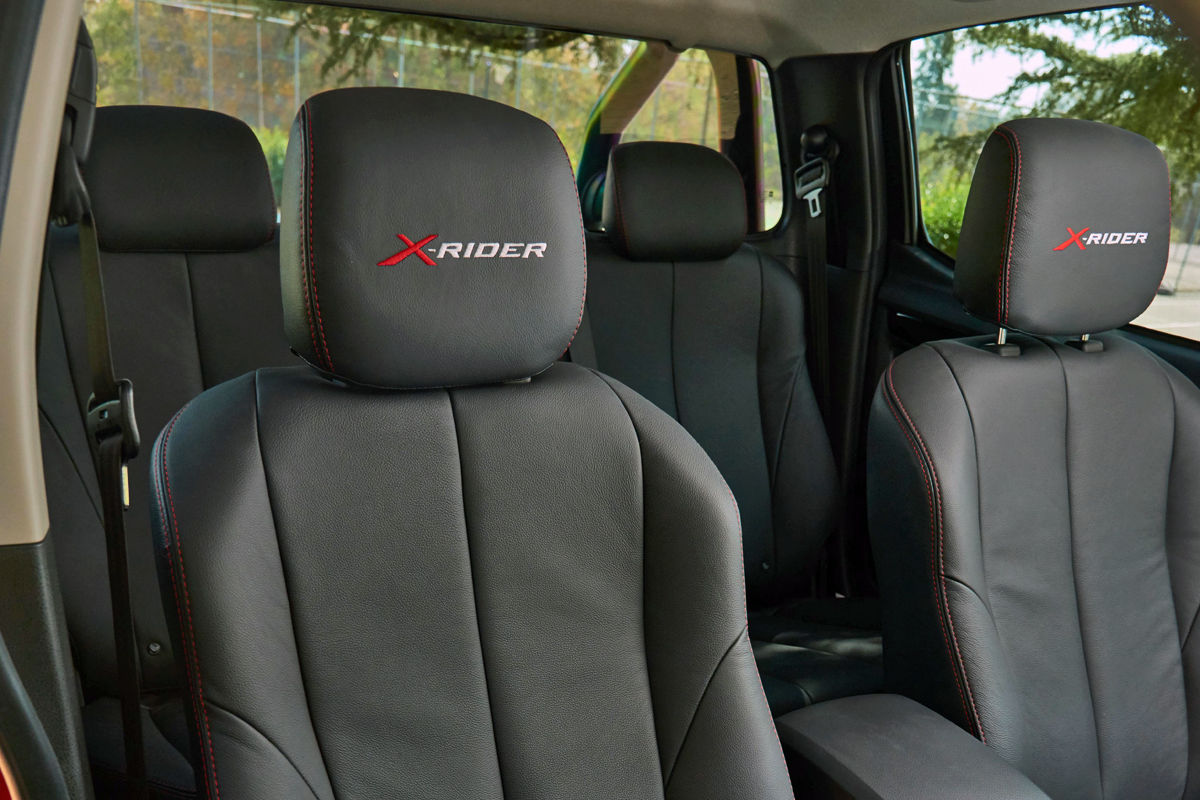
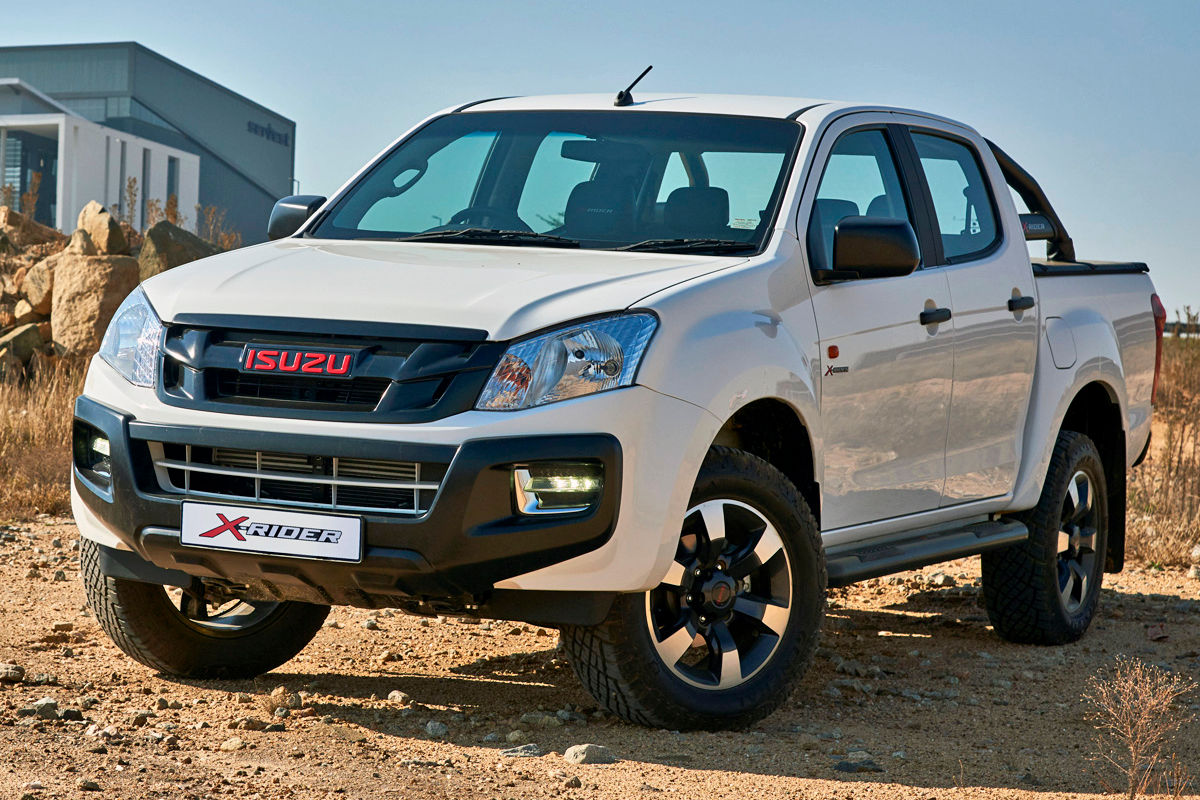
By July 2016, the X-Rider hit the market for the first time. Unlike previous special-edition models, the X-Rider was based on the KB 250 Hi-Rider 4×2 and available in both extended- and double-cab form. Isuzu described it as a “special value model” and around 700 units rolled off the assembly line when all was said and done.
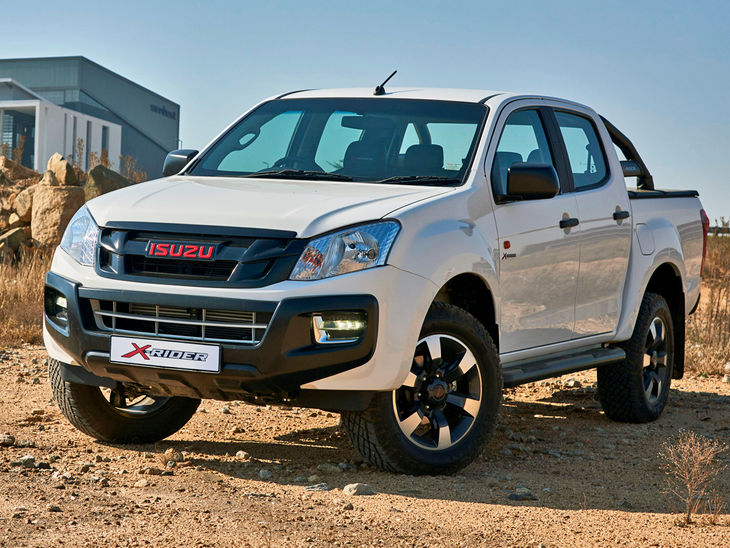
The X-Rider nameplate debuted in 2016 on the KB 250, billed as a “special value model”.
By April 2017, however, the dual-cab version of the X-Rider had become a permanent fixture in the line-up, but not before the KB gained a new face, fresh tailgate styling, a revised instrument cluster and suspension tweaks (in October 2016).
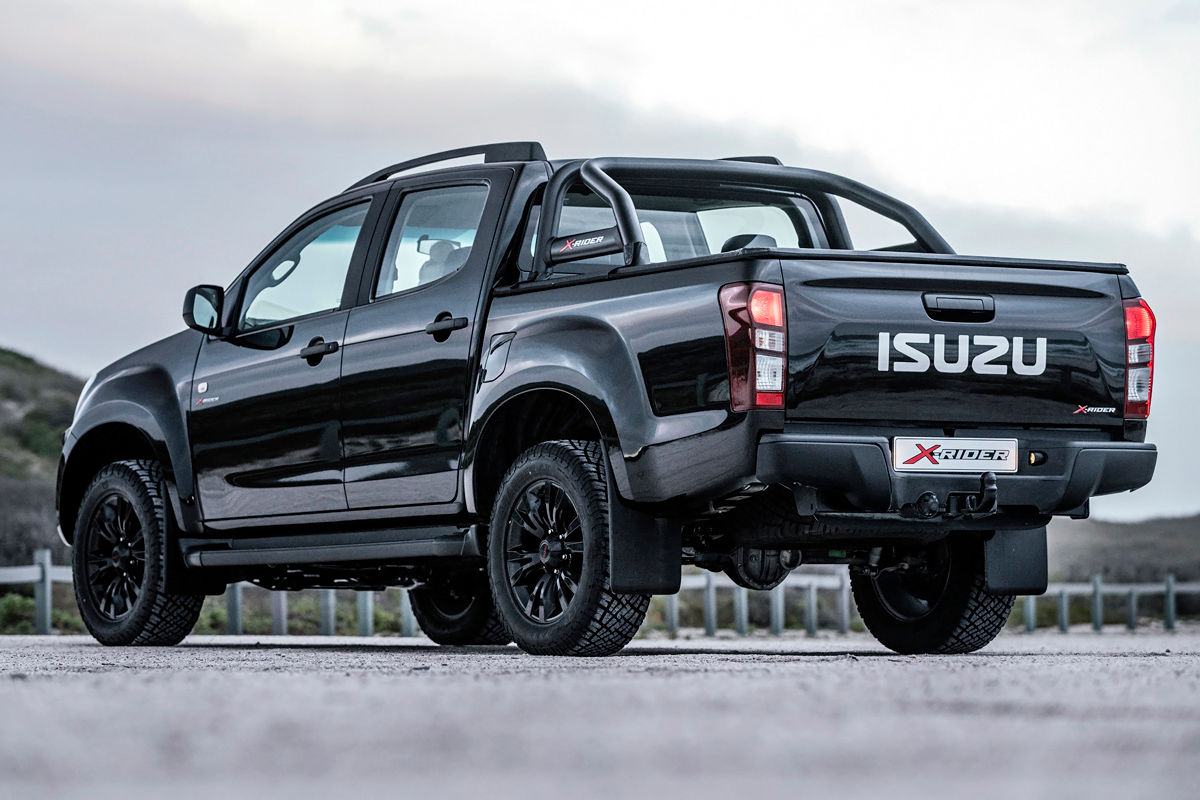
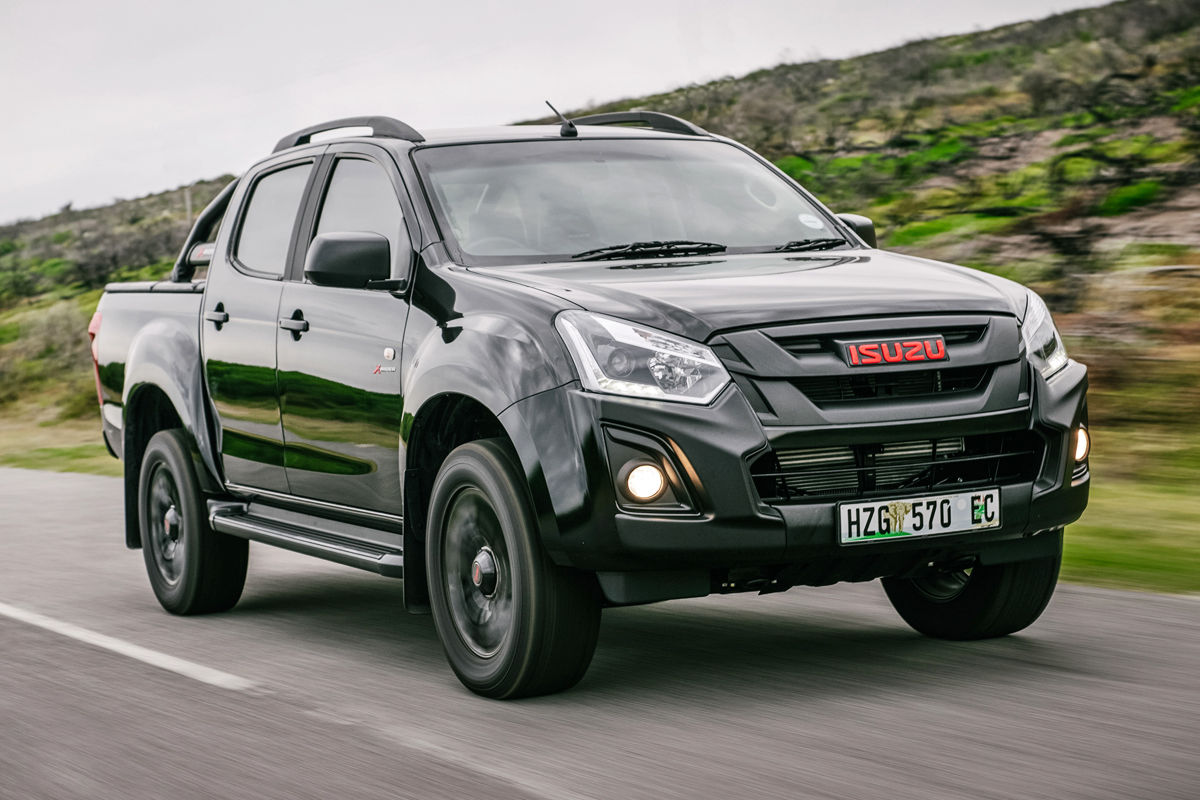
Things then went quiet for the KB for a while, with General Motors – the distributor of Isuzu in South Africa at the time – pulling out of the local market at the end of 2017. Isuzu’s global division jumped in to purchase the company’s light-commercial vehicle operations in Struandale and Isuzu Motors South Africa was officially born as a wholly owned subsidiary. By May 2018, it was back to business with the arrival of another special edition in the form of the KB X-Rider Black.
A facelift (and a name change!) for Isuzu’s bakkie in 2018
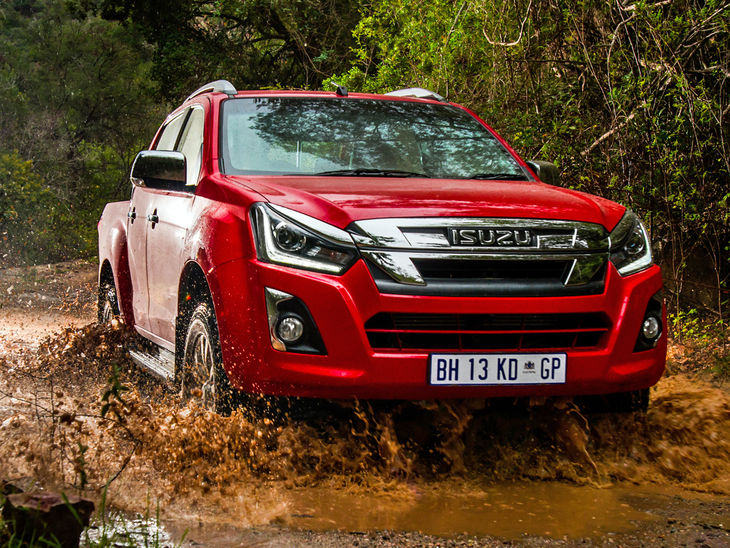
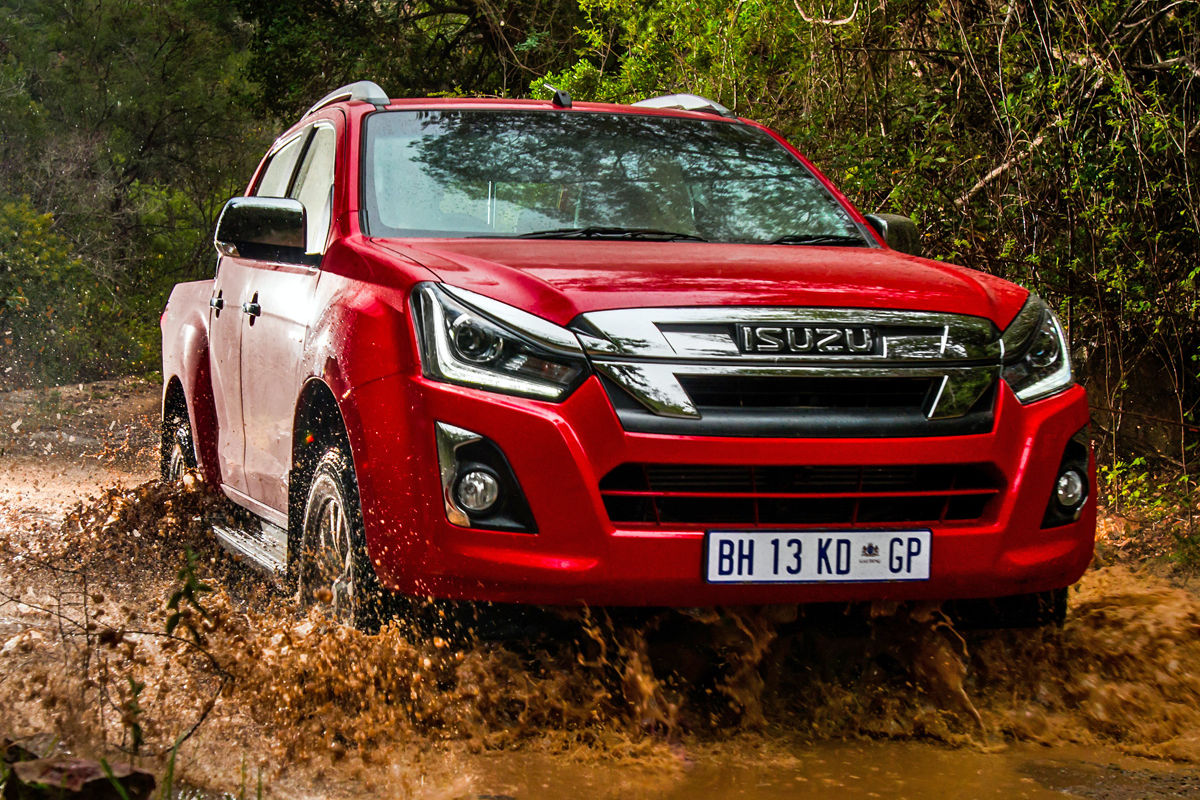
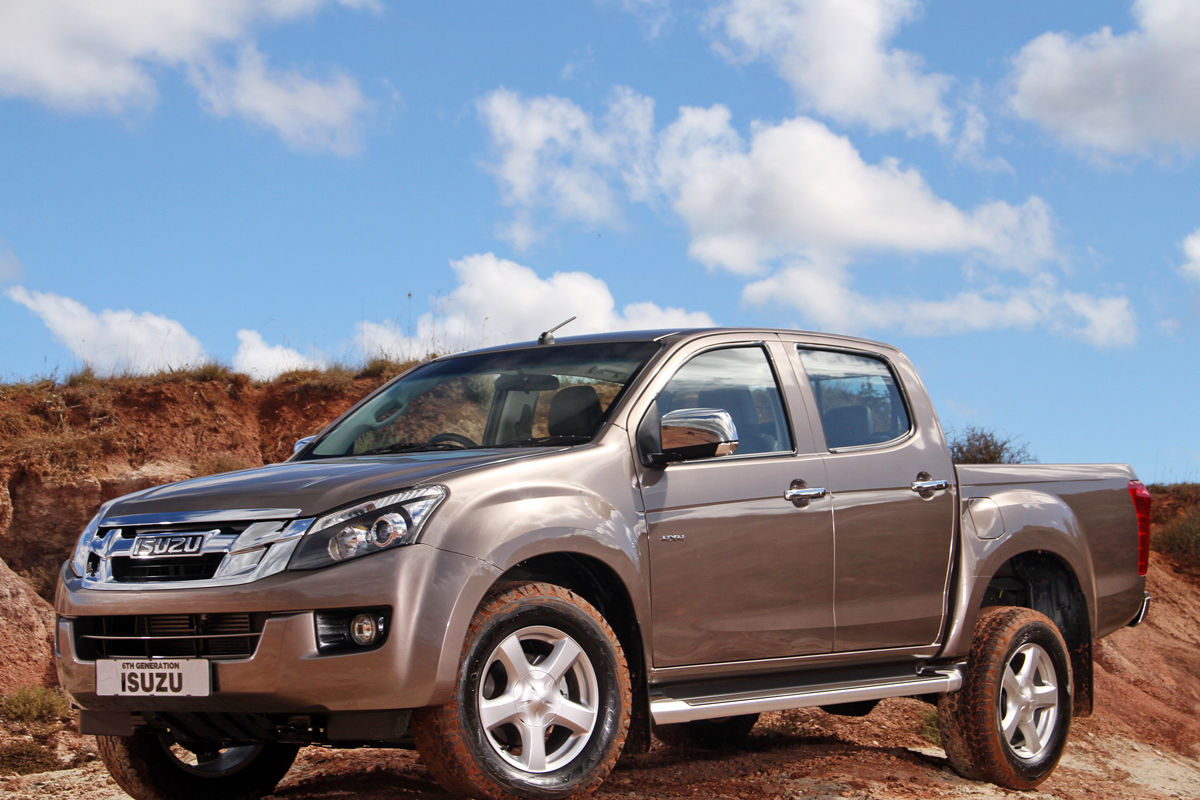
Isuzu Motors SA finally switched to the D-Max nameplate with the bakkie’s refresh in 2018.
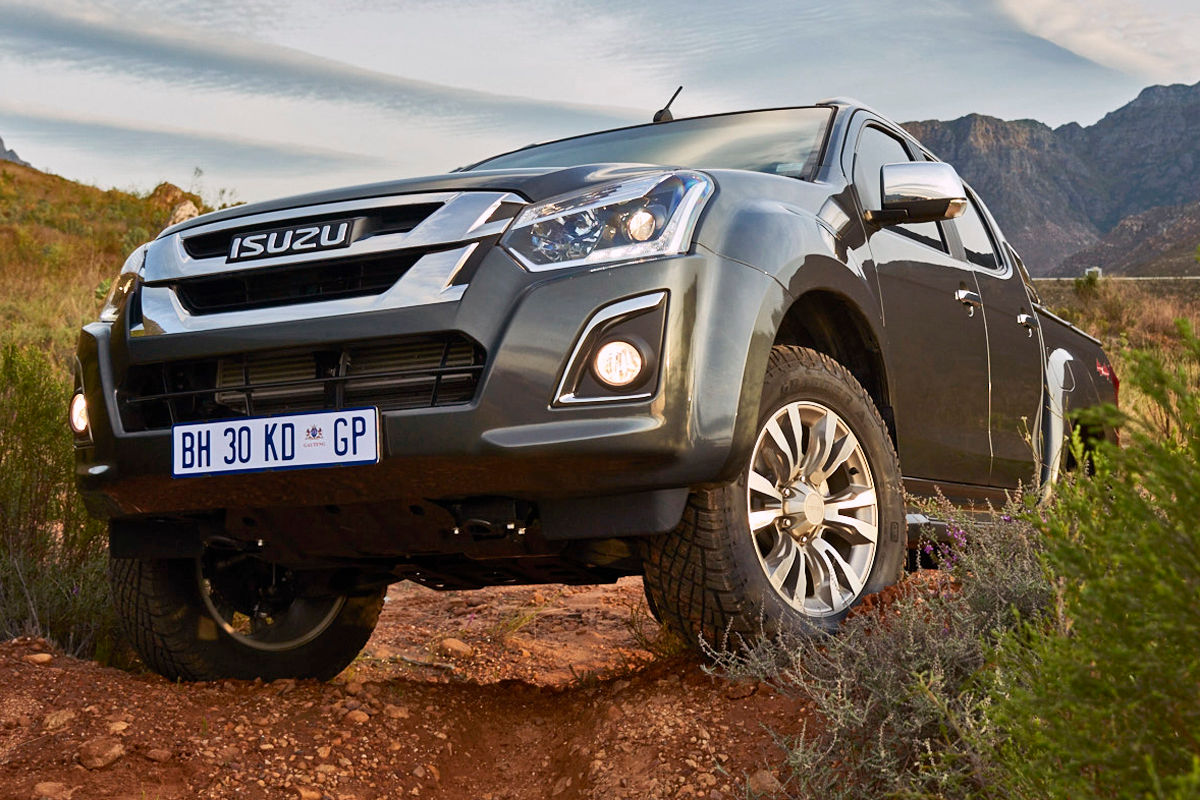
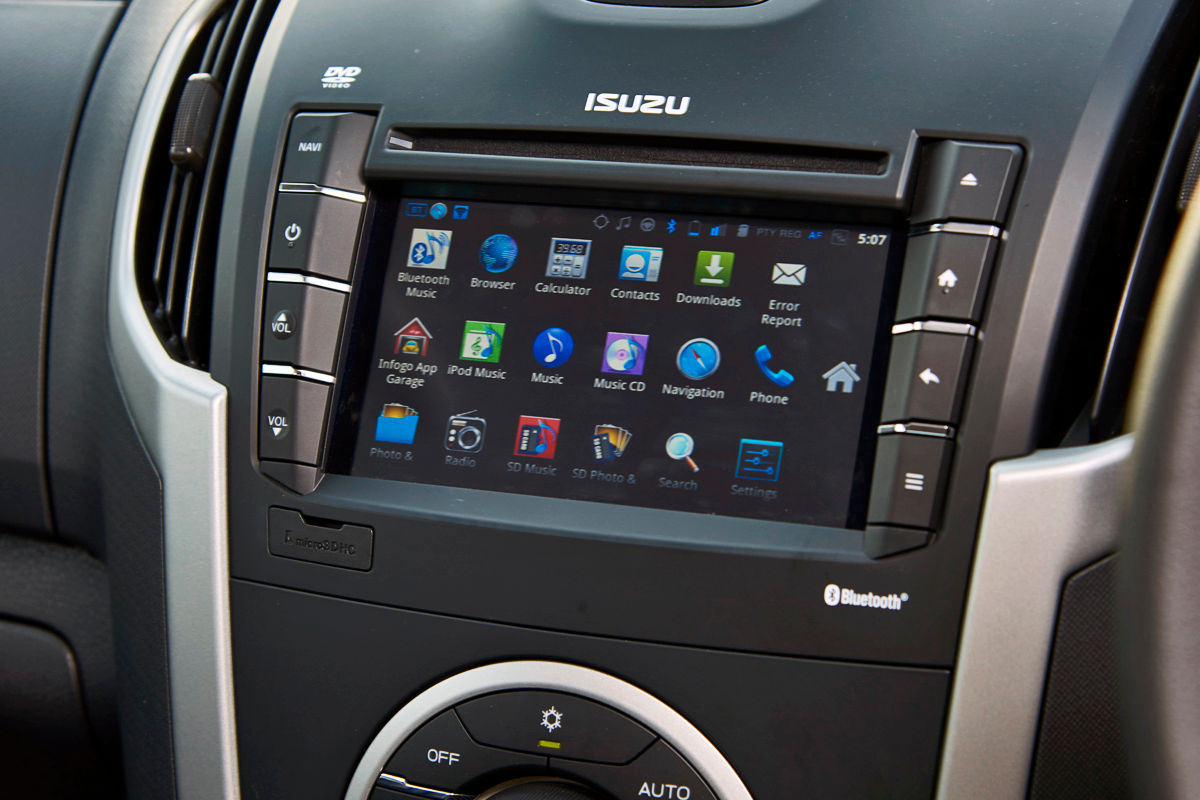
In October 2018, Isuzu launched the facelifted model in South Africa, also taking the opportunity to officially rename it the D-Max “in line with international markets”. For the range-topping 3.0-litre LX derivatives, the refresh included cosmetic updates such as a new chrome-effect grille, revised headlamps and upgraded cabin trim, as well as the transition from the old 6.5-inch touchscreen to an 8.0-inch item.
While all engines were unchanged, 3.0-litre LX variants dropped the old 5-speed manual and automatic transmissions in favour of fresh 6-speed versions. Safety upgrades for the top-spec models came in the form of a brake override system (restricting accelerator input if the brake pedal was applied simultaneously) and the addition of trailer sway control. At this point, the D-Max line-up ballooned to 30 derivatives.
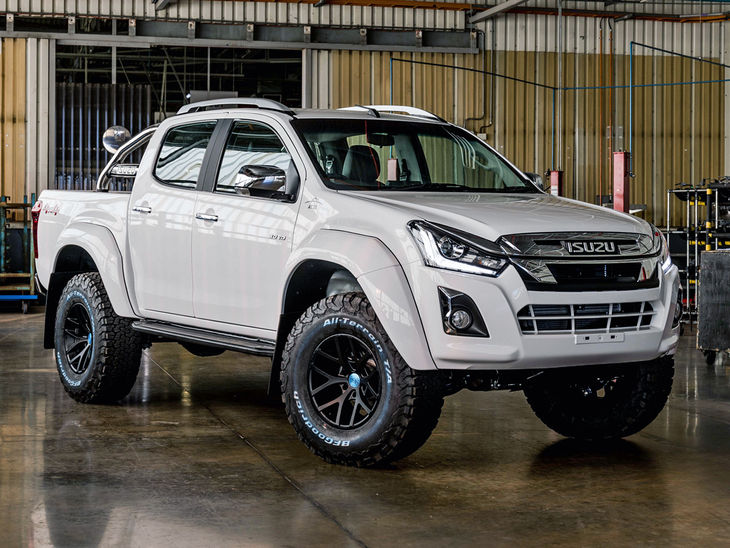
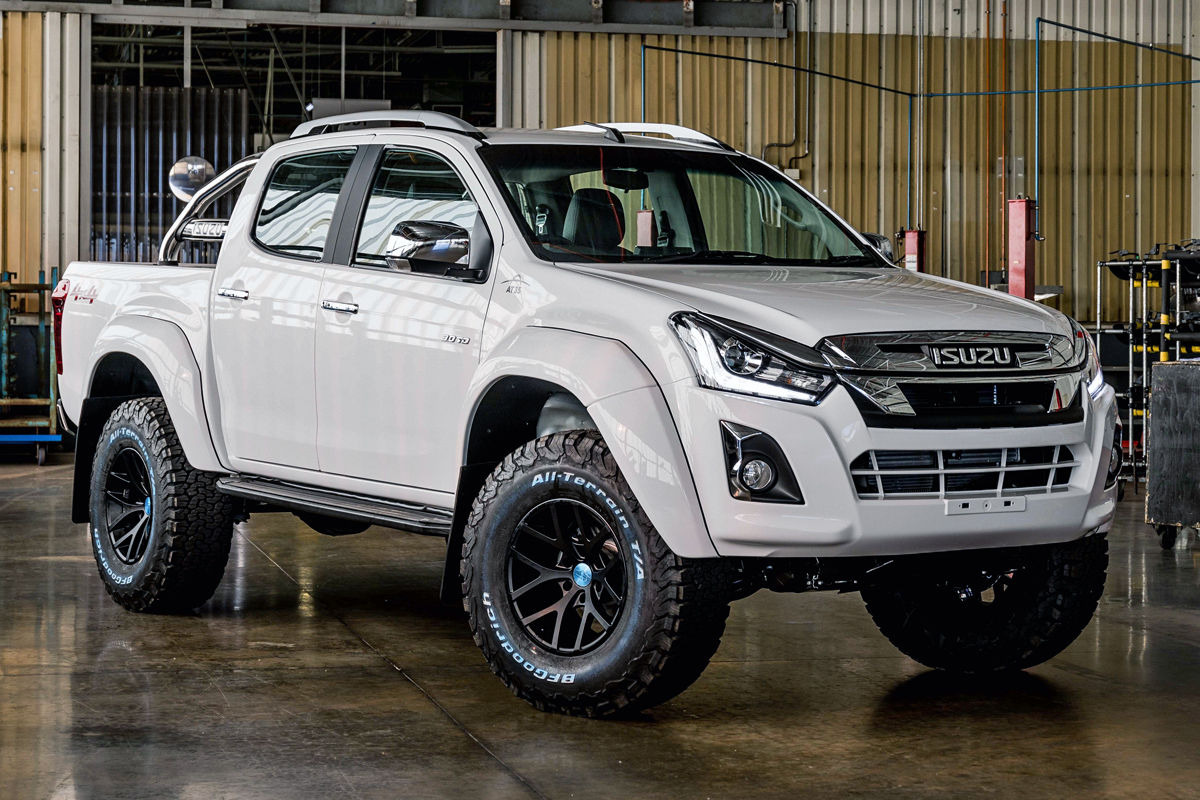
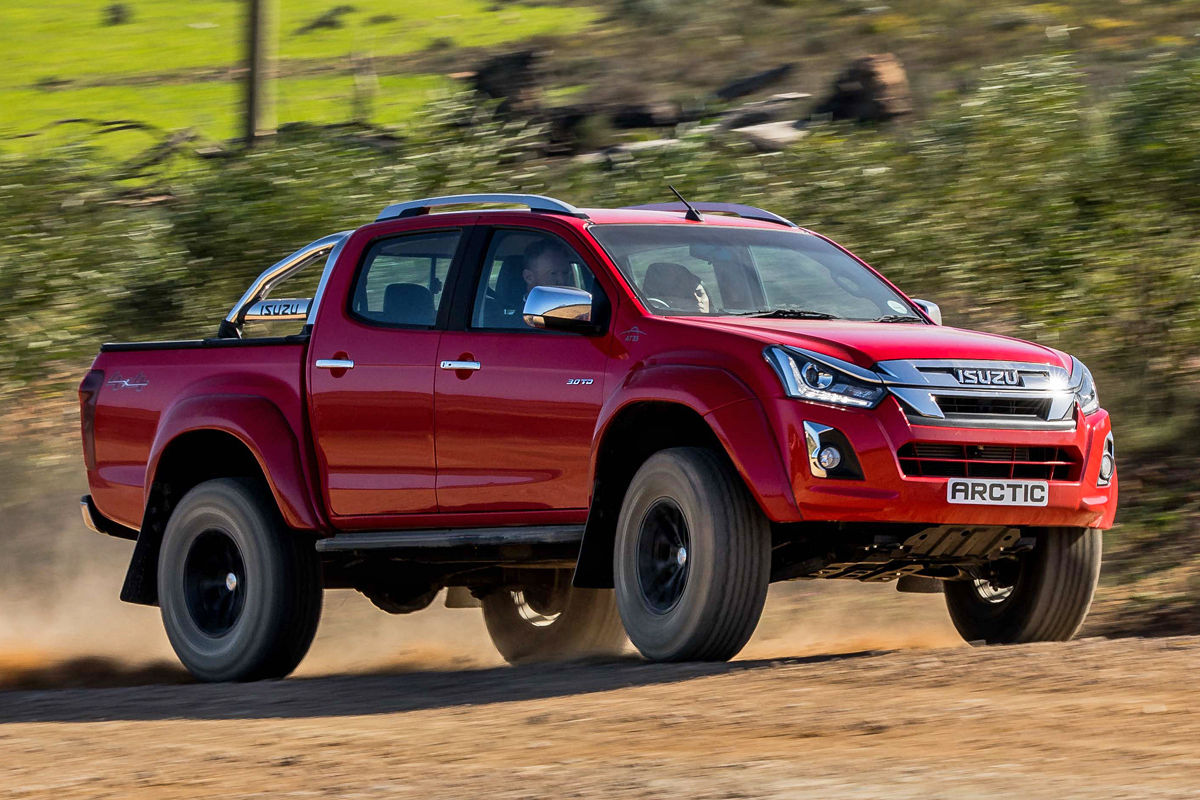
The D-Max AT35 (with its Fox suspension) conversion took place at Isuzu’s Struandale facility.
By May 2019, the high-riding D-Max AT35 (based on the double-cab version of the D-Max 300 4×4 LX auto) was added to the local range. Developed in “close collaboration” with Arctic Trucks but built in South Africa, the special model slotted in at the very summit of the line-up. A new version of the X-Rider Black, meanwhile, arrived later in 2019, before select high-output versions of the D-Max 250 finally gained the option of a 5-speed automatic gearbox in early 2020.
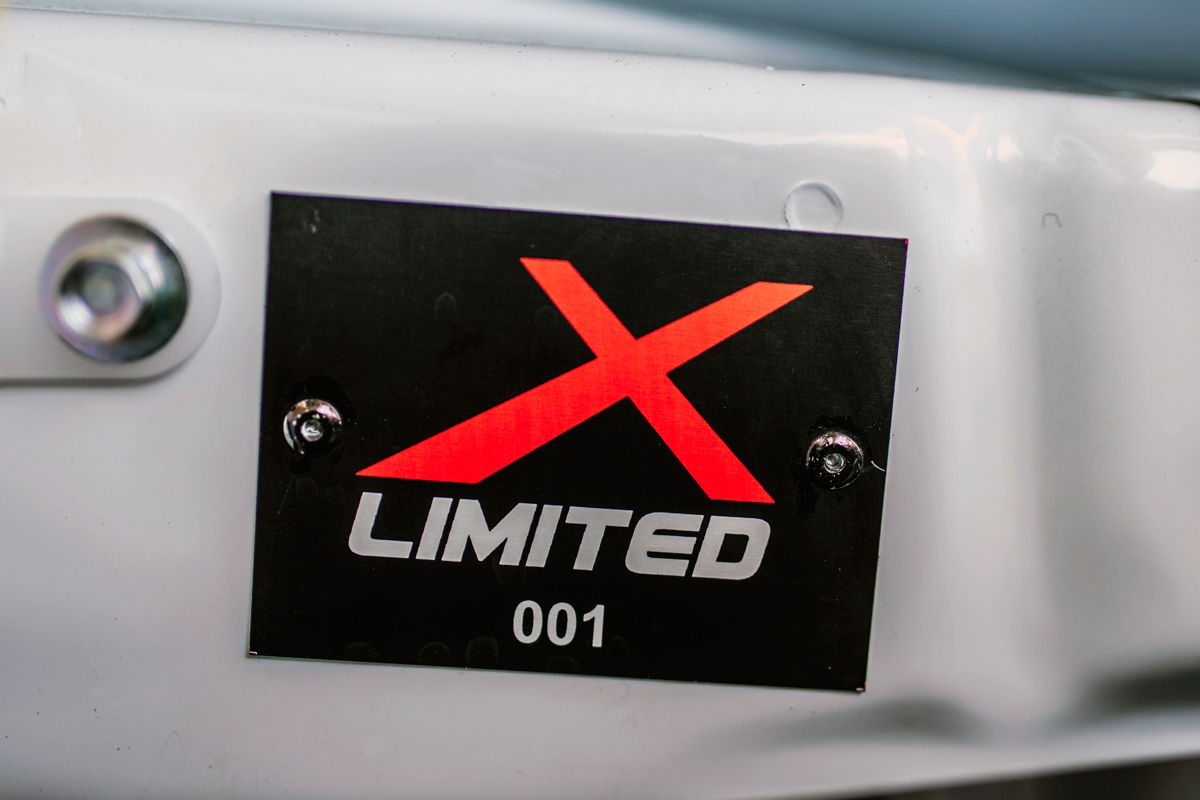
In August of that year, Isuzu extended the increasingly popular X-Rider nameplate to the 3.0-litre double-cab model (in self-shifting guise) for the first time, before finally rolling out minor cosmetic changes to the remainder of the range. Three more X-Rider Limited Edition derivatives followed at the end of 2021, effectively seeing off the RT-generation model.
Product strengths
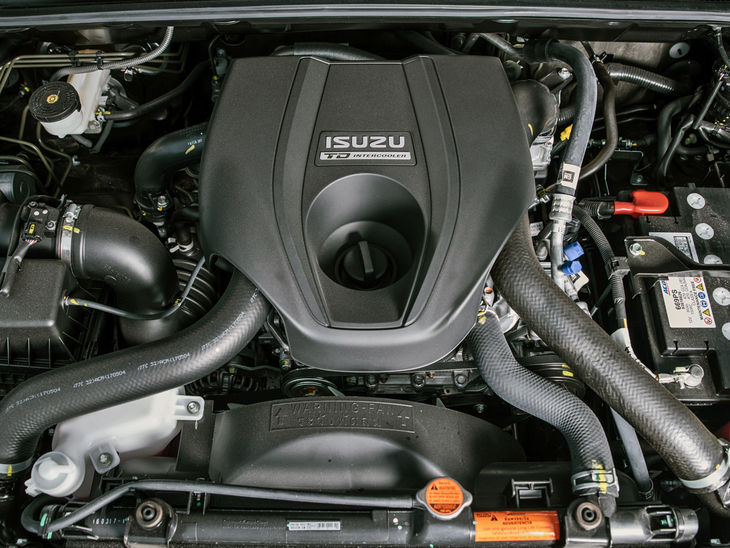
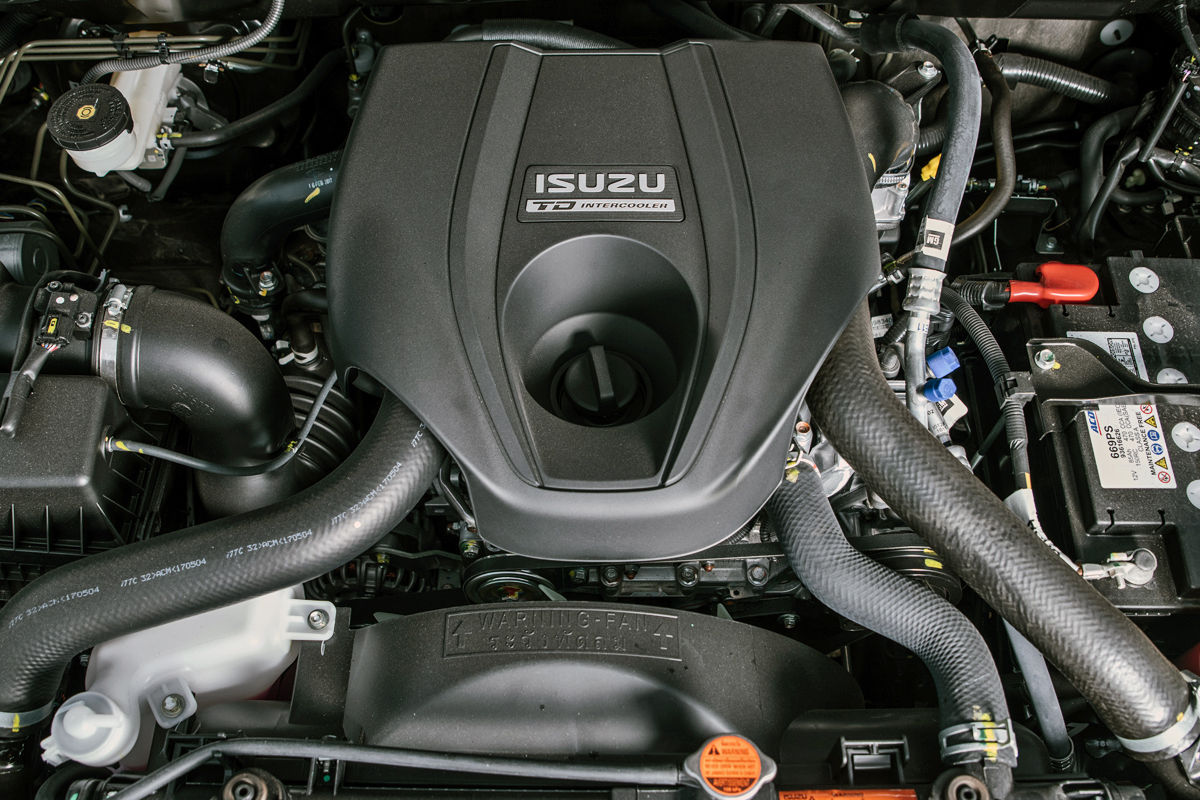
Isuzu engines (such as this 2.5-litre D-TEQ unit) tend to be under-stressed, which boosts reliability.
While the RT-generation KB (and the D-Max that followed with the facelift) certainly wasn’t class-leading in areas such as cabin finish, infotainment technology or rolling refinement, very few people would argue any bakkie from that era was more durable. Unsurprisingly, then, that’s the basis for most of this vehicle’s strengths.
Renowned durability: As a bakkie (and truck) specialist, Isuzu was able to dedicate a hefty chunk of its resources to extensive durability testing of the KB. In fact, the company said its rigorous test and development programme for this generation was equivalent to four million kilometres of driving in a wide range of conditions, with a “significant portion” conducted in Southern Africa. In the years since, the KB has earned a reputation for being as tough as nails.
Proven engine reliability: At launch in 2013, the only technically “new” engine in the KB range was the 2.4-litre 16-valve petrol mill (though it replaced a similar 8-valve unit). The low- and high-output versions of the 2.5 turbodiesel were carried over virtually unchanged from the previous generation, while Isuzu’s famous 4JJ1-TC 3.0-litre turbodiesel engine was massaged only slightly to free up a little more oomph. In short, the engine range was entirely proven.
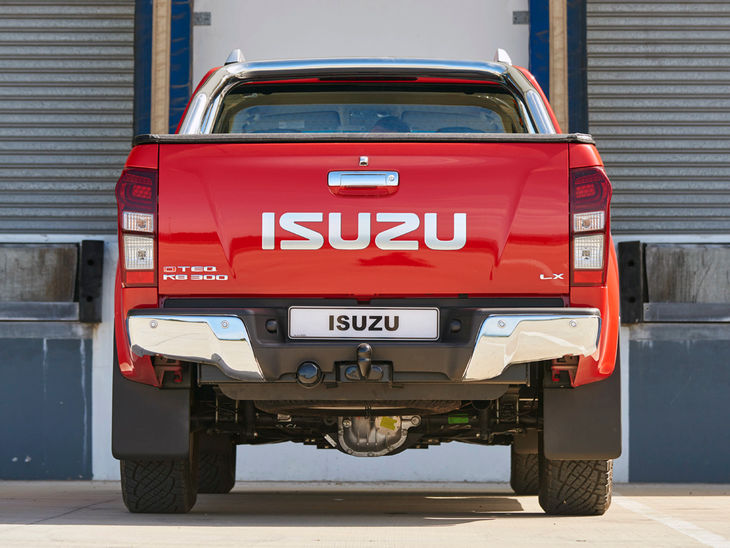
The 4JJ1-TC engine used in the KB 300 has a long history of durability.
In addition, all were fairly low stressed engines (especially the 58 kW 2.5-litre unit), operating at peak power and torque outputs far below their respective potentials. Provided such engines are properly maintained, that means they’re far less likely to break. There were also some small changes made to aid convenience; on the D-TEQ engines, for instance, the oil filter was relocated to the top of the block to make servicing simpler.
Lengthy warranty: Throughout this generation’s lifecycle, a 5-year/120 000 km warranty – generous compared with those of most rival bakkies at the time – was included in every derivative’s purchase price, along with a 5-year/unlimited kilometre anti-corrosion warranty and a 5-year/90 000 km service plan (with intervals of 15 000 km). So, if you’re shopping in the “nearly new” category, you’ll have the benefit of potentially lengthy aftersales cover.
We should also mention the dealer network here. Before General Motors pulled out of the country in 2017, Isuzu vehicles were serviced at the Detroit-based firm’s local dealers. Once GM had left, Isuzu Motors SA took over many of those sites, with the number of dealers in Southern Africa now standing at a healthy 100.
Product weaknesses
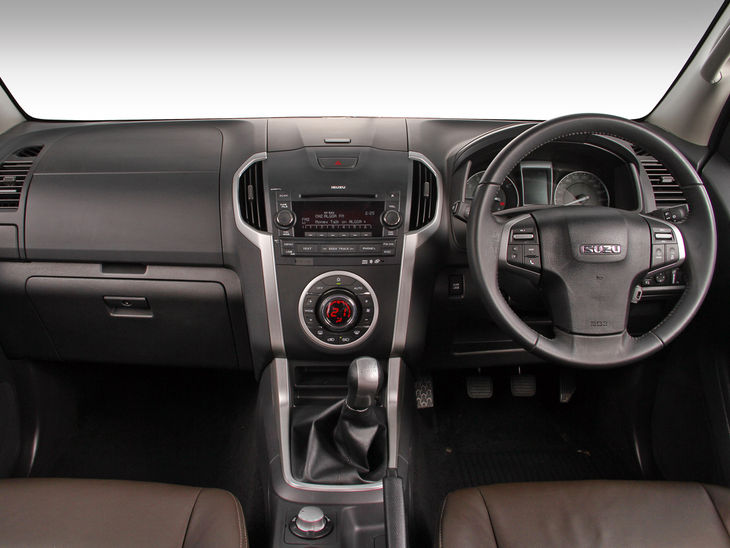
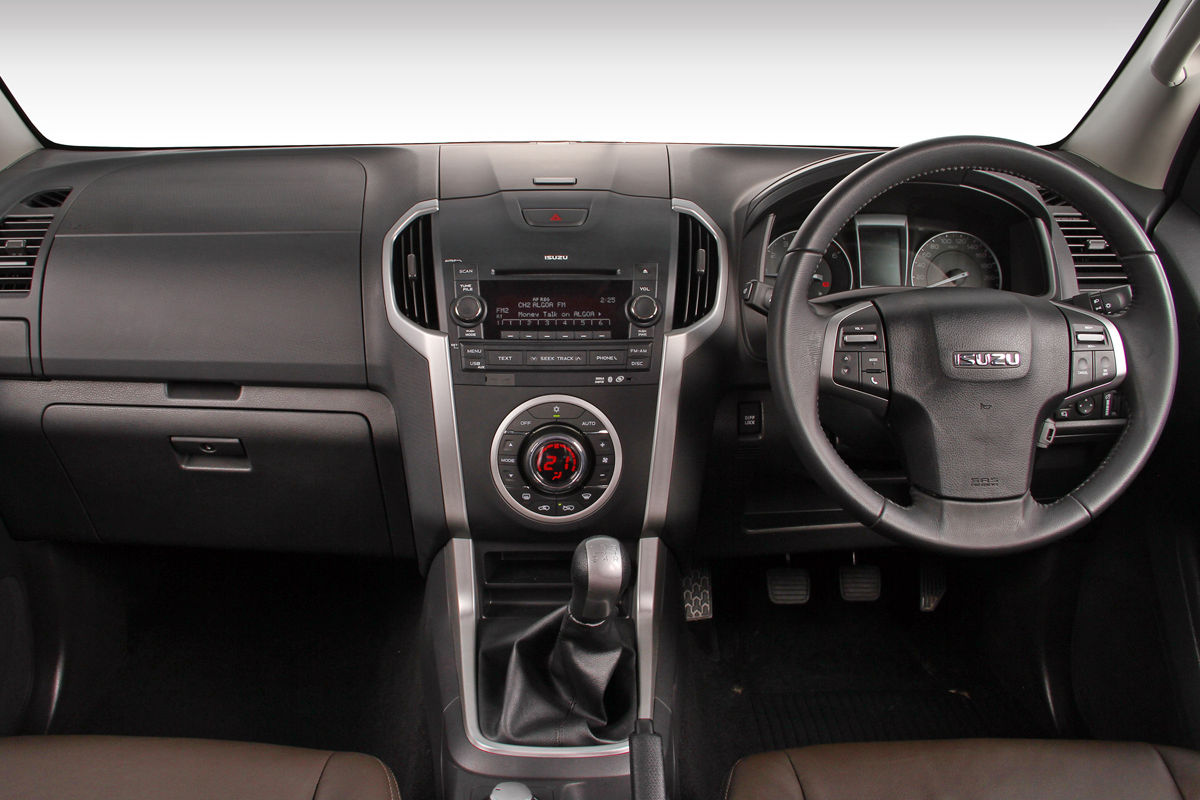
Here’s what the flagship KB 300 LX’s cabin looked like in 2013. Not as premium as those of its major rivals.
Considering just how robust the KB and D-Max have proven to be over the years, we struggled to uncover any major reliability weaknesses with this generation, despite extensive digging (the problem of cracked inner guard body panels, for instance, is well known in Australia but appears to be peculiar to vehicles built by the Thailand factory). That said, our investigations did unearth a few potential niggles we believe are worth looking out for.
Weak CV joints: We’ve heard of a few complaints of weak constant velocity (CV) joints, though this is admittedly an accusation that can be levelled at many off-roading vehicles with independent front suspension arrangements. Even if the bakkie you’re considering has seemingly never gone off tarmac, make sure to turn the steering to full lock (both left and right) during your test drive and listen out for the distinctive clicking sound that tends to accompany worn CV joints. A quick inspection of the rubber CV boots wouldn’t hurt, either.
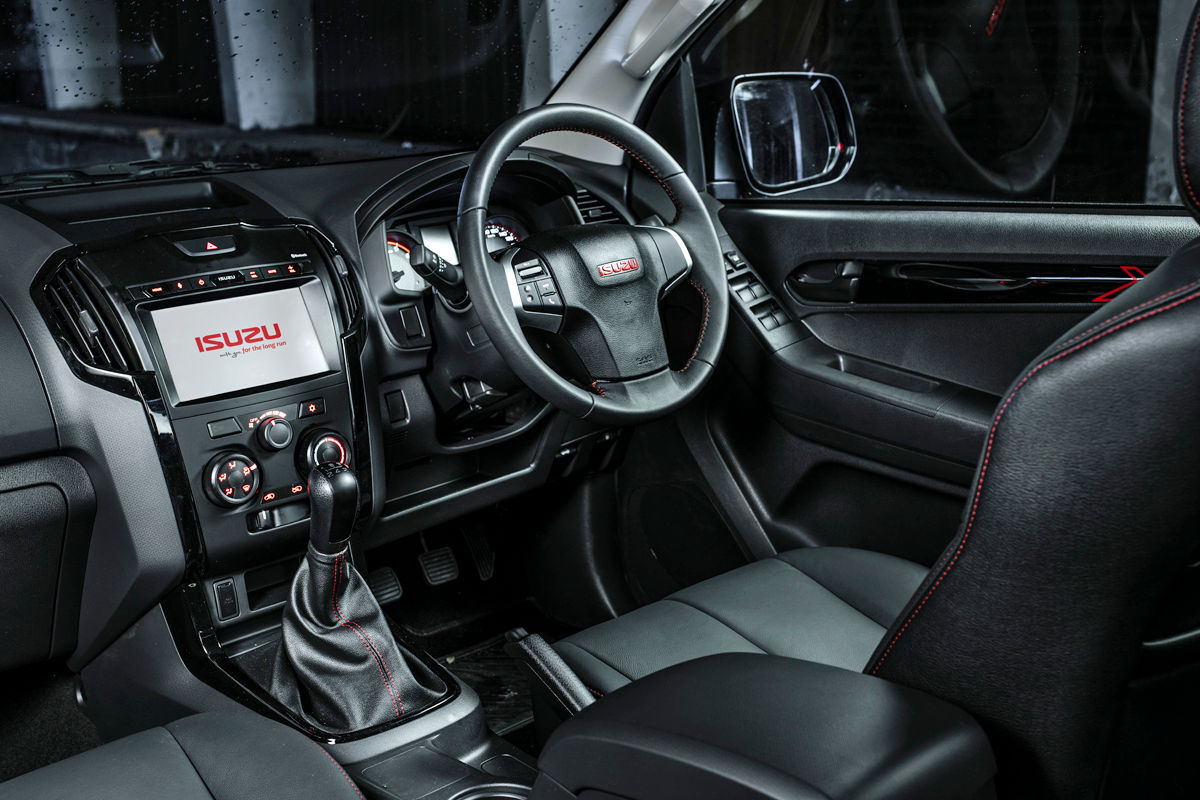
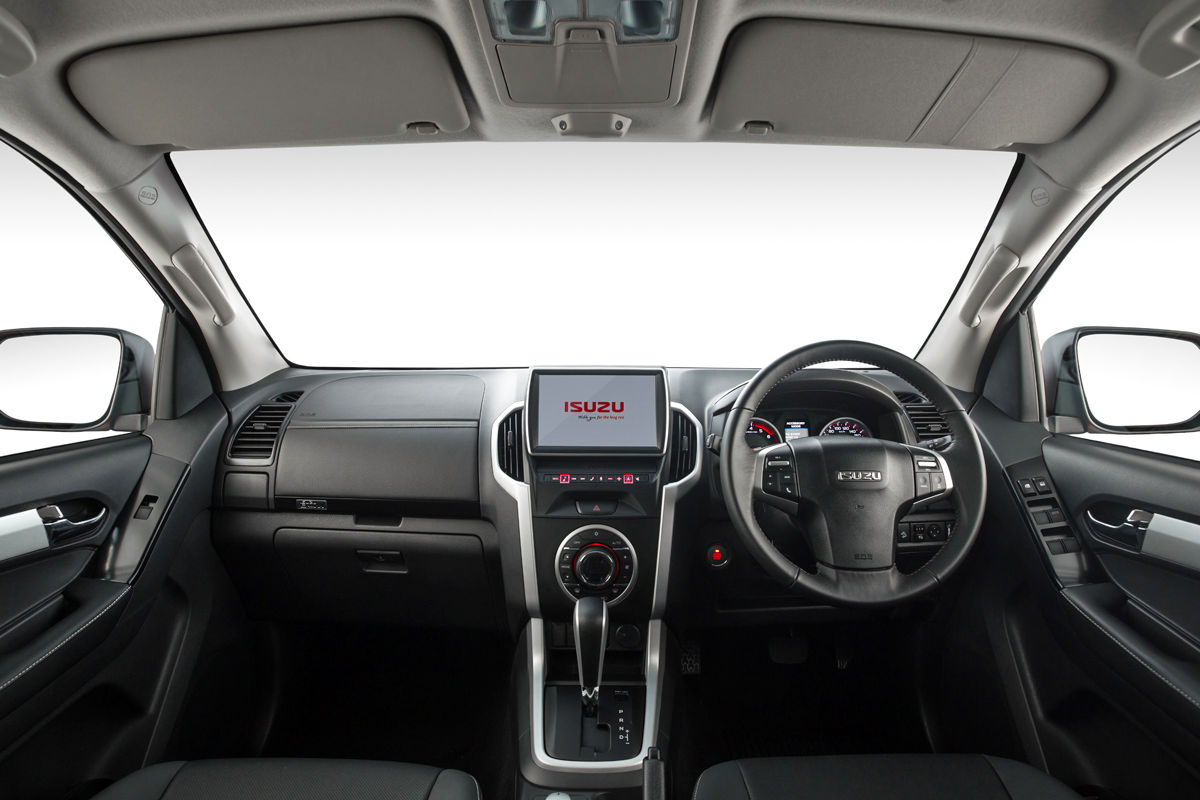
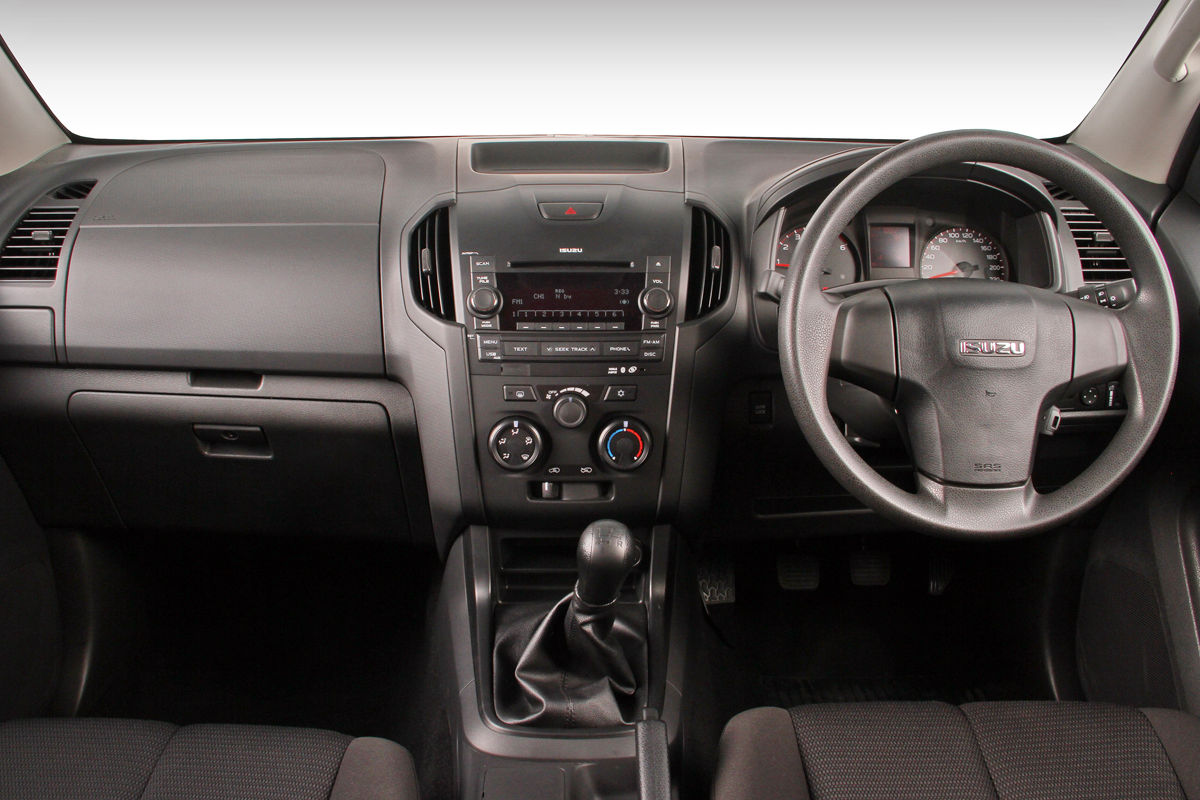
Fairly low-rent cabin: Though this generation of KB and D-Max offers generous interior space, the finishes in the cabin are quite utilitarian (or, to put it more charitably, “functional”) compared with those of more polished competitors. For example, there’s precious little in terms of soft-touch surfaces, while the steering column frustratingly lacks reach adjustment. Whether you regard such foibles as weaknesses depends entirely on your requirements, though here we’re writing mostly for leisure-bakkie buyers, and they would generally prefer more in the way of creature comforts.
What to pay?
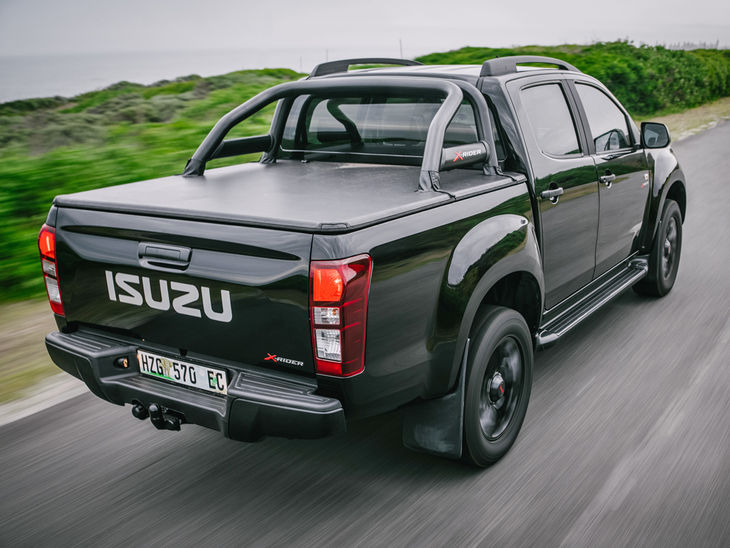
The double-cab body style accounted for just over half of all listings at the time of writing.
As we always advise those considering a vehicle that is in healthy supply on the second-hand market, it’s worth simply walking away from a deal should there be even the slightest concern. Since there are plenty of options out there, you can afford to be picky, after all.
When viewing a potential buy, make sure you inspect the bakkie’s undercarriage closely for any damage sustained during off-roading activities. It’s also crucial to always request evidence the bakkie was diligently maintained.
Of the used Isuzu bakkie stock (2013-2021) listed on Cars.co.za at the time of writing, the split between the earlier KB models and the later D-Max versions was close to even. The double-cab body style, meanwhile, accounted for 55% of all listings, while just short of 99% were diesel-powered. Interestingly, 4×4 models were in relatively short supply, with 86% featuring a rear-wheel-drive configuration, while just 19% used an automatic transmission.
- Below R200 000: Predictably, shopping at this sort of price level means you’d be largely restricted to single- and extended-cab KB models. Many of the clearly hardworking examples we found here had in excess of 300 000 km on the clock (with one close to 500 000 km!), which is testament to the KB’s durability, if nothing else.
- From R200 000 to R350 000: We found the majority (just over 54%) of used stock nestling between these price brackets. There was something for most tastes here, ranging from almost-new D-Max single cabs to older KB 250 X-Rider and early model-year KB 300 double cabs. Mileage varied greatly, though considering how under-stressed these engines were, there’d be nothing wrong with considering a vehicle with a reading north of 150 000 km (at the right price, that is) should a reliable service history be presented.
- From R350 000 to R600 000: Unsurprisingly, most Isuzu bakkies listed between these bookends wore a D-Max rather than KB badge, with those at the upper end of the pricing range taking the form of the popular D-Max 250 X-Rider and the high-spec D-Max 300 LX. If you’re in the market for a leisure bakkie, this is where you’d likely be shopping as the majority of auto-equipped double cabs were found here.
- R600 000 and up: There were very limited options above the R600 000 mark, with most of the few examples priced here being top-spec D-Max 300 LX models with self-shifting transmissions. Interestingly, there was just a single example of the AT35, priced at a lofty R850 000…
Pick of the range?
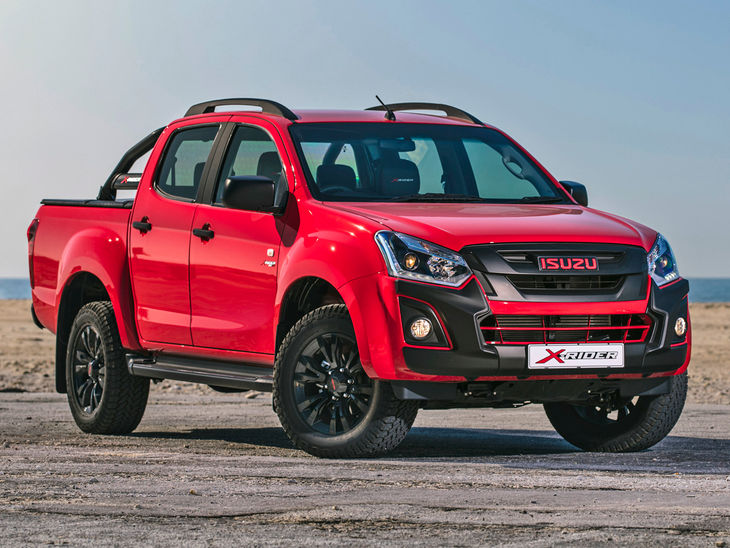
The 3.0-litre unit in the flagship D-Max LX (or X-Rider, as above) is our engine of choice.
So, which one should you buy? Well, seeing as the range is fairly broad, the answer would depend largely on both your intended usage (leisure versus workhorse) and budget. Still, since the powertrain line-up is not nearly as varied as that of, say, the P375-generation Ford Ranger, it’s easier to nail down what we believe represents the best engine.
Since we’re writing primarily for lifestyle-oriented buyers shopping towards the top of the market, we’d select the D-Max 300 LX double-cab and the closely related D-Max 300 X-Rider as the picks of the bunch, since this 3.0-litre engine offers a pleasing mix of brawn and reliability, while the cabin gains some extra standard equipment that accompanied the mid-cycle refresh.
That said, should your budget not quite allow, there’s also the option of the KB 300 LX, though note this model uses the older 5-speed gearboxes. It’s likewise worth pointing out only KB 300 derivatives boasted a braked towing capacity of 3 500 kg, with this figure interestingly dropping to 2 900 kg with the move to D-Max badge. The X-Rider versions of the KB 250 and D-Max 250, meanwhile, also offer attractive value if you’re content with the lower power and torque outputs.
Verdict
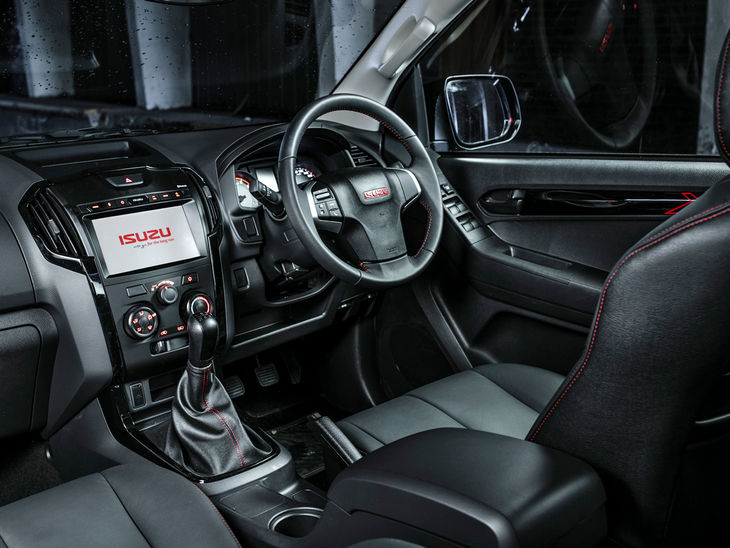
Though an improvement over earlier efforts, the D-Max cabin (here in X-Rider Black form) is by no means luxurious.
It’s important to reiterate here that Isuzu’s RT-generation model – even in its later guises – doesn’t stand out in the leisure bakkie crowd. It simply lacks the sophistication and refinement of many of its rivals, instead majoring in practicality over luxury, for the most part.
That said, if you’re the type of bakkie owner whose vehicle is expected to work hard and play hard, the Isuzu starts to make sense as something of a middle ground. Though the engines are all rather coarse, the trade-off is virtually bulletproof reliability (when properly maintained, of course). And while the cabin is by no means the last word in luxury and technology, it’s certainly hardwearing and space in the rear of the double cab is appreciable.
Naturally, the big-name alternatives here are the likewise locally built Toyota Hilux and Ford Ranger, but you’d pay far more for those on the used market (particularly in the case of the Hilux). There’s also the somewhat underappreciated Nissan Navara, while the Volkswagen Amarok offers the allure of V6 turbodiesel grunt and SUV-like driving manners (but, again, it will cost you considerably more to purchase). We’d also be remiss if we didn’t mention the highly capable but often-overlooked Mitsubishi Triton here.
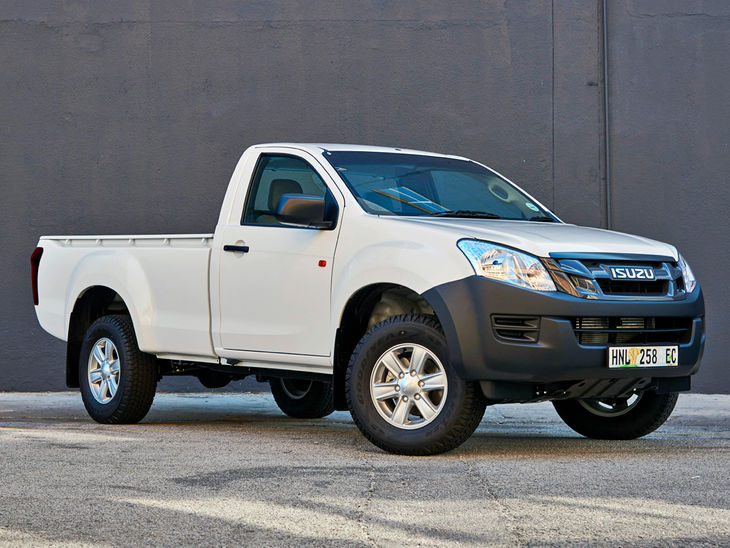
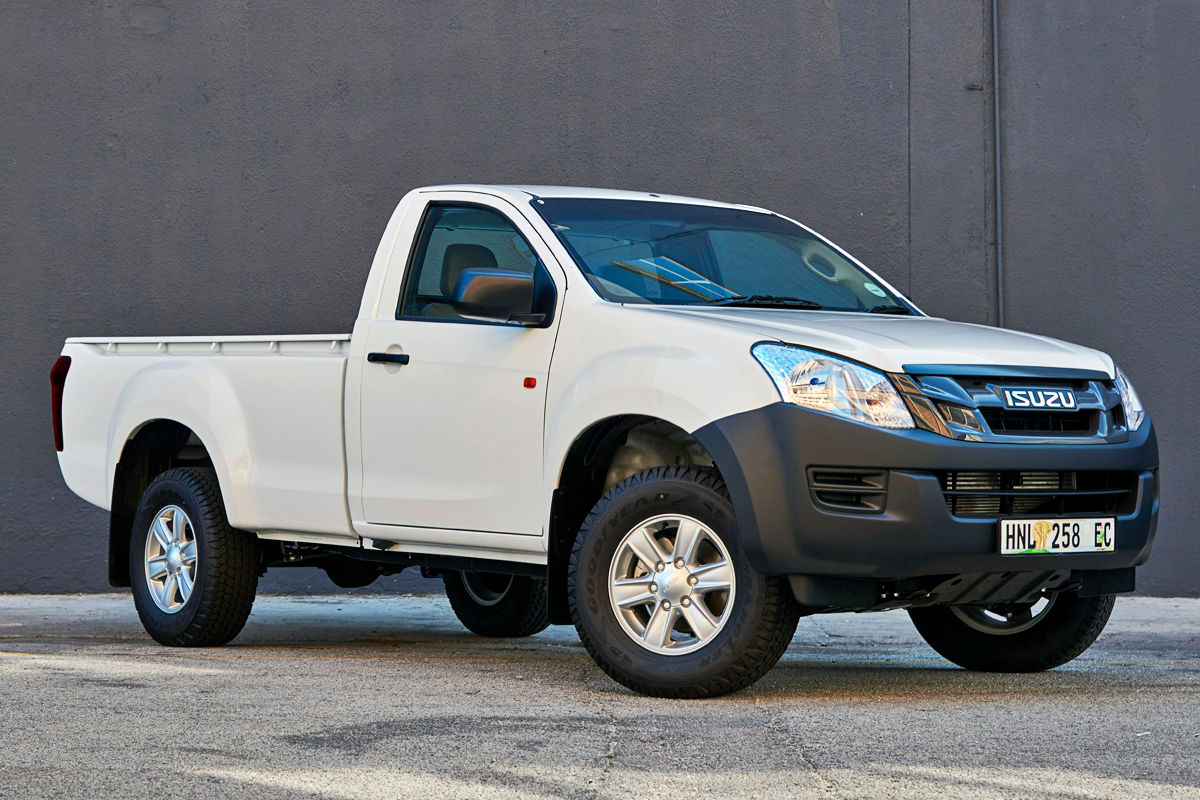
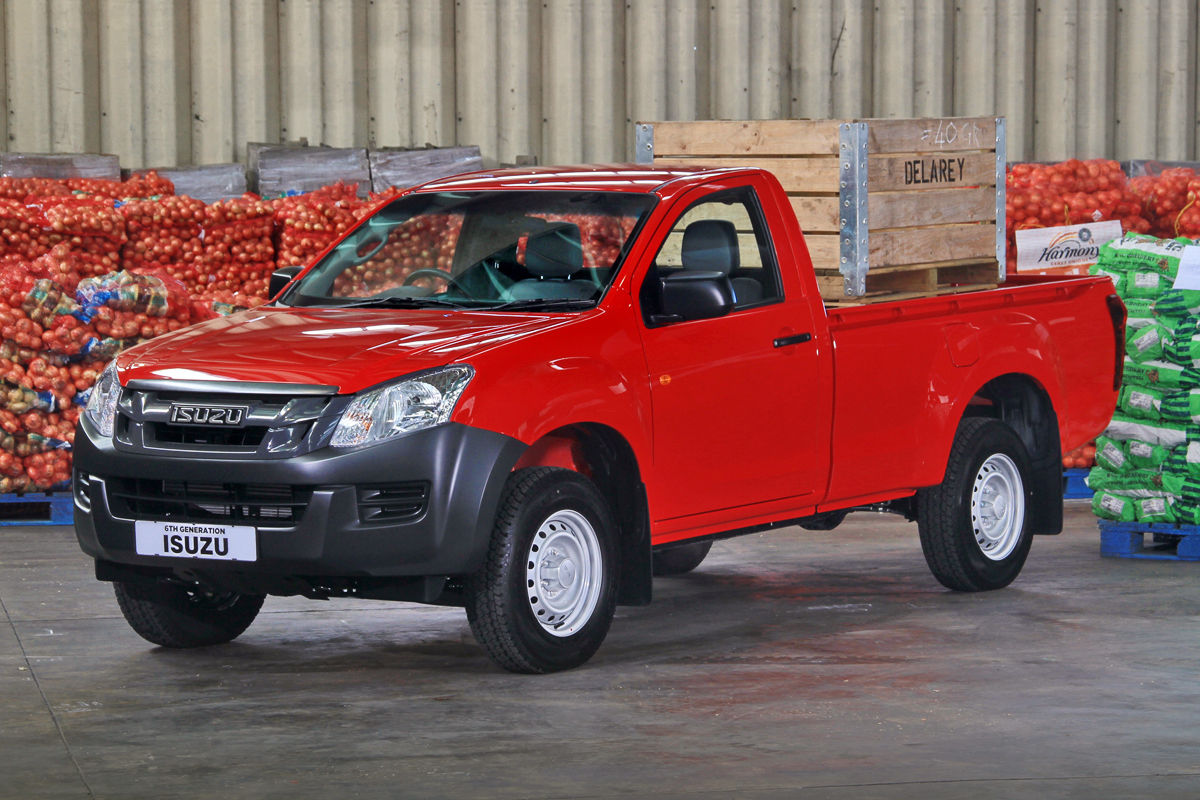
Is there a trustier one-tonne workhorse than a well-maintained Isuzu single cab? We think not.
Those seeking a single-cab workhorse already know the KB and D-Max are arguably the best choices out there. But it’s not nearly as cut and dried for this generation of Isuzu bakkies when it comes to double cabs in the leisure space. Yet, as we’ve outlined above, there are significant potential advantages – chiefly in the reliability department – that come with sacrificing some powertrain refinement and a handful of premium touches. In that respect, the Isuzu is as honest and straightforward an offering as you’ll find in this space. And there’s certainly a market for that.
Looking for an Isuzu KB or D-Max to buy?
Find one on Cars.co.za here and here.
Or, sell your car here, for free
Related content
Double-Cab 4×4 Bakkie Buyer’s Guide (2022)