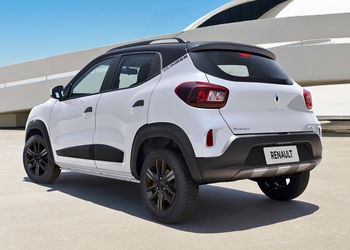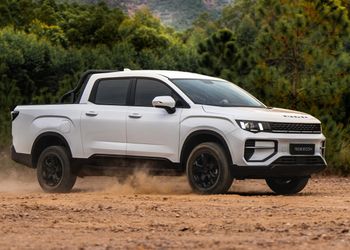
As bakkies become increasingly sophisticated – and therefore, pricier – the demand for more affordable new double-cab bakkies will only increase. Chinese manufacturers’ models offer one solution, but another one might come from within South Africa…
New vehicle affordability is an issue. That’s obvious. South Africans aren’t getting wealthier and their disposable spend is constrained. But the strange thing is that South Africa’s best-selling vehicle isn’t entry-level or particularly affordable – at all.
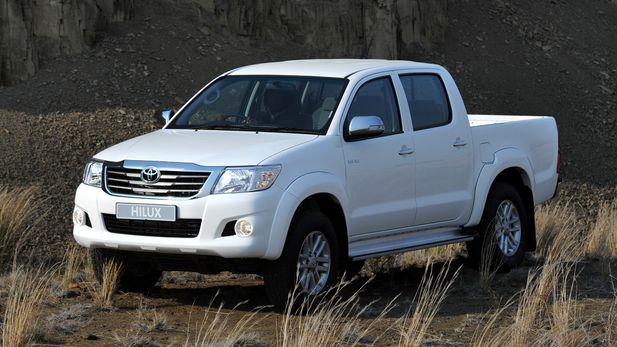
That’s because there is no such thing as a cheap Toyota Hilux. When you are priced out of budget for the current 8th-gen Hilux, you’ll find that 7th-gen Hiluxes, even those that have racked up huge mileages, command high prices. But the bakkie market might be due for reshaping, with old becoming… new.
Chinese car brands have redefined “value”
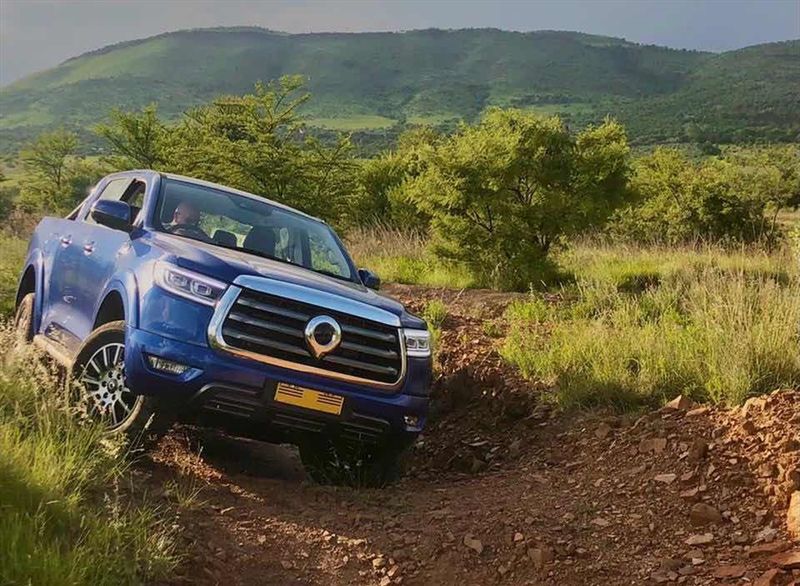
Product-wise, Chinese car brands have raised their games significantly in a relatively short space of time, yet they have never lost focus on affordability. Great Wall Motor’s Haval sub-brand has proven what credible product quality and bold price positioning can achieve in the South African small- to medium crossover and SUV segments and a number of their fellow Chinese brands look set to follow suit.
Chinese bakkies are much better than a decade ago and it’s unlikely that legacy bakkie producers, which need to fulfil the needs of buyers in mature markets (insofar as powertrain, in-car and safety tech are concerned) will meet the challenge of GWM (and its, um, countrymen) with all-new budget-oriented (or “value”) products. But that doesn’t mean more affordable Hiluxes (or Ford Rangers) couldn’t materialise.
How will they come to be? The key lies in continuation models and this strategy’s variability for the local market. In business school, they teach you about product adjacency and the risk of cannibalisation. You wouldn’t pass your automotive MBA assignment by suggesting a business case for selling 2 generations of the same model concurrently. But theory and reality often diverge. Especially in South Africa.
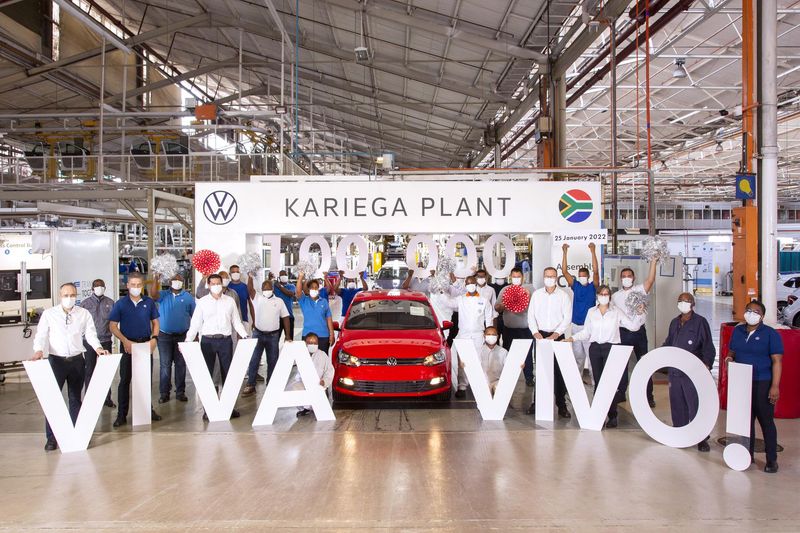
Volkswagen has proved that you can, very successfully, sell 2 generations of the same model without losing market share – or cannibalising the newer, more expensive model. In the ’80s, the Kariega-based manufacturer began producing the Citi Golf (a cut-price version of the discontinued Golf 1) while building and marketing the Golf 2 at the time. Volkswagen South Africa has also been doing that for nearly 2 decades with the Polo and Polo Vivo (the latter based on the preceding Polo) with much success.
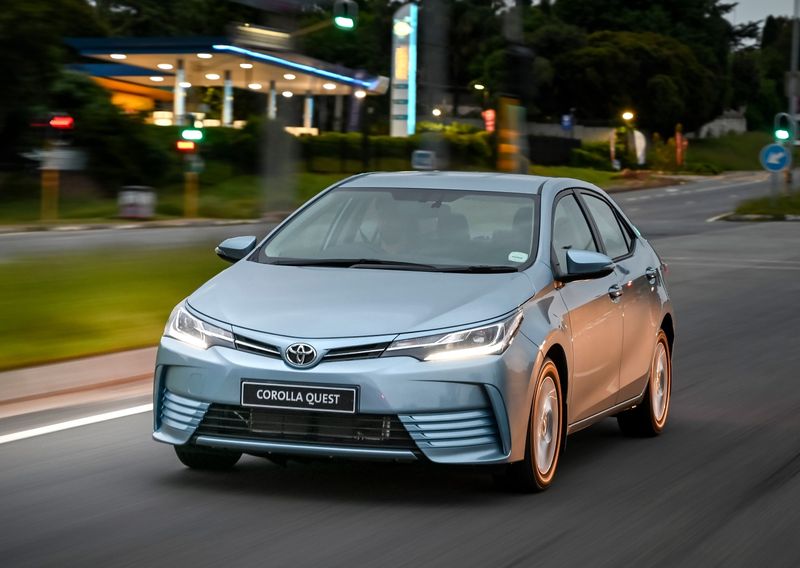
Toyota’s passenger car division, which kept once kept a long-discontinued Corolla hatchback (known as the Conquest) alive as the Tazz, has done much the same with the Corolla Quest. Building and marketing continuation cars alongside its newer vehicles have not limited Toyota’s market share, which continues to expand to record levels, quarter after quarter. And, if it works for passenger cars, what about bakkies?
New ‘old’ bakkies – it’s not a new concept
Why don’t automotive product specialists apply the continuation business strategy to bakkies? South Africa’s most robust and actively traded vehicle segment has excellent potential for continuation bakkies.
Toyota, Ford, Isuzu and Nissan already produce double-cab bakkie models locally, so assembly and component sourcing constraints should not be of concern.
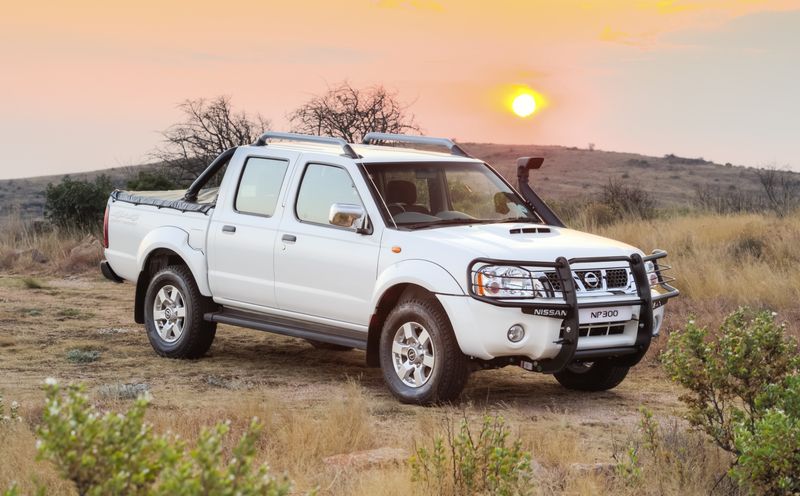
In theory, product planners responsible for locally built bakkie models could keep the supplier order books open so that production may continue. In theory. Nissan proved this strategy for years with the NP300 Hardbody, which it sold alongside the newer Navara. For 2 generations of the Navara, in fact.
“But production of the NP300 was eventually discontinued due to the local Navara build programme”, I hear some of you say. Yes, that’s correct, but what about Isuzu?
You can build new and ‘old’ bakkies at the same plant
Isuzu’s local business is bakkies, which makes the Japanese brand very sensitive to the influence of cheaper – and rapidly improving – Chinese alternatives. Isuzu’s solution? A dual-product strategy.
Exactly a year ago, Isuzu Motors South Africa confirmed that both the 6th and 7th-gen D-Max would be built in parallel and sold together, in an “old-and-new” product portfolio.
What this has done for Isuzu is give it more bakkies priced at, and below, R500 000. The cheapest continuation bakkie you can now buy from Isuzu is the 6th-gen base spec single-cab, at only R346 800. That’s much less than the most affordable 7th-gen D-Max single-cab, which is priced at R421 200.
Aside from the value offering Isuzu is giving budget-constrained customers, the D-Max continuation-bakkie production proves that it can be done. Which begs the question: will Ford and Toyota follow?

New ‘old’ bakkies won’t influence top-end DC sales
South African legacy car brands have learned that customer loyalty has a price. And, to reiterate, nobody is going to win a price war with the Chinese. That much is clear from the sheer percentage of market share that Chinese brands have conquered in the various segments of the new passenger-car market.
It is unlikely that most local customers of Chinese cars, who are virtually all conquests instead of first-time car buyers, will exit their Havals or GWMs when the time comes to replace their vehicles.
Why would Toyota, for example, invest in the risk and complication of producing a continuation bakkie, alongside their current-gen bakkie? Let’s first debunk the risk issue. A previous-generation continuation D-4D double-cab bakkie, in SRX-equivalent trim, will not cannibalise those profitable 2.8 GD-6 sales.
Customers who are willing to pay R1 million for a double-cab bakkie want to experience contemporary design and trending technology – not to mention high status. Lifestyle specification double-cab bakkies are now luxury vehicles, replete with all the social wealth signalling that paying premium prices implies.
The risk of cannibalisation is quite low, but the potential defensive product strategy benefits are high. In reasonably basic specification, continuation bakkies would, theoretically, be priced around or below R500 000. We have evidence of this with Isuzu’s D-Max dual product strategy specification and pricing.
New ‘old’ bakkies to slow Chinese brands’ ascendancy?
Derivatives of the continuation Isuzu D-Max double-cab are base-specification vehicles. They have steel wheels, no touchscreen infotainment systems and 5-speed gearboxes. However, they come with ABS and ESC. And the requisite cabin airbags. To some, they are ideal double-cab workhorse vehicles.
If Ford and Toyota apply something like what Isuzu is doing, their continuation bakkies would be rather basic. That would position them as technology-aged – but well-proven rivals – to new Chinese double-cabs, which are targeted at buyers who can no longer afford the legacy brands’ lifestyle-spec bakkies.
For Toyota, a Hilux continuation bakkie might be challenging to execute considering that the Hilux is so mature in its lifecycle. But when a 9th-generation model eventually replaces the current Hilux, it might create an opportunity to keep the 8th-generation 2.4 GD6 SR double-cab around in some form.
The Corolla Quest proves that Toyota SA can successfully roll out continuation models for the local market. But will the Prospecton-based brand produce a “Quest” version of the current Hilux?
Related content:
Did Mazda give the CX-60 the wrong engine?
Is Isuzu’s 6-cylinder turbodiesel hiding in plain view?
Why you don’t need a double-cab 4×4 with low range
What bakkie might Stellantis build in SA?
Green hydrogen could save South Africa’s car industry
Lance Branquinho

Lance Branquinho is a Namibian-born writer and photographer who has won numerous motoring journalism awards. He once smuggled parts to South America, in a minor contribution to help Giniel de Villiers finish on the podium at the Dakar. He fears for the eventual collapse of the air-cooled Porsche 911 market – and keenly awaits, in vain, the return of the brand's 928.