Shopping for a sensible used sedan that majors in value? Here’s what you need to know about the original Toyota Corolla Quest, including its strengths and weaknesses, what you can expect to pay and plenty more…
So-called prolonged lifecycle models – essentially those based on previous-generation underpinnings – have a rich history in South Africa. Volkswagen’s Mk1-based Citi Golf is perhaps the most famed example, having remained in production until 2009, while other success stories include Toyota’s Conquest-based Tazz and Ford’s Fiesta-based Figo.
Modern-day examples take the shape of VW’s immensely popular Polo-based Vivo and Isuzu’s cleverly repurposed D-Max Gen 6, as well as Toyota’s 2nd-generation Corolla Quest. Of course, there was an earlier version of the latter saloon, which forms the subject of this buyer’s guide.
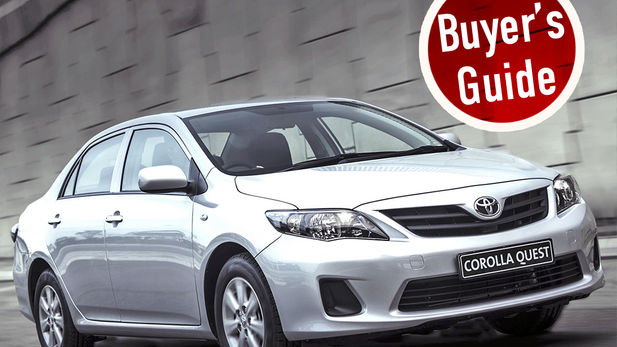
Yes, the original Corolla Quest – which Toyota described as the “ultimate value proposition” – was effectively a re-invented version of 10th-generation (E150) Corolla sedan. Though it was decidedly vanilla to drive and look at, the Quest boasted the space and comfort of a C-segment sedan at the price of a B-segment model. At launch, Toyota SA Motors boldly stated the familiar-looking newcomer had “winner written all over it”.
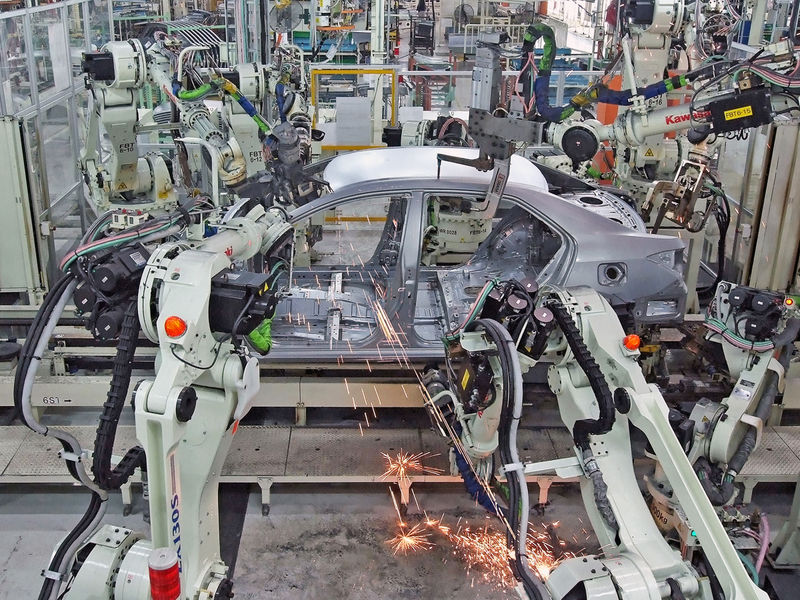
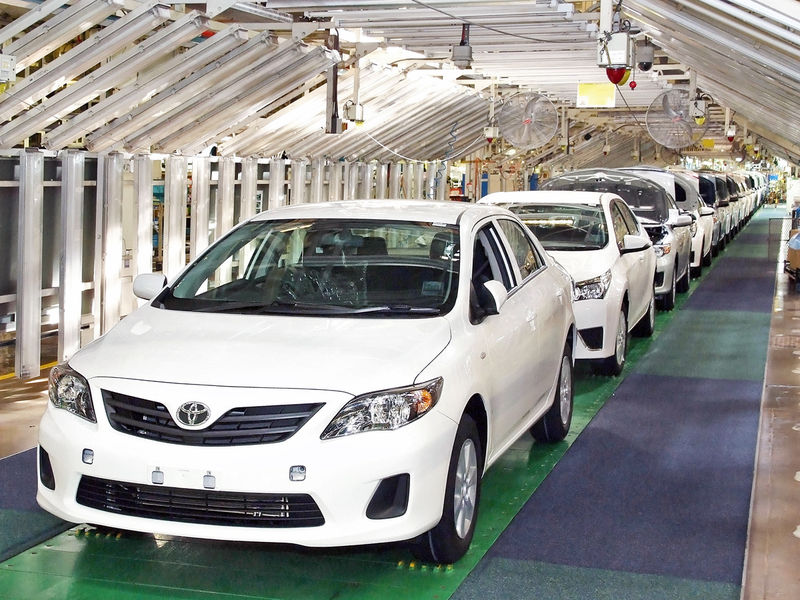
The Japanese company’s local division certainly wasn’t wrong. Built at the Prospecton facility in KwaZulu-Natal, the Quest proved a hit with both private and fleet buyers in South Africa, with 63 966 units sold locally over its almost-6-year production run. As a result, there are plenty of examples on the 2nd-hand market today.
Toyota Corolla Quest model line-up
The Quest rolled into showrooms in May 2014, just 3 months after the 11th-generation Corolla launched locally. Toyota SA Motors insisted it was more than just a “stripped-out Corolla”, declaring the “minor changes” to the exterior and interior had not “compromised quality, durability or reliability in the least”.
The model line-up was a suitably whittled-down one, comprising just 2 trim levels, a single petrol engine option (with sufficient poke for the application, even though its peak power and torque arrived late in the rev range) and a pair of transmission choices, each driving the front axle. At launch, 3 variants were available:
- 1.6 Quest (90 kW/154 Nm) 6-speed manual
- 1.6 Quest (90 kW/154 Nm) 4-speed auto
- 1.6 Quest Plus (90 kW/154 Nm) 6-speed manual
Considering the Toyota Corolla Quest’s no-nonsense positioning and straightforward specification, very few changes were required over the following 6 years. In fact, only a single modest update was implemented, when Toyota opted to hand the base models colour-coded exterior door handles and side-mirror caps (items standard on the Plus derivative from the get-go) in April 2016. At the same time, the Plus scored Bluetooth functionality for hands-free phone calls and audio playback, while all versions upgraded to electric windows all round (rather than just up front).
In May 2018, Toyota SA Motors revised the terms of its standard service plans, switching from the “number of years” parameter to “number of services” instead. The Corolla Quest thus shifted slightly from a 3-year/45 000 km arrangement to a 3-service/45 000 km service plan, again with 1-year/15 000 km intervals.
The Japanese automaker launched the 2nd generation of its big-on-value saloon (this time based on the 11th-gen Corolla) in South Africa in March 2020, bringing down the curtain on a highly successful run for the original Quest.
How Quest differs in design from 10th-gen Corolla
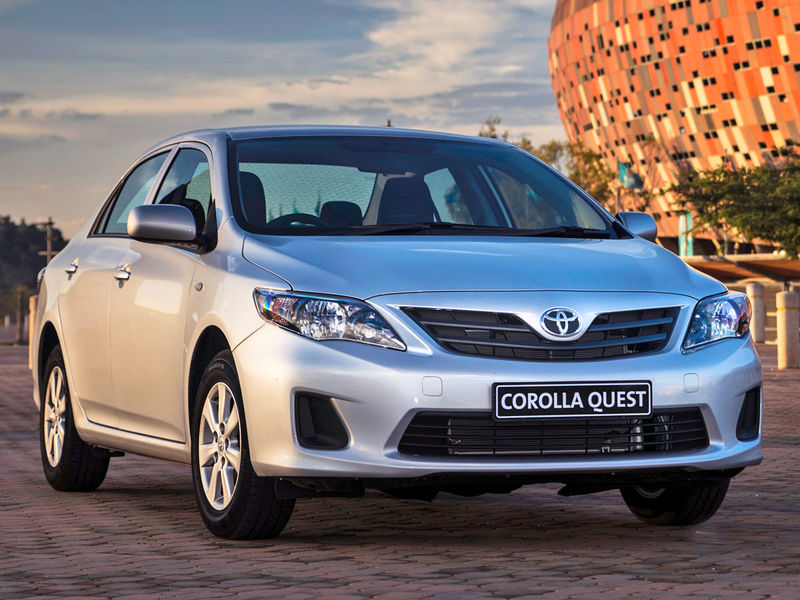
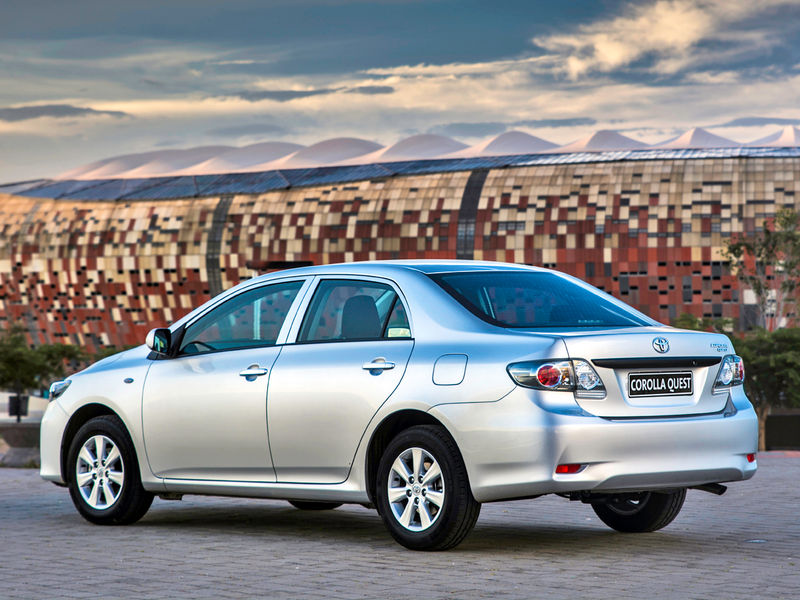
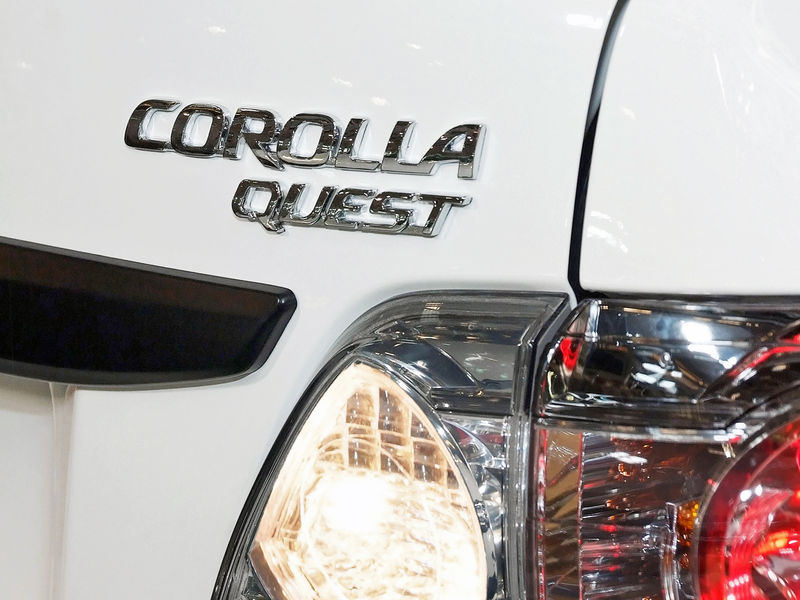
If you’re struggling to tell the difference between the original Quest and the 10th-generation Corolla on which it’s based, we don’t blame you. Still, the Quest did have a few key distinguishing elements, including subtly redesigned headlamps, mildly revised taillights and a black (as opposed to grey, silver or body-coloured) grille.
In addition, the side indicators were relocated from the door mirrors to the fenders, while the rear trim strip above the licence plate changed from body colour to black. Inside, the Quest upgraded to the front seats from the 11th-gen Corolla (which made sense since the 2 models rolled off the same assembly line) and switched to the same carpeting and roof-headlining materials used by the Hilux and Fortuner (again, to save costs).
Product strengths
Proven underpinnings: Perhaps the most significant long-term ownership benefit of a typical prolonged-lifecycle model is its proven underpinnings. This was certainly the case with the Quest, with Toyota demonstrating the durability of the platform in 10th-generation Corolla guise – and crucially in local conditions – over several years. This applied to everything from the powertrain to the front MacPherson strut and rear torsion-beam suspension arrangement.
Low cost of ownership: Thanks to economies of scale and shared componentry – not to mention Toyota’s enduring reputation for reliability – the cost of ownership of a Corolla Quest was low compared with that of many other sedans of this vintage. The naturally aspirated 1.6-litre, 4-cylinder petrol engine (in the form of the widely used 1ZR-FE) was already well proven, had the potential to be frugal with fuel and was thankfully chain driven, while spare parts were and still are readily available.
Space and practicality: For the price, the Quest offered oodles of interior room. Measuring 4 545 mm long with a wheelbase of 2 600 mm, the saloon was properly spacious inside, with loads of rear legroom, making it fit for both family and ride-hailing duties (the hard-wearing materials and dark-grey trim certainly helped in this regard, too). Despite the welcome presence of a full-size steel spare wheel, the luggage compartment offered a generous claimed capacity of 450 litres, though be warned the rear bench was fixed in place.
Product weaknesses
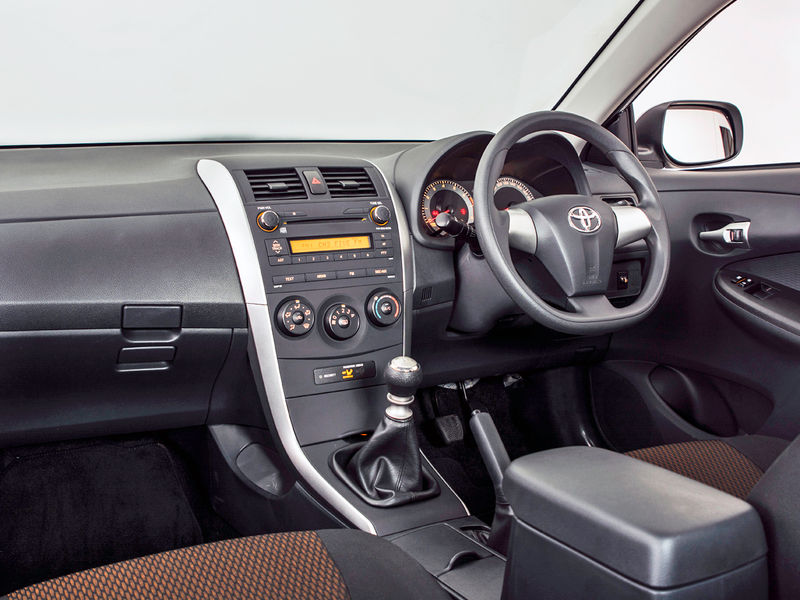
Cost-cutting measures inside: Before an automaker relaunches an outgoing vehicle as a prolonged-lifecycle model at a more affordable price, it must partake in some sort of cost-cutting exercise. In the case of the Quest, there were a few fairly obvious examples inside, including the aforementioned shift from an asymmetrically split rear bench to a fixed item. In addition, the overhead console was binned entirely, as was the map-reading light and vanity lamp in the sun visor. The front and rear cloth door inserts were replaced with a textured vinyl material, while – as we’ve pointed out above – the carpeting and the roof headlining were lifted from the more utilitarian Hilux and Fortuner.
Spartan spec for the base model: While the base model shipped standard with air conditioning, dual front airbags, IsoFix child-seat anchorage points and a reach- and rake-adjustable steering column, it was missing a few niceties. For instance, it did without an audio system (though at least came prewired to receive one), while also forgoing fairly basic features such as Bluetooth, steering-wheel controls and cruise control. Early versions even sported wind-up windows at the rear.
It’s even older than it looks: One of the downsides of a model using a proven platform and body shell from an earlier generation is the fact the resulting vehicle tends to look even older than it is. Indeed, the inherent engineering and design of the Quest traces its roots back to well before 2006, which was when the E150-gen Corolla debuted globally. Still, if you’re shopping for a budget sedan with a focus on value (and proven reliability) above all else, such a consideration isn’t likely to rank highly on your list of priorities.
What to pay?
Since production of the original Quest at Prospecton ended in the opening quarter of 2020, virtually all examples on the used market no longer benefit from active service plans and warranties (the latter coming in at 3 years/100 000 km). Still, it’s worth noting some buyers may have purchased extended service cover from Toyota. Either way, give preference to models with a full maintenance history and don’t be scared off by relatively high mileage if the vehicle has been properly cared for.
Also, be aware Toyota SA Motors offered a range of factory-backed accessories for the Quest, including a fixed towbar, mudguards, a faux-carbon bonnet guard, a foglamp kit, daytime running lights, a (primed) boot spoiler, an uprated audio system and 150-micron safety film for the windows. If such items are fitted to a potential buy, make sure they’re genuine Toyota accessories rather than aftermarket components.
Of the used 1st-gen Corolla Quest stock listed on Cars.co.za at the time of writing, 66% featured a 6-speed manual gearbox, with the remaining 34% employing the old-school (and comparatively sluggish) 4-speed automatic cog-swapper. Fascinatingly, just 13% of all units listed were Plus derivatives, suggesting buyers held a strong preference for the more value-driven base models.
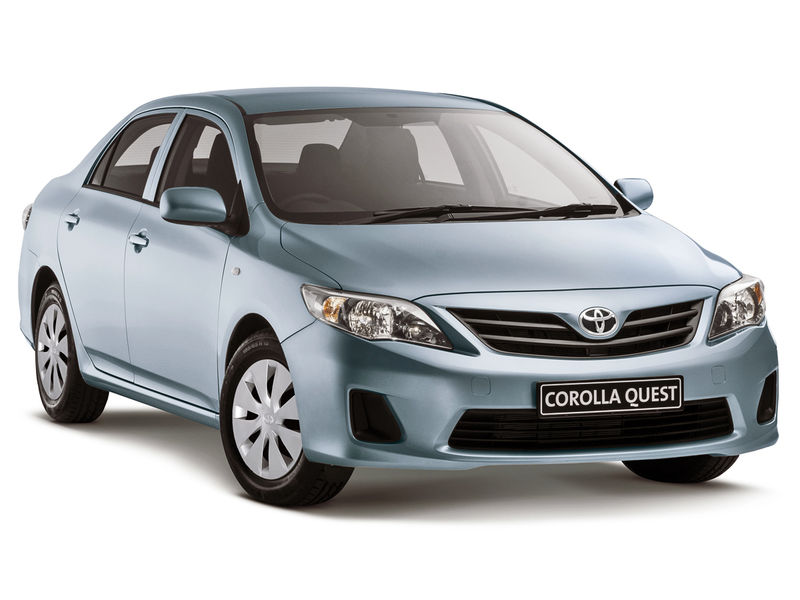
Mileage varied from just 13 500 km (on a 2018 base example) to a whopping 309 000 km (achieved by a 2015 Plus variant), with a further 17 listings showing well in excess of 200 000 km. The most popular exterior paint colour was white, which accounted for 49% of listings, followed by silver (23%) and blue (15%).
- Below R100 000: Though choice was limited here, most examples with 5-figure asking prices appeared battered and bruised (some with obviously misaligned body panels and others bearing traffic battle scars). Tread particularly carefully in this price bracket.
- From R100 000 to R150 000: Those shopping for a bargain would do well to consider examples priced between R100 000 and R150 000. We found several mid-to-late model-year cars with well under 100 000 km on their respective odometers, as well as fairly tidy higher-mileage units.
- From R150 000 to R200 000: This was the most densely populated pricing bracket at the time of writing, housing more than half of all Quest listings. It’s also where we found the majority of Plus derivatives. Interestingly, we noticed some examples riding on aftermarket wheels and others wearing body-coloured grilles (likely pilfered from 10th-gen donors). We’d recommend steering clear of cars that aren’t stock standard.
- R200 000 and up: We found only a small selection of Quest models above R200 000, most of which were late model-year (2019 and 2020) examples. It was a dead-even split between manual and automatic gearboxes here, while mileage was generally quite low (with only a single listing showing more than 100 000 km). Intriguingly, just 2 Plus derivatives made it into this top bracket.
Pick of the range?
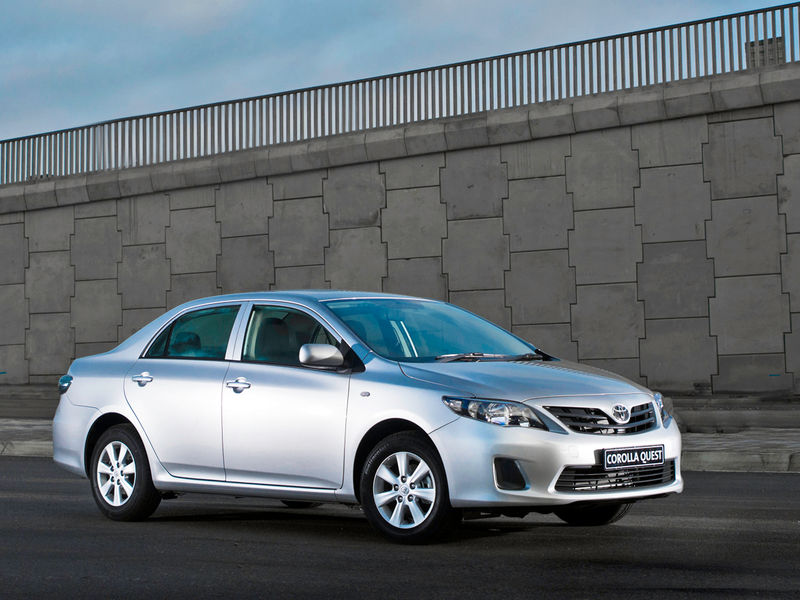
So, which one should you buy? Well, considering just 3 variants were offered over the lifecycle of the original Corolla Quest, selecting a winner is a relatively straightforward exercise. We’d argue the Plus derivative is the pick of the Quest range, offering a little more standard kit for not much more money. In fact, it seems the price gap between the base and Plus variants has narrowed markedly on the used market, which serves to further improve the top-spec model’s already compelling value proposition.
As a reminder, extra equipment enjoyed by the Plus derivative included 15-inch alloy wheels (the base models made do with steelies covered by plastic hubcaps), a 4-speaker radio/CD player and a cigarette lighter. After the 2016 update, the Plus also scored Bluetooth, so we’d suggest looking for an updated model if you’re averse to aftermarket audio systems. The Plus model’s colour-coded door handles and mirror caps were also rolled out to the base versions at this time.
Of course, should you require a self-shifting gearbox, note you’d be restricted to the base model as the Plus was available exclusively in manual guise.
Verdict
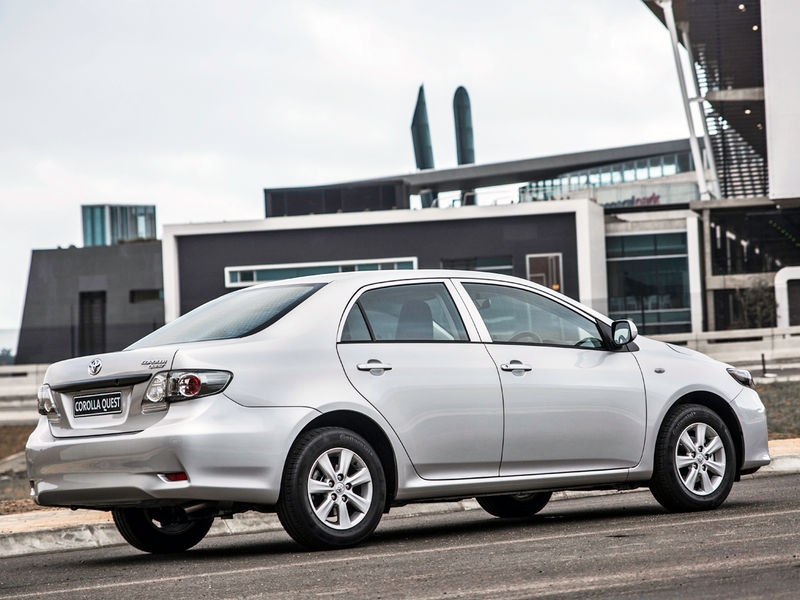
Like the model on which it was based, the Corolla Quest quickly became a popular choice in South Africa. Buyers clearly didn’t mind the somewhat outdated styling, the hard plastics (and cost-cutting measures) in the cabin, the lack of electronic stability control or the generally bland driving demeanour.
Though there were certainly alternatives in this space, many weren’t technically direct competitors as the Corolla Quest offered far more space for the price. The Volkswagen Polo Vivo Sedan, for instance, had a significantly smaller footprint, as did the Nissan Almera (which incidentally soldiers on today) and the Suzuki Ciaz. Still, we’d suggest checking out each of those as well as the Honda Ballade and even the under-appreciated (and deceptively big-booted) Fiat Tipo Sedan.
The prolonged-lifecycle formula is an attractive one to automakers because the significant investment made in the initial model has often already been amortised. In short, elements such as design, engineering and even tooling are mostly paid for before the first unit of the legacy model rolls off the line. There are considerable benefits for buyers, too, who gain access to solidly engineered vehicles with proven underpinnings for near-bargain prices.
The Toyota Corolla Quest is a prime example and represents just as strong – and, in some cases, even stronger – value on the used market as it did when new. For those who prefer a traditional compact family sedan over a crossover (and don’t demand heaps of character from their cars), the refreshingly honest Quest is definitely worth a look.
Looking for a Toyota Corolla Quest to buy?
Find one on Cars.co.za HERE
Ryan Bubear

Having written about everything from sport and politics to crime, Ryan eventually settled on motoring. For well over 15 years, he's been penning articles – both online and in print – about the broader automotive industry, though he's particularly fascinated by vehicle-sales statistics. A freelance writer and editor, Ryan has owned a 1971 Austin Mini Mk3 for 20-plus years.