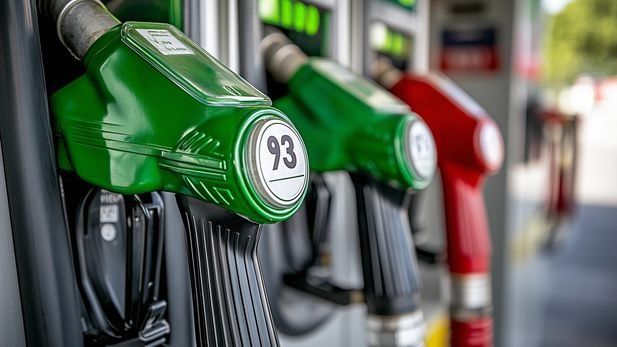
As of June 2025, the fuel price in South Africa will be adjusted to include increases to the General Fuel Levy (GFL), which will see petrol and diesel consumers paying more for a litre of fuel.
The recent Budget Speech delivered by the South African Minister of Finance, Enoch Godongwana, was free of a VAT increase but instead announced an increase in the General Fuel Levy (GFL) in a bid to help fill the government’s ever-growing budget shortfall, which stands at almost R62 billion over the next 3 years!
National Treasury, however, says that the increase comes as a result of inflationary pressure and has not been implemented as a revenue-generating tool. The increase is expected to raise up to R4 billion in the 2025 financial year and further increases in the General Fuel Levy are expected in the next 2 years.
What does the General Fuel Levy increase mean for consumers?

Earlier in May 2025, we reported that sizable fuel price cuts were on the cards for June 2025 but these cuts will now be crushed by increases to the General Fuel Levy (GFL) which will see consumers pay 16 c/l more for petrol and 15 c/litre more for diesel, raising the GFL and RAF (Road Accident Fund) levies to over R6 per litre in some areas or over 30% per litre sold in South Africa.
Current fuel price data is showing potential decreases of up to 19c/l for petrol and 49 c/l for diesel, which will be reduced to about 3c/l and 34c/l respectively, considering the increase of the GFL.
The Automobile Association (AA) has responded to the Fuel Levy increases, calling for transparency and structural reform.
“While acknowledging the government’s fiscal constraints, the AA warns that this increase will have immediate and far-reaching consequences for consumers and the economy.”
“This levy adjustment comes at a time when South Africans are already contending with high food prices, elevated interest rates, increased electricity tariffs and persistently high unemployment. Fuel is a critical input cost across all sectors of the economy; any increase inevitably drives up transport and operational costs, further intensifying inflation. Lower-income households, which spend a greater share of their income on transport, will be disproportionately affected by this rise”, says the AA.
“While the AA recognises the need to address fiscal pressures, continuously turning to fuel levies to fill budget gaps is unsustainable, especially in the absence of transparency on how these funds are allocated and used”.
As part of its response, the AA has called for a comprehensive and transparent review of South Africa’s fuel pricing model which should include the following:
- A forensic audit of revenue generated from the GFL and RAF Levy, including its allocation and expenditure
- Full transparency on the fuel price-setting formula published by the Department of Mineral Resources and Energy (DMRE)
- Engagement with civil society, labour, and the transport sector to identify fair and sustainable revenue models
- Exploration of alternative funding mechanisms that reduce reliance on fuel-based taxation.
In conclusion, the AA believes that broader engagement is needed.
“Although the latest increase may appear modest in isolation, it forms part of a broader trend where motorists and transport-reliant industries bear the brunt of fiscal policy changes. South Africa must have a broader conversation about funding infrastructure, road safety, and public transport in a way that doesn’t unduly burden citizens”, concludes the AA.
Buy a fuel-efficient car on Cars.co.za
Related Content
Most Fuel-Efficient Budget Cars in SA
10 Fuel Efficient Used Compact SUVs under R300k
10 Fuel-Efficient Used Cars Under R200k in SA
10 Fuel-Efficient Used Family SUVs Under R400k
5 Fuel Efficient Used Double Cab Bakkies Under R500k
Is it time for South Africa to Switch to EVs?
5 Ways to Beat the Fuel Price Hike
Cars.co.za

Providing you with the latest motoring news, new car releases and the simplest way to buy and sell cars.