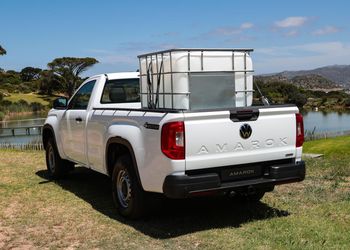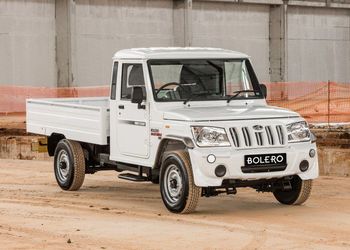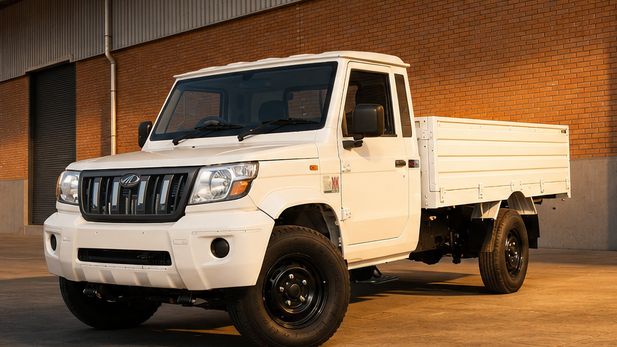
The Mahindra Bolero Maxx can carry more payload than a Toyota Land Cruiser 79 bakkie, yet it costs from just R200k. How is that even possible? And what are its limitations?
There aren’t many car companies that can claim their brand’s good standing has been built by bakkies in South Africa. Toyota is one of them because the Hilux has been the best-selling vehicle in South Africa for decades. Isuzu is another – for a long time, it did nothing but build and sell bakkies.
We can include a third manufacturer that is often overlooked by those who don’t use their bakkies for hardcore work: Mahindra. When the Indian brand launched in South Africa back in 2004, no one paid it much attention. Last year, it sold 18 000 units, and the brand’s bakkies are now trusted by farmers and value-oriented 4×4 enthusiasts.
Mahindra’s ascent in South Africa can be attributed to making bakkies that South Africans need. They work in severe off-road conditions and are well priced. While most people would be familiar with the Pik Up Karoo range, which offers some of the best-value double cabs for real 4×4 driving, Mahindra also markets an absolute bargain of a bakkie that boasts amazing payload capabilities at the price: the Bolero Maxx.
Steel simplicity
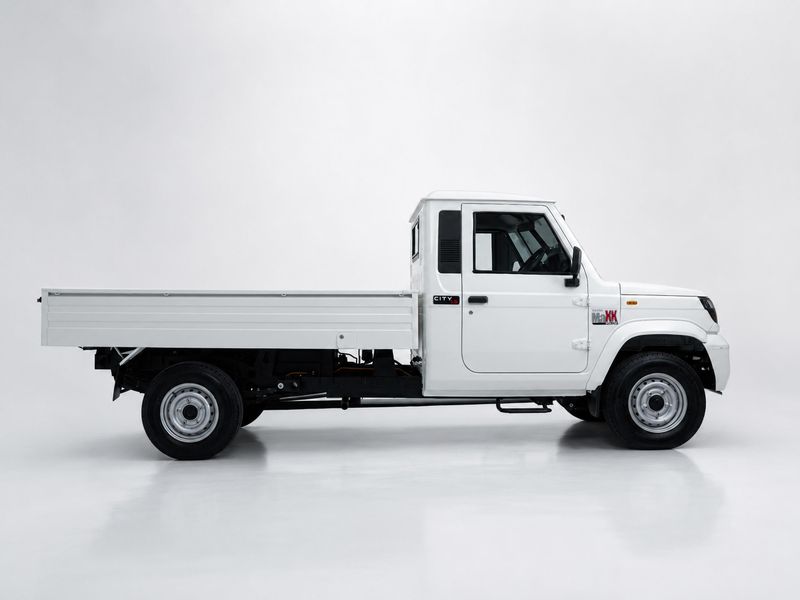
The Bolero Maxx is as far removed from a lifestyle bakkie as you can imagine. This is a pick-up from the old school, built for real work. And a lot of it. Comfort is optional.
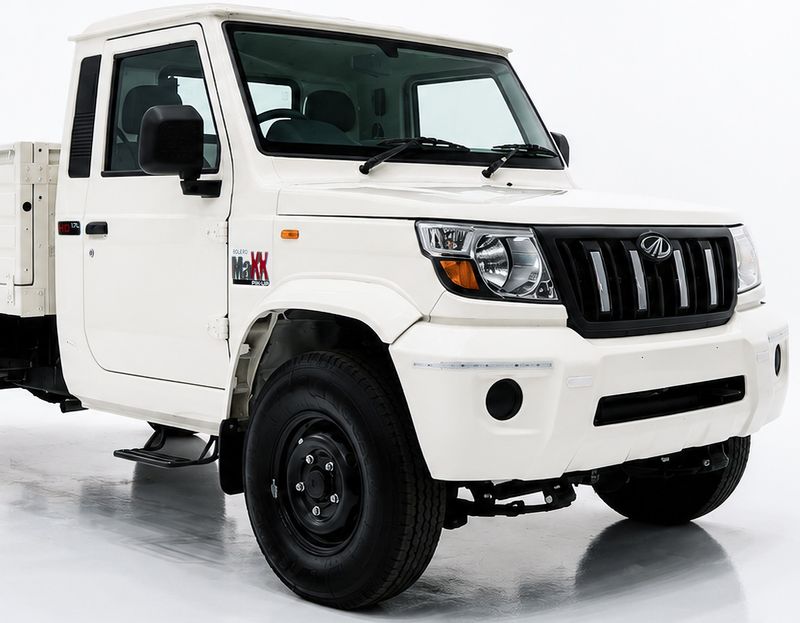
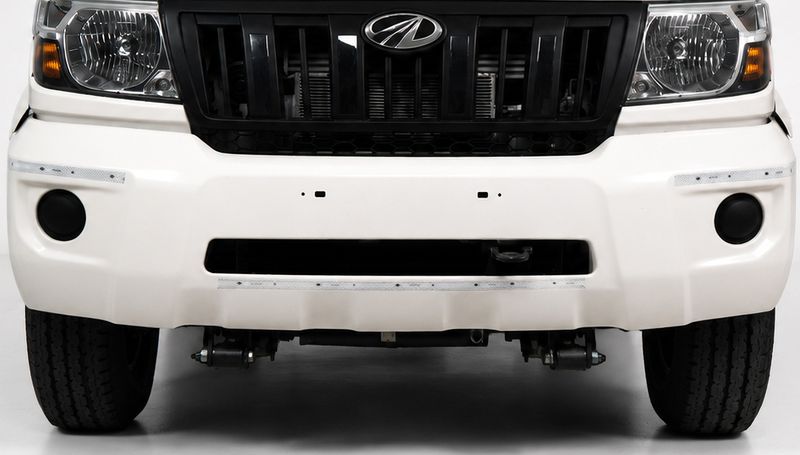
Here’s a good example of its rugged simplicity: In a world where bakkies feature crash-safety-shaped front bumpers, the Bolero Maxx has proper steel bumpers from the factory.
There is no need to go aftermarket and replace the standard bumpers with steel upgrades. This is a single-cab bakkie that’s ready for unpredictable incidents, whether from other traffic or animals that might wander into the road.
The Mahindra Bolero Maxx diesel is specced sensibly
There was a time when a bakkie with a diesel engine could run hundreds of thousands of kilometres with only routine maintenance. But that era has mostly passed.
Most modern turbodiesel bakkie engines have diesel-particulate filters and some feature AdBlue treatment systems. These additional emissions-control parts can become a maintenance burden as engines mature and mileage compounds. Then add the complication of using South African diesel, which can range from excellent to diluted with paraffin, depending where you refuel.
The Bolero Maxx features an incredibly simple, durable diesel engine. Its 2.5-litre 4-cylinder should run for a very long time supported by just routine maintenance.
It’ll also run on poorer quality fuel without issue. Bid farewell to the engine-management risks that South Africa’s variable diesel quality can trigger on more powerful, sophisticated engines.
Mahindra offers two tunes of the 2.5-litre turbodiesel engine. The outputs are low: 52 kW or 60 kW. Torque outputs aren’t exactly impressive, either, at 200 Nm or 220 Nm. But these low outputs don’t affect the Bolero Maxx range’s extraordinary payload ratings.
Search for a Mahindra Bolero bakkie on Cars.co.za
Payload numbers to shame more expensive bakkies
The Bolero Maxx is a true working bakkie. It’s been built tough to carry a heavier load than bakkies with 3 times the power or torque.
While payload ratings don’t matter that much to double-cab bakkie buyers because they’re used as family cars and are hardly ever loaded to their 1-ton limit, single-cab buyers have very different expectations. Payload is everything, as these bakkies need to earn by the kilometre as they move freight around.
In the South African market, the Isuzu D-Max base model has an unappreciated status as the 4×2 payload king with a rating of 1 305 kg. If you include 4×4 single cabs for drivers with a licence beyond Code B, the maximum payload increases dramatically. For example, Ford’s new Ranger SuperDuty offers 1 982 kg. But that’ll be a R1 million single cab…
For a quarter of the price, you can have nearly the same load capacity. The entry-level R199 000 Mahindra Bolero City 1.3T LX can carry 1 300 kg. Upgrade to the 1.5T City VX for an additional R30k and that number jumps to 1 500 kg. For R259 000, Mahindra will sell you the 1.7T Heavy Duty VX (with the engine offering 60 kW and 220 Nm) that can carry 1 700 kg. It’s the kind of number that will silence a lot of debate at the braai-side bakkie chat.
Tough suspension to match
How is it possible that Mahindra can build a single-cab bakkie that’s so cheap, is rated to carry so much payload, and still be drivable on a standard Code B licence?
Solid axles are part of the answer. In a market where most bakkies feature an independent front suspension, the Mahindra Bolero Maxx is one of the very few remaining bakkies with a leaf-sprung solid front axle.
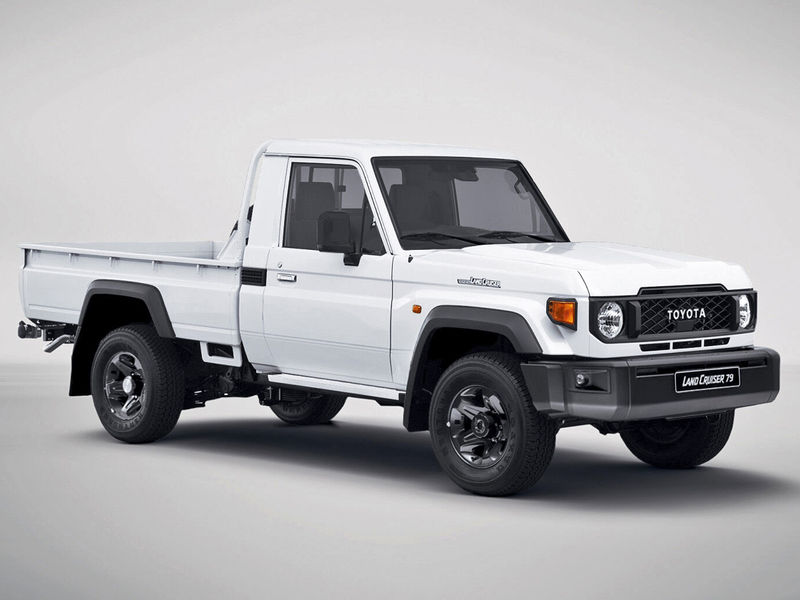
Even the legendary Land Cruiser 79 features coil-sprung front suspension to improve ride quality and steering responsiveness. But Mahindra’s engineers chose an all-round rigid axle and leaf-sprung suspension setup for maximum load factor.
The highway driving question…
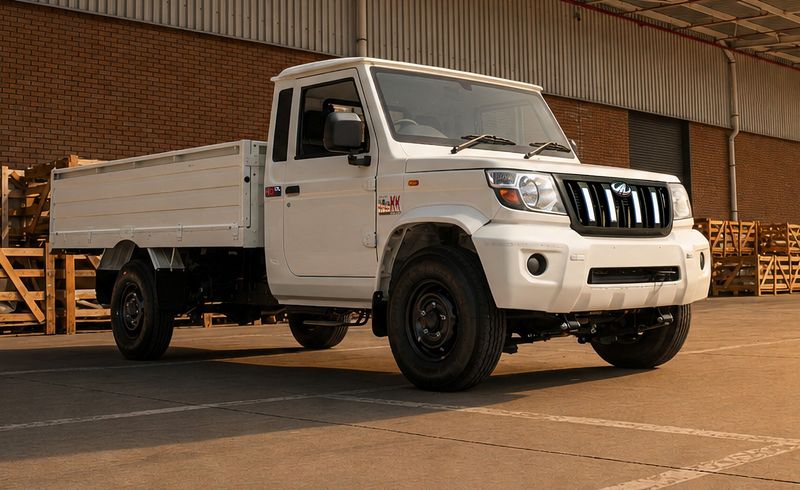
Another element that enables the Bolero Maxx to record a 1 700 kg payload while still being under the GVM required for a Code B driver to operate is that it is reasonably light. That means it has less ultra-high-strength steel in some of the safety structure zones. Sound-insulating materials? Hardly. But their absence also means less kerb weight.
For operators and fleet drivers who never do much highway or long-distance driving, but rather operate on rural dirt roads or in large mining or construction zones, the Bolero Maxx makes a lot of sense. Just don’t venture onto the highway…
A fully loaded Bolero Maxx 1.7T has a power-to-weight ratio of only 17.2 kW per tonne. That makes high-speed momentum retention a test of driving skill and patience. Of course, that’s not much of an issue in its home country of India, where highway traffic moves and bakkies are often operated at low speeds in mountainous areas of the country’s northern parts. In some global markets, these bakkies are even limited to 80 kph.
However, in South Africa, speeds are higher. While the price-to-payload rating is hugely impressive, if you’re considering a Bolero Maxx, it’s not a bad idea to incorporate a highway stretch into your test drive before signing on the dotted line.
Lance Branquinho

Lance Branquinho is a Namibian-born writer and photographer who has won numerous motoring journalism awards. He once smuggled parts to South America, in a minor contribution to help Giniel de Villiers finish on the podium at the Dakar. He fears for the eventual collapse of the air-cooled Porsche 911 market – and keenly awaits, in vain, the return of the brand's 928.