In light of the recent news that local fuel prices are expected to breach the R20-per-litre mark before the end of 2021, Gero Lilleike ponders the case for rapid and widespread electric vehicle (EV) adoption in South Africa. Is it time to switch to EVs?
There’s a saying that goes something like this, “if you can live and survive in South Africa you can live anywhere in the world”. I think that’s true.
Our beloved Republic is not a utopian country by any stretch of the imagination – it is beset with problems. Unemployment is rising, corruption is rife, crime is rampant, SOEs are broken, fuel prices are soaring, food is expensive, safe public transport is just about non-existent and then there’s the devastating impact of Covid-19 on our communities, economy and (usually resilient) spirits.
I could go on, but the bottom line is that people are suffering and it’s not okay.
As a South African living in this country, you may (or may not) recognise or acknowledge how much stress and trauma we are required to absorb on a daily basis just to live to see one more sunrise. That stress and trauma of survival, over the years, has sadly become a way of life for many South Africans – the norm. Is it right? No, it’s not. Should we as the citizens of this country accept it? Definitely not.
The subject of this article, however, pertains to the recent news that steep fuel price increases are expected for November 2021 and that the price per litre of good old gasoline could surge to R20 and beyond before we see the end of 2021. The news has generated much public frustration and anger, understandably so; it got me thinking about electric vehicles (EVs) again and I couldn’t help but ask…
When is enough, enough?
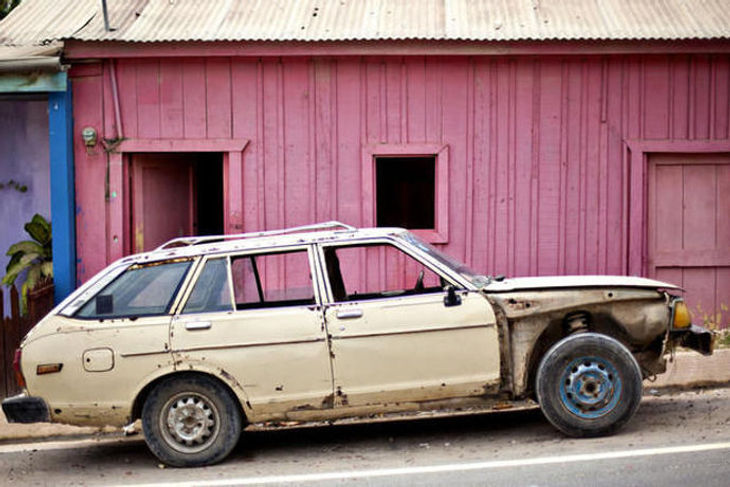
How much longer can you afford to run your ICE car?
Before I talk about EVs let me quickly touch on the cars most South Africans use on a daily basis — vehicles powered by internal combustion engines (ICE).
When is it no longer worthwhile or viable to run your ICE vehicle? The simple answer to that question is when it’s too expensive for you to do so. So, how do you know when enough is enough?
That limit or breaking point will vary depending on who you are, the car you drive and your financial profile. Only you will know what you are able to afford based on your monthly income and expenses.
Without getting too complicated and, for the sake of this discussion, let’s look at some basic fuel-cost projections as a starting point.
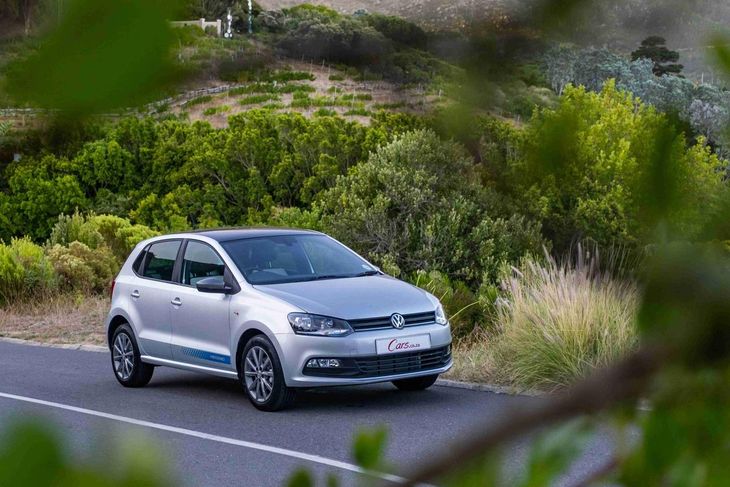
The Volkswagen Polo Vivo is a common sight on SA roads and returns good fuel economy!
Let’s use the popular Volkswagen Polo Vivo 1.4 Comfortline (R246 000), South Africa’s most popular new car, as an example and let’s assume that the average driver achieves an average fuel consumption 6.0 L/100 km, which is fairly realistic for the Polo Vivo.
This may make you wince, but if the fuel price reaches R20 per litre before the end of 2021, it’s not inconceivable that it could balloon to R25 per litre in 2022 – and perhaps eclipse the R30-mark in 2023.
Now, bear with me here and take a look at the fuel-cost projections in the table below to get an idea of what fuel will cost you if you drove a VW 1.4 Polo Vivo for the next 3 years. It goes without saying that thirstier ICE cars will cost you much more to run by comparison… and South African roads are packed with older (generally less fuel-efficient) vehicles that are in less than tip-top condition anyway.
Note that the table below does not include other costs of car ownership such as ongoing maintenance and insurance costs.
Furthermore, it does not account for the long list of other monthly living expenses, which will most certainly rise too over the same time periods (due to pesky inflation).
See the table below…
| Distance Travelled | Fuel Costs | |||
| R15 p/litre | R20 p/litre | R25 p/litre | R30 p/litre | |
| 25 km p/day | R22.50 | R30 | R37.50 | R45 |
| 50 km p/day | R45 | R60 | R75 | R90 |
| 100 km p/day | R90 | R120 | R150 | R180 |
| 750 km p/month | R675 (1 tank) | R900 | R1 125 | R1 350 |
| 3 000 km p/month | R2 700 | R3 600 | R4 500 | R5 400 |
| 10 000 km p/annum | R9 000 | R12 000 | R15 000 | R18 000 |
| 20 000 km p/annum | R18 000 | R24 000 | R30 000 | R36 000 |
| 30 000 km p/annum | R27 000 | R36 000 | R45 000 | R54 000 |
So, by studying the table above, you should be able to come up with a decisive answer as to where your financial breaking point is to continue running your ICE vehicle.
Moreover, I can’t help but ask if exorbitant fuel prices can (and will be) the catalyst for the more rapid adoption of electric vehicles (EVs) in South Africa? Looking at the numbers above, I think it definitely can be, but let’s dissect the case for EV adoption in the Republic.
If you haven’t seen/heard our podcast, “Will electric cars work in South Africa? In-depth discussion with Alex Parker”, we strongly suggest that you give it a watch/listen.
Is it time for South Africa to switch to EVs?
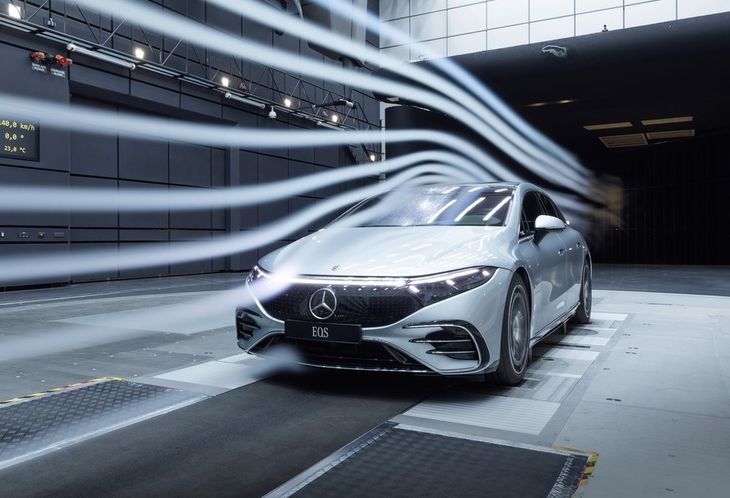
EVs in SA are prohibitively expensive and the forthcoming Mercedes-Benz EQS won’t be cheap.
That’s an interesting question and my answer to that question is… Yes, it is the right time to switch to EVs but unfortunately, for many reasons (see below), conditions that are conducive to the widespread EV adoption just aren’t in place, at least not yet.
Backing and support by the government is a critical factor and unlike other EV positive countries, the South African government doesn’t subsidise or incentivise the purchase of electric vehicles. Instead, EVs are heavily taxed (as luxury vehicles) and EV uptake is therefore stifled, no, suffocated from the get-go. Government EV policy is therefore the first significant hurdle that needs to be addressed and overcome urgently if widespread adoption of EVs is even remotely possible in South Africa. Until that happens, the majority of battery-powered vehicles in the Republic will remain golf carts and forklifts.
In addition to that significant challenge, the few EVs that are currently on sale are prohibitively expensive. Consider the Porsche Taycan, for example. Affordable, entry-level EVs are not available in South Africa and, as a result, the vast majority of local motorists simply cannot afford to switch to EVs, even if they wanted to. Therefore, no matter what the fuel price is, most South Africans will just have to suck it up and blow big chunks of their disposal incomes at fuel stations, use public transport – or buy bicycles, which is a great suggestion if you want to exercise and save the planet at the same time.
We ran a poll on our Cars.co.za Twitter page in which we asked our audience the following question: “Considering that fuel prices in South Africa might reach R20 per litre and beyond in the near future, would you be prepared to purchase an Electric Vehicle (EV) instead of an ICE vehicle if more affordable EV’s were made available in SA?
The majority of respondents (roughly 60%) voted in favour of switching to EVs if affordable options were available in South Africa, while 40% of voters were still in favour of ICE vehicles. Those results, as a basic litmus test, speak volumes for what consumers would buy if they were given the opportunity to do so! 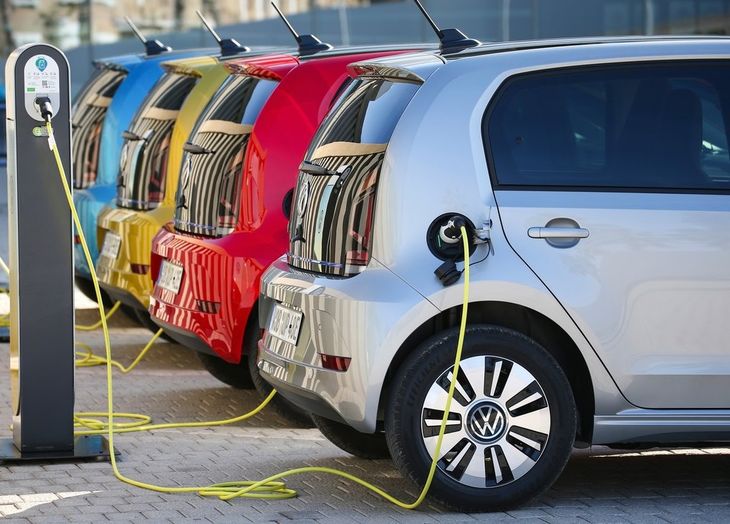
The EV market in South Africa can flourish if affordable, competitively-priced products come to market.
EV infrastructure in South Africa is an ongoing concern for would-be EV buyers, but with significant ongoing investment from OEMs and others, EV infrastructure is improving; all major cities in South Africa are fairly well catered for in terms of charging infrastructure. An example of this is the Jaguar Powerway in partnership with GridCars, which is the result of a R30-million commitment to install 22 charging stations along the N3 between Gauteng and Durban and the N1 between Gauteng and Cape Town, as well as the N2 from Cape Town, along the Garden Route, all the way to East London.
Such initiatives will go a long way to alleviate range anxiety and will ultimately make long-distance EV travel more viable in South Africa. Even so, there is massive scope to improve and expand EV infrastructure in the Republic and perhaps this will only come to fruition when there’s ample demand for it – in other words when EVs become more widely adopted and retail on a much larger scale than what is currently the case (barely a trickle, sales wise). Talk about a chicken and egg scenario. After all, why develop widespread EV infrastructure if there’s virtually no EV market in SA, right now?
Eskom is another issue! If EVs are widely adopted in South Africa, will Eskom be able to supply the electricity needed to charge them? That remains to be seen, but perhaps demand could be met more cleanly and reliably if South Africa embraces renewable energy and moves away from dirty, coal-based energy production, which is becoming more irrelevant in a modern world with each passing year.
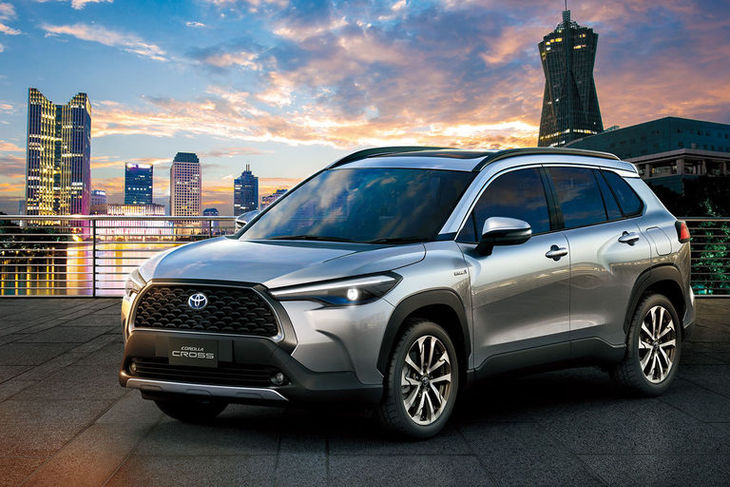
The Corolla Cross Hybrid is the cheapest hybrid vehicle currently offered in South Africa.
Also, brands such as Toyota are playing a major role in bridging the gap between ICE vehicles and EVs with the introduction of a host of new hybrid models such as the Corolla Cross Hybrid, Corolla Hybrid and the RAV4 Hybrid, all of which are not only currently more affordable than EVs, but also more efficient than their ICE counterparts.
Elsewhere in the world, EV (including petrol-electric hybrids) uptake is progressing at a furious pace. Tesla sales are booming and companies such as Volkswagen are selling up a storm in Europe.
This week, Herbert Diess, the chairman of the Board of Management of Volkswagen Group, posted on his LinkedIn profile stating that “Driving a combustion engine car costs up to 50% more compared to an e-car! Autozeitung does the math, taking into account all the costs: Driving a #VW Tiguan costs around 30% more per kilometer than an ID.4. One kilometre in an #Audi Q5 costs around 40% more compared to a Q4 e-tron. And driving a #Skoda Kodiaq is around 50% more expensive per kilometre compared to an Enyaq! It’s time to switch.”
In terms of new EV products coming to South Africa, Volvo recently introduced its XC40 Recharge locally and the BMW iX3 and Audi e-tron are due to make landfall soon. In 2022, Mercedes-Benz will introduce a range of EVs including the EQA, EQB, EQC and flagship EQS. Note that none of them are likely to be priced below R500k.
So, where to from here?
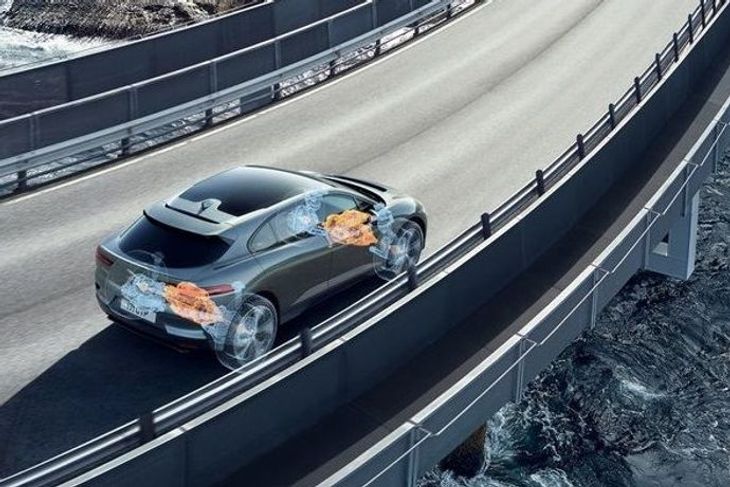
Thankfully, there’s hope! Earlier this year, the Department of Trade, Industry and Competition released an Auto Green Paper on the Advancement of New Energy Vehicles in South Africa, laying the foundation for South Africa to gear up for local electric vehicle (EV) production. This prospect is a critical one for the local automotive industry as well as South African motorists and, if it’s realised, it will essentially evolve and develop local car manufacturing from ICE to EVs, stimulate job growth and bolster the broader automotive industry (including component suppliers) for generations to come.
It’s also a rare opportunity for South Africa to shine again on the world stage, for the right reasons, and accomplish something to be proud of by becoming a major EV player within an African context, but also globally. Wouldn’t that be nice?
The Minister of Trade, Industry and Competition, Ebrahim Patel, has highlighted the urgent need for the government to step up its efforts to accelerate the process towards local EV production: “We must step up efforts to build full electric vehicles in SA to maintain our capacity to export to key markets such as the EU and UK, both of which have set new targets and deadlines to reduce the number of fossil fuel reliant vehicles on their roads. We need charging infrastructure – and must expand the existing 200 charging points for electric vehicles in South Africa using the agreed SABS standard”.
He added: “We don’t want South Africa to become simply a market for electric vehicles produced elsewhere in the world, relegating our car making simply to internal combustion engines. Then, as the world shifts more and more to electric vehicles, we will be left with a stranded asset in the form of a large assembly capability that has not been adjusted to electric vehicles.”
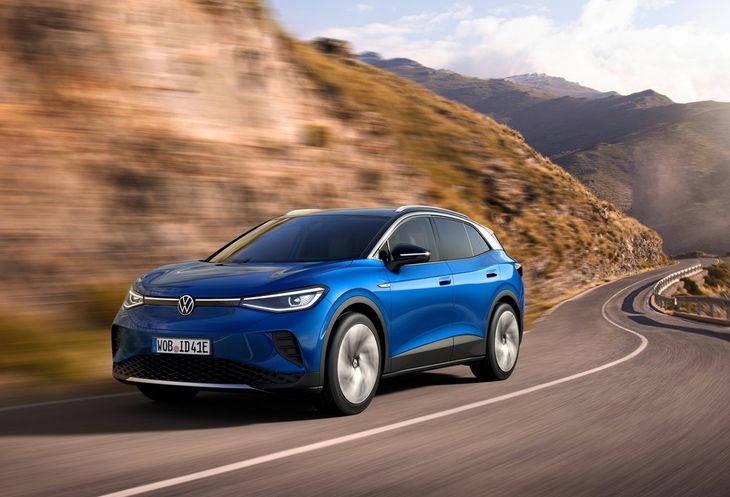
If the government can effectively reduce ad valorem tax on EVs and close the chasm between EV and ICE vehicle pricing then EVs will become more attractive to local buyers. If that happens and the demand for EVs increases, then automotive manufacturers and importers will be more inclined to introduce a wider range of EV products to meet the needs of ALL South Africans and not just affluent early adopters. Perhaps then we will see a day when we, as consumers, can enjoy the right to choose what form of propulsion we prefer, EVs included, at prices that are fair and competitive. Is that possible?
Will the South African government seize this significant opportunity and drive the country towards a successful transition from ICE vehicles to EVs or will a golden opportunity once again slip through our nation’s fingers and sink in a pool of our children’s tears? Having asked that, I don’t think it is a total coincidence that several brands are lining up to introduce EVs for local introduction next year… I am holding thumbs (as we all should) that the development anticipates a yet-to-be-communicated concession from our government pertaining to a reduction in taxes levied on (imported) electric vehicles.
Crucially, passenger-car market leader Volkswagen has been running a fleet of EVs in Mzansi as it prepares to launch its ID range of EVs on local soil in the very near future… So watch this space!
Suffice to say, something has to give and until that happens, we have no choice but to accept the fuel-price horror unfolding before our eyes…
Related content:
SA Petrol Price – Where Does Our Money Go?
5 Ways to Beat the Fuel Price Hike
Most Fuel Efficient Budget Cars in SA
Most Fuel-Efficient Double-Cab Bakkies in SA
5 Fuel-Saving Car Features & How They Work
Most Fuel Efficient Budget Cars in SA
Gero Lilleike

Gero Lilleike is a published writer and photographer with most of his work appearing in the fields of travel and motoring. Gero has worked as a motoring journalist for Cars.co.za for the past 8 years and takes every opportunity to go on an adventure whether it be offroad or in the ocean. For Gero, a car's worth is measured by how many surfboards it's able to carry.