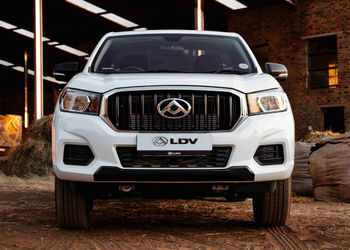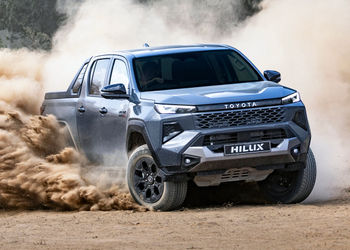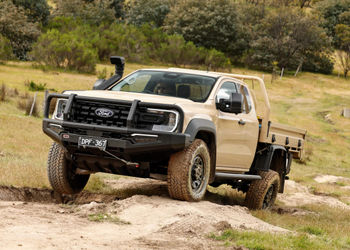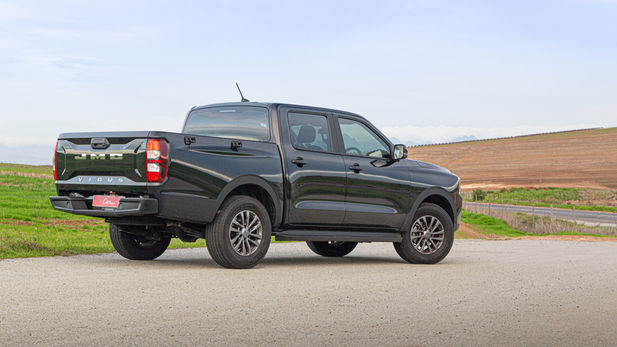
The tow ratings of Chinese double-cab bakkies are lower than those of Toyota’s Hilux or the Ford Ranger. We explain why, and how this is starting to change.
The Cars.co.za stats experts provide a great breakdown of what’s happening each month in the South African new-car market. There are often surprises in the data, but the broad trends are quite obvious: bakkies and SUVs are more popular than ever.
More South Africans now own a vehicle with a 3 500 kg tow capacity than ever before. The irony is that few South African drivers know what the capacity actually means. Or know how to tow.
It’s all an unintended consequence of the surging popularity of double-cab bakkies as urban family cars. Buyers are choosing powerful double cabs for the feeling of safety and all-terrain capability when embarking on a cross-country road trip. And some load bin utility for occasionally getting something bulky home from a retail store.
Is unused tow capacity valuable?
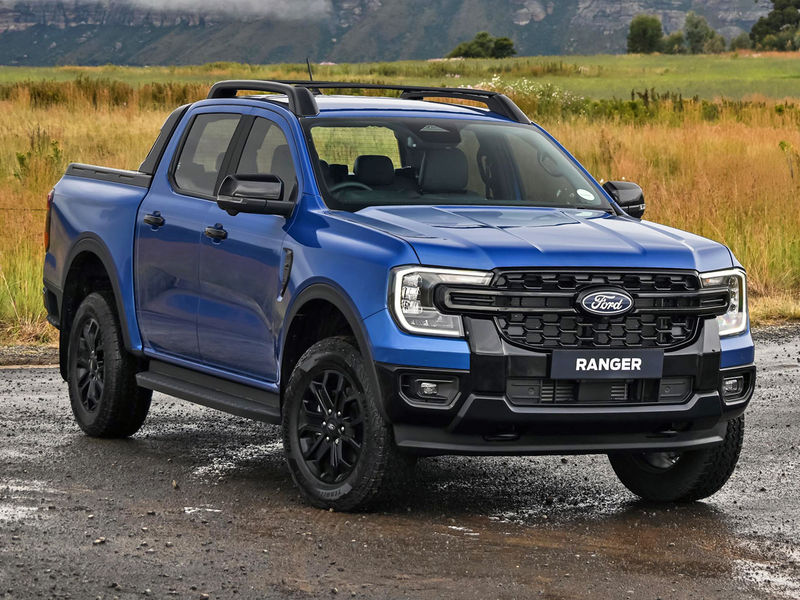
Is that 3 500 kg braked tow capacity a waste if left unused? Many South African owners of luxury double cabs may ponder this question.
Even if you’ve never used the peak tow rating of a Ford Ranger V6 turbodiesel or a Toyota Hilux 2.8 GD-6 (both of which have a braked tow rating of more than 3 000 kg), it still has value. Why? Because some components are over-engineered to handle that towing weight and therefore offer benefits in many other driving conditions, too.
It means the engine and transmission cooling systems are designed for extreme towing loads. This also makes these bakkies cope well with driving in traffic, where airflow is low, especially in extreme temperatures; or when driving slowly in low-range through thick sand, where engines and transmissions are working very hard but the ambient airflow for cooling is low.
Search for a Ford Ranger on Cars.co.za
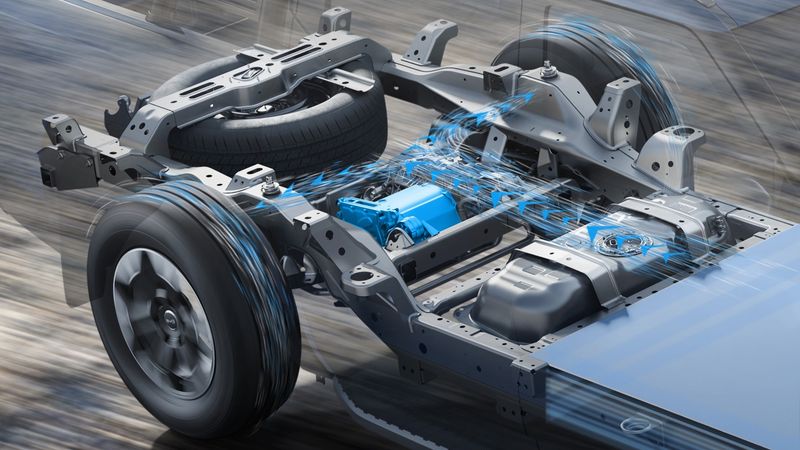
You might never use that tow capacity to its full extent, but it means you get a bakkie with uprated cooling, brakes and rear suspension. Bakkies that can tow up to 3.5 tonnes are engineered to resist sag and “shunting”.
These bakkies often also feature rear disc brakes instead of drums, which allow much better high-speed deceleration in an emergency.
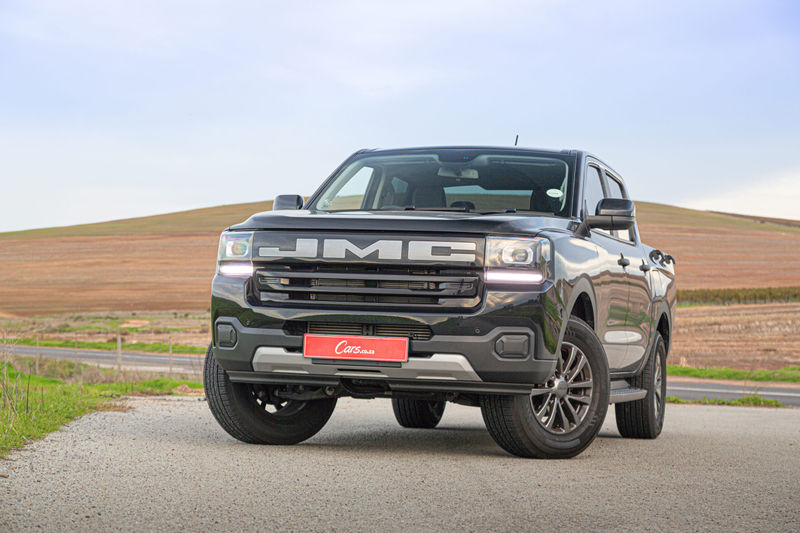
So, to address the headline: There are very few Chinese bakkies with a 3 500 kg braked towing capacity – why is this the case?
Why most Chinese double-cab bakkie tow less
Urban double-cab owners don’t really tow. Yet, South African bakkie drivers have a long legacy of towing. Farmers, watercraft owners and Airbnb-averse holidaymakers have been towing trailers and caravans all around Southern Africa for decades.
South Africa even has a globally renowned off-road caravan and trailer industry, creating rugged load-carrying chassis to tow behind bakkies deep into the Richtersveld or Kalahari. There is a real community of South African bakkie owners who regularly tow, which has a profound effect on product planning for automakers that sell bakkies in South Africa. Bakkie towing culture in China? Not really a thing.
Caravanning holidays aren’t particularly popular in China, nor are off-road trailers for overlanding journeys, or boating. And although China produces an enormous number of motorbikes, there’s no real amateur MX scene that requires motocross trailers.
This lack of a towing culture influences how engineers and planners think about their bakkies. And that’s why Chinese bakkies haven’t prioritised towing capacity.
Will these bakkies start towing more?
We know from experience that the Chinese car industry moves at Shenzhen speed. Car companies possess an ability to make product decisions and deliver upgrades in less than half the time of a traditional American, European or Japanese car company.
Chinese product people analyse the specifications and technical capabilities of rival bakkies in incredible detail. They know what a Hilux, a Land Cruiser 79 or a Ford Ranger SuperDuty can do, including tow. And Chinese marketing teams know that by closing the tow-rating gap and matching their legacy rivals on capability at a much lower price, they will conquer even more South African customers.
As Chinese technical teams have proved, all the skills exist in the Chinese car industry to make incredibly advanced bakkies, like the BYD Shark 6. China also produces many heavy-duty vehicles, like trucks, so nobody needs to teach them about frame strength and resistance to wear and tear.
Search for a GWM P500 bakkie on Cars.co.za
More powerful bakkies are coming
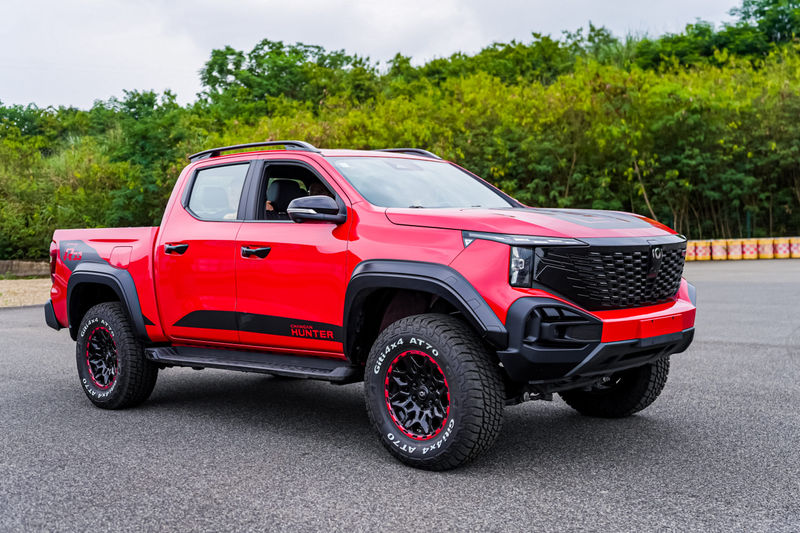
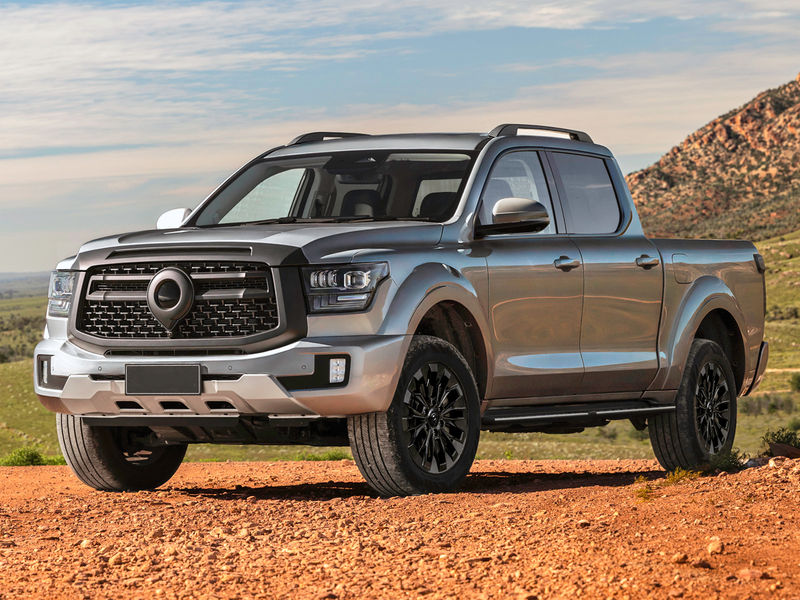
GWM’s P500 hasn’t been a huge sales success in South Africa, at least not yet. But this “larger-than-Ranger” Chinese double-cab bakkie has shown Chinese engineers and product people can develop a luxury double-cab with a 3 500 kg braked tow rating.
Over the past year, the Chinese approach to bakkie development has changed significantly. Observing the demand for more capable bakkies and customers’ willingness to pay nearly anything for an over-engineered double-cab, Chinese automakers have shown an incredible number of new double-cab concepts that are nearly production-ready. They even possess all the off-road accessories and oversized all-terrain tyres that weren’t even options on Chinese bakkies 5 years ago.
Chinese vehicles might be renowned for their incredibly advanced PHEV powertrains, but their automakers have also invested heavily in diesel-engine development for bakkie models. They know that Australia, Africa, Asia and the Middle East still want diesel engines.
The new generation of Chinese diesel engines will give Chinese bakkies the torque delivery needed for heavier towing. But what about the chassis strength, the upgraded rear suspension, the axles and the drivetrain? The answer to that has already been shown.
You know all those over-the-top adventure 4×4 bakkies we’ve seen over the last year? They all feature those upgraded components already integrated. Thus proving, again, that Chinese automakers’ product strategies and speed-to-market are unlike anything we’ve ever seen.
Lance Branquinho

Lance Branquinho is a Namibian-born writer and photographer who has won numerous motoring journalism awards. He once smuggled parts to South America, in a minor contribution to help Giniel de Villiers finish on the podium at the Dakar. He fears for the eventual collapse of the air-cooled Porsche 911 market – and keenly awaits, in vain, the return of the brand's 928.