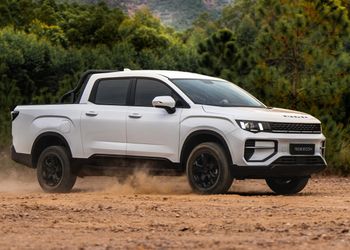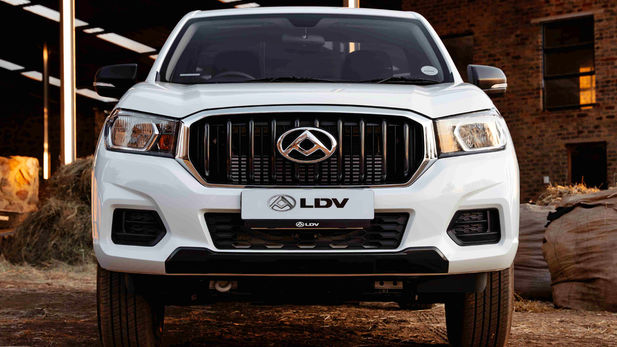
There is a new Chinese entry-level work bakkie on the market. We look at how the LDV T60 Utility compares to the Toyota Hilux and Isuzu D-Max.
People who don’t use bakkies for work can forget how big the simple steel-wheel single-cab bakkie market in South Africa is. We’re not talking about the expensive single cab 4×4 bakkies. Instead, these are pick-ups that actually work.
Farmers, small business owners, logistics fleets and technical support crews use single-cab bakkies in huge numbers. They need the load-bin length and payload capacity to do real work.
Toyota predictably dominates the single-cab bakkie market. But there’s room for additional players. Cue the Chinese brands, which offer a lot of standard equipment and features in the simple single-cab market. And the latest entrant is the all-new LDV T60 2.0TD single cab Utility.
How does this bargain Chinese single cab compare with established utility-spec versions from Ford, Isuzu and, of course, Toyota?
The LDV T60 Utility power-to-price ratio
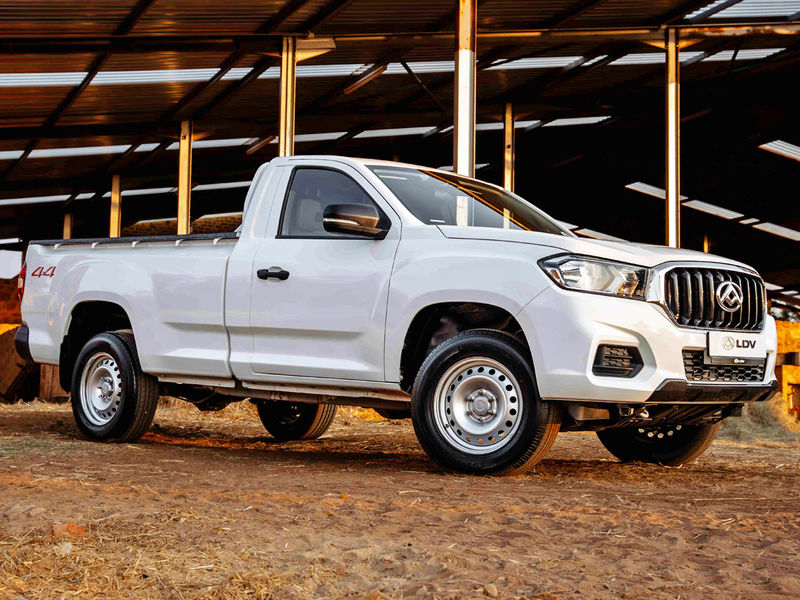
The LDV T60 Utility 4×2’s pricing is predictably affordable, undercutting its traditional bakkie rivals by a huge margin. At only R299 900, you get a lot of bakkie for your money.
The engine is a 2.0-litre turbodiesel rated at 120 kW and 410 Nm, and those numbers are better than any of its rivals from Ford, Isuzu, and Toyota. It also has a 6-speed manual gearbox, which makes a big difference to open-road fuel economy because the 6th ratio is effectively an overdrive gear.
Loadability is good, with the T60 Utility rated for 1 170 kg in the load bin and a braked towing capacity of 3 000 kg. This latter number is better than any of its American or Japanese entry-level single cab rivals’.
The T60 Utility offers the traction features you need
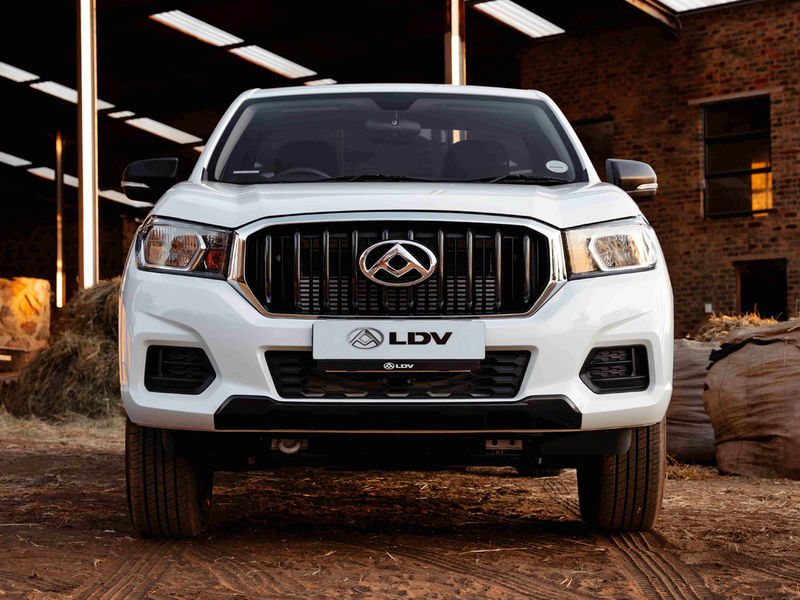
Chinese vehicles are renowned for their exceptionally generous standard equipment levels, but the LDV places its price-to-power ratio and load-carrying ability front and centre.
Like many other entry-level single-cab bakkies, it does not have vehicle stability control. Still, it does have ABS with brake force distribution, which is arguably a more useful feature.
Although single-cab utility bakkies aren’t designed for off-roading, they might frequently need to navigate muddy farm tracks or pockmarked roads in industrial zones, often while heavily loaded. And that is where a limited-slip rear differential, or a selectable locking rear differential like the LDV has, is valuable.
Search for an LDV T60 on Cars.co.za
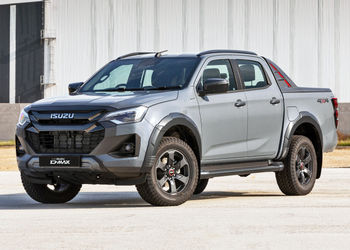
Rival number 1: The Isuzu D-Max
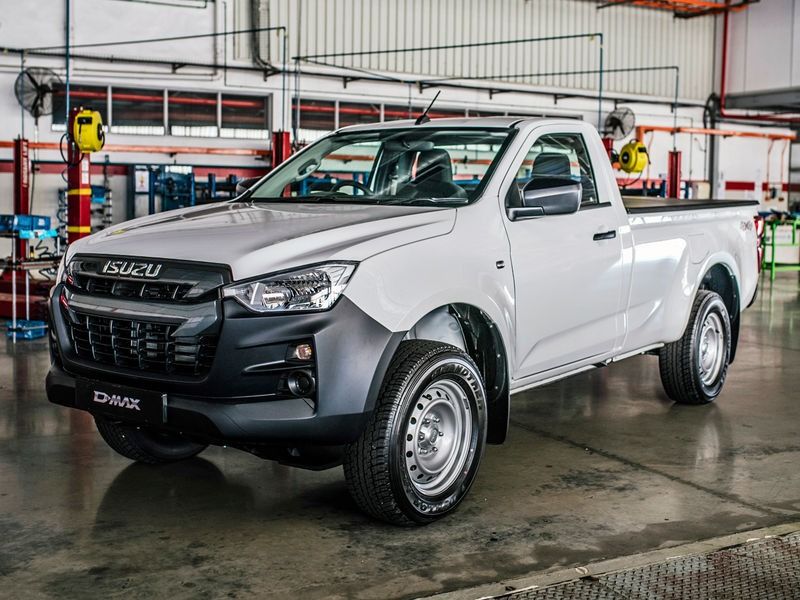
Isuzu is one of the most trusted bakkie brands in South Africa, with its D-Max prominently featuring in fleets needing single-cab bakkies that work hard.
However, compared with the LDV T60 Utility single cab, the equivalent Isuzu D-Max is over R130 000 more expensive at R433 860. It is also less powerful than the Chinese bakkie.
The Isuzu D-Max 1.9-litre turbodiesel produces 10 kW less power and 60 Nm less torque than the LDV T60 Utility. But the Isuzu does have a 6-speed manual gearbox, like the LDV, which promises better fuel consumption on extended drives.
In terms of loading ability and traction, the Isuzu is outgunned by the LDV. It does not have a selectable rear differential lock, or even a self-locking limited-slip differential. Braked towing capacity is much lower than the T60’s, too, at only 2 100 kg.
Search for an Isuzu D-Max on Cars.co.za
The D-Max is the payload king
Where the Isuzu 1.9-litre single cab does have the measure of its bargain-priced Chinese rival is payload. At 1 305 kg, it carries 135 kg more than the LDV. In fact, the Isuzu’s rating is class-leading for a highway-capable bakkie. Mahindra’s ultra-cheap bakkie carries more payload, but you wouldn’t want to take it on the highway for a long drive.
To give you an idea of how good the entry-level D-Max single cab is at carrying really heavy loads, its payload is nearly equal to that of the legendary Land Cruiser 76 single cab.
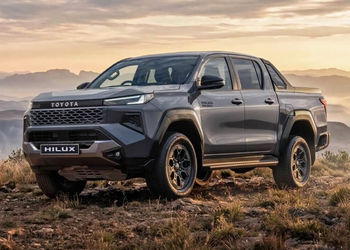
Rival number 2: The Toyota Hilux
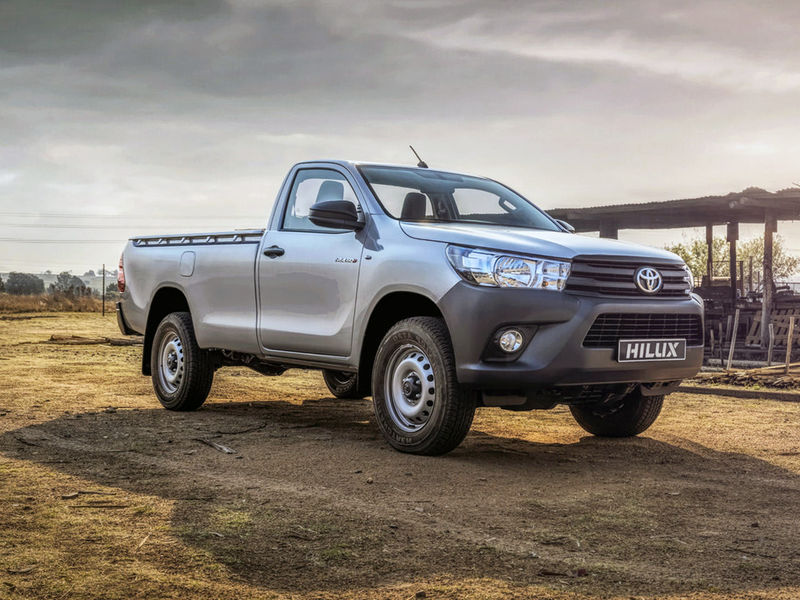
The Hilux single-cab range is in a transition phase. Toyota’s biggest-ever South African engineering investment is delivering 9th-generation Hilux double cabs to the market, but the single cabs are still the previous 8th-generation version.
While the new Hilux 2.8 single cab’s pricing and spec have been confirmed, for this single-cab comparison, we’re using the 8th-generation runout version because it’s still the cheapest Hilux you can buy.
Like the Isuzu, if you choose the Toyota Hilux 2.4 S single-cab over the equivalent LDV T60, you’ll pay a price premium of more than R120 000 (R426 300). What do you get for that price jump? Certainly not more performance.
The Toyota Hilux 2.4 S single cab uses the familiar and proven 2,4-litre turbodiesel rated at 110 kW and 343 Nm, which means you pay a lot more for 10 kW less power and 67 Nm less torque. You also sacrifice a gear, as the Hilux features only a 5-speed manual gearbox.
Comparing loading ability and towing prowess, the Hilux can handle a heavier trailer than the Isuzu, but carry less. Its 1 085 kg payload is still acceptable, though, and the 2 500 kg braked towing capacity is slightly above average for the class, but still well short of the LDV T60 Utility’s 3 000 kg.
Like the Isuzu, Toyota’s product planners choose not to fit the entry-level Hilux with a locking or limited-slip differential.
Search for a new Toyota Hilux on Cars.co.za
The value of aftersales support
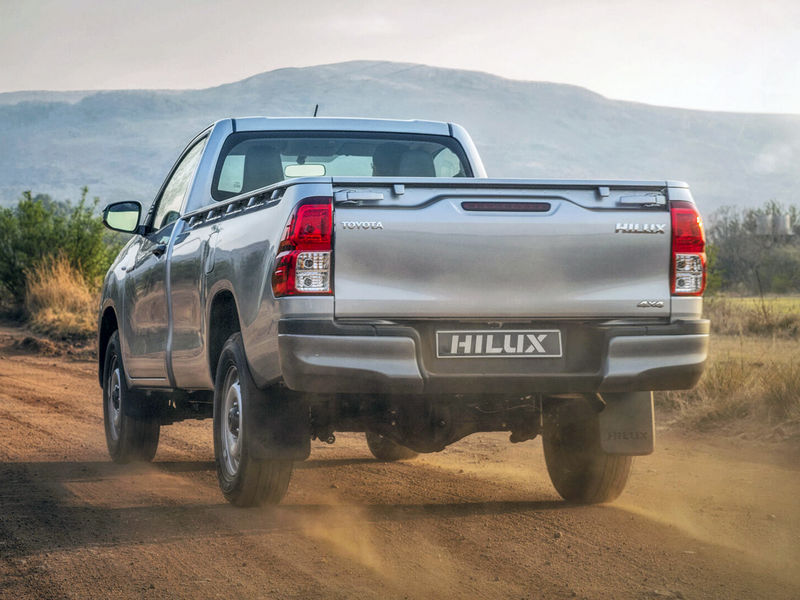
Where the Toyota single cab is absolutely unrivalled is in its aftersales support and predicted residual values. Toyota has an enormous South African dealer network, staffed by expert technicians who know bakkies better than anyone.
The brand also has a huge parts-distribution warehouse and distribution systems. Because the Hilux is locally built, most of its parts are sourced from the South African automotive supply chain rather than imported. Compare that to LDV, which is still new to South Africa and needs to import all parts to keep its bakkies running.
The Chinese automotive supply chain has developed into an incredible ecosystem at immense scale. However, there’s still the issue of shipping and distribution delays in getting those parts to all the global markets.
LDV also has only 17 dealers, compared to Toyota’s dealer network, which numbers more than 200.
Lance Branquinho

Lance Branquinho is a Namibian-born writer and photographer who has won numerous motoring journalism awards. He once smuggled parts to South America, in a minor contribution to help Giniel de Villiers finish on the podium at the Dakar. He fears for the eventual collapse of the air-cooled Porsche 911 market – and keenly awaits, in vain, the return of the brand's 928.