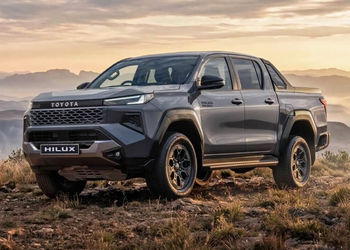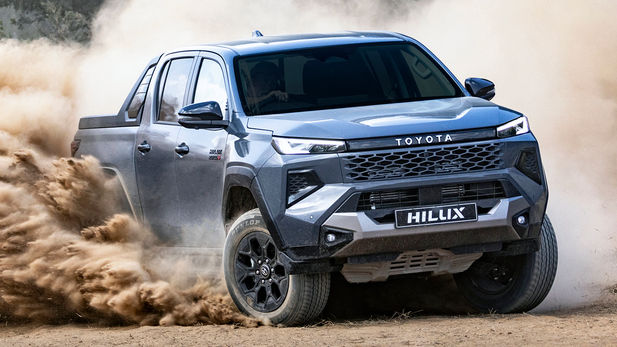
The Toyota Hilux and the Springboks face a similar challenge: how do you consistently stay on top?
If you work as a product planner in the car industry, nothing is certain. There was a time when German luxury sedans were the most profitable models in the world. In fact, they were so in demand in the 1990s and early 2000s that German car companies hardly had to market them. Today, the German industry is in crisis due to shrinking profits. Cue the Hilux as an example of how to do it right.
Toyota South Africa Motors doesn’t have the same problem as the Germans. Basically, whatever it does, works. Toyota is the world’s biggest car company, so you would expect it to be successful everywhere. But in South Africa, it holds a proportionally higher market share than anywhere else in the world. And most of that dominance is because of the Hilux.
Hilux has become its own brand…
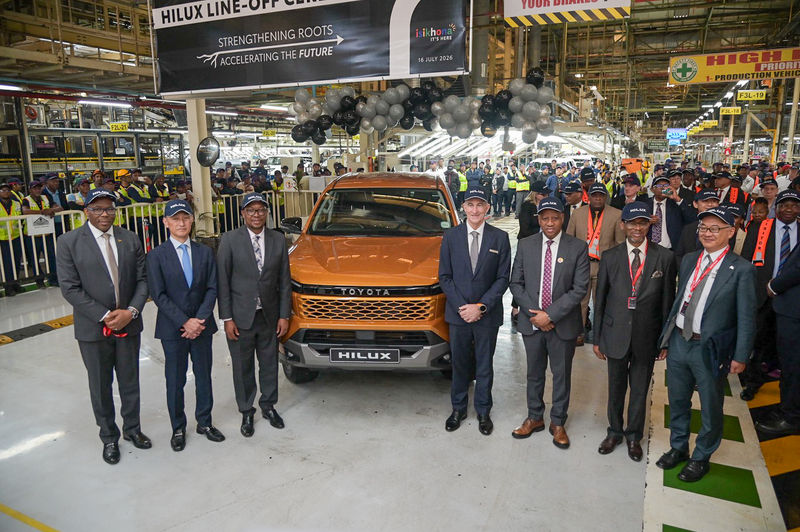
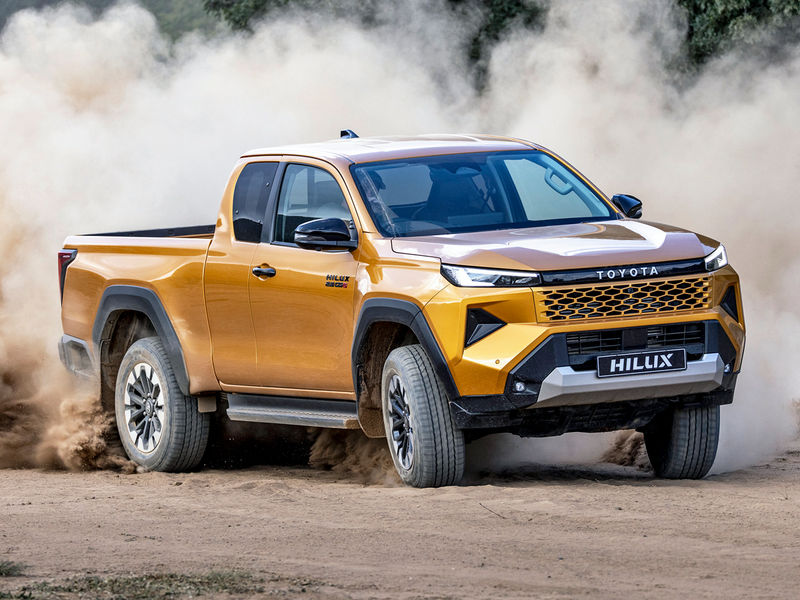
Most South Africans aren’t old enough to remember a time when the Hilux wasn’t South Africa’s best-selling vehicle. For Toyota South Africa Motors, the presence of Chinese bakkies has not really challenged its Hilux success. Despite being old, the previous-generation Hilux bakkie was still South Africa’s dominant model range last year. There’s no doubt that the new Hilux will sustain the model’s sales dominance in South Africa, or more likely increase it.
From commercial buyers who order single-cab Hilux bakkies with steel wheels, to parents who buy a double-cab Hilux as the family vehicle, this model range is so successful that it’s legitimately become a brand unto itself.
Real product feedback makes all the difference
More South Africans are buying bakkies, especially double-cab bakkies, than ever before. That means that Toyota’s customers are no longer only commercial buyers, farmers or overlanding types.
With the Hilux having been the best-selling vehicle in South Africa for such a long time, Toyota has excellent data on what customers want and need. This allows the Toyota South Africa Motors product team to negotiate with purpose when it needs to suggest the ideal specification matrix to head office.
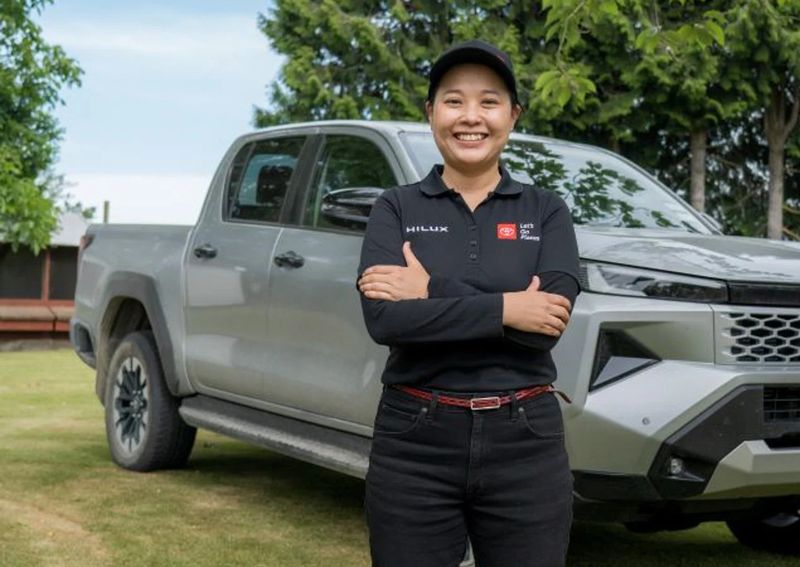
The regional engineering chief for the Hilux product line is Thailand’s Anyarat Sutthibenjakul. She knows the Toyota IVM platform better than anyone else. Anyarat has spent a lot of time in South Africa and Namibia, meeting with customers and learning what local bakkie drivers need. Her decisions about specification and allocation for South Africa aren’t made from slideshows and spreadsheets. They are made from real-world experience with Southern African owners.
Hilux modernisation risks
The Springboks seem unstoppable, but Rassie Erasmus and Siya Kolisi understand dominance is earned and complacency creates risk.
A reason why most buyers prefer the Hilux is that Toyota is a conservative company when it comes to product features and engineering integration. Toyota rarely leads with new technology implementation. Its bakkie engineers don’t believe in first-mover advantage because they know their customers demand durability above everything else.
The truth is that the bakkie market is changing. A greater share of the per-unit bakkie profits sits in the lucrative luxury double-cab derivatives. Buyers of those bakkies, who are mostly urban drivers, demand far more technology and comfort features. It’s the kind of specification that Chinese companies have been incredibly good at providing at a very low cost.
We don’t know the medium-term durability of these higher-technology Chinese bakkies in local conditions. But their presence and amazingly feature-rich cabin architectures are creating pressure on Hilux. Why? Because customers in the double-cab market are comparing its proven engineering and design with the latest over-the-top features from Chinese brands.
Search for a new Hilux on Cars.co.za
Hilux residuals are real
The new Hilux has 3% more local components than any previous version. Toyota South Africa Motors has spent more than R10 billion in industrial engineering on the 9th generation. But what does that really mean for South African buyers and Hilux owners?
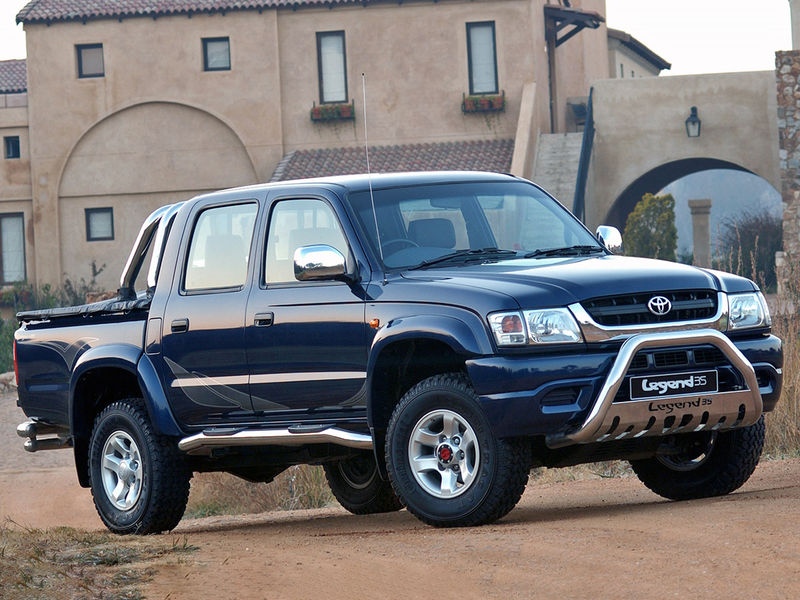
Search for Hilux models for sale on Cars.co.za and you’ll spot very little relative depreciation even on models that are 15 or 20 years old. There are several reasons for this, the main one being Toyota’s conservative engineering approach. Technology and features are integrated into the Hilux only when proven, rather than trying to be trend-setting with specifications.
Other factors also contribute to the Hilux’s excellent residuals in a very competitive and heavily traded local bakkie market. One of these is that Toyota has a lot of dealerships, and they do very well commercially. That’s simple to understand. Toyota dealers sell the best-selling model in South Africa (Hilux) and several of the best-selling large SUVs, too, which makes a Toyota dealership very profitable.
Dealerships that make good money invest in their maintenance and service staff, tooling and diagnostics. That’s why you are unlikely to get stranded in the middle of nowhere without responsive assistance if you have an issue with your Hilux.
Why locally produced parts matter
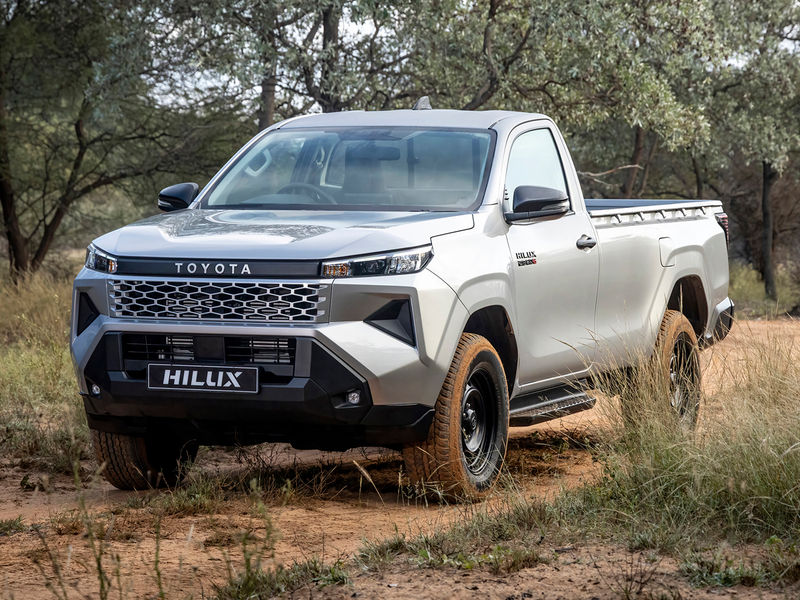
Another factor that supports the Hilux’s residual values – and the continued demand for these bakkies – has a lot to do with the localisation data that most buyers and car enthusiasts gloss over.
The more local content there is in a Hilux, the easier it is to source service and crash parts. And that’s important because the availability of crash parts or peculiar small service items are often a weakness among importers, especially many of the emerging Chinese brands.
Because so many parts that go into the new bakkie built in Prospecton are made by local suppliers, owners are unlikely to get stranded with a multi-month wait to fix an issue.
The Toyota Hilux success story in South Africa is one of rugged engineering. Lots of dealers. And lots of locally sourced parts ready for overnight dispatch. It’s like the Springboks having that first, second and third XV squad depth. The concept isn’t complicated but the execution is flawless, and that’s why it works.
Lance Branquinho

Lance Branquinho is a Namibian-born writer and photographer who has won numerous motoring journalism awards. He once smuggled parts to South America, in a minor contribution to help Giniel de Villiers finish on the podium at the Dakar. He fears for the eventual collapse of the air-cooled Porsche 911 market – and keenly awaits, in vain, the return of the brand's 928.