X-Trail versus RAV4 used to count as the compact-SUV comparison in South Africa. Should you still care which one is best in an era of so many Chinese crossovers and SUVs?
X-Trail. Great name but, as with so many of Nissan’s legacy products, it’s been largely forgotten. That’s a pity, because there was a time when the Nissan X-Trail was Toyota’s biggest rival in the mid-size crossover-SUV segment.
Toyota’s RAV4 is one of the world’s best-selling vehicles. In South Africa, it has quietly dominated the mid-size crossover-SUV segment for a long time. Most people know how successful the Fortuner is, but not as many pay attention to the monthly RAV4 sales stats, which are deeply impressive.
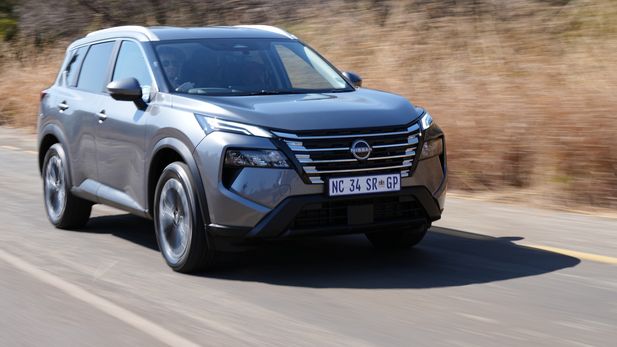
There’s a new RAV4 in the market, and it’s the first one with a PHEV powertrain. In response, Nissan has launched the updated version of the 4th generation of its mid-size crossover SUV. And that’s unusual for a Nissan product in South Africa, where followers of the brand have been used to waiting for years after an international model rollout for local availability.
The X-Trail is arguably Nissan’s most important product
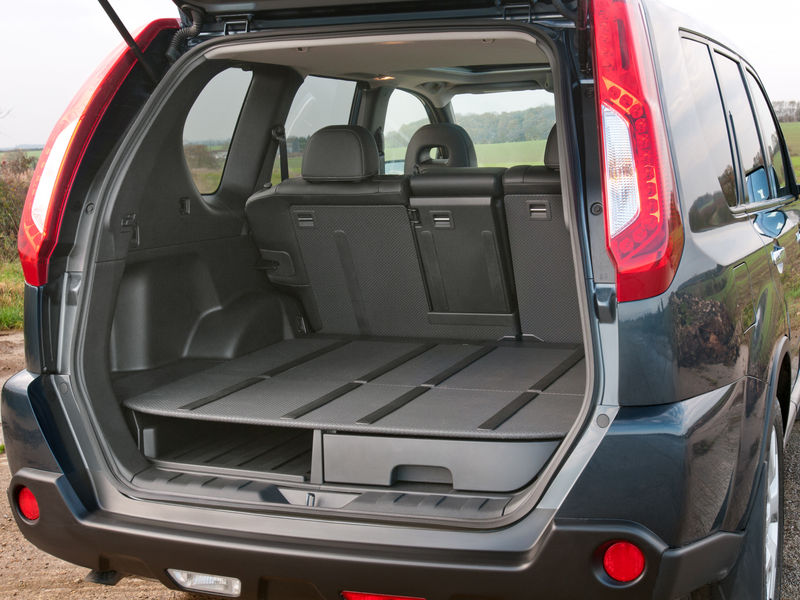
In the 1st decade of the century, Nissan had an incredible product offering in South Africa. It’s almost unrecognisable from what the brand offers in South Africa today.
In the late 2000s, the Navara was unquestionably the best-looking bakkie on sale in South Africa. The 350Z was a bargain driver’s car, and the GT-R redefined what supercar ownership could be. And then there was the second-generation X-Trail.
Nissan had engineered the X-Trail with good turbodiesel engines and decent all-terrain ability for a non-low-range-enabled vehicle. It had brilliant packaging, too. The X-Trail had a huge load area and lots of clever storage spaces for muddy mountain bikes, trail-running gear, and fishing or adventure equipment.
If you were in the market for a mid-size crossover SUV toward the tail-end of the 2000s, the ideal shortlist featured a RAV4 and X-Trail.
In 2026, Nissan’s South African product portfolio is much smaller, while Toyota remains the most influential car company in South Africa. Every fifth car sold in South Africa is a Toyota, after all. By comparison, Nissan has become a niche brand trying to reinvent itself now that it’s ceased local production after 6 decades. That means the X-Trail has become even more important.
Which brings us to the X-Trail and RAV4 in 2026…
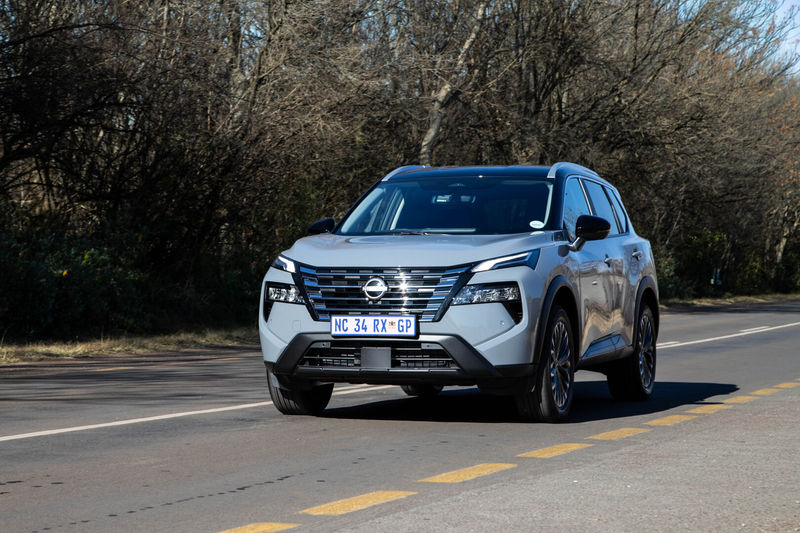
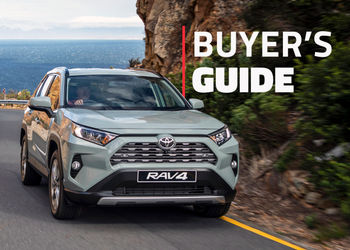
How does the new Nissan X-Trail compare to Toyota’s RAV4? Curiously, the latter now has a much more daring design than the X-Trail, which was never really the case.
From the first-generation X-Trail, Nissan designers pushed the boundaries of design. For example, the original X-Trail had a central instrument stack, which showed Nissan’s confidence at the time.
Compared to similarly priced Chinese crossover SUVs, the latest X-Trail and RAV4 don’t have the same infotainment screen sizes or graphics quality. But they do have more logical ergonomics and a sensible UX, with physical buttons, dials, and controls where people need them.
Search for a Nissan X-Trail on Cars.co.za
Luggage space and payload
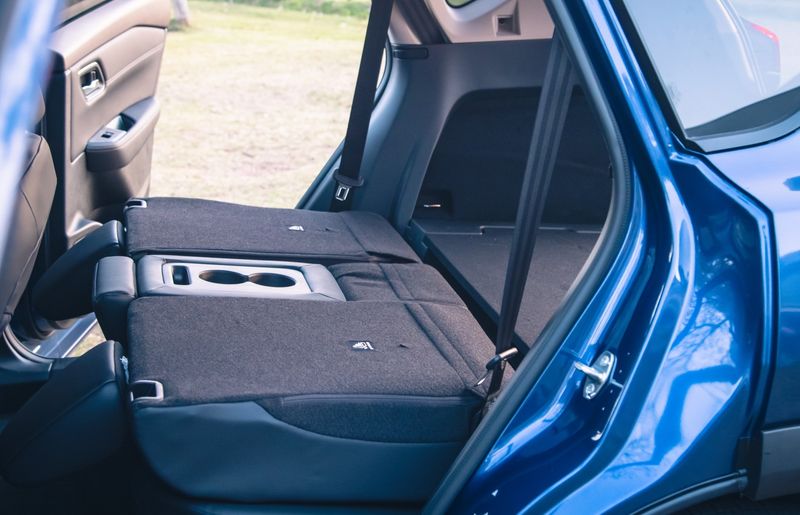
Crossover SUVs need to be versatile when it’s weekend-away or vacation time. That means decent luggage capacity and a usable payload rating.
The X-Trail can take 585 litres of luggage, which is sufficient, and leave you with about 480 kg of payload capacity when packing for that big year-end road trip with the family. Those are useful numbers for a crossover SUV of the X-Trail’s size.
However, the Toyota soundly beats it. Offering 688 litres of luggage space, the RAV4 can also take a payload of 500 kg (on the non-hybrid models, mind you).
Search for a new Rav4 on Cars.co.za
How do their engines and prices compare?
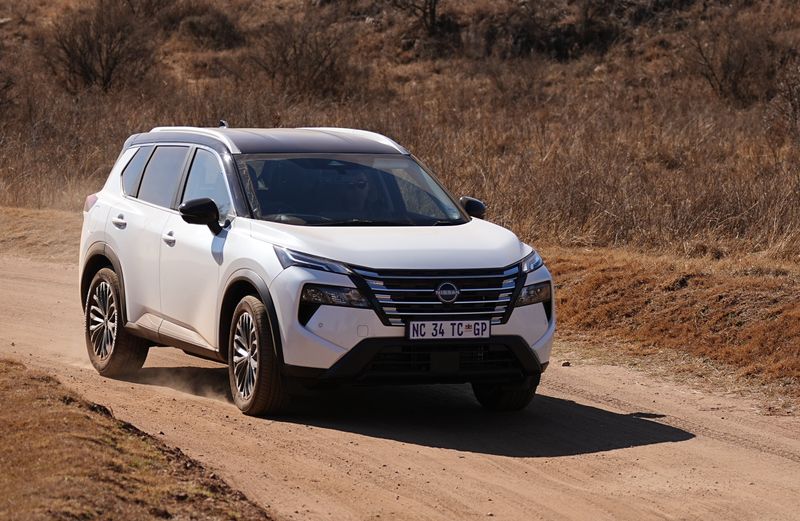
The mid-size crossover-SUV segment is where Chinese brands offer incredibly advanced HEV and PHEV powertrains. Even Toyota has had to respond, launching the latest RAV4 with HEV and PHEV powertrain options, but at much higher prices than what is available from brands like Jetour.
Nissan offers just one powertrain on the new X-Trail at launch, a proven 2.5-litre, naturally aspirated petrol engine. It’s broadly the same configuration of engine that powers the petrol component of the RAV4 hybrids. Meanwhile, the RAV4 non-hybrid is powered by a smaller 2.0-litre naturally aspirated petrol engine, which is less powerful and torquey than the X-Trail’s.
Nissan’s launch strategy has been impressively targeted, with significant discounts on the new X-Trail compared to previous versions. The entry-level X-Trail is priced at only R599 900. That compares favourably with the RAV4 range starting at R770 500 for the 2.5 GX HEV E-Four.
The most relevant pricing comparison is between Toyota’s mid-grade RAV4 2.0 VX, which costs R799 900, and the spec-equivalent X-Trail 2.5 Acenta at R770 900. The Nissan’s outputs measure 135 kW and 244 Nm versus the Toyota’s 127 kW and 203 Nm. At high altitudes like Gauteng, the X-Trail’s torque advantage should play a noticeable role.
It’s clear these 2 legacy rivals are as close as ever. However, in a market awash with glitzy new rivals offering turbocharged engines and laptop-sized infotainment systems, their jobs to convince potential buyers to sign on the dotted line have become much, much more challenging…