Under Akio Toyoda, Toyota evolved from a trustworthy brand that produces good cars to one that appeals to enthusiasts. Koji Sato, who will succeed him as the firm’s CEO, is also a car nut – but he’ll accelerate the electrification of TMC’s product line-up.
It’s not fun being number one. We live in an age of unprecedented data availability; an era in which statistics reign supreme. And when you lead the rankings, be it as the world’s biggest car company or the team that tops the PSL table, it’s a double-edged achievement. You inadvertently become a target.
In terms of sheer sales volume, Toyota Motor Corporation (TMC) is the world’s largest car company. It’s a title that it has held for the past 3 years. At its core, Toyota also remains a thoroughly Japanese company. That makes Toyota a challenge to understand for analysts, investors and rivals. But not for customers.
The Aichi-based company enjoys tremendous customer loyalty across many segments in diverse markets, yet, not to be too unkind, it doesn’t produce truly class-defining vehicles. Good vehicles? Yes. Highly reliable vehicles? Absolutely. And, on those 2 traits, Toyota has built its brand around the world.
The problem with being number one
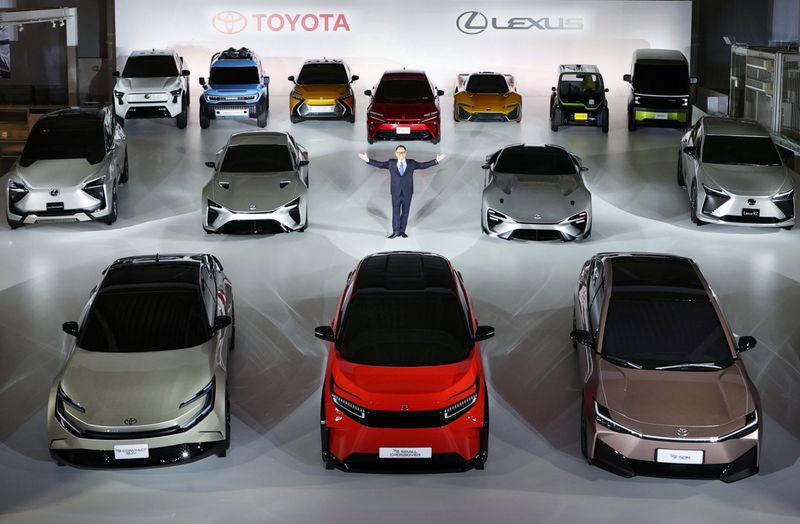
When you are the world’s biggest car company, everything you do and say is scrutinised. And Toyota’s reticence towards battery electric vehicles (BEVs), has been leveraged by rivals as a potential weakness. The fact that Toyota markets a vast portfolio of “new energy” vehicles is curiously disregarded by many.
When Maserati gets a new boss, the global car industry hardly takes notice. It’s a Friday afternoon e-mail or tweet. But the announcement that Akio Toyoda is vacating his role as Toyota CEO – that’s huge news.
If Toyota is generating significant profits and enjoying immense customer loyalty in most markets, why is its boss leaving? Toyota’s corporate critics – and there are many of them – say that it’s because of Akio Toyoda’s well-publicised indifference to battery-electric vehicles (BEVs). But, as with corporate changes of this magnitude, there’s much more going on in the background…
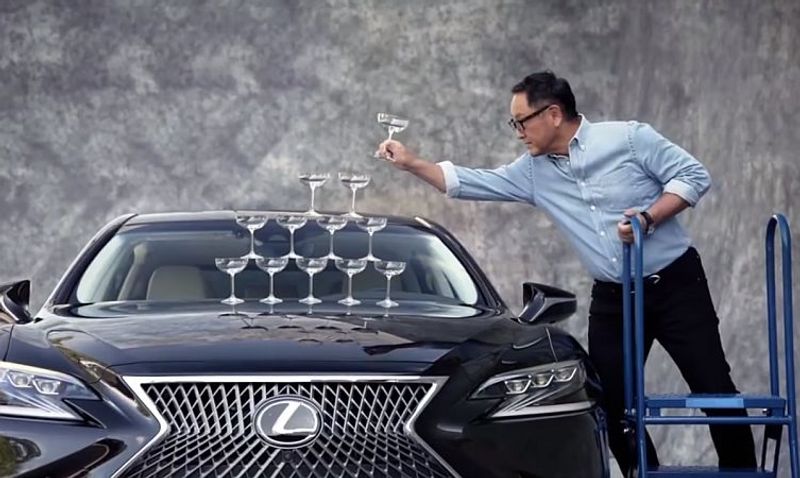
Was Akio Toyoda the right boss for Toyota?
All of the world’s greatest car companies started as – and grew from – family businesses (that means the firms were affected by sometimes messy family politics and had unusual management structures, such as powerful board positions reserved for family members). But that’s changed due to the industrial might of China, where the Beijing government’s shareholding and influence nix car-company family legacies.
Toyota, however, is unique among the world’s most influential car companies because the founding family remains powerfully involved. And not only involved – in control. BMW’s Quant family are silent shareholders. And members of the Porsche/Piech dynasty don’t serve in CEO roles at any VW Group entities – Audi, Bentley, Bugatti, Lamborghini, Porsche, Seat or Volkswagen. Mercedes-Benz? It has been a purely corporate company for decades.
Honda? No Hondas as the CEO. Ford? Founder Henry Ford’s grandson, Bill, serves in a ceremonial role. But Toyota has been run by Akio Toyoda since 2009. And Toyota has done well, very well, ever since.
The driver’s CEO
In South Africa, Toyota dominates the new-vehicle market and has done so for longer than most of us can remember. Globally, of the top 10 best-selling vehicles, 3 are Toyotas. And these are global platforms that serve many customers in diverse markets. Toyota builds everything from rugged off-road vehicles to hybridized crossovers and attainable low-centre-of-gravity sportscars. And it’s a very profitable pursuit.
Akio Toyoda isn’t an engineer. He’s a business and finance graduate. But what made him such a perfect CEO for Toyota, is that his financial awareness was always subservient to an authentic love of cars.
Design. Driveability. Attainability. Akio Toyoda understood and lived these concepts more truthfully than many car company CEOs, most of whom are merely high-level managers and cost optimisers. Such execs tend to be rather disinterested in products, but obsessed with balance sheets and graphs.
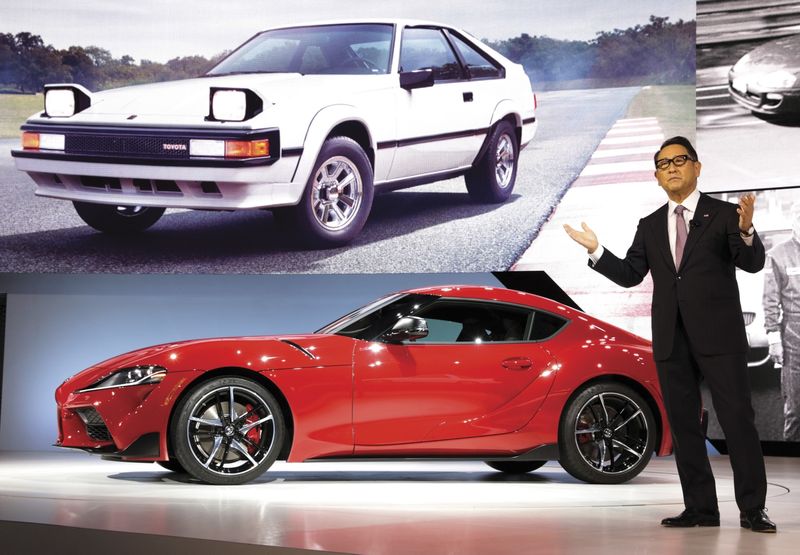
He steered Toyota through a crisis
When Akio Toyoda became TMC’s CEO in 2009, it was a year after the global financial crisis and a year before Toyota would face a bizarre “unintended acceleration” mistrust campaign in the United States. The Japanese earthquake and Tsunami would follow in 2011. Despite facing these difficult challenges during the early phase of his CEO tenure, Akio Toyoda demonstrated his value as a product person.
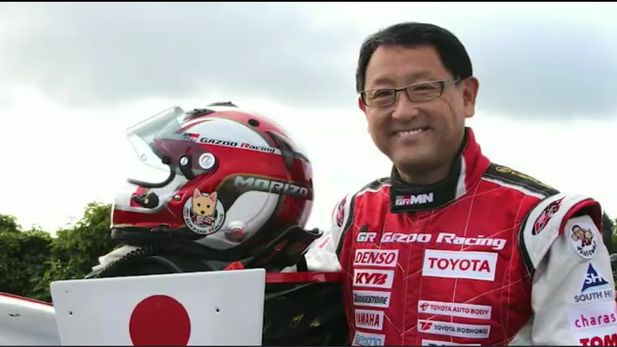
He established Gazoo Racing, very much to the benefit of Toyota South Africa Motors’ (TSAM) Dakar racing efforts. That is something that TSAM’s product managers have expertly leveraged to create the Dakar trim level for Hilux. Under Akio Toyoda’s guidance, some of the best Japanese cars in history have been conceived, developed and brought to market, including the LF-A, GR 86, GR Supra and GR Yaris.
It can be argued that Akio Toyoda is the 2nd-best family-member car-company CEO of all time, behind the legendary Ferdinand Piech, who built Volkswagen AG into the empire it has become. But if Toyoda-san has been so good for Toyota, why did he make the sudden decision to vacate his position as CEO?
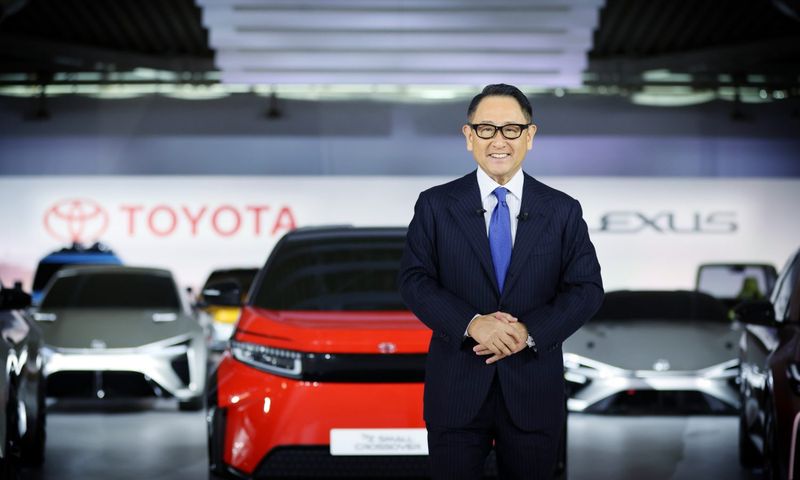
Why is Akio Toyoda leaving?
A car company CEO can listen to consultants, designers, product people and brand architects all day, but there’s no substitute for driving. Akio Toyoda would get out of the boardroom to spend time behind the ‘wheels of a nascent Toyotas and his love of driving manifested in the brand’s product portfolio.
The low-volume GR Yaris was evidence that the world’s biggest car company was run by a CEO who would rather be clipping apexes at a test track, than approving track changes in a strategic document.
As a genuine driving enthusiast and sportscar fan, Akio Toyoda was always going to be unimpressed with BEVs’ drawbacks (such as their weight and diluted driving experience, given current battery densities).
Despite a nearly unrivalled portfolio of petrol-electric hybrid vehicles, initially marketed through Prius and the Lexus brand channel, Toyota isn’t selling a million BEVs a year – but Tesla is.
Toyota knows how expensive the transition to BEVs will be: not only regarding manufacturing costs, but retail pricing for customers. TMC controls many Japanese suppliers and is headquartered in a country with much deeper advanced-battery-production knowledge than any American or European car brand.
Unlike many other car company bosses, automotive-market analysts and industry observers, who believe a global BEV fleet can be brought to fruition simply and easily, Akio Toyoda has been transparent about the discrepancy between pure-electric/battery-car aspirations and immediate deliverables.
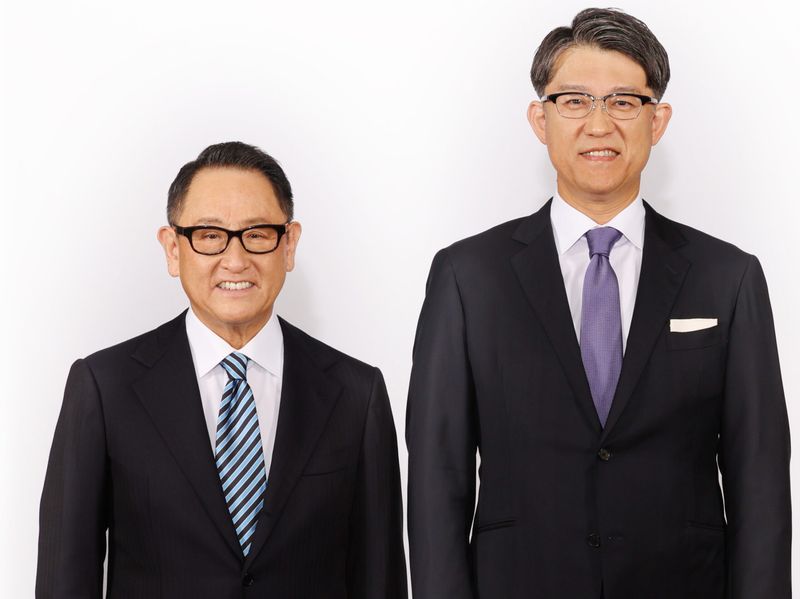
Who is the new CEO of Toyota Motor Corporation?
Koji Sato. And he’s young (53), at least for the CEO of the world’s biggest car company. With Sato’s appointment, Akio Toyoda wants to ensure his legacy of creating driver’s cars and product excellence survives. This is why Sato, who owns an AE86, was chosen ahead of a Toyota finance executive.
Sato’s appointment is a significant change for Toyota. Some feel that Akio Toyoda was damagingly conservative in his attitude towards BEVs, but many of Toyota’s most profitable models (the bakkies and large SUVs) serve customers who have little to no desire for battery-electric powertrains.
Toyota’s new CEO must counter Tesla in the US and in Europe while reshaping Toyota’s powertrain R&D, without disrupting its legacy profit flows from the global bakkie and large SUV businesses.
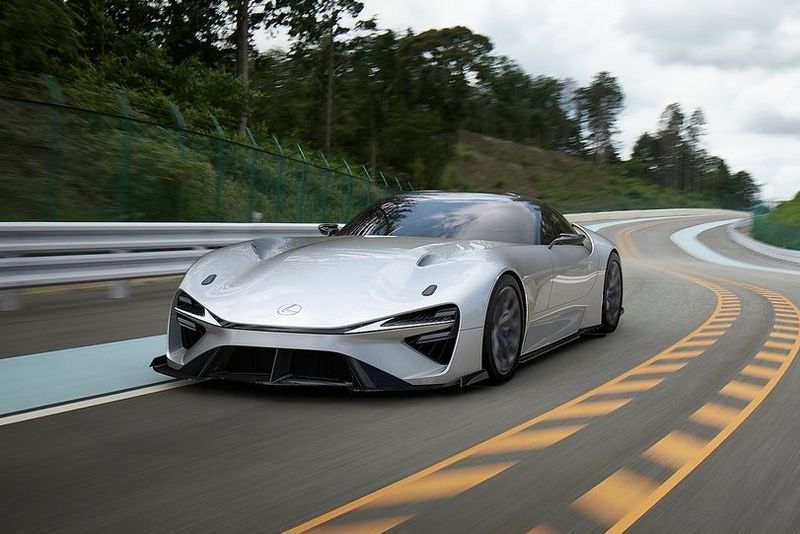
Sato is an engineer and currently serves as Toyota’s brand manager. That means he has an expertly informed global view of the company’s customers – including those in South Africa. But it’s where Sato worked from 2016-2020 that really matters. During this timeframe, he served in senior engineering and management roles at Lexus, a brand which has served as Toyota’s stealth battery-development entity.
Timing the battery market
Having dealt with challenging hybridisation/electrification choices at Lexus, Sato has a strong overview of battery chemistry trends – something of immeasurable value for any car company executive in 2023.
Sato’s advanced engineering literacy should help him to find solutions for the scalability issues of some battery technologies. It’s worth noting that a Japanese battery supplier, Panasonic, was Tesla’s enabler.
Toyota has the cash and proximity access to Japan’s advanced battery industry. To secure the best battery chemistries, scale matters. This is where Toyota’s ordering magnitudes and healthy cash position can make a big difference.
Car CEOs and the software issue
Of course, the advantage of Sato’s age is that he appreciates software. Coding development and UX integration have been massive cost issues for legacy car companies. Volkswagen has struggled hugely with it. Tesla does it better than anyone else because its CEO, Elon Musk, is a computer scientist at heart.
Japan remains the world’s most digitally connected and advanced nation, with deep coding competency at all levels. But digital awareness is a factor of youth.
If Elon Musk was a decade older, would he have been as tech-immersed during his teens, which laid the groundwork for his later career breakthroughs? Probably not. And that’s why Sato, at 53, is the ideal age to understand and network better strategic software outcomes for Toyota. Hopefully, Sato-san will help TMC to circumvent the software and UX issues that have bedevilled Volkswagen in the recent past.
Koji Sato is an inspired choice to succeed Akio Toyota as CEO of Toyota. At a time when fantastically complex powertrain choices must be understood, would you rather have a finance-minded CEO, or a proven automotive engineer, making decisions about the next-generation Hilux’s engines? Exactly…
Related content:
Why Tank 300 matters so much for GWM
Can Jaguar save itself – or not?
Why your next bakkie shouldn’t have side mirrors
Will Chinese cars stay cheap forever?
Lance Branquinho

Lance Branquinho is a Namibian-born writer and photographer who has won numerous motoring journalism awards. He once smuggled parts to South America, in a minor contribution to help Giniel de Villiers finish on the podium at the Dakar. He fears for the eventual collapse of the air-cooled Porsche 911 market – and keenly awaits, in vain, the return of the brand's 928.