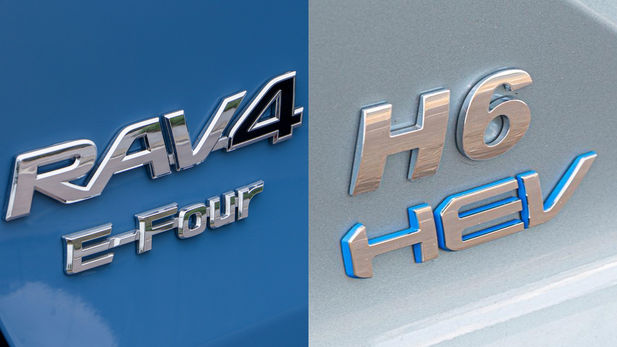
The Toyota RAV4 Hybrid is one of South Africa’s best buys, but it now has fresh competition in the shape of the Haval H6 Hybrid. How do these petrol-electric rivals match up?
Toyota’s RAV4 is a stealthy overachiever. Arguably the original crossover/SUV, the RAV4 dominates global sales in its class – and often, overall. Last year, it was the world’s best-selling vehicle.
Product planners at Toyota clearly know what most global buyers want: a mid-sized (family) SUV with some adventure travel ability and mild powertrain hybridisation.
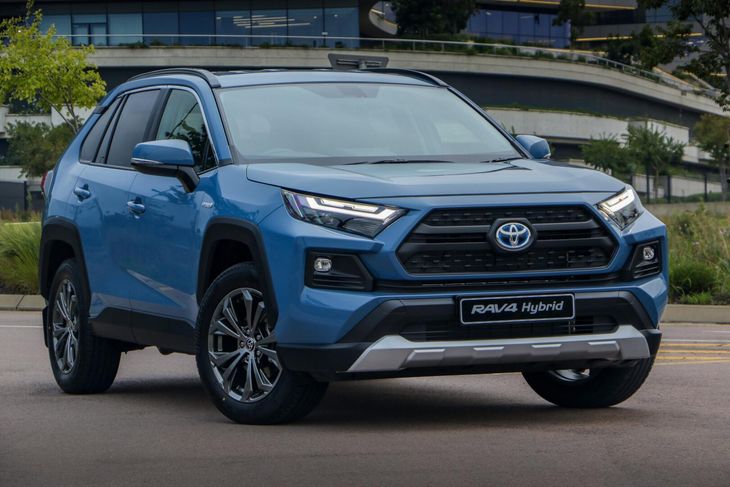
Hot hatch overtaking performance and compact car petrol consumption. The win/win of a hybrid drivetrain.
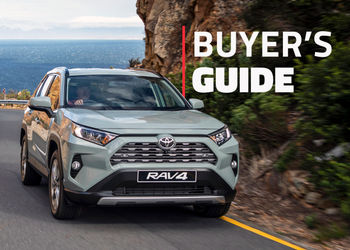
In the local context, there is a solid argument to be made that Toyota’s RAV4 hybrid is probably South Africa’s best family vehicle. Its dimensions are more manageable for city driving than most rugged SUVs, like the Fortuner, which is a 7-seater, bakkie-based Adventure SUV. The refinement of its shared Corolla platform makes the RAV4 a lot less fatiguing to drive than any ladder-frame type SUV.
Best of all is that hybrid powertrain. Toyota’s been building mild hybrid vehicles for a long time. Prius was available in the local market way before the concept of “new energy” vehicles escaped a creative agency meeting room, and entered the voice of marketing jargon.
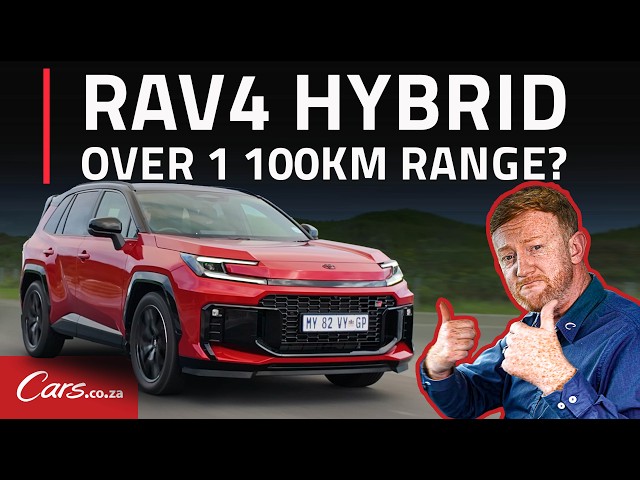
Watch our Toyota RAV4 Hybrid E-Four video review
The car changing hybrid perceptions in SA
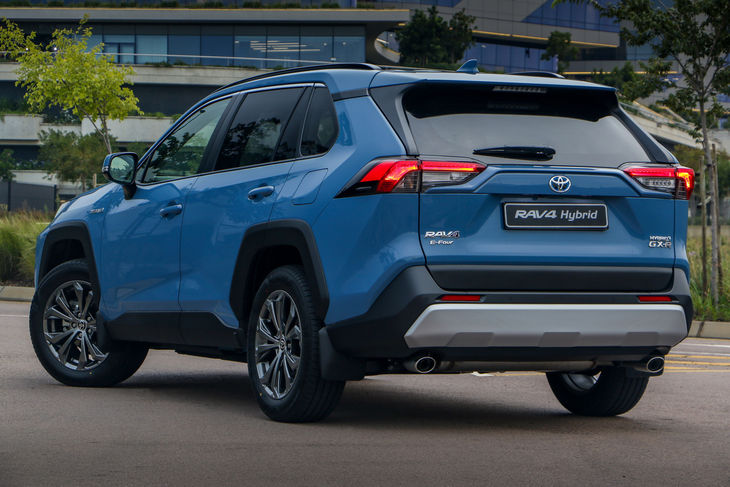
Unofficially, this is probably the best family vehicle you can own in South Africa.
Many South Africans still class hybrids in the stereotype of Prius: slow, weird-looking, light on fuel and easily ruined with prolonged use on dirt roads. But RAV4 Hybrid is only one of those things: it’s frugal, not slow (at all) and doesn’t look strange (but for some blue graphics). And like any RAV4, it’s entirely capable of journeying thousands of kilometres on South Africa’s rural dirt roads.
The RAV4 Hybrid offers a fantastic driving experience, completely unrelated to its statistics. The power system output numbers aren’t shy, with Toyota’s petrol-electric family SUV making the kind of power you’d expect from a hot hatch. But the driving appeal is how the RAV4’s hybrid’s power becomes available exactly when needed – at peak throttle.
The electric energy that flows into acceleration with a hybrid system is there when you need it for executing overtaking manoeuvres. But it doesn’t create a fuel consumption burden when cruising. That’s the issue with any pure petrol or diesel engine – it’s great having the overtaking performance of a potent 2.0-litre turbopetrol or -diesel, but you pay for its unused latency with marginally higher fuel consumption.
Meet the Chinese ‘RAV4 Hybrid’
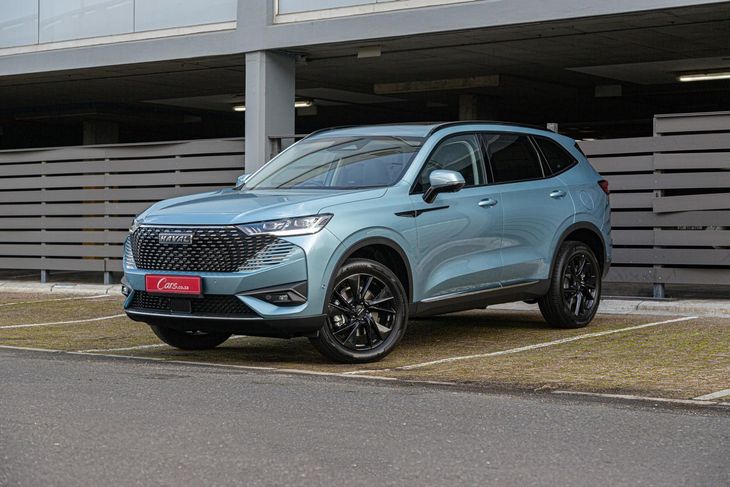
The H6 Hybrid looks good and rides on a truly global-standard vehicle architecture – from GWM.
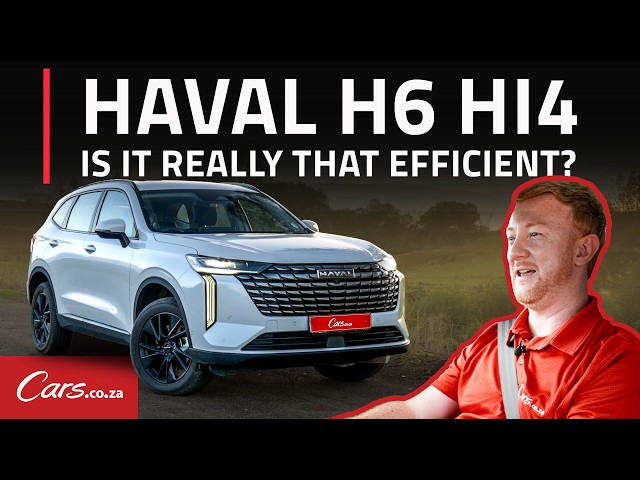
But what if you could have most of what makes the RAV4 Hybrid great, but with a marginally higher power output – and that’s just for starters? Well, that’s exactly what the new, range-topping Haval H6 HEV (hybrid electric vehicle) offers. Keen to harvest the moment and resurgent brand adoption that South Africans have shown towards Haval’s latest products, the H6 Hybrid has a terrifically convincing specification. In theory.
Its platform is proven. The H6 Hybrid is built on the ironically named, but very advanced, GWM L.E.M.O.N. architecture. That means no crashing ride-quality or awkward body roll that older-generation Chinese vehicles were infamous for. As a given for any current-generation Haval model, the cabin architecture is tidy and materials anything but cheap and nasty.
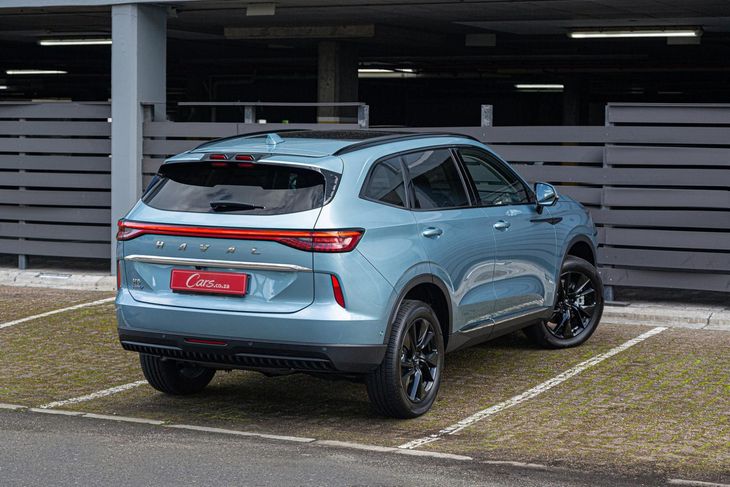
The Haval H6 Hybrid’s engine produces 113 kW/223 Nm, while its electric motor makes 139 kW/300 Nm.
But, for the (battery-assisted) thrust of this article, let’s compare the balance of performance and fuel consumption that Toyota and Haval’s petrol-electric medium (family) SUVs offer.
Hybridised powertrains are complex, and Toyota has a particular methodology of stating total system outputs, which are often lower than cumulative petrol and electric motor power ratings. The RAV4 Hybrid’s petrol engine is good for 131 kW, with its electric motor spinning 88 kW of power. But combined, it only has a total power output of 163 kW (no combined torque figure is stated). Haval’s H6 Hybrid? It’s claimed to produce a total system output of 179 kW and 530 Nm.
The H6 Hybrid is more powerful than Toyota’s new-energy drivetrain RAV4, but analyse the technical specifications with more scrutiny, and an interesting detail emerges. One that could influence fuel efficiency and long-term ownership cost.
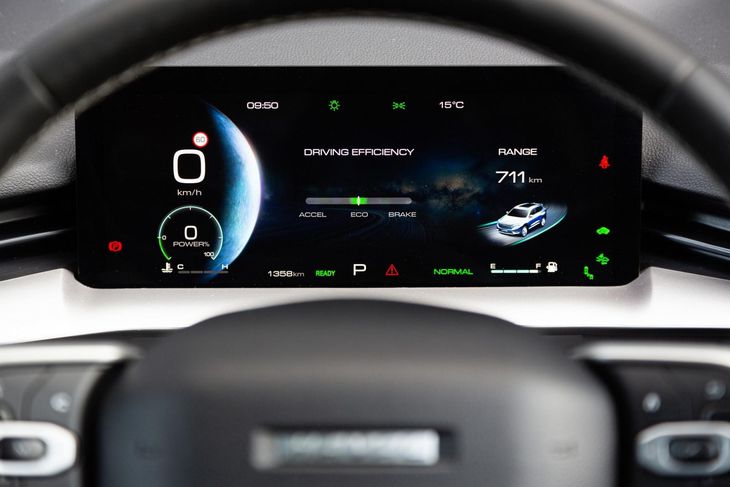
Befitting a top-of-the-range derivative, the H6 Hybrid comes fitted with a digital instrument cluster.
The Haval H6 Hybrid utilises a 1.5-litre 4-cylinder turbopetrol engine, which is much smaller than the RAV4 Hybrid’s naturally-aspirated 2.5-litre 4-cylinder powerplant. Why does that matter if both vehicles have battery packs and electric motors, the latter of which provide the smoothing element of electric power?
Well, hybrid drivetrains are complicated. Marrying internal combustion power and electric energy requires precise software and powertrain calibration. And it is much easier to achieve that balance and provide a smooth hybrid drivetrain experience when the petrol engine component is naturally-aspirated, instead of turbocharged.
Despite dramatic improvements in all aspects of Chinese vehicle technology, design and build quality, engines remain an issue. They aren’t as powerful or efficient, for a given capacity and configuration, compared to the leading engines produced by American, European, Korean and Japanese car manufacturers.
Fuel costs versus battery life
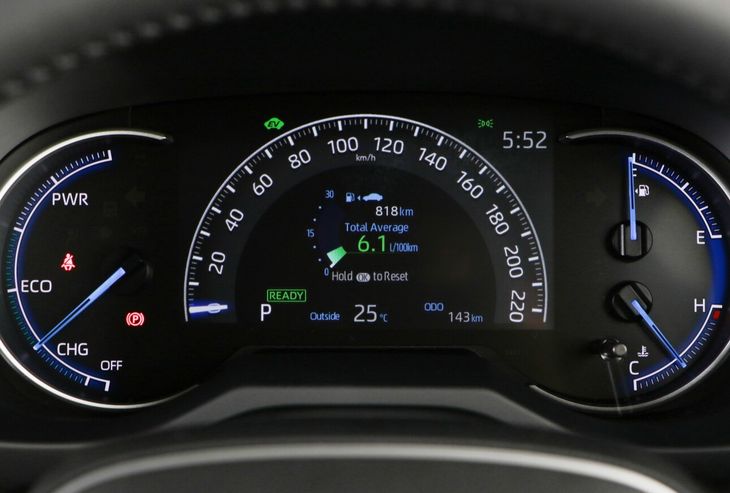
RAV4 offers great range and cruising performance, without the long-term maintenance fragility of turbocharging.
Although it has a smaller petrol engine element as part of its hybrid system, Haval’s new-energy H6 may potentially be heavier on fuel than its RAV4 equivalent – and that’s despite the fact that the capacity of Toyota’s petrol engine is 66% larger. Why? Haval’s H6 Hybrid will be on-boost most of the time and its claimed consumption is 5.2 L/100 km, which is a bit higher than RAV4 Hybrid’s 4.8 L/100 km.
The fuel costs should be to Toyota’s advantage. But what about long-term ownership risk, concerning batteries? An issue which has traditionally created resistance to broader hybrid vehicle adoption domestically.
South Africans need to start cultivating an awareness of battery quality as a powertrain feature of excellence. And although a deep dive into the respective hybrid batteries of the RAV4 and H6 derivatives isn’t possible, China is a global leader in battery production. As such, the turbopetrol part of an H6 Hybrid’s drivetrain might be average, but its battery quality is likely to be class-leading.
Value is a given with the H6 Hybrid
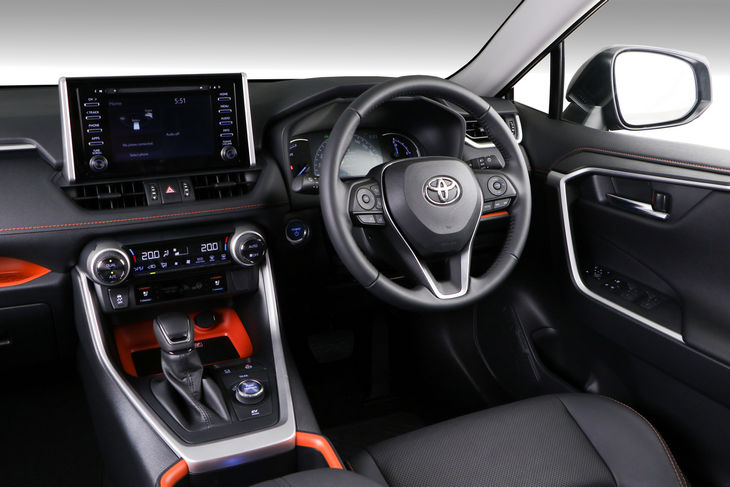
The Toyota RAV4’s interior exemplifies fine build quality, even though it’s not quite as stylish as that of the H6 Hybrid.
And what about the value equation? Assertive market positioning has been a feature of Haval’s South African product strategy and the H6 Hybrid is no exception. With a list price of R669 950, the Haval H6 Hybrid offers many more standard features than the slightly more affordable RAV4 2.5 Hybrid GX-R E-Four (R663 400, September 2022), but holds a significant price advantage over the Japanese brand’s range-topping 2.5 Hybrid VX E-Four derivative (R744 900).
For context, the flagship Toyota RAV4 2.5 Hybrid VX E-Four comes equipped with automatically activated LED headlamps with auto high beam, 18-inch alloy wheels, heated and folding side mirrors, rain-sensing wipers, digital rear-view mirror, semi-digital instrument cluster, blind-spot monitor and rear cross-traffic alert, a lane-keeping system with departure warning and lane-trace assist, adaptive cruise control, a 360-degree surround-view camera system, dual-zone climate control, wireless charging pad, electric adjustable front seats (with heating function), partial leather upholstery, front and rear PDC, plus an electric tailgate. Those are by no means all of the derivative’s features, but the most prominent ones.
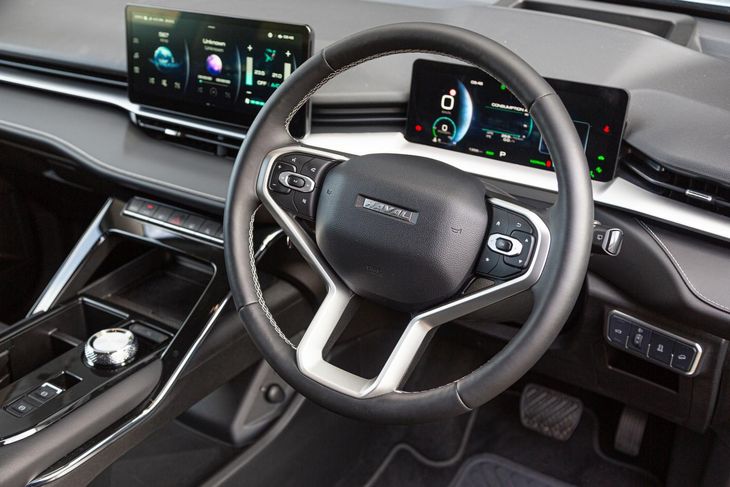
The H6 Hybrid comes fully loaded, plus it offers 20 litres more luggage space than the RAV4, Haval claims.
The H6 Hybrid, which costs about R75k less than the top-spec RAV4 Hybrid (September 2022), may have synthetic leather trim and an electrochromatic rear-view mirror, but it offers the rest of the features mentioned above. What’s more, it comes with 19-inch alloys, a fully-digital instrument cluster, a head-up display, heated and ventilated front seats, a panoramic sunroof, as well as automatic parking with reverse memory assistance, to name just a few additions.
See also: Haval H6 Hybrid (2022) Specs & Price
Toyota’s service plan for the RAV4 Hybrid (6 services/90 000 km) bests Haval’s 5-year/60 000 km offering for the H6 Hybrid, but the Chinese brand’s general warranty is valid for longer (5 years/100 000 km versus 3 years/100 000 km). Both manufacturers offer good hybrid-battery warranties (8 years/195 000 km for the Toyota and 8 years/150 000 km for the Haval).
The arrival of another petrol-electric medium (family) SUV offering – if at the upper end of the segment – could see many more South Africans embracing “new-energy” vehicle ownership. For Haval, the hybrid-drivetrain H6 narrows an advantage in one area where legacy brands, like Toyota, have traditionally held the ascendancy over GWM – advanced internal combustion engine technology. A hybrid derivative of the Jolion small crossover is also in the pipeline.
We will publish a full spec-versus-spec comparison between the range-topping petrol-electric RAV4 and H6 derivatives, as well as a full review of the latter, soon.
Related content:
Chinese brands that have thrived since returning to SA
How Hyundai became the world’s 3rd-biggest car company
Rising interest rates hike up car payments, but depreciation’s the killer