Interest rates and car prices are up, but at least vehicle depreciation is lower than usual. Rule one of buying a car through a vehicle finance agreement is to ensure that you’ll be able to make your payments easily, but rule two – minimise the risk of steep depreciation by choosing your next vehicle wisely – still applies. Here’s why…
If you have the resources to buy a vehicle cash (provided you choose your purchase carefully – but more about that in a little while), it is undoubtedly the smartest way to own your car. But, of course, few of us have that luxury.
Most South African vehicle purchases are financed and that means you are at the mercy of the market regarding the future cost of your car – a rather expensive “asset” that loses value each month that you are paying off the loan against it.
Buying and owning a car is a balance of financial risk. You can’t control interest rates, but you can buy a car with a lower risk of suffering ruinous depreciation, which matters over the repayment term. It matters a helluva lot.
In an economic climate of rising interest rates, car ownership keeps getting more expensive. And, at the same time, your car is losing value every single day; you don’t need an actuarial degree to understand the problem.
Rates are going to keep rising
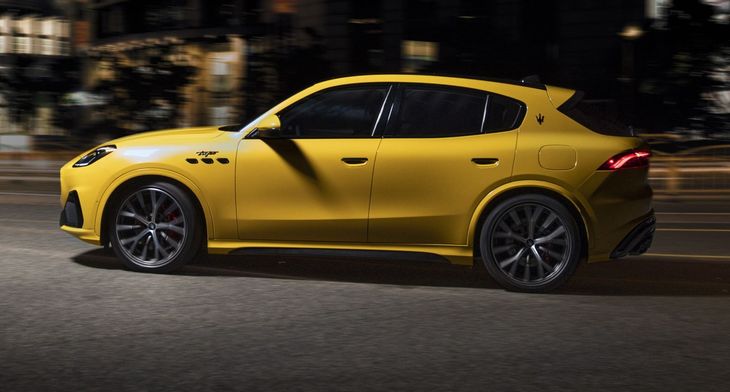
A brightly coloured Italian luxury SUV is particularly tempting when interest rates are low.
When credit is cheap, you can be more discerning when choosing a new car. Buyers are more likely to risk purchasing a model from a niche brand – finished in a very bold colour – because additional interest rate costs aren’t gearing the depreciation risk over time. Here’s an example: when the interest rate was at an all-time low, you may have taken a leap of faith with a scarlet red Alfa Romeo Stelvio, instead of buying the more sensible glacier white Mercedes-Benz GLC.
But borrowing money has become a lot more expensive in South Africa. Inflation is surging across the globe, and nations’ central banks are mandated to contain its effect by hiking up interest rates. And, if you are servicing financed vehicle debt, or are pondering the options of doing so, the calculation has changed a lot.
Interest rates aren’t volatile. Or at least, they aren’t supposed to be. Unlike the Rand’s exchange rates or the fuel price, which can fluctuate wildly, South Africa’s credibly skilled and prudent Reserve Bank staff navigate interest rate challenges in long cycles. That means once inflation creeps up or gradually subsides, interest rates move within their own momentum during the next few years, not months.
How worried should you be about the rising interest rate cycle and your car payments? Let’s look back on the past 25 years.
The current repo rate is 5.5%, which is quite a bit more than the lowest South African data point of 3.5%, but nowhere near the nightmarish interest rates of 1998, which peaked at 23.99%. Your vehicle financing cost is obviously higher than the official repo rate of 5.5%, but it does function as the foundation of all other debt structurings, and when it rises, the cost of servicing all your other interest-bearing debts go up too.
Interest rates will keep increasing because local and global inflation isn’t receding. Will you be deep into double-digit interest rate repayments on your car by year-end? No. That’s unlikely. However, it is valuable to think of the car you drive and how it plays against the twin cost risks of interest rates and depreciation.
Rising rates and depreciation – the terrible twins
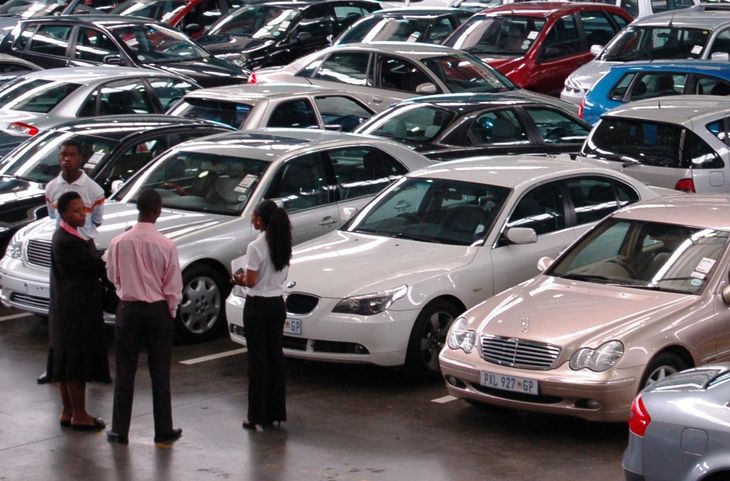
When you own a car, it depreciates constantly. But the loss only becomes “real” when you want to trade-in your vehicle.
Timelines for vehicle financing vary from 12- to 72 months. Again, you don’t need to be a financial guru to know that servicing that debt in the shortest possible timeframe is the best strategy.
If we imagine that 36 months is an average repayment term for South African vehicle finance, you need to think about how much additional cost is tolerable. And not just the finance cost, but the “invisible” depreciation that occurs over that period, which is only revealed when you decide to sell or trade-in your current car.
The combination of paying interest over several years of a vehicle finance agreement (your instalments don’t repay the capital portion of a car loan right from the onset – quite the contrary, in fact) and depreciation leads to the dreaded “shortfall”, when your vehicle’s trade value is lower than the outstanding amount you owe on it; many consumers opt to refinance that shortfall when they buy their next car, which often worsens the problem (the “debt trap” phenomenon).
Meanwhile, even a 3-year commitment can be a long time to trust the markets, government, global events and even model cycles. Suppose your car is being repaid over 3- or 5 years. In that case, it is guaranteed that you will suffer an additional depreciation event due to a mid-lifecycle product update (a facelift version of the model comes to market) or replacement (a new-generation model gets introduced). Well, unless you drive a Hilux, but we’ll touch on that later.
Suffice it to say, choosing an apparently “cool” or “quirky” car usually precedes a depreciation disaster…
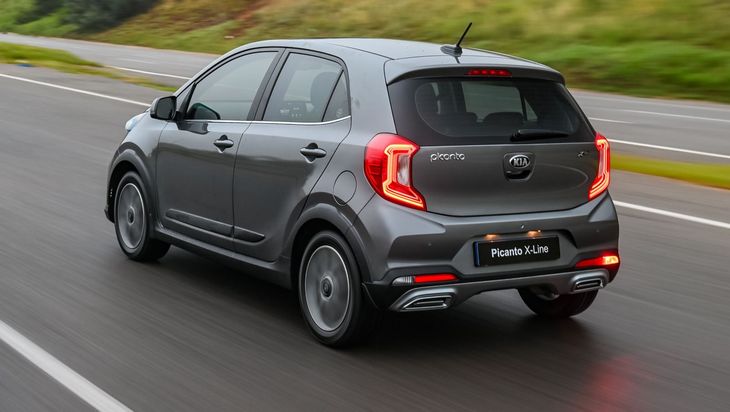
Special-edition cars are a marketing staple. But with a class-leading model (such as the Picanto), you can buy some style without facing increased depreciation risk.
The sagest advice for managing your vehicle debt, or at least structuring it for a new purchase, is to be sensible about what you buy.
Always buy a great platform (yes, a popular make and model, even if it seems like a “boring” or “unimaginative” choice) and, importantly, avoid specifying the vehicle with numerous extra-cost features. You don’t retain value on optional extras, especially digital elements, which age rapidly on the technology timeline. Apply the same scepticism to any “special edition” vehicle that’s adorned with distinctive graphics or funky trim upgrades… “Fine feathers don’t make fine birds”.
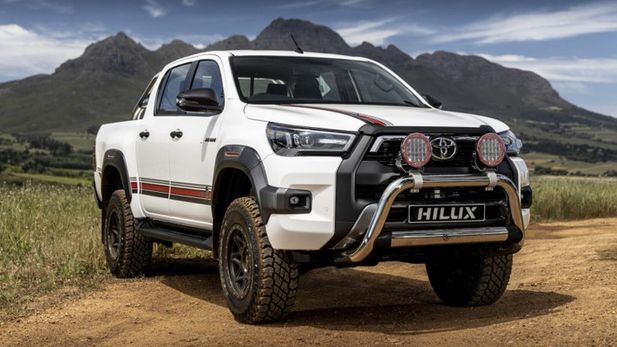
Toyota’s Hilux, however, isn’t a risk. Even if you buy one of the “edition” versions, with negligible content upgrades, it remains fundamentally a Hilux, which is South Africa’s most in-demand vehicle. You want to avoid any “special edition” type vehicle that is released close to the end of a model’s lifecycle, or where a manufacturer or importer’s marketing team is clearly attempting to prevent sales momentum from stalling out.
You don’t get a depreciation statement each month – but remain mindful of it
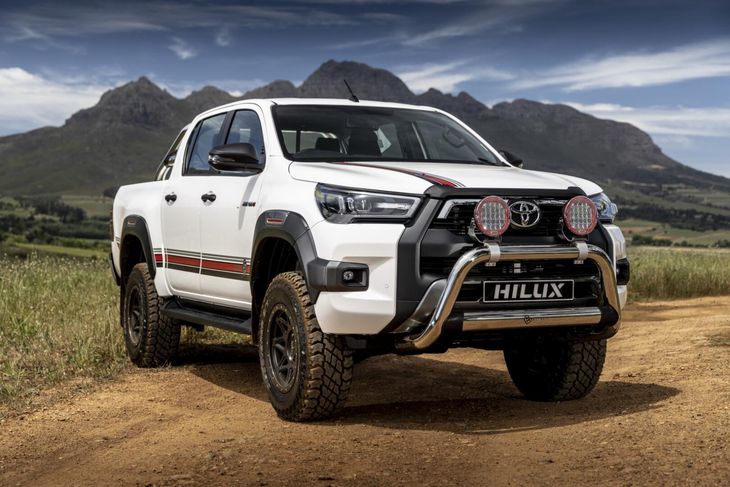
Hilux is one of the very few models where a “special edition’ buy is a smart buy.
A sound principle is that any vehicle’s simplest specification will suffer the least depreciation and, therefore, retain the most value. And that hedges your debt position regarding car payments and rising interest rates.
The worst cars? Luxury vehicles. Virtually all of them, except a Toyota Land Cruiser Prado or 300. German and British luxury SUVs and crossovers suffer crushing deprecation, but their owners are often wealthy enough to absorb the losses.
Engine configuration matters too. In fact, we’ve seen that vehicles powered by engines with more than 4 cylinders suffer significant depreciation. Consumers have a decreased appetite for 6- and 8-cylinder vehicles – even in South Africa – and not due to environmental concerns or emission tax, such as in Europe, but the fear of further escalating fuel prices.
Buying now, but thinking beyond 2022

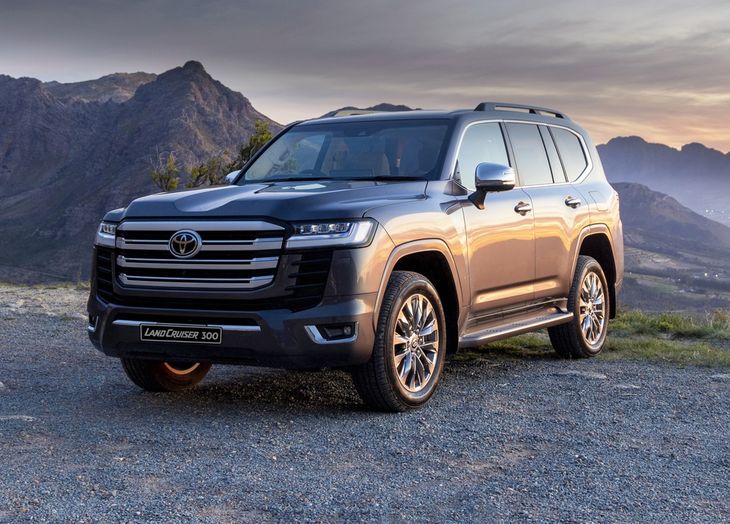
This is one of the very few luxury cars you can buy in SA that doesn’t suffer tragic depreciation.
Balancing the risk of future depreciation against credit cost cycles is crucial for any owner who wants to enjoy their car-ownership experience. Your car is not a collector’s bottle of wine or an NFT, which is stored safely at home (where you can view it occasionally).
Cars operate in the real world – in heat and rain and over vast distances. They transport us to work and enable us to pursue leisure activities or go on holidays across the country, even beyond our borders in Southern Africa. If you suffer anxiety about driving and using your vehicle due to an unfavourable debt position developing around it, that’s a very disempowering position.
But, for the moment, the car market is in a state of suspended animation with regards to depreciation and that creates a dangerous fallacy of misinterpretation. Because global new vehicle supplies remain low and car prices, new or used, remain high, depreciation is negligible – owners are capable of selling most “newish” models under R500 000 with almost no depreciation risk. However, this “stalled depreciation” will not last indefinitely, especially given rising interest rates.
Don’t get lulled into believing your car has become “depreciation-proof” due to the artificial market conditions of 2022, the advice to buy proven and popular models with moderate specifications stands.
When supply returns to normal, there will be a flood of inventory in the new- and used-vehicle markets, which is when prices could adjust downwards, and dramatically so. If you have to sell into the late 2023 or 2024 used-vehicle market, in which depreciation is likely to normalise, be sure that you will be able to absorb that financial hit.
You can’t control the interest-rate cycle. But you can choose wisely with make, model, colour and specification, to glide along a milder depreciation curve with your car ownership experience.
Related content:
The problem with 7-seater cars in SA
Why would you buy an Amarok instead of a Ranger?