South Africa’s best and worst family cars are 7-seaters… and they are priced across a broad spectrum of the market, from very affordable to rather expensive.
South Africa’s default upper-middle-class family vehicle is the Toyota Fortuner, which is a 7-seater. But how often are the Japanese adventure SUV’s 3rd-row jump seats put to use? Very infrequently. That’s why there are so many of those “extra seats” stacked up against the walls of garages in upper-income security estates…
As a concept, the 7-seater vehicle configuration has merit, but it has drawbacks in terms of engine power (at the more affordable end of the market) and packaging (at the top end of the price range). Third-row seating was never really a thing for family cars until Chrysler launched the original Voyager in the 1980s. Packaged within the cabin architecture of this long-wheelbase MPV, the 3rd row of seats made terrific sense, but it also created a false expectation going forward…
Ladder-frame SUVs don’t play nice with 7 seats
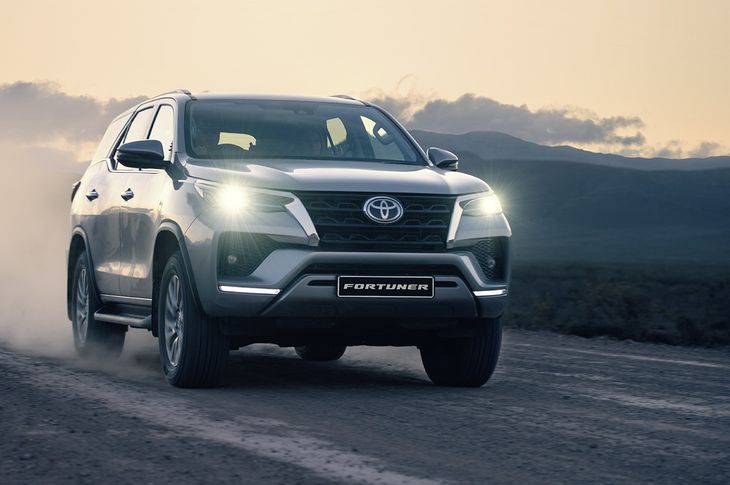
Fortuner is an ideal all-terrain family vehicle, but it rarely serves as a 7-seat people carrier.
When SUVs started displacing large MPVs in the early 2000s, designers were tasked with incorporating people movers’ 3rd-row seating in ladder-frame-based vehicles. It’s an unenviable task, MPVs are designed to have 3 rows of seats, with good legroom and passenger access. SUVs, by contrast, don’t have floorpans and require additional ground clearance with greater suspension travel, creating a greater extent of wheel-well intrusion – it’s one of many packaging issues.
And that’s why contemporary ladder-frame-structure SUVs have horribly compromised 3rd-row seating. When you inspect the 3rd-row seats in a ladder-frame SUV, your first thought is probably: “I’m glad I’m driving and not sitting there.”
Frankly, 3rd-row seating in Toyota’s Fortuner is a world of discomfort compared to that in the marque’s legacy Previa MPV. Or, if you want a more current example, the long-distance travelling comfort in the 3rd row of a Quantum VX.
At the expensive end of the price spectrum, bakkie- or off-roader-based 7-seater SUVs’ compromised 3rd-row accommodation renders the idea of transporting more than a driver and 4 passengers on long trips virtually invalid. But then there’s a potentially worse scenario in South Africa, but at the affordable end of the 7-seater vehicle spectrum.
The issue with small engines and 7 passengers
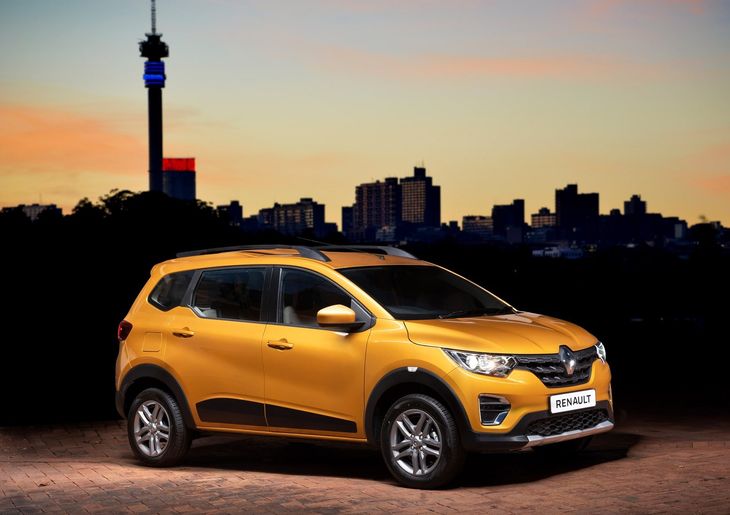
The Triber, with Joburg’s skyline in the background. But when the Renault’s fully loaded, at Joburg altitude, it struggles.
Honda’s Mobilio and Toyota’s Avanza are no longer available locally, but Renault markets a 7-seater Triber and Datsun has the Go+ (while inventory lasts). Both these vehicles are afflicted by the combination of the performance dropoff that their tiny naturally aspirated (non-turbocharged) petrol engines suffer on the Highveld (because the air is less dense upcountry than at sea level) and their ballooned kerb weights when they’re used to their full people-carrying potential.
Budget 7-seater MPVs are much more likely to drive with a full complement of passengers on board than any Fortuner, Ford Everest, Isuzu MU-X or Mitsubishi Pajero Sport. And that means their modest naturally-aspirated petrol engines have to work very hard to keep up with traffic, not to mention consume a lot more fuel than what their manufacturers claim they will. Run the numbers, and the issue becomes evident.
Renault’s Triber is powered by a modest 1.0-litre 3-cylinder petrol engine that produces 52 kW and 96 Nm. Those numbers aren’t awful for a non-turbocharged engine of that capacity and entirely reasonable for a compact hatchback. But the Triber isn’t a compact hatchback… It’s an affordable mini-MPV, with seating for 7; buyers purchase the model with the express intention of using its full seating capacity – and often.
The reality of 7-seater vehicles at altitude
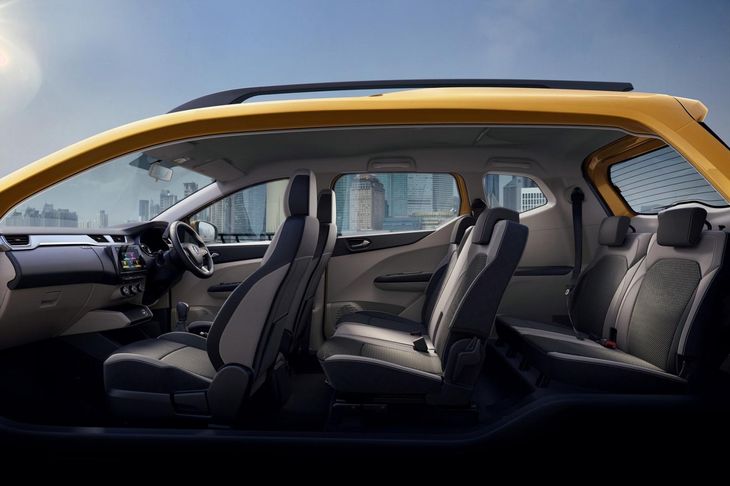
For what you pay, the Tiber seems a great 7-seater. Until you try and drive up an upcountry mountain pass, with 6 passengers in situ.
Renault’s engineering specification for the Triber provides a fully-loaded vehicle mass of 1 522 kg (that’s the prescribed limit with 7 occupants and their luggage on board). The Triber has an impressively trim kerb weight of under 1 000 kg, which gives it a power-to-weight ratio of about 54 kW/tonne. Would you be satisfied with the overtaking ability of a compact hatchback, with similar power-to-weight numbers as the Renault, if it had 7 people on board? No, I didn’t think so.
At its full operating weight, the Triber’s power-to-weight number reduces to 34 kW/tonne. And it potentially gets worse.
Altitude becomes a real issue if you operate a fully loaded Triber on Gauteng, North West or Limpopo road infrastructure. In a naturally-aspirated petrol engine, the reference figure for altitude-adjusted power loss is about 10% per 1 000 m of elevation. In Gauteng, that’s a loss of nearly 16.8%.
In theory, the real-world power resources of a completely loaded Triber, at altitude, could be down to 28.3 kW/tonne. If you were offered a new compact hatchback with those numbers, you’d think twice about venturing near a highway…
The numbers don’t make sense in SA
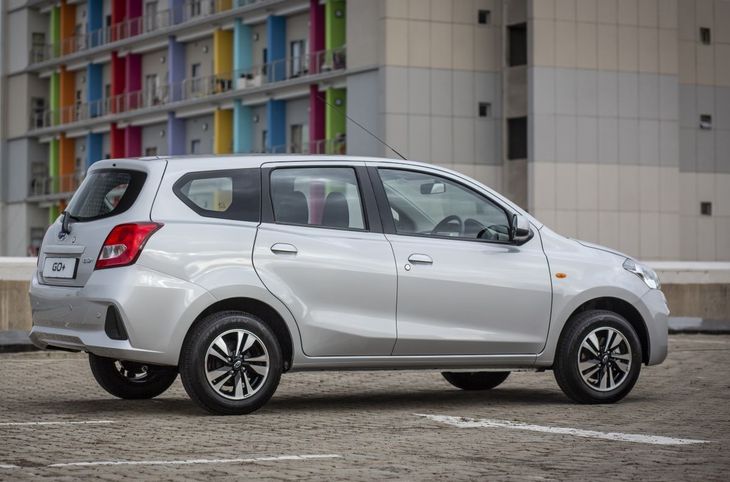
The Datsun Go+ is well suited to India, where driving conditions limit cruising and commuting speeds.
Tribers sell in relatively healthy numbers – just as the Datsun Go+ once did – and they are used by drivers and owners, who move people about as a matter of routine, out of necessity or for business. And that means those, um, plucky engines, at altitude, facilitate a very compromised driving experience.
The Renault Triber and Datsun Go+, which are related, aren’t the happiest 7-seater motoring outcomes for South African users. Sheer affordability drives Triber and Go+ sales, but at altitude, those vehicles are a challenge to drive when they’re fully loaded, due to their underpowered engines.
Toyota, Suzuki, Honda and Mitsubishi offer markedly better 7-seater options, a segment above the Triber and Go+. With 1.5-litre engines, the Rumion, Ertiga, BR-V and Xpander all cope more confidently with the reality of carrying 7 occupants across the Highveld.
The ‘RAV4 7-seater’ we really need
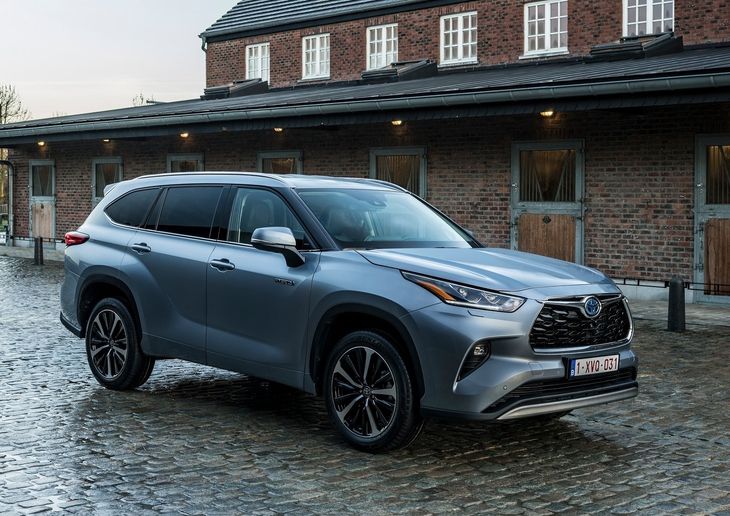
Toyota’s Kluger. It has 7-seats and mild gravel-travel ability. An ideal South African configuration.
Oh, the irony – South Africa’s most popular 7-seater model has sufficient power to transport a full complement of passengers with consummate ease, plus it suffers negligible performance depreciation at altitude because its engine is turbocharged. However, the turbodiesel-engined Fortuner is rarely used in a 7-seater role, because its body-on-frame configuration creates an uncomfortable third-row passenger experience.
And therein lies the great 7-seater passenger vehicle quandary for South African car buyers. The 7-seaters that are powerful enough to transport their full complement of occupants lack proper 3rd-row seating ergonomics, while the affordable ones are woefully underpowered for their purpose. Consider that South Africa’s average highway speeds (at altitude) are much higher than those in India, where the Triber and Go+ are made, that’s why the Renault and Datsun seem gutless.
Honda’s solution to the dearth of compact fit-to-purpose 7-seater MPVs in the local market is the BR-V. It is powered by the most powerful 1.5-litre engine in its class (it produces 88 kW/145 Nm) and its 3rd-row seating is reasonably usable.
It’s such a pity Toyota does not offer the Kluger as part of its local product range. Available in Australia, it is a much better 7-seater family vehicle than the Fortuner and it’s unencumbered by the bulk and “minibus” silhouette of the Quantum.
Related content:
Will Toyota revive the Stallion as a RAV4 double cab?
Why would you buy an Amarok instead of a Ranger?
Kia’s V6 diesel bakkie could redefine double cabs
Lance Branquinho

Lance Branquinho is a Namibian-born writer and photographer who has won numerous motoring journalism awards. He once smuggled parts to South America, in a minor contribution to help Giniel de Villiers finish on the podium at the Dakar. He fears for the eventual collapse of the air-cooled Porsche 911 market – and keenly awaits, in vain, the return of the brand's 928.