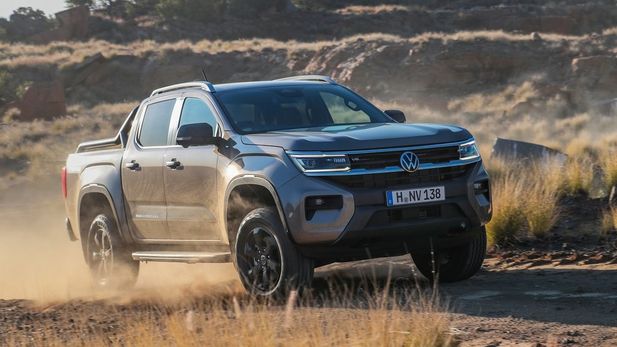
Volkswagen’s collaboration with Ford on the more off-road capable and tech-laden new-gen Amarok will suit VWSA, which has an extensive dealer footprint in South Africa.
Very few car companies spend as much money on platforms as Volkswagen. The German automotive conglomerate’s MQB platform, which now underpins virtually every VW, Audi, Skoda, Seat and Cupra with a transverse powerplant, set a standard for pure internal combustion vehicles that might never be equalled, costing R135bn by its completion in 2012. The same is expected from MEB, VW’s hugely expensive and adaptive electric vehicle specification architecture.
And then there’s Amarok – the VW model that defied odds and defined the concept of a lifestyle double-cab bakkie. And a hugely important product for South Africans, despite being completely unrelated to either MQB or MEB, two of VW’s core platform architectures.
When VW became embroiled in the diesel-emissions testing scandal in 2015 (aka Dieselgate), the Amarok’s future became problematic. Despite its product excellence, VW could not justify extended funding to create a successor to the bakkie, given the drain of legal compliance costs and all the resources it needed to devote to the development of MEB.
The answer was a joint venture with Ford. And with the 2nd-generation Amarok revealed, the question arises: what’s the point of the collaboration? And which of the two products makes most sense.
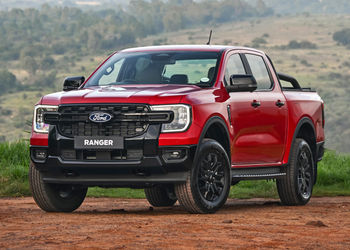
Bakkie owners will have strong opinions on the Ranger T6.1 platform Amarok. Some might dismiss it as being badge-engineered and pointless. But if you layer the analysis a bit deeper, it appears that VW might have delivered a very clever product solution to its South African division.
What does VWSA want to do with the new Amarok?
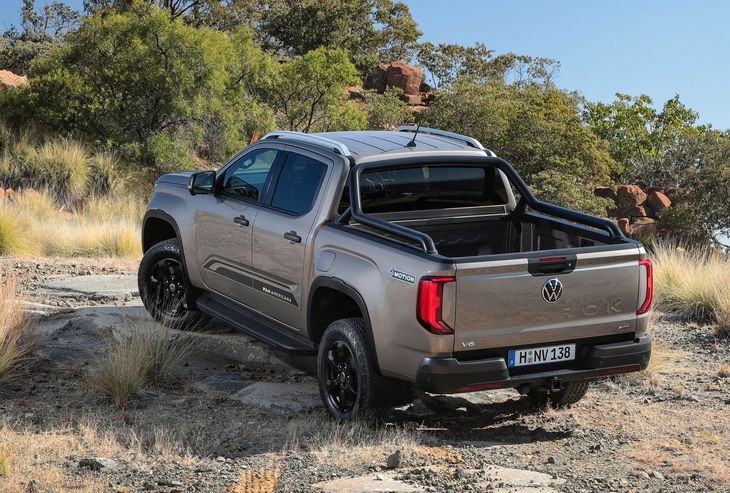
VW has gone for oversized wheelarches on the Amarok, which could enable off-road enthusiasts to run larger tyres.
There’s no question that Ford’s T6.1 Ranger will be enormously influential within the South African vehicle market. And not only for Ford.
VW has never been interested in challenging Hilux volumes, as Ford is, with an extended range of bakkies. The expectations within VW’s South African bakkie business are modest compared to Ford, where Ranger is nearly its entire business. VW does not require Ranger’s huge volumes or derivative complexity, with configurations from entry-level single-cabs on steel wheels to extreme off-road-capable Raptors.
The VW bakkie product strategy is narrow. And simple. It wants to sell Ranger-platform Amaroks to wealthy customers in the lifestyle market. That makes it possible for the VW South African product marketing team to be more targeted in its approach. Trying to do less, with a lot more.
Fewer bakkies to sell, but more dealers to support them
VW has a greater number of dealers than Ford in South Africa, giving it potentially better geographic reach. And if you sell lifestyle bakkies, that’s important.
Anyone who has suffered the frustration of trying to order a specialist mechatronic component for a modern vehicle in a rural area, will know the value of superior network and distribution.
This is especially true when journeying on vacation, in your ‘lifestyle’ double-cab. Parts can become a nightmare if you have an unfortunate wildlife or farm animal incident on an isolated rural dirt road.
Unlike Mitsibushi, which also only markets lifestyle double-cab bakkie derivatives at low volumes, VW has significant dealership networking across South Africa. If your new Amarok does require some assistance in the middle of nowhere, VW is resourced to assist.
The one feature Ford did not want to share
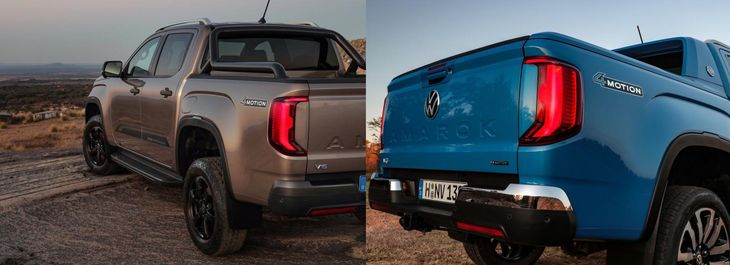
It appears that VW was not given an option, on Ranger’s brilliant box step.
Second-generation Amarok has gained a great deal from its joint venture with Ford. But what has not been shared? Despite all the corporate posturing about cooperation, it was always clear that Ford would not share all the best features of its Ranger development with VW.
One of the cleverest Ranger features is its box step. The risk of clambering onto a load box is fraught. And if you own a double-cab bakkie, the load box is a highly functional aspect of its appeal.
With the box step, Ford provides a secure foot placement to reduce the risk of lower limb or back injuries when accessing the load box… or loading and retrieving things you have placed in it. It is one of those unique selling points for the new Ranger. And Ford is not keen to share it.
Scrutinise the Amarok launch images, and you’ll notice it has a wraparound bumper at the rear, without any box step indents. It’s a pity for VW, which will be marketing Amarok as a pure lifestyle double-cab play in the local market.
The box step is an excellent safety and convenience feature for any double-cab owner using their bakkie in the lifestyle role.
A better VW infotainment option?
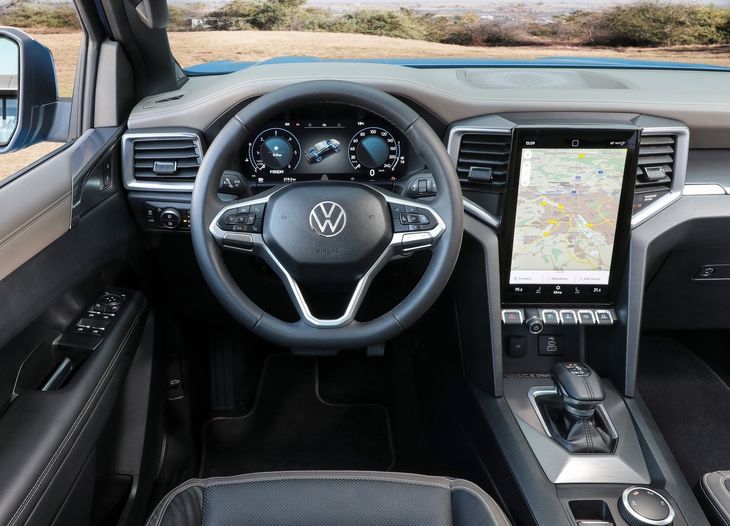
Will VW’s infotainment Sync or not?
An aspect where Ranger and Amarok are likely to share feature richness is infotainment. VW has struggled with infotainment and UX design. The termination of more than one chief software engineer has illustrated the risk of complex coding and UX at VW.
Ford’s Sync has set the standard for bakkie infotainment. And there’s a reason it is so good. The CEO credited for reviving Ford as a company, Alan Mullaly, recognised the value of proper UX. He worked on the design of Boeing’s 757/767 cockpits and deeply appreciated the value of intuitive user interfacing.
Mullaly’s greatest legacy at Ford is the Blue Oval’s respect for device software and UX design specialists. It’s something that has helped to create and sustain an automotive infotainment system that has proved industry-leading in the bakkie market.
Smartphone and device synchronicity has become a defining customer decision point with all vehicles – even bakkies. And for some buyers, there could be a legacy preference for Ford’s Sync, placing VW in a great position, as the new Amarok is inheriting the proven Ford double-cab infotainment system.
Crawl gearing for Amarok V6 in SA – finally
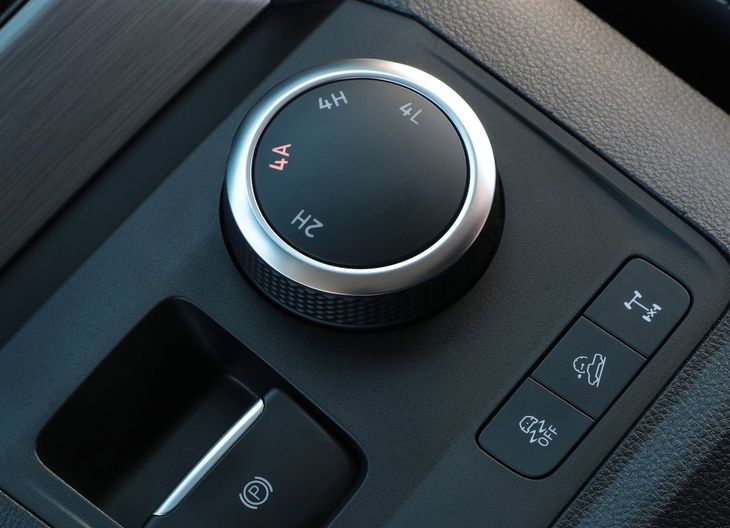
With V6 power and low-range gearing, Amarok will have much stronger off-road ability.
Load box access and infotainment systems aside, Amarok benefits greatly from Ford’s huge bakkie R&D budget for engines and drivetrains. VW never offered the V6 Amarok with a manual ‘box in South Africa and that meant no low range (in fact, none of the outgoing Amaroks had low range – just short first gears). This changes with the new Amarok V6; it will be equipped with a comprehensive Ranger drivetrain and, therefore, be available with a low-range transfer case.
For those new Amarok customers keen on using their vehicles for off-road exploration, the presence of low range will be a significant capability enhancer. Especially in crawl-speed technical terrain, where double-cabs risk the most damage.
The issue of a ‘rugged’ V6
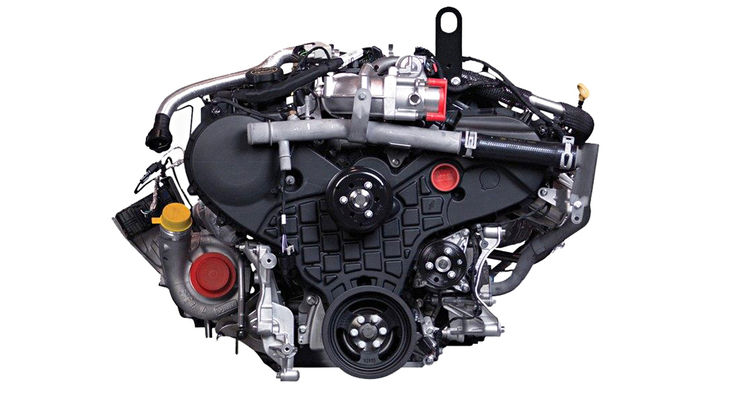
Amarok’s Ford-sourced V6 diesel, is a proven bakkie and SUV engine. Not a luxury car one.
Beyond the presence of low range in the Amarok V6 configuration, the change from VW Group to Ford engines is another win for VW. Ironically, VW proved the concept of a 2.0-litre turbodiesel engine being ideal for most double-cab users many years before Ford introduced its 2.0-litre Ranger single- and biturbo engines.
VW can benefit from the positive association of a powertrain range that could be considered more “rugged”. The first-generation Amarok V6 used a rerolled Audi 3.0-litre turbodiesel engine, which was a brilliant example of German luxury vehicle engineering, but one that originally came from a passenger-car application – not a bakkie.
With the 2nd-generation Amarok, the 3.0-litre V6 turbodiesel is a pure bakkie engine. It is from the Ford F-Series range and was designed specifically for pick-ups. And that implies all the additional robustness and redundancy features regarding heat and dust. That’s everything one would expect from a diesel engine where the brief was for high-demand work at low speeds, instead of cruising in ideal conditions on the autobahn.
VW’s huge dealer footprint is a plus
VW South Africa will achieve only a fraction of Ford’s monthly Ranger volumes with the new-gen Amarok, but it has more dealers to support that effort. And for customers, that could mean a very targeted and value-enhanced experience.
If you are in the market for a leisure double-cab bakkie, the Ford-powered and designed Amarok could be a great stealth deal – and ownership prospect.