How should buyers calculate the running costs between the Ranger 2.3 turbopetrol and the 3.0 V6 turbodiesel? We break down the fuel, price and performance metrics shoppers of these double-cab bakkies need to consider.
Since launching the current Ranger, Ford has regularly led double-cab sales in South Africa – the natural result of pouring significant resources into a single core segment. Globally, body-on-frame bakkies drive profitability for Ford. South Africa directly benefits from that global engineering scale, operating in a market where body-on-frame bakkies remain the top-selling vehicle category.
Much of Ford’s double-cab success was initially built on an engine option that no longer sits in the lineup: the 2.0-litre bi-turbodiesel (BiT). Discontinuing the 2.0 BiT changed the performance-to-economy equation for prospective Ranger buyers.
The revised engine line-up created a noticeable gap in price, power and specification across the range. Because the 2.0 BiT delivered strong output for its displacement—frequently outperforming traditional large-capacity turbodiesels – it catered to a broad spectrum of South African buyers.
Now, with shifting fuel pricing and revised engine options, how should current and prospective Ford Ranger drivers rethink real-world performance versus total cost of ownership?
Search for a Ford Ranger on Cars.co.za
Why the Ranger 2.3 EcoBoost exists
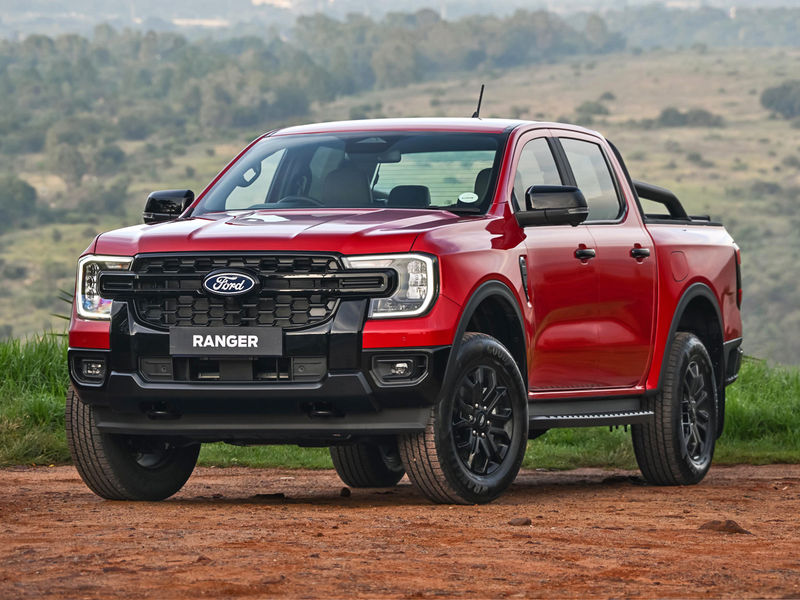
Among the established legacy bakkies in South Africa, the Ranger is unique in offering a high-output turbopetrol engine in its mainstream line-up.
Following line-up restructuring, buyers looking above the middle tier have to shop beyond the single-turbo 2.0 SiT diesel (125 kW) if they want high-grade trim levels with effortless highway cruising and overtaking capability.
Ford’s strategy guides traditional 2.0 BiT buyers toward the flagship 3.0 V6 turbodiesel models. Simultaneously, Ford introduced the 2.3-litre EcoBoost turbopetrol, an option unmatched by key competitors like Toyota, whose petrol Hilux offering remains limited to lower-spec commercial variants.
For buyers seeking a double-cab with high cabin comfort, premium tech and lifestyle styling (such as the Sport trim level), the choice often comes down to two distinct powertrains: the 2.3-litre turbopetrol or the range-topping 3.0 V6 turbodiesel.
Read more: How to optimise the fuel economy of your diesel-powered vehicle
Comparing the numbers: Power vs torque
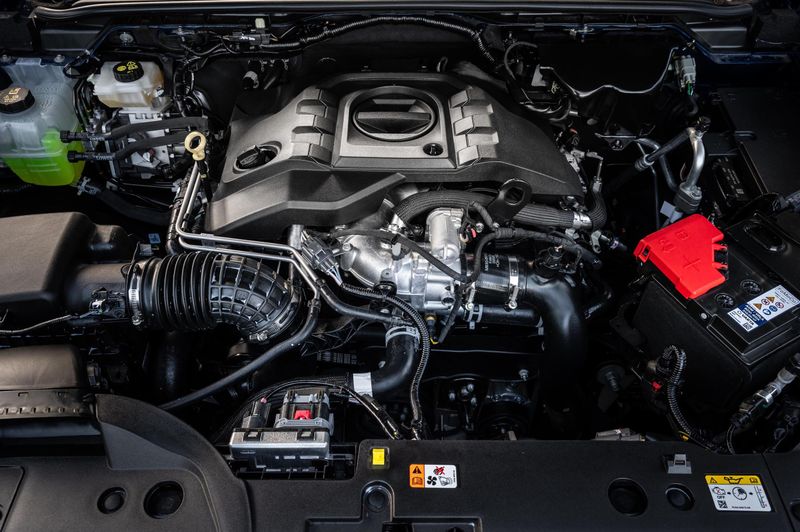
Before the arrival of modern luxury-spec imported bakkies, turbopetrol engines were rarely considered by local buyers. Mainstream competitors like the Toyota Hilux and Isuzu D-Max focus almost exclusively on turbodiesel powerplant options. Adding a high-output turbopetrol to the Ranger was a bold move by Ford.
On paper, the figures reveal two very different driving characteristics:
- Ranger 2.3 EcoBoost: Produces 222 kW, giving it roughly 20% more peak power than the 3.0 V6 turbodiesel (184 kW). For a lifestyle bakkie, peak power delivers lively acceleration and effortless high-speed highway overtaking.
- Ranger 3.0 V6 EcoBlue: Produces 600 Nm of torque compared to the 2.3 EcoBoost’s 452 Nm – a torque advantage of nearly 33%.
That extra torque is invaluable for low-speed off-road driving, heavy towing and immediate low-down responsiveness when hauling heavy payloads. However, given that many urban lifestyle double-cabs rarely run near maximum payload capacity, buyers must decide whether that additional diesel torque is essential for daily driving.
Read more: Ford Ranger Tremor (2026) Long-term Review
Search for a Ford Ranger on Cars.co.za
Efficiency and purchase-price dynamics
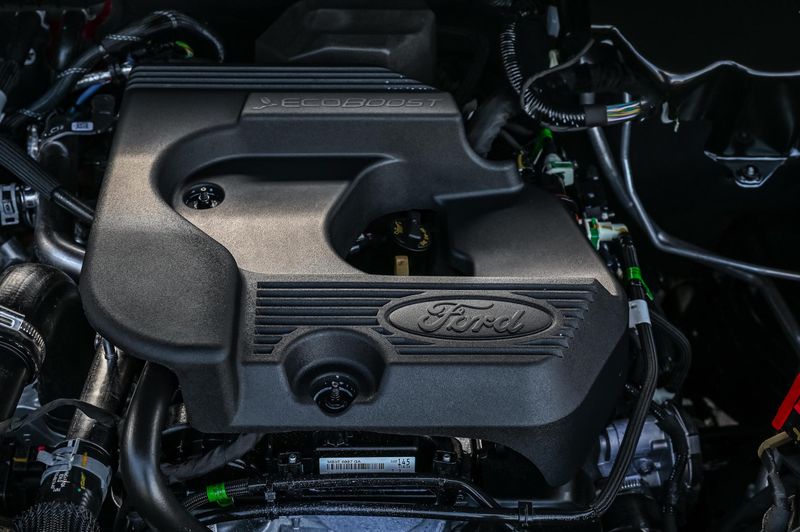
South African double-cab buyers traditionally lean toward turbodiesels due to the fuel’s higher energy density, which typically yields better open-road range. However, engine capacity plays a role in closing that gap.
The 3.0 V6 turbodiesel features two extra cylinders and roughly 30% more engine displacement than the 2.3 turbopetrol. Consequently, real-world fuel consumption figures are closer than traditional petrol-versus-diesel assumptions suggest:
- Claimed fuel consumption: The 2.3 EcoBoost has a claimed consumption of 9.3 L/100 km, while the 3.0 V6 EcoBlue claims 8.4 L/100 km – roughly a 10% efficiency advantage for the V6 diesel.
However, running costs must be calculated alongside the initial purchase price. The 3.0 V6 Sport model (which includes Ford’s permanent four-wheel-drive system) commands a significant premium over the 4×2 2.3 EcoBoost Sport.
Depending on the price gap at purchase, that capital saving covers dozens of full fuel tanks for the petrol model – translating to thousands of kilometres of driving before the diesel’s fuel efficiency advantages offset the initial cost difference.
Long-term ownership considerations

Beyond fuel consumption and purchase price, daily operating conditions factor into the total cost equation.
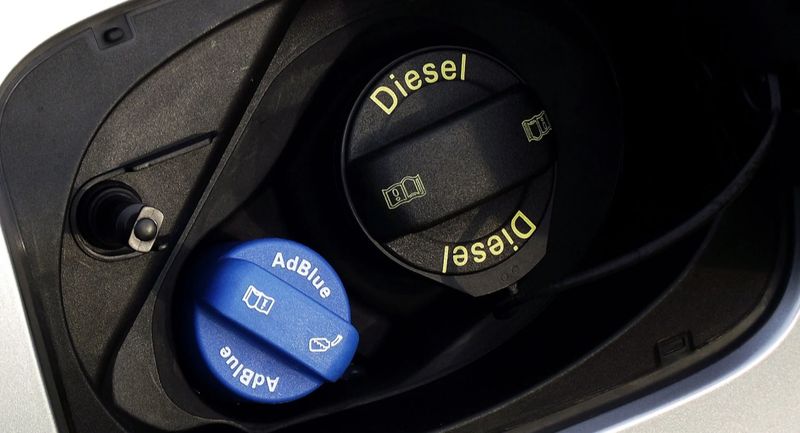
Modern turbodiesel engines equipped with complex emissions systems, such as diesel-particulate filters (DPFs) and AdBlue injection, require specific operational habits. Heavy stop-start urban traffic without periodic highway runs can lead to DPF clogging, while maintaining AdBlue fluid levels adds an extra maintenance step during long-distance travels.
Conversely, the 2.3 EcoBoost turbopetrol avoids AdBlue requirements entirely and offers responsive, smooth power delivery suited to urban commuting and rapid highway joining.
For buyers using a double-cab primarily as an urban family vehicle and light leisure cruiser, the 2.3 EcoBoost presents a compelling case. It offers lower upfront expenditure, high peak power, and simpler daily operation against the heavy-towing capability and low-down shove of the 3.0 V6 diesel.
Lance Branquinho

Lance Branquinho is a Namibian-born writer and photographer who has won numerous motoring journalism awards. He once smuggled parts to South America, in a minor contribution to help Giniel de Villiers finish on the podium at the Dakar. He fears for the eventual collapse of the air-cooled Porsche 911 market – and keenly awaits, in vain, the return of the brand's 928.