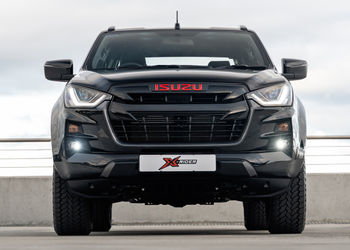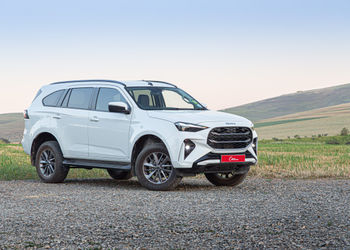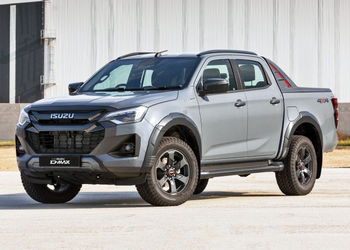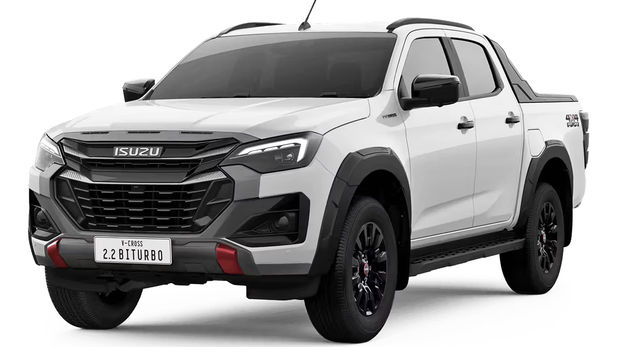
Isuzu in Thailand has revealed a new 2.2-litre bi-turbodiesel engine for the D-Max and MU-X – and it outpunches the current 3.0-litre powerplant. Here’s what we know…
- New 2.2-litre bi-turbodiesel powerplant detailed
- Debuts in updated D-Max and MU-X in Thailand
- No word yet on plans for South African market
Isuzu’s Thailand division has released initial details about a new 2.2-litre bi-turbodiesel, 4-cylinder engine – which outpunches the Japanese brand’s 3.0-litre oil-burning motor – for updated versions of the D-Max bakkie and MU-X adventure SUV.
As a reminder, both the D-Max and MU-X are produced in Thailand. The versions offered in that market has now received not only minor styling updates but also the option of a new bi-turbodiesel mill (featuring an internal desgination of “RZ4F-TCX”) for high-spec derivatives.
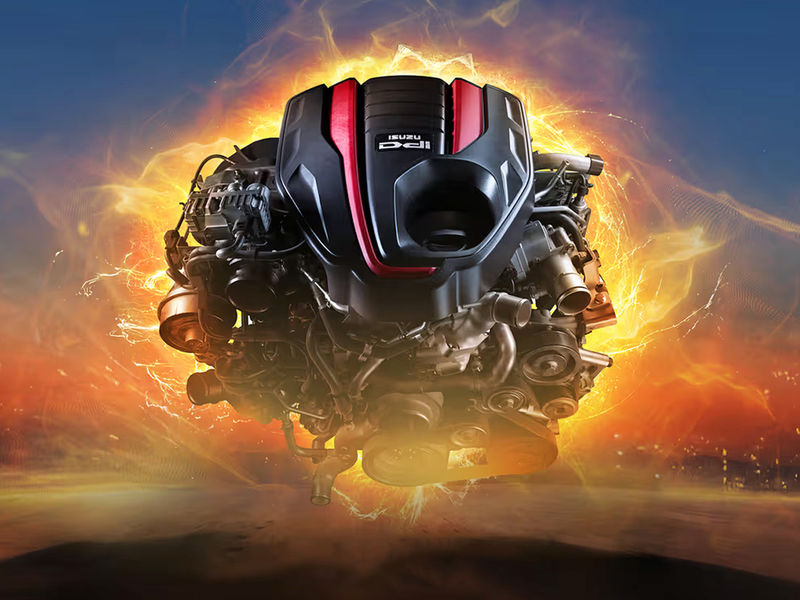
While the current 3.0-litre motor (4JJ3-TCX) offers peak outputs of 140 kW and 450 Nm, the new 2.2-litre bi-turbodiesel unit – closely related to the 120 kW/400 Nm single-turbo 2.2-litre engine (RZ4F-TC) that was rolled out in Thailand late in 2024 – generates 150 kW (at 3 600 rpm) and 500 Nm (from 1 600 rpm to 2 600 rpm).
That sees it match the outputs of the Toyota Hilux‘s 2.8-litre GD-6 engine (1GD-FTV). According to Isuzu Thailand, the new twin-turbo 2 164 cc motor delivers a 5% faster 0-100 kph sprint and 12% stronger in-gear acceleration (from 80-100 kph) compared to the 3.0-litre engine, while also offering an 8% improvement in fuel efficiency.
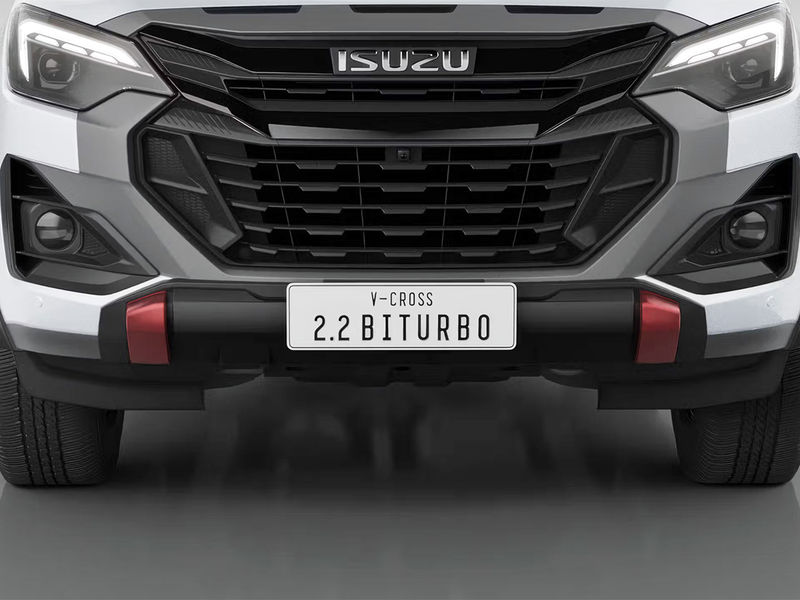
Mated to either a 6-speed manual gearbox or an 8-speed automatic transmission, this MaxForce-badged powerplant has thus far been confirmed only for the Thai market. As a reminder, the D-Max available in South Africa is produced at the Japanese firm’s Struandale plant rather than imported from Thailand.
In addition, it worth noting the aforementioned single-turbo version of the 2.2-litre oil-burning motor has yet to launch in Mzansi (despite being available in Thailand for nearly 2 years), with the current D-Max and MU-X line-up instead sticking with the 110 kW/350 Nm 1.9-litre 4-cylinder and the older 3.0-litre motor.
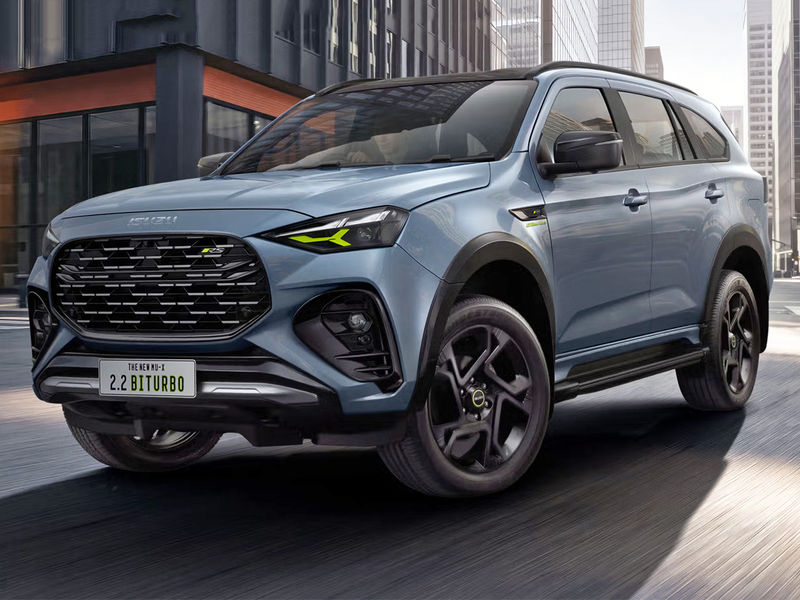
Considering Isuzu Motors South Africa’s Struandale facility imports its D-Max engines and transmissions (and indeed the fully built-up MU-X) from Thailand rather than producing powertrains locally, there’s certainly a chance our market will eventually gain the option of this new bi-turbodiesel unit. But history would suggest the local market is in for a bit of a wait, what with the facelifted D-Max having launched here only earlier this year…
Frequently Asked Questions (FAQ)
Q: What are the specs of Isuzu’s new 2.2-litre bi-turbodiesel engine?
A: The new 2.2-litre bi-turbodiesel 4-cylinder engine (RZ4F-TCX) produces 150 kW at 3 600 rpm and 500 Nm of torque between 1 600 and 2 600 rpm, outpowering the brand’s existing 3.0-litre motor while offering a claimed 8% improvement in fuel efficiency.
Q: How does the new 2.2-litre bi-turbodiesel compare to Isuzu’s 3.0-litre engine?
A: The 2.2-litre bi-turbo unit delivers 10 kW more power (150 kW vs 140 kW) and 50 Nm more torque (500 Nm vs 450 Nm) than the 3.0-litre 4JJ3-TCX engine, resulting in claimed 5% faster 0–100 km/h acceleration and 12% stronger in-gear response.
Q: Is the new 2.2-litre bi-turbodiesel engine coming to the Isuzu D-Max and MU-X in South Africa?
A: Isuzu Motors South Africa has not confirmed plans to introduce the 2.2-litre bi-turbodiesel locally. The SA-built D-Max line-up continues to utilise the established 1.9-litre (110 kW/350 Nm) and 3.0-litre (140 kW/450 Nm) turbodiesel powerplants.
Related content
Best-selling bakkies in September 2026
Ryan Bubear

Having written about everything from sport and politics to crime, Ryan eventually settled on motoring. For well over 15 years, he's been penning articles – both online and in print – about the broader automotive industry, though he's particularly fascinated by vehicle-sales statistics. A freelance writer and editor, Ryan has owned a 1971 Austin Mini Mk3 for 20-plus years.