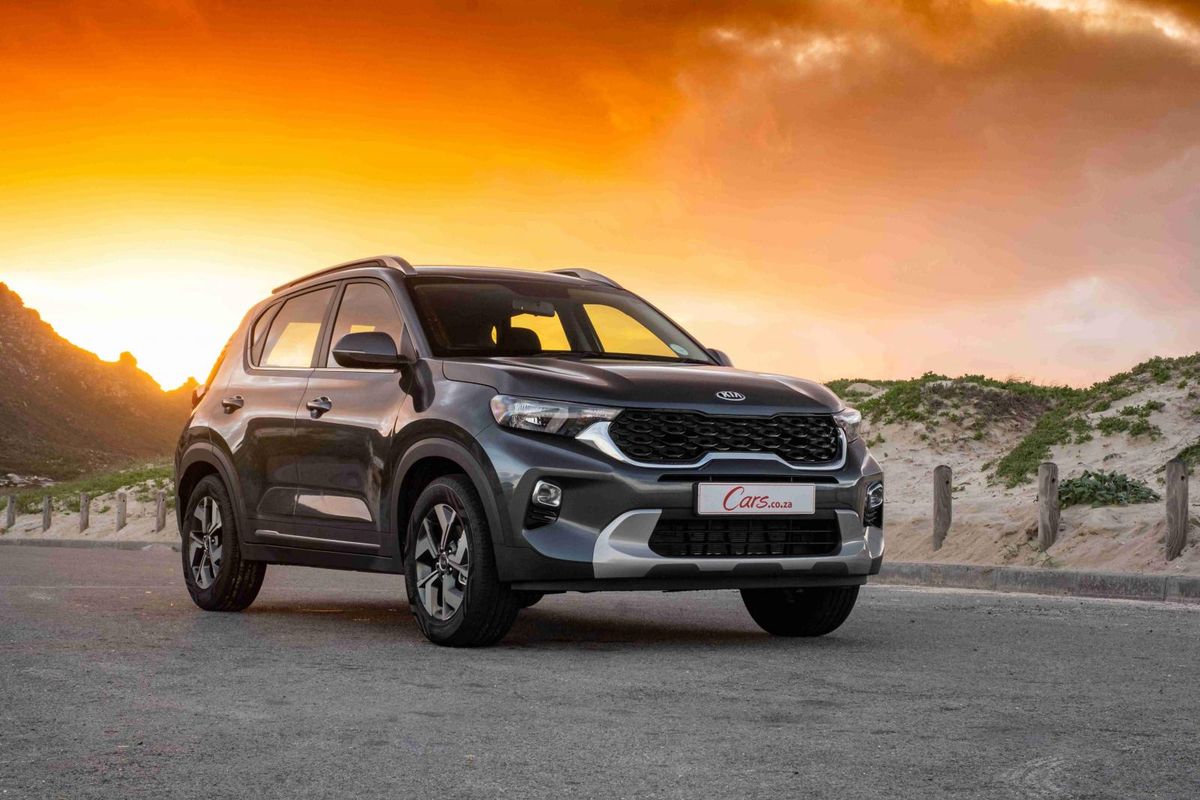
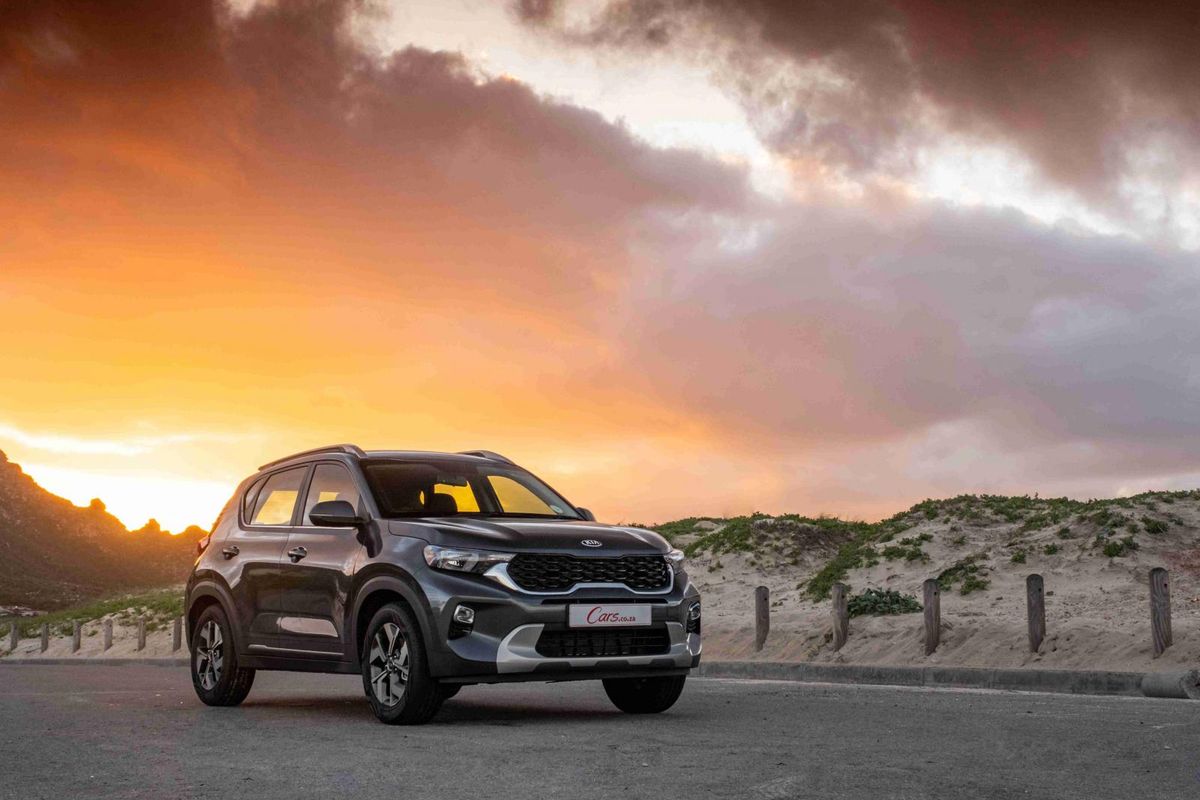
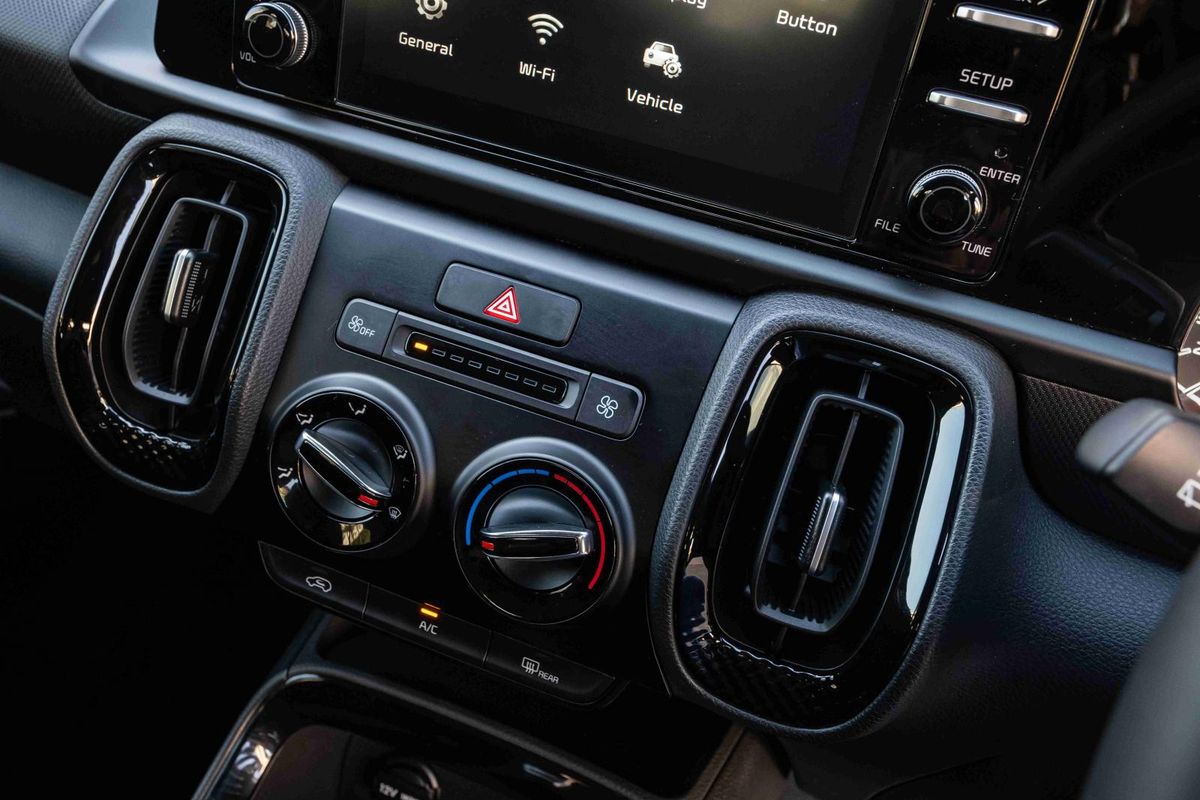
Kia recently expanded its compact family car line-up with the introduction of the Sonet, which is smaller and more affordable than its Seltos sibling. Does the newcomer tick enough boxes to beat other budget-positioned rival offerings from Suzuki, Toyota and Nissan? We put the 1.5 EX derivative through its paces.
We like: Performance, fuel economy, perceived build quality, overall value, luggage space.
We don’t like: Rear bench isn’t split. Cruise control would be welcome.
Fast Facts
- Model Tested: Kia Sonet 1.5 EX
- Price: R284 995 (June 2021)
- Engine: Naturally-aspirated 1.5-litre petrol
- Power/Torque: 85 kW/144 Nm
- Transmission: 6-speed manual
- Fuel efficiency: 7.0 L/100 km
- Load capacity: 392 litres
What is it?
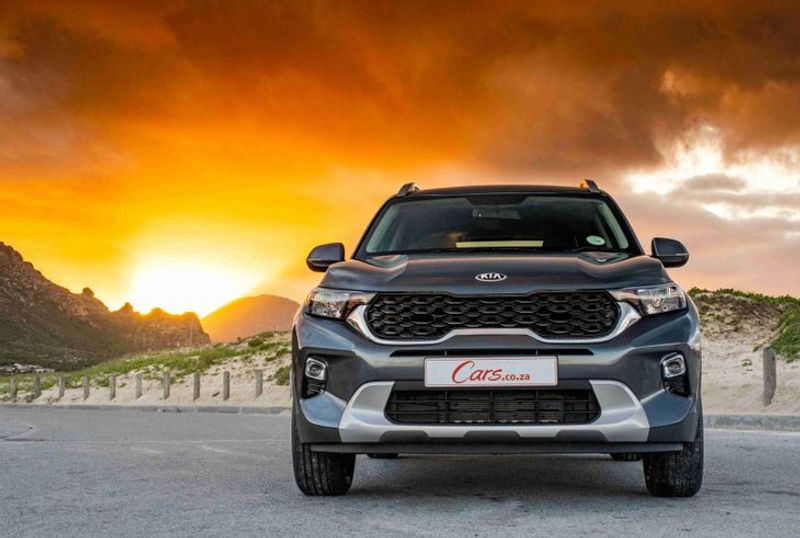
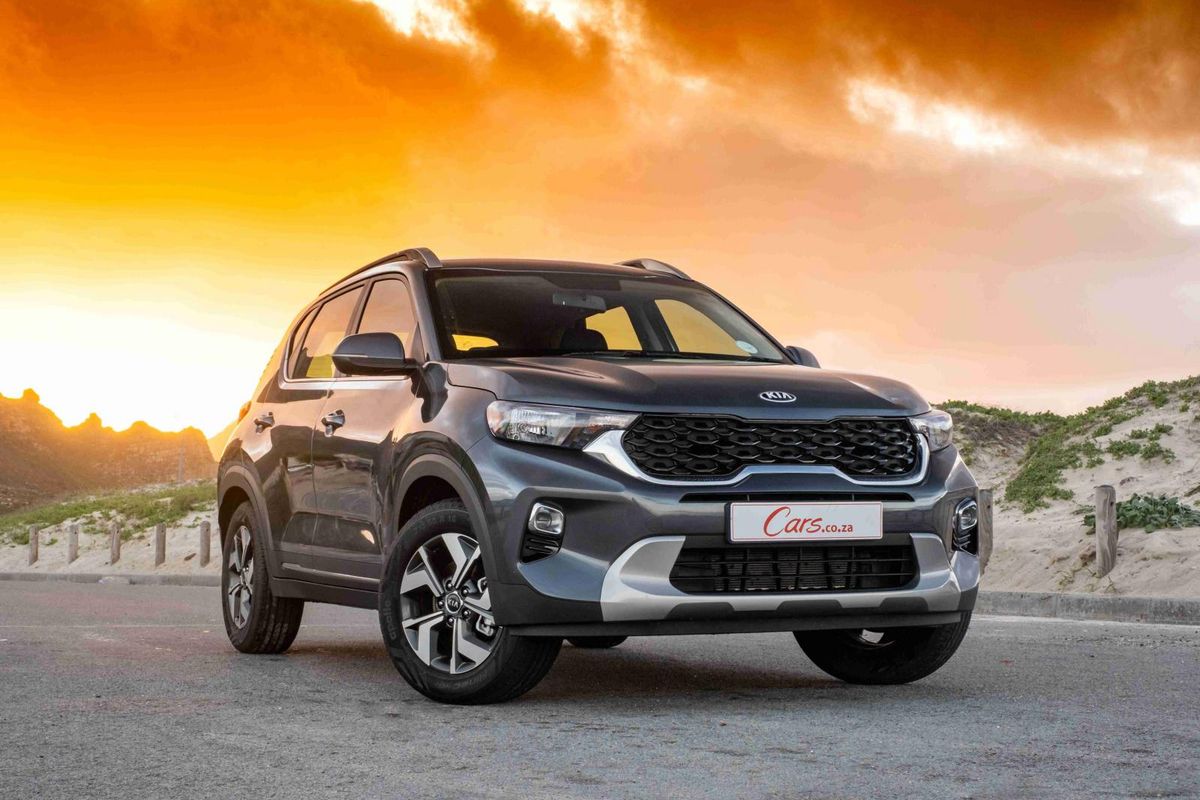
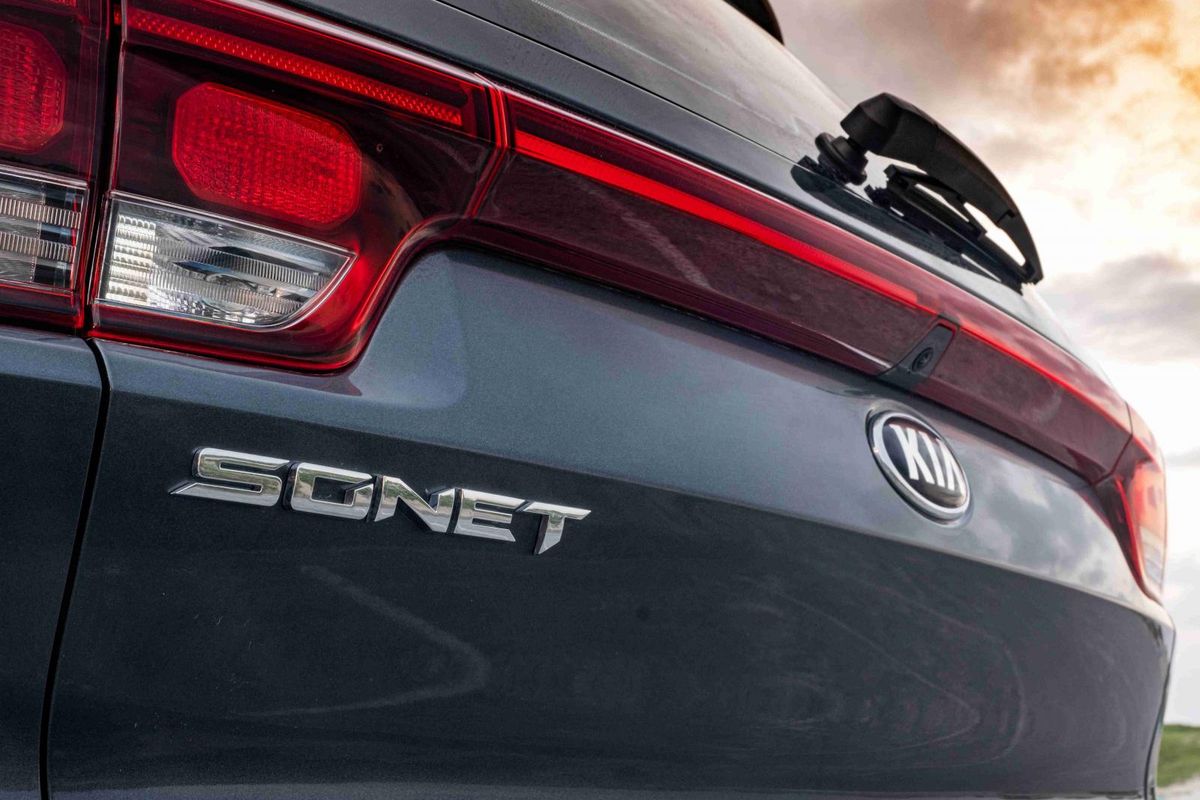
The Sonet’s tiger-nose grille gives it a unique, quirky look and makes it stand out in this segment.
Market demand for budget-oriented small crossovers has grown substantially, so much so that the segment is flourishing – it now incorporates a wide range of products and humdrum compact hatchback variants with SUV-aping embellishments have all but disappeared! The Kia Seltos goes up against rivals such as the Suzuki Vitara Brezza, Toyota Urban Cruiser, Nissan Magnite and the ageing Ford EcoSport.
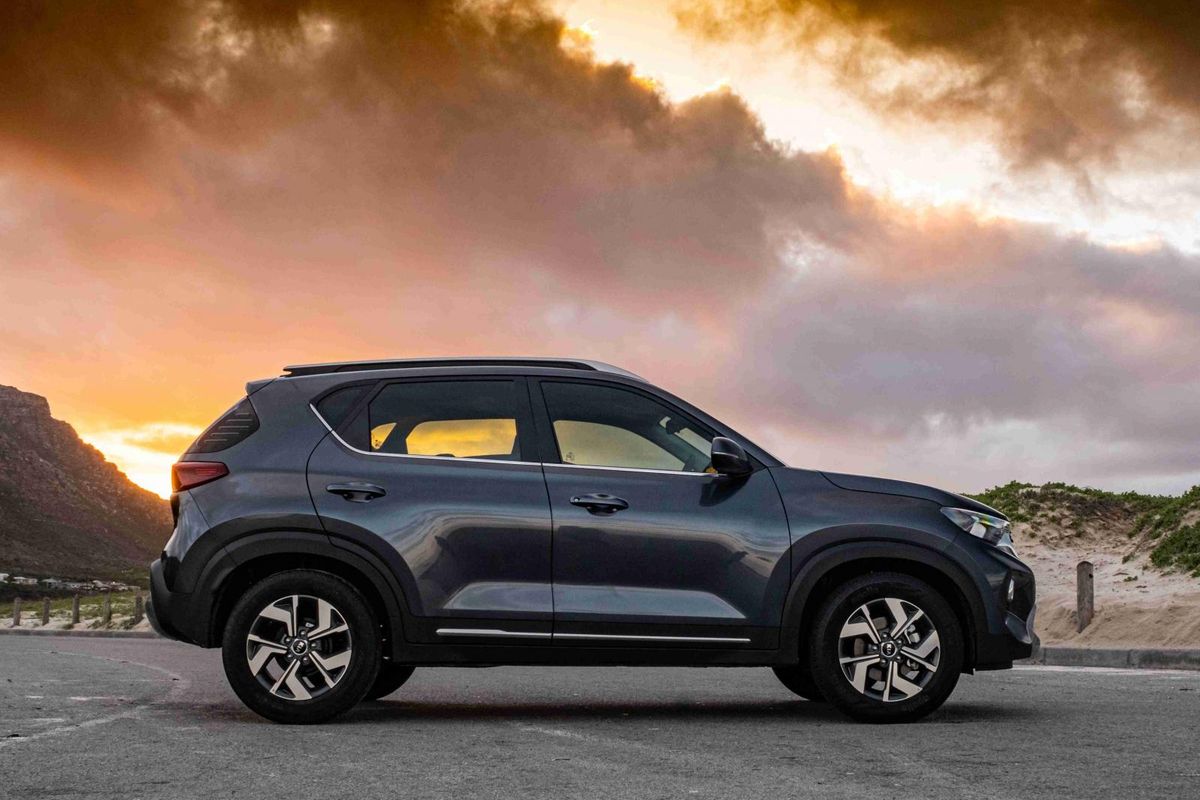
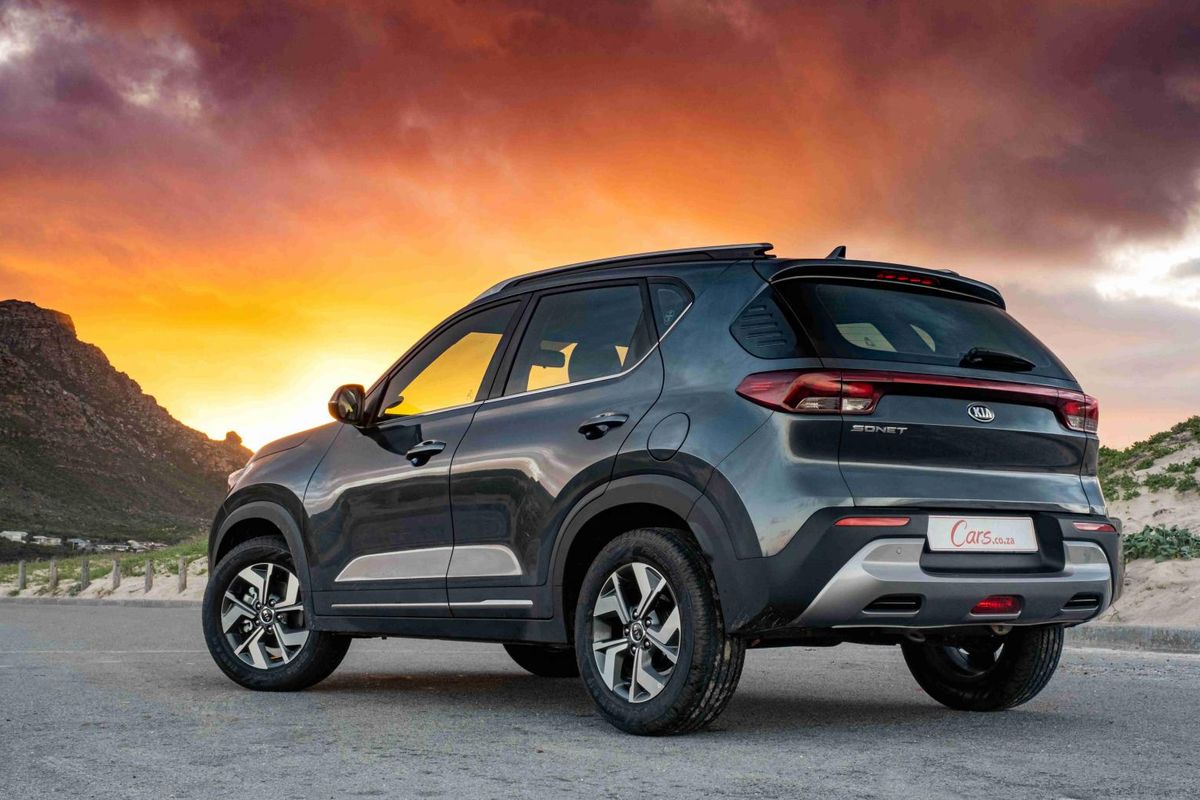
Like its Seltos sibling, the Sonet is manufactured in India on the Hyundai-Kia K2 platform, which also underpins the popular Hyundai Venue. This Sonet 1.5 EX derivative can be distinguished by its 16-inch alloy wheels, stylish roof rails and front fog lights. With its simple, yet aesthetically pleasing design, we think the newcomer is one of the better-looking compact family cars in an ever-expanding segment.
So, Kia has seemingly nailed the design brief for the Sonet… but let’s examine the nitty-gritty details to determine if you should consider buying the Korean marque’s new model…
What’s the new Kia Sonet’s interior like?
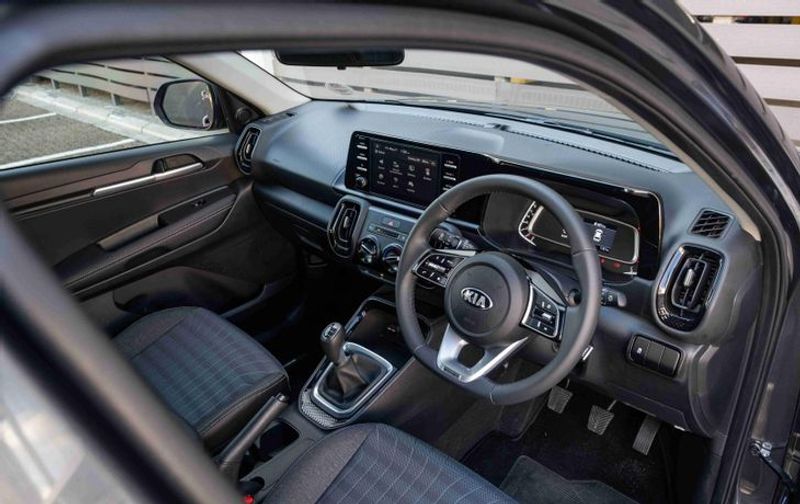
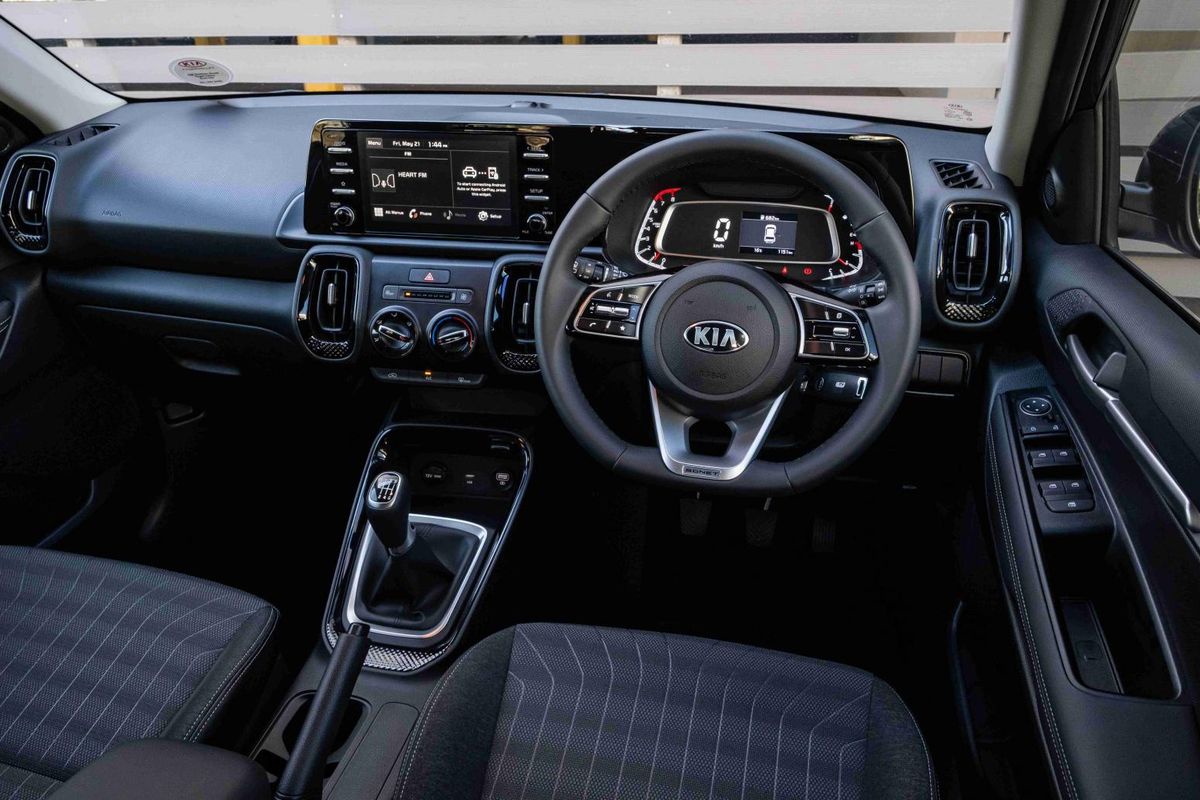
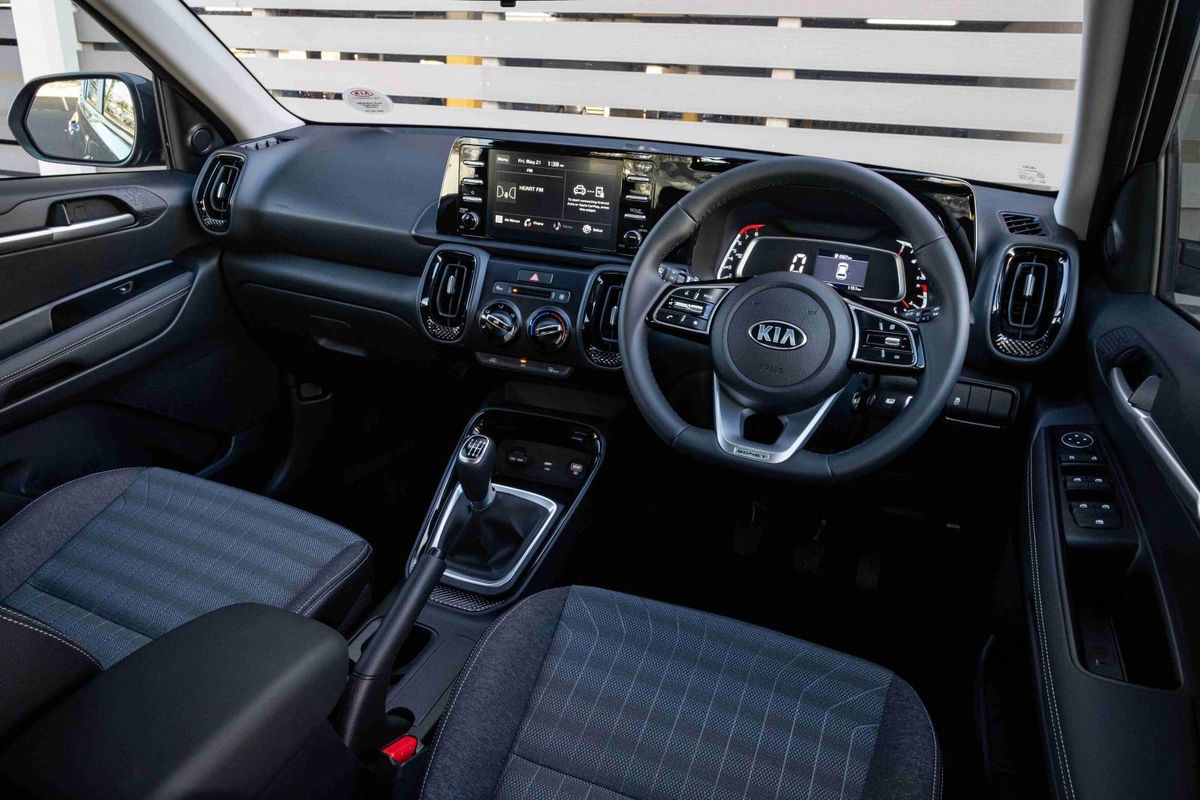
The Sonet’s perceived interior build quality is arguably better than what’s offered in its strongest rivals.
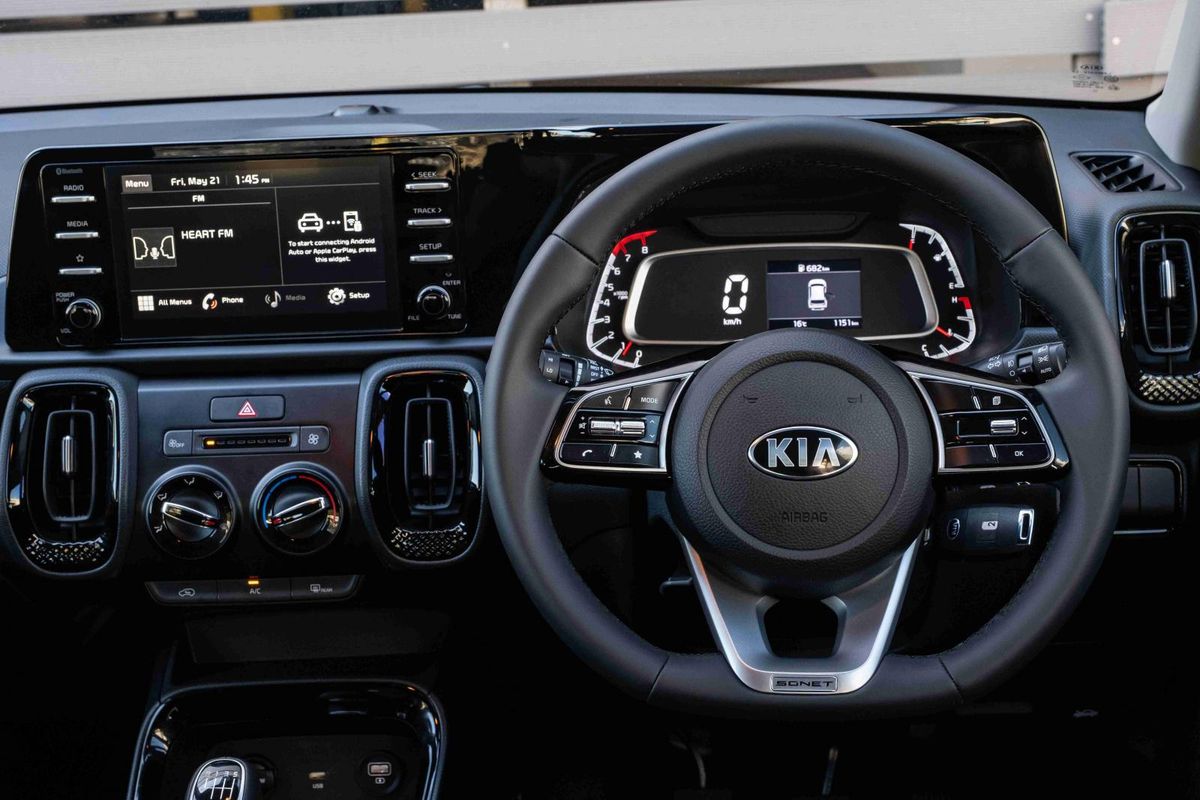
At its price point, the Kia Sonet arguably offers the best interior – both in terms of styling and perceived build quality, barring the Haval Jolion, which is admittedly a bigger vehicle and its entry-level derivative is comparatively pricier (R299 900). The newcomer’s interior is finished in mostly harder plastics and the fascia design is unfussy, but there’s a pleasing solidity to the build quality, which we appreciated.
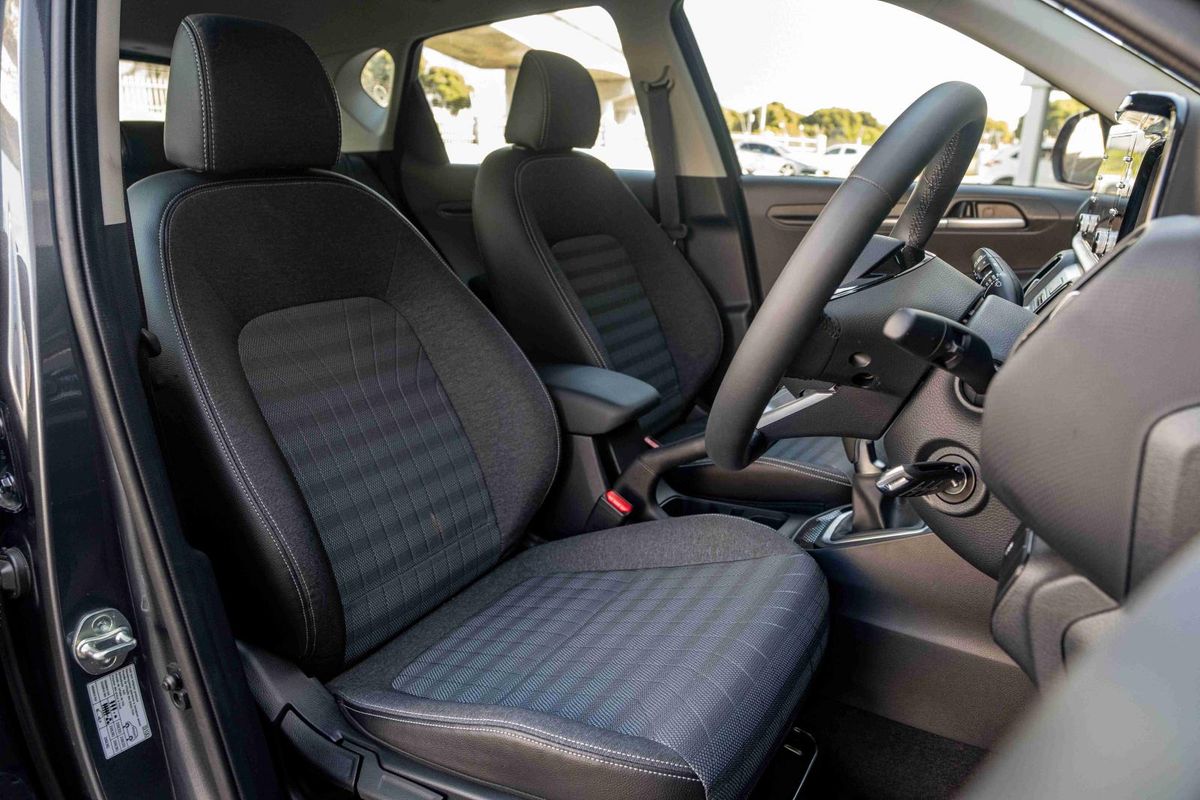
The seats are upholstered in a cloth-leather combination and even though their cushions are rather firm, they provide ample comfort for the daily commute, if not perhaps long-haul journeys. The driver’s seat is height adjustable and the column of the multi-function steering wheel can be adjusted for rake, but not reach.
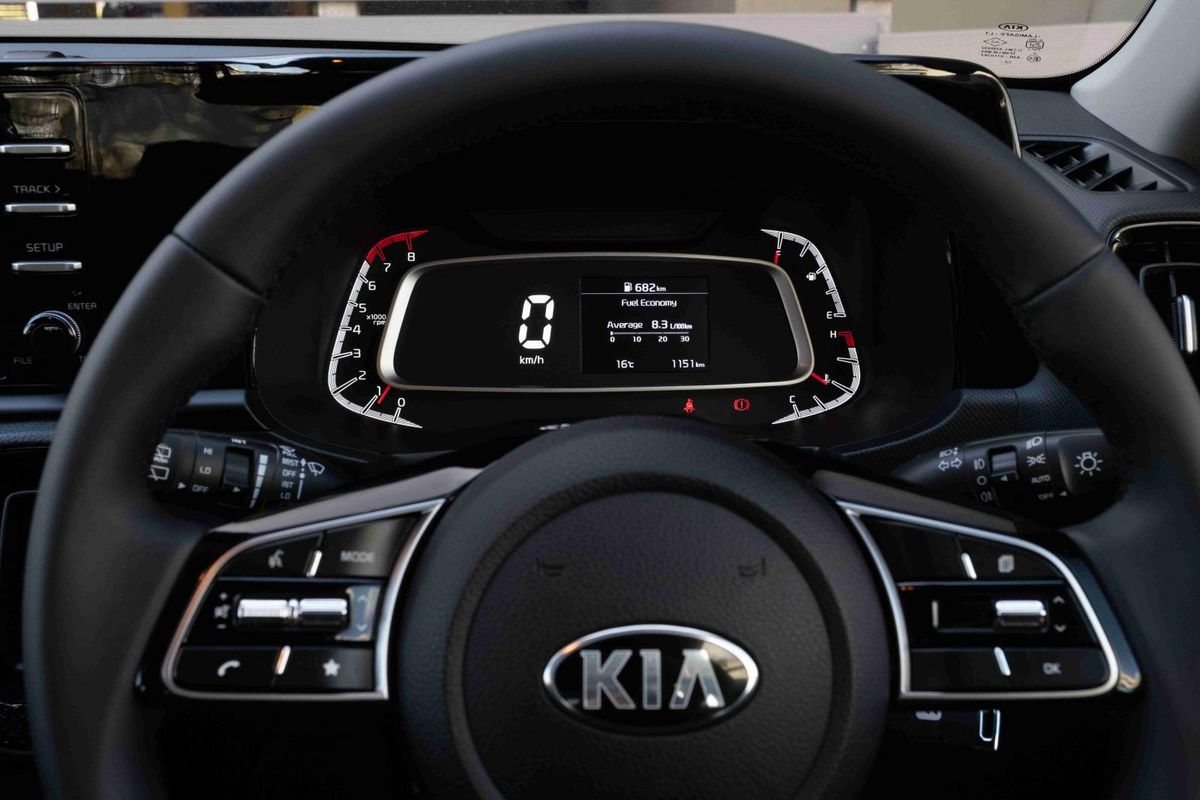
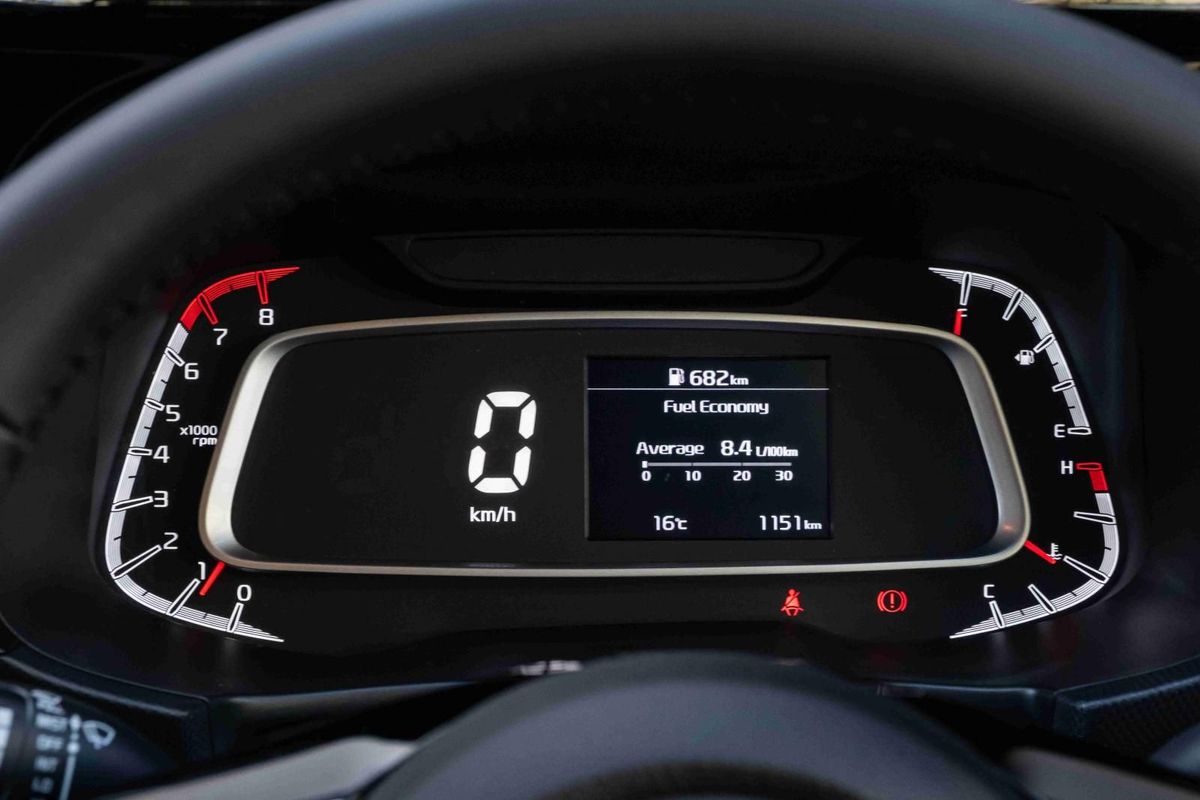
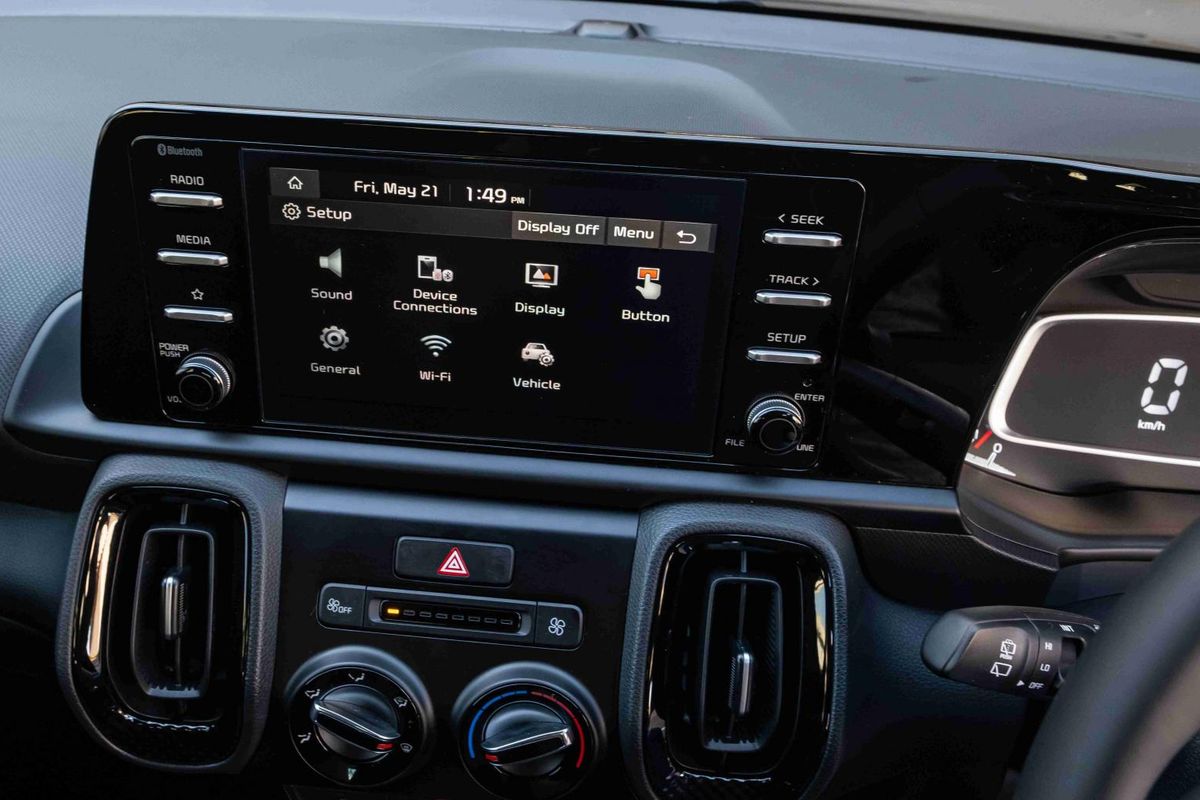
We like the modern look of the digital instrument cluster, which incorporates a digital speed readout and an LCD screen. In terms of infotainment, the Sonet has all the bases covered with an easy-to-use 8.0-inch touchscreen infotainment system equipped with wireless Android Auto and Apple CarPlay functionality, as well as the obligatory Bluetooth connectivity and voice control.
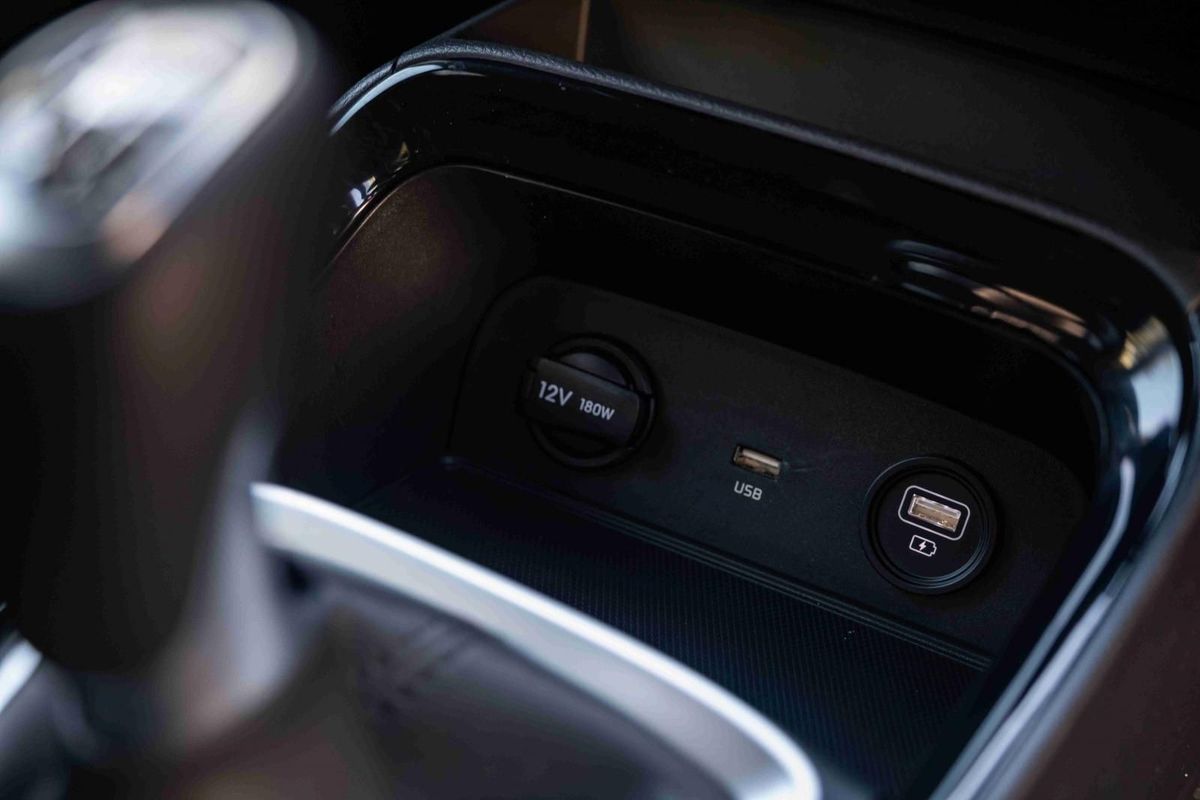
This 1.5 EX derivative equipped with a pair of USB ports and a 12V socket at the front of the cabin, while there’s a single USB port for rear passengers (in other words, 3 USB ports in total). Front and rear park distance control, plus a reverse-view camera (with guidelines) are standard too; they’re certainly nice-to-have features at this price point!
In terms of safety, the Sonet is fitted with 2 airbags (driver and front passenger), ABS with EBD, as well as electronic stability control.
What’s the Kia Sonet like to drive?
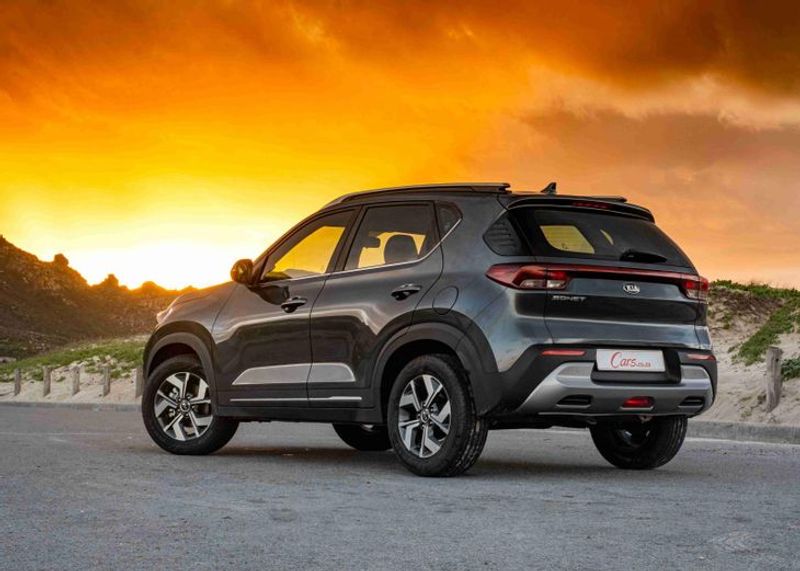
The Sonet performs well in urban and highway driving situations while also returning favourable fuel consumption.
The Sonet utilises a naturally-aspirated 1.5-litre engine that produces 85 kW and 144 Nm of torque; in this particular case, the motor is mated with a 6-speed manual gearbox. It’s worth mentioning the Korean powerplant’s peak outputs trump those of the Suzuki Vitara Brezza and Toyota Urban Cruiser, both of which also employ a 1.5-litre naturally aspirated engine.
While the 1.5 EX’s motor is admittedly not as punchy as a smaller-capacity turbocharged engine, it delivers nippy performance in urban and highway driving conditions… It definitely doesn’t feel like the 1.5 EX lacks oomph: in-gear acceleration, even in the highest gear, is commendable, which suggests the ratios of the manual gearbox are well-calibrated with the engine’s performance characteristics.
That, of course, means you don’t need to work the gears hard to keep the 1.5 litre “on the boil”. It’s easy to execute overtaking manoeuvres, for example, even when the Kia is in top (6th) gear. Buyers based in Gauteng (where the air is thinner), must, however, accept that the Sonet’s performance will wane somewhat at altitude; it won’t feel as tractable, especially when fully loaded with passengers and luggage.
The gearbox has a positive shift feel and that extra gear does its bit to optimise the 1.5 EX’s fuel consumption! Kia claims a combined-cycle figure of 7.0 L/100 km for this derivative and, during the Sonet’s tenure in our test fleet, the newcomer indicated consumption figures as low as 6.6 L/100 km – we hardly ever achieve better returns than what the vehicle manufacturers claim! Impressive stuff.
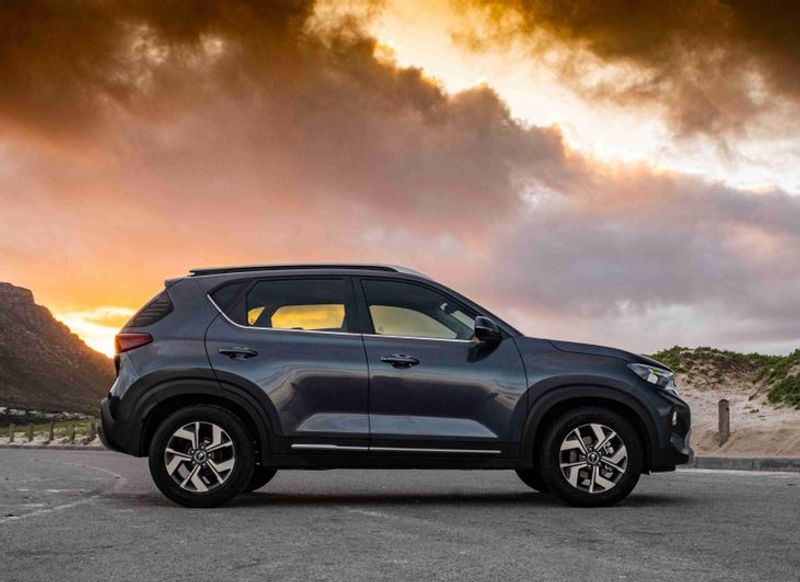
Gravel or tar, the Sonet rides comfortably on varied surfaces.
In terms of ride quality, the Sonet is just about average for a car in this segment. The cabin is fairly well insulated from noise, vibration and harshness (NVH); okay, we did discern some wind noise at highway speeds, but it was not bothersome. We also found the Sonet’s ride quality forgiving and pliant on both tarred- and gravel surfaces of varying quality.
As for handling, the Kia’s steering does have some vagueness to it, particularly at the centre, but the ‘wheel is light to wield and fairly responsive to inputs. Not only does the Sonet turn in reasonably sharply, but it feels feel well-planted, which means you can make it corner fairly briskly with confidence. Compact family cars aren’t generally renowned for their dynamism, but the Sonet feels quite sure-footed.
Is the new Kia Sonet practical?
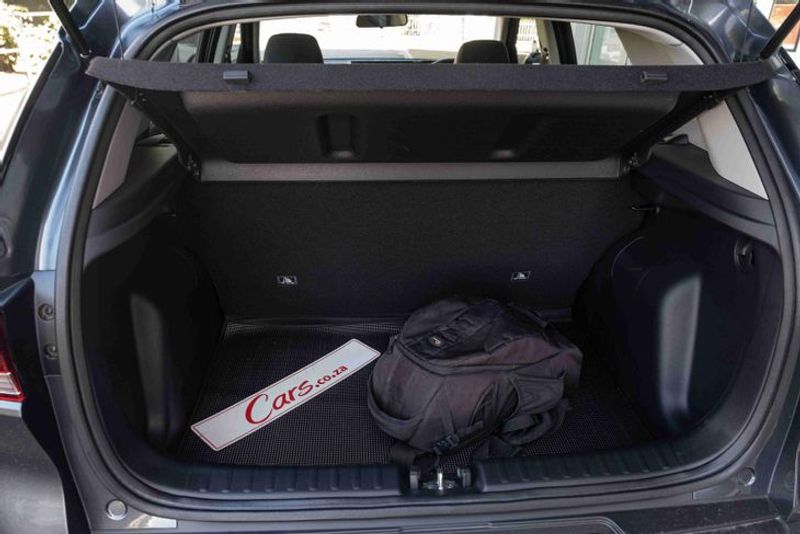
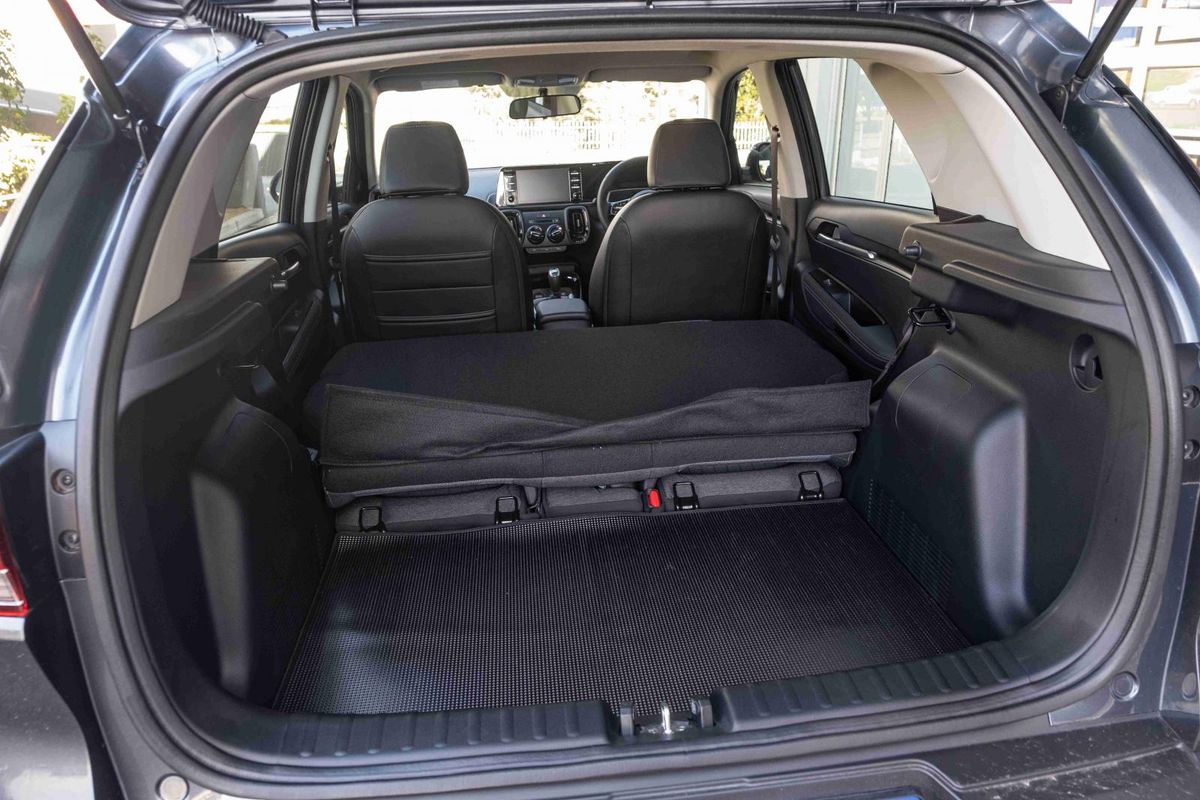
At 392 litres, the Sonet’s load bay is generously proportioned for a vehicle of this size.
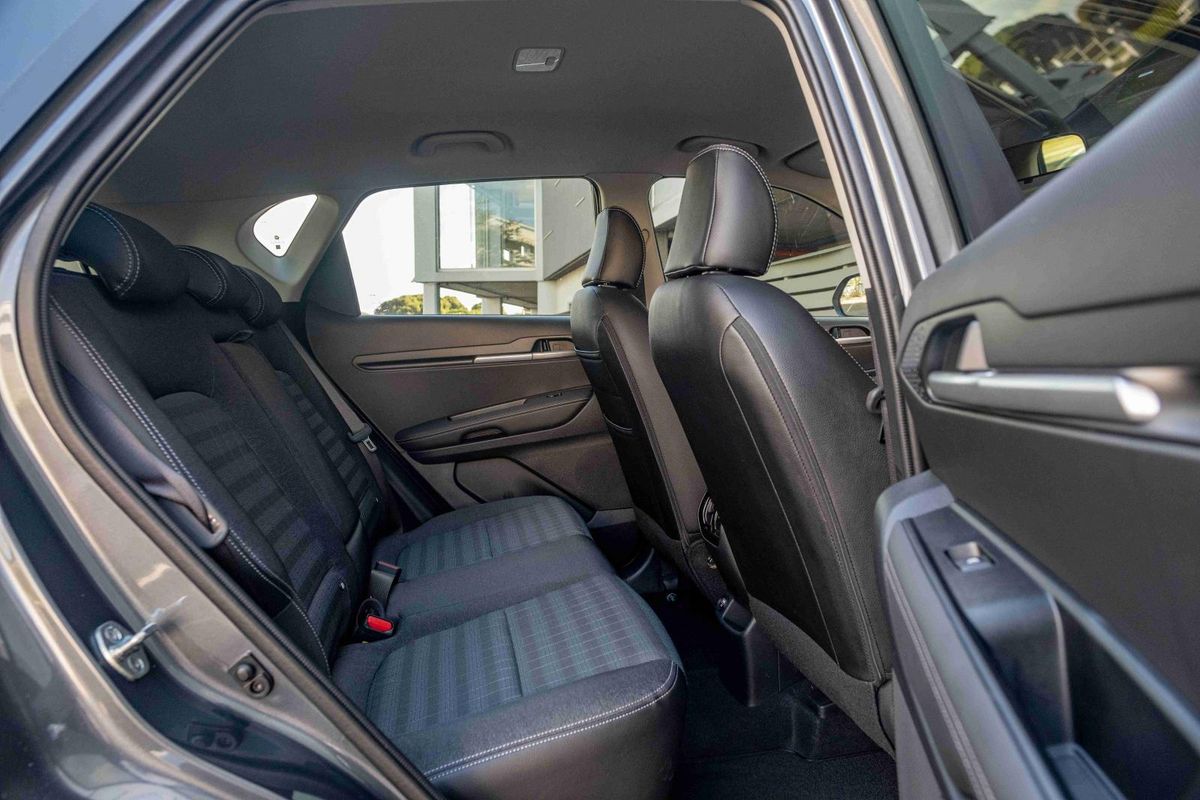
Due to its compact size, the Kia Sonet can comfortably navigate narrow streets and slip into tight parking bays with ease. Also, due to its notable 2 500-mm wheelbase, interior space is reasonable too. Rear legroom is average (at least on par with other offerings in this segment), but the load bay (with a claimed 392-litre capacity) is notably larger than those of its primary rivals, which is particularly useful.
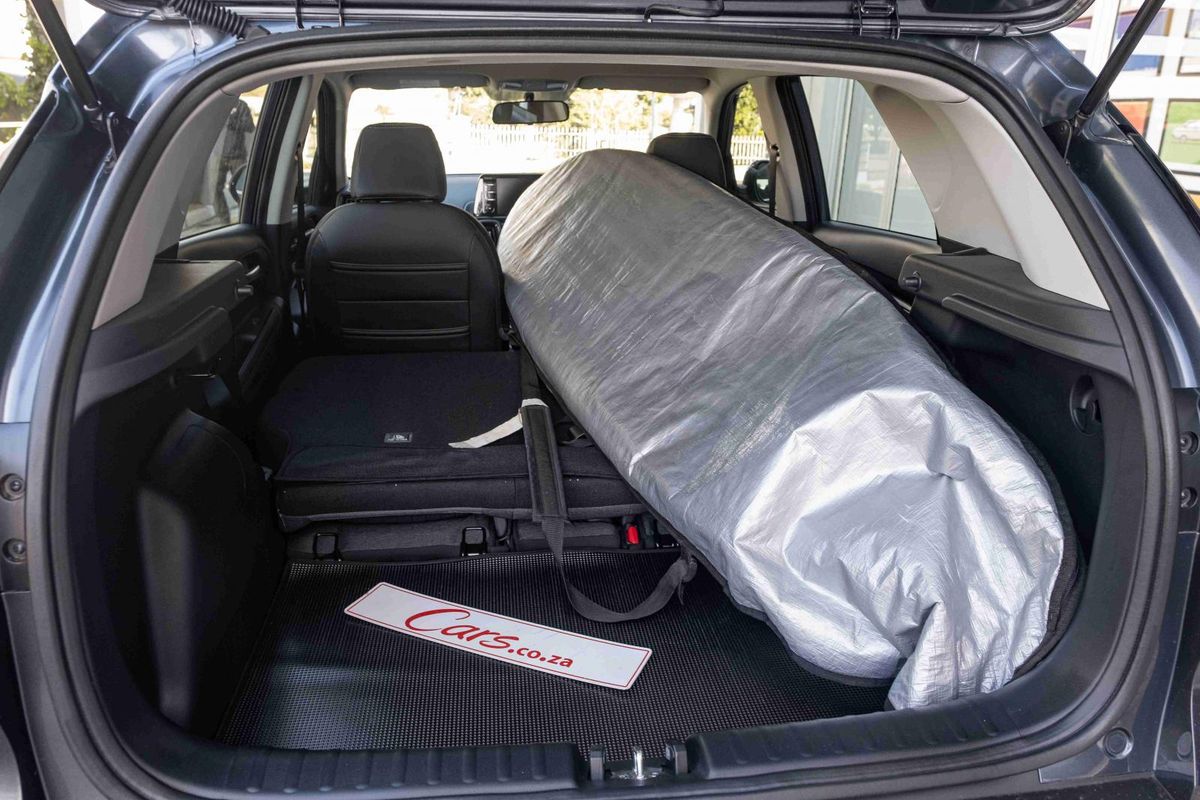
Unfortunately, although the rear bench can be folded forward, it does not split, which means the Sonet’s load bay is not as flexible as those of rivals that have 60:40-split seatbacks. Also, when the rear bench is folded, the load floor isn’t flat because the base of the bench creates a pronounced step (or lip) in the load bay, which make it harder to load longer items. In our obligatory Cars.co.za “surfboard test”, the Sonet managed to accommodate a 6-foot surfboard, but only just!
In terms of stowage spaces, it’s worth noting that there are bottle holders in the door linings, as well as 2 cupholders at the front. Rear passengers are also afforded the comfort of a central armrest, which is equipped with 2 cupholders. A small storage bin is located between the front seats, plus there’s additional storage available in front of the gear lever (and in the glove box) for any items you wish to store.
How much does the Kia Sonet Cost in South Africa?
The Kia Sonet 1.5 EX manual is priced from R284 995 and is sold with Kia’s 5-year/Unlimited warranty and a 4-year/60 000 km service plan.
See specification details for the Kia Sonet
Verdict
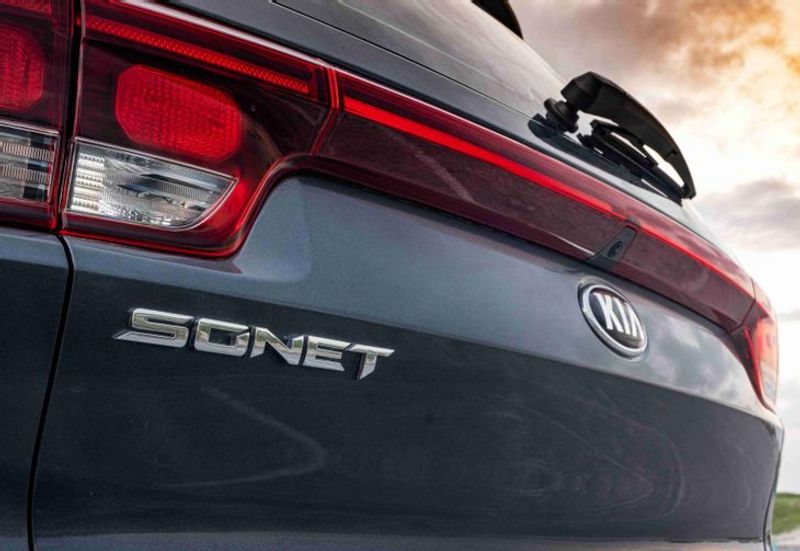
In the sub-R300k price range, the Sonet makes a very strong case for itself.
The Kia Sonet 1.5 EX represents very good value. Its performance and perceived build quality surpass what’s offered by comparable Suzuki and Toyota models; for many buyers, that will count for a lot.
Overall, the Sonet is a likeable, distinctive and eminently capable compact family car that’s equipped with most of the features that its target market would want. It does have its shortcomings, however: the 1.5 EX does not offer cruise control and LED headlights, which some of its rivals do. Also, the solid (non-splitting) rear seatback might bother some practically-minded buyers, but it’s not a deal-breaker.
Considering its reassuring sense of solidity, driveability and efficiency, you’d be silly to ignore this newcomer to the market. Moreover, the Sonet is backed by a comprehensive 5-year/unlimited km warranty and a 4-year/60 000 km service plan, which strengthen its purchasing proposition. If your budget can stretch to R300k, however, it’s also worth keeping the talented new Haval Jolion in mind.
Nonetheless, there’s a lot to like about the Sonet – we won’t be surprised to see it steal quite a few sales from its established rivals in the months to come…
Book a test drive of the new Kia Sonet here
Frequently Asked Questions
Q: What is the Kia Sonet?
A: The Kia Sonet is a compact crossover vehicle in the South African market. It was first launched in 2021 and received a mid-life upgrade in 2024, introducing new features and an updated design.
Q: What engine options are available for the Kia Sonet?
A: The Kia Sonet is offered with two engine options: a 1.5-liter naturally-aspirated petrol engine and a 1.0-liter, 3-cylinder turbopetrol engine. The turbocharged version is recommended for those who need more power, especially at higher altitudes.
Q: What are the key features of the 2024 Kia Sonet?
A: The 2024 facelift introduced several tech features, including wireless Android Auto/Apple CarPlay, Bluetooth with voice recognition, and a reverse camera. The top-tier SX grade also comes with an active safety suite.
Q: What are the disadvantages of the Kia Sonet?
A: According to the article, some disadvantages include a low airbag count (only two) in the entry-level models, a significant power loss in the 1.5-liter engine at high altitudes, and the high price of the flagship SX model. The service plan was also reduced from 4 years/60,000 km to 3 years/45,000 km.
Q: Which Kia Sonet model is the best to buy?
A: The article recommends the Sonet 1.5 EX+ model as the best balance of specification and price.
Related Content
Kia Sonet (2025) Specs & Price in South Africa
Kia Sonet – Why you should buy it
Reviews