Cars.co.za journalist and photographer, Gero Lilleike, recently ventured into the wilds of Botswana in a Suzuki Jimny to find out if this cute, compact off-roader can handle the brutal and unforgiving terrain of this exceedingly beautiful African country. Step out of your comfort zone and join us for a trip on the wild side!
It was about 3 am, but my eyes were wide open. My heart was pounding hard in my chest. All my senses were on high alert. The thin canvas walls of my tent were all that separated me from the hungry, wild creatures lurking in the dim glow of the full moon overhead. I lay still, listening intently for even the faintest sound of movement. The loud and distinctive belch of a large hippo reverberated through the camp. That was close, very close — too close.
Further off in the bush, the eerie squeal of a hyena sent shivers down my spine and then, in an instant, the bush was silent once more. The gentle lapping of the nearby Khwai river calmed my nerves and slowly lulled me back into a deep sleep.
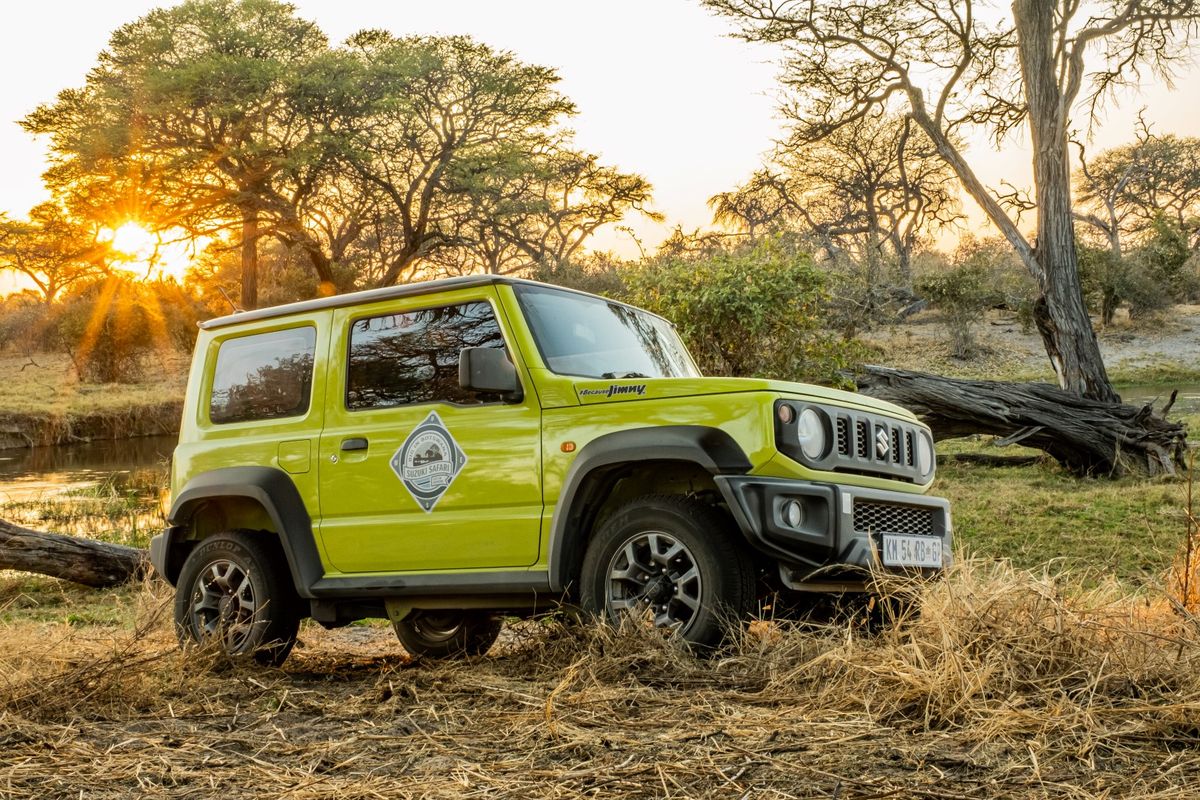
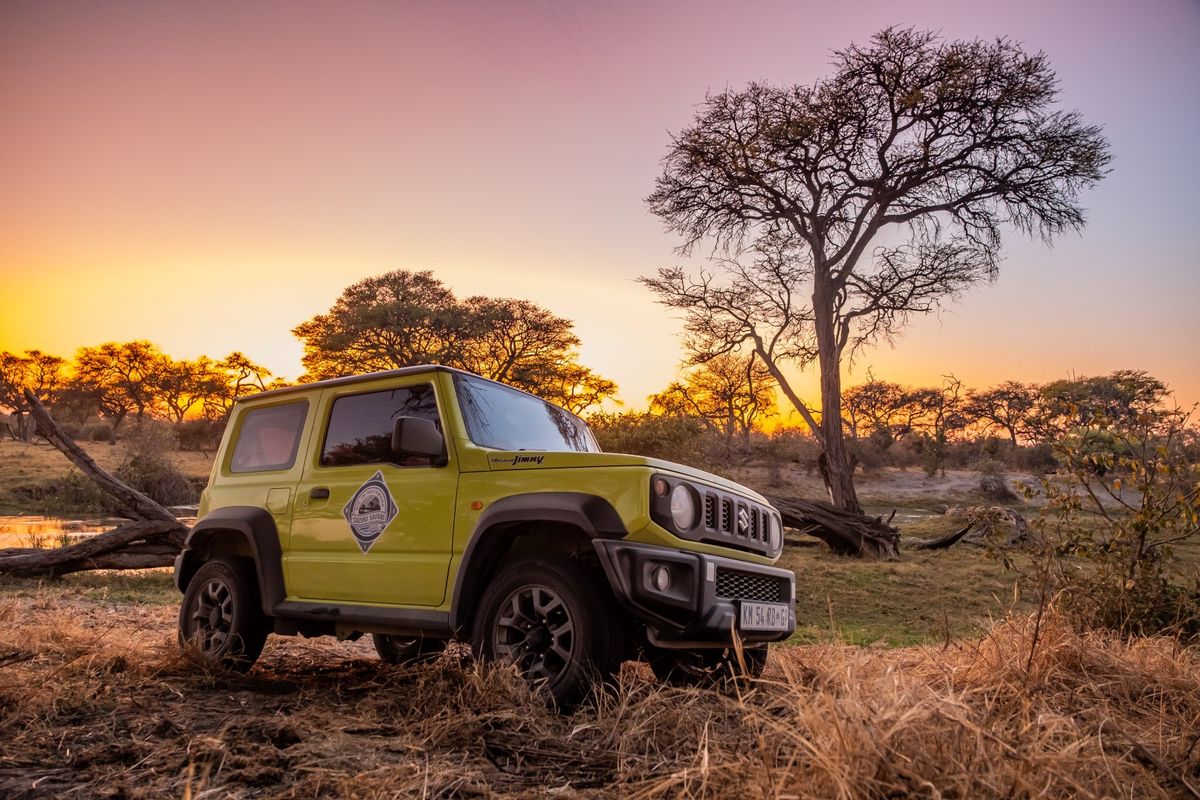
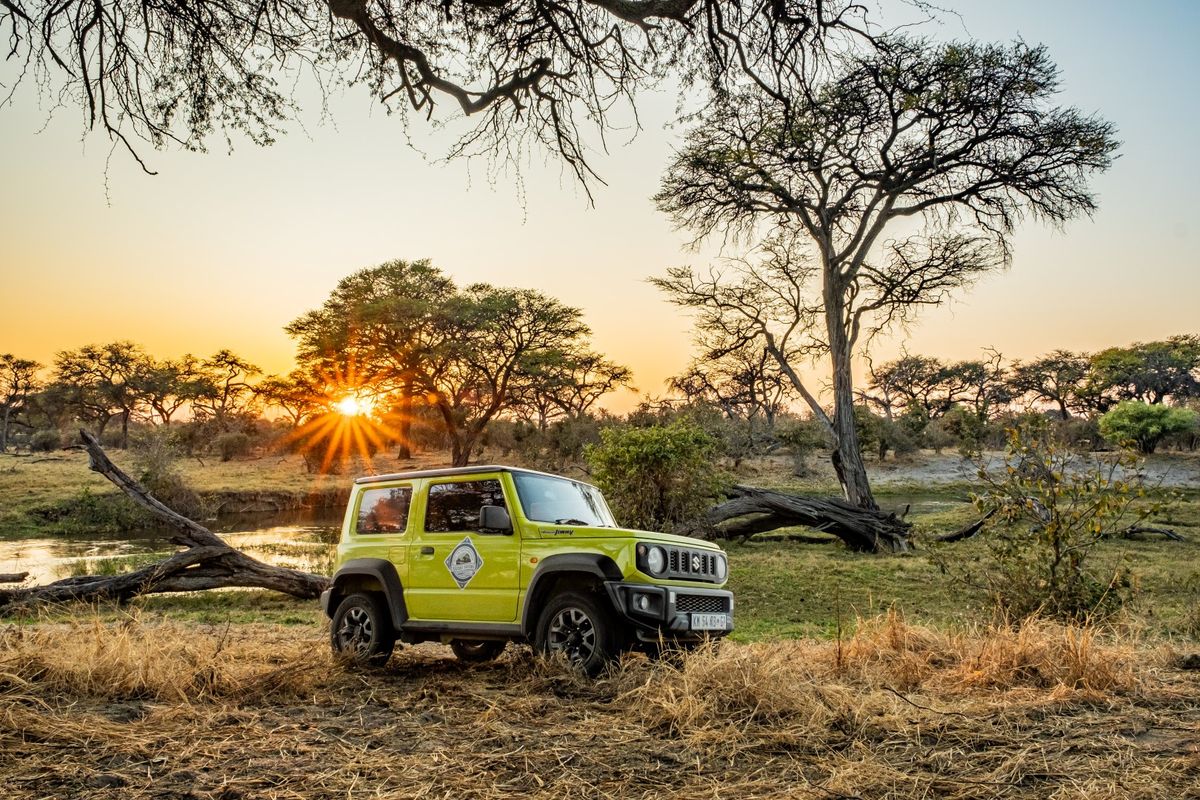
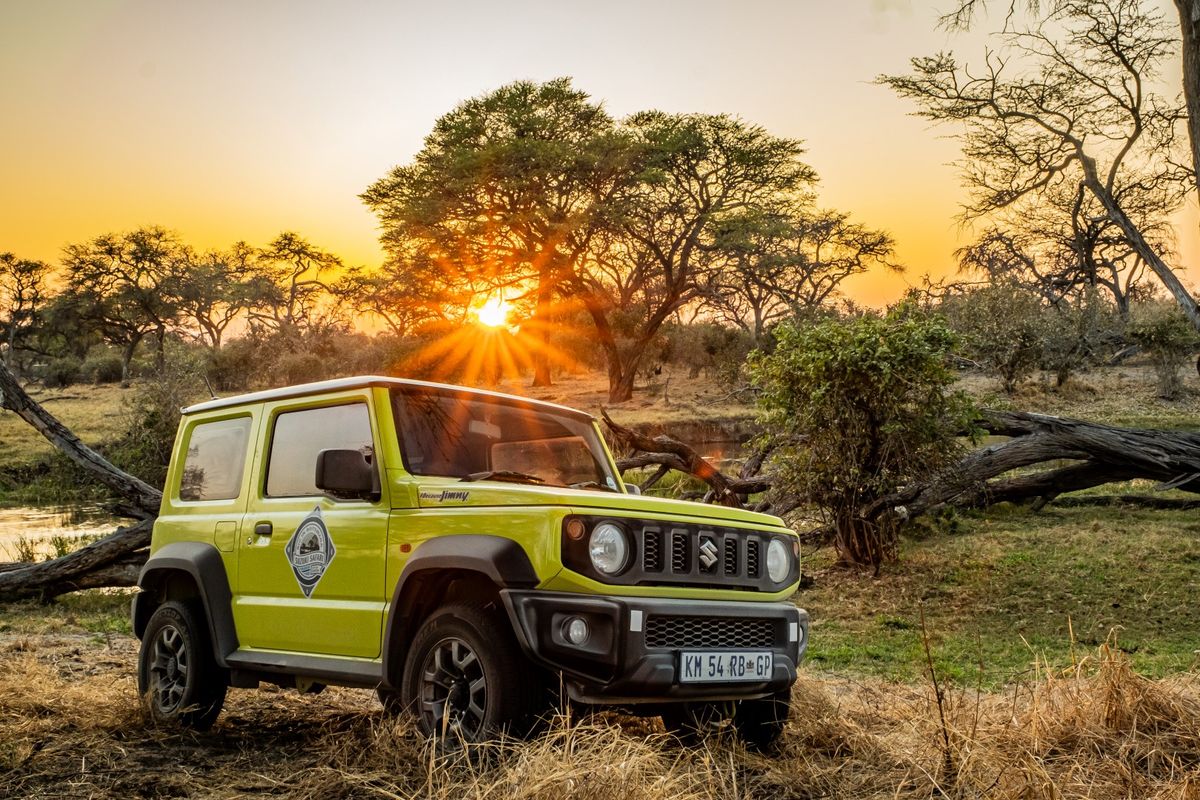
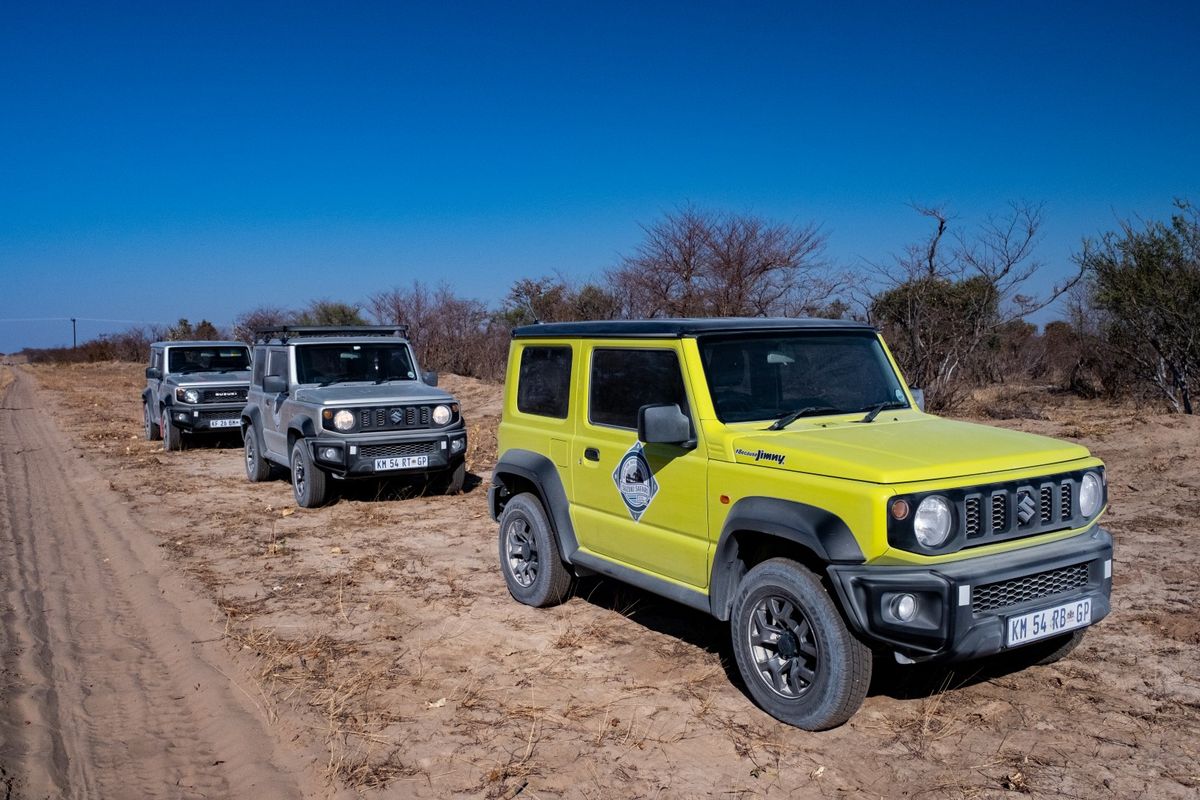
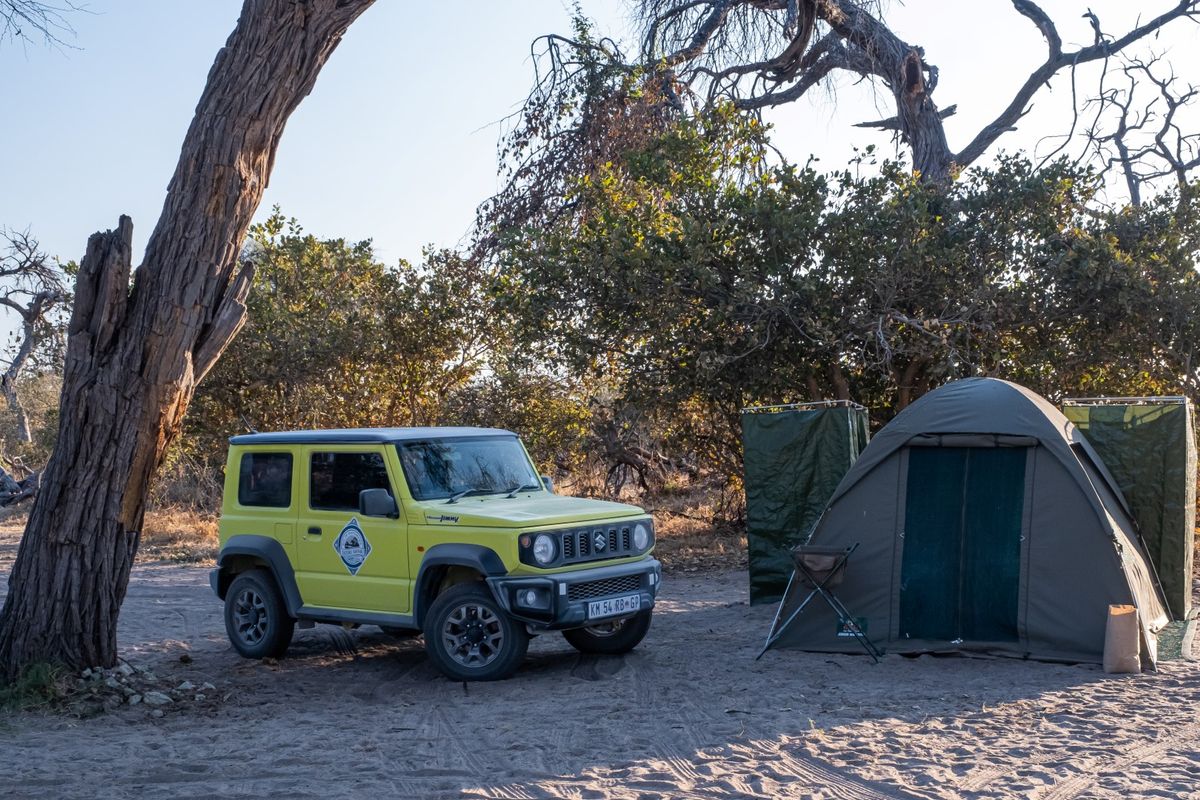
Day broke with a fiery red sky and the full, magnificent beauty of Botswana laid bare. The vibrant glow of the rising sun woke me from my slumber. I popped my head out of my tent and instinctively checked that there were no animals hiding under the Kinetic Yellow Suzuki Jimny parked nearby.
The campfire crackled hot and fresh coffee was on the brew. I gazed over this splendid scene and I was in awe. Was this a dream? How did I get here?
Into the Wilds of Botswana with the Suzuki Jimny
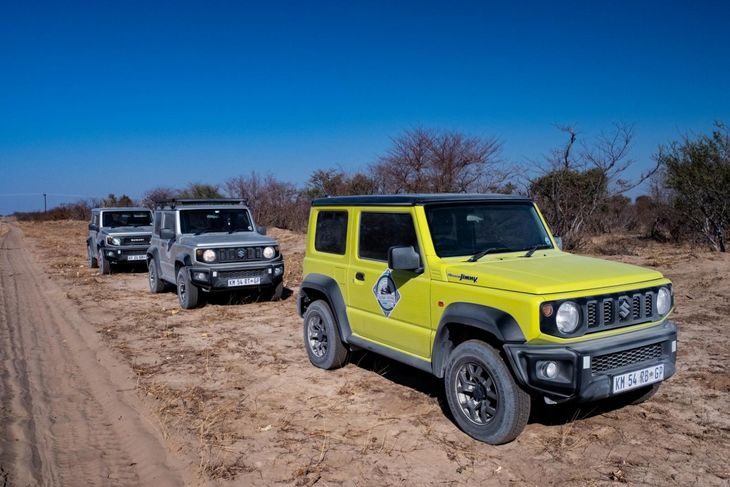
Can a stock-standard Suzuki Jimny tame the wilds of Botswana? You betcha!
The day before, we landed in Maun, in northern Botswana. Maun serves as a key supply town for local safari operators and Overlanding enthusiasts that visit places such as Moremi, Mababe, Savuti and Chobe.
Many Overlanding and wildlife enthusiasts consider Botswana the ultimate safari destination in Africa. Its vast wilderness is not only rich in wildlife but the harsh, unforgiving terrain poses a significant challenge to even the most capable 4×4 vehicles.
In a post-Covid-19 world, the Overlanding industry has grown significantly; enthusiasts now spend crazy sums of money to equip their 4x4s to the tee with the latest aftermarket equipment, but is it really necessary to equip your 4×4 with all that fancy equipment if you want to tackle the wilds of Botswana? Well, we were about to find out…
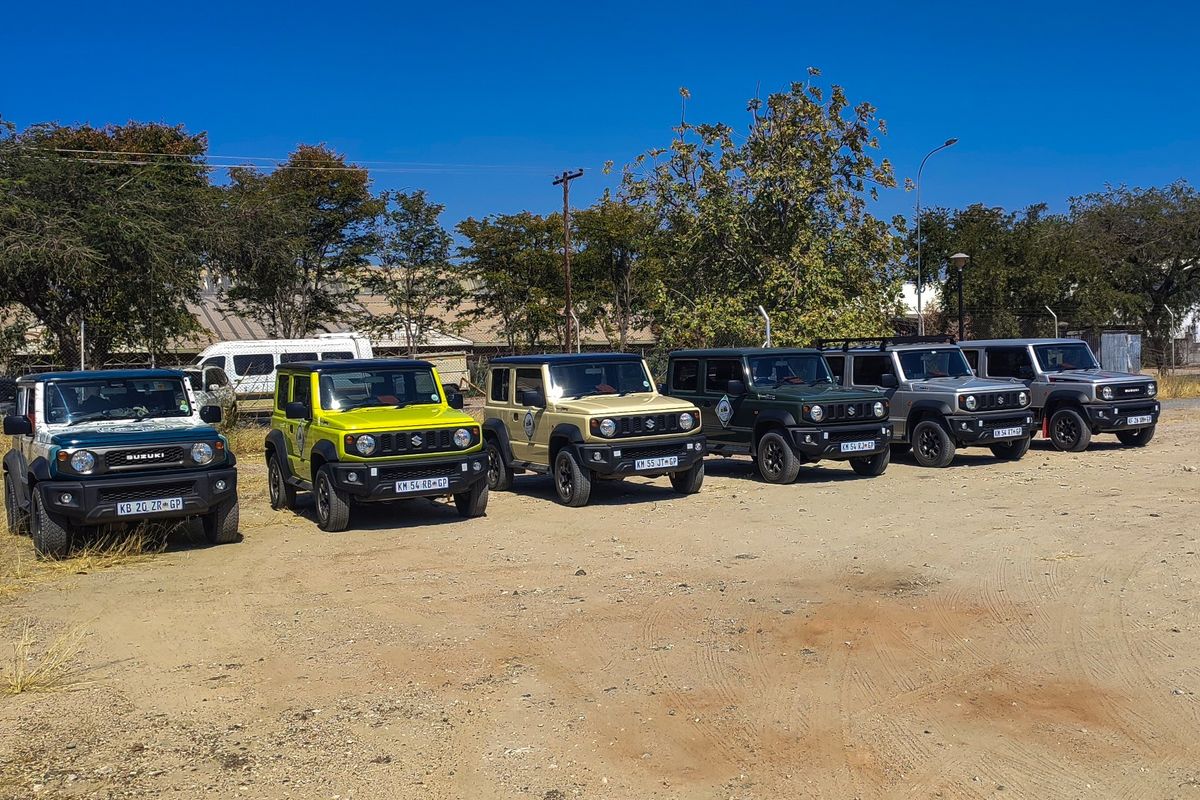
Waiting for us at the airport in Maun were 6 Suzuki Jimnys, but importantly, not one of them was modified or accessorised — just stock-standard Jimnys that you can source on Cars.co.za.
My trusty Jimny (in mid-spec 1.5 GL AllGrip guise) was named the “Catepillar”. It’s powered by a 75 kW/130 Nm naturally-aspirated 1.5-litre 4-cylinder petrol engine, paired with a 5-speed manual gearbox. Some of the other media participants had the luxury of an automatic transmission, but I was more than happy to “drive stick”.
The Jimny is well-known for its formidable off-road ability; it’s a conventional 4×4 that’s equipped with a transfer case that facilitates 2H, 4H and 4L – I felt confident that the Jimny would rise to this challenge.
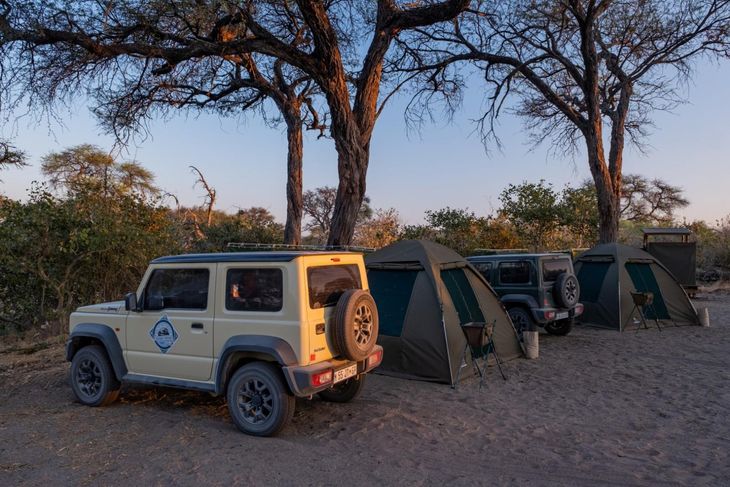
Wild camping and free-roaming animals awaited us in Mababe. Here, you sleep with one eye open…
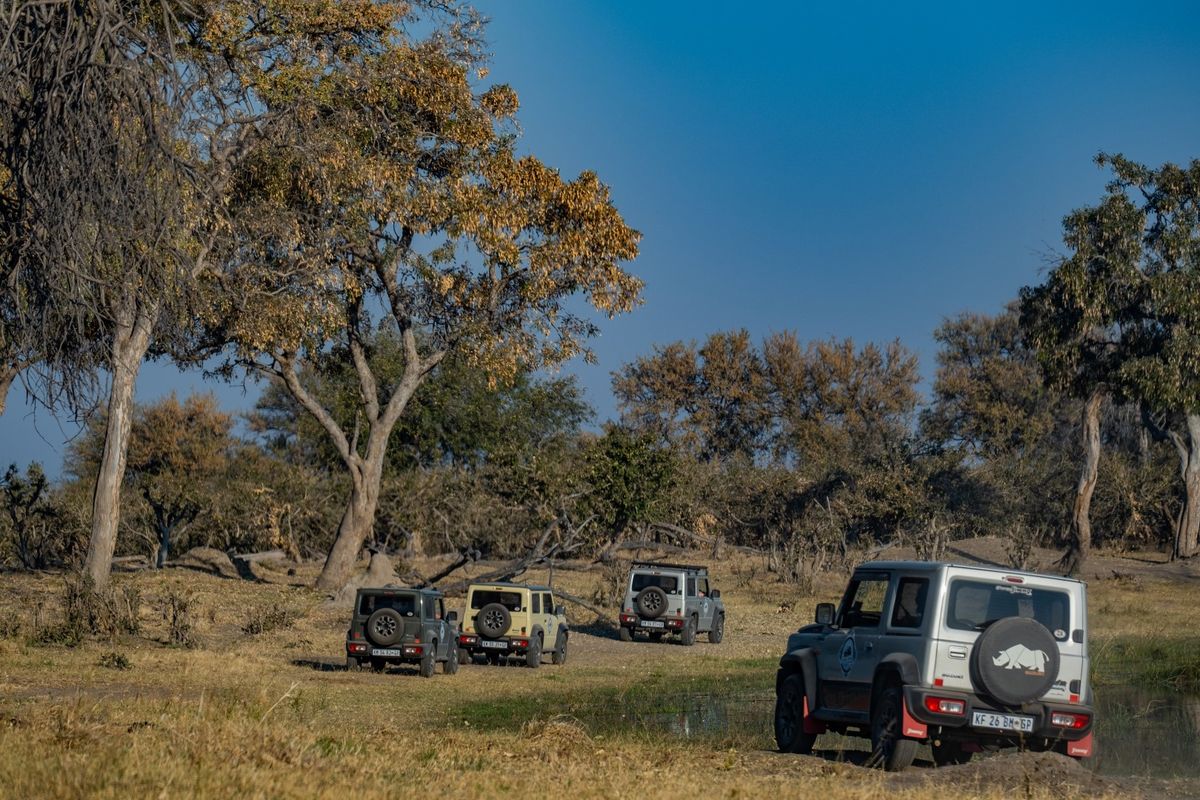
The route for this wild adventure would take us to a bush camp on the banks of the Khwai River some 120 km northeast of Maun. From there, the convoy of intrepid Jimnys would attempt a gruelling 166 km drive through some of the harshest sand corridors in Botswana in Chobe National Park, with the journey ending at the Linyanti Floodplains near Kasane, a town which straddles the borders of Namibia, Zambia and Zimbabwe.
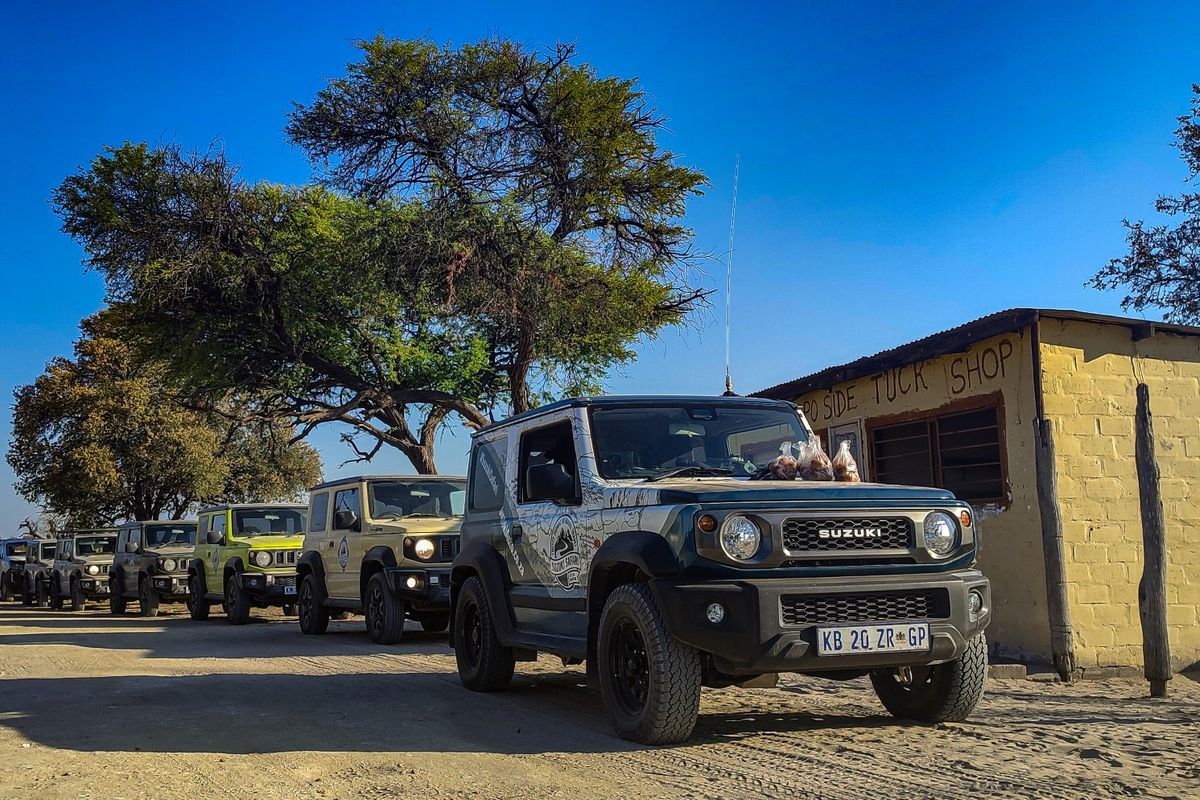
With tyre pressures dropped to about 1 bar, the Jimnys were primed for sand- and dirt-road driving in temperatures nudging above 30°C. Under the experienced command of JJ from African Expeditions, the convoy set off from Maun into the wilderness of Botswana.
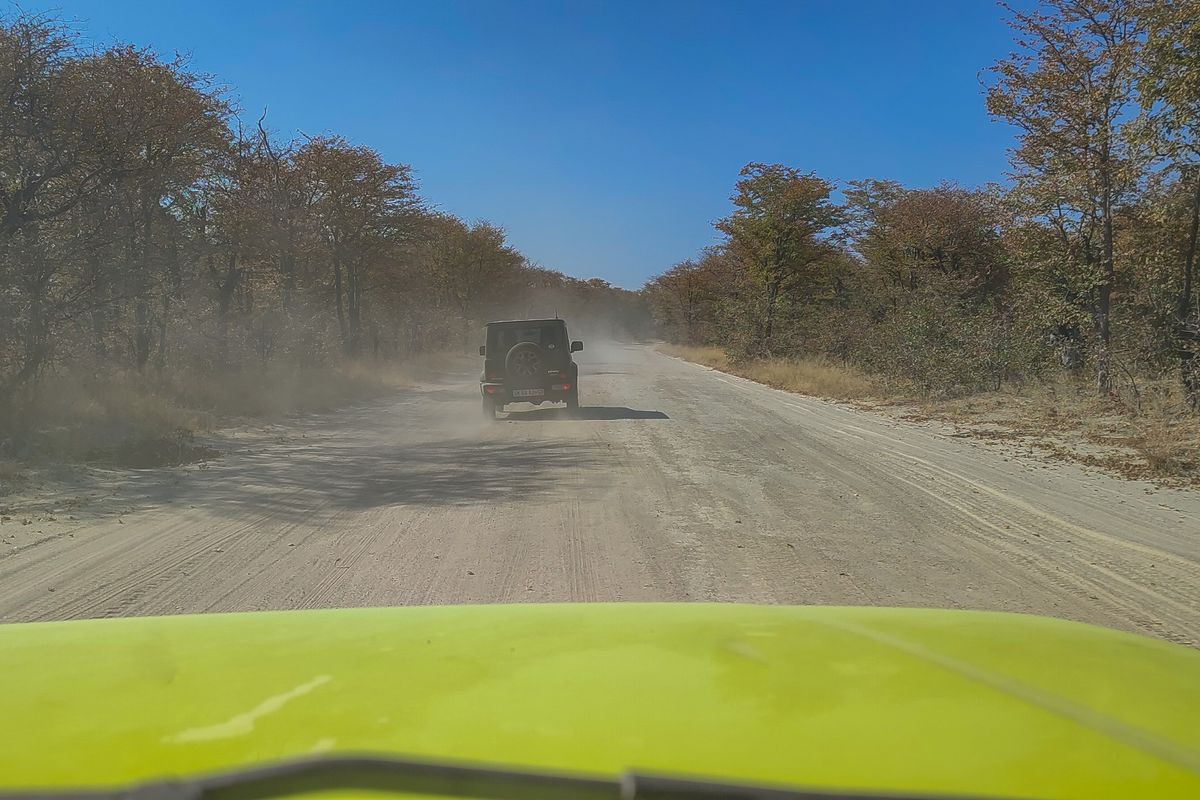
The dirt road from Mababe to Maun is in a bad state with neverending ruts, channels, dips and holes to keep even the most experienced off-road drivers on their toes. In such conditions, progress is slow and the 120 km trip took us about 3.5 hours to complete! The 33°C heat and a dry, scorched landscape made for an apocalyptic scene, but despite this, the Jimnys forged ahead without hesitation.
We arrived at what is called Camp Tshaa 2, on the outskirts of Mababe Village. With just enough time to unpack before sunset, we were about to be treated to a magical wildlife experience on the Khwai River, replete with a raging fire to keep us warm in the cold night air.
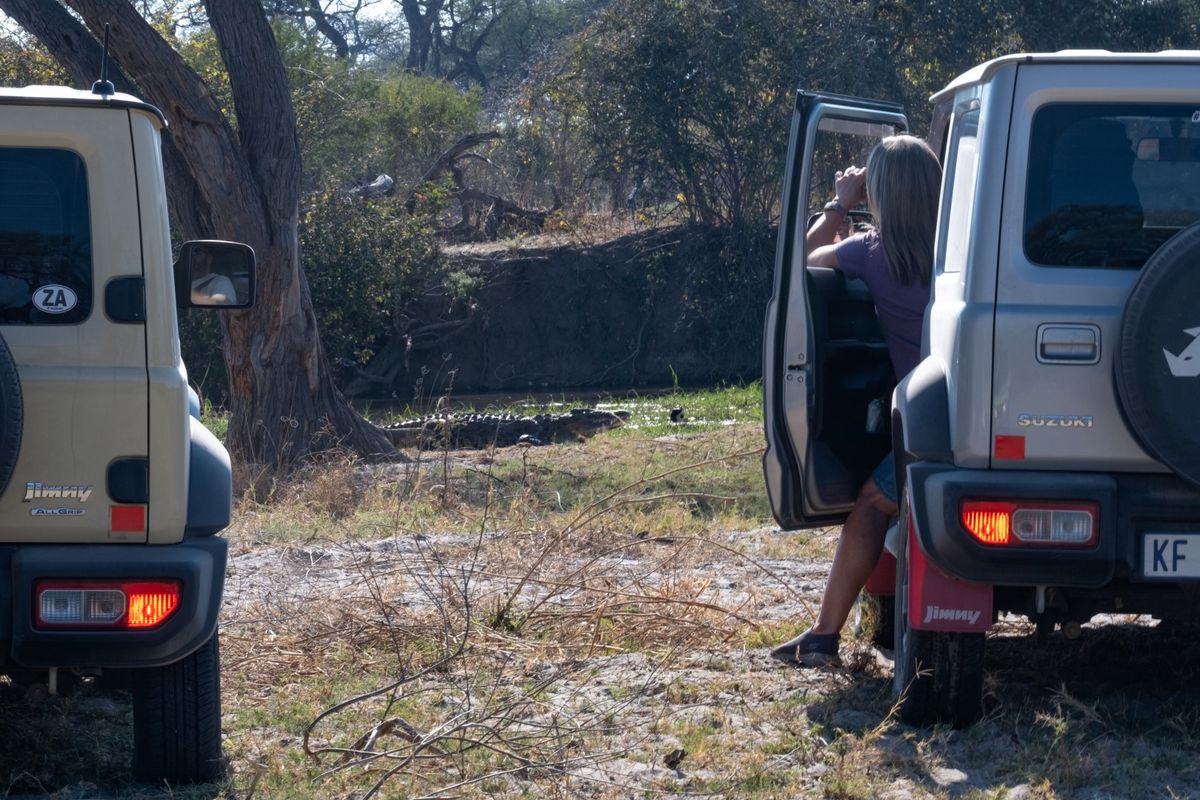
There are no fences here – wildlife can roam freely, making this a truly wild camping experience. Anything can happen and it’s wise to always be alert! The Khwai is home to hippos and crocodiles and the former are particularly active at night, when they graze on grass on the riverbanks.
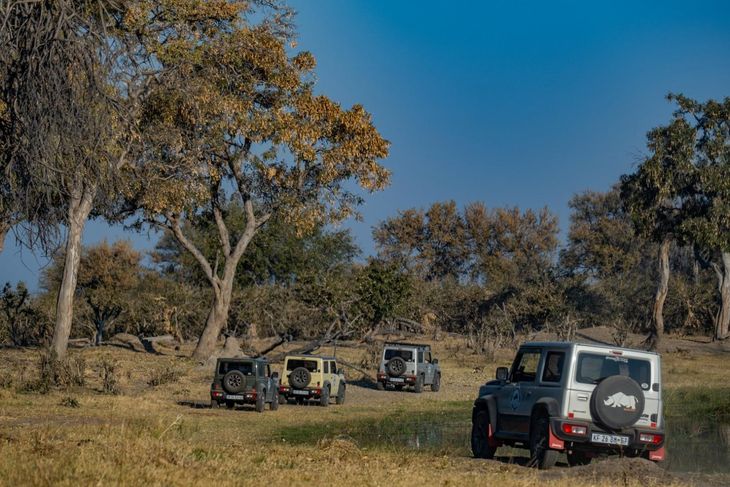
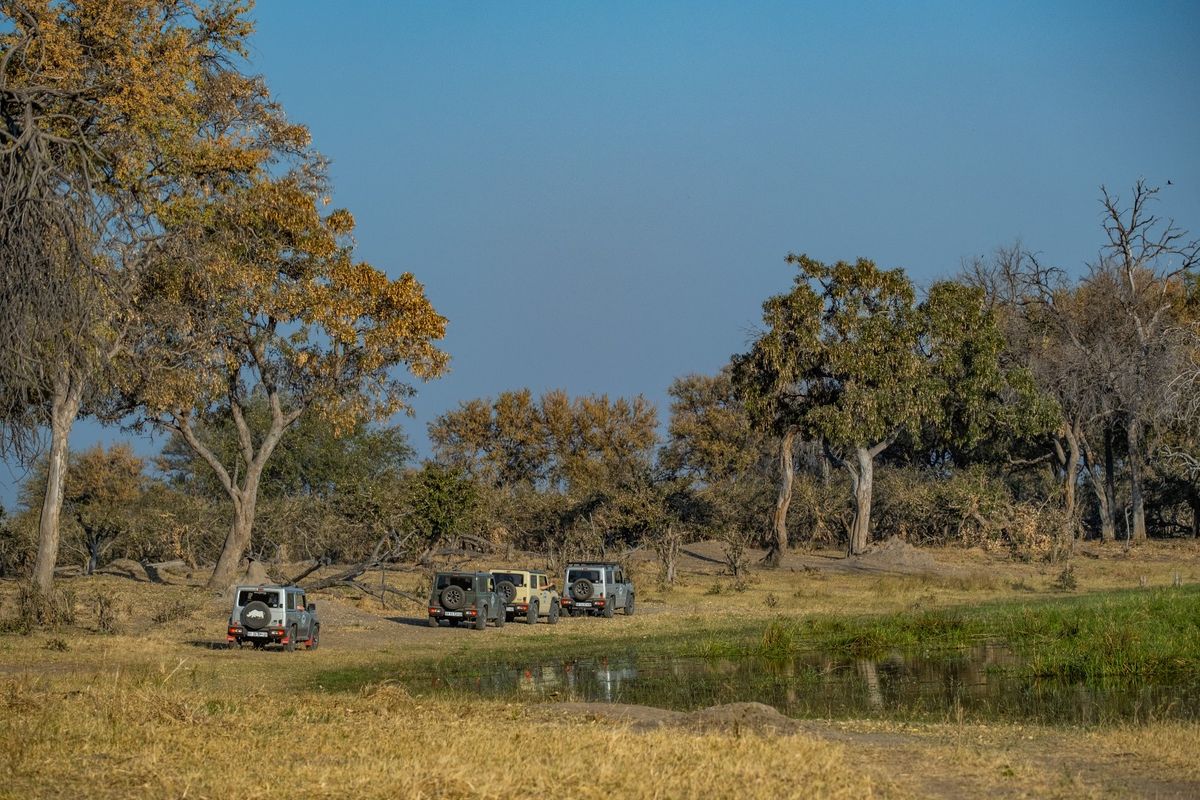
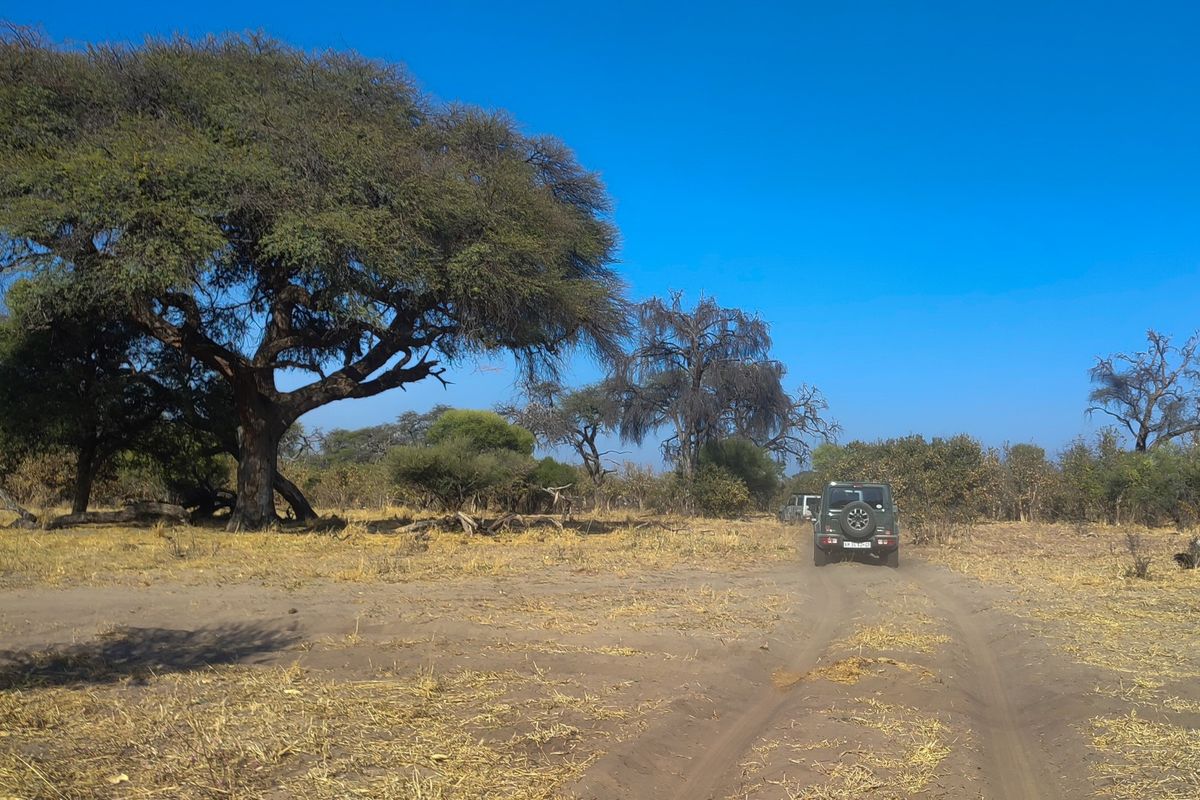
The Jimny tackled various terrain in Botswana with ease.
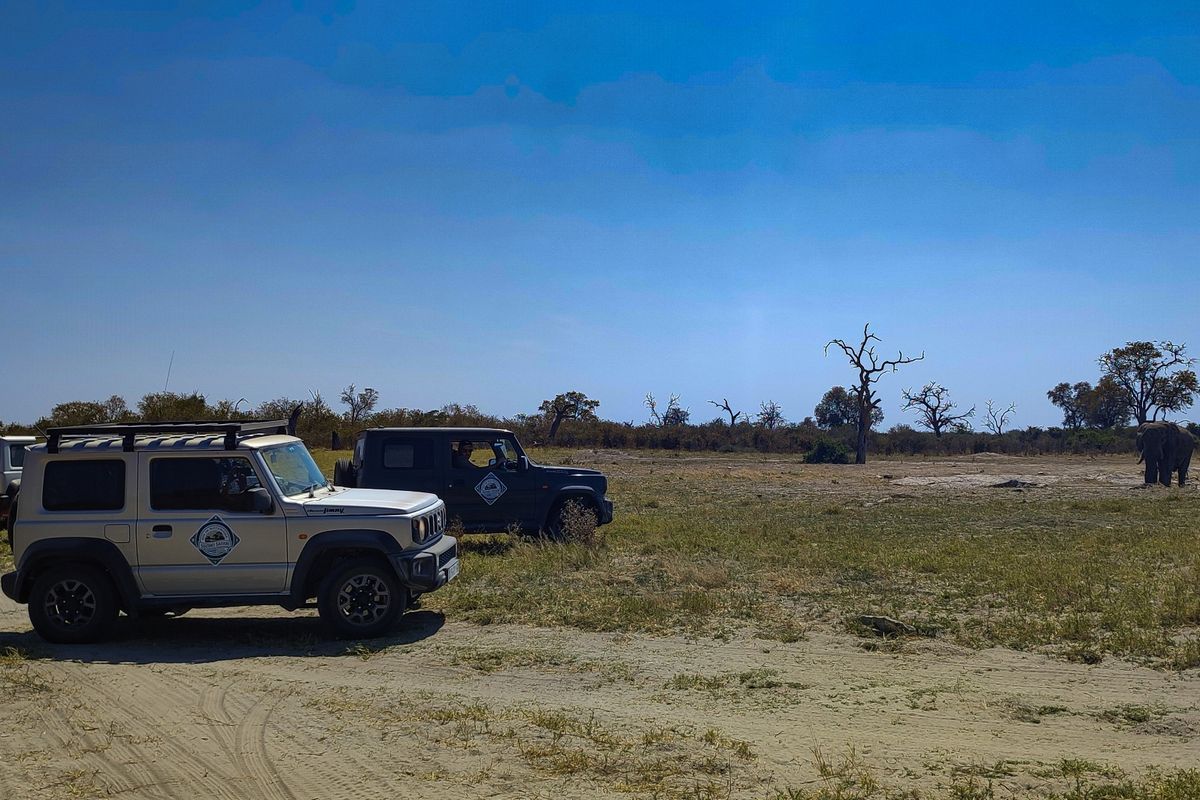
The next morning, after enjoying coffee and a hearty breakfast beside the campfire, we set off in the Jimnys in search of wildlife. We saw a large variety of birds and mammals along the route, which skirted the Khwai River. Large crocodiles basked in the sun. Hippos bathed in the deep pools and a variety of antelope enjoyed a cool drink from the river as the sun irradiated the earth.
We also spotted a few lone male elephants that were foraging deep in the bush, but the large herds alluded us. We ended the day with a lovely, refreshing sundowner next to the river. On our way back to camp, we saw a pair of beautiful lionesses lying on the road (before they would head off to hunt in the fading light), just a mere kilometre from our open camp. What a magical place!
When the going gets tough, the Suzuki Jimny will prevail
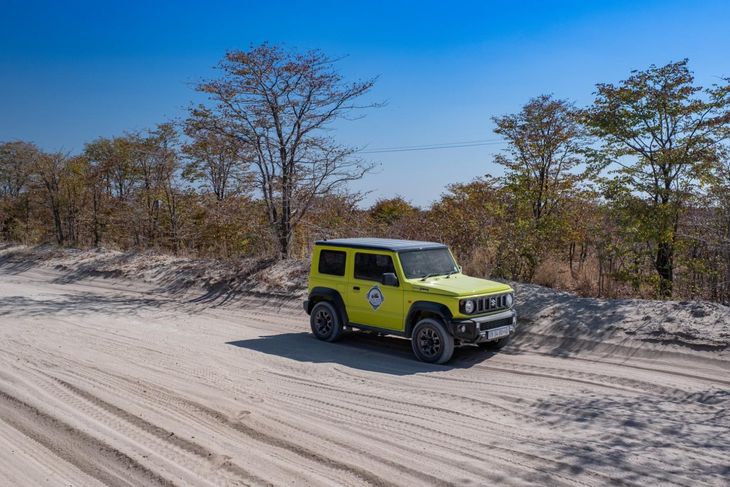
Botswana’s vast sand corridors pose a significant challenge for any 4×4 and not every 4×4 makes it out alive.
The most significant off-road challenge that the half a dozen Jimnys would face presented itself on Day 2. Hot weather and acres of soft sand lay ahead of us as we embarked on the gruelling 9-hour (166 km) drive from Mababe to the Linyanti Floodplains via Chobe National Park.
While most of this drive was done in 4H, we had to engage low range (4L) after we entered the park at Mababe Gate. With its tyres adequately deflated, the Jimny had absolutely no difficulty in traversing the thick, soft sand. In fact, the diminutive 4×4 glided over the sand with aplomb… it just kept on doing it for hours on end with no fuss at all!
The Jimny’s performance in those difficult conditions suggested that nothing could stand in its way, but in the wild, there’s bound to be some drama, even if just a little. About 40 km from Savuti main camp, JJ’s Jimny, which was the lead vehicle, suffered a puncture and the whole convoy crept to a halt.
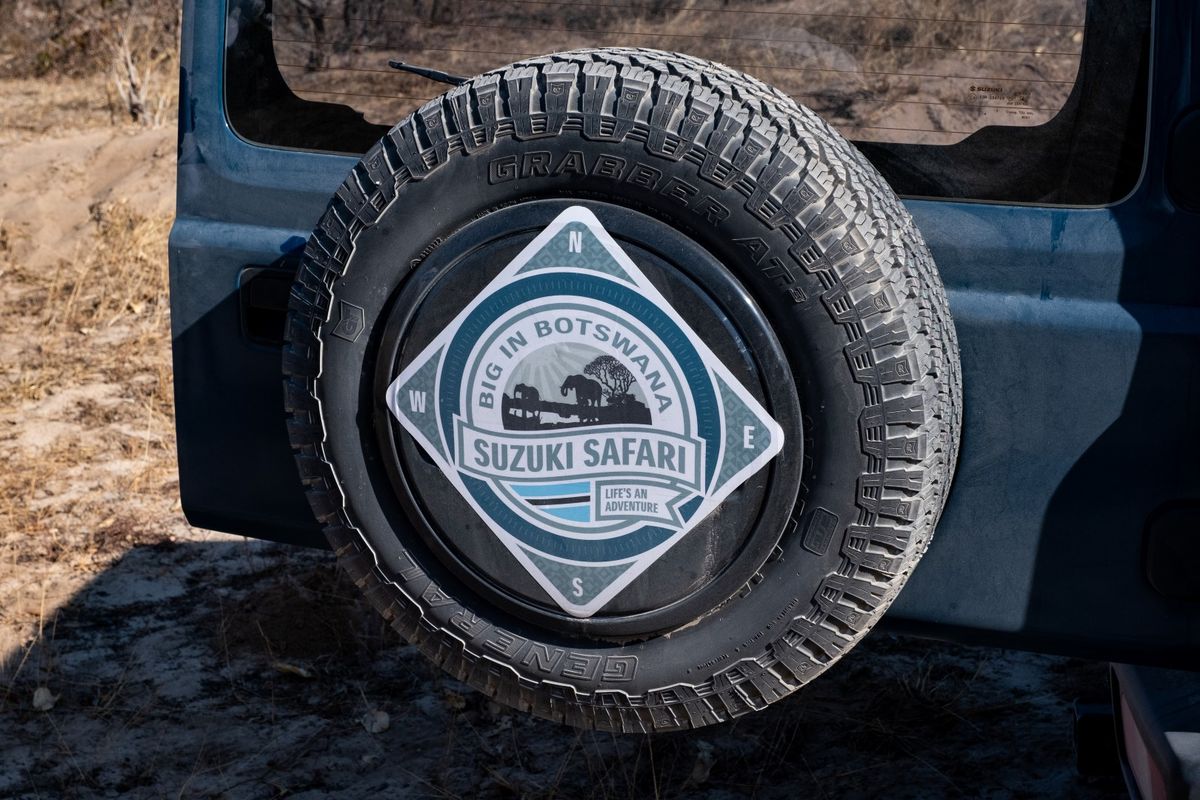
The men got to work with changing the wheel (thankfully the Jimny’s spare wheel is conveniently located on its tailgate), while the ladies scanned the surrounding bush for animals that might pose a threat. The wheel was changed in under 20 minutes and we were soon back on the road!
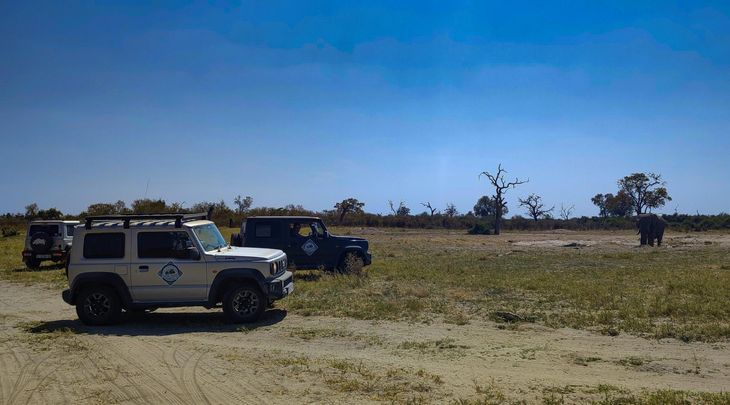
Botswana offers some of the best game-viewing in Africa!
The remaining leg of the trip was mostly uneventful, apart from a large giraffe that suddenly galloped out of the bush and onto the road ahead of the convoy, as the Jimnys approached the park exit at Ghoha Gate. The convoy pressed on to the small town of Kachikau where the dirt road finally gave way to tar and led us to our overnight accommodation at Mwandi View. A cold beer and a magnificent sunset over the Linyanti Floodplains awaited our tired bones.
This epic 3-day Suzuki Safari came to an end all too soon, but there was one final treat that would cap off this adventure in spectacular fashion.
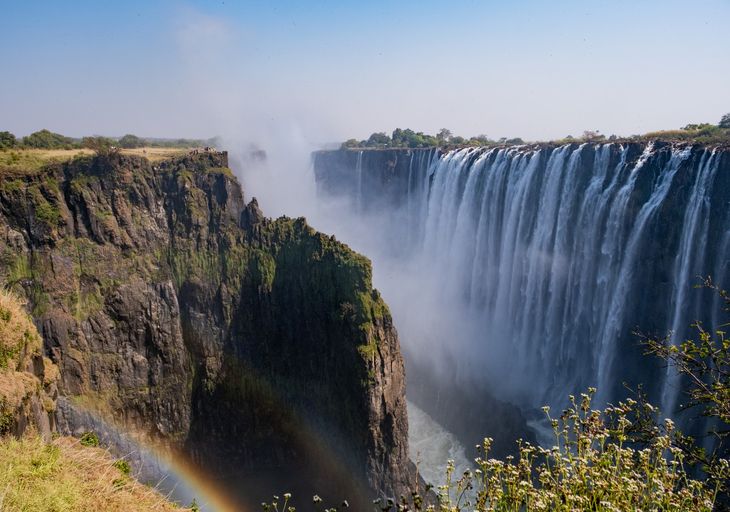
A quick border crossing into Zambia afforded us a quick look at the magnificent Victoria Falls.
Our return flight would depart from Livingstone in Zambia the following day and we had to leave the Jimnys in Kasane, the last town near the border confluence of Botswana, Zambia and Zimbabwe. We left Mwandi View early in the morning and arrived in Livingstone a few hours later, which gave us just enough time to see the magnificent Victoria Falls, known as Mosi-oa-Tunya (The Smoke That Thunders). Africa is just amazing!
This “Jimny Journey” undoubtedly reinforced the go-anywhere ability of the Suzuki Jimny (in standard, non-accessorised guise) and this experience will hopefully inspire South African owners of the Japanese brand’s diminutive off-roader to not only explore the vast beauty that South Africa has to offer, but venture further and conquer the wilds of Africa in one of the most capable 4×4 vehicles currently on the market. If you have the will, the Jimny will get you there!
Buy a new Suzuki Jimny on Cars.co.za
Buy a used Suzuki Jimny on Cars.co.za
Related Content
Experiencing the Incredible Beauty of Lesotho in the Suzuki Jimny
Gero Lilleike

Gero Lilleike is a published writer and photographer with most of his work appearing in the fields of travel and motoring. Gero has worked as a motoring journalist for Cars.co.za for the past 8 years and takes every opportunity to go on an adventure whether it be offroad or in the ocean. For Gero, a car's worth is measured by how many surfboards it's able to carry.