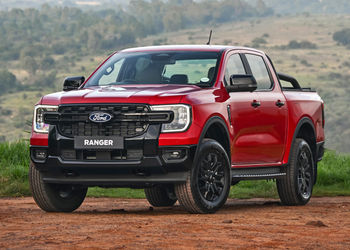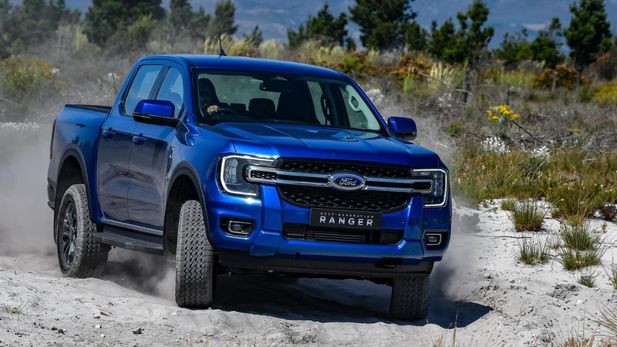
Big changes will happen to Ford’s Ranger line-up early next year. But will that create a Ranger XLT-spec gap for loyal Ford double-cab buyers?
Ford’s revised Ranger line-up looks set to have a huge impact on South African bakkie buyers in 2026. But what does the loss of the 2.0-litre bi-turbodiesel (BiT) really mean?
First, some background. VW did all the hard work, and Ford benefited. Until now. That’s the story of 2.0-litre turbodiesel engines in double-cab bakkies for the South African market.
When the Amarok launched back in 2010, the market judged its 2.0 TDI engine as too small and overstressed for a South African double-cab bakkie operating under severe local conditions. But VW engineers proved everyone wrong, partly because the Amarok also eventually brought a more sophisticated transmission to market, too, with many gears: the ZF 8-speed auto.
When Ford retired the 3.2-litre, 5-cylinder turbodiesel in 2020, its 2.0 BiT became the lead South African Ranger diesel powertrain. And there was little judgment about its size – even the previous-gen Ranger Raptor used it. The market had accepted that a 2.0-litre turbodiesel could work, and work well, because the Amarok had proven it over years of durable real-world operations.
VW did the difficult initial engagement with South African bakkie buyers, convincing everyone of the 2.0-litre turbodiesel’s merits. Then Ford did the bomb-squad thing, coming to market to benefit from shifting attitudes toward smaller-capacity, double-cab bakkie engines.
Why the Ranger XLT 2.0 BiT mattered
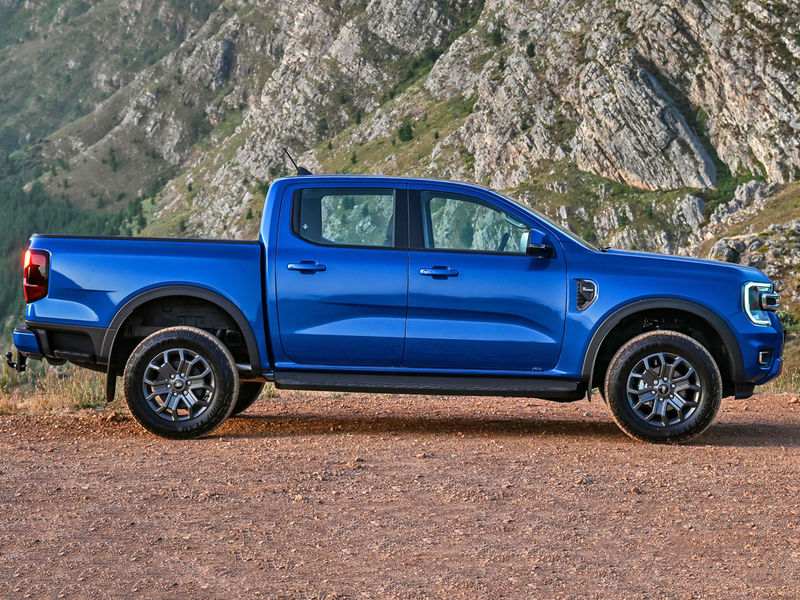
The 2.0 BiT was an essential engine for Ford’s bakkie business in South Africa. It outpowered its main rival (Hilux 2.8 GD-6), but power was only part of what made the 2.0 BiT so driveable. The other element was a 10-speed automatic transmission. This transmission created a driving experience that was responsive, efficient and, most importantly, refined in stop-start urban traffic, where many double-cab bakkies spend most of their driving mileage.
Ford’s decision to retire the 2.0 BiT opens a significant gap in the Ranger double cab powertrain line-up, which has narrowed from 15 to 13 derivatives. But what does that mean for Ranger double-cab buyers?
In simple terms: if you want a Ranger bakkie that’s comfortable on corrugated dirt roads and has enough highway overtaking performance, you now need to buy the 3.0 V6 turbodiesel engine. And that means you’ll be paying more.
The loss of the 2.0 BiT XLT
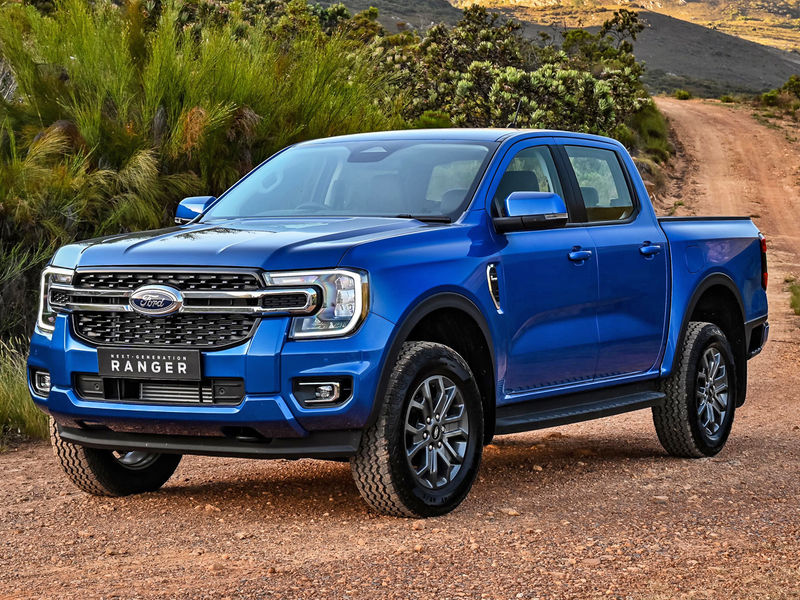
There was a hope among Ranger owners that Ford would create the double cab many buyers have always wanted: a 3.0 V6 turbodiesel XLT. All the power without the unnecessary extra cost of excessive cosmetic features, oversized alloy wheels and needless luxury cabin trim.
If you know bakkies, you know that luxury double cabs, with their oversized wheels and road-biased highway tyres, aren’t great at doing what a bakkie should be able to do. Like long-distance dirt-road driving across the Karoo or Namibia.
All those styling trim bits that designers add to differentiate premium-grade double cabs serve no practical function. They are just vulnerabilities that scratch and get damaged over time, adding to vehicle depreciation.
Want to purchase a new or used Ford Ranger XLT? Browse vehicles for sale
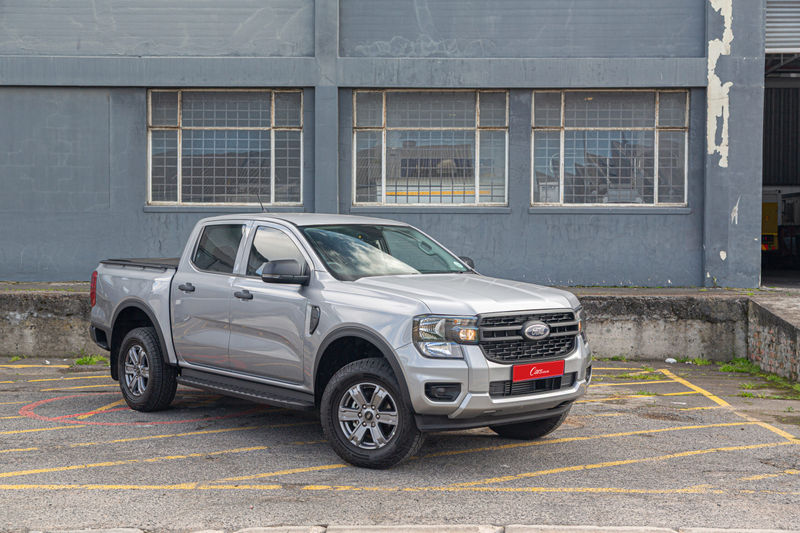
The best all-purpose double-cab bakkies are the mid-grade ones. Like the XLT. It has all the core safety and cabin infotainment tech, and rugged chassis engineering, but none of the needless cosmetics or cabin trim. And Ranger XLTs feature the correct bakkie wheel size: 17 inches. These are all reasons why a 3.0 V6 turbodiesel XLT would have been so welcome. It had the potential to be the best real-world Ranger double cab, delivering all the features, performance, ruggedness and value that buyers need.
But Ford has other ideas. There is no Ranger 3.0 V6 XLT to replace the 2.0 BiT XLT 4×4 or 4×2, which was a true stealth-value, hero bakkie for many Ford followers. What Ford is offering buyers who want a 2.0 BiT XLT replacement is the 3.0 V6 Sport, which is a trim level higher. And that means you are paying more for a step-up in model grade, while already paying more for a larger engine.
But what about the 2.0 SiT XLT?
It’s a good bakkie, which for 2026 gets a more reliable version of the mid-power 125 kW version of Ford’s 2.0 turbodiesel, using chain-driven ancillaries, as well as the 10-speed automatic transmission. Despite these changes, the 2.0 SiT doesn’t have the power, highway-cruising prowess, or truck-traffic overtaking ability to substitute for the retiring 2.0 BiT.
The one we’ll miss the most: the Ranger XLT 4×2 derivative
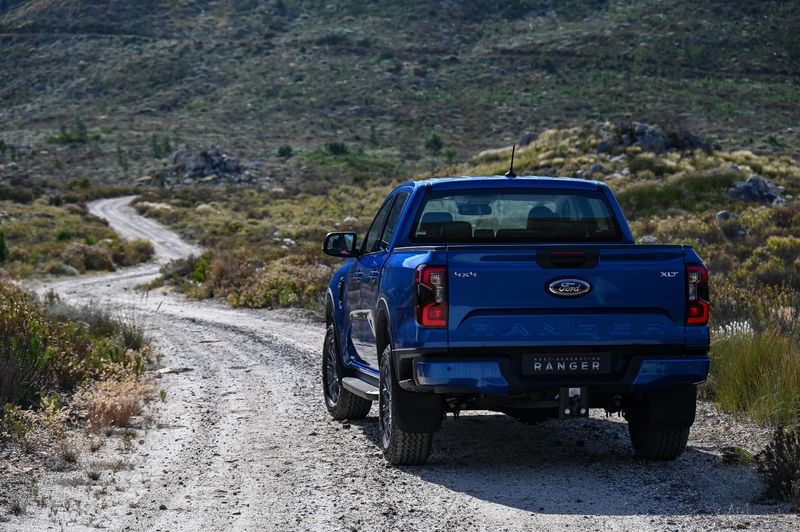
The other issue with Ford’s 2026 Ranger line-up, framed around the deleted 2.0 BiT XLTs, is drivetrain. Sensible double-cab owners know they don’t need a 4×4. because the most challenging traction situations they’ll ever encounter are some corrugated Karoo backroads and maybe a moss-covered slipway when launching or recovering watercraft.
For most South Africans, a double-cab 4×2 with a locking rear differential is more than adequate. And it saves the cost, weight and future maintenance burden of owning a 4×4-drivetrain vehicle – one that’s never going to use its 4×4 hardware to its full capabilities anyway.
But Ford isn’t offering a replacement for the 2.0 BiT XLT 4×2 in its new Ranger line-up. The 3.0 V6 Sport is available only as a 4×4. That means you can’t have a value-grade Ranger double cab in 4×2 with a powerful turbodiesel engine.
If you want a 4×2, your only choice is to sacrifice highway performance by ordering the 2.0 SiT XLT 4×2. Or buying a powertrain that nobody really wants: the new 222 kW/452 Nm 2.3 EcoBoost Sport 4×2, which offers arguably too much highway cruising performance and unavoidably heavy fuel consumption – like all turbopetrol bakkies.
The 2.0 BiT XLT 4×2 was a terrific real-world double-cab for South African Ford buyers. It offered all the core capabilities of Ranger, with strong highway cruising performance. A pity there’s nothing to really replace it in the rationalised Ranger line-up.
Want to purchase a new or used Ford Ranger XLT? Browse vehicles for sale