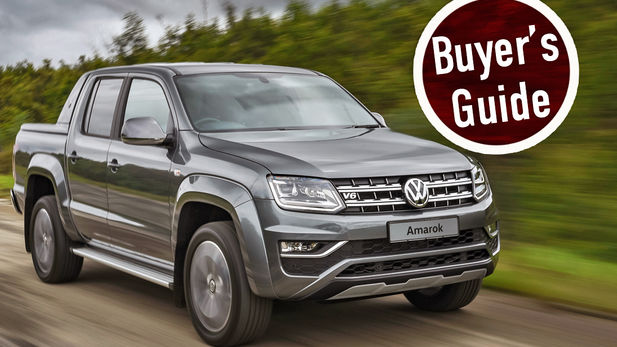
The 1st-gen Volkswagen Amarok was on the South African market for more than a decade. What should you look out when shopping for a used example? Let’s take a closer look…
When the original Volkswagen Amarok touched down in South Africa in 2010, the Wolfsburg-based manufacturer’s local division billed it as the “world’s most fuel-efficient 1-tonne bakkie”, predicting that the 2.0 BiTDI powertrain would “revolutionise the segment”.
But, by the time the curtain fell on this generation some 13 years later, the Amarok would instead be remembered for the most powerful (and least efficient) engine in the line-up: the 3.0-litre V6 TDI.
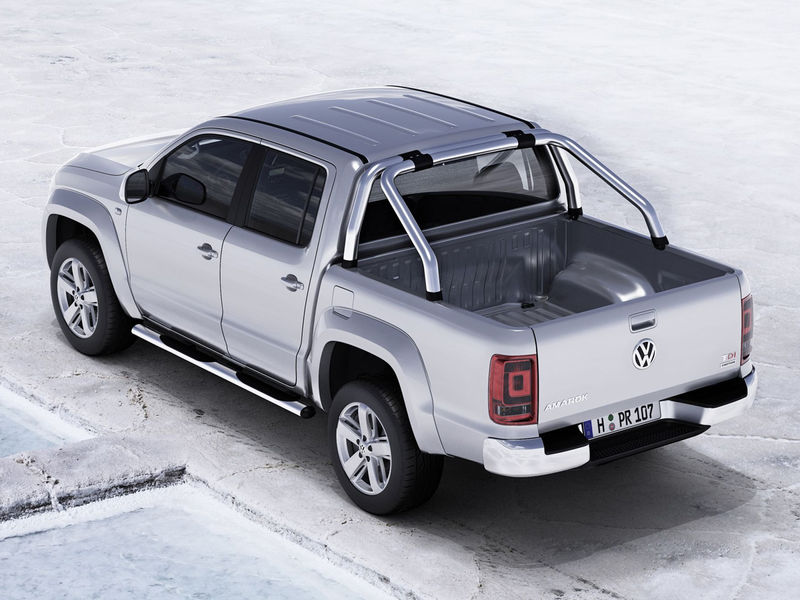
Yes, for quite some time in Mzansi, the Amarok was the only bakkie in its class to be offered with a brawny 6-cylinder turbodiesel, lending VW’s 1-tonner a distinct unique selling point. And, when a V6-powered alternative finally did arrive in the form of the now discontinued Mercedes-Benz X350d, it proved to be a short-lived rivalry.
Of course, there’s more to the German firm’s 1st real stab at a 1-tonne bakkie (the Taro that preceded it by a couple of decades was just a rebadged 5th-gen Toyota Hilux, after all) than a single powertrain option, particularly since this engine was offered only after the facelift. In fact, at launch, Volkswagen described the ladder-frame Amarok as the “most technically advanced bakkie in South Africa”.

Designed by Walter de Silva – the man responsible for penning the Alfa Romeo 156, 1st-gen Audi A5 and R8 models, Volkswagen Up, and many more – the 1st-gen Amarok was an important model for Volkswagen in regions such as South America and Australasia, with South Africa likewise categorised as a “key market”. We’re going to focus on the double-cab body style here, since the 2-door version wasn’t particularly popular with local buyers (and even fell away entirely at the facelift).
Once the 2nd-generation model – based on the Ranger and built by Ford in South Africa – came online in early 2023, around 830 000 examples of the original Amarok had been sold globally, with more than 42 000 of those registered locally (around 29 000 in pre-facelift form). Fascinatingly, although production of the original Amarok has ceased for global markets, the 1st-gen shape will technically soldier on in Argentina as a prolonged-lifecycle model – or Amarok Vivo, if you will.
Volkswagen Amarok model line-up in South Africa
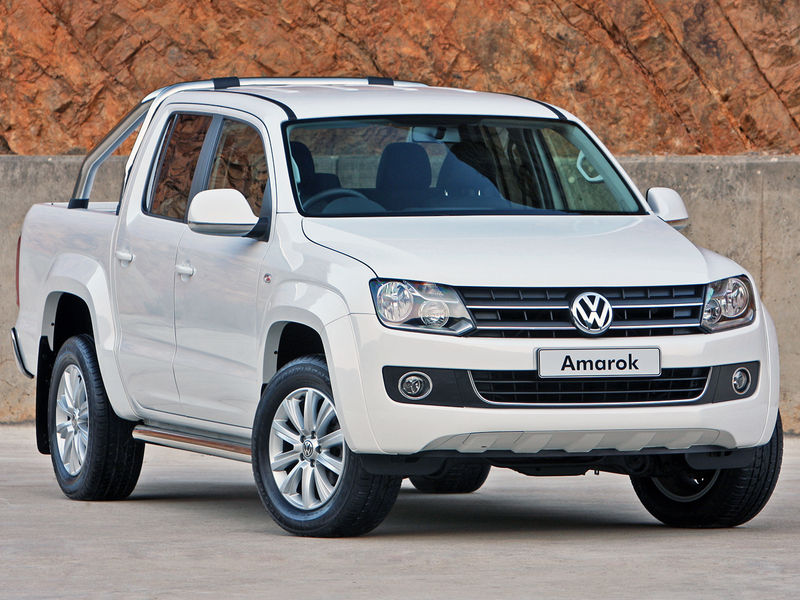
While the project dates back to at least 2005, we had an early glimpse of the Amarok in concept form in 2008. The global reveal followed in January 2010, before the bakkie made its local debut at the annual Nampo Harvest Day in Bothaville in May 2010. It was then displayed at select shopping centres around South Africa in June and July of that year, with the official market arrival taking place in September 2010.
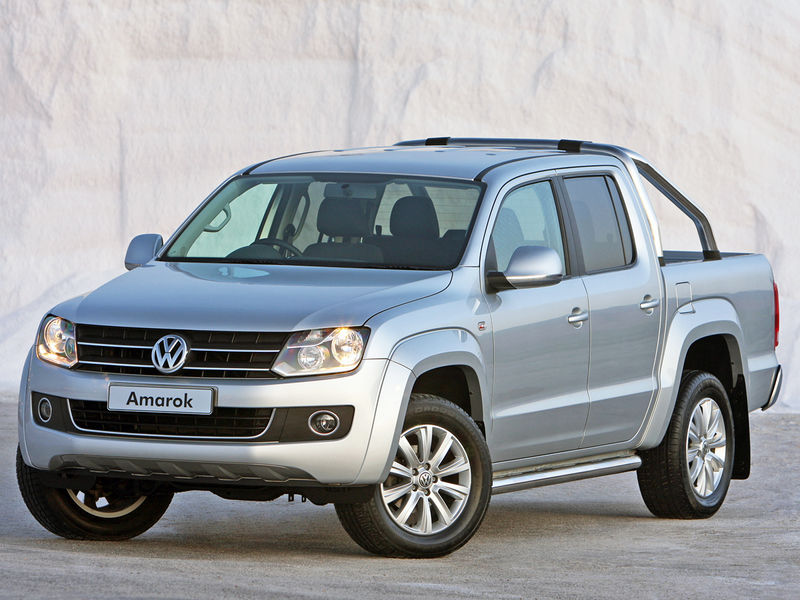
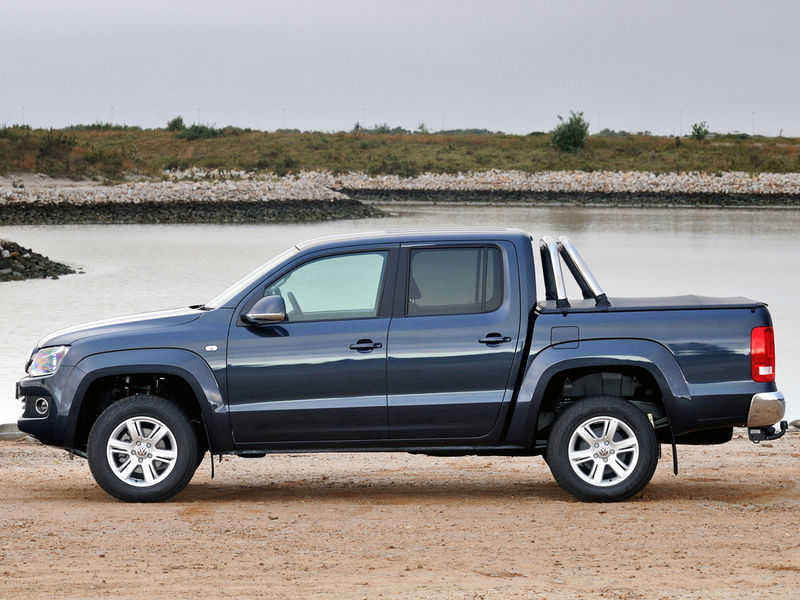
Initially, the Amarok was offered exclusively in double-cab form, with a choice of “clean, high-tech” 2.0-litre turbodiesel engines: a 90 kW single-turbo unit (which technically arrived shortly after launch) and a 120 kW bi-turbo motor. Drive was sent to either the rear axle or all 4 wheels via a 6-speed manual gearbox, while Trendline and Highline grades were on offer:
- 2.0 TDI Trendline DC 4×2 (90 kW/340 Nm)
- 2.0 TDI Trendline DC 4Motion (90 kW/340 Nm)
- 2.0 BiTDI Highline DC 4×2 (120 kW/400 Nm)
- 2.0 BiTDI Highline DC 4Motion (120 kW/400 Nm)
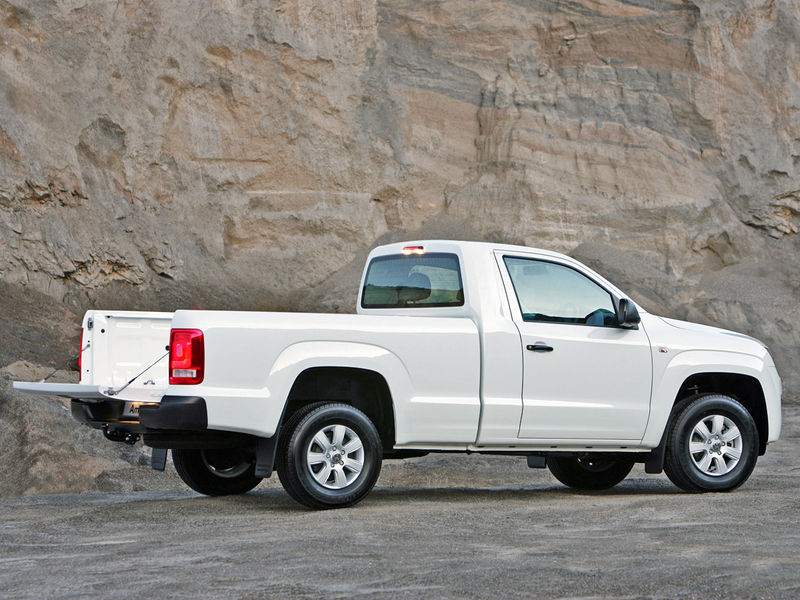
In July 2011, VW added 6 single-cab derivatives to the local range, with South Africa being the 1st country in the world to receive this body style. The oil-burning engines and manual transmissions from the double-cab line-up were carried over (as was the choice of 4×2 or 4Motion configurations), though the automaker offered the single cab in 2 basic variants and 4 Trendline derivatives.
By the final quarter of that year, Volkswagen had slotted a new petrol-powered Amarok Trendline 2.0 TSI 4×2 model in at the foot of the double-cab range. Linked to a 6-speed manual cog-swapper, this 4-cylinder unit generated 118 kW and 300 Nm, facilitating a 0-100 kph sprint in “under 10.0 seconds”.
Around the midpoint of 2012, the BiTDI engine employed by Highline derivatives was handed an extra 12 kW, pushing its peak power to 132 kW (maximum twisting force was unchanged at 400 Nm, though was now on tap over a slightly wider rev range). Claimed fuel economy remained 7.9 L/100 km, while the listed 0-100 kph times fell to 10.3 seconds for the 4Motion and 10.6 seconds for the 4×2.
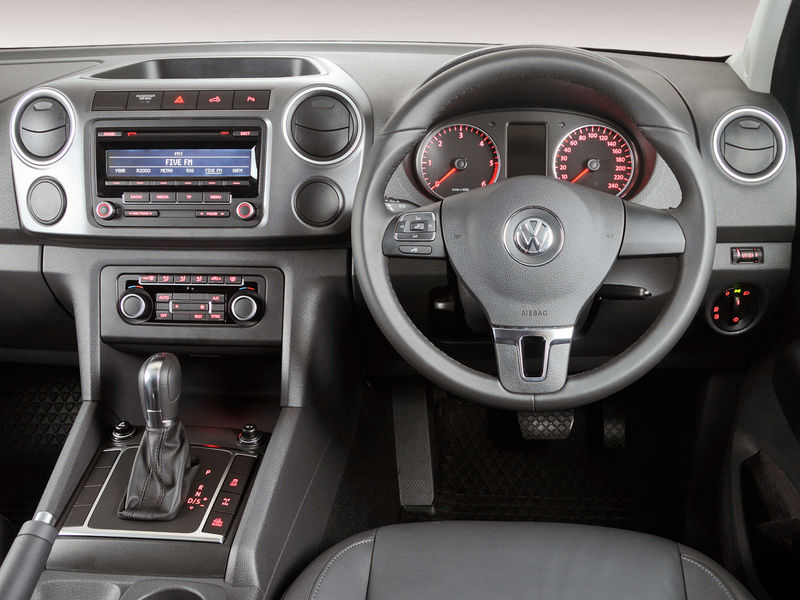
In January 2013, the Wolfsburg-based company expanded the Amarok double-cab range with the addition of a new 8-speed automatic transmission, which it described as the 1st of its kind in the class. The self-shifting gearbox was offered in conjunction with the 132 kW BiTDI engine, with peak torque increasing to 420 Nm (available from 1 750 r/min).
While the manual 4×4 models came with selectable 4-wheel drive, the auto-equipped version featured permanent 4WD and a Torsen differential. It was a mite slower to 3 figures than the 3-pedal equivalent, while also sipping at a slightly higher 8.3 L/100 km. By April of that year, BlueMotion technology was rolled out to the Amarok range, adding items such as a stop-start system and regenerative braking in a bid to improve fuel consumption.
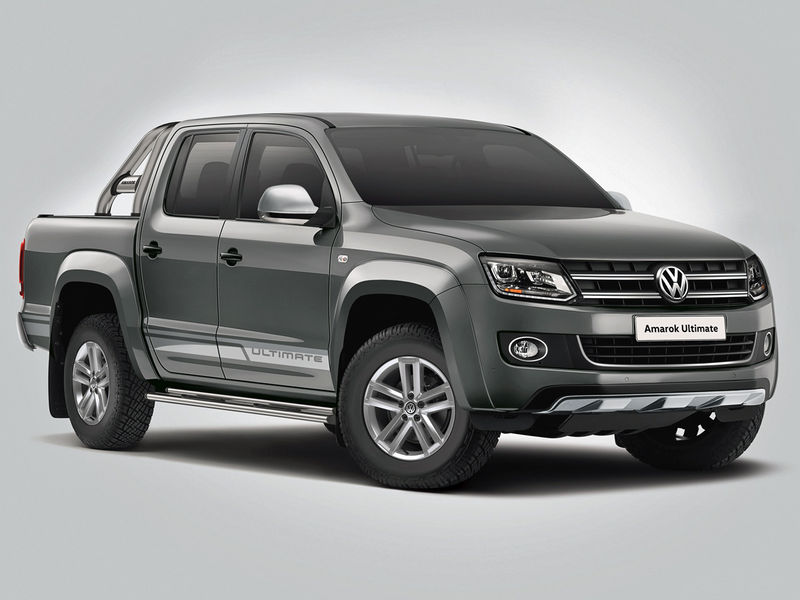
Early in 2015, the automatic version of the Highline double-cab became available in 4×2 guise, before the special-edition Amarok Ultimate – based on the range-topping 2.0 BiTDI 132 kW 4Motion Highline 8AT derivative – touched down a year later.
VW billed the Ultimate as the 1st bakkie “in the local market with bi-xenon headlights with LED daytime running lights as standard”, while also fitting it with chrome grille bars, a silver-coloured underbody guard, silver-painted side-mirror caps, darkened taillamps, 19-inch “Cantera” alloy wheels, a styling bar, “Ultimate” decals and other extras.
Amarok receives a facelift (and that V6)
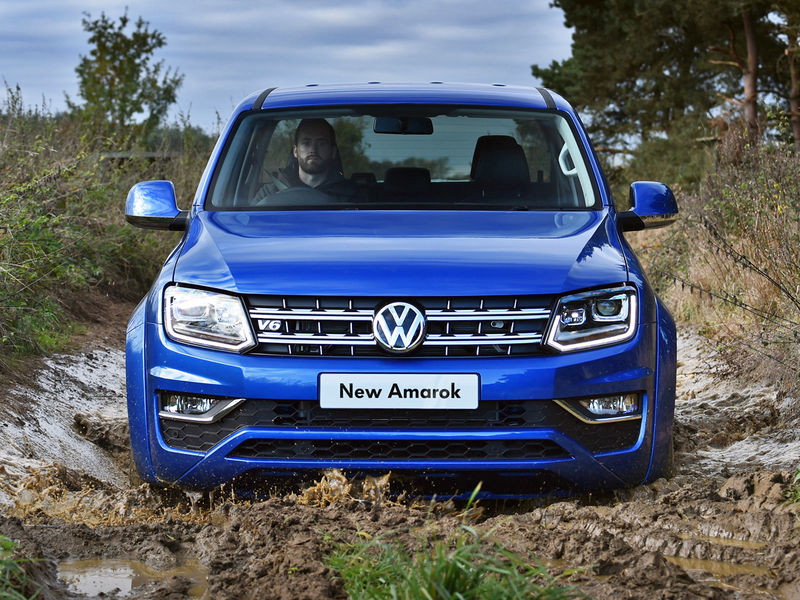
In April 2017, nearly 7 years after the Amarok’s local debut, the facelifted version finally arrived in South Africa. Though VW SA opted to cull the single-cab variants at this point, the local range still comprised as many as 12 double-cab derivatives. Revised grades on offer included Comfortline, Highline, Highline Plus and Extreme, while the 2.0 TDI unit now made 103 kW and 340 Nm, with the BiTDI motor unchanged.
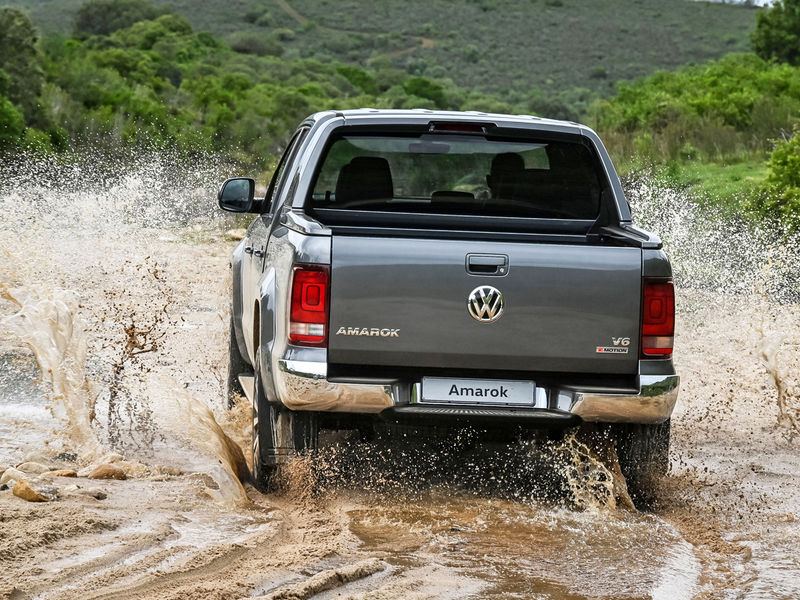
But the big news was the arrival of the 3.0-litre V6 TDI unit. Developed by Audi and pilfered from none other than the 1st-gen Porsche Cayenne Diesel, the 6-cylinder engine generated 165 kW and 550 Nm (the latter from 1 400 to 1 750 r/min), with these outputs rising briefly to 180 kW and 580 Nm on overboost. Fitted as standard with the 8-speed automatic transmission and permanent 4WD, this version of the Amarok V6 completed the 0-100 kph sprint in a claimed 8.0 seconds, before topping out at 193 kph.
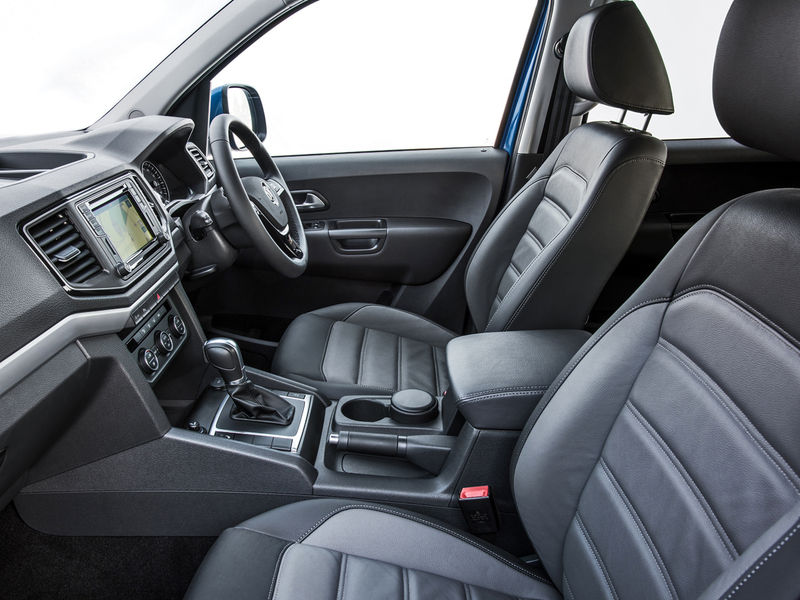
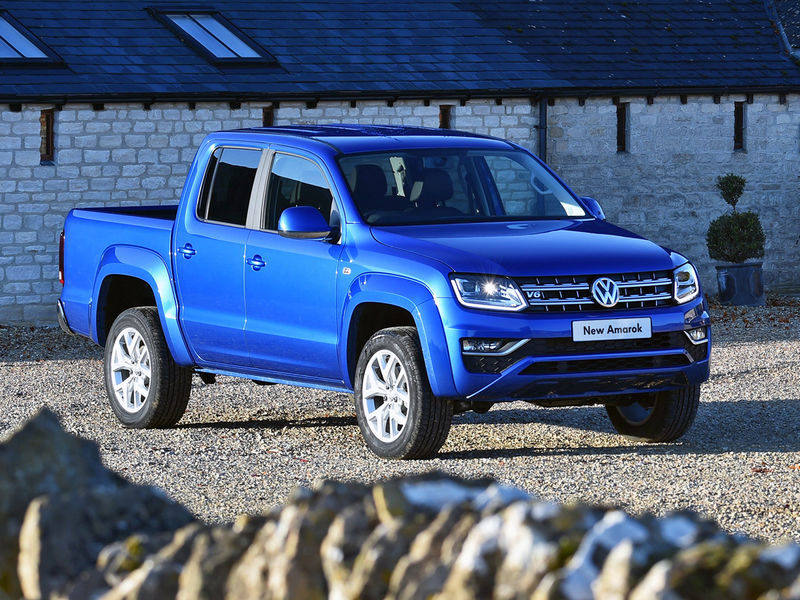
Meanwhile, the bakkie’s exterior was treated to a few subtle design revisions, led by a new front bumper, updated grille, fresh front foglamps, new alloy-wheel designs and the addition of a 3rd brake light employing LED technology. Inside, the Amarok’s cabin became even more car-like, gaining a revised dashboard design featuring a modular infotainment system (the touchscreen system used depended on the chosen trim level).
In December 2018, another special-edition Amarok – again using the BiTDI engine and 8-speed auto – joined the line-up. Badged as the “Dark Label”, this variant scored a locally sourced matte-black styling bar, while also featuring a black finish for items such as the exterior door handles, side-mirror caps, B-pillars and side sills. Tinted rear windows, smoked taillights, 18-inch “Rawson” rims and decals were also included, along with black headlining, Vienna leather seats and embroidered floor mats.
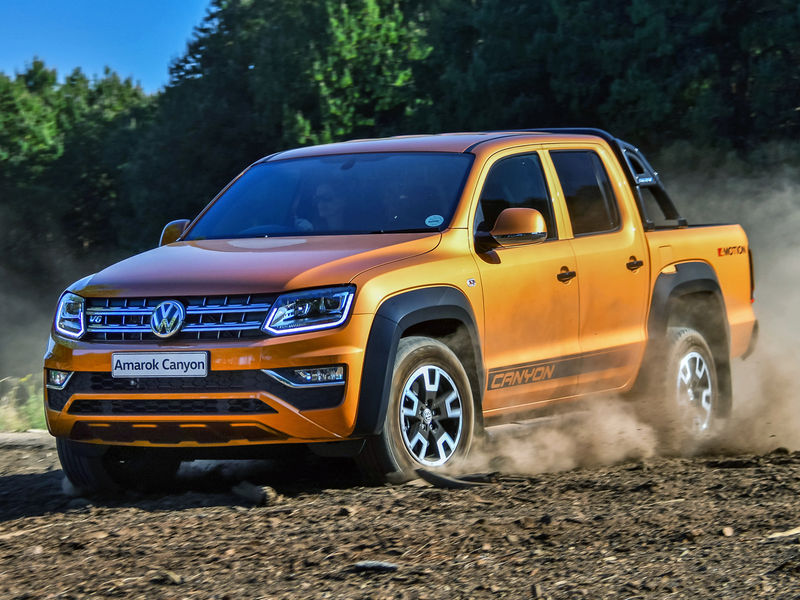
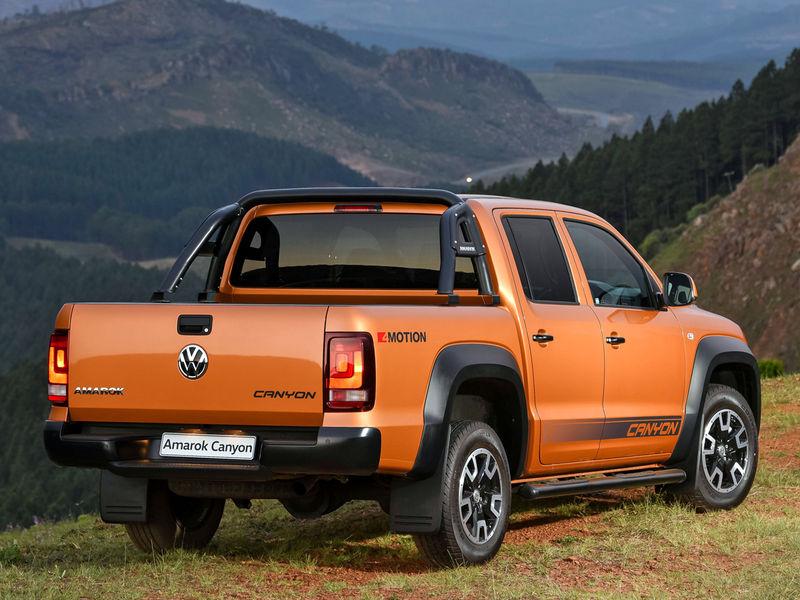
September 2019 saw the 165 kW 3.0 TDI V6 engine extended to a special edition for the 1st time, with the Amarok Canyon set apart by its “Honey Orange” metallic paint, matte-black exterior door handles, black-and-chrome grille, part-chrome side-mirror caps, black widened wheels arches, matte-black styling bar, matte-black side steps, 17-inch “Aragua” alloy wheels and the requisite “Canyon” decals. Inside, this model featured partial-leather upholstery with orange stitching, a hue that was repeated on the seatbelt seams.
Finally, the V6 engine was gifted even more grunt in December 2020, when it was updated to produce 190 kW (or 200 kW on overboost) and 580 Nm, with peak twisting force now available from 1 400 to 2 750 r/min. The result was a hot-hatch-like 7.6-second sprint to 3 figures and a maximum speed of 207 kph, according to VW.
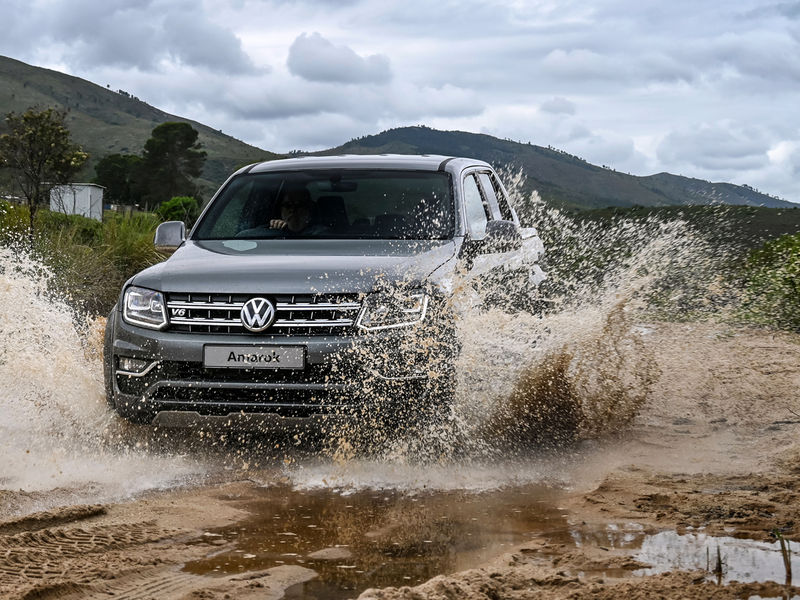
With the Mercedes-Benz X-Class (including the 190 kW X350d) having been discontinued earlier that year, the updated Amarok V6 thus became the most powerful, fastest-accelerating and indeed most expensive double cab on the local market.
The original Amarok was finally discontinued in the opening quarter of 2023, with the new Ford-built model hitting the SA market in March.
What are the advantages of a VW Amarok?
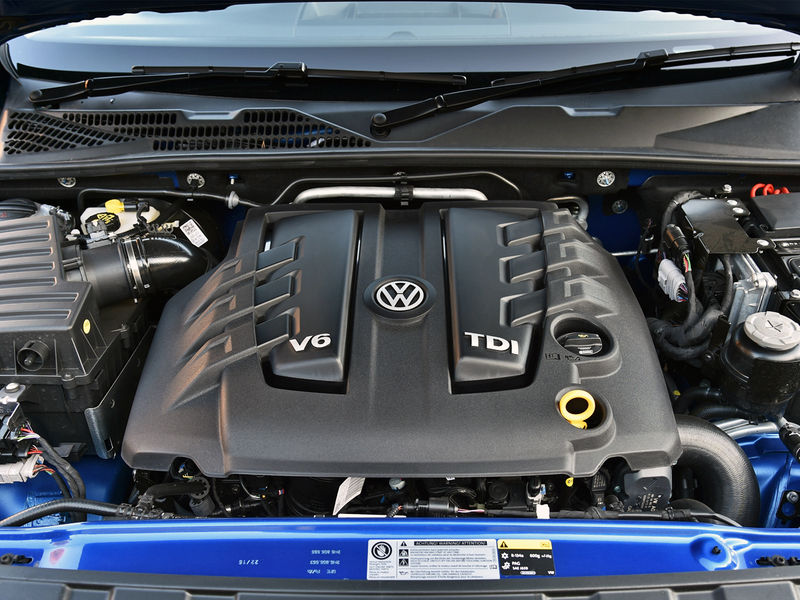
The mighty V6 engine: Whether justified or not, VW was on the receiving end of some serious criticism when it launched the Amarok with only 2.0-litre, 4-cylinder engines. After all, most rivals of the era employed motors displacing at least 3.0 litres. The German company’s eventual response? To use the bakkie’s mid-cycle update as an opportunity to drop a smooth-revving, Audi-developed 3.0-litre V6 turbodiesel mill (EA897) into the engine bay.
As detailed above, the torque-rich 6-cylinder unit was offered in both 165 kW and 190 kW form, in each case exclusively in conjunction with an 8-speed automatic transmission. Though it came with a hefty price tag, all that grunt endowed the Amarok V6 with rapid off-the-line acceleration as well as immense overtaking ability. The lower-output version had a braked towing capacity of 3 300 kg, while the 190 kW iteration pushed that number to 3 500 kg.
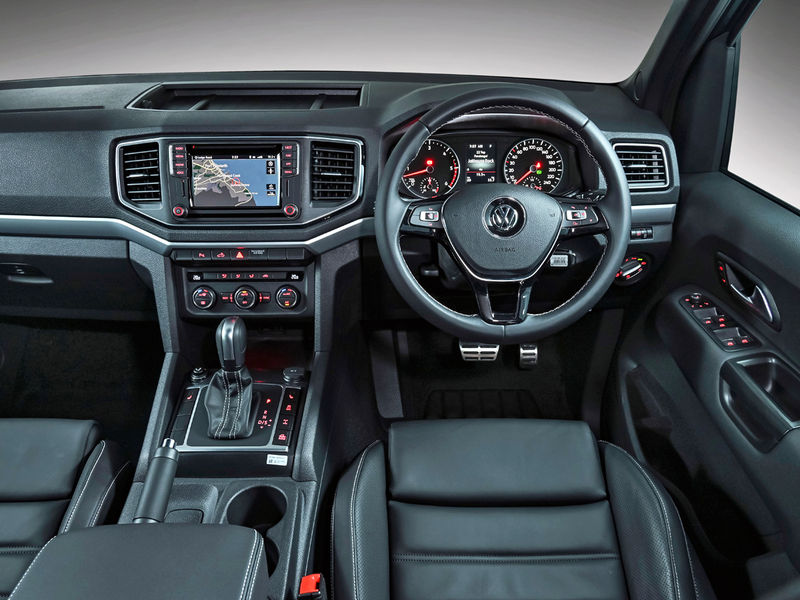
Double cab’s SUV-like cabin: Arriving at a time when most bakkies still featured largely utilitarian cabins, the double-cab version of the Amarok offered an interior more akin to that of an upmarket SUV, both in terms of ergonomics and quality of materials. At launch, VW claimed its 4-door bakkie boasted “exceptional interior dimensions” that made it “the most spacious in its class”. Wide-opening doors, good outward visibility and impressive shoulder space in the rear quarters were all highlights, though the Amarok would be overtaken in the rear-legroom department by newer rivals in the years to come.
Back in 2010, Volkswagen claimed the Amarok had established a “new level of safety in bakkies”, since Highline double-cab derivatives were fitted as standard with items such as electronic stabilisation control (with a trailer-stabilisation system on models featuring towbar preparation), ABS with EBD, anti-slip regulation and hill-descent assist.
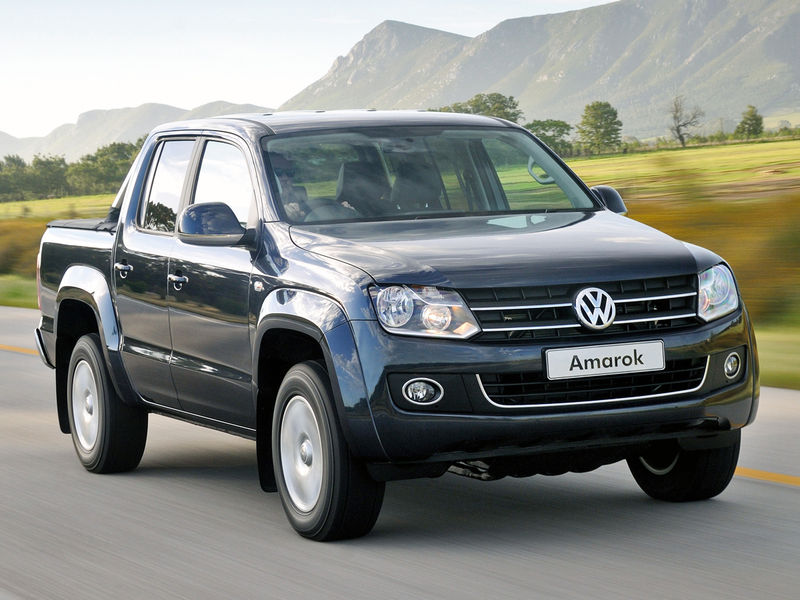
In addition, there were airbags for the driver and front passenger, along with head/thorax airbags, though the Amarok unfortunately didn’t ever receive rear airbags. Models fitted with 4-cylinder engines made do with drum brakes at the rear, while the V6 derivatives scored discs back there (as well as 17-inch items – an inch larger than on other variants – up front).
Comfort and refinement: The 5 254 mm-long bakkie not only looked like a well-sorted SUV inside but it drove like one, too. While employing leaf springs at the rear (as opposed to the multi-link configuration used by the D23-generation Nissan Navara and thus the closely related Mercedes-Benz X-Class), the Amarok rode with a degree of comfort and refinement that was anything but agricultural. Note the bakkie was specified as standard with a “2+1” leaf-spring set-up to optimise comfort, though a heavy-duty “3+2” version was also available.
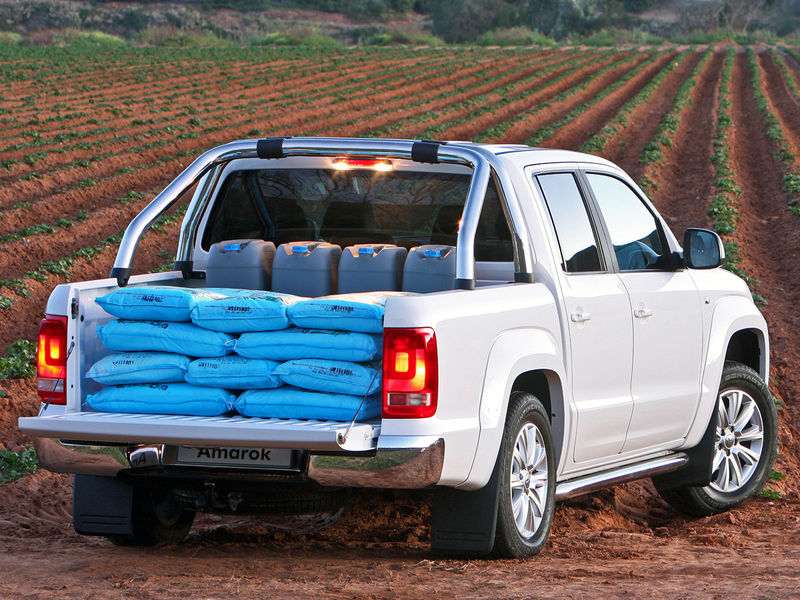
Double cab’s large load-bed: While the lifestyle-oriented Amarok may not be the 1st double-cab bakkie that springs to mind when thinking of load-lugging duties, there’s no denying this model’s credentials. At launch, VW claimed the load bed was “best in class” in terms of its overall dimensions (measuring 1 555 mm long and 1 620 mm wide) as well as the maximum load width between the wheel wells (1 222 mm), the latter ostensibly making it possible to load a standard Euro pallet sideways.
Over the course of its 13-year lifecycle, the double-cab bakkie’s standard payload capacity varied from 838 kg to 1 010 kg, depending on the powertrain (with the top-end figure attributed to the V6). The optional heavy-duty rear suspension set-up, meanwhile, saw certain 4-cylinder derivatives rated to carry up to 1 150 kg.
What are the disadvantages of a VW Amarok?
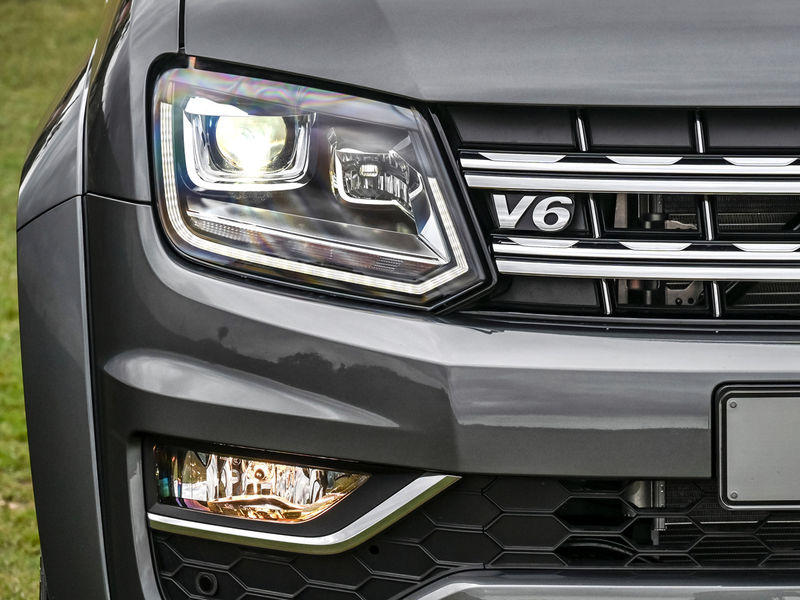
Hefty price for the V6: When the 165 kW version of the Amarok V6 arrived in SA in the 2nd quarter of 2017, the flagship Extreme derivative was priced from R748 600. By the time the 190 kW iteration had made local landfall towards the end of 2020, the price had grown to R996 000, making it SA’s most expensive bakkie (yes, eclipsing even the X350d Power, although technically the latter had already been discontinued by that point). Ultimately, it settled on a heady R1 118 200 right at the end of the original Amarok’s lifecycle. That pricing premium extends to the used market today.
Clunky manual ‘box (early models): At the start of the Amarok’s life, there were a fair few reports of issues with the 6-speed manual gearbox. In addition to this transmission’s long throw, some owners complained of a clunky gearshift, which tended to be accompanied by a difficulty in selecting reverse. However, we should point out manual-equipped models (which, of course, came with part-time 4×4) featured a low-range transfer case, a feature missing from the self-shifting derivatives.
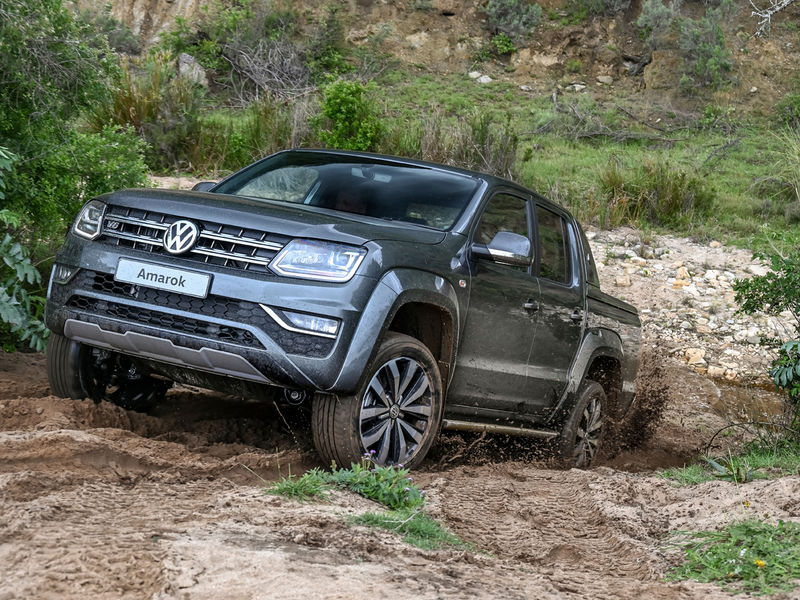
Modest ground clearance: Though most examples would likely not be pressed into service as hardcore off-roaders, it’s worth keeping in mind the Amarok’s modest (by class standards, anyway) ground clearance meant it was hamstrung slightly when tackling seriously jagged terrain. In the case of the double-cab derivatives, ground clearance under the front axle was listed as just 192 mm, though VW at least included robust underbody protection.
Miscellaneous potential issues: Early versions of the 4-cylinder turbodiesel engines were known to suffer from issues with a fast-wearing serpentine belt. Exposure to dirt sometimes saw these belts fail prematurely, at which point they could be dragged into the timing belt, potentially leading to catastrophic engine failure. VW quietly fitted a revised timing-belt cover to these early models as part of a general service campaign (as opposed to a full recall).
Other relatively common possible problems with these smaller-capacity TDI motors included exhaust gas recirculation (EGR) valve failures and premature clogging of the diesel particulate filter (DPF). In addition, 15 500 units of the 2.0 TDI (in both single- and double-cab form) built from the start of production to June 2013 were recalled in South Africa late in 2013 for “potential fuel-line leaks” in the engine compartment.
Finally, though the Amarok’s petrol-flavoured 2.0 TSI mill was widely used across the VW and Audi passenger-car range, it still suffered from maladies such as timing-chain tensioner faults, water-pump failures, high-pressure fuel pump malfunctions and excessive carbon build-up.
How much is a used VW Amarok in South Africa?
At launch, the Amarok shipped standard with a 3-year/100 000 km warranty and a 5-year/90 000 km service (with intervals of 15 000 km), arrangements that remained unchanged throughout the 13-year lifecycle. As always, closely examine the maintenance history of any used bakkie you’re considering buying and simply walk away should any scheduled services have been skipped.
At the time of writing, the 3.0 V6 was the most popular engine, accounting for 46% of all 1st-generation Amarok listings on Cars.co.za. That said, the 2.0 BiTDI motor wasn’t far behind on 44%, while the 2.0 TDI (9%) and 2.0 TSI (a mere 1%) made up the numbers. Overall, 72% of listed models featured an automatic transmission, while 70% were fitted with 4Motion.
Indicated mileage varied from just 16 km on a virtually new 2023 Amarok 2.0 BiTDI Highline Plus 4Motion to a whopping 310 000 km achieved by a 2013 Amarok 2.0 TDI Trendline double cab. Moreover, we found a further 53 models showing in excess of 200 000 km on their respective odometers.
- Below R300 000: Every Amarok listed below this mark was predictably a pre-facelift model, with most showing high mileage. There were, however, a few of the final single-cab derivatives in this space, too. Beware examples fitted with aftermarket accessories (think bonnet vents, oversized wheels, etc.) that didn’t come from VW’s official list of factory-backed items.
- From R300 000 to R500 000: This pricing bracket served up a far broader selection, with options including low-mileage pre-facelift 2.0 BiTDI Highline double cabs, higher-mileage facelifted versions and even V6-powered models in the 165 kW state of tune.
- From R500 000 to R700 000: The V6 engine dominated between these pricing bookends (including a few examples with the full-fat 190 kW output), while 2019 was the most common model year here. We also discovered several late model-year, very low-mileage 2.0 BiTDI Highline double cabs in this space, along with the only few Canyon units listed.
- R700 000 and up: Spending more than R700 000 would put you in a late model-year Amarok double cab, either in 2.0 BiTDI or 3.0 V6 form (with the latter again dominating this space), likely with well under 100 000 km on the clock. The most expensive 1st-gen model we could find was a 2023 Amarok 3.0 TDI Extreme (with just 100 km on its odometer) going for a heady R1 149 000 – yes, that’s more than VW’s recommended retail price when it was registered.
Which Volkswagen Amarok should I buy?
So, which Amarok double cab should be on your shortlist? Well, while the other engines were all more fuel efficient (and the 132 kW BiTDI hardly short of grunt), we’d argue the lusty V6 was the motor that made this generation so very special. Bear in mind, of course, opting for the 6-cylinder unit – in either of the 2 tunes available locally, both in conjunction with the 8-speed automatic transmission as standard – would mean you’d have to do without low range.
Thankfully, this is the powertrain that’s in greatest supply on the used market. Still, it’s worth noting that you’d have to spend at least R400 000 to get into a V6 model at the time of writing (and likely more than R600 000 if you have your heart set on a 190 kW version). In terms of trim levels, Highline Plus should cover most needs, though the choice would again depend on your budget.
Is the Volkswagen Amarok a good used buy?
Since both bakkies harboured premium aspirations, the Amarok’s chief foe was the Mercedes-Benz X-Class – though that rivalry didn’t last very long at all. Other contenders in the leisure-bakkie space included high-spec versions of the strong-selling 8th-gen Toyota Hilux, P375-series Ford Ranger and Isuzu D-Max (both the RT and RG generations, including KB-badged versions of the former) as well as the D23-gen Nissan Navara on which the X-Class was based.
Less-popular choices in this segment included the Mazda BT-50 (both the Ranger-based UP generation and the D-Max-based TF series) and the 5th-gen Mitsubishi Triton, as well as the seldom-spotted Fiat Fullback that pilfered the latter’s platform.
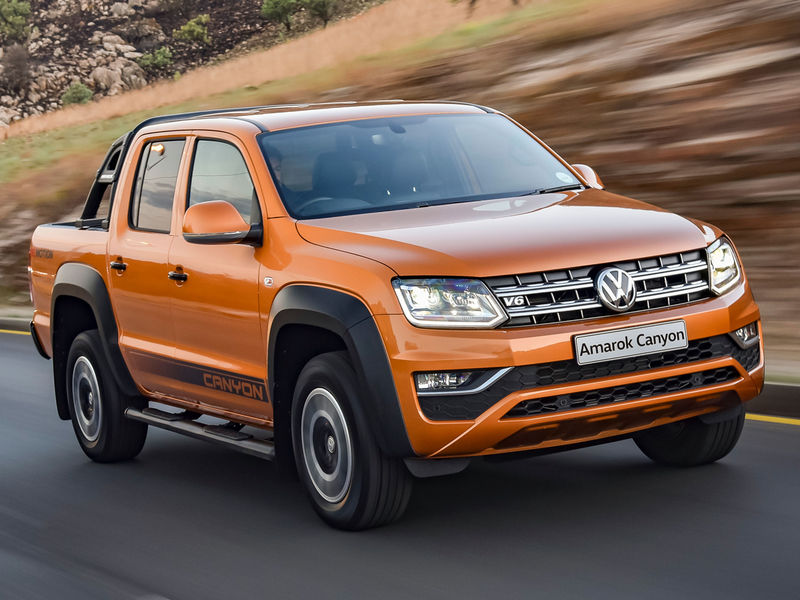
Ultimately, however, if VW’s intention was to create a practical double-cab bakkie that could pull off a remarkable impression of a relatively upmarket family SUV, it nailed the brief (bar the lack of rear airbags, that is) – particularly in V6 form. In fact, we’d go as far as saying the original Amarok was at the very top of the leisure-bakkie (as opposed to workhorse) pile.
And the 3.0 TDI V6 – despite its hefty price tag – was very much the Amarok’s defining feature.
Looking for a used Volkswagen Amarok to buy?
Looking to sell your car? You can sell it to our dealer network here.