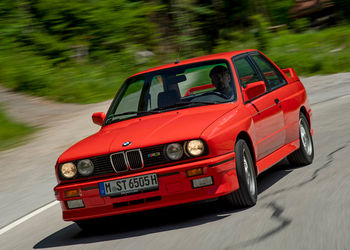
The Renault R8 Gordini is a little car that took big scalps on the South African racing scene in the late 1960s. We get to drive a superb example of this iconic French car.
IMAGES: Duwyne Aspeling
“Sideways Scheckter”, the nickname given to South Africa’s sole F1 world champion, was earned behind the ‘wheel of one of these little cars. The sight of Jody flinging his modified Renault R8 Gordini around local racing circuits was a familiar one during the late 1960s and the tiny French sedan chalked up plenty of race wins as it took on Alfa Romeo GTAs, Mini Coopers and Ford Escorts in the modified saloon class.
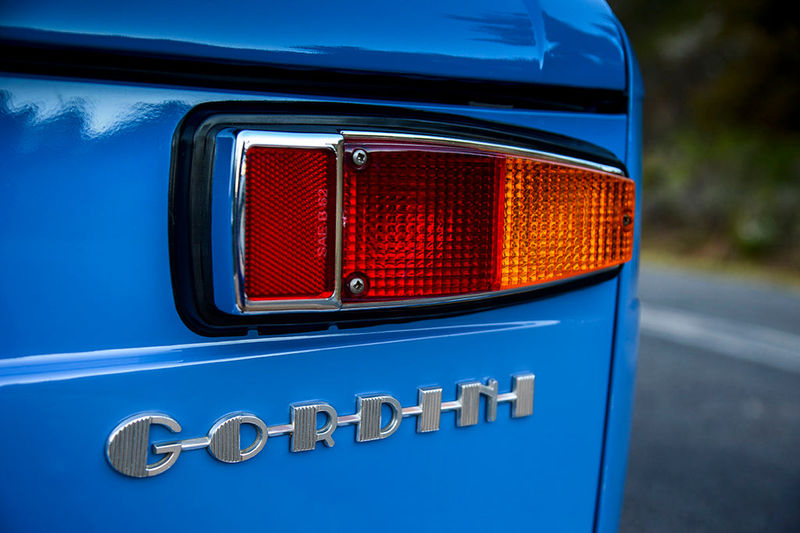
I must admit it wasn’t a fascination with these golden years that first piqued my interest in the Renault R8 Gordini; credit must go to a much later model. That one also carried a Gordini sticker, but was more of a respectful nod to its ancestor than an actual Gordini.
History
As a big fan of the high-revving, naturally aspirated, early-generation RenaultSport Clios, I was intrigued by this moniker when the limited-edition Gordini version of that car was released in 2011.
A little research pointed to Italian Amadeo Gordini, a racecar driver and tuner known as Le Sorcier who was employed by Renault during the 1960s and ‘70s to breathe some magic into its models.
The legendary Renault R8 Gordini was one such example and my interest in it grew to a point where a phone call was made to the WP Renault Club. Was it really that special? I had to find out.
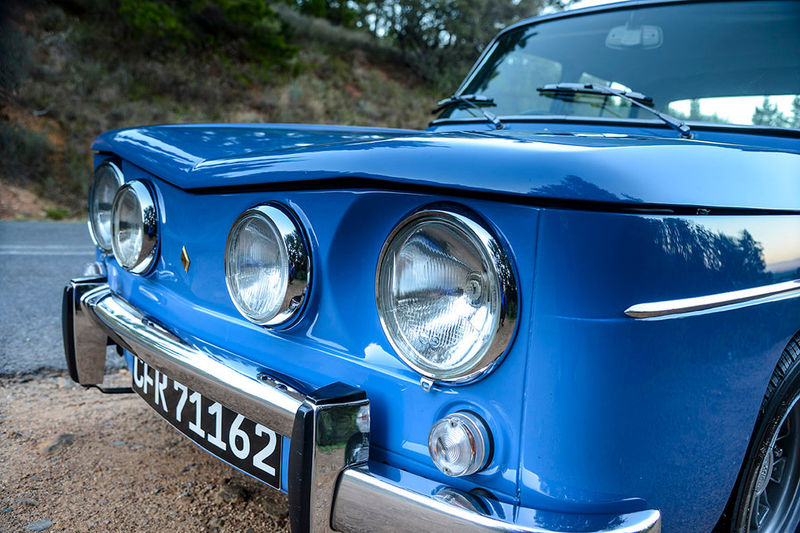
Fortunately, a member of the club owns an example and, within a few days, on a particularly cold Cape winter morning, we met at the tight and twisty Bain’s Kloof Pass outside Wellington.
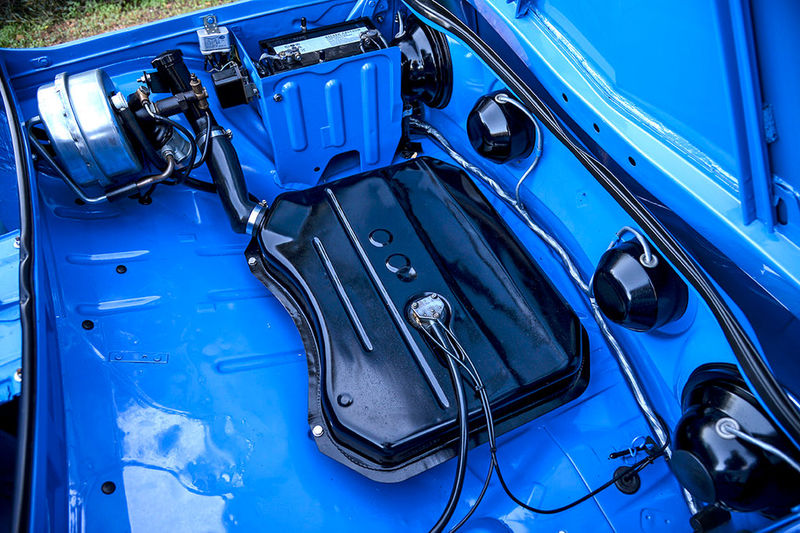
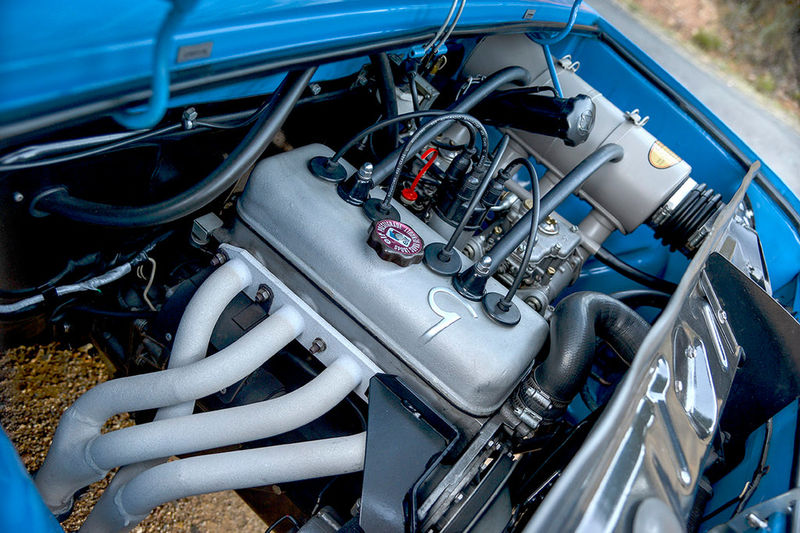
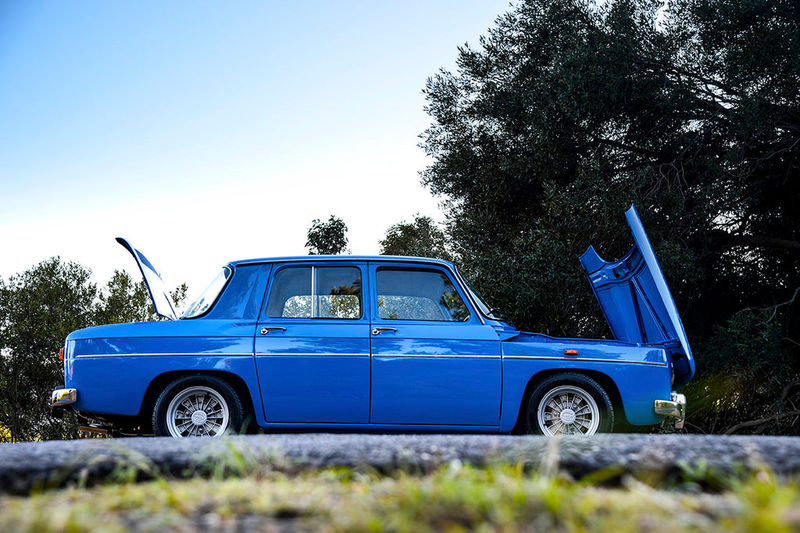
Typical of European sedans of this vintage, the Renault R8 Gordini is small when compared with modern compact sedans. The engine is also in the “wrong” place. Open the bonnet and you’re greeted by a black fuel tank, wiring and the battery. The former is a 25-litre auxiliary tank, placed there to improve mass distribution, because at the rear is the main 38-litre tank… and the engine.
A long strip of vents on the boot above “Renault” lettering gives away the location of the powerplant, which is a very compact unit and there’s plenty of space in the bay. It’s a proverbial “mechanic’s dream”: you get a perfect view of the manifold, air filter and the big “G” on top of the engine head cover.
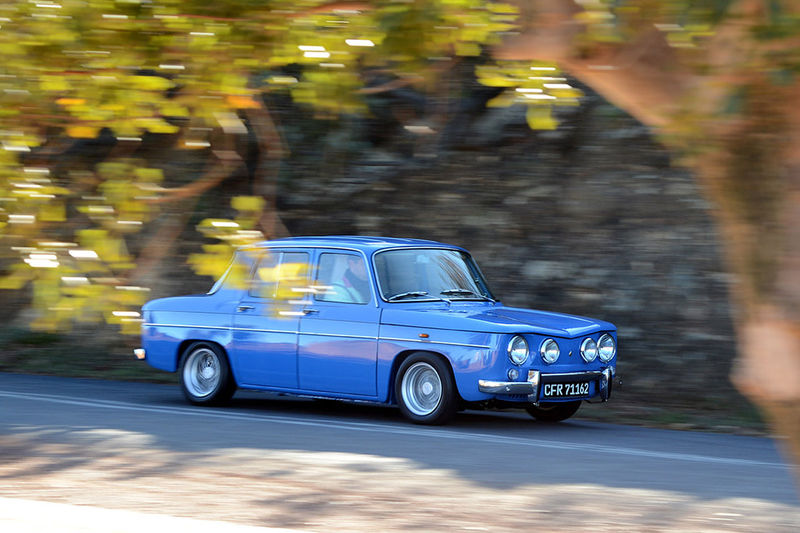
Although this particular car was refurbished 17 years ago, it’s meticulous throughout, from period alloys to the spartan black interior and small bucket seats. It looks perfect.
Specifications:
- Model: 1970 Renault R8 Gordini
- Engine: 1.3-litre, 4-cylinder, petrol
- Power: 77 kW at 6 750 rpm
- Torque: 116 Nm at 5 000 rpm
- Transmission: 5-speed manual, RWD
- Weight: 855 kg
- 0-97 kph: 10.3 sec (tested by CAR magazine)
- Top Speed: 175 kph
Behind the wheel of the Renault R8 Gordini
When you open the driver’s door, you get an indication of how light this car is – it only takes a couple of fingers to swing ajar – and it was this element that contributed to the Gordini’s on-track success. Its 77 kW 1.3-litre 4-cylinder petrol engine had to propel a vehicle weighing just 855 kg, when fully fuelled.
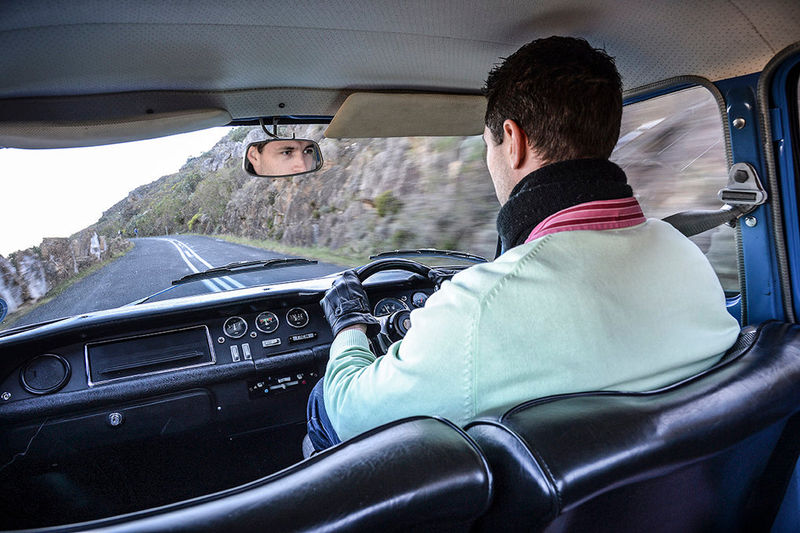
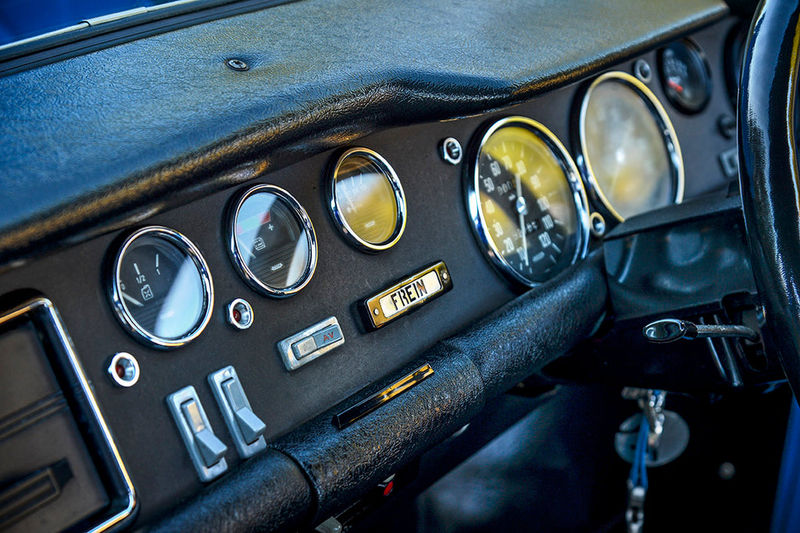
Automotive ergonomics have evolved tremendously during the past 5 decades but, despite that, my lanky frame fits fairly comfortably behind the ‘wheel. Taking my time to familiarise myself with the R8, I notice that the steering column is short; so is the dashboard – I sit virtually “on top” of the windscreen. Being this close to the controls has its advantages, though: I feel instantly connected with the car.
A quick turn of the key brings the engine to life and a few pulses on the accelerator pedal produces a distinctly coarse sound from the exhaust pipe. This li’l motor enjoys being revved right through its range.
Once underway, I find the Renault R8 Gordini’s 5-speed manual gearbox tricky to master – during the first few minutes, my shifts are clumsy and I require a couple of attempts to select the right ratio.
However, it’s not long before I start moving up and down the ‘box with confidence and, as the clear-sighted corners of this Western Cape pass loom ahead, I start to get a feel of the car.
As I accelerate in 2nd gear, the engine pick-up is instant. Soon, the piercing growl at 6 500 rpm indicates I should select 3rd gear. On this stretch of road, straight sections of asphalt are in short supply and I’m required to regularly jump on the brakes to scrub off speed before turning into the challenging corners.
The steering feels direct and provides more feedback than I’ve experienced in any recent modern car.
Feeling increasingly “plugged into” the little Renault, I find a rhythm through the succession of turns, all the while the front- and rear independent suspension (coil springs with telescopic hydraulic shocks) inform me exactly what is happening at each corner of the car.
Sitting close to the road surface with those alloys tucked deep into the wheel arches, the R8 Gordini feels planted. Thanks to its remarkably low mass, you can brake late into corners and change direction deftly.
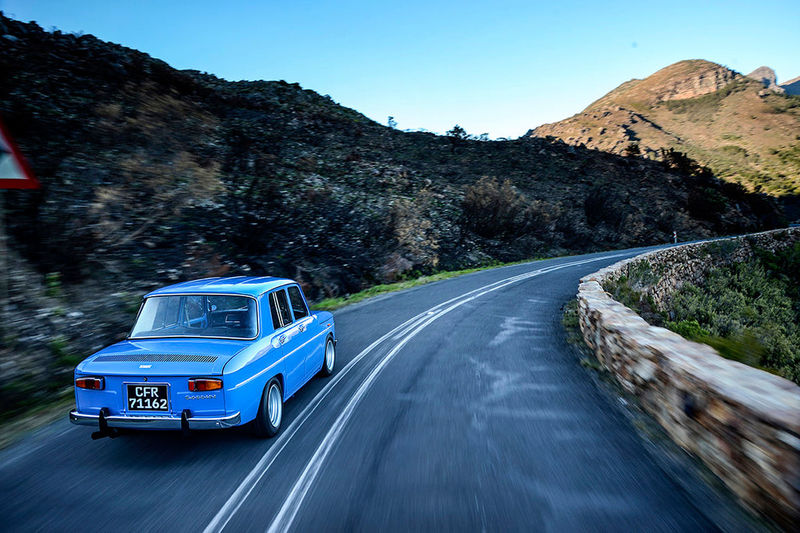
CAR magazine tested an R8 Gordini for its January 1970 issue and recorded a 0-60 mph (0-97 kph) time of 10.3 sec (and 7.3 sec for an X-128 race car tested in their July 1967 issue), but that figure cannot quite convey the sensation of piloting this car. It’s an utterly absorbing and concentrated experience.
After a few more runs, I park the car at the top of the pass, open the door with the delicate lever and unfold my 1.87-metre frame to get out.
Summary
What a genuine thrill it was to drive the Renault R8 Gordini in exactly the way its makers intended. It’s a testament to the Billancourt-based brand’s ability to build a compact car that’s enormously fun to drive, a wonderful legacy that lived on in RenaultSport and survives to this day under the Alpine sub-brand.
Search for a classic car listed for sale on Cars.co.za
Find exclusive car-themed merchandise at the SentiMETAL Shop
Related content:
Lancia Delta HF Integrale: Classic Drive
Mercedes-Benz (W123) 280E: Classic Drive
Porsche 944 Cabriolet: Classic Drive
Mercedes-Benz 280SL ‘Pagoda’: Classic Drive
Wilhelm Lutjeharms

A passionate car enthusiast from an early age, Wilhelm has been a motoring writer since 2006, having worked for more than 10 years at CAR magazine before turning to a full-time freelance career. He is also a contributing writer for UK, USA and European-based motoring titles.