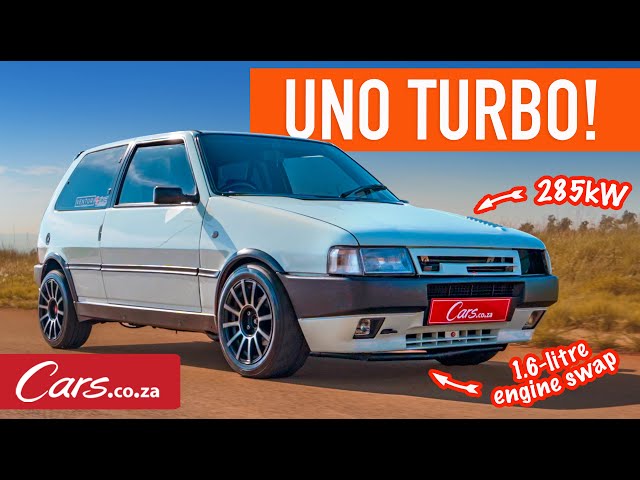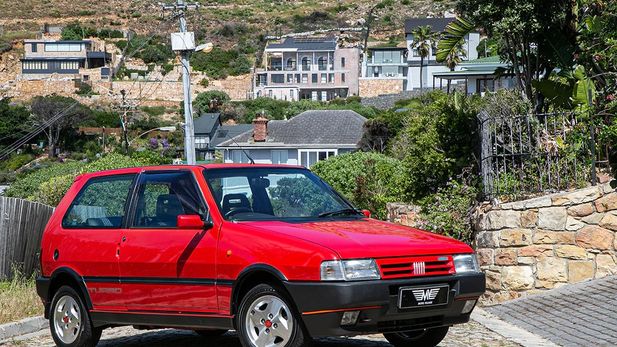
The Fiat Uno Turbo is an oft-forgotten hot hatch from the early Nineties, but nearly 40 years later, this little 3-door firecracker is certainly worth revisiting.
In the early Nineties (when the hot-hatch craze was past its peak), Fiat sprung a surprise when it fitted its Uno budget car with a turbocharged 1.4-litre mill; the result – a 3-door hatch with 85 kW of power and 161 Nm of torque – offered performance substantially above that of other variants in the range. Bear in mind that, before that, Fiat Unos produced between 33 and 52 kW, so 85 kW truly made headlines!
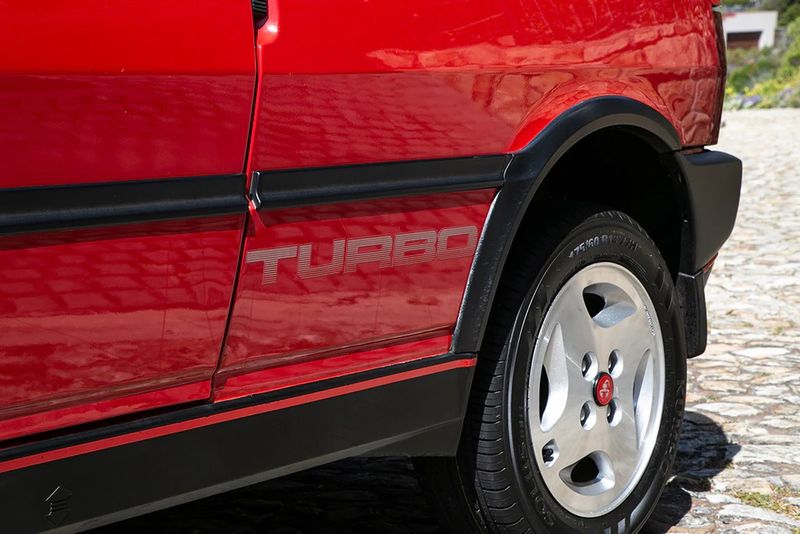
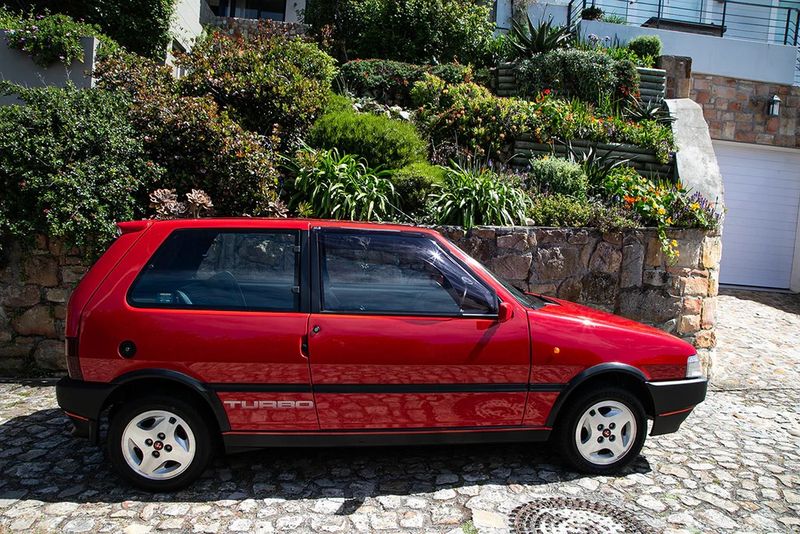
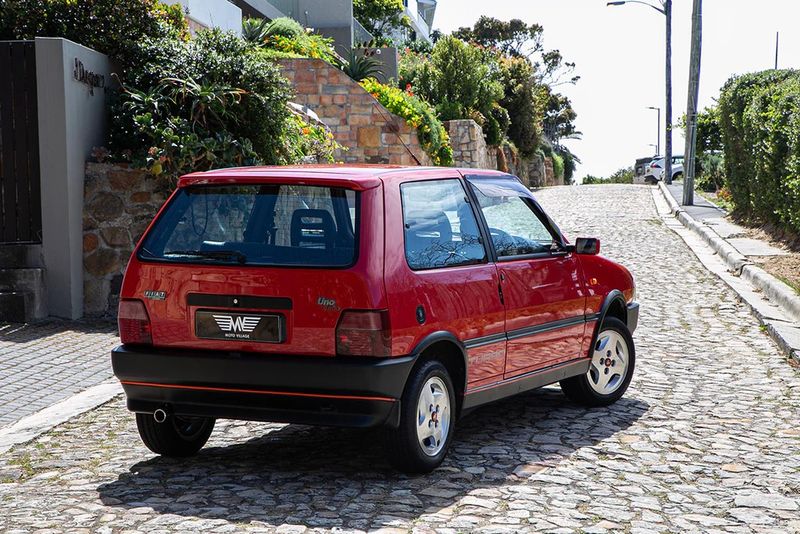
The first thing you notice when you walk up to the Fiat Uno Turbo is its boxy design. The front is typically period Fiat, and at the back, the rear slopes straight downwards towards the angular bumper. The iconic Scorpio alloy wheels are fitted with 175/60 R13 tyres, which are miniscule by modern standards.
At first glance, the Uno doesn’t appear to have door handles. It has “latches” instead: you have to put a finger into the panel gap between the front door and the rear panel, to flip the small handle upwards.
The Fiat Uno Turbo’s cabin
Once seated, I was surprised to find that my head didn’t touch the car’s ceiling (and I am 1.87 meters tall). You do sit close to the door though. It is a simple interior (as one would expect of a budget car from the ’90s), and the chequered-cloth seats with vinyl inserts don’t hide the era they date from either.
While the headrests are a little too far back, the seats are comfy and fairly supportive. The fascia and centre console have very blocky designs and, in front of you, the instrument cluster seems positively crowded with analogue dials. This car is even fitted with a period-correct Pioneer radio-tape unit!
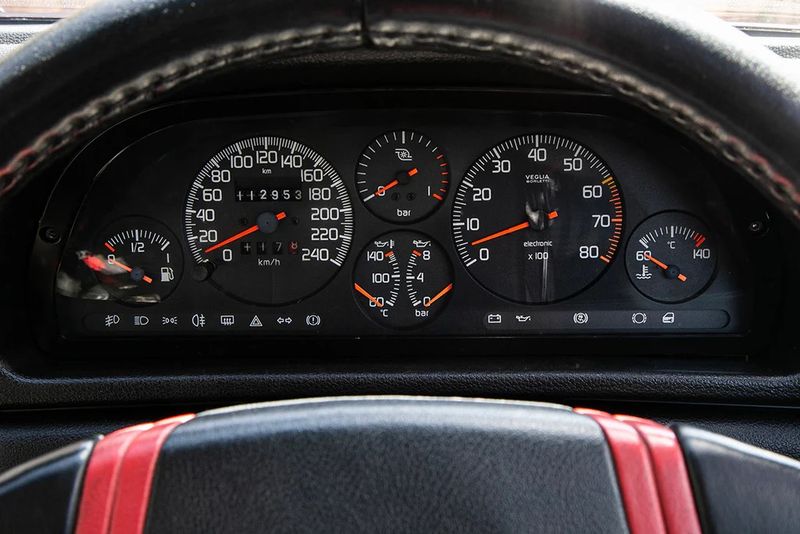
In front of the easily legible dials is a 3-spoke Momo steering wheel, which is slightly offset to the left. The Fiat Uno Turbo’s yellow line begins at 6 000 rpm, while the red line is only a few hundred rpm later.
Specifications:
- Model: Fiat Uno Turbo
- Engine: 1.4-litre, 4-cylinder, turbopetrol
- Power: 88 kW at 6 000 rpm
- Torque: 161 Nm at 3 500 rpm
- Transmission: 5-speed manual, FWD
- Weight: 925 kg
- 0-100 km/h: 9.1 seconds (tested by CAR magazine)
- Top Speed: 200 kph (tested by CAR magazine)
Behind the wheel of the Fiat Uno Turbo
When you start driving the Uno, you notice the squishy gear knob with which you row the 5-speed ‘box. The centre console emits a rattle or two, but it is immediately evident that this is an exciting little car to drive, because it has a tiny footprint. Lower down in the rev range, it feels almost like a naturally aspirated engine, but when you bury the accelerator pedal, you immediately sense how the boost starts to build.
There is also a little boost gauge in the middle of the instrument cluster! Again, in the lower part of the rev range, the Uno ambles. Keep your foot down and, as the revs climb, the gauge starts to indicate how the boost changes, and then, at around 3 500 rpm, the fun starts, and that fiery (sorry) 1.4-litre engine performs at its best. Then you’ve got another 2 500 rpm to play with before you need to change up.
You can’t rush gear changes; the throws are quite long. Keep it in 2nd or 3rd gear, as low as 2 000 rpm and, when you stab the long pedal, the torque will build steadily – this engine is remarkably tractable.
It’s such fun to hustle the Uno Turbo through tight corners at pace because it feels like you’re behind the ‘wheel of a large dinky toy, but in a good way. The driving experience is so immersive that you may think you’re going quite quickly, but when you look at the speedometer, the Fiat’s only travelling at 120 kph.
There is not a lot of traction, but the Uno Turbo’s handling ability is impressive, given its age and budget-car underpinnings. Because the car weighs only 925 kg, it offers a light and nimble driving experience.
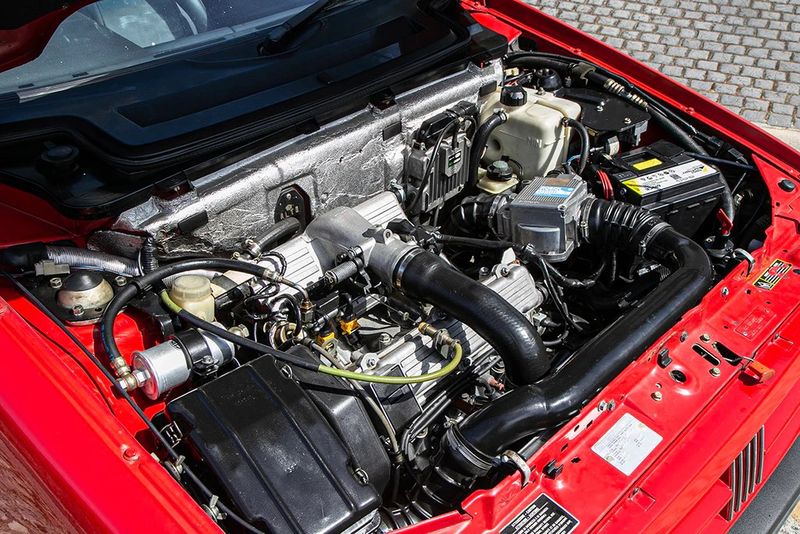
The example we drove had 113 000 km on the odometer and presented as a neatly maintained “oldie”. This was evident from the good condition of the cabin and the seats, but also when we lifted the bonnet.
The engine bay was very clean – even the firewall’s heat-resistant lining was still in place – and when we looked under the wheel arches, the Fiat looked more like a 15-, as opposed to a 35-year-old, car.
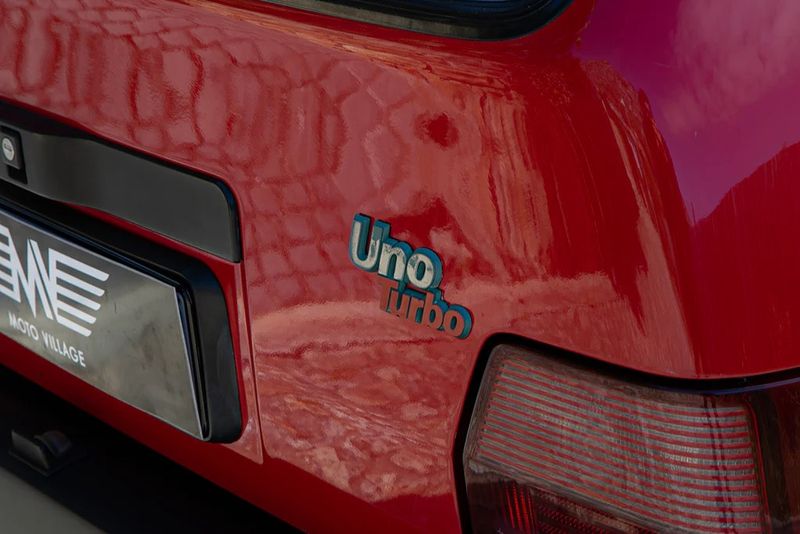
This car was sourced and sold by MotoVillage, located in Tokai, Cape Town.
Summary
It was tremendous fun to drive an Uno again (for the first time in more than a decade-and-a-half), and now, after my first spin in a Turbo, I fully understand why it has a following among enthusiasts. Did you know this humble hatchback even competed in the Stannic Group N production-car racing series?
It has a fun-loving character, and according to CAR magazine’s original road test in 1990, it achieved a 0-100 kph acceleration time of 9.1 seconds and a top speed of 200 kph (phew, those testers were brave).
I can confirm that the Uno Turbo feels slightly faster than that acceleration time suggests. The Turbo is a car that should be listed among the memorable and affordable Italian hot hatches of the 1990s.
Search for a classic car listed for sale on Cars.co.za
Find exclusive car-themed merchandise at the SentiMETAL Shop
Related content:
Lancia Delta HF Integrale: Classic Drive
Mercedes-Benz (W123) 280E: Classic Drive
Porsche 944 Cabriolet: Classic Drive
Mercedes-Benz 280SL ‘Pagoda’: Classic Drive
Wilhelm Lutjeharms

A passionate car enthusiast from an early age, Wilhelm has been a motoring writer since 2006, having worked for more than 10 years at CAR magazine before turning to a full-time freelance career. He is also a contributing writer for UK, USA and European-based motoring titles.