Right now, all the focus might be on Ferrari’s 296 GTB, offering a V6 for the first time in the modern era. However, close to 60 years ago Enzo Ferrari and his team already developed a great V6-engined sports car – the Dino 246 GT.
We are truly spoiled for choice today. If you want a Ferrari sports car, you can have one of their (very good) “bread-and-butter” cars, or you can purchase one of their limited-edition exotics. Then there is also the option to join the Corse Clienti program where you can indulge in the track-only, race and F1 cars. All these different portfolios have grown over the years. Today Ferrari offers a variety of drivetrain options, from a V6 hybrid, V8, V8 hybrid and thankfully still a V12.
But this diversity has almost always been the case with Ferrari – even during its earlier years Ferrari developed 4-cylinder and inline 6-cylinder engines in some of their race cars as well as V12s.
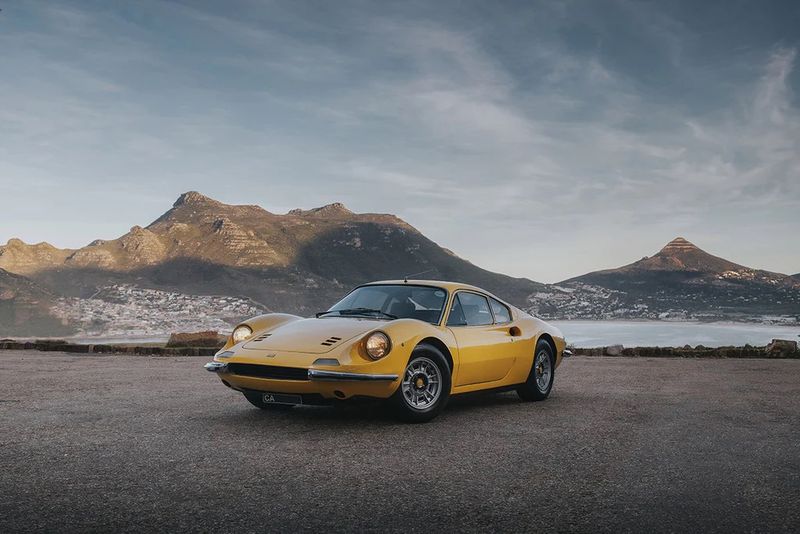
However, in 1965, Ferrari released a car and decided to name it after Enzo’s late son (Alfredo, nicknamed Dino), who passed away at the age of 24 in 1956; he had already named the engine after his son, who suggested a V6 for F2 racing. The result was that eventually the Dino 206 GT sportscar was launched.
Only 152 of these lightweight sportscars were manufactured before the model was upgraded to the Dino 246 GT. The result was an increase in engine capacity from 2.0-litres to 2.4-litres, while the bodywork was also different. Looking at pictures, you may find the differences difficult to spot, but when an expert points them out, you’re almost surprised at how obvious they are.
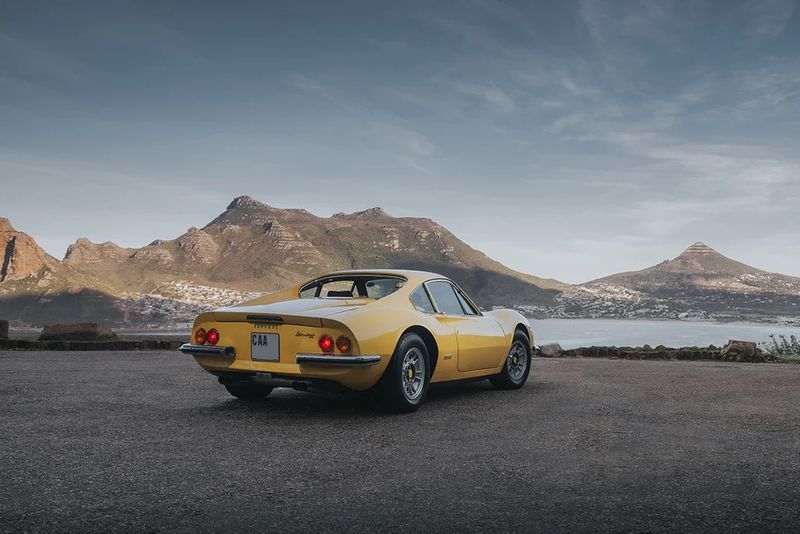
Many Ferrari enthusiasts scoffed at the idea of a V6-engined car that was never officially named a Ferrari, but “only” Dino. That would be a mistake, as this is a fully-fledged prancing horse in the same way as any other car that has been adorned with the Ferrari badge.
Secondly, as mentioned, Ferrari has always been known for developing a variety of engine configurations, so it matters little how many cylinders are powering the rear wheels. Just before sunrise on a mild Cape Town morning, Graham Webb pulls in with his 1971 Dino 246 GT.
Specifications
- Model: 1971 Dino 246 GT
- Engine: 2.4-litre, V6 petrol
- Power: 143 kW at 7 600 rpm
- Torque: 225 Nm at 5 500 rpm
- Transmission: 5-speed manual, RWD
- Weight: ±1 100 kg
- 0-100 kph: N/A
- Top speed: 235 kph (claimed)
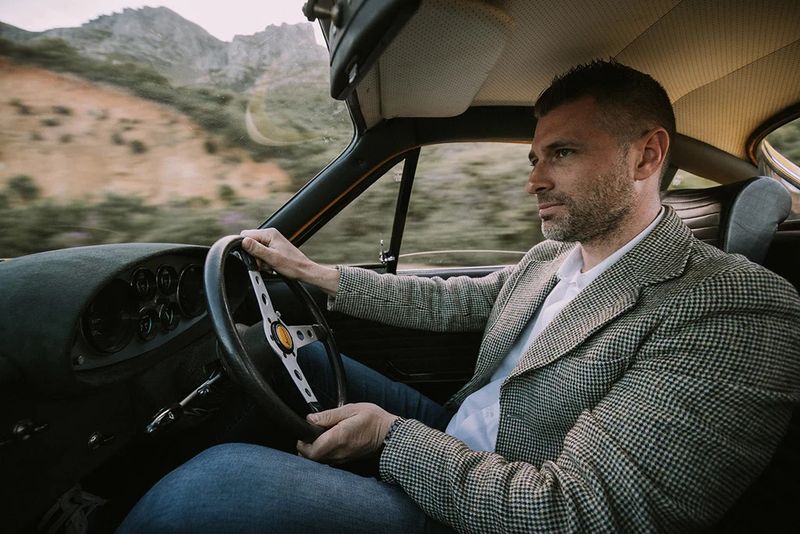
In terms of classic Ferrari owners, he is on the younger side, being only in his mid-30s. However, during our chat, it becomes clear that he has had an appreciation for classic cars since he was a young boy. It helped that his father was, and still is, a complete petrolhead and exposed him to cars from a young age.
“The first time I saw the car was when I was 19. That was also the first time I met Dicken, the previous owner. But, I think at that stage everybody wanted to buy the car from him. He told me to save up the money and then one day we could talk.
“It is a very unique-looking car, and that is what drew me to it. I wouldn’t say I’m not into fast cars, but I lean more towards the appreciation of elements like the sound and the feel of the car, as well as the mechanical nature of them. I’m precious about my cars, but at the same time I like to use them.”
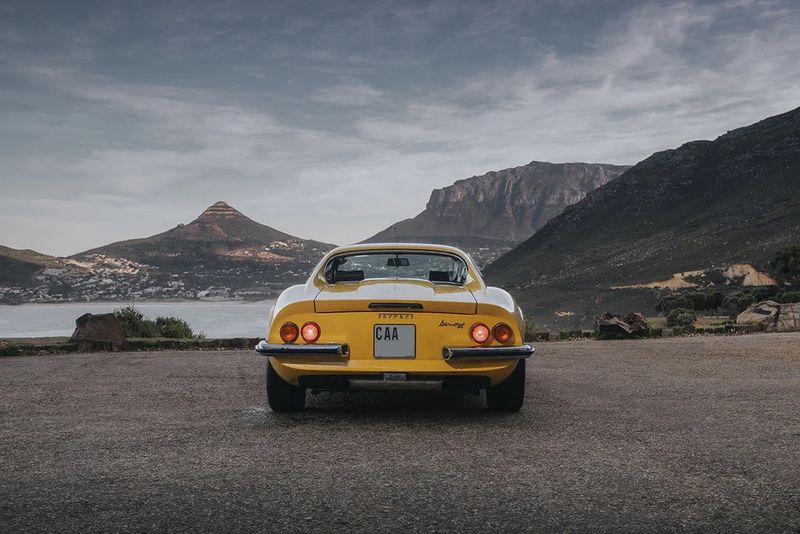
Graham admits that in the near future the car will need some serious attention and possibly a complete restoration. It is during this process that he plans to take it back to its factory blue colour. Design is objective, but the Dino’s proportions… its elegant and soft lines are simply gorgeous.
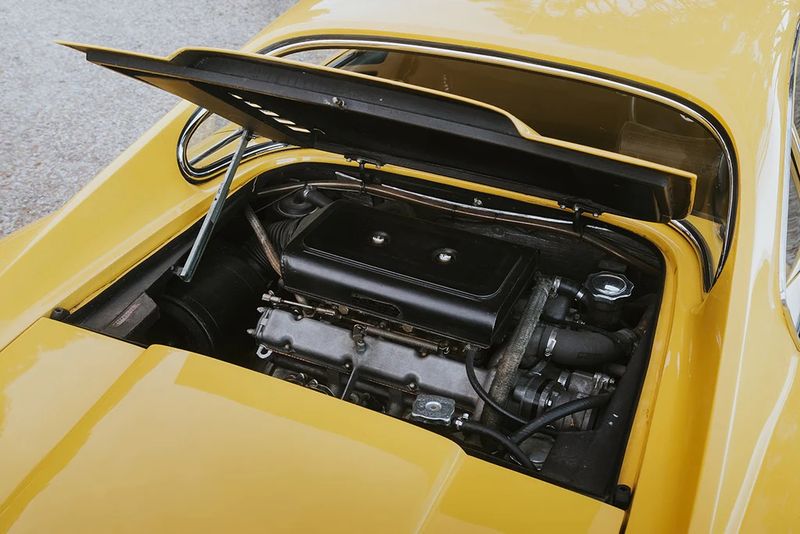
The flowing lines cover a compact shape that screams ’60s sports (and race!) car. The fat tyres (205/70 14-inch) are also an immediate reminder of its age while the two neat exhaust pipes are an indication that there must be some level of performance under the rear engine cover.
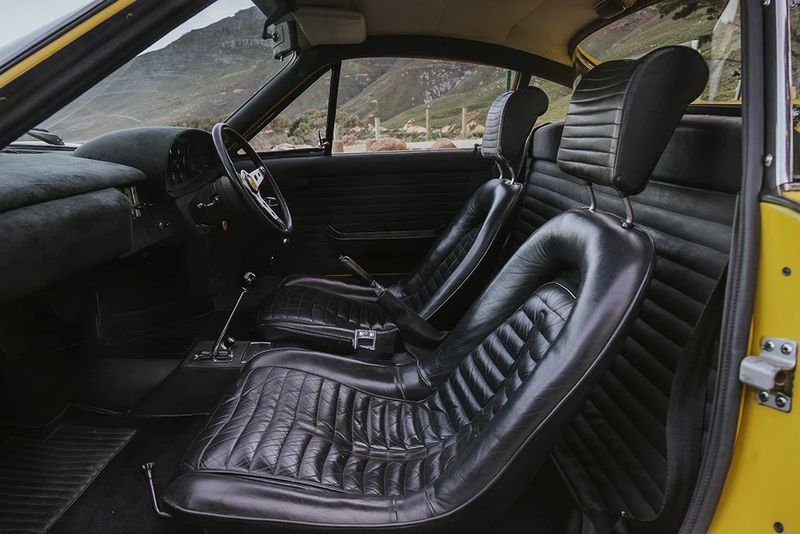
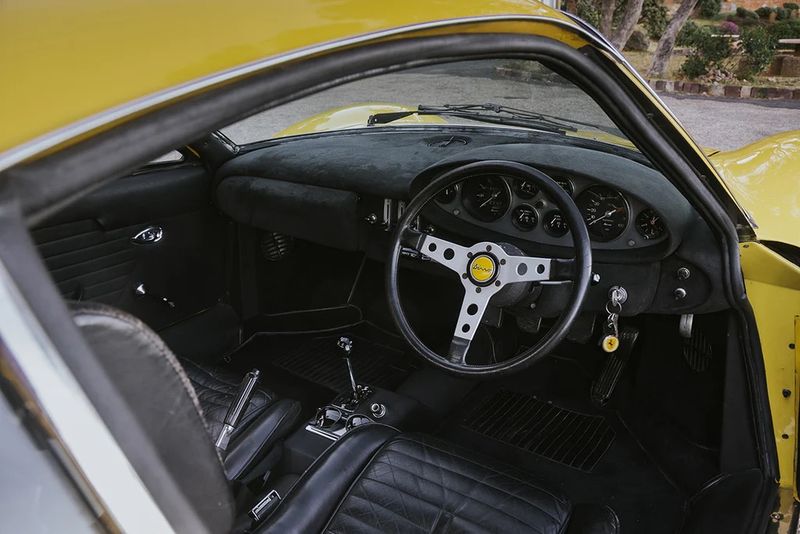
Graham is eager to hand me the key and having driven a 206 GT, I am particularly keen to sample the “updated” version. As I turn the small chromed lever (so tiny and neatly hidden) to open the door, I get into the very tight cabin.
When I close the door, I immediately feel cocooned in the car and very much an integral part of it. My knees do point up a little, past the steering column, but that is part of the experience of several ’60s and early ’70s sports cars. The seat base is also very close to the floor, the result is that you sit very close to the ground but the positioning of my feet on the pedals is fine.
The steering wheel rim does block the final couple of thousand revs on the tachometer, but I soon get used to listening to the engine or peeking around the ‘wheel to see the needle climb. The seat offers some adjustability – it can be moved forward or backward on the railing.
It is helpful that the classic three-spoke steering wheel is large, because at parking speeds with no assistance, you need some muscle and leverage to turn the wheel. However, the moment the car starts to move little effort is needed.
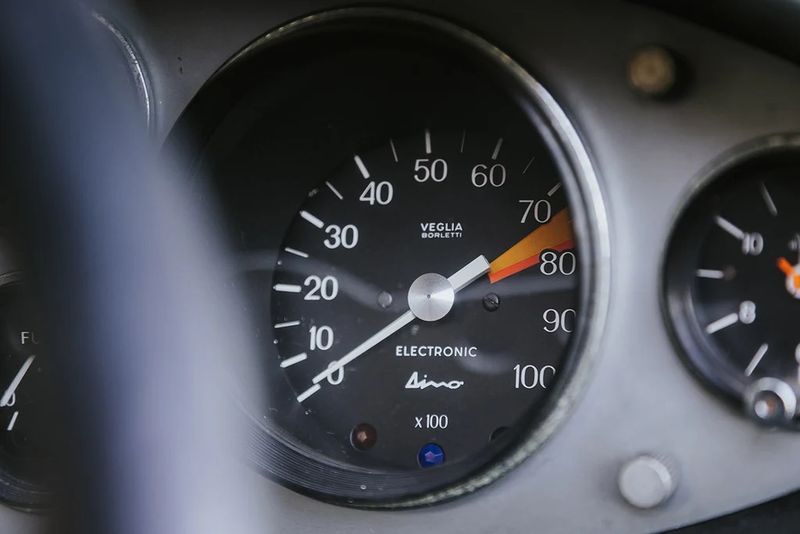
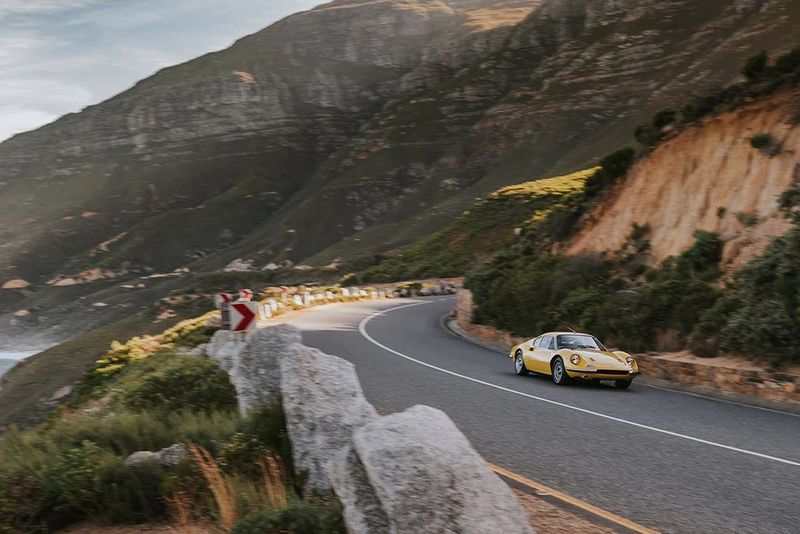
As I pull away and make my way around the number of corners that litter the picturesque Chapman’s Peak Drive outside Hout Bay, it is the view through the windscreen that immediately draws me in and is also one of the highlights of the driving experience.
There is a smooth dip in the middle of the body towards the nose of the car while the beautiful fenders covering the front wheels perfectly indicate to you where each wheel is situated. It immediately made me think of the view racers must have had when piloting the racing versions of these cars during its era.
I first rev the engine to about 4 500 rpm, being quite impressed by the torque on offer. But later I keep the throttle pinned for a little longer and the engine is only too happy to rev past 6 000 rpm towards 7 000 rpm. There is no tapering off of the rate at which it revs, and from here on you can’t help but rather let the engine race higher before you change gears. There is also the engine sound to be enjoyed as it passes 5 000 rpm.
Don’t rush a shift though, but once the next gear is engaged, you can enjoy the acceleration and try to find that balance of the car through the next corner. It is such a vastly different experience to today’s modern cars that it almost made me wish that I got to experience this era of cars in period. I find myself constantly thinking about the experience on hand and not about whether the Dino will connect quickly enough with my smartphone!
I enjoyed this car as much as I did the 206 GT. One will have to drive them back-to-back for a clear and informed decision. But, in essence they give the same experience. It rates as undeniably one of the purest classic sports cars drives I’ve had. This is owing to a combination of factors.
From the Dino’s small footprint on the road, a compact engine and a driving position (although not ideal) that puts you at the front of the car and gives you a perfect view over the short nose, so that you can place the wheels perfectly on the road. I’ll admit, another reason I’m drawn to this car is just the romantic thought of the Italian masters shaping this car back in the 1960s.
Summary
Driving here this morning was a little hard work, but so engaging and refreshing. It is hard to argue Graham’s words. I will pick this Dino 246 GT above several other – more powerful – Ferraris of the same era and, probably, even over a few Prancing Horses that followed after the Dino.
Dare I say it, but this is Ferrari’s Lotus, a true lightweight sports car, which gives a rather impressive experience from behind its thin-rimmed wheel. It is a winner.
Search for a new/used Ferrari listed for sale on Cars.co.za
Find exclusive car-themed merchandise at the SentiMETAL Shop
Related content:
Naturally aspirated Ferrari 12Cilindri revs up
How to buy a new Ferrari: A beginner’s guide
Ferrari F355 Challenge: Classic Drive
Ferrari F40: Enzo’s Greatest – SentiMETAL Ep13
Wilhelm Lutjeharms

A passionate car enthusiast from an early age, Wilhelm has been a motoring writer since 2006, having worked for more than 10 years at CAR magazine before turning to a full-time freelance career. He is also a contributing writer for UK, USA and European-based motoring titles.