The 944 Cabriolet has never been enthusiasts’ most loved Porsche – but are they underestimating the drop-top? We head to the Free State to drive a prime example.
IMAGES: Kian Eriksen
When most motoring enthusiasts think about topless Porsches, visions of V10-engined Carrera GTs, rare 550 Spyders, 356s and G-Series (1973 – 1989) 911 models tend to pop into their heads first.
However, those cars are rare (except perhaps G-Series 911s) and, suffice it to say, one needs a healthy bank balance and the patience of a saint to source and acquire one of those revered models. So wouldn’t it make sense to see what is available at the opposite – more realistically priced – end of the market?
Prevailing classic car market conditions
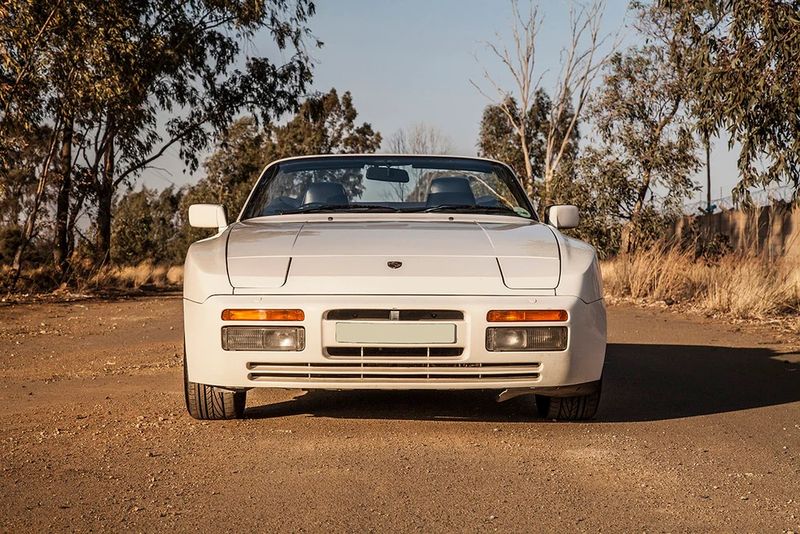
At the bottom end of the Porsche cabriolet range are early Boxsters and 996-series 911 Cabriolets. Each of these models holds an appeal of its own, but much older Porsche 944 Cabriolets (produced from 1989 to 1991) now trade for roughly the same price as early Boxsters and, in some cases, even more.
Although some enthusiasts frown when you mention investment value, most will quietly admit they don’t want to lose money on a car. Fortunately, many classic cars are safe bets nowadays (that pertains to 944 Cabriolets as well). It is unlikely that they will appreciate much over the coming years and because their values seem to have bottomed out, you are unlikely to lose money on one (provided you get a good one).
Specifications
- Model: Porsche 944 S2 Cabriolet
- Engine: 3.0-litre, 4-cylinder, petrol
- Power: 155 kW at 5 800 rpm
- Torque: 280 Nm at 4 000 rpm
- Transmission: 5-speed manual, RWD
- Weight: 1 340 kg
- 0-100 kph: 7.1 sec (claimed)
- Top speed: 240 kph (claimed)
Details of this Porsche 944 Cabriolet example
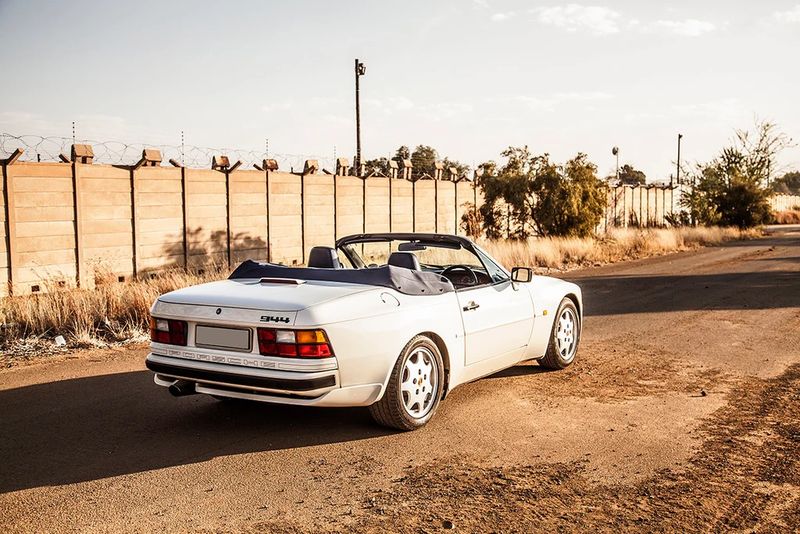
As we parked the white 944 Cabriolet to conduct static photography on a warm spring day in Bloemfontein, I asked the Porsche’s owner about their car’s history.
“I bought this 944 about 5 years ago. At first, the previous owner didn’t want to sell it to me, but the second time I approached him, he still had the 944 as well as a Mercedes-Benz SLK (the Three-pointed Star’s now discontinued compact roadster), so I offered him a price for both cars, which he accepted.
I particularly like the colour combination, the white body colour with the dark blue soft top and the purple interior. What’s more, the car’s overall condition was very good – that was initially the drawcard for me.”
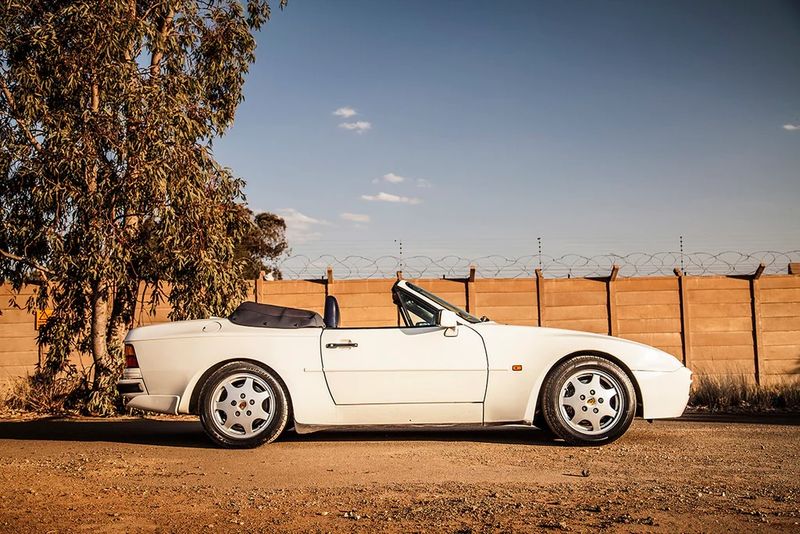
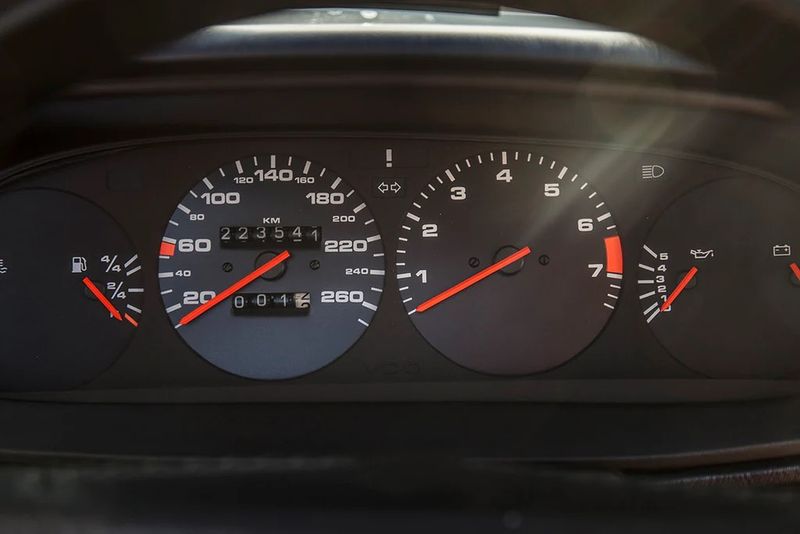
Upon closer inspection, it is clear that the car has indeed been lovingly cared for. The paint finish looks in good condition, and the interior shows only a few signs of wear, which is in keeping with the odometer reading of 223 541 km.
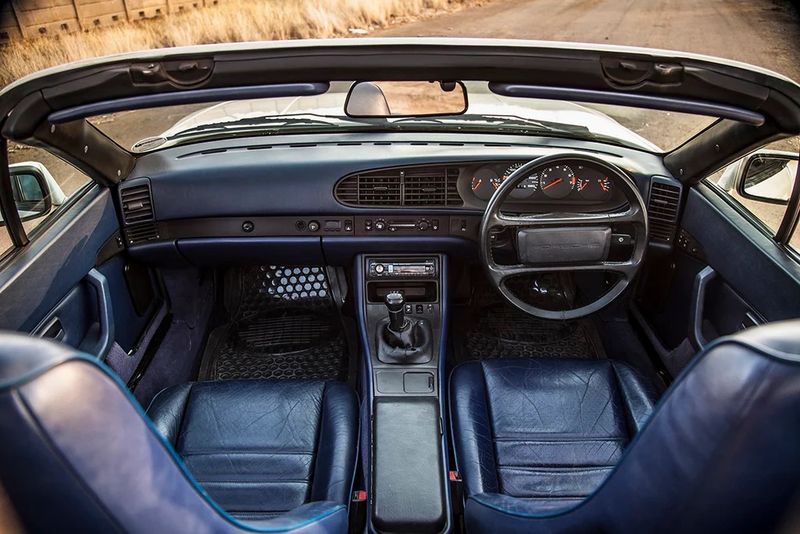
The colour of the interior might polarise opinions, but having said that, if you appreciate a bit of pizzazz, this 944’s cabin will surely appeal to you. The seats, carpets, sun visors and tonneau are a very rich dark purple, which not only highlights and contrasts with the white exterior paintwork, but imbues the interior with a sense of luxury. It looks so much more welcoming than a standard 944’s plain black interior.
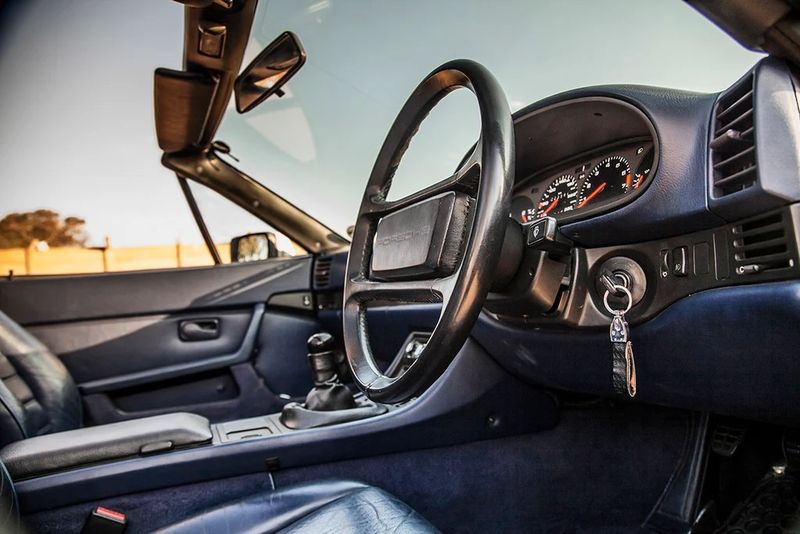
The only item that deters from the otherwise original state of the interior is the aftermarket radio, which is a modern necessity seeing as motorists now prefer to enjoy their choice of music in digital formats.
I open the bonnet and find the engine bay tidy, which shows little evidence that the 944 Cabriolet has indeed covered its indicated mileage. As is usually the case, the discoloured (yellowy) plastic of the fluid containers gives the car’s age away.
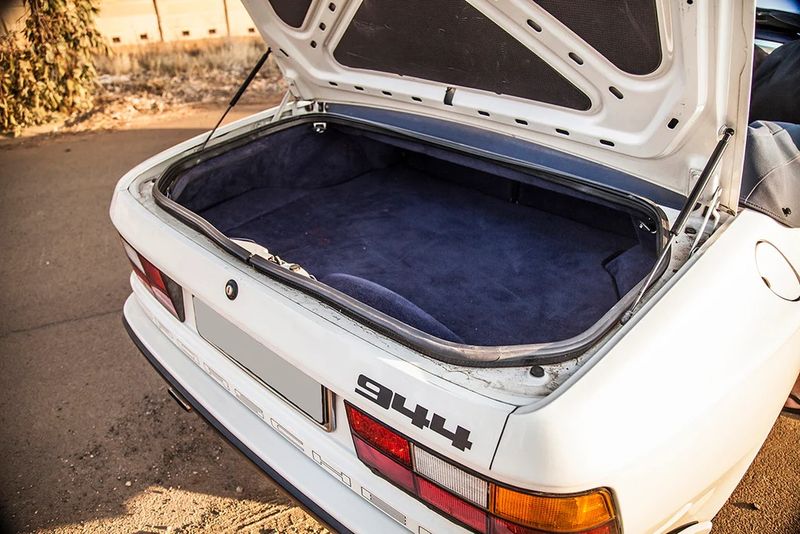
I find the car’s chassis number to the left of the engine, positioned against the firewall. According to The Porsche Book by authors Jürgen Barth & Gustav Büsing, this particular car was one of 1 864 examples manufactured in 1991. For curiosity’s sake, I also have a peek at the luggage compartment. It has the same purple hue as the interior and the carpets and trim are in near-perfect condition.
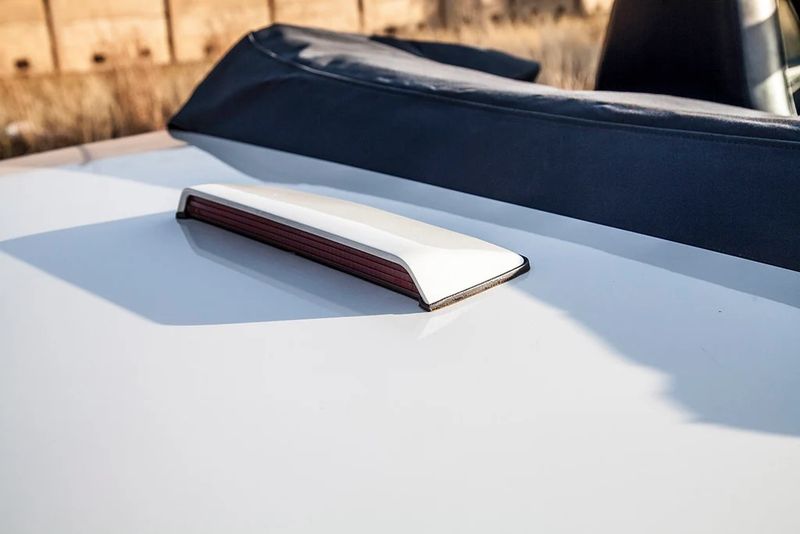
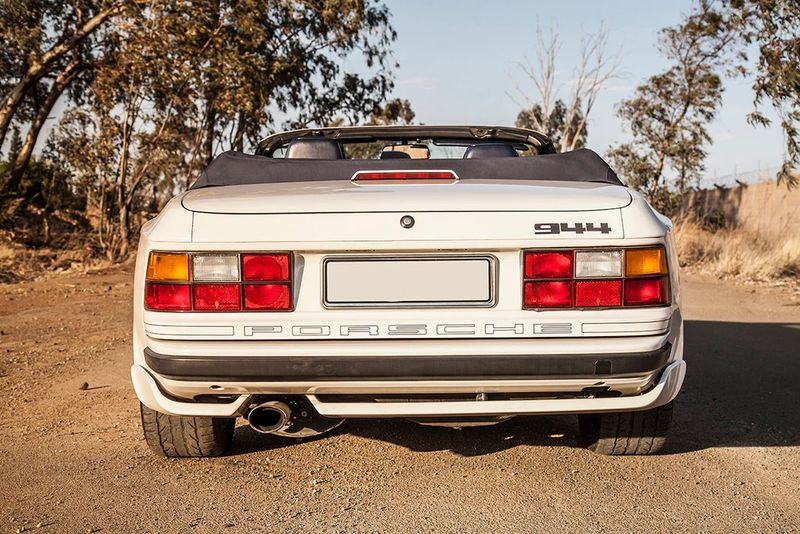
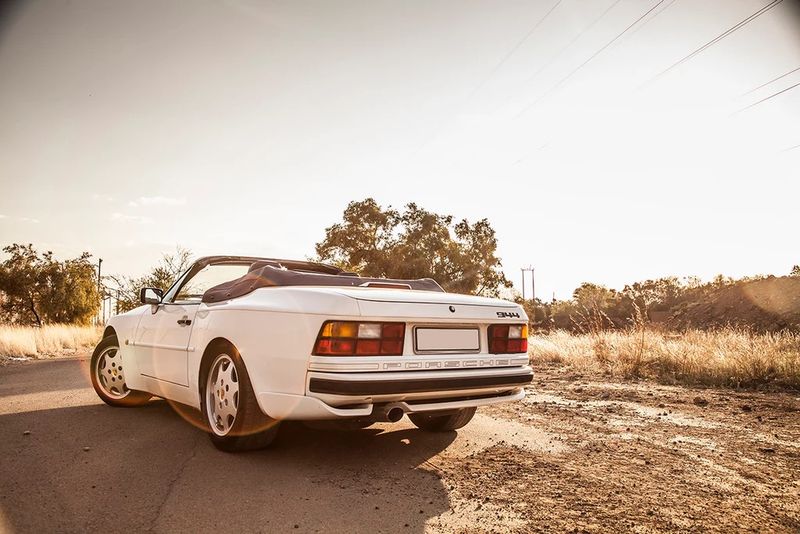
The rear deck lid features a neat rear brake light. Having seen and looked at several 944 Cabriolets, this is the first one I’ve seen with such a brake-light configuration. I’m not sure if it was an OEM, country-specific item, or an aftermarket addition. Lower down you can also spot the diffuser, first seen on the later S2 models, which wraps itself around the bottom edges of the car’s rear fenders.
The Porsche 944 Cabriolet variant only went into production towards the end of the model’s production cycle, in January of 1989, which means all Cabriolet models featured the updated cabin and exterior facelift. The Cabriolet was based on the 944 S and, as was the case with the Zuffenhausen-based brand’s entire 4-cylinder range, was assembled at Neckarsulm in Germany (the home of Audi Sport).
However, before 911 purists frown upon those who adore Porsche’s early 4-cylinder sportscars, keep in mind that the assembly of the 944’s powertrain was completed at Porsche’s plant. The convertible roof was installed by the American Sunroof Corporation (ASC) at its Weinsberg plant in Germany.
However, in June 1991, the 944’s entire assembly was moved to Zuffenhausen. The 944 Cabriolet’s launch price was DM76 700, slightly higher than the DM58 950 for an equivalent 944 S coupe.

Today, these cars’ prices depend on mileage and condition, of course, but expect to pay more for a good drop-top than a coupe… and a pretty penny for the much rarer (around 500 built) 944 Turbo Cabriolet.
Behind the ‘wheel of a Porsche 944 Cabriolet
Then, I got behind the 944 Cabriolet’s ‘wheel and shut the driver’s door. Thunk! For the record, fewer rattles and vibrations emanated from the car’s doors – and cabin – than I thought would be the case.
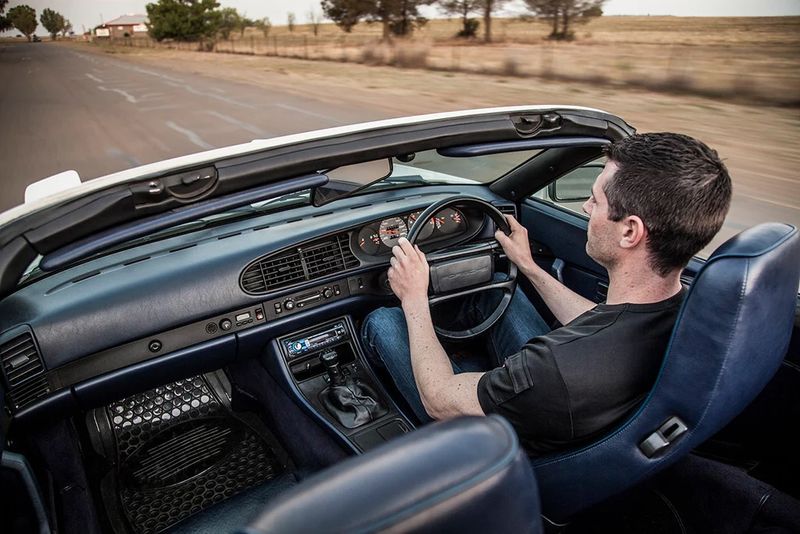
You sit low in the car, more so than in a Mercedes-Benz SL of the same era (then the 4th-gen model, known as the R129), and the dashboard and instrument panel will be very familiar to any 944 owner.
Everything falls easily to hand; the gear lever, in particular, is perfectly positioned, as is the feel of the steering wheel, which was shared across Porsche’s range of transaxle cars, as well as the 911.
Compared to those of some modern sportscars, including new 911s, the 944’s steering wheel has a notably thinner rim, which feels perfect in your hands, and allows you to grip it firmly. This is rather important during parking manoeuvres, as the steering wheel does need proper input from the driver.
By modern standards, the Porsche 944 Cabriolet’s cabin is a simple, almost spartan space: there are 2 stalks attached to the steering column and the ventilation buttons are situated below the centre air vents; even the analogue dials seem slightly lost in the large instrument binnacle. Apart from the speedometer and rev counter, you also have oil pressure, battery voltage and coolant temperature gauges.
Twist the ignition key (positioned to the right of the steering wheel) and after a turn or two of the crank, the engine starts undramatically. As expected, there is less fanfare than in the 944’s contemporary 911 siblings, but this is, after all, one of the most useable boulevard cruisers Porsche has ever built.
Still, as the Porsche pulls away, I slot the gear lever into 2nd, then 3rd; the gearbox has a lovely, relatively direct shift quality. The ride quality is good, I have a perfect view through the windscreen and across the bonnet. Moreover, the 4-pot engine is all too happy to potter around in the first 3rd of the rev band.
For a car that has clocked many kilometres, the cabin panels still feel tight; I don’t detect notable rattles or creaks. The previous and current owners have done an excellent job of keeping the interior preserved, especially taking into account that it is a Cabriolet and has spent its life under the harsh African sun.
The Porsche 944 Cabriolet offers ample performance
As I start to increase my pace, the weight of the car is noticeable. It is, after all, the Cabriolet is between 50 and 80 kg heavier than the coupe, depending on the exact specification and model year of the car.
However, no test drive would be complete without making the engine rev to its redline. So, I select 2nd gear and give the accelerator pedal a solid prod. The revs rise gradually to around 4 500 rpm, but once the needle swings past this mark, the engine evidently gets its second breath and spins up eagerly to 6 000 rpm. I did this quite a few times and every time the engine obliged and cantered to the red line.
Even though the motor does so willingly, the engine is similarly well-suited to leisurely driving. As the maximum torque of 280 Nm is already delivered at 4 100 rpm, it means that you don’t need to wring the engine’s neck to make the 944 gallop. In the end, that means it is an ideal propulsion unit for a cabriolet.
Not unlike 911s, the moment you use all the available performance, the nose lifts ever so slightly, and the rear ducks a smidge. I felt little need to hustle the car through corners. I’m not saying it shouldn’t be, but if that is the kind of thrill you’re after, a 996-series 911 Cabriolet or 986 Boxster would be a wiser choice.
I let the Porsche 994 Cabrioloet’s revs drop to about 2 000 rpm in 4th gear, and then flatten the long pedal. The revs start to rise and then, past 4 500 rpm, the needle further awakens. A peak output of 155 kW at 5 800 rpm is not a lot of power, especially in a relatively hefty cabriolet, but it’s enough to entertain and make things exciting when you want to string a few corners together or use all the available revs.
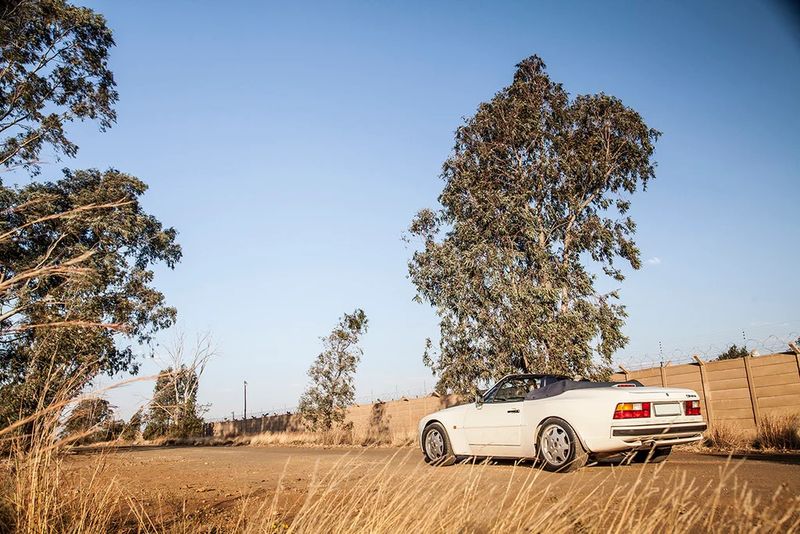
As this area of Mzansi receives minimal rain or wind, and the afternoon sky gave way to a near-perfect sunset, I never had the urge to raise the roof – a wonderful luxury to have when you own such a car!
However, should you wish to change that because of, say, the onset of inclement weather/a sudden drop in temperature, or to store the car with its roof up, bear in mind the top is manually operated. There is some evidence of scuttle shake in general driving conditions, but, again, it’s nothing out of the ordinary.
Summary
After spending several hours in the company of the Porsche 944 S2 Cabriolet, my opinion of the drop-top changed somewhat. It’s not a 911, but it IS a true Porsche, albeit not the most dynamic one.
If you’re going to drive mostly on your own and seek an engaging experience, consider one of Porsche’s other cars, BUT if someone is going to be joining you for the trip, and you’re going to be driving at “7 tenths” most of the time – and enjoy the manual gearbox – it’d make a worthy addition to your garage.
Search for a Porsche 944 listed for sale on Cars.co.za
Find exclusive car-themed merchandise at the SentiMETAL Shop
Related content:
Porsche 911 (993) GT2: Classic Drive
Porsche 356 vs Porsche 912: Classic Comparison
Porsche 911 Targa ‘Edition 50 Years’ (2022) Launch Review
Porsche 911 GT3 (2022) Launch Review
Porsche 911 GTS (2021) Launch Review
Wilhelm Lutjeharms

A passionate car enthusiast from an early age, Wilhelm has been a motoring writer since 2006, having worked for more than 10 years at CAR magazine before turning to a full-time freelance career. He is also a contributing writer for UK, USA and European-based motoring titles.