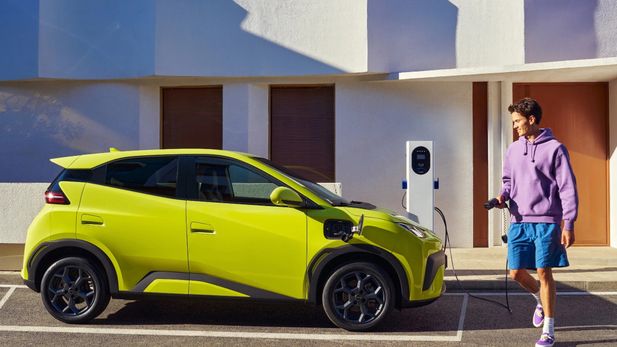
Charging your EV at home with solar is a no-brainer in sunny South Africa. But once a home battery system enters the mix, the math gets a lot less straightforward. Capacity limits, efficiency losses, and battery degradation all start to chip away at the “free fuel” narrative. Here’s what the numbers really look like.
Too often, buyers don’t consider an EV’s running costs when signing on the dotted line. Unlike refuelling an internal combustion engine (ICE) vehicle, where you know exactly what a litre of fuel will cost, the various scenarios in which you can charge an EV differ greatly in price. While first prize is a high-voltage station at the office where rapid charging happens for free, the reality of hybrid work, weekends, and holidays dictates that you’ll occasionally have to charge elsewhere – including at home.
Read more: New Hilux BEV listed on Toyota SA’s website, but…
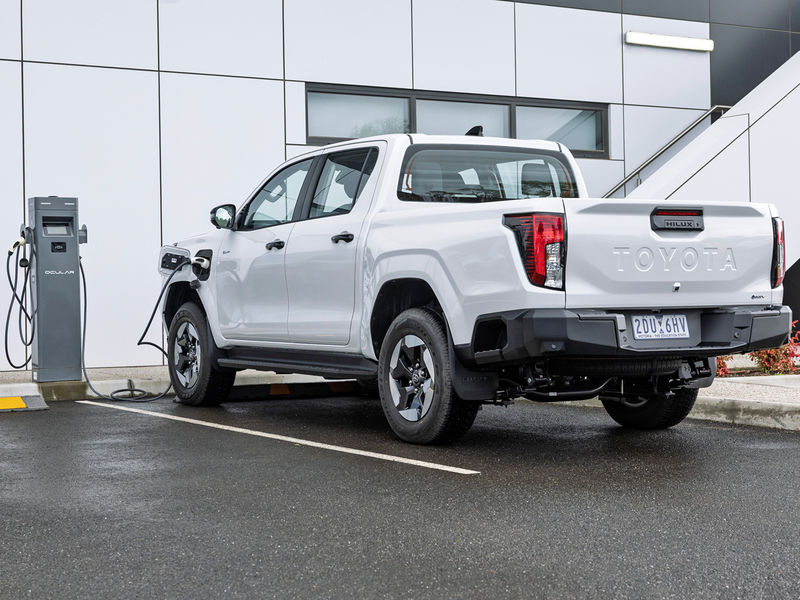
Here is how the standard at-home options compare in real-world costs.
How much does it actually cost to charge an EV at home in South Africa?
| Charging scenario | Source tariff (per kWh) | Storage wear cost (per kWh) | Total true cost (per kWh) | Real cost per 100 km | Financial verdict |
| Direct daytime solar | R0.00 | R0.00 (bypasses home battery) | R0.00 | R0.00 | Free, but the car must be plugged in during peak daylight hours. |
| Standard municipal grid | R4.00 | R0.00 (direct to car) | R4.00 | R60.00 | Significantly cheaper than internal combustion, but subject to tariff hikes. |
| Overnight home battery (stored solar/grid power) | R0.00 to R4.00 | R1.00 (inverter battery wear) | R1.00 to R5.00 | R15.00 to R75.00 | Drawing power into a home battery to dump it into an EV adds a heavy premium in hardware wear. |
| Internal combustion engine averaging 6.75 L/100 km | n/a | n/a | n/a | R190.00 (at R28/L) | Double the cost of standard grid charging, but requires no behavioural adjustments. |
Eskom tariffs vs solar energy: Is charging via panels truly free?
With enough solar panels, you can run practically anything in your household off the sun, provided there’s enough light to power a suitably sized solar array. During peak solar periods – say, between 10:00 and 14:00 – you could theoretically charge your EV for free.
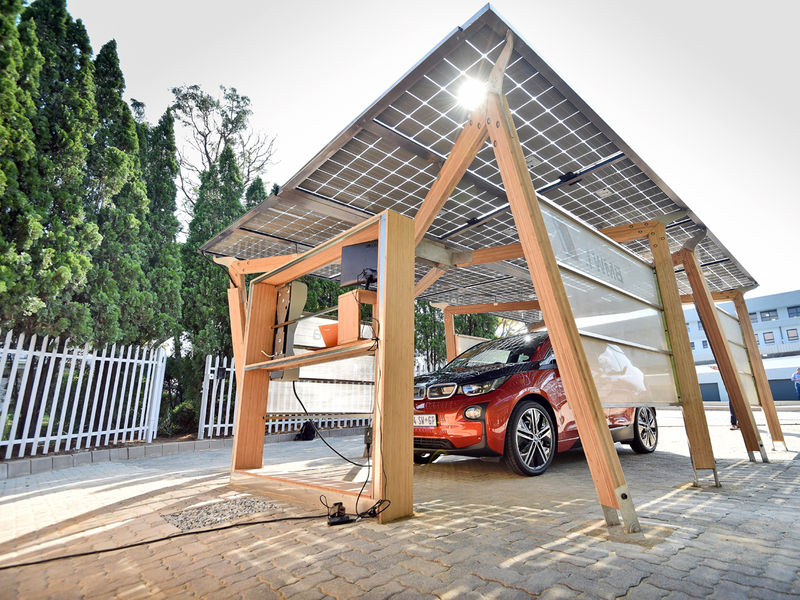
However, that assumes you’ve already made the capital outlay for a solar system capable of dealing with the demands of a 7.4 kW single-phase or an 11 kW 3-phase AC wallbox charger – most modern solar panels produce around 550 Wh, so simple math suggests you’ll need a minimum of 15 panels on your roof.
If it’s cloudy, or your inverter capacity is limited to 8 kW, attempting to charge your EV means you will have to forgo topping up your home backup system. In such a scenario, the house’s backup battery won’t reach a full state of charge. This forces you to use expensive grid power to top up the shortfall overnight.
Ultimately, achieving “free” charging demands a significant lifestyle change and careful daily planning.
Read more: SA’s NEV sales for Q1 2026: PHEV market surges 430%
The hidden costs: Why depleting your home battery to charge your EV is a mistake
It’s tempting to think that a home storage battery can easily be used to charge an EV overnight. But the hardware physics prove otherwise.
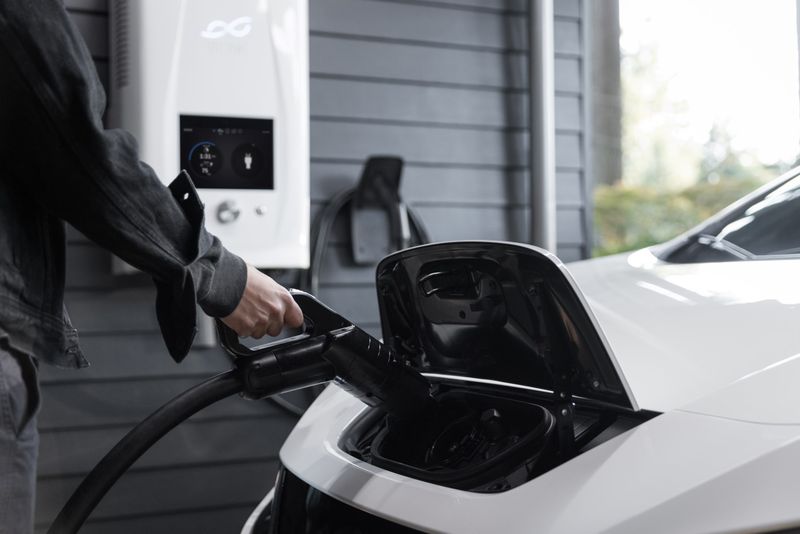
A standard 5.12 kWh home battery can only boost a typical EV battery (which ranges from 50 kWh to 100 kWh) by about 30 km worth of range. A single standard home battery simply doesn’t have the capacity to feed a massive vehicle battery. More importantly, pulling a continuous high load from the home battery causes rapid thermal degradation, prematurely eating through its finite lifespan of charging cycles.
Trying to run a 7.4 kW wallbox charger off a lone 5.12 kWh battery will drain the home storage to 0% in less than 45 minutes. You are effectively trading away your household load-shedding protection for a mere 30 km of driving range.
The true cost of storage wear: Assuming a quality 5.12 kWh LiFePO4 (lithium iron phosphate) battery costs roughly R30 000, dividing this upfront cost by its expected lifetime energy throughput (5.12 kWh x 6 000 cycles) yields a relative storage cost of R1.00 per kWh.
While your solar panels might harvest the energy for free, routing it through your home battery adds R1.00 per unit in hidden hardware depreciation. If a typical 40 km daily commute adds 10 kWh of demand to your home system overnight, it would require nearly 2 full charges of a 5.12 kWh battery just for the car. Combined with regular domestic usage, this forces the battery to operate at an unsustainable cycle rate, cutting its expected usable lifespan from 15 years down to under 6.
Read more: SA’s EV sales fell in 2025 (but the total NEV market grew)
The lesson? Configure your inverter to skip the home battery when the car is plugged in. You save R1.00 per unit in hardware wear every single time.
Wallbox vs. standard wall socket: Balancing home charging & speed
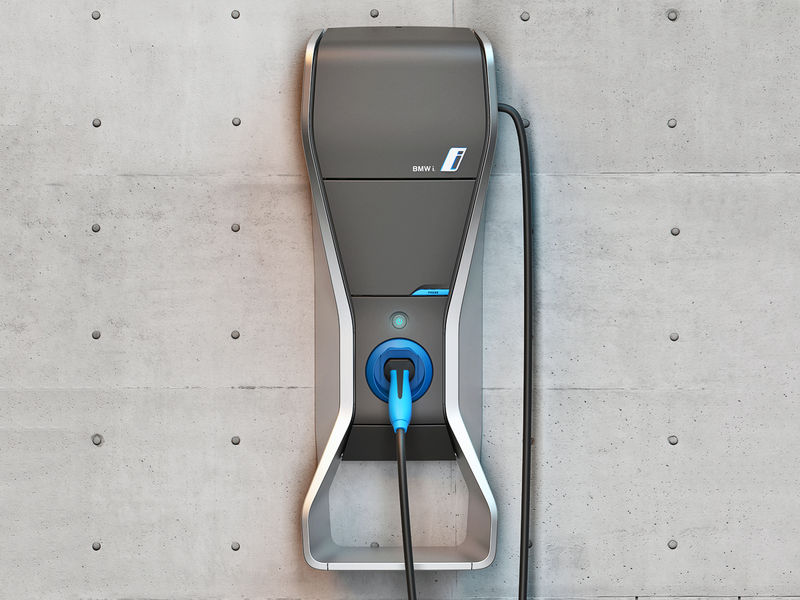
The other major cost of home charging resides in the ratio between charging speed and upfront investment. Relying on the portable “granny charger” sold with the car as your permanent home charging solution is a non-starter. Standard domestic sockets aren’t designed for a prolonged, maximum-amperage current draw lasting over 24 hours. Doing so introduces significant thermal stress behind the wall, creating severe risks of melted sockets and electrical fires.
Upgrading to a dedicated home charger requires balancing your property’s electrical infrastructure against installation costs – some manufacturers are wise to this and are including the cost and installation of home AC chargers into the price of their vehicles.
| Charger type | Electrical supply required | Charging power (kW) | Added range per hour | Time to charge a 60 kWh battery (0-100%) | Usage conditions |
| Portable charger (included with car) | Standard 3-pin wall socket (10A – 13A) | 2.3 kW | 10 to 15 km | 26 hours | Emergency use only. Continuous high-current draw over a full day creates dangerous thermal stress on standard domestic wiring. |
| Single-phase wallbox (the most common installation) | Dedicated 32A breaker from DB board | 7.4 kW | 35 to 40 km | 8 hours | The sweet spot. Fits 70% of South African suburban homes. Perfectly aligned with an overnight sleep cycle to fully replenish a daily commute without major grid upgrades. |
| 3-phase wallbox (premium installation) | 3-phase power supply (16A per phase) | 11 kW | 60 km | 5.5 hours | Infrastructure dependent. Requires a native 3-phase property connection, which is typically limited to specific agricultural holdings, older large estates, or light commercial properties. |
Most South African homes are wired as single-phase, which allows installation of a 7.4 kW wallbox able to fully charge a 60 kWh battery in 8 hours, and without significant revision of electric infrastructure. If not yet installed, upgrading to a full-fat 11 kW wallbox requires:
- 3-phase power.
- A new application to your municipality.
- A replacement electricity meter and modifications to your DB board.
- Labour and a certificate of compliance.
Combined, the aforementioned could run into tens of thousands of extra rands spent.
The 3 rules for efficient EV home charging are…
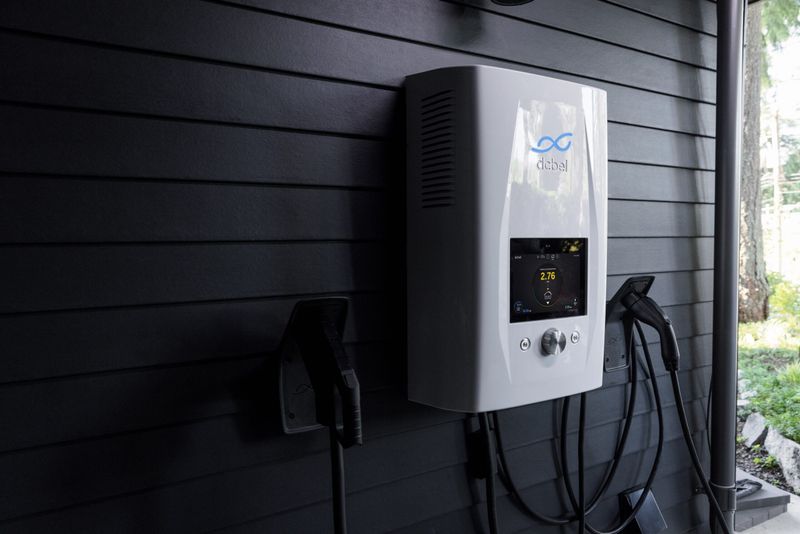
Time your charging perfectly: To truly charge using “free” fuel, plug your EV in exclusively during peak daytime solar hours (10:00 to 14:00).
Protect the home storage system: Program your inverter to never drain the household backup battery to charge the car. Use daytime sun to charge the home battery, and let the car pull straight from the panels or the grid.
Stick to a 7.4 kW wallbox: For the vast majority of South Africans, a single-phase 7.4 kW charger offers the best balance of overnight speed without triggering exorbitant municipal infrastructure upgrade fees.
The bottom line
Charging an EV at home in South Africa isn’t as simple as plugging it in and watching the savings roll in. The math proves that the smartest investment you can make isn’t buying more expensive hardware – it’s simply knowing exactly when to plug in.