South Africa’s new-vehicle sales grew 10.1% year on year in May 2023, thanks in part to a robust LCV segment. Here’s a look at the country’s best-selling cars, most popular brands and more…
In May 2023, South Africa’s new-vehicle industry registered encouraging year-on-year growth of 10.1% to finish on 43 060 units, ending 2 consecutive months of market decline. That industry tally furthermore represented a month-on-month improvement of 16%, with April 2023’s effort having come in at 37 107 units.
The light-commercial vehicle (LCV) segment appeared to do much of the heavy lifting, with sales in that part of the market increasing a substantial 38.5% year on year to 12 825 units, according to figures released by Naamsa. In contrast, the new passenger-vehicle market came in at 27 401 units, registering a marginal increase of 0.1% compared with May 2022’s figure.
Out of the total reported industry sales of 43 060 vehicles, Naamsa estimated 38 872 units (or 90.2%) represented sales via the dealer channel, with 4.9% coming courtesy of the vehicle-rental industry, 2.7% from industry corporate fleets and 2.2% via government purchases.
Meanwhile, May 2023 export sales stood at 31 833 units, registering a “remarkable” year-on-year gain of 67.5% (though it’s worth bearing in mind May 2022 wasn’t the best month for exports as Toyota’s factory in Prospecton was offline thanks to the prior month’s floods). Still, the industry representative body said production of the Ford Ranger and Volkswagen Amarok at the Blue Oval brand’s Silverton facility “boosted” SA’s export numbers for May.
Meanwhile, WesBank pointed out May sales last year were the 2nd-worst performing month of 2022 (so this latest growth wasn’t off a particularly high base), with May 2023’s performance returning to “levels experienced at the beginning of the year”.
“Although this May presented 1 more selling day year on year, market demand as measured by WesBank’s applications for finance increased substantially compared to the same time last year,” said Lebogang Gaoaketse, Head of Marketing and Communications at WesBank. “In fact, applications for new-vehicle finance displayed double-digit growth and increased twice as much as for used vehicles.”
Still, Gaoaketse cautioned the conversion of these applications into actual deals wasn’t taken into account, though added it was “reassuring” that opportunity remained in the market and that “economic activity – however difficult – continued to perform”.
Gary McCraw, Director of the National Automobile Dealers’ Association (NADA), said the market returned stronger-than-expected sales during the month, despite the general feeling among industry commentators having pointed to a slowdown.
“The retail motor industry is, naturally, delighted at the unexpected extent of the upswing, with dealers responsible for selling 90.2% of the total volume. Certain dealers focused on sales before the interest-rate announcement to allow customers to take advantage of lower rates. This activity, early in the month, certainly benefited sales volumes during May. However, purchase consideration didn’t deteriorate after the rate increase, driven by the ongoing trend towards smaller, more affordable vehicles,” said McCraw.
New-vehicle sales summary for May 2023
- Aggregate new-vehicle sales of 43 060 units increased by 10.1% (3 959 units) compared to May 2022.
- New passenger-vehicle sales of 27 401 units increased by 0.1% (15 units) compared to May 2022.
- New light-commercial vehicle sales of 12 825 units increased by 38.5% (3 564 units) compared to May 2022.
- Export sales of 31 833 units increased by 67.5% (12 826 units) compared to May 2022.
10 best-selling car brands in South Africa for May 2023
After dipping below the 10 000-unit mark in April but still finishing the month way out in front, Toyota improved its tally to 11 395 units (6 200 of which came in the passenger-vehicle space) in May 2023. As is so often the case, the Japanese firm’s total was more than double that of the 2nd-placed automaker, which was again the Volkswagen Group (5 259 units). Suzuki, meanwhile, completed the podium, taking 3rd place – as it has done all this year and much of last – with 3 709 registrations.
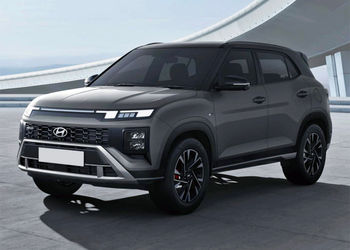
Hyundai (2 745 units) climbed a position to 4th, which saw Ford (2 491 units) slip a spot to 5th. Nissan held steady in 6th with 2 314 units, while Haval (1 877 units) clawed its way up to 7th, a month-on-month improvement of 2 positions. Not far behind, Isuzu (1 871 units) remained in 8th and Renault (1 848 units) in 9th, while Kia tumbled 3 places to 10th, finishing the month on 1 668 sales.
So, which automakers just missed out on a top-10 finish? Well, the BMW Group technically landed up in 11th, though its 1 228-unit tally was listed as a Naamsa estimate, while Chinese firm Chery (1 211 units) settled for 12th, ahead of Indian automaker Mahindra (907 units).
1. Toyota – 11 395 units
2. Volkswagen Group – 5 259 units
3. Suzuki – 3 709 units
4. Hyundai – 2 745 units
5. Ford – 2 491 units
6. Nissan – 2 314 units
7. Haval – 1 877 units
8. Isuzu – 1 871 units
9. Renault – 1 848 units
10. Kia – 1 668 units
10 best-selling vehicles in South Africa for May 2023
After uncharacteristically relinquishing the top spot in April (by just 14 units, we should point out), the Toyota Hilux grabbed back 1st position in May 2023, with 2 798 examples registered round the country. That saw the likewise locally built Ford Ranger (2 104 units) drop a place to 2nd.
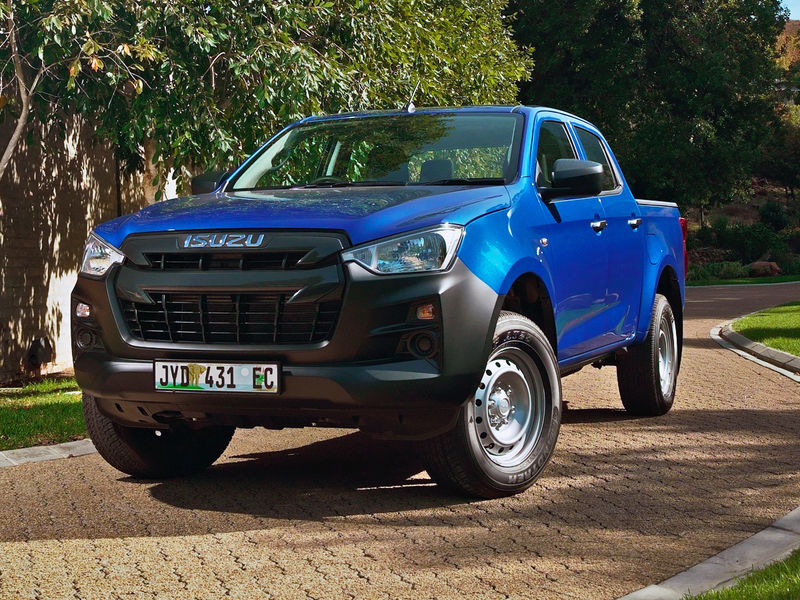
The Volkswagen Polo Vivo (1 876 units) and Toyota Corolla Cross (1 644 units) held steady in 3rd and 4th respectively, while the popularity of locally built vehicles continued, with the Isuzu D-Max moving up a couple of spots to 5th, finishing the month on 1 555 units (a figure that includes the prolonged-lifecycle Gen 6 range).
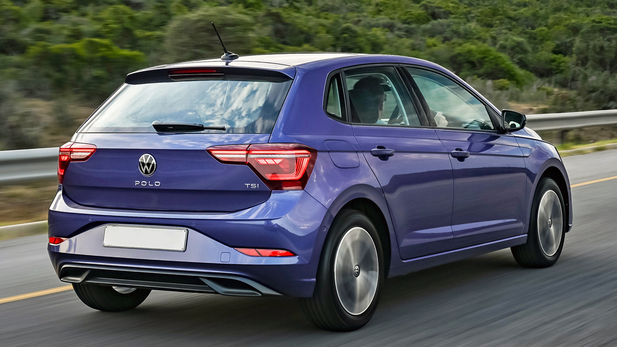
The Prospecton-built Toyota Hi-Ace (1 553 units) was right on the D-Max’s tail but slipped a position to 6th, while the Toyota Starlet (1 218 units) climbed a place to 7th, where it finished as the best-selling imported model ahead of the likewise Indian-produced Suzuki Swift (1 178 units), which fell 2 spots to 8th. The Rosslyn-manufactured Nissan NP200 (1 157 units) again ended in 9th, while the Volkswagen Polo hatch finally returned to the table, with 1 024 sales in May 2023. This is only the 2nd time in 2023 the Polo hatch has made the top 10, having been out in the cold since January 2023.
What about the models that just failed to crack the table in May 2023? Well, the Toyota Fortuner (1 018 units) was the only other vehicle to cross 4 figures, eclipsing the Hyundai Grand i10 (976 units), Haval Jolion (881 units), Chery Tiggo 4 Pro (745 units) and Renault Kiger (720 units). The new Toyota Urban Cruiser, meanwhile, wasn’t far off the pace on 713 registrations.
1. Toyota Hilux – 2 798 units
2. Ford Ranger – 2 104 units
3. Volkswagen Polo Vivo – 1 876 units
4. Toyota Corolla Cross – 1 644 units
5. Isuzu D-Max – 1 555 units
6. Toyota Hi-Ace – 1 553 units
7. Toyota Starlet – 1 218 units
8. Suzuki Swift – 1 178 units
9. Nissan NP200 – 1 157 units
10. Volkswagen Polo (hatch) – 1 024 units
Top 9 vehicles exported from South Africa in May 2023
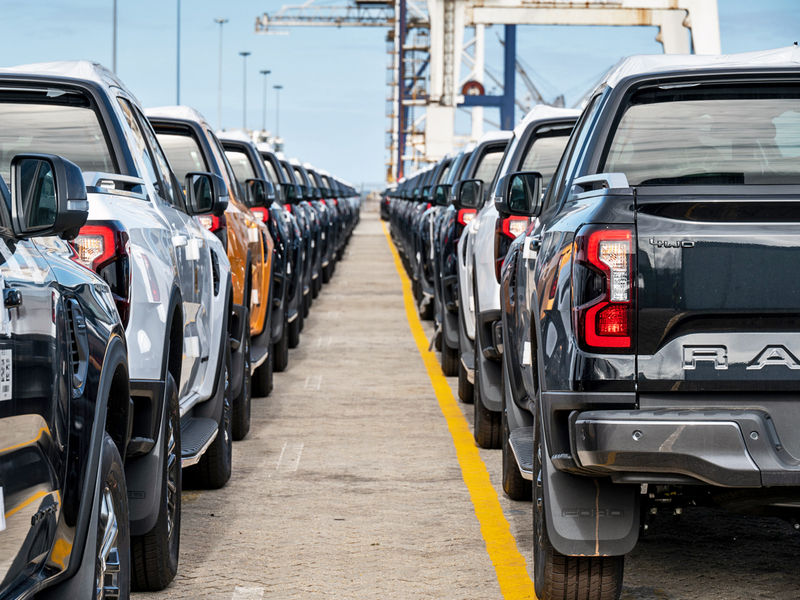
The Volkswagen Polo hatchback was again top of the export charts, with 7 855 units shipped off from the German automaker’s Kariega facility in May 2023. The Ford Ranger (6 274 units) moved up to 2nd, though its figure may well include VW Amarok units built in Silverton. The Toyota Hilux thus dropped to 3rd, with the Japanese bakkie’s export tally coming in at 5 323 units.
As you might have expected, the Isuzu D-Max, Nissan Navara, Toyota Fortuner, Toyota Corolla Cross, Nissan NP200 and Toyota Corolla Quest made up the export numbers. We should, of course, add the fact BMW and Mercedes-Benz did not submit detailed figures, so it’s unclear how many X3 and C-Class sedan units were exported during the month (but, for the record, Naamsa’s estimates for May 2023 stood at 3 300 units and 7 567 units, respectively).
1. Volkswagen Polo (hatch) – 7 855 units
2. Ford Ranger – 6 274 units
3. Toyota Hilux – 5 323 units
4. Isuzu D-Max – 630 units
5. Nissan Navara – 451 units
6. Toyota Fortuner – 146 units
7. Toyota Corolla Cross – 38 units
8. Nissan NP200 – 31 units
9. Toyota Corolla Quest – 19 units
Vehicle-sales outlook in SA for remainder of 2023
So, what’s next for South Africa’s new-vehicle market? Well, Naamsa warns the market continues to face “multiple headwinds”, including the recent “escalation” of interest-rate hikes, the depreciation of the currency, “sectoral” supply chain disruptions as well as “producer and consumer inflationary pressures”. In addition, the organisation notes a “load-shedding-bound economy will cause irreparable harm to the automotive industry, which has become the successful cornerstone of industrialisation and development in South Africa”.
“Globally, recession concerns have gained prominence, while concerns over the high inflation environment continue to persist. For SA, the risks are heavily tilted downwards, especially as debt levels continue to grow to record high levels. The likelihood of further monetary tightening is very high as inflation remains stickier than expected,” explains Naamsa, before adding “business sentiment is riding a pessimistic tide, with threats on the certainty of South Africa’s future participation in AGOA [the African Growth and Opportunity Act] now entering a realm of speculation”.
ALSO READ: How many EVs and hybrids were sold in SA in Q1 2023?
Heading towards the middle of the year, WesBank says the industry’s year-to-date volumes – up 3.0% to 218 869 units – are representative of “the slow recovery in the market”.
“While the levels of demand remain reassuring for the new-vehicle market, the economic effects will continue to take their toll on consumer budgets and ultimately have a bigger impact on the market,” concludes WesBank’s Gaoaketse, who echoed Naamsa’s concerns about “relentless” increases to interest rates, rising fuel prices and a depreciating currency.
ALSO READ: How many model derivatives are offered in South Africa?
Pointing to May 2023’s figures, NADA’s McCraw appears a little more positive, saying it will be “interesting to see if the pace can continue in an environment where sales growth is seen as being somewhat against the odds”.
“A contributing factor to the better-than-expected sales is that several brands have started offering incentives, to encourage new vehicle buyers. This is something we haven’t seen much of since the pandemic. Another factor could be that many dealers have accumulated stock and were concerned about being left with an excessive inventory if the market took a downturn. As a result, they have turned to more aggressive marketing strategies on new models,” concludes McCraw.
Related content
Ranger pips Hilux! SA’s best-selling vehicles in April 2023