The Volkswagen Caravelle is one of the most storied nameplates in South African family motoring, and now the all-new model has arrived exclusively as a plug-in hybrid. VW pitches it as an alternative to a luxury 7-seater SUV, but at almost R1.8 million, does this electrified Volksiebus make sense?
We like: Driving refinement; fuel efficiency; Caravelle comes generously equipped as standard.
We don’t like: It’s undoubtedly pricey; not as spacious as some rivals; small fuel tank.
FAST FACTS
- Model: Volkswagen Caravelle 1.5 TSI eHybrid Style 4Motion
- Price: R1 794 000
- Engine: 1.5-litre 4-cylinder turbopetrol plus 2 electric motors
- Transmission: 6-speed dual-clutch automatic
- Power/Torque: 180 kW/350 Nm
- 0-100 kph: 8.20 seconds (claimed)/8.24 seconds (tested)
- Fuel consumption: 1.9 L/100 km (battery charged)/8.1 L/100 km (combined)
- Range: 90-95 km (electric)/556-700 km (combined)
- Luggage capacity: 603 litres (claimed)
Serious about buying/selling?
Some dealerships regularly offer great deals. See our New Car Specials!
Looking to sell your car? Sell it on Cars.co.za for free
Where does the Volkswagen Caravelle eHybrid fit in?
Ask any South African of a certain vintage about the Volkswagen Caravelle, and you’re likely to hear fond stories of family holidays along our national highways, school lift clubs and, if they’re somewhat interested in automotive history, the locally developed Audi-engined 2.5i and 2.6i models of the late 1980s and early 1990s. Of course, there are also those iconic David Kramer TV advertisements… Few nameplates have carried as much cachet in the people-mover segment.
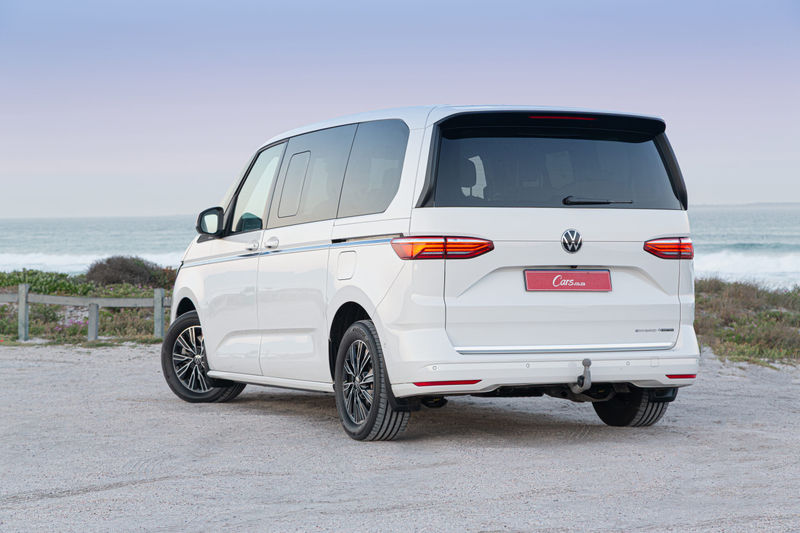
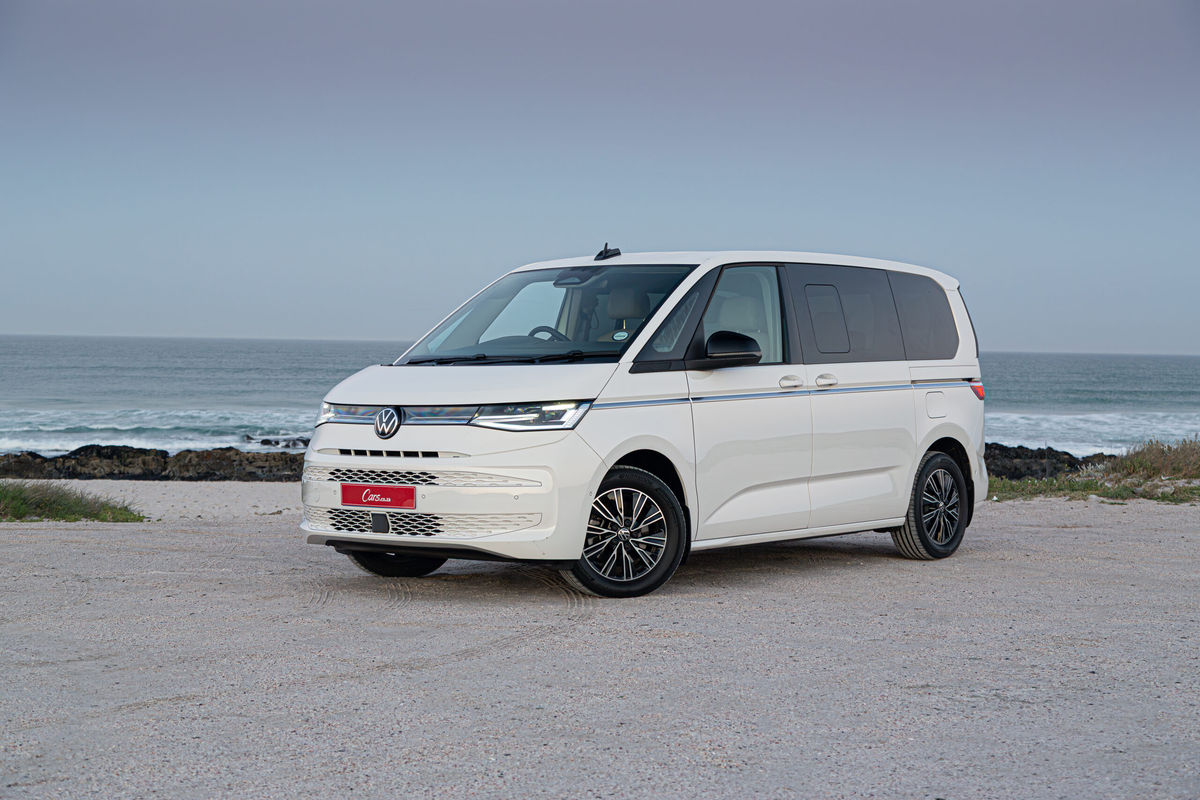
The new Caravelle (T7) is a significant departure from its predecessors. It was developed by Volkswagen independently of the Ford-based Transporter (sold here in various Kombi-badged passenger variants), and here it’s offered in a single specification: the 1.5 TSI eHybrid Style 4Motion in the short wheelbase (SWB) body style. Gone is the trusty 2.0 TDI turbodiesel; in its place is a plug-in hybrid powertrain that combines a 1.5-litre turbopetrol engine with an electric motor on each axle and a 19.7 kWh battery pack.
Read more: Volkswagen Caravelle eHybrid (2026) Launch Review
Compare the Caravelle to the GAC M8 and the Mercedes-Benz EQV using our handy comparison tool
Volkswagen is pitching the Caravelle as an alternative to luxury 7-seater SUVs, but it does have more traditional rivals too. Its only true direct competitor in South Africa is the GAC M8 Master PHEV Executive Plus (R1 499 900), another plug-in hybrid luxury MPV, which we haven’t yet tested, so we can compare the two only on specification and dimensions. Then there’s the all-electric Mercedes-Benz EQV 300, which costs a whopping R2.3 million and offers a claimed range of only 363 km. And, as we’ll see, there are other options well worth considering if your heart isn’t set on electrification…
How the Volkswagen Caravelle eHybrid fares in terms of…
Design
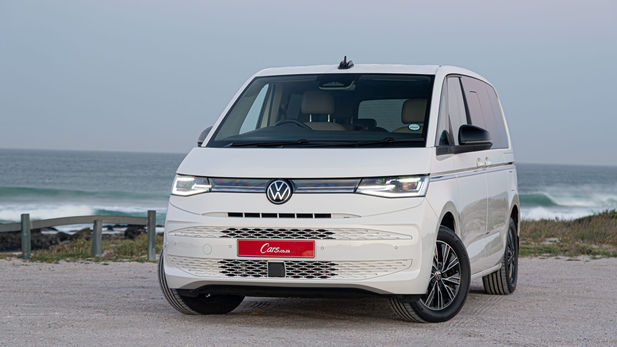
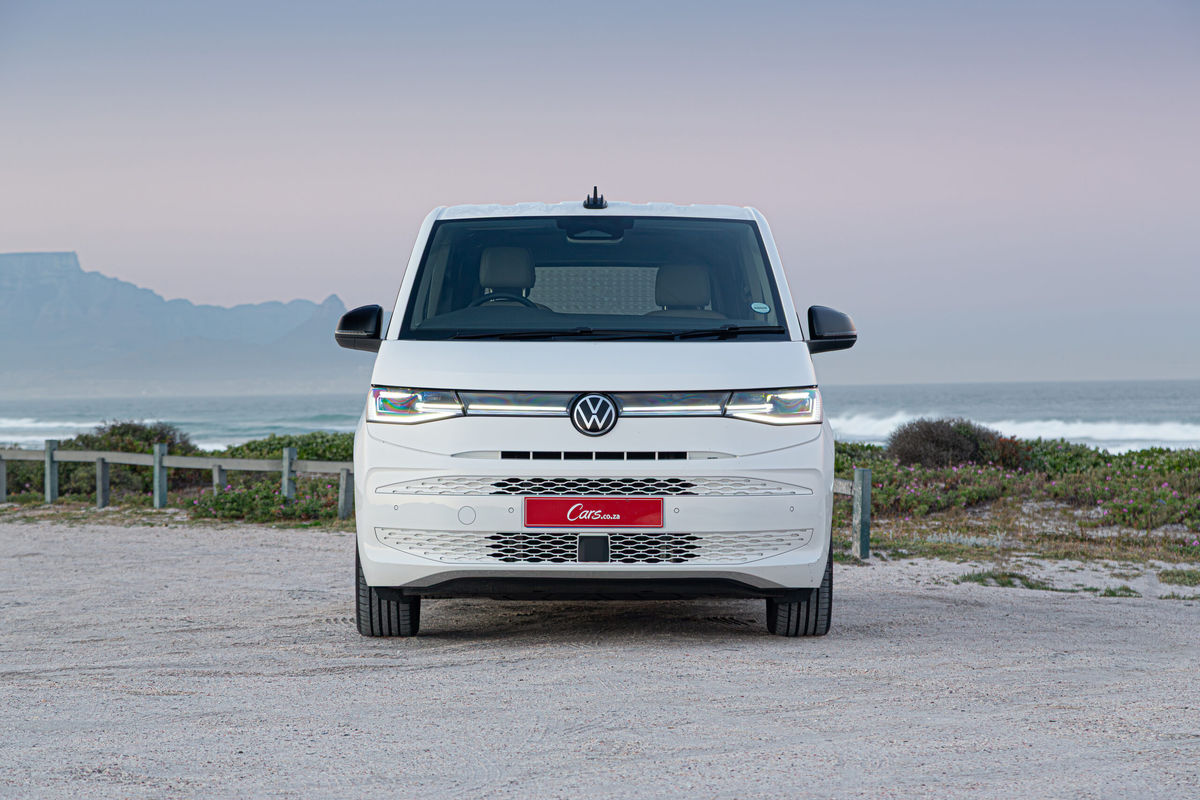
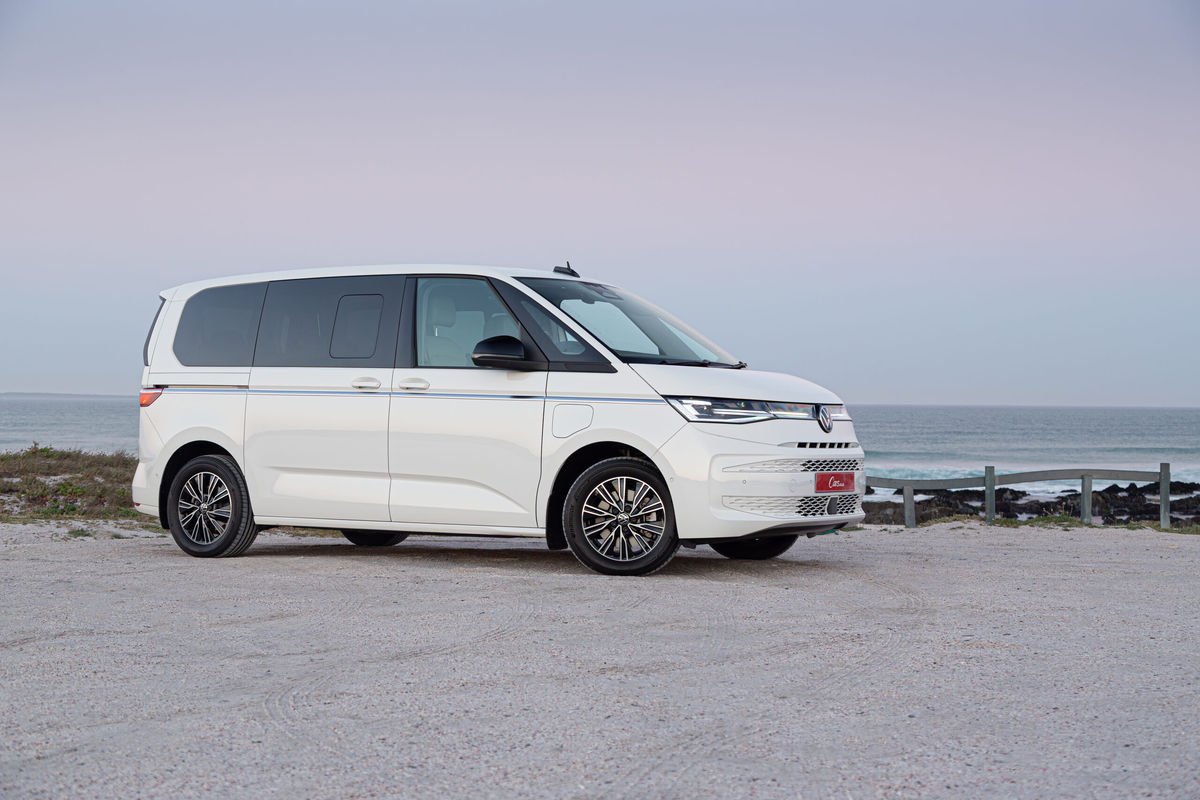
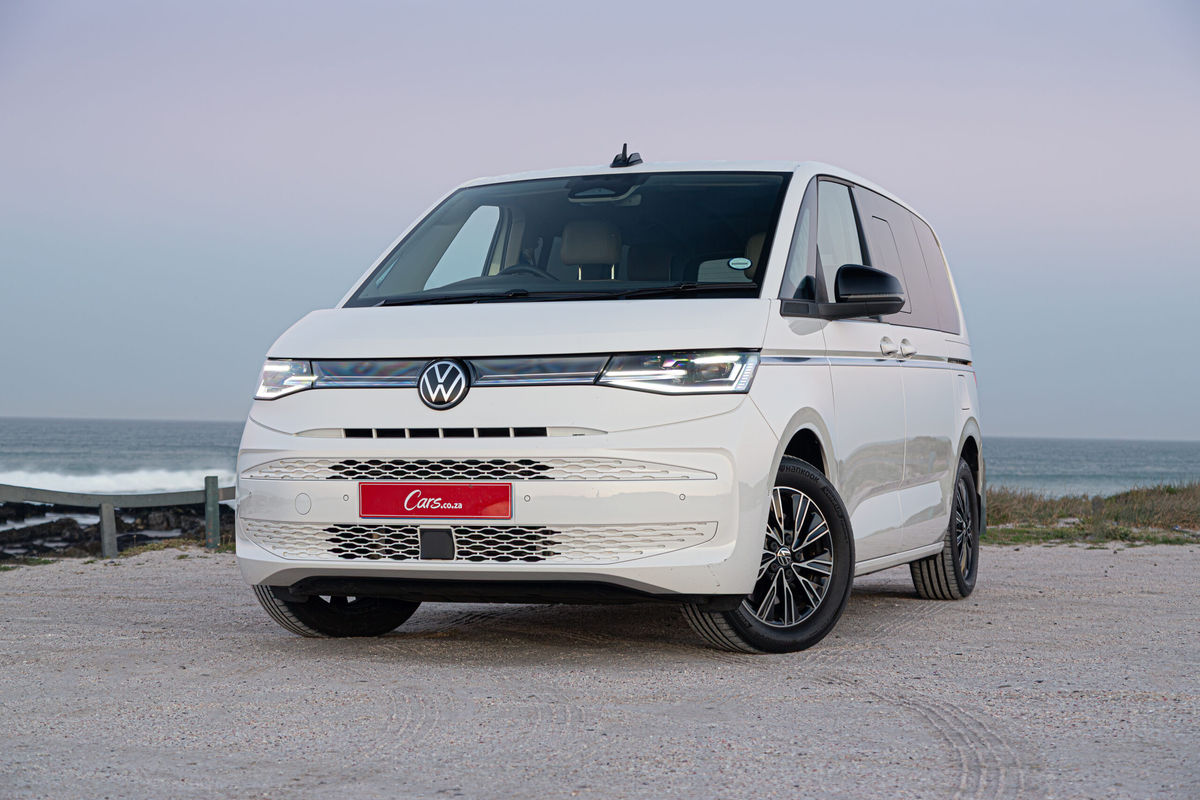
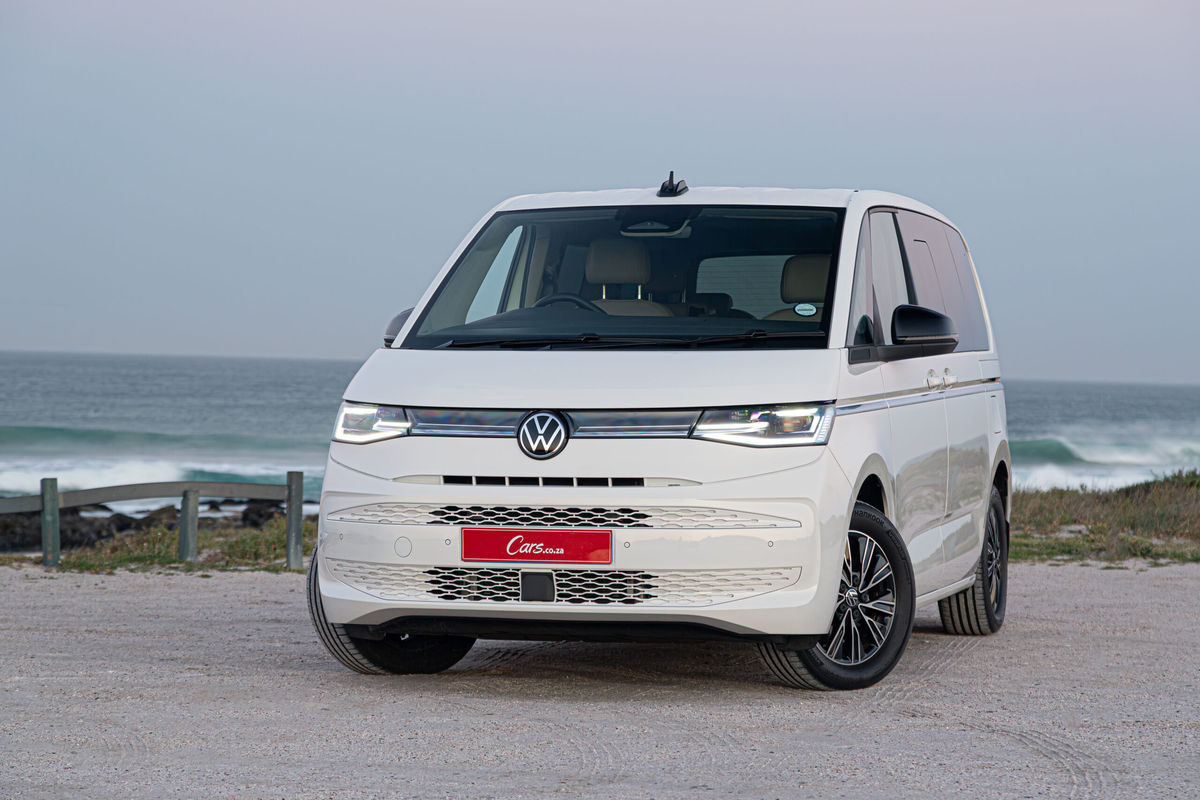
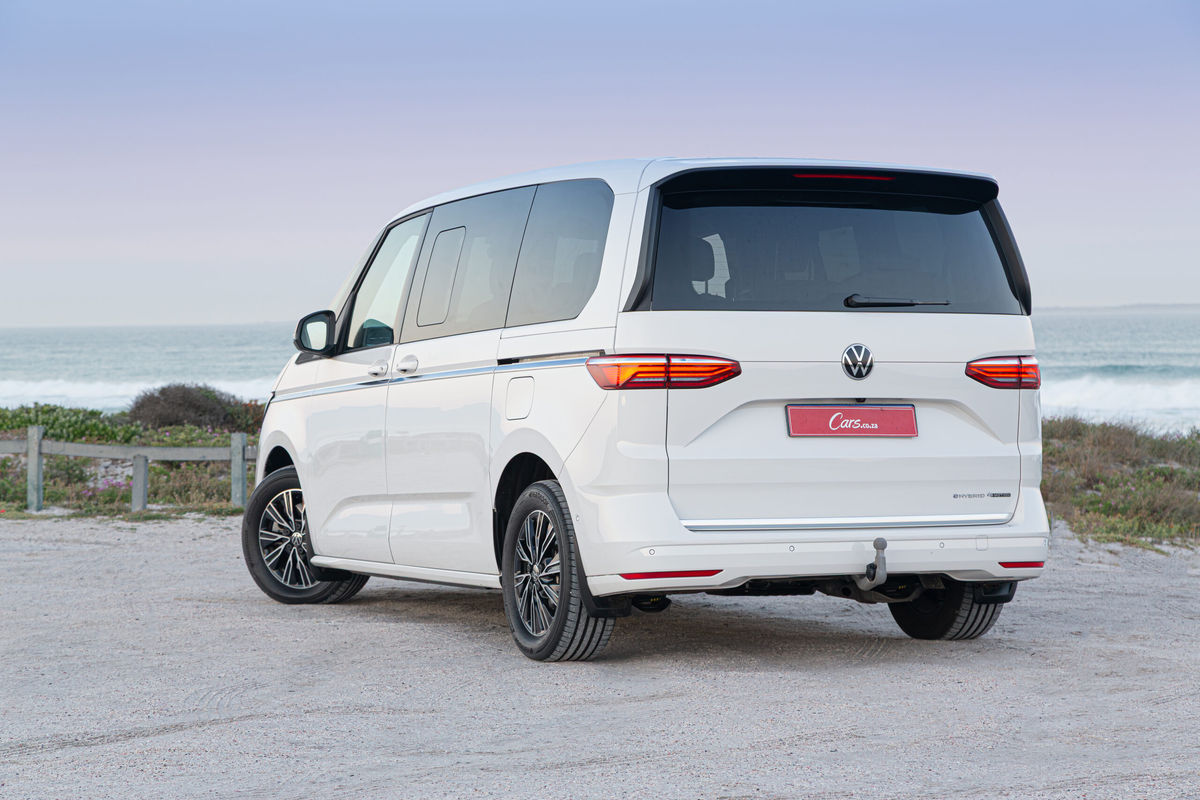
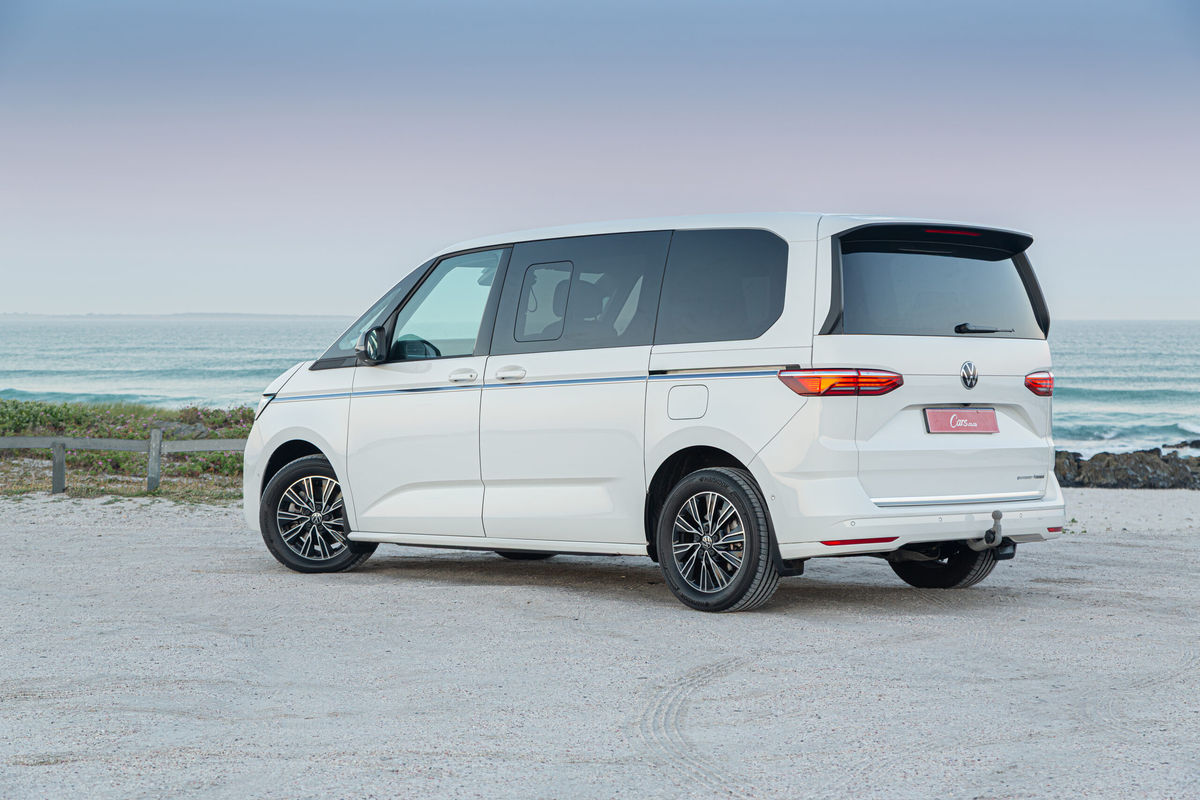
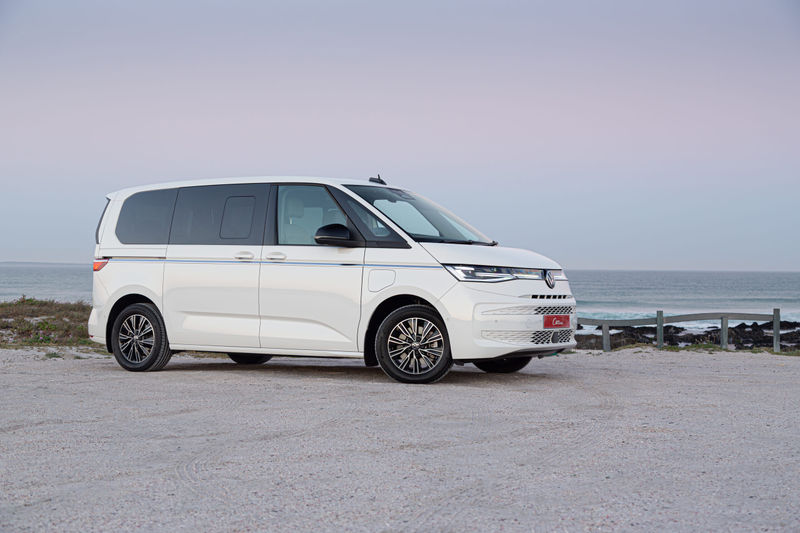
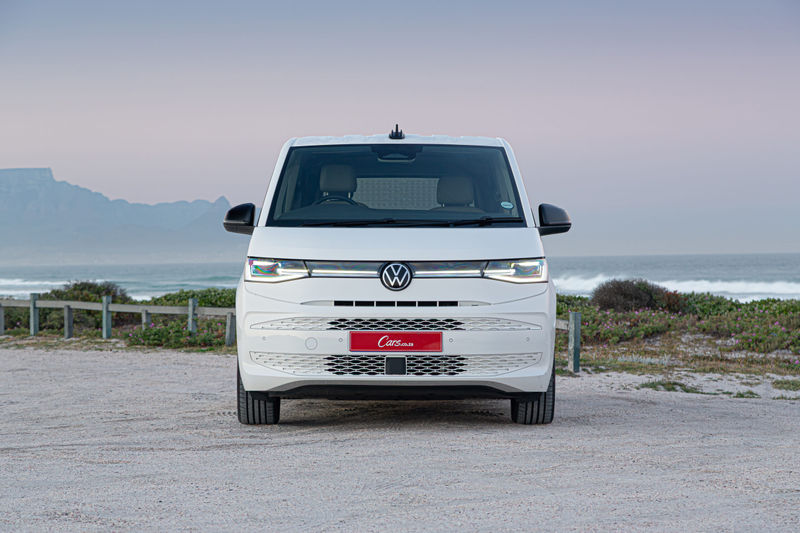
The Caravelle’s styling is clean and contemporary, with slim LED headlights joined by an illuminated light bar and a partially blanked-off grille that hints at the electrified powertrain. Specify one of the two-tone paint finishes and the Caravelle stands out more. In a single, sober hue, like the all-white of our test unit, it blends into the background somewhat.
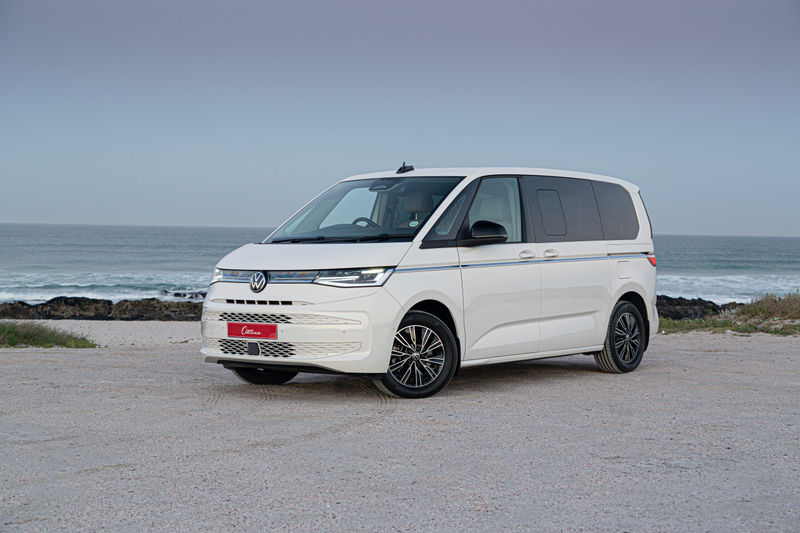
And therein lies a dilemma. Volkswagen wants the Caravelle to be cross-shopped against luxury SUVs and, rationally, the comparison holds water. But luxury SUVs aren’t desirable only because they’re versatile all-rounders. They’re desirable because of the image they project and their muscular road presence.
A Land Rover Defender or Toyota Land Cruiser Prado says something about its owner when it pulls up at the school gate or a Constantia restaurant. A relatively conservative-looking bus, however well-specified on the inside, struggles to make the same statement, and in a very superficial world, that matters more than many buyers would care to admit.
Interior & Practicality
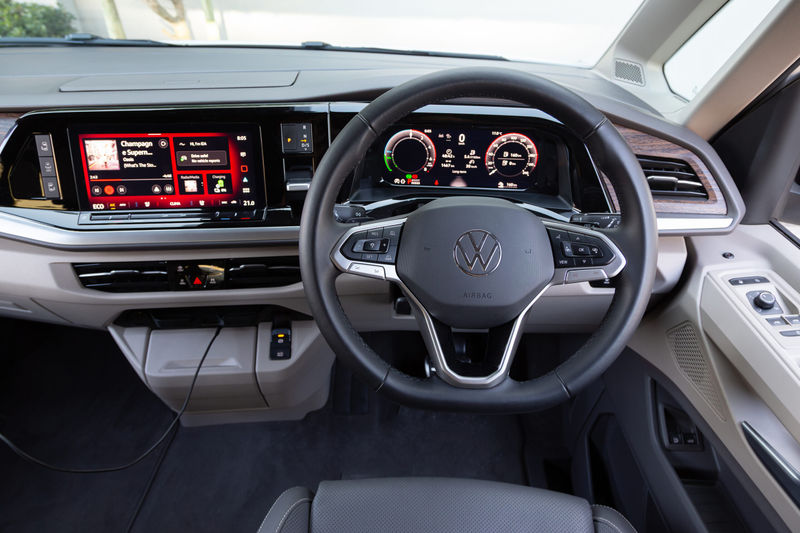
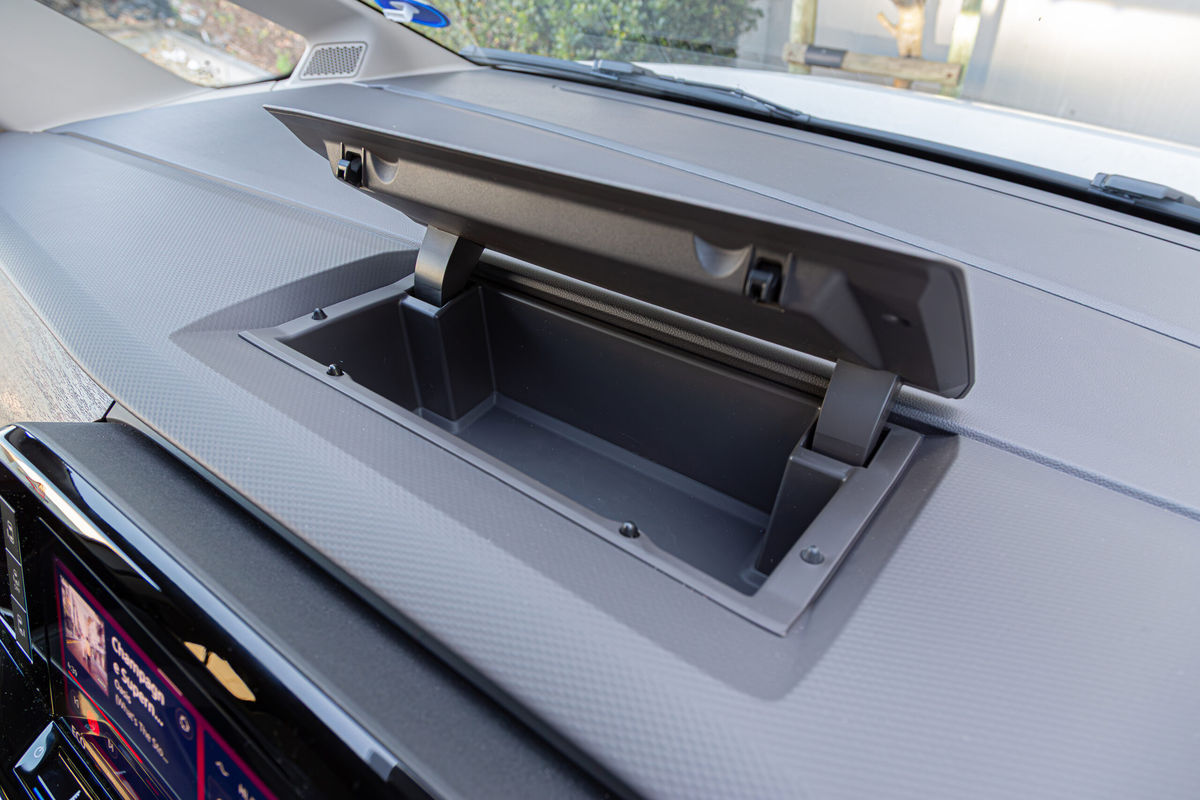
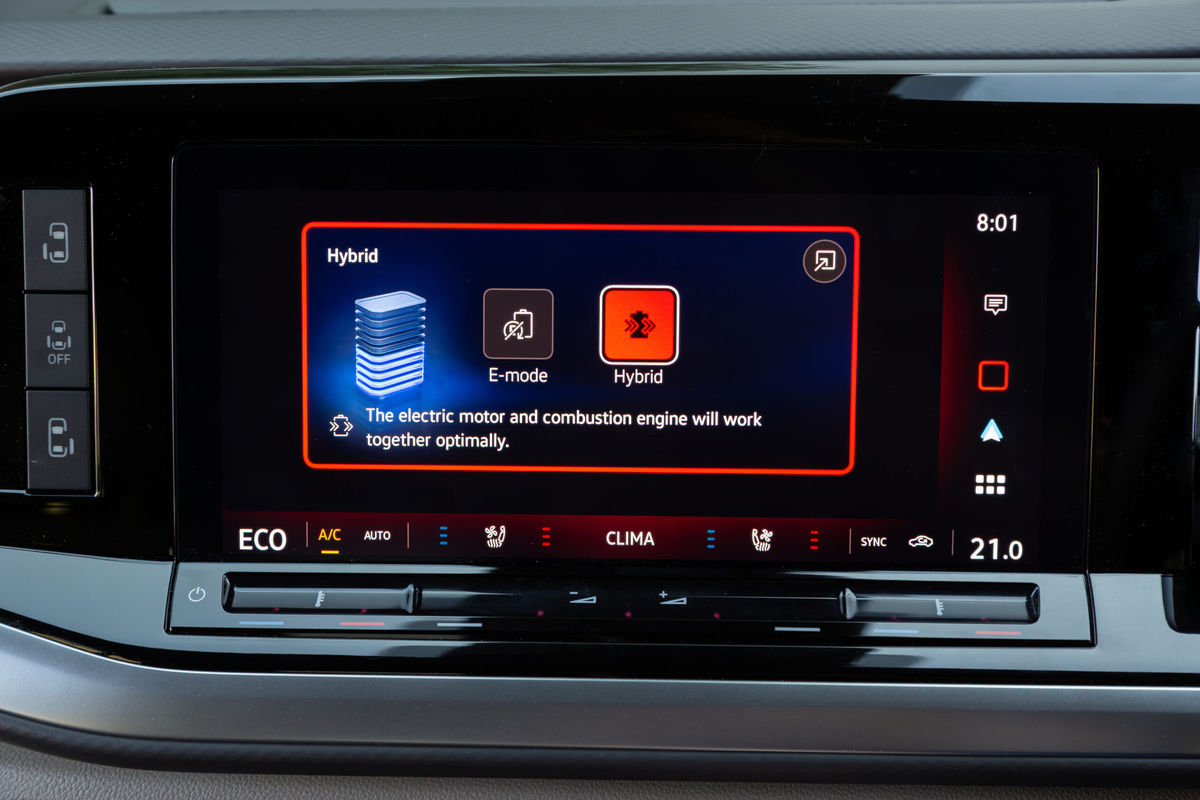
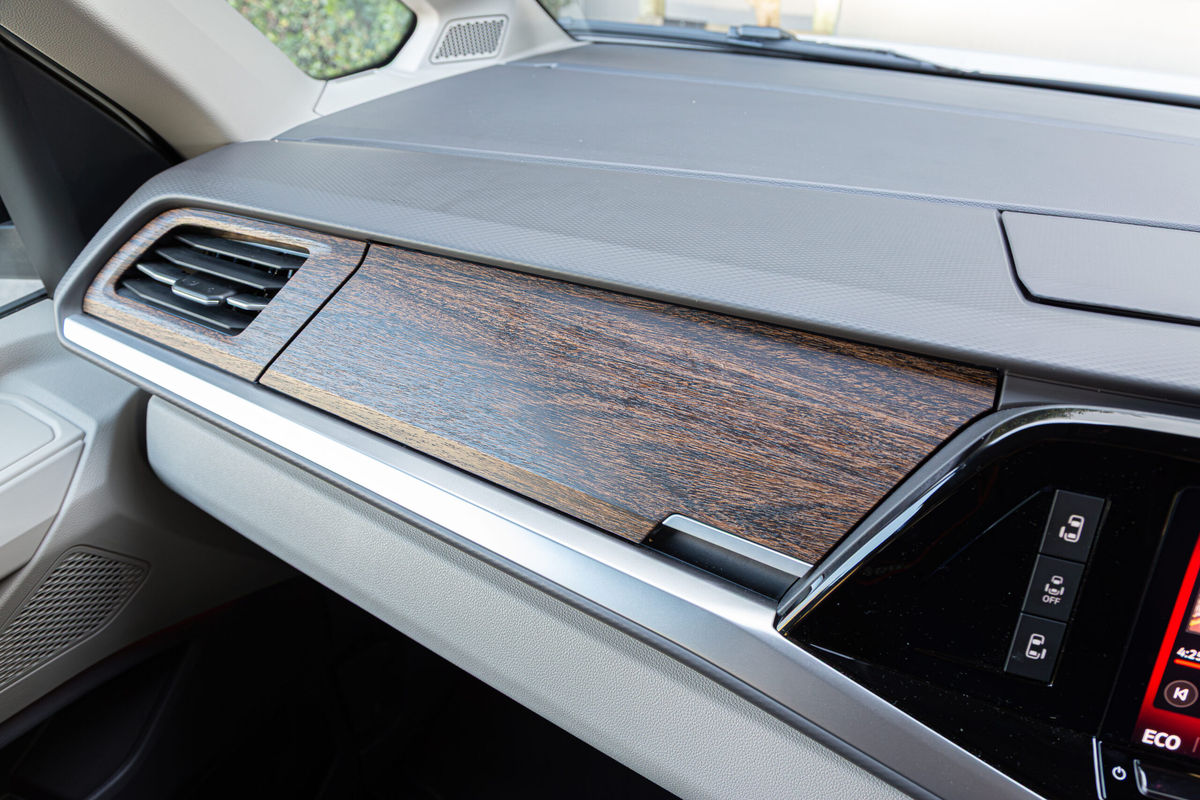
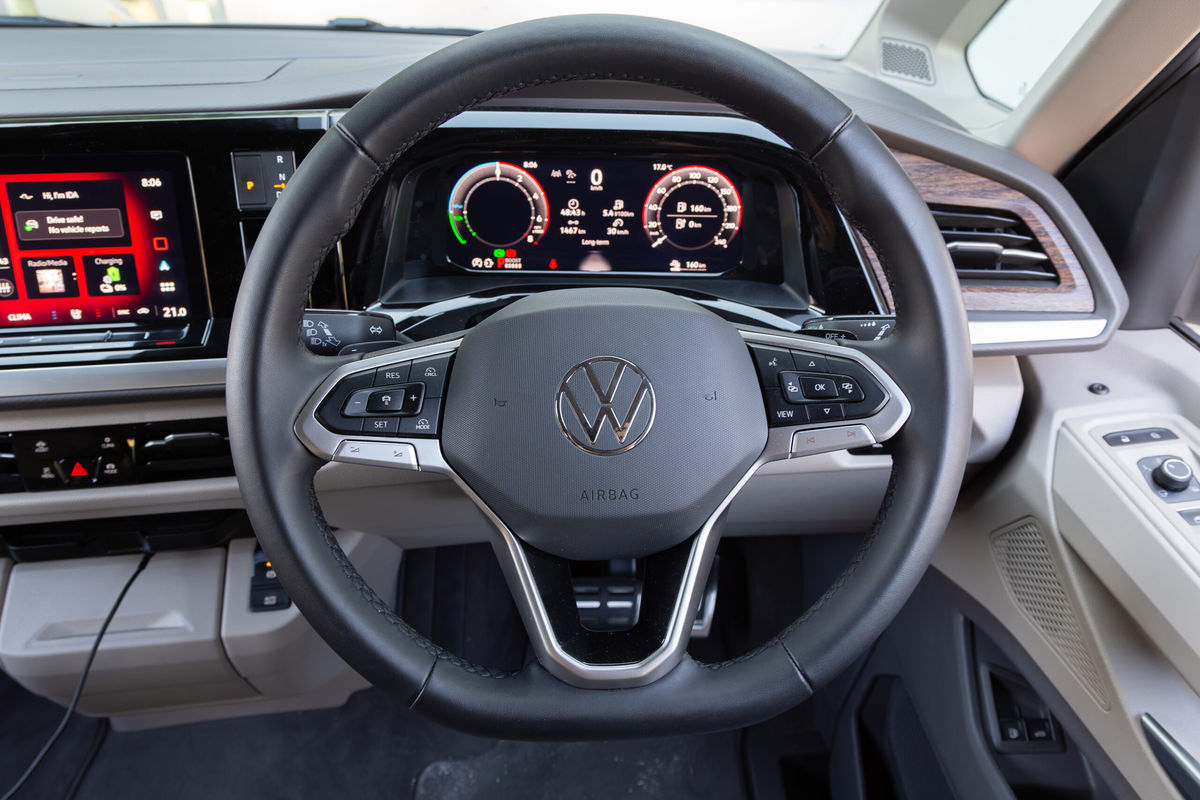
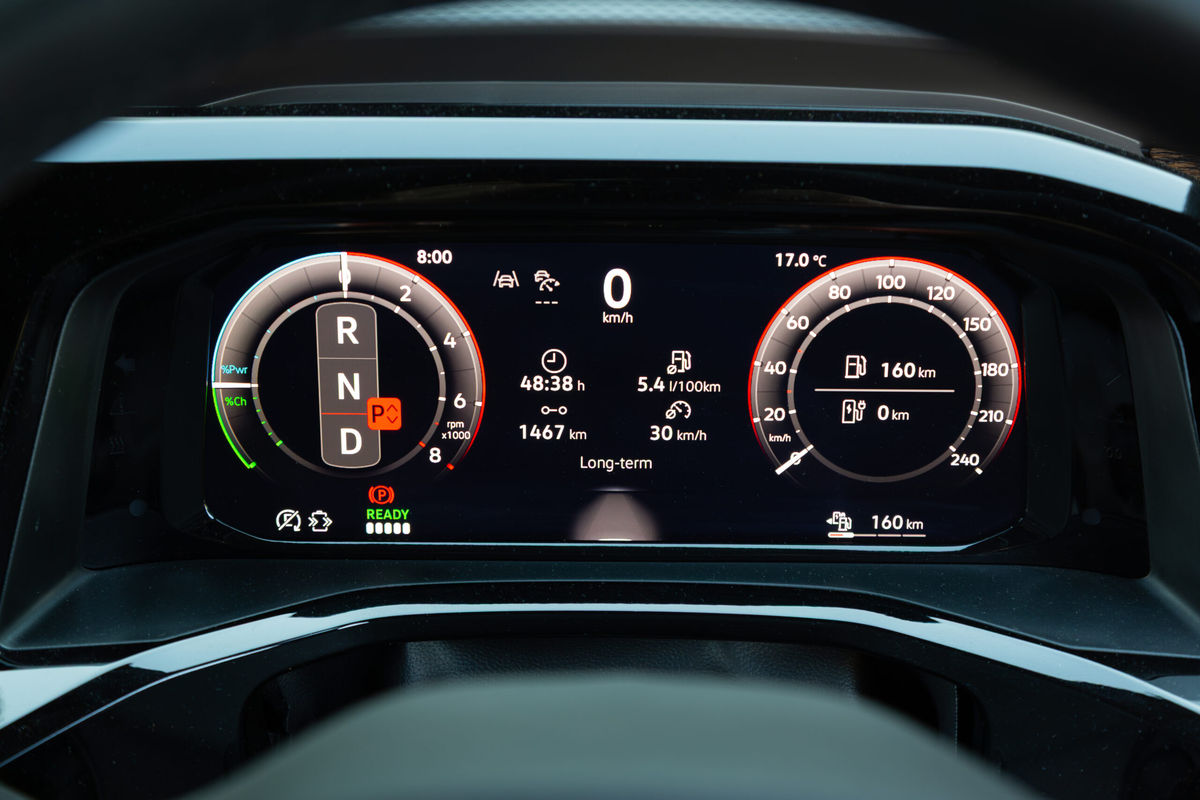
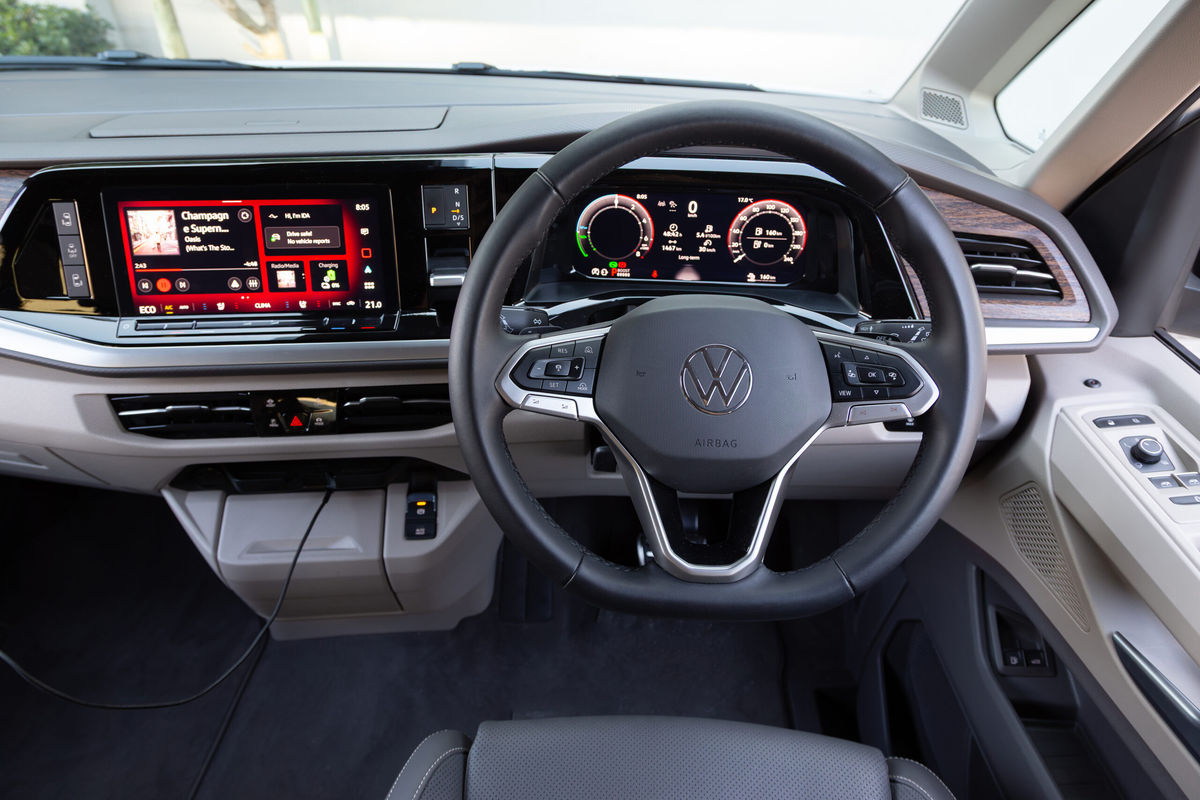
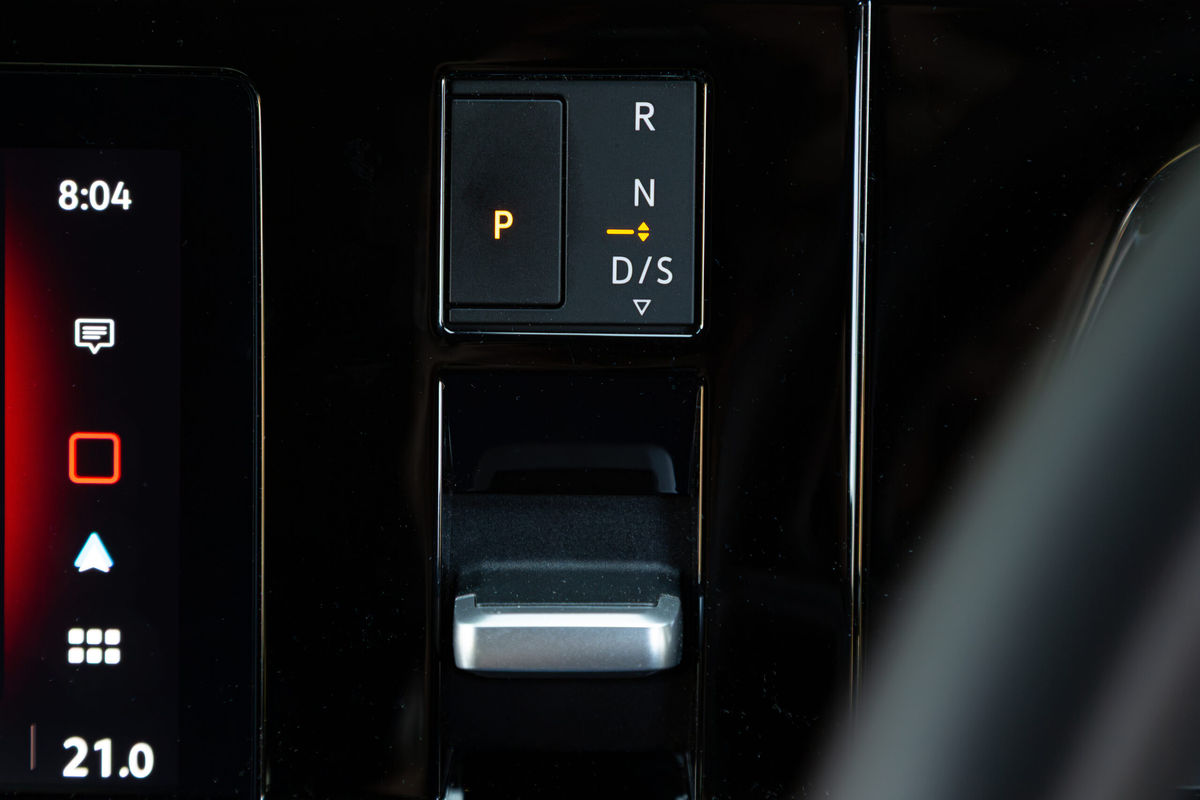
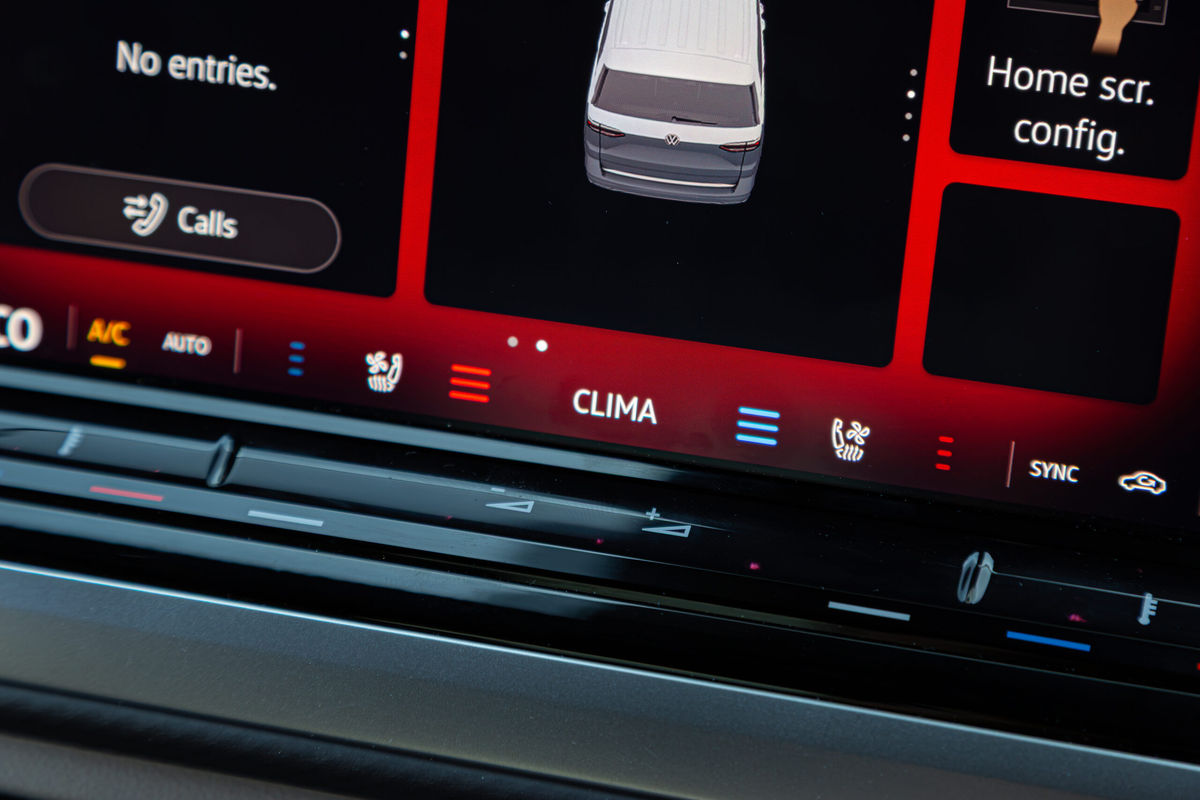
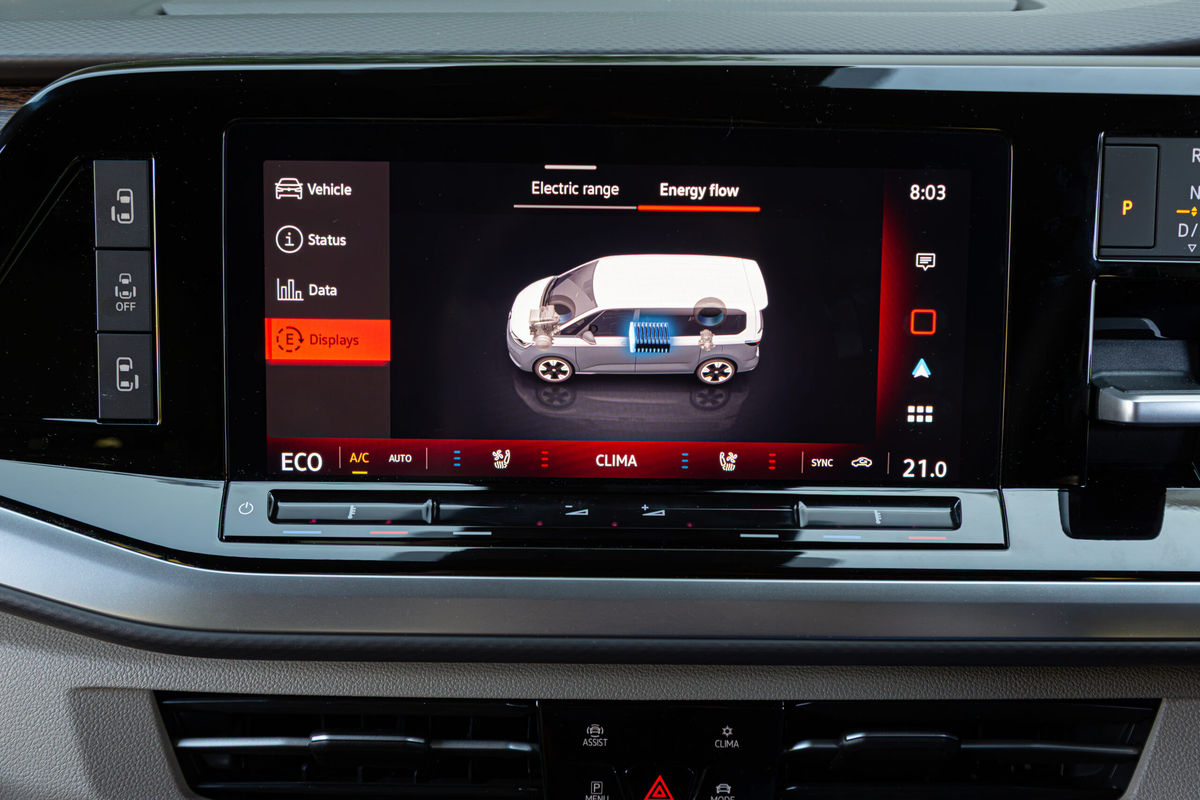
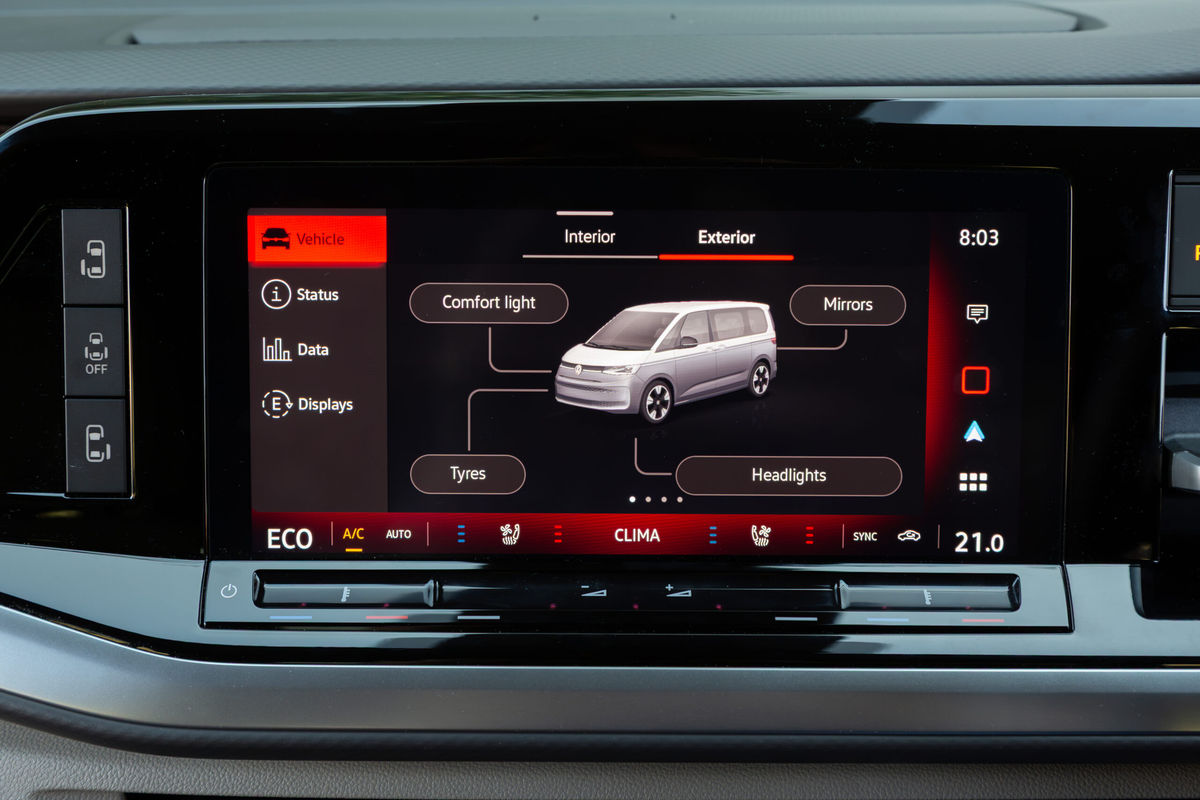
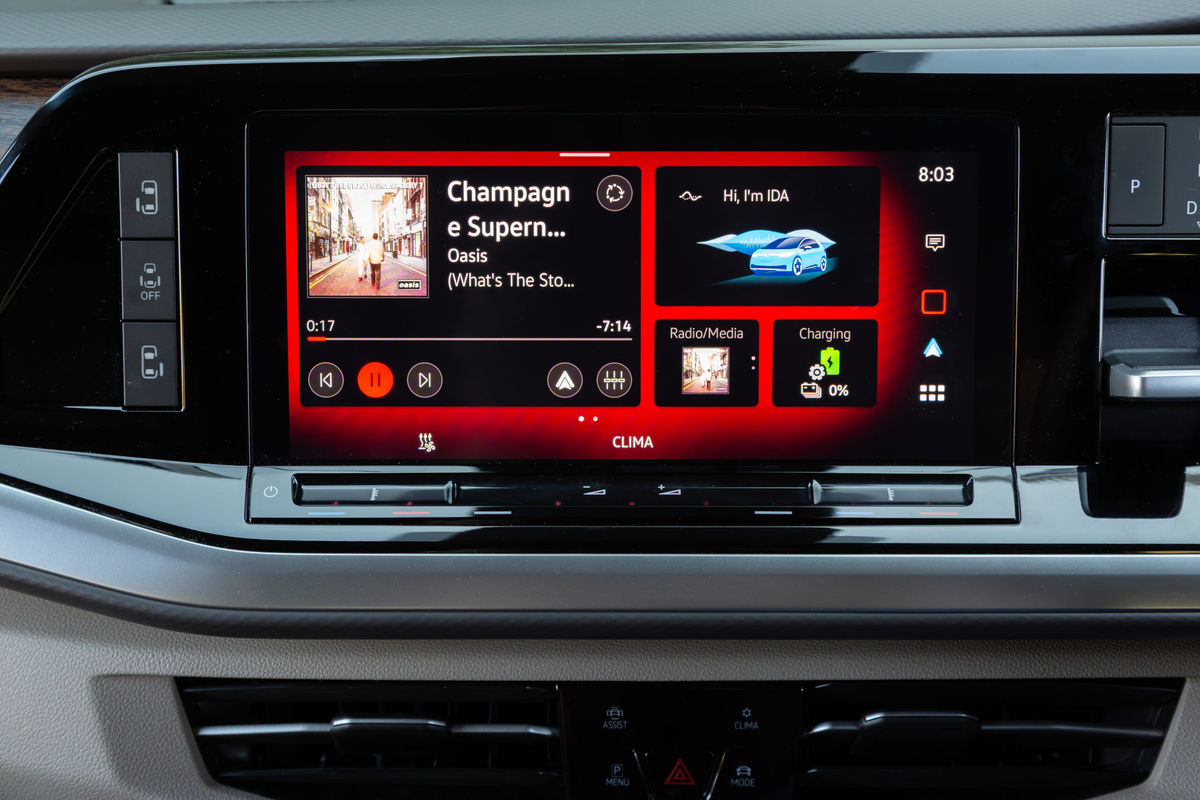
Volkswagen’s Digital Cockpit Pro instrument cluster and a 10-inch infotainment touchscreen (with wireless Apple CarPlay and Android Auto) dominate the dashboard, which is modern in its design, if not exactly cutting-edge; the system is VW’s older generation, rather than the larger-screened set-up found in the brand’s latest passenger cars. It unfortunately still has those annoying touch-sensitive slider controls for the volume and climate controls, just below the main infotainment screen. More disappointing, at this price, are the hard plastics used on the lower sections of the dashboard and door cards.
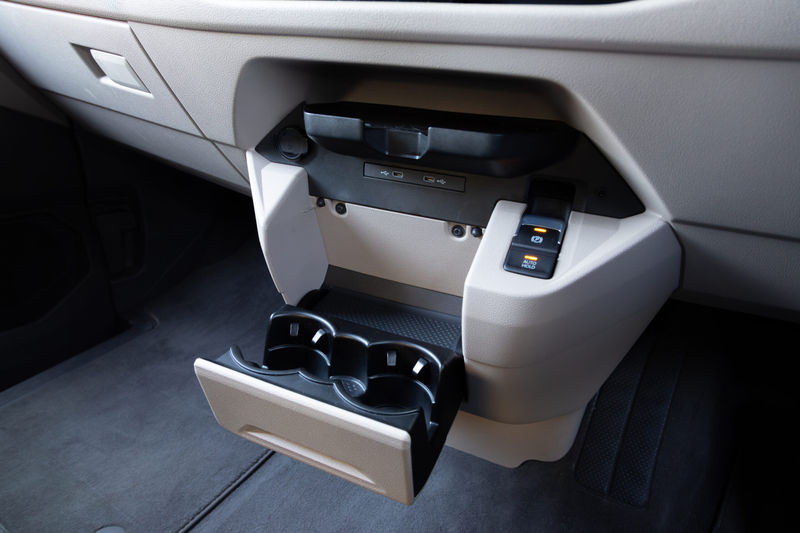
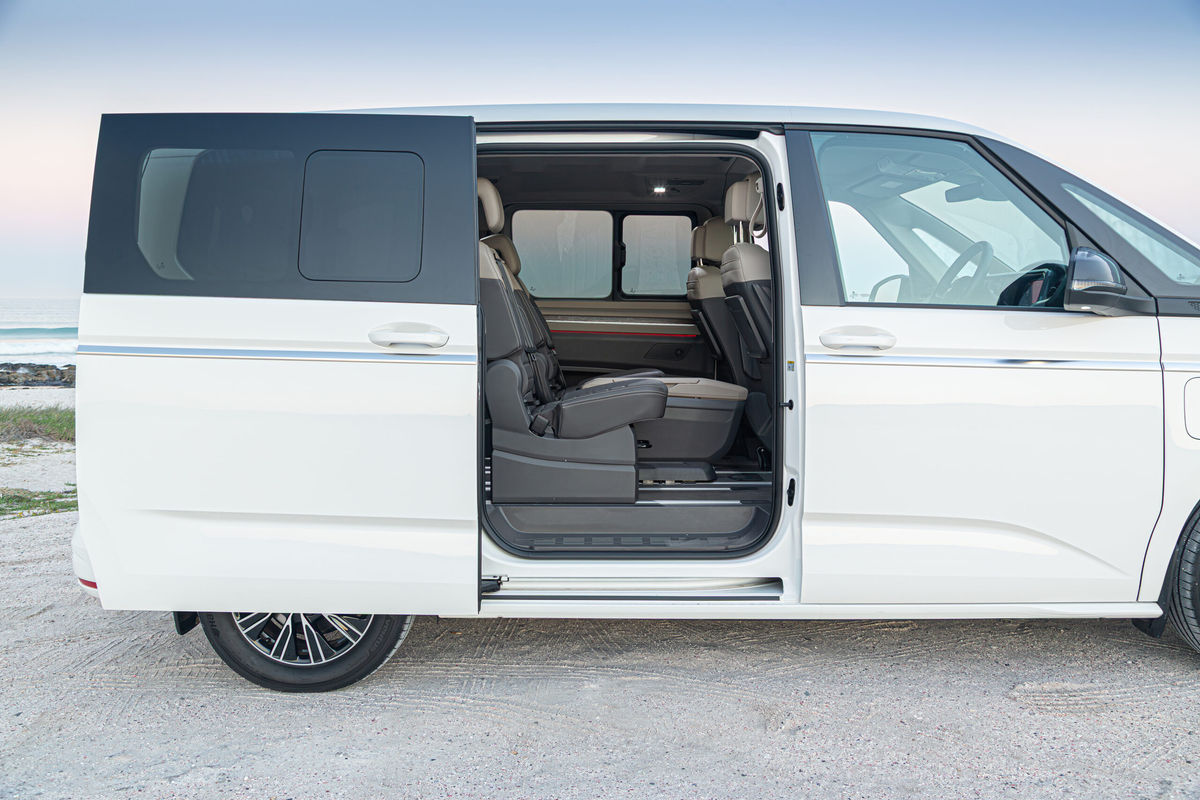
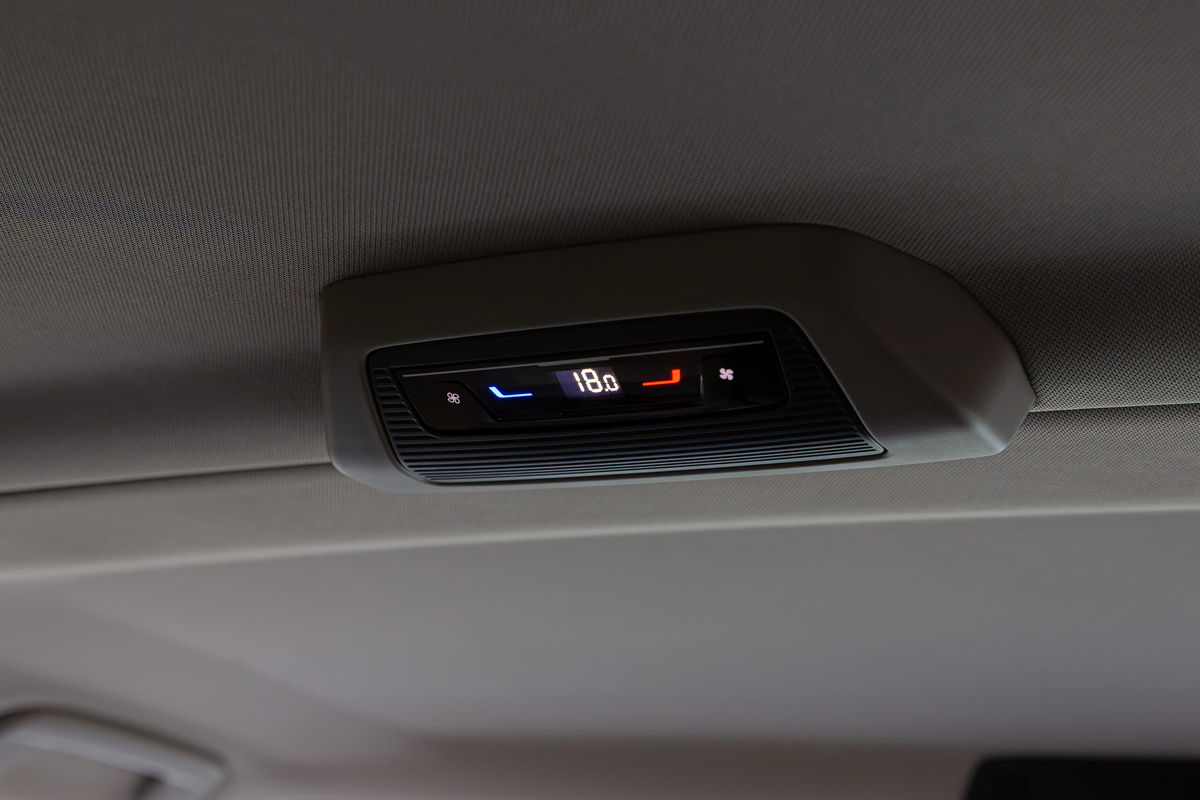
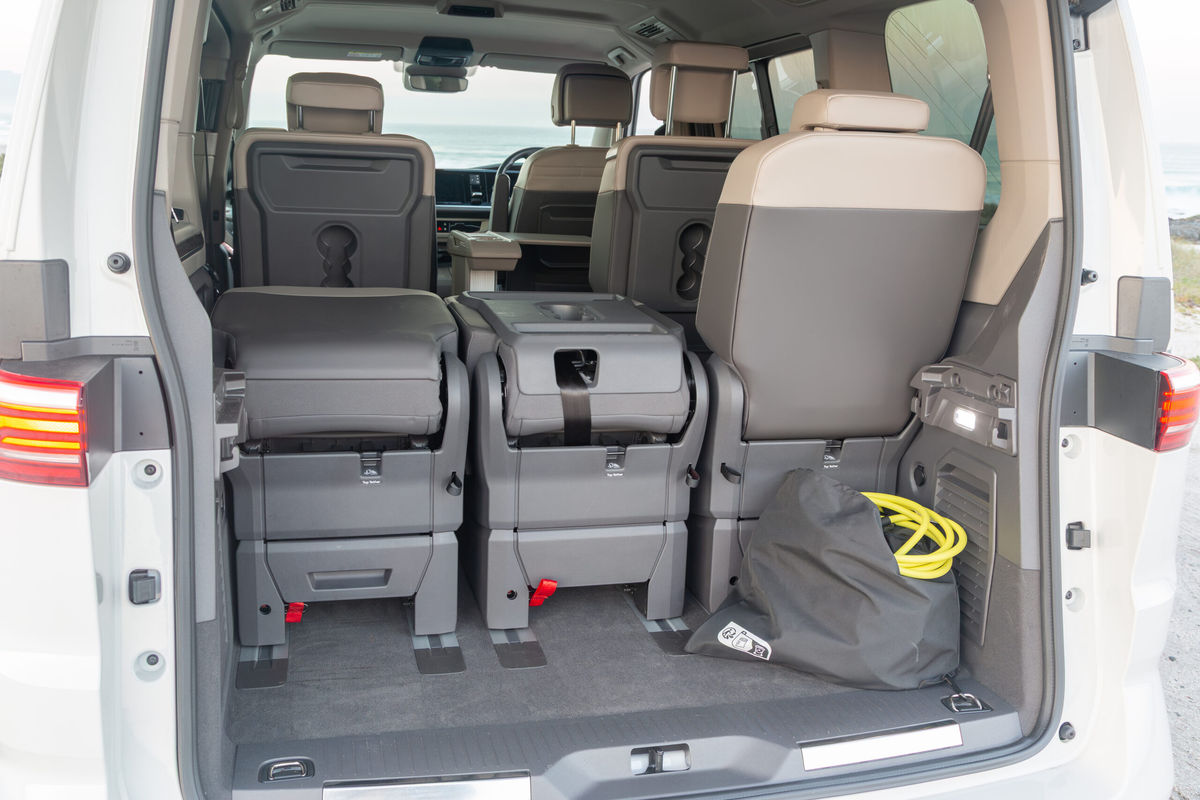
The driving position is excellent, however. You sit high, visibility is good in all directions and the major controls are easy to find and operate. The Style specification includes a 13-speaker Harman Kardon sound system, tri-zone climate control, 30-colour ambient lighting and, crucially for a family vehicle, electrically operated sliding doors on both sides alongside an electric tailgate.
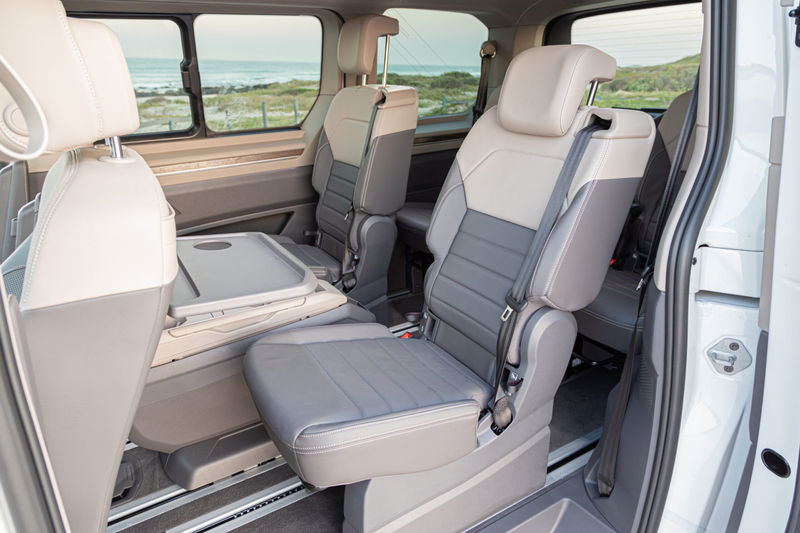
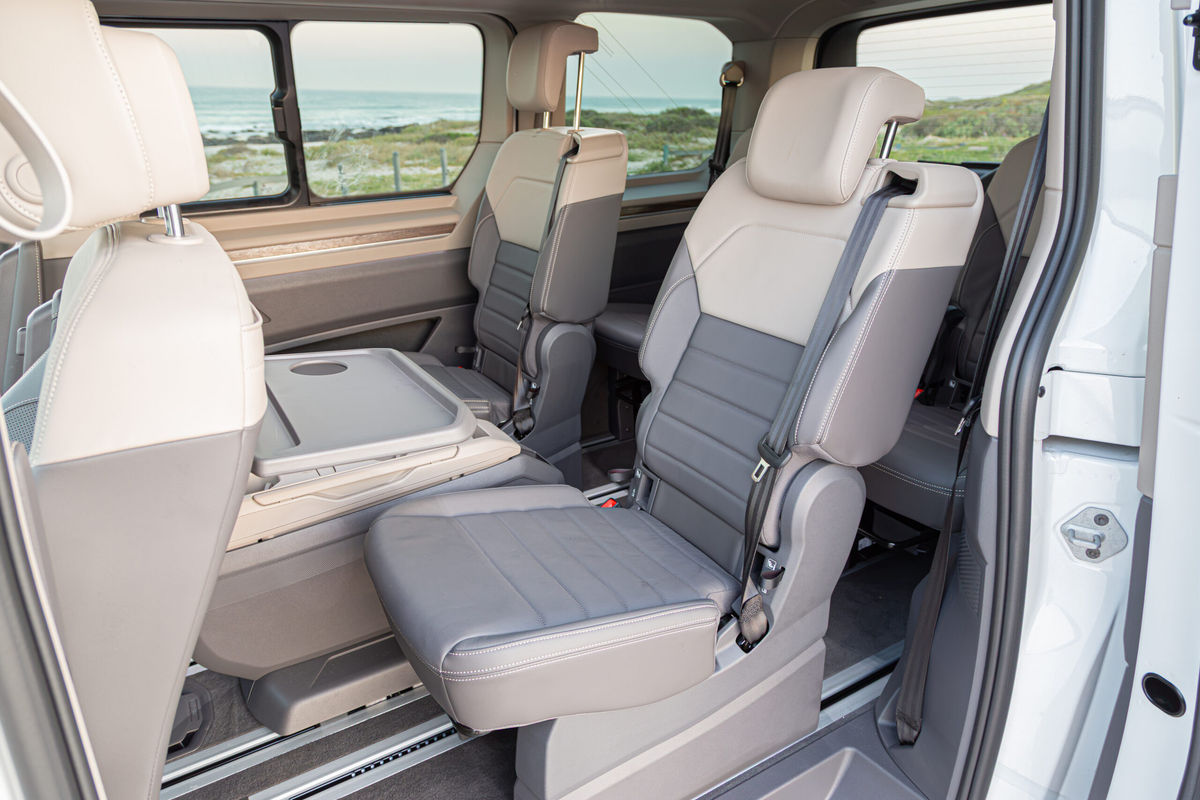
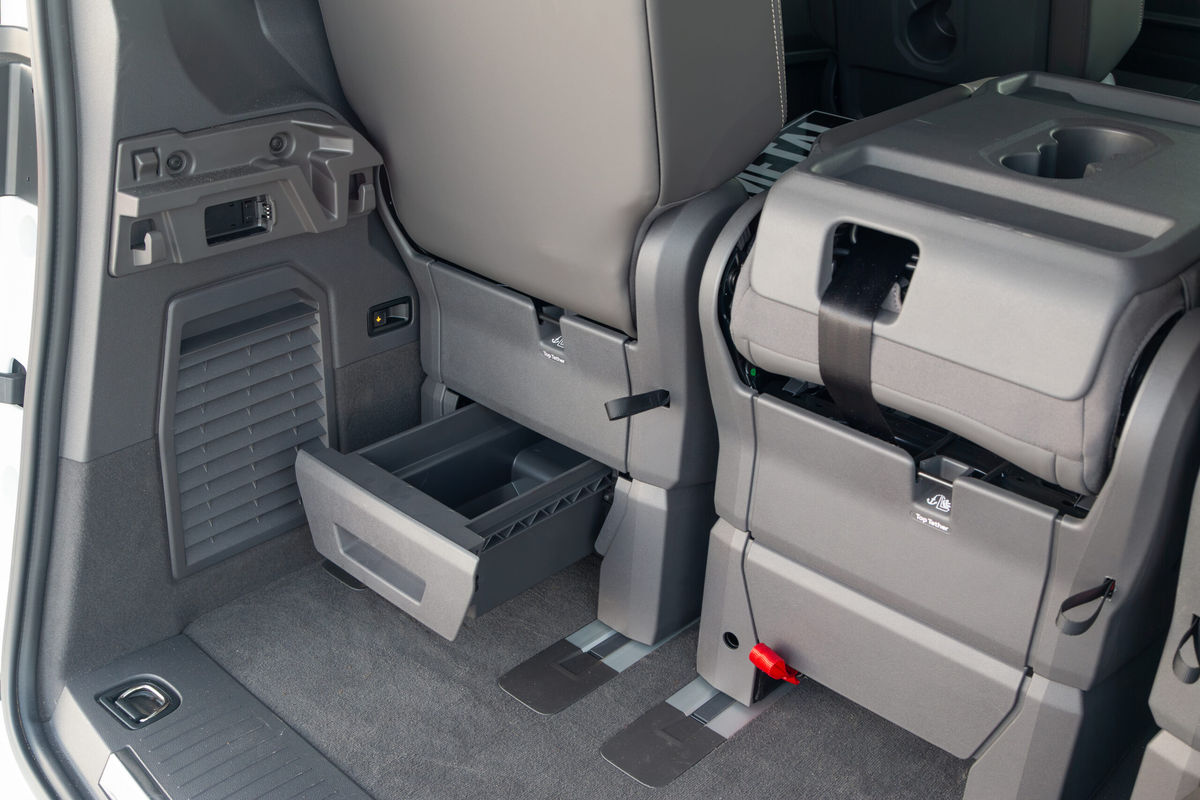
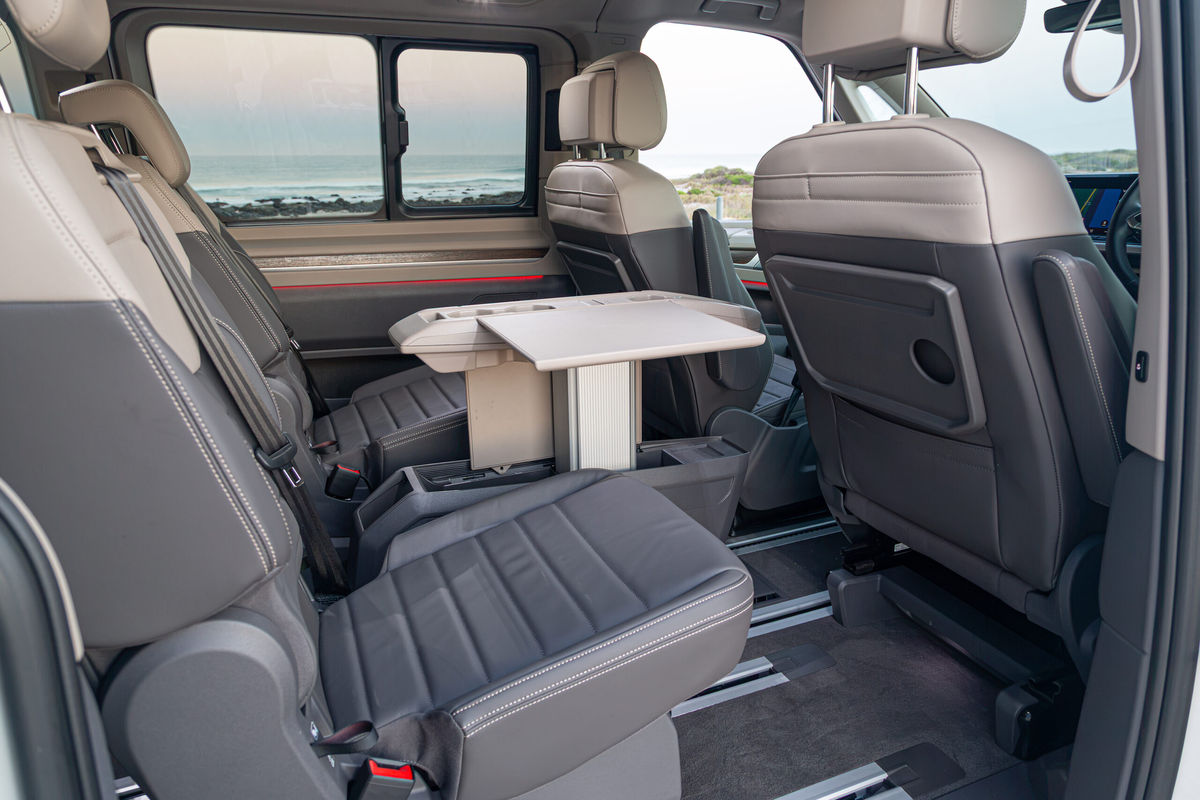
The individual rear seats are mounted on rails, so the cabin can be configured in a variety of ways, and the much-loved Caravelle multifunction table is still present and correct. The seats weigh around 20 kg each, which is claimed to be 25% lighter than before. In terms of practicality, the Caravelle comfortably beats any luxury SUV at its price.
That said, the Caravelle isn’t quite as spacious as you might expect. A look at the dimensions explains why. At 1 941 mm wide and 1 907 mm tall, the VW is competitive with its rivals (the GAC M8 is 1 893 mm wide and 1 823 mm tall, while the EQV measures 1 928 mm and 1 901 mm). Its 3 124 mm wheelbase is also on par: longer than the GAC’s (3 070 mm); shorter than the EQV’s (3 200 mm).
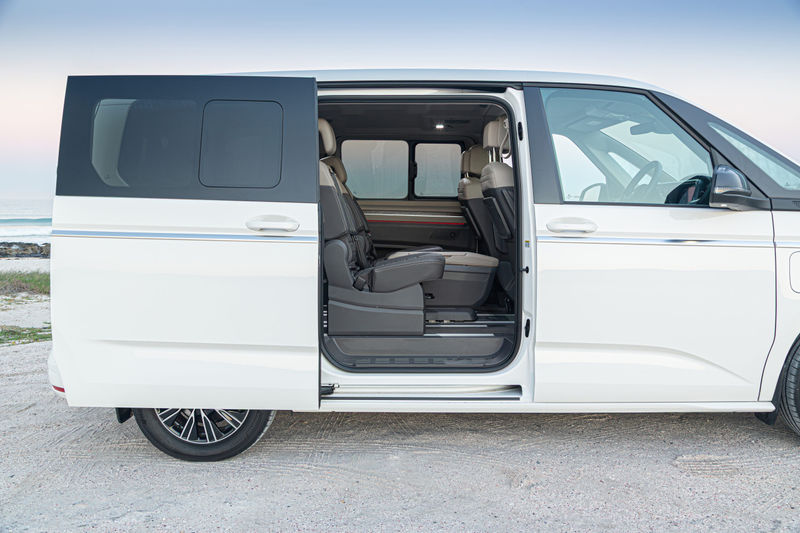
However, at 4 973 mm long, the Caravelle is notably shorter overall than the M8 (5 212 mm), the EQV (5 140 mm) and even the diesel-powered Kia Carnival (5 155 mm) and Hyundai Staria (5 253 mm). In other words, the Caravelle’s cabin is generously proportioned, but its rivals offer more overall length to play with – including Volkswagen’s own Kombi SWB, by the way.
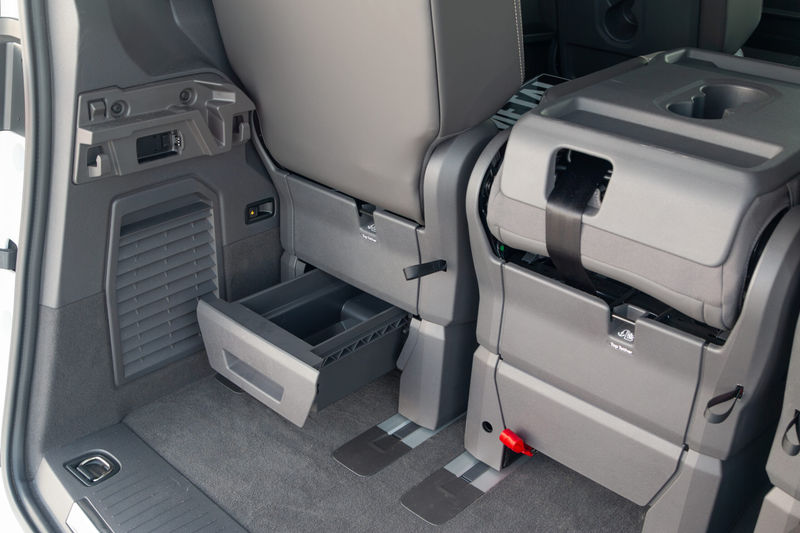
The Caravelle has a claimed payload of 592 kg (fully fuelled, with the driver aboard), which is sufficient for five passengers and a boot full of luggage, and it can tow a braked trailer of up to 1 570 kg. The latter figure is almost identical to the Kia Carnival’s. A Staria, however, can tow 2 500 kg and a Volkswagen Kombi (in SWB Style 4Motion guise) manages an impressive 2 800kg.
Performance & Driving
The Caravelle’s 1.5 TSI engine produces 130 kW and 250 Nm on its own; combined with the electric motors, the system outputs are 180 kW and 350 Nm. VW claims a 0-100 km/h time of 8.2 seconds, which is respectable for a vehicle weighing more than 2.2 tonnes. We just about matched the claim during our testing (8.24 seconds).
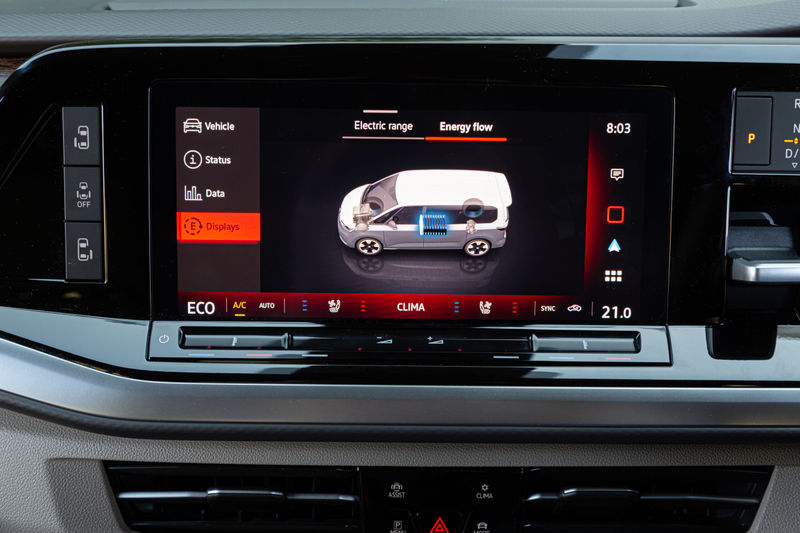
On paper, the GAC M8 Master is considerably more muscular (274 kW and 630 Nm), but it drives only its front wheels, whereas the VW benefits from 4Motion all-wheel drive courtesy of the rear-mounted electric motor. That’s a meaningful advantage on a wet, steep driveway with a full complement of passengers aboard.
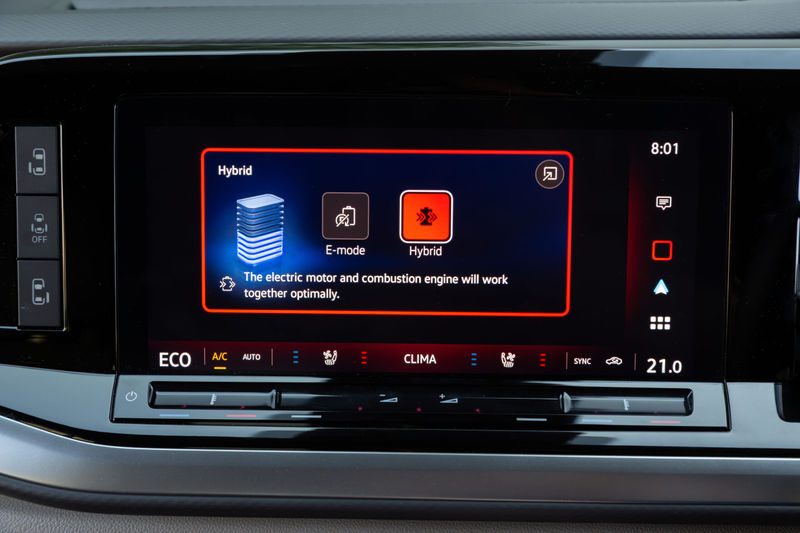
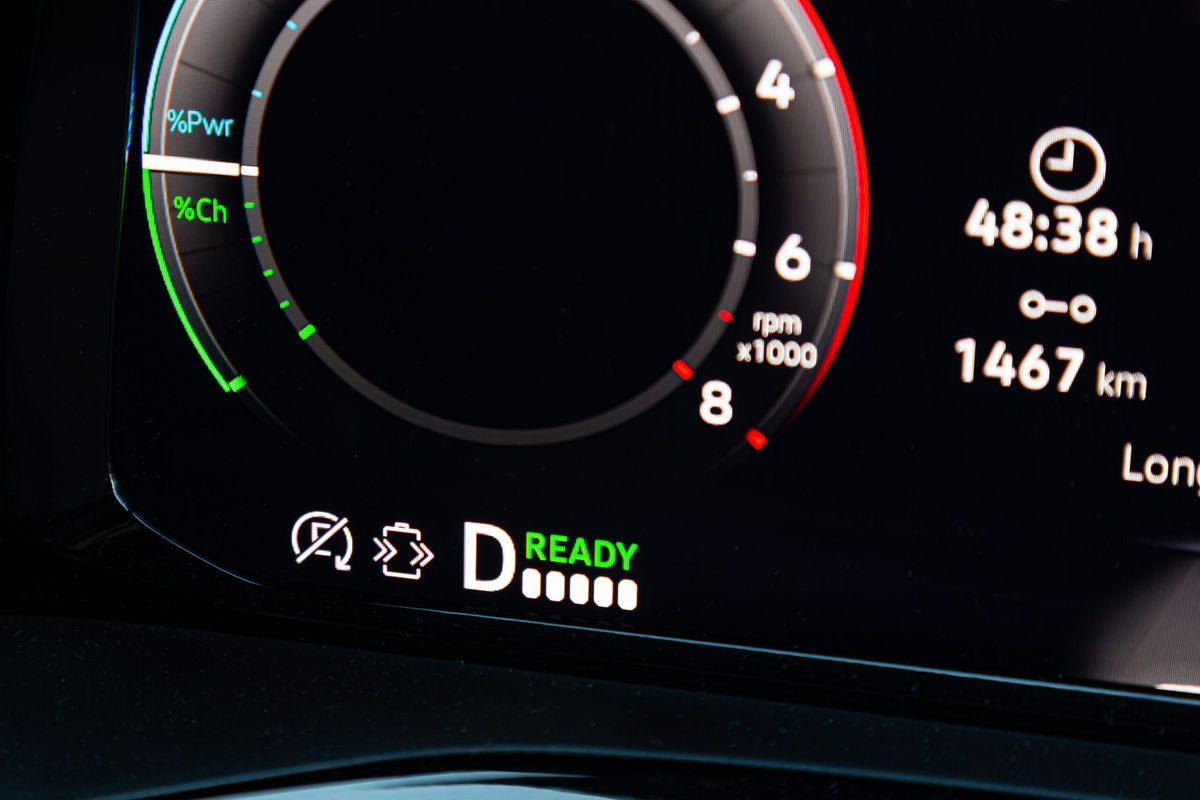
The Caravelle starts up in EV mode by default and, with a fully charged battery, it can cover 90-95 km on electric power alone at speeds of up to 130 kph. That’s more than enough for the average day’s commuting and school runs. In Hybrid mode, the petrol engine and electric motors work together pretty much seamlessly.
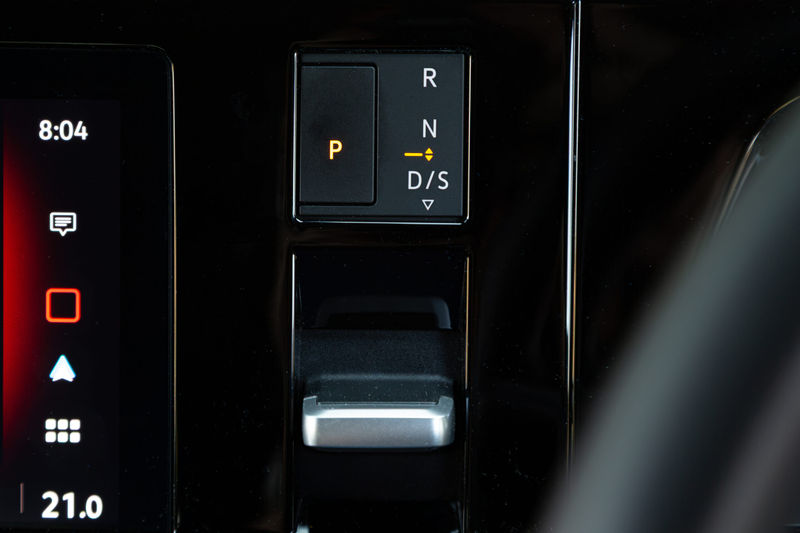
On the road, the Caravelle is genuinely nice to drive. It feels more like a large passenger car than a van, which makes sense given that it rides on VW’s MQB Evo platform. The suspension strikes a good balance between long-distance comfort and composure through corners, the steering is light but accurate, and there’s enough in reserve for confident overtaking. As a cross-country tourer, it’s a pleasant companion and it’s very easy to manoeuvre around town, too.
Efficiency & Charging
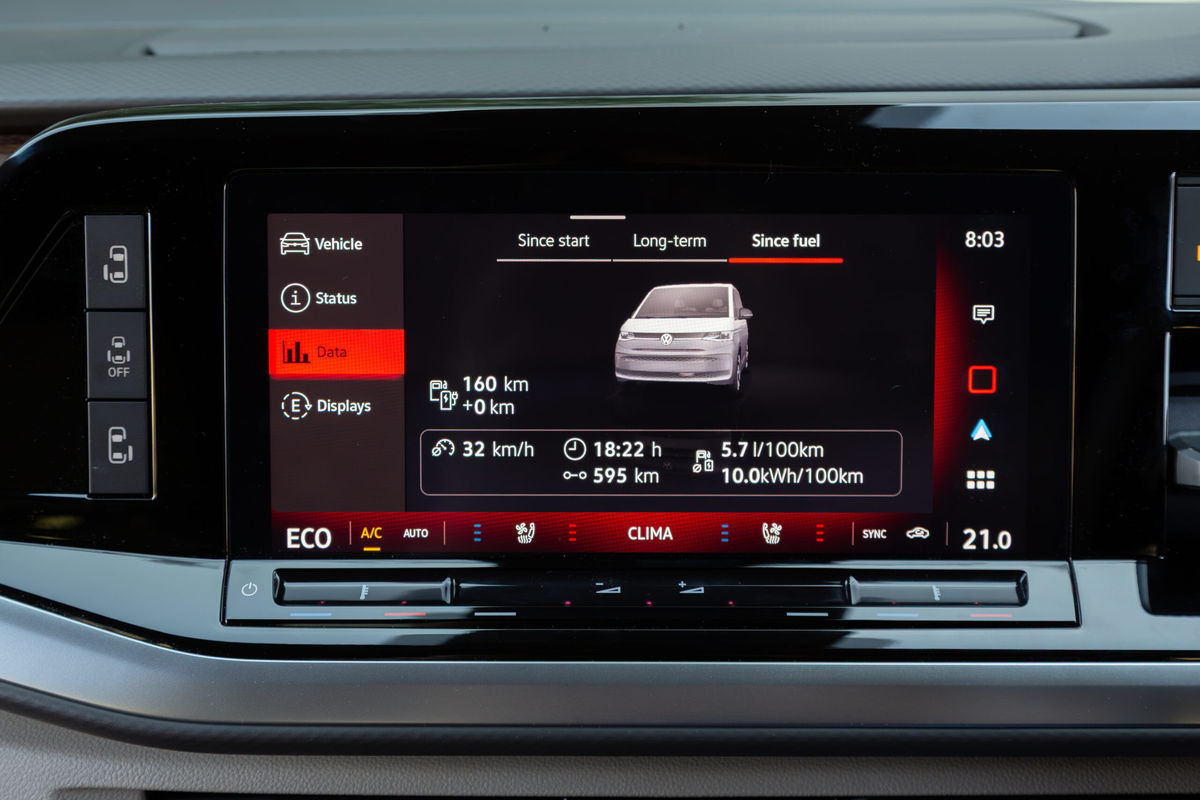
Volkswagen claims a fuel consumption figure of just 1.9 L/100 km when the battery is charged, but as with all PHEVs, that number is achievable only if you plug in regularly. Once the battery is depleted, the claimed figure rises to 8.1 L/100 km (slightly more in our experience), and that’s where the Caravelle’s small 45-litre fuel tank becomes a limitation. But if you factor in regular charging into your schedule, the consumption will come down significantly.
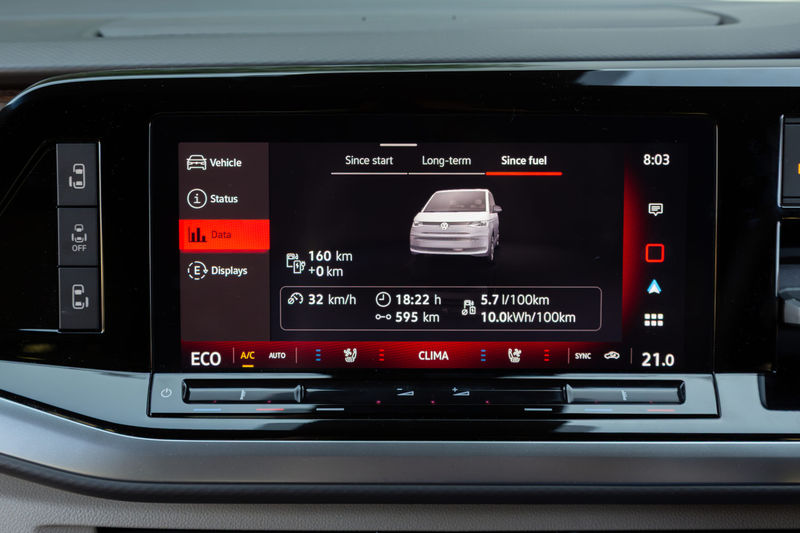
VW quotes a combined range (petrol and electric) of between 556 and 700 km, which is modest for a vehicle that might be considered for long-distance family road trips. By comparison, the GAC M8 Master (with a 56-litre tank and a 25.6 kWh battery) claims a combined range of more than 1 000 km. Of course, GAC’s claims remain unverified.
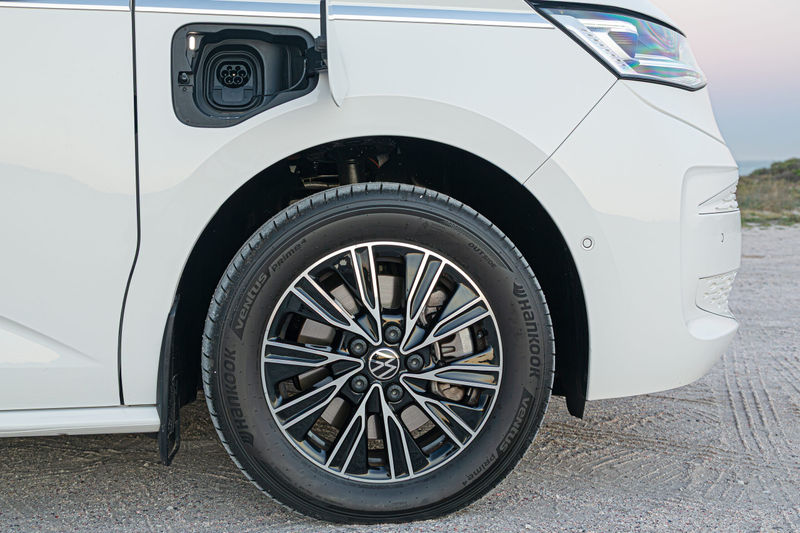
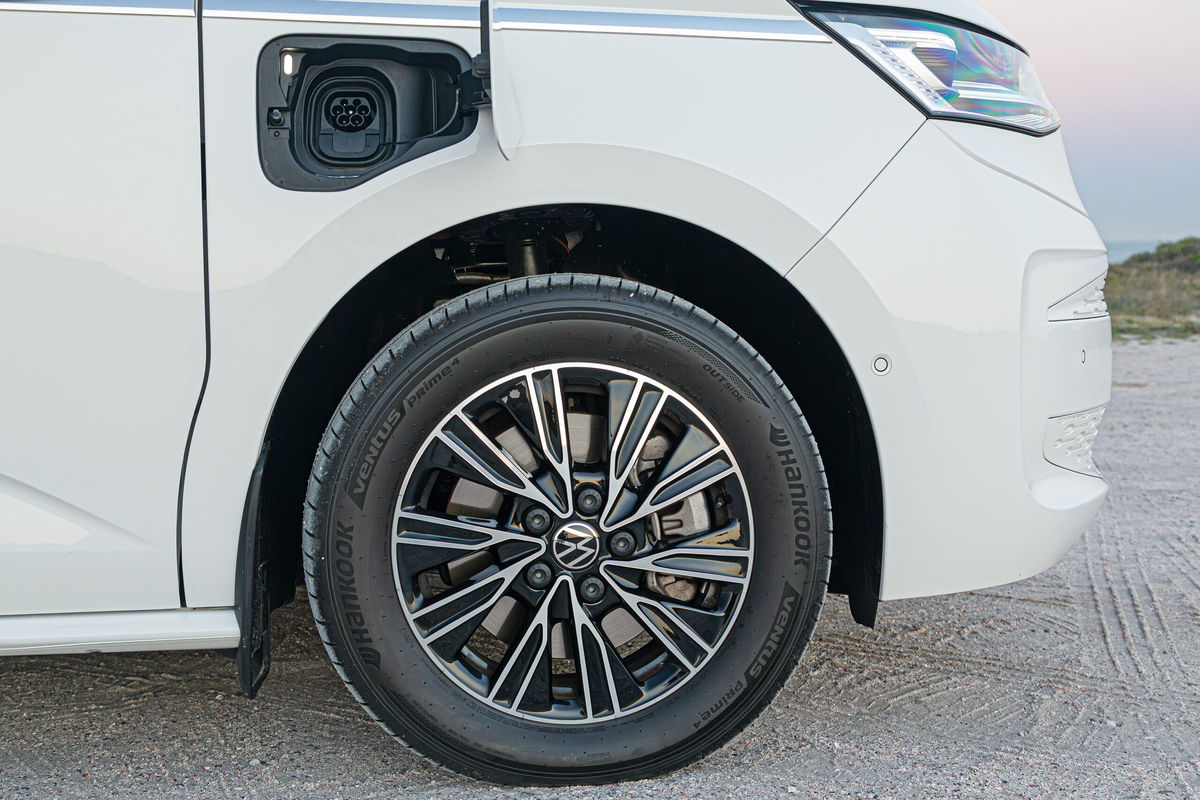
The Caravelle eHybrid is sold with a 7.4 kW AC wallbox home charger, providing a charging time of five and a half hours. Fast charging is supported, allowing charging from 10% to 80% in 26 minutes under “optimal conditions”. For a plug-in hybrid, it’s a handy feature on a long trip, but most owners are likely to do the vast majority of their charging at home.
Charging costs
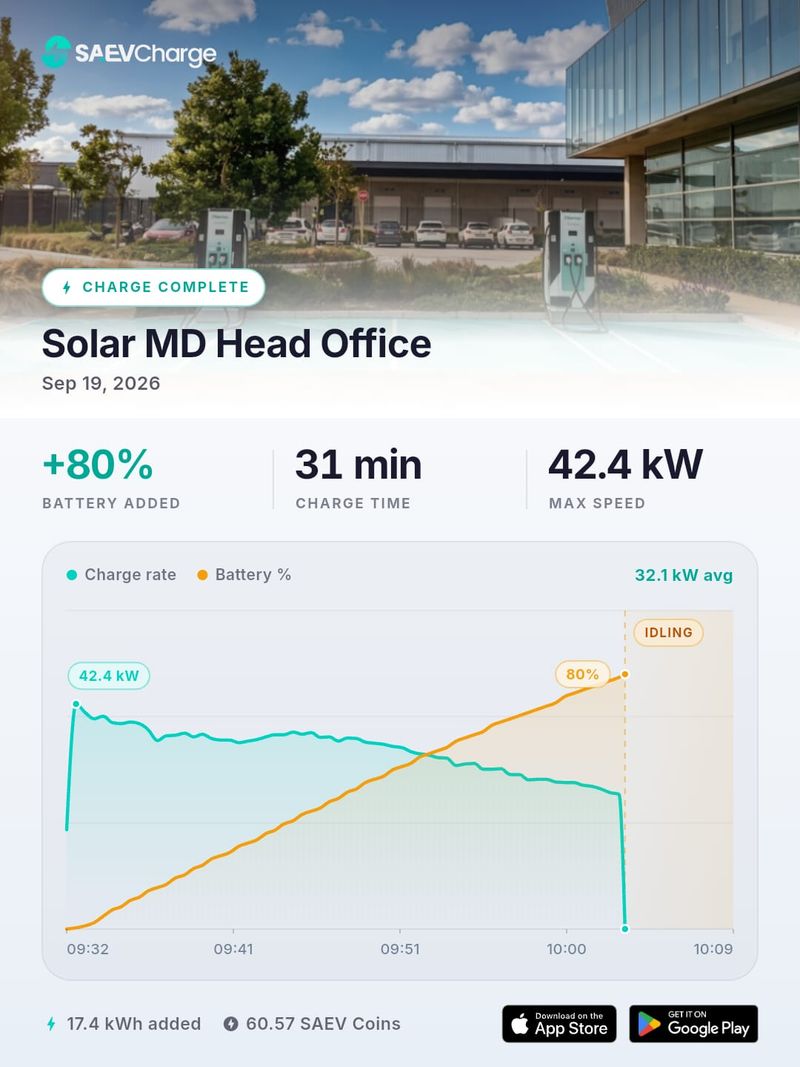
The Caravelle eHybrid supports up to 11 kW AC and 40 kW DC fast charging. Keep in mind charging speed drops significantly after 80% to safeguard battery health. If time is limited, charging to 80% is recommended.
| Supplier | Rate per kWh | Cost (10% to 80% / 13.79 kWh) | Cost per km |
| Residential home | ~R3.50/kWh | R48.27 | R0.51/km |
| Public AC charging | ~R5.88/kWh | R81.09 | R0.85/km |
| Public DC fast charging | ~R7.25/kWh | R99.98 | R1.05/km |
| Public ultra-fast DC charging | ~R8.35/kWh | R115.15 | R1.21/km |
Price & After-sales support
The Volkswagen Caravelle 1.5 TSI eHybrid Style 4Motion costs R1 794 000, which includes a 5-year/100 000 km maintenance plan, a 3-year/120 000 km vehicle warranty and an 8-year/160 000 km hybrid battery warranty. That warranty looks a touch stingy next to the GAC M8 Master’s 5-year/150 000 km cover (it also has a 5-year/100 000 km service plan), but VW’s extensive dealer network remains a significant advantage, particularly when you’re far from home on a cross-country road trip.
| Volkswagen Caravelle 1.5 TSI eHybrid Style 4Motion | R1 794 000 |
Verdict
The new Volkswagen Caravelle eHybrid is a niche offering. It blends the practicality of an MPV with a dose of luxury and the feel-good factor of electrification. It’s a pleasant, refined vehicle to drive. For a family that would otherwise consider a luxury seven-seater SUV, it makes a sound rational case. It’s more practical than any SUV at its price, its 4Motion drivetrain inspires confidence and VW’s dealer network offers peace of mind.
But rational doesn’t necessarily mean desirable. At almost R1.8 million, the Caravelle lacks the image of the SUVs it hopes to lure buyers away from; its cabin is less spacious than I’d anticipated; and its small fuel tank limits its range on long hauls. The cheaper, more powerful GAC M8 Master looks a strong proposition on paper, if you really must have a PHEV.
The Caravelle makes the most sense as a primarily city- or town-based runner, recharged every night and used mostly on electric power during the week, then pressed into service on weekends for sport or lifestyle outings. In that role, its electric range, all-wheel drive and flexible cabin all come into their own. Its main USP is refinement. However, is that alone worth its near-R400 000 premium?
If you really want to hit the long road with the same vehicle and have a genuinely all-in-one people mover, however, look elsewhere. There are a number of (mainly diesel-powered) offerings from Volkswagen itself – as well as the Ford vehicles upon which they are based – at significant savings. We would argue, however, that the Ford/VW siblings are nowhere near as refined and are much more van-like in character than the more upmarket Caravelle.
We think that the Caravelle’s deadliest minibus/MPV rivals are actually two Koreans, but for different reasons. Pick the Hyundai Staria if you prioritise space; it remains the king of long-distance, real-world family travel with a hint of luxury and style. Or pick the Kia Carnival if you want superb practicality with a strong dose of tech, design and luxury. Both use frugal turbodiesel engines that excel over long distances, and either will leave you with almost half a million rand to spare.
Want to purchase a new or used Volkswagen? Browse vehicles for sale
Hannes Oosthuizen

With the ultimate goal of spending his life writing about cars, Hannes studied journalism at the University of Stellenbosch. A brief stint as a sports editor for Paarl Post followed, before he joined CAR magazine in 2001. He eventually became the (youngest-ever) editor of CAR in 2011, a position he occupied for two years. During his career at CAR he became a member of the WCOTY (World Car of the Year) panel, wrote a book (Cranked Up: Confessions of a Petrolhead) and was named by the Mail & Guardian as one of the Top 200 South Africans to take to lunch in its 2008 Youth Day supplement, and by The Media magazine as one of the most influential media professionals under 40 (2012). He left CAR in 2013 to experience the \other\" side of the industry