After a disappointing 0-star rating for adult occupant protection earlier this year, Toyota’s popular hatchback has bounced back following a crucial safety update.
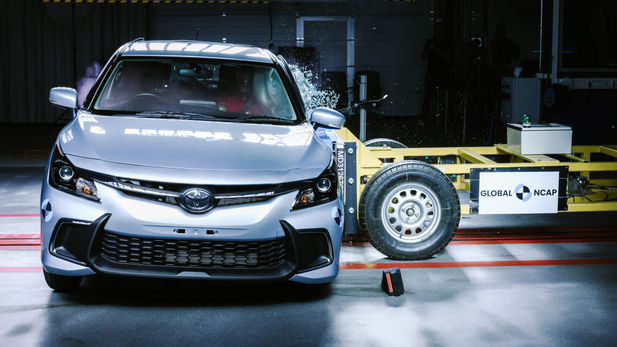
The Toyota Starlet has achieved a commendable 4-star rating for adult occupant protection in the latest Global NCAP #SaferCarsForAfrica crash tests.
Earlier this year, the Indian-built hatchback – one of South Africa’s best-selling models – was heavily penalised for offering only 2 front airbags. Following the original test, Toyota made 6 airbags (including side curtain airbags) standard fitment across the locally offered range.
Read more: SA-built Toyota Corolla Cross: Global NCAP issues 2-star safety rating
Putting the updated model to the test
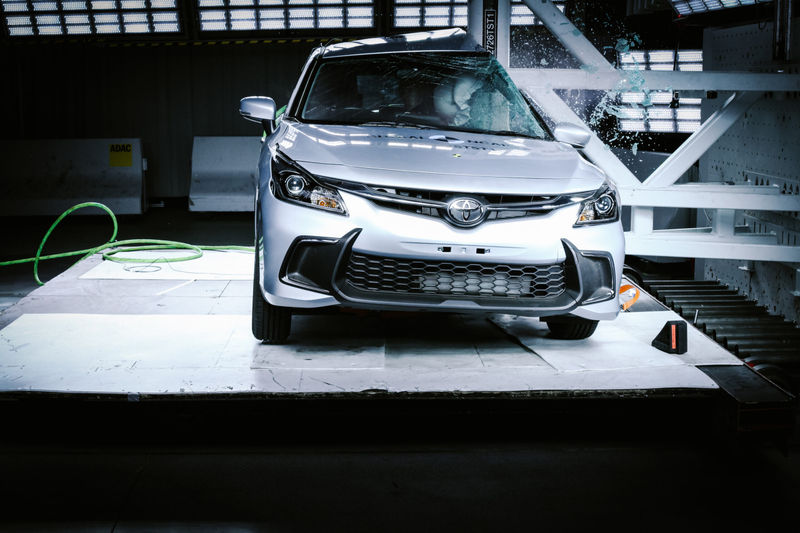
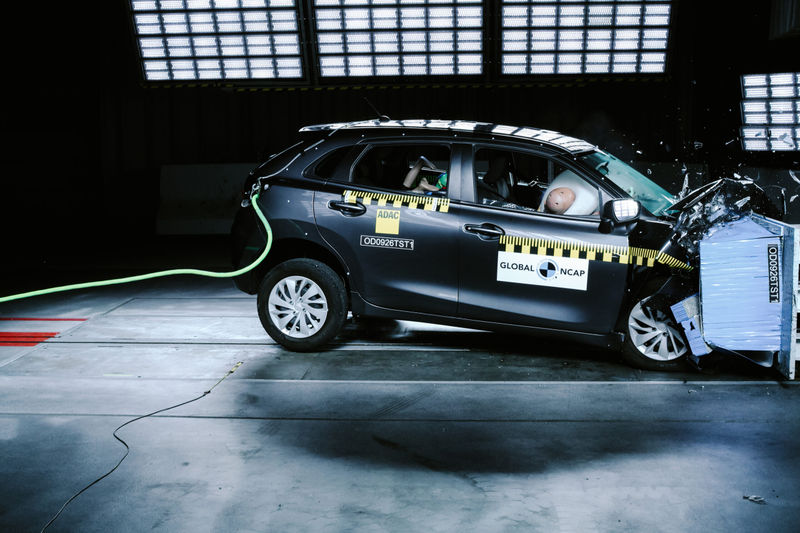
Global NCAP independently funded a follow-up assessment to test the revised safety spec. The results proved the benefit of the extra equipment, with the Starlet securing 4 stars for adult protection and retaining its 3-star rating for child occupant protection.
The structural assessment revealed a stable footwell area, although the body shell was deemed unstable under further frontal loadings. In the side and pole impact tests, head, abdomen and pelvis protection scored well, while chest protection ranged from adequate to marginal. However, child occupant testing highlighted some ongoing vulnerabilities, noting that the head of the child dummy (simulating a 3-year-old child) made contact with the interior during the frontal impact.
Industry praise for the turnaround
Industry bodies have warmly welcomed the upgrade. Richard Woods, CEO of Global NCAP, noted that the result proves what can be achieved when manufacturers prioritise safety, stating that “safety should never be reduced to an optional extra”.
Read more: Car safety ratings: What they mean and why they matter
Meanwhile, the Automobile Association of South Africa (AA) praised the swift action, calling it proof that improving entry-level safety needn’t cost the Earth or disrupt production lines.
According to Bobby Ramagwede, CEO of the AA, “This result serves as an example of how improvements to safety specifications on entry-level vehicles can instantly yield safer cars on our roads. We strongly encourage those local brands with recent poorer #SaferCarsForAfrica results to work with us on improving the safety of their affected entry-level models, ensuring that safety is prioritised over cost; and proving that African lives matter.”