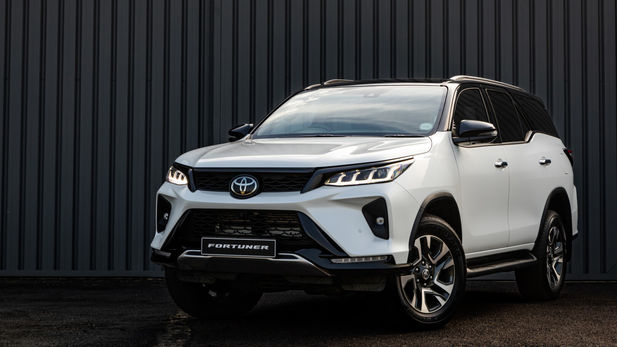
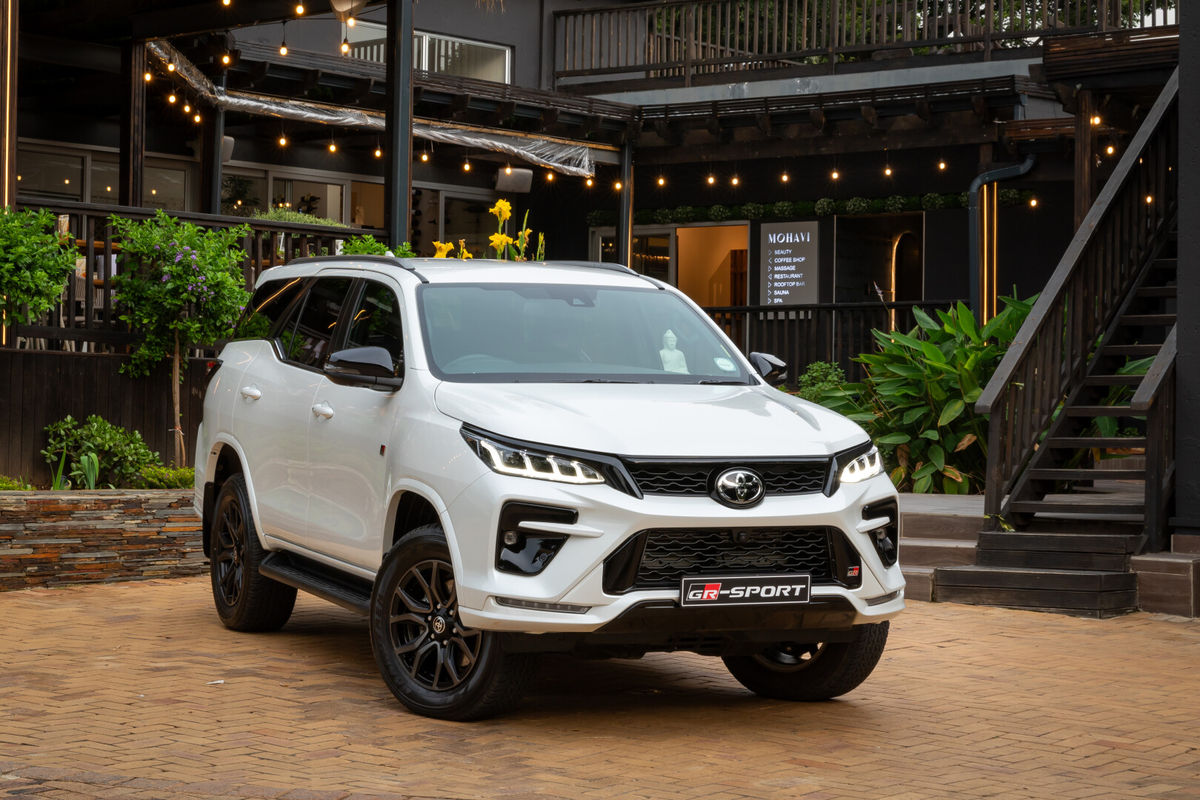
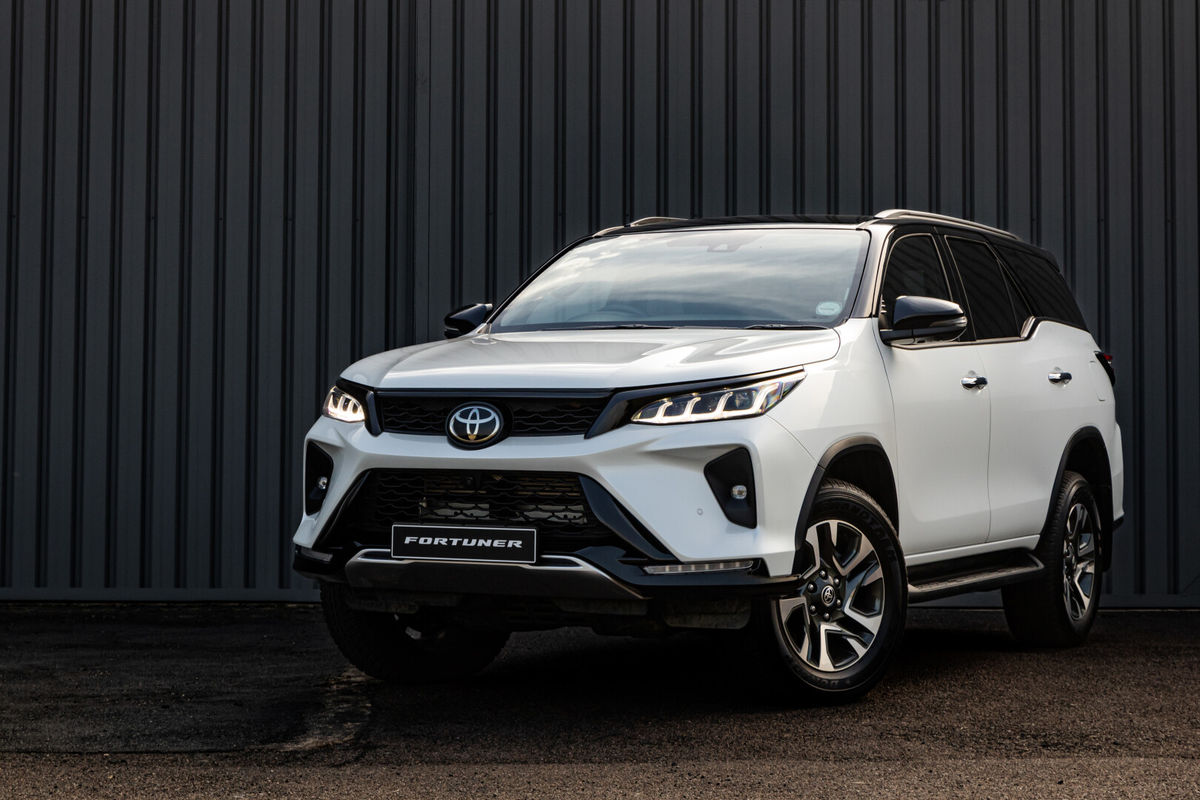
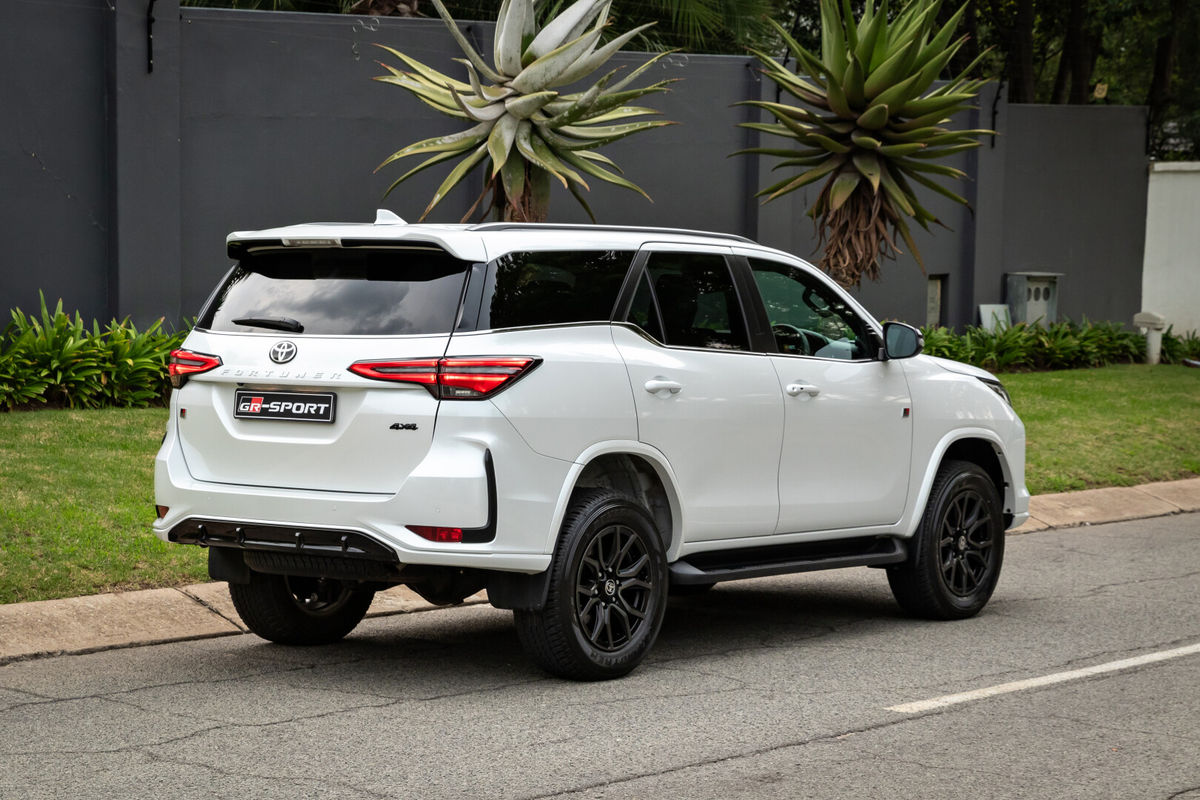
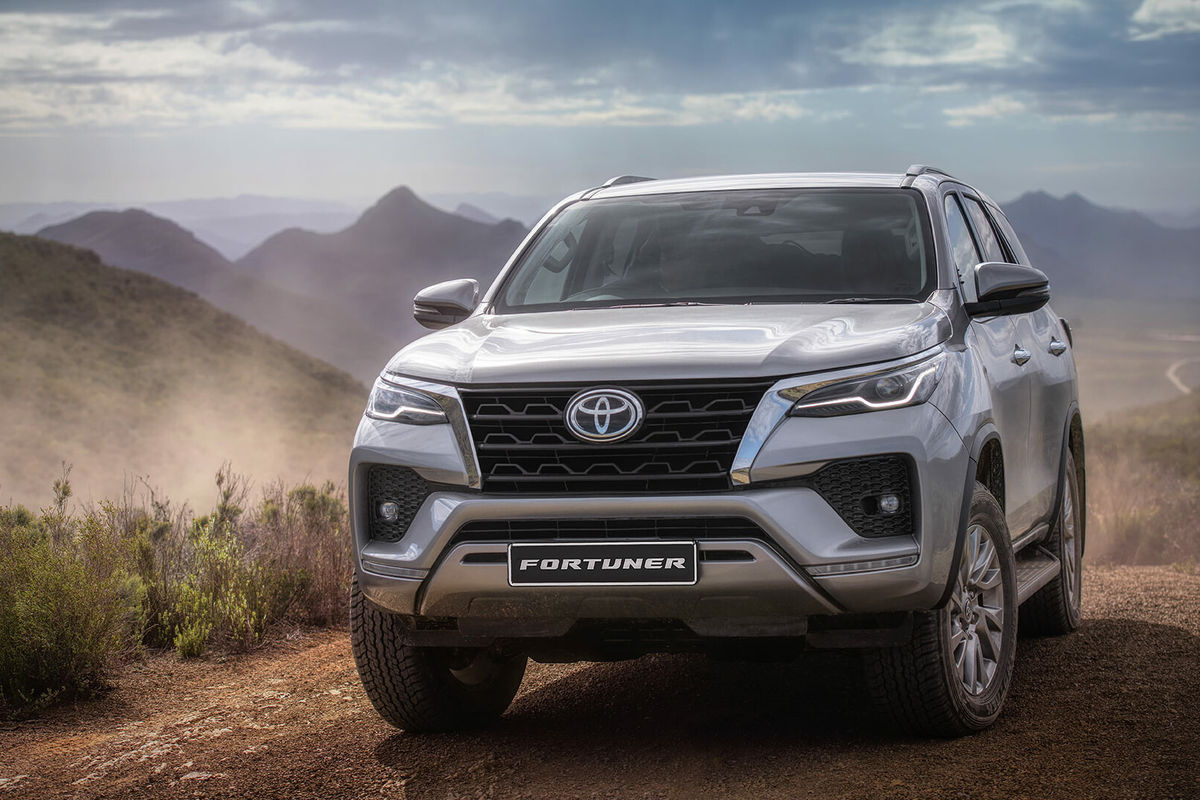
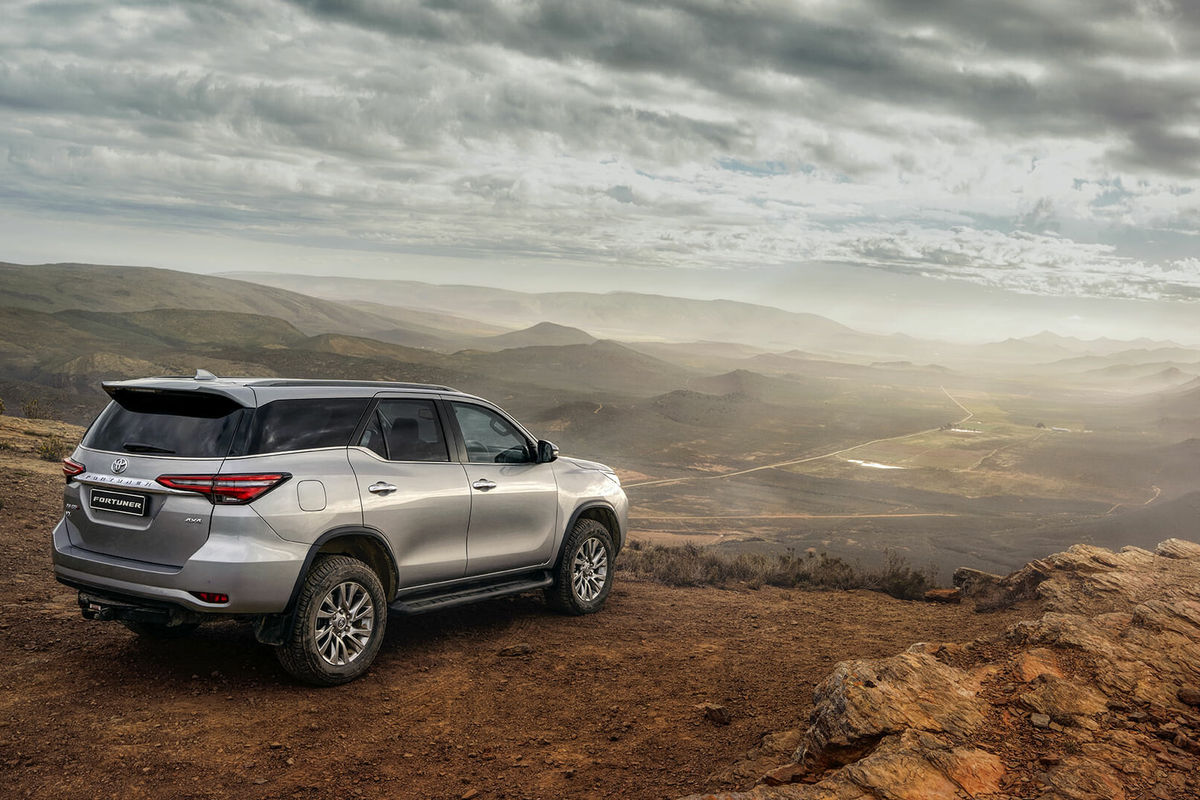
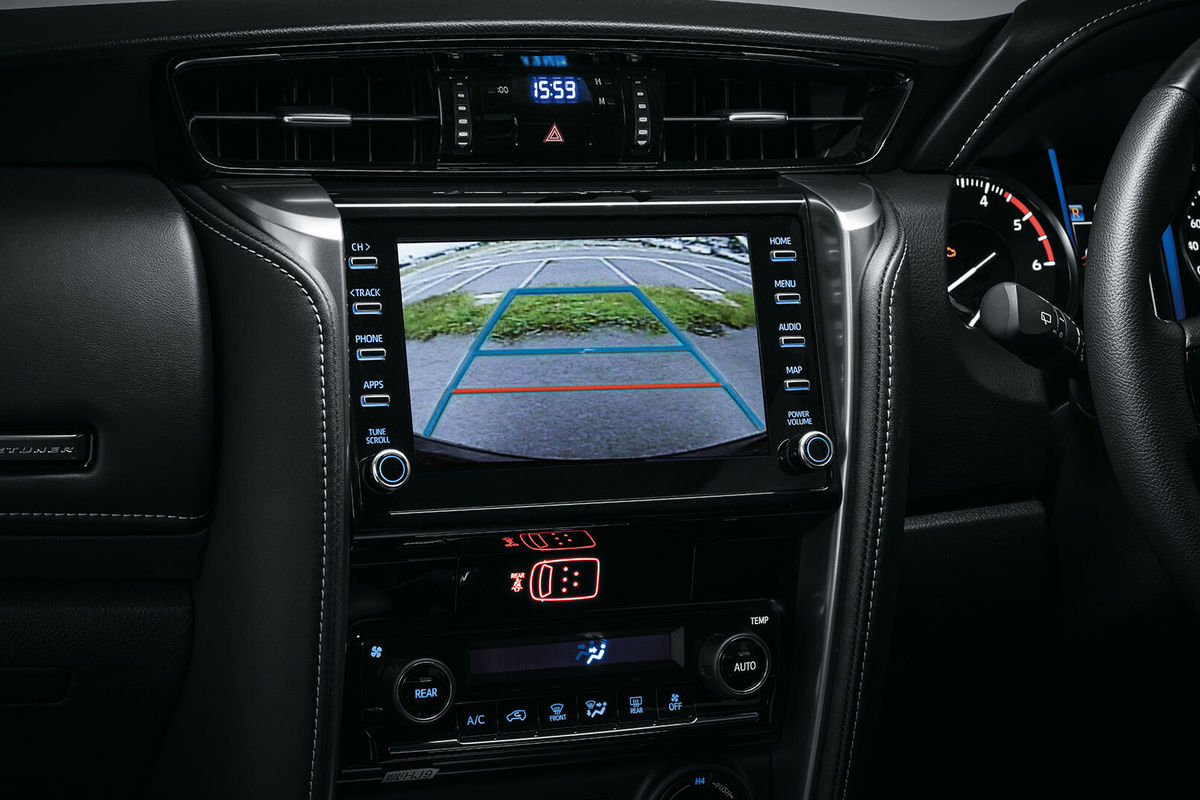


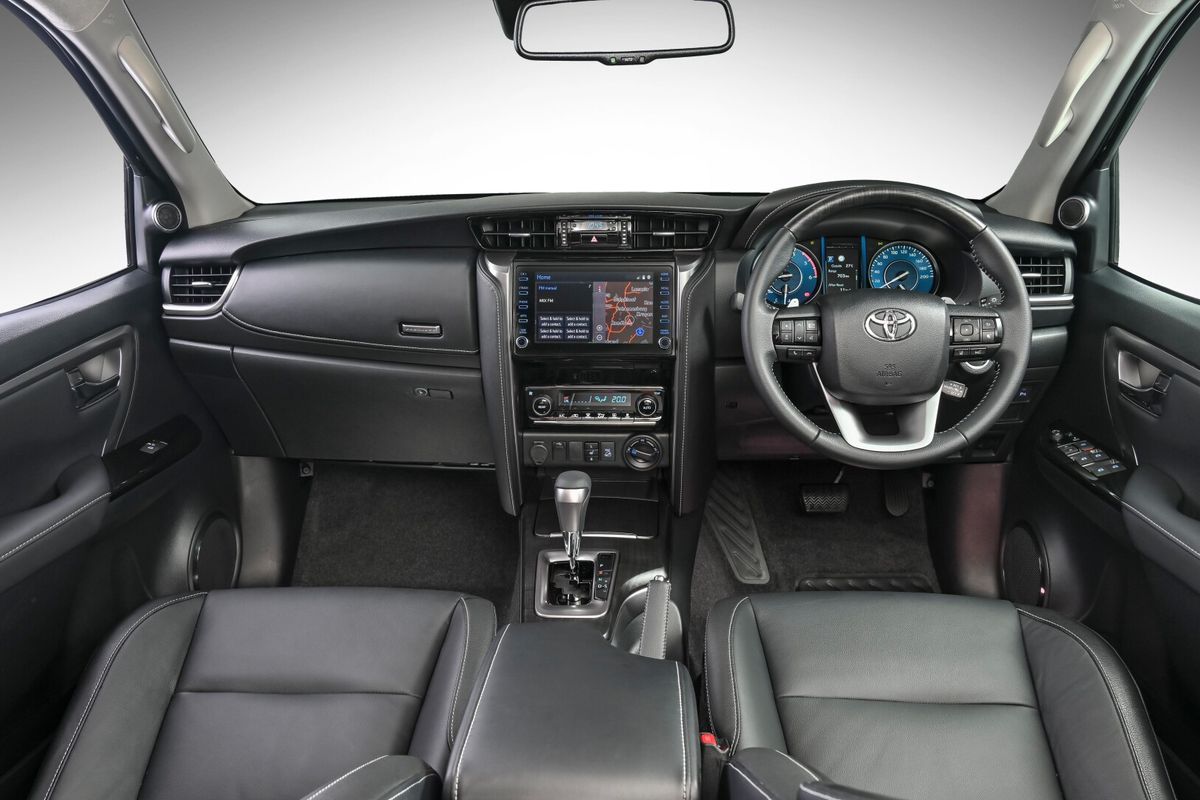
The Toyota Fortuner is the go-to vehicle for Mzansi’s (upper) middle-class. Mixing go-anywhere ability with everyday usability, no other vehicle matches its appeal to anyone from hunters to heart surgeons and housewives. This Buyer’s Guide will tell you all you need to know before signing on the dotted line.
In 2026, the esteemed Toyota Fortuner will celebrate 20 years of market dominance in South Africa. And what a ride it’s been: initially and conceivably a rather niche proposal of a Hilux-station wagon configured as a quasi-7-seat, tough-as-nails ladder-frame SUV, over time it has become middle-upper earners’ favourite mode of transport.
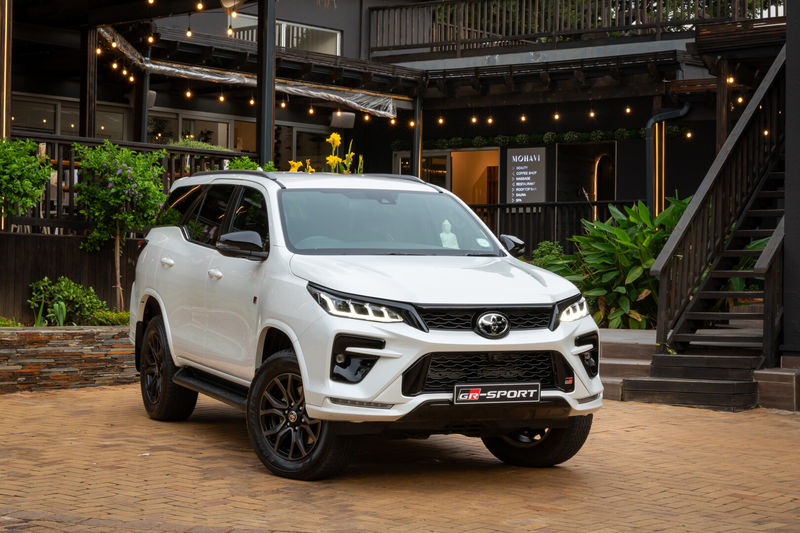
Having long overtaken the beloved bourgeois badges of yore like the Mercedes-Benz C-Class and BMW 3 Series, the Fortuner’s all-year, all-terrain allure provides every reason to want Toyota’s savannah-to-suburb sweetheart today. If that sounds like you, let’s get into the details.
Watch: 2023 Toyota Fortuner (facelift) Review – In-depth coverage of Toyota’s updated SUV (2.8 VX 4×4)
Doubtlessly, the SUV craze that started in the mid-2000s has helped accelerate the Fortuner’s trajectory into mainstream market. As proof of its popularity, last year the Fortuner was South Africa’s favourite ladder-frame SUV. Despite topping R1 million at its most expensive, the Fortuner often mixes it in the sales charts with much more affordable fare such as the Kia Sonet and Volkswagen Polo (excluding the Vivo). Quite simply, despite the current generation having been around for more than 10 years and only increasing in price over time, South Africans just can’t get enough of Toyota’s “Kalahari Ferrari”.
Buy a new Toyota Fortuner on Cars.co.za
Toyota Fortuner: What the models cost in South Africa
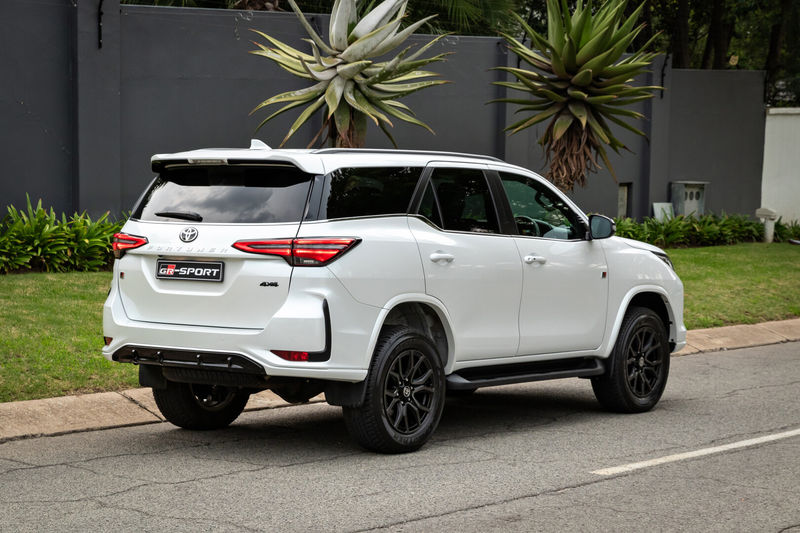
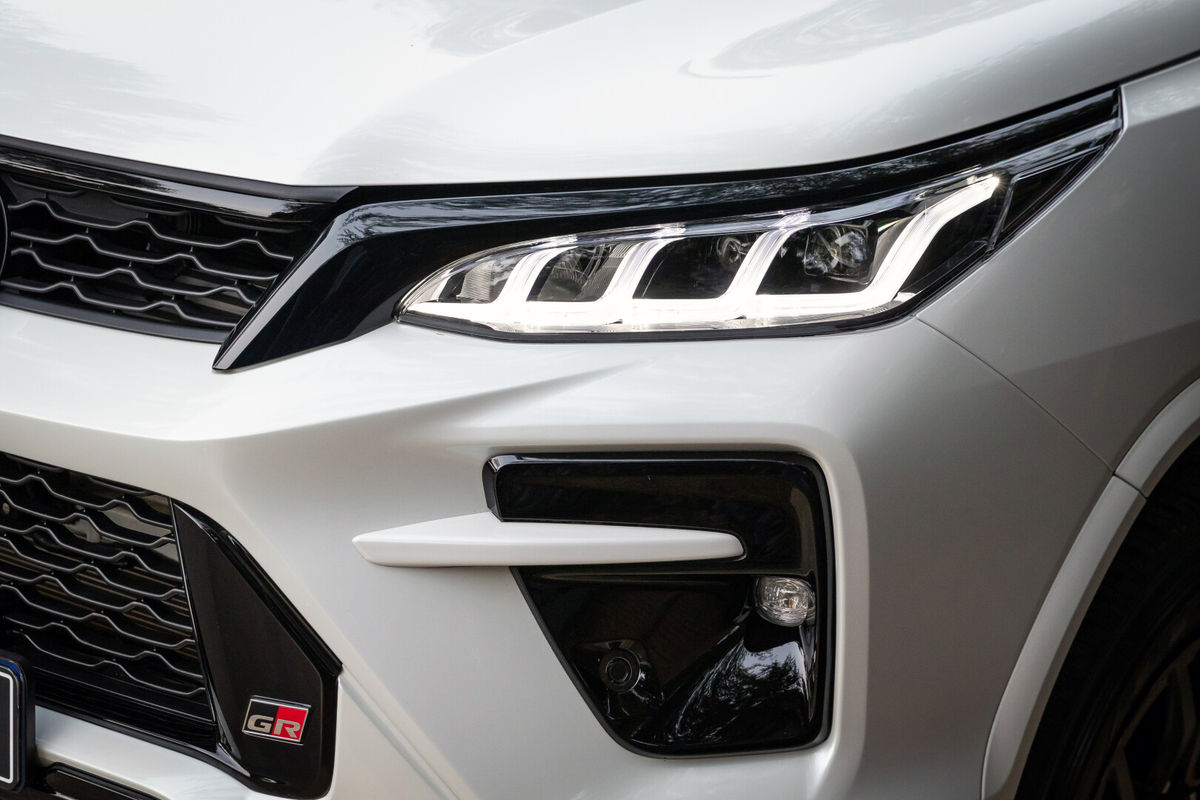
The current line-up spans 12 models, of which 3 are powered by a 110kW/400 N.m 2.4-litre turbodiesel engine. The rest are fitted with Toyota’s more powerful 150 kW/500 Nm 2.8-litre, 4-cylinder engine also found in the Land Cruiser 70-series, Hilux and Prado. Of these, there are 4 hybrids available with slightly more power (12 kW/65 Nm). The range is topped by the 165 kW/550 Nm GR-Sport model.
Read more: Toyota Fortuner GR-S In-depth review: The Beefed-up Bakkie-Based Beast Hits SA with more power!
All engines are configured as diesel-powered turbocharged 4-cylinder units. The ferociously thirsty V6 petrol engine was dropped in 2020 alongside the introduction of the Epic trim. There’s no longer a manual gearbox on the 2.8-litre iteration, either.
| Model | Price |
| Fortuner 2.4GD-6 | R671 900 |
| Fortuner 2.4GD-6 auto | R705 800 |
| Fortuner 2.4GD-6 4×4 | R739 100 |
| Fortuner 2.8GD-6 | R826 400 |
| Fortuner 2.8GD-6 48V | R834 800 |
| Fortuner 2.8GD-6 VX | R870 900 |
| Fortuner 2.8GD-6 48V VX | R879 300 |
| Fortuner 2.8GD-6 4×4 | R907 700 |
| Fortuner 2.8GD-6 48V 4×4 | R918 600 |
| Fortuner 2.8GD-6 4×4 VX | R950 900 |
| Fortuner 2.8GD-6 48V 4×4 VX | R961 800 |
| Fortuner 2.8GD-6 4×4 GR-Sport | R999 000 |
Toyota Fortuner (2021) Review – Cars.co.za
The current Toyota Fortuner range: Models, engines & key specs
| Model | Engine | Power / Torque | Drivetrain | Fuel efficiency |
| Fortuner 2.4GD-6 | 2.4L turbodiesel | 110 kW/400 Nm | 6-speed manual, RWD | 6.8 L/100 km |
| Fortuner 2.4GD-6 auto | 2.4L turbodiesel | 110 kW/400 Nm | 6-speed automatic, RWD | 7.2 L/100 km |
| Fortuner 2.4GD-6 4X4 | 2.4L turbodiesel | 110 kW/400 Nm | 6-speed automatic, part-time 4WD | 7.6 L/100 km |
| Fortuner 2.8GD-6 | 2.8L turbodiesel | 150 kW/500 Nm | 6-speed automatic, RWD | 7.6 L/100 km |
| Fortuner 2.8GD-6 48V | 2.8L turbodiesel, electric assist | 162 kW/565 Nm | 6-speed automatic, RWD | 7.3 L/100 km |
| Fortuner 2.8GD-6 VX | 2.8L turbodiesel | 150 kW/500 Nm | 6-speed automatic, RWD | 7.6 L/100 km |
| Fortuner 2.8GD-6 48V VX | 2.8L turbodiesel, electric assist | 162 kW/565 Nm | 6-speed automatic, RWD | 7.3 L/100 km |
| Fortuner 2.8GD-6 4×4 | 2.8L turbodiesel | 150 kW/500 Nm | 6-speed automatic, part-time 4WD | 7.9 L/100 km |
| Fortuner 2.8GD-6 48V 4X4 | 2.8L turbodiesel, electric assist | 162 kW/565 Nm | 6-speed automatic, part-time 4WD | 7.6 L/100 km |
| Fortuner 2.8GD-6 4×4 VX | 2.8L turbodiesel | 150 kW/500 Nm | 6-speed automatic, part-time 4WD | 7.9 L/100 km |
| Fortuner 2.8GD-6 48V 4×4 VX | 2.8L turbodiesel, electric assist | 162 kW/565 Nm | 6-speed automatic, part-time 4WD | 7.6 L/100 km |
| Fortuner 2.8GD-6 4×4 GR-Sport | 2.8L turbodiesel | 165 kW/550 Nm | 6-speed automatic, part-time 4WD | 8.4 L/100 km |
New Toyota Fortuner Specs & Prices in South Africa
Toyota Fortuner 4×4 vs. 4×2: Which drivetrain is perfect for local conditions?
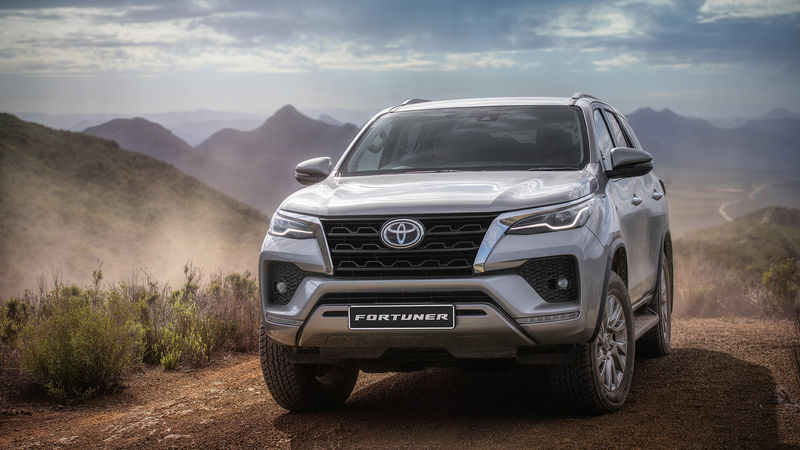
There’s good and bad news. First, the positives: Unless you tow, the automatic 2.4-litre model, available in 2- or 4-wheel-drive, is adequate and saves you a respective R120k and R169k against 2.8-litre equivalents.
And, as a locking rear differential is standard across the entire range, even 2-wheel-drive will get you further than you may think.
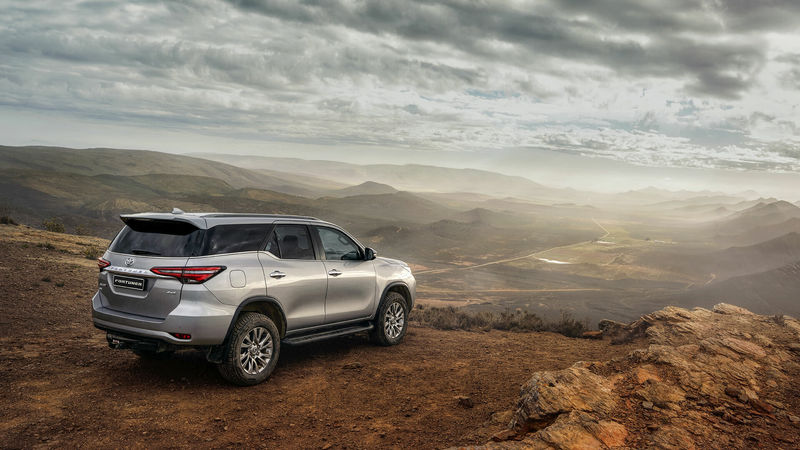
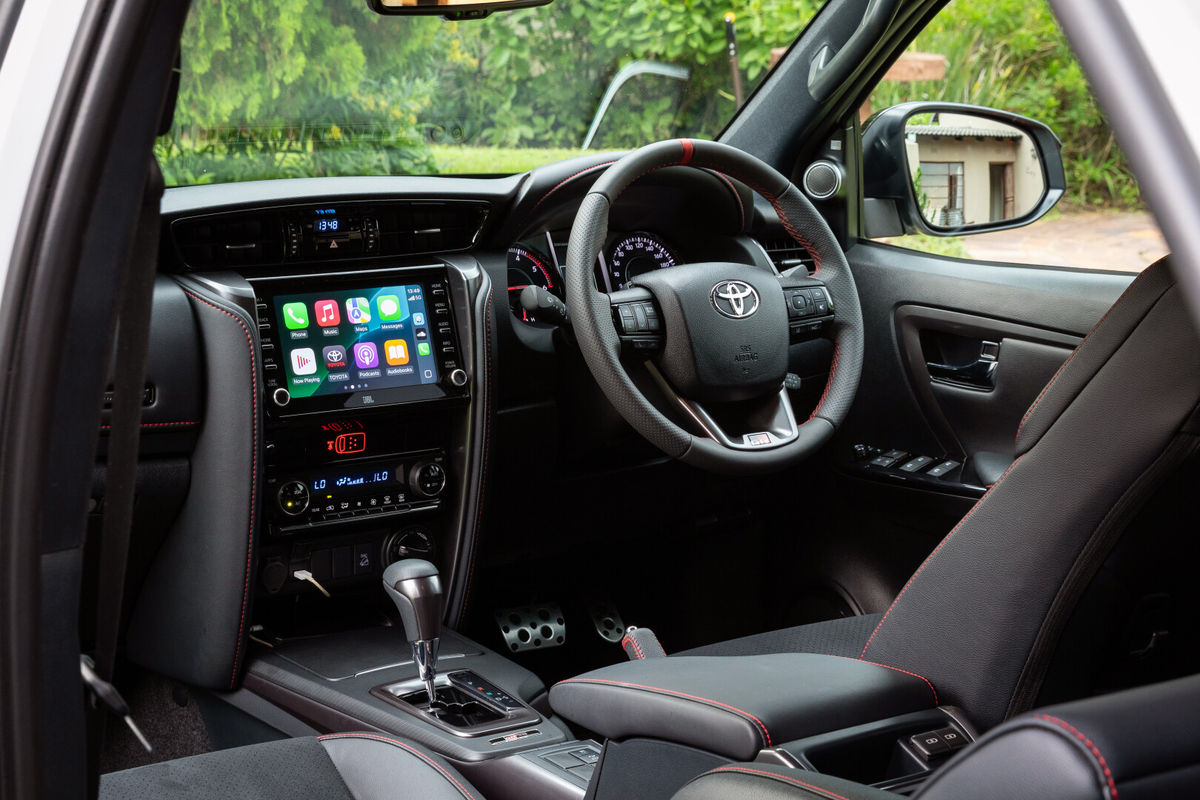
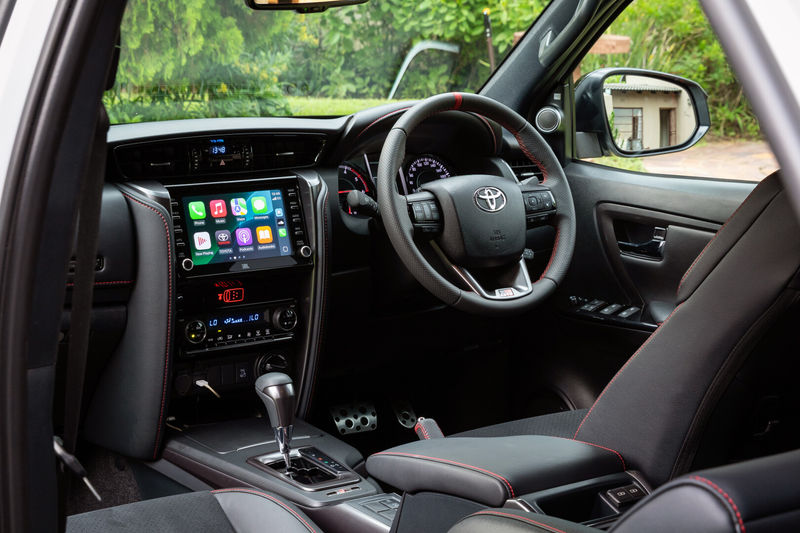
On the downside, Toyota has stepped the specifications list in such a way that all the best toys are the sole prevail of the VX/GR-Sport models. So you can have a 4×4-equipped 2.4-litre derivative, yet miss out on goodies such as downhill assistance, steering wheel-mounted shift paddles, an active safety suite, adaptive cruise control, dual-zone air conditioning and heated front seats – among others.
Buy a used Toyota Fortuner on Cars.co.za
And what of the 48V versions? Offering a negligible power increase and a similar decrease in fuel consumption, these were introduced in early 2024. If you’re looking for cheap speed or a Greenpeace-pleaser, it’s best to look elsewhere: in our 3-way Hilux drag race conducted between the (2.8-litre) 48V derivative, rear-driven and GR-S equivalents, the battery-assisted Hilux was the slowest of the 3. Offering no life-changing benefit, there’s more to go wrong if you’re stuck in the Caprivi, and more to spend once the vehicle is out of warranty.
Toyota Fortuner Used Car Buyer’s Guide – Common Problems, used car pricing, our pick of the range
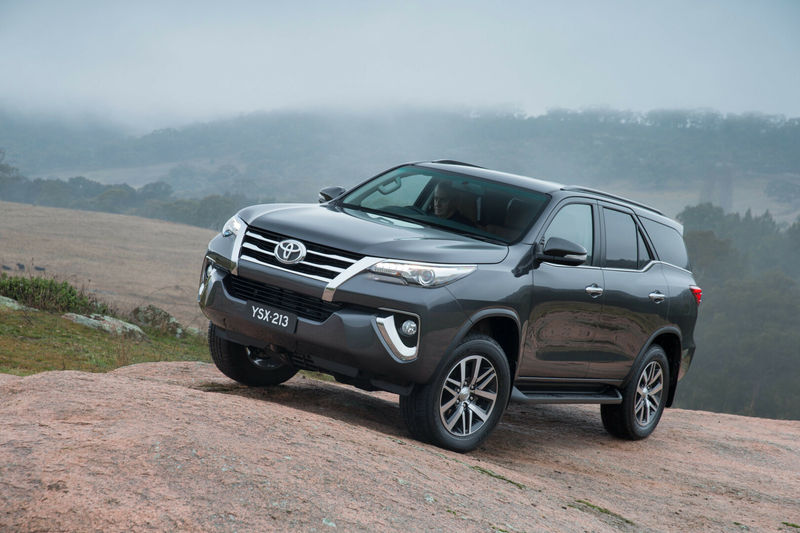
Fortuner vs. rivals: Ford Everest, Isuzu MU-X & Mitsubishi Pajero Sport
The segment for 7-seat, body-on-frame utility vehicles – based on their bakkie brethren and so configured for ultimate off-road capability – is surprisingly limited.
Locally, the Fortuner competes mainly against the Ford Everest, Isuzu MU-X and Mitsubishi Pajero Sport. Incredibly, after 10 years, it still cleans up from month to month in the sales race. In 2025, the Toyota sold 9 049 units, the Everest 3 444, the MU-X 1 326 and the Pajero Sport just 253 vehicles.
Which SUV is better? Isuzu MU-X vs. Toyota Fortuner Head-to-Head Review
All of these have their individual strengths and weaknesses. As a next-gen vehicle, the Everest and (DNA-sourcing Ranger twin) is a comprehensively newer product as far as infotainment, cabin comfort and engines go. Its (outgoing) smaller-capacity 2.0-litre engine is also more powerful in bi-turbo trim than the Fortuner’s 2.8GD-6 engine, excepting the GR-S range-topper. However, despite the allure of V6 power that the Fortuner lacks (and ideally needs), the Everest range is more expensive.
The Isuzu MU-X received a much-needed facelift in 2025 that modernised the styling and interior features. Its engine is less powerful than the Fortuner’s, though. Still, the Isuzu has the most rear space of all vehicles in this category.
| Toyota Fortuner | Ford Everest | Isuzu MU-X | Mitsubishi Pajero Sport | |
| Engine capacity | 2.4-litre, 2.8-litre | 2.0-litre, 3.0-litre | 1.9-litre, 3.0-litre | 2.4-litre |
| Power/Torque | 110 kW/400 Nm, 150 kW/500 Nm | 154 kW/500 Nm, 184 kW/600 Nm | 110 kW/350 Nm, 140 kW/450 Nm | 133 kW/430 Nm |
| Average fuel consumption (claimed) | 7.9 L/100 km (2.8-litre model) | 7.5 L/100 km (comparative 2.0-litre model) | 7.6 L/100 km (comparative 3.0-litre model) | 8.1 L/100 km |
| Maximum towing ability | 3 300 kg | 3 500 kg | 3 500 kg | 2 700 kg |
| Approach, departure and breakover angles | 29°/25°/23.5° | 30.4°/23.5°/22.3° | 30°/26°/°24° | 30°/24.2°/23.1° |
| Ground clearance | 279 mm | 220 mm | 235 mm | 218 mm |
| Loading space (all 3 rows up to 2nd and 3rd rows flat) | 200-1 718 litres | 259-1 823 litres | 311-2 138 litres | 193-1 813 litres |
| Price range | R685 900-R1 009 000 | R953 000-R1 324 000 | R752 300-R1 026 800 | R789 990-R904 990 |
| Warranty | 3 years/100 000 km | 4 years/120 000 km | 5 years/120 000 km | 3 years/100 000 km |
What are the Toyota Fortuner’s drawbacks?
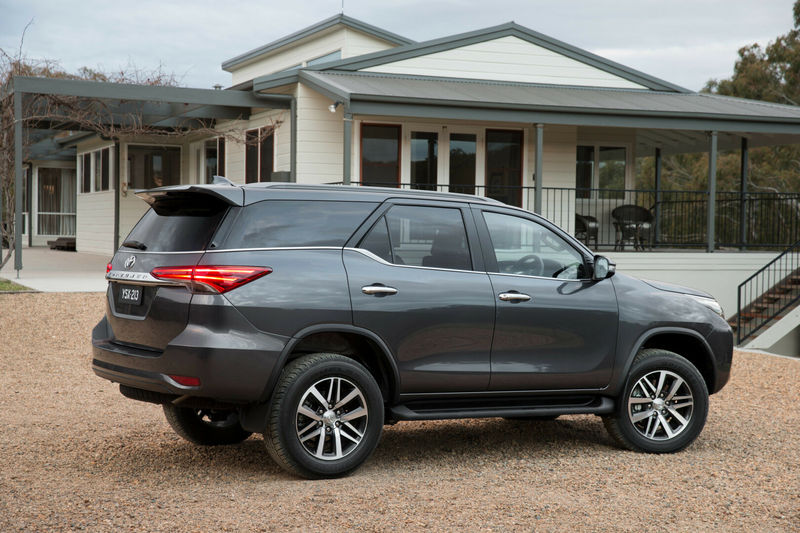
As Toyota likes to extend the lifespans of its vehicles to infinity and beyond, the most obvious disadvantage is the Fortuner’s age, although that shortcoming is set to be corrected most likely in 2026 when the 3rd-gen Fortuner launches as a spinoff of the upcoming 9th-gen Hilux.
With that in mind, you could get your hands on a run-out version at a discount; or wait for the new one which is guaranteed to be more expensive.
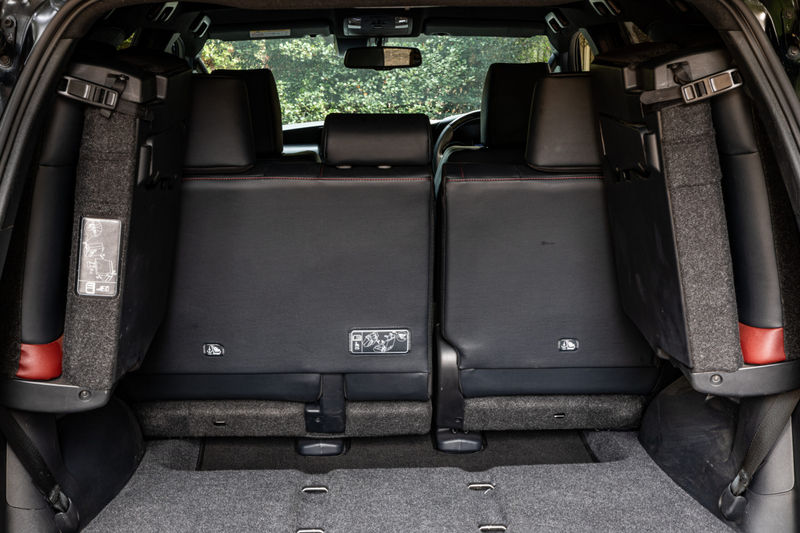
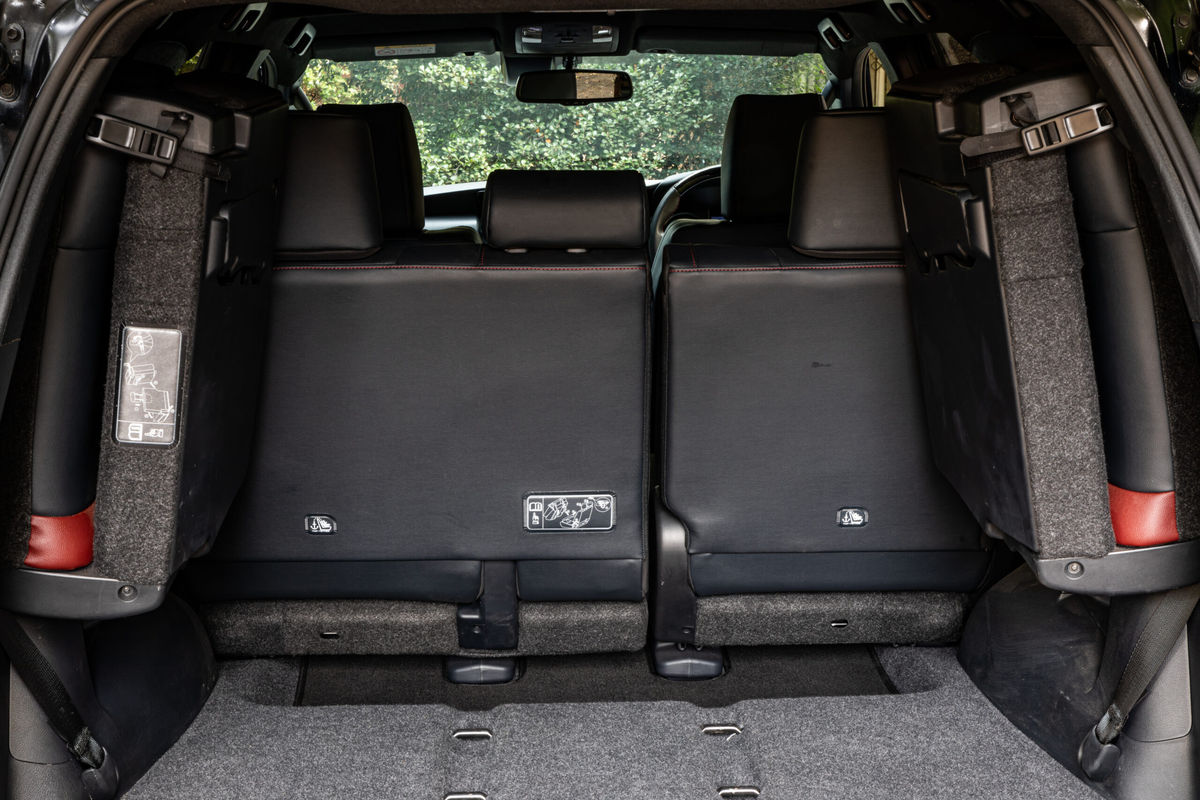
Secondly, the jump-seat arrangement… The third-row seats fold up against the boot’s inner sides when stowed away. And it’s a major inhibitor of rear loading space. The chairs can’t be removed by a simple process of unclipping, either, although it is possible with a spanner, a fair degree of effort and some Gordon Ramsay-shaming slang. Toyota says the vehicle’s body-on-frame construction doesn’t allow any other mechanism. We say offer the option to delete the 3rd row at no cost straight off the factory floor.
Finally, owing to its popularity and reliability, the Fortuner is classified as one of the highest-risk vehicles for theft or highjacking by South African insurers. Demand for genuine parts within and outside our borders, as well as Fortuners’ off-road ability, add to their appeal to cross-border syndicates. Owners are often expected to fit a secondary tracking device, which adds to long-term ownership costs.
Conclusion
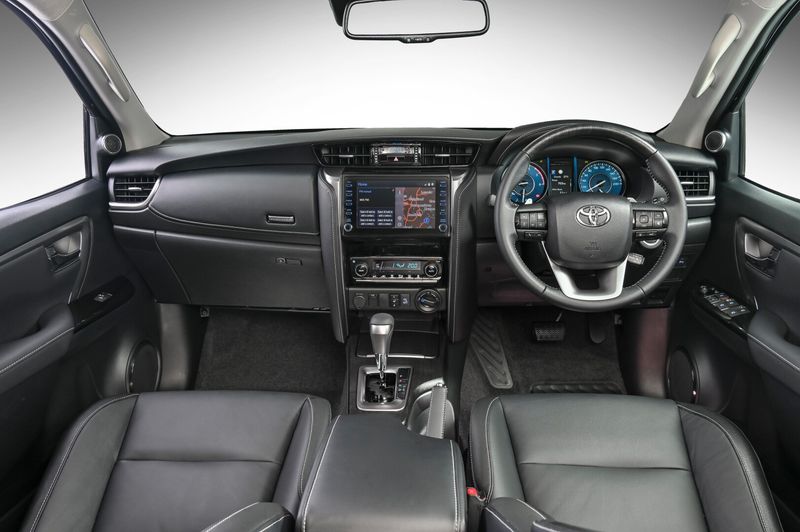
Seemingly against all logic, the 10-year-old Toyota Fortuner endures as South Africa’s favourite ladder-frame 7-seat SUV. Boasting bulletproof badge appeal and reliability, backed up by the largest dealer footprint in the country, commendable resale value and robust off-road pedigree, practically nothing else blends rugged capability and ease of use quite like the Fortuner.
Age, in Fortuner land, is indisputably just a number.
Read more: