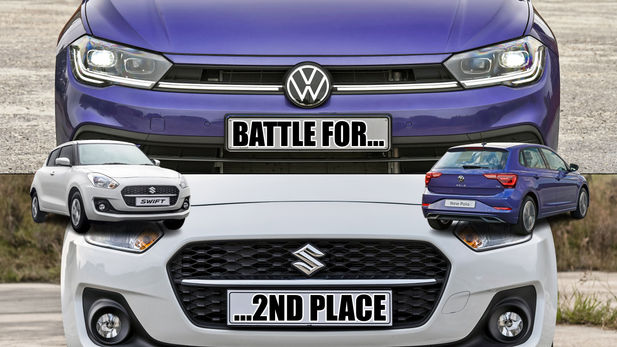
January 2024 saw Suzuki Auto South Africa finish a mere 287 sales behind Volkswagen Group SA. So, is the German firm’s 2nd position really under threat this year? Let’s examine the figures…
Though South Africa’s new-vehicle industry kicked off 2024 with its 6th consecutive month of year-on-year decline, a certain Japanese automaker continued to buck the trend, putting in its best sales performance yet. Yes, Suzuki Auto South Africa finished January 2024 on a record 5 235 units, a mere 287 registrations behind the 2nd-placed Volkswagen Group (5 522 units).
This impressive haul furthermore represented the 1st time the Hamamatsu-based company’s local division had breached the 5 000-unit mark in a month, besting its previous record of 4 734 registrations achieved back in July 2022. So, while alliance partner Toyota – which has led Mzansi’s new-vehicle market for 44 years on the trot now – remains far out of reach for Suzuki, the VW Group is now seemingly within touching distance.
Will 2024 be the year Suzuki leapfrogs the German company in South Africa? Or was January’s record performance simply an anomaly, perhaps brought about by differing year-end reporting strategies? Let’s take a closer look at the recent sales figures in a bid to find out…
Stepping back: Suzuki Auto SA’s sales figures in 2023
Before we delve into January 2024’s fascinating statistics, let’s take a step back and consider Suzuki Auto SA’s performance across 2023. Last year, the budget-car specialist made 3rd place very much its own, finishing every single month on the final step of the podium and wrapping up the reporting period on 49 438 units (up 4.8% year on year and translating to its highest ever market share of 9.3%).
Volkswagen Group SA, meanwhile, held steady in 2nd place despite its sales dropping 3.4% year on year to 67 456 units. That, in turn, saw the German automaker’s market share slip slightly to 12.7% in 2023. Still, it finished a considerable 18 018 units ahead of Suzuki (down from a 22 623-unit differential in 2022). Of course, we should also keep in mind that VW Group SA’s business extends far further than the local market, with the Kariega-built Polo hatch leading the export charts last year with a whopping 101 468 units.
As an aside, the VW Group’s monthly average in 2023 worked out to 5 621 units, while Suzuki’s came to 4 120 units. So, across last year, as many as 1 501 units separated the 2 automakers each month, on average. Although that’s certainly a smaller gap than we saw in the previous year, Volkswagen’s 2nd position still looked relatively safe.
Just how close was Suzuki to the VW Group in January?
In contrast, January 2024 was anything but comfortable for the Wolfsburg-based company’s local division. In fact, remove any of several variables from the equation and the VW Group would not have kept its nose ahead at all.
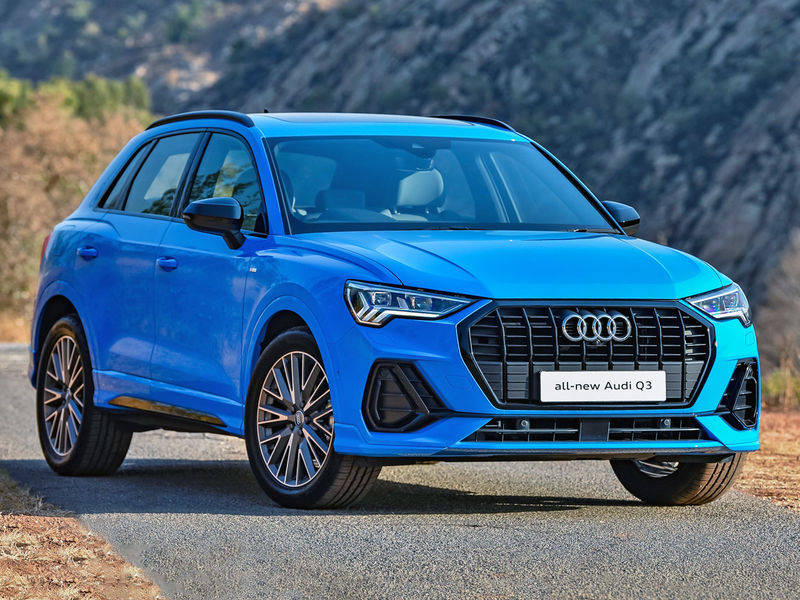
For instance, it’s worth keeping in mind that Volkswagen Group SA’s sales figures include both the VW brand and the Audi marque. So, what happens if we exclude Audi registrations (407 units) from January’s figures? Well, on its own, the VW brand managed 5 115 units, which put it 120 sales behind the Suzuki brand.
That said, the VW Group (including Audi) edged Suzuki in the passenger-vehicle segment – that is, excluding light-commercial vehicle (LCV) sales – last month, finishing on 5 130 units compared with the Japanese brand’s 5 019 units. Again, though, pull the Ingolstadt-based firm’s 407 units from that tally and the picture changes.
Did rental and government sales keep VW ahead in January?
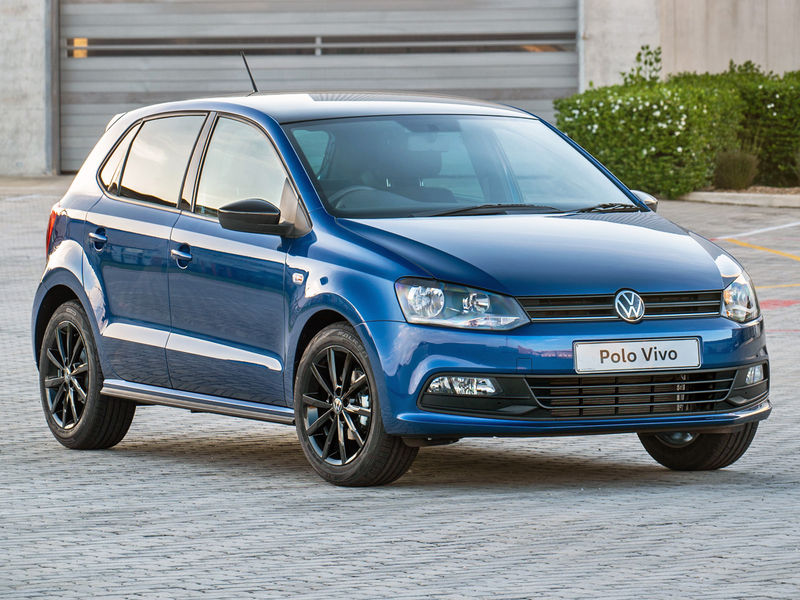
It’s also interesting to note that, compared with Suzuki, the VW Group relied far more heavily on sales to the vehicle-rental market last month. In fact, as many as 1 318 units – or 23.9% of the automaker’s total for the month – came via this channel. In contrast, Suzuki’s sales to the rental segment in January came to 748 units, translating to 14.3% of its tally.
A similar though even more pronounced trend emerged when it came to so-called “single registrations” (defined as units the company keeps for its own use, such as staff vehicles, media vehicles and promotional vehicles). Here, the VW Group saw 311 registrations compared with Suzuki’s 6 units. In addition, the German firm sold 152 vehicles to government, while the Japanese brand reported zero sales in this sector.
What about the all-important dealer channel – that is, excluding rental, government and single registrations – which can be considered a strong indicator of private-buyer sentiment in the country? Well, rather fascinatingly, Suzuki (4 481 units) found itself some way ahead in this space, outdoing the VW Group (3 741 units) by as many as 740 sales and setting a new dealer sales record in the process.
Most of Suzuki’s products pulled their weight in January
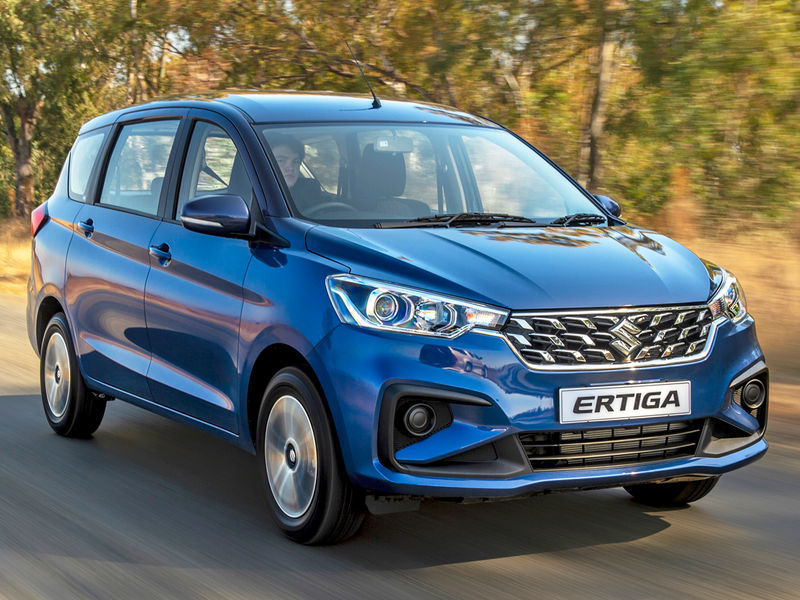
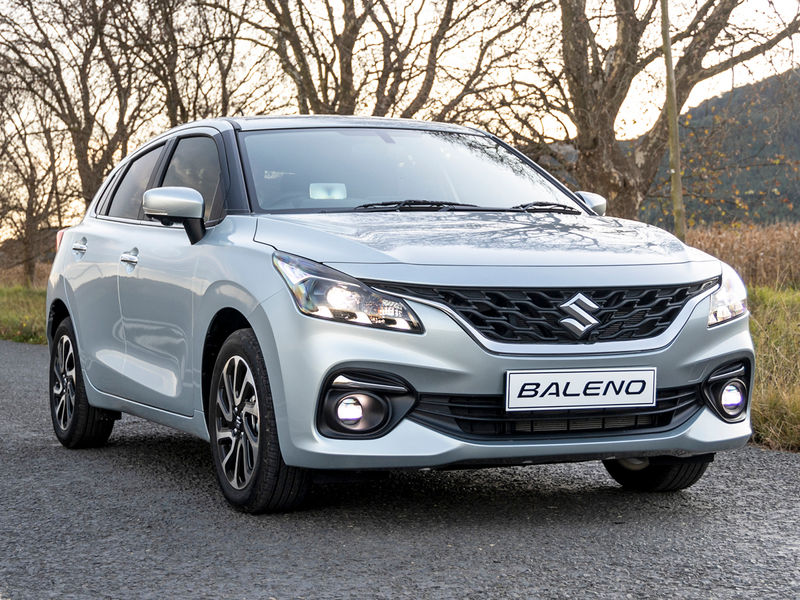
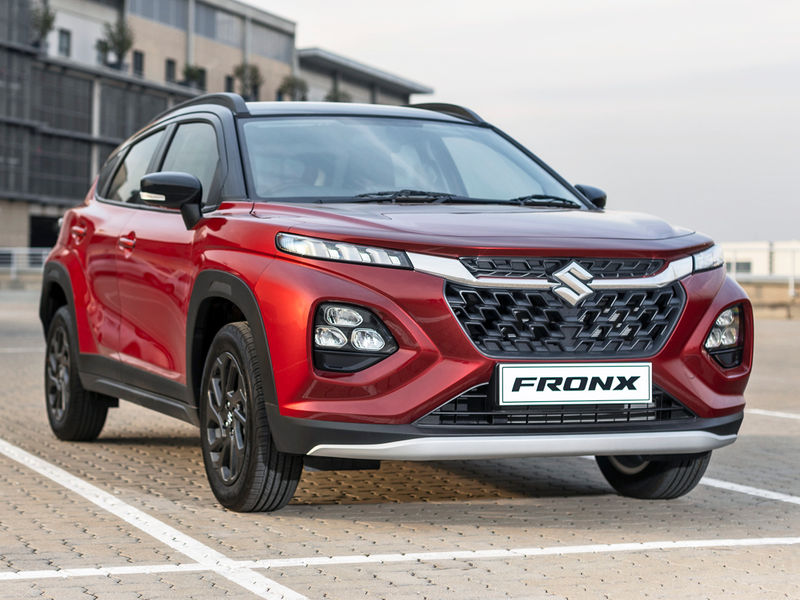
Drilling down to individual model sales statistics, it’s worth pointing out that the overwhelming majority of Suzuki’s products pulled their weight last month. While the Swift (1 566 units) again led the charge, models such as the Ertiga (657 units), Baleno (625 units), Jimny (445 units), S-Presso (434 units) and Fronx (391 units) all put in exceedingly solid performances.
The Celerio (300 units), Grand Vitara (265 units), Ciaz (128 units), Eeco (121 units) and Dzire (107 units) likewise all managed to crack 3 figures, with only the Super Carry (95 units), XL6 (54 units), Ignis (46 units) and Vitara (a single registration) falling short of that mark.
In contrast, the VW Group relied mostly on the Kariega-built Polo Vivo (2 034 units) and Polo hatchback (1 079 units) siblings, which together accounted for 56.4% of the organisation’s total. Of course, when it comes to Volkswagen’s imported models, there may well still be some supply constraints at play here. Suzuki Auto SA, on the other hand, has seemingly secured a largely free-flowing stream of new vehicles from India (we’ve heard of supply issues only in the case of the Fronx).
How does Suzuki continue to grow in a stifled market?
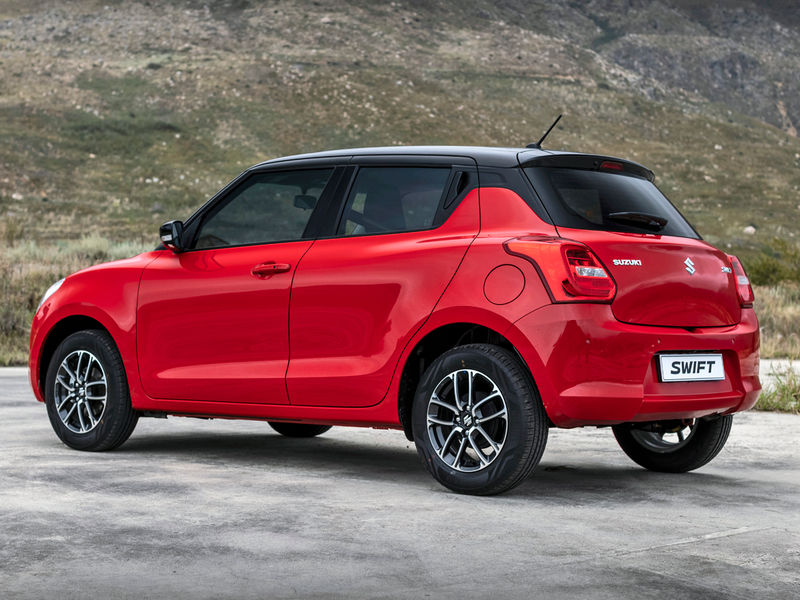
What’s behind Suzuki Auto SA’s consistent growth? Well, operating in an increasingly price-sensitive local market, the company has shrewdly taken advantage of its mother brand’s large-scale production facilities in fellow right-hand-drive country India, where its Maruti counterpart manufactures massive volumes of budget-friendly compact vehicles.
Today, as many as 14 of the 15 nameplates in Suzuki Auto SA’s broader stable (including the Super Carry and Eeco in the LCV segment) are imported from India. Only the long-in-the-tooth Vitara (which remains the brand’s slowest seller) is sourced from Hungary in Europe, while the low-volume Swift Sport derivative is brought over from the Sagara factory in Japan. In addition, we believe 3-door versions of the Jimny are these days again imported from Japan (with the 5-door variants coming from India).
In short, considering the wide-ranging economic headwinds that continue to batter the already beleaguered South African new-vehicle buyer, Suzuki’s laser-like focus on the budget segments – for the record, its range currently runs from R174 900 to R542 900 (compared with VW’s bookends of R259 400 and R1 723 800, excluding Audi) – means that it’s effectively offering the right cars at the right time … and, crucially, at the right sort of price.
So, will Suzuki pass VW Group SA by the end of 2024?
Right, let’s get down to the question on everyone’s minds: will Suzuki have overtaken the VW Group in Mzansi by the time 2024 is done and dusted? In a market as volatile as ours, making big predictions has become something of a fool’s game. Still, while wiping out last year’s considerable 18 018-unit differential seems like an incredibly steep hill for Suzuki Auto SA to climb, the signs are certainly looking positive for the brand as the gap continues to narrow.
The next couple of months will prove whether or not January 2024’s record performance was a flash in the pan. Does VW have anything up its sleeve? Well, the firm plans to add a mystery 3rd vehicle – some sort of sub-T-Cross crossover – to its Kariega production line, potentially along with a half-tonne bakkie spin-off. But, as it stands, these (still unconfirmed, it should be said) models are a few years away.
Ultimately, if recent history is anything to go by, things may well eventually swing Suzuki’s way. While the German company suffered marginal year-on-year sales declines in 2022 and 2023, its Japanese counterpart grew a whopping 71% and a more subdued 4.8% over the past 2 years, respectively. Should Suzuki continue to buck the market trend as we move deeper into 2024, Mzansi may well have crowned a new runner-up to Toyota by the time December ends. We’ll be watching closely.
Related content
SA’s best-selling brands and vehicles in January 2024
SA’s top 10 brands: 2023’s winners & losers by market share
Polo Vivo or Corolla Cross? SA’s 10 best-selling cars of 2023
Ryan Bubear

Having written about everything from sport and politics to crime, Ryan eventually settled on motoring. For well over 15 years, he's been penning articles – both online and in print – about the broader automotive industry, though he's particularly fascinated by vehicle-sales statistics. A freelance writer and editor, Ryan has owned a 1971 Austin Mini Mk3 for 20-plus years.