July 2025 represented the SA new-vehicle market’s highest monthly total in nearly 6 years. Here’s your industry overview, including Mzansi’s 10 best-selling automakers…
In July 2025, South Africa’s new-vehicle market grew 15.6% year on year – the local industry’s 10th consecutive month of year-on-year growth – to end on a whopping 51 383 units. For the record, that represents not only an 8.6% increase over June 2025’s effort but also the market’s highest monthly sales total since October 2019 (nearly 6 years ago).
“We are encouraged by the sustained positive momentum in new-vehicle sales, which clearly underscores the resilience of South African consumers and the strategic importance of a stable macro-economic policy environment. This performance reflects more than short-term consumption – it signals the sector’s confidence in the country’s broader economic trajectory,” said Naamsa CEO, Mikel Mabasa.

The industry-representative body further said vehicle exports “displayed notable resilience” in July, decreasing 1.9% year on year to 35 379 units “despite the effects” of the 25% automotive tariffs imposed by the United States in April 2025. Year to date, exports remain 2.5% ahead of the same 7-month reporting period in 2024.
According to Naamsa, 83.1% of July 2025’s total reported domestic figure of 51 383 units represented dealer sales, while an estimated 11.1% were sales to the new-vehicle rental industry, 3.1% to government and 2.7% to industry corporate fleets.
- ALSO READ: Facelifted Renault Triber confirmed for SA
Mzansi’s new passenger-vehicle market drove much of the broader industry’s growth, ending July 2025 on a heady 36 248 units (with the rental market contributing a considerable 14.0%). Up 20.1% year on year, that total is the best monthly new passenger-vehicle performance since January 2017. Meanwhile, the light-commercial vehicle segment put in its 4th straight month of year-on-year growth, increasing 6.9% to 12 356 units.
Meanwhile, Brandon Cohen, Chairperson of the National Automobile Dealers’ Association (NADA), said that “despite global uncertainty and the looming threat of tariffs”, South Africa’s new-vehicle market was showing “remarkable resilience”. He also pointed to the strength of the new-vehicle rental market, saying this channel continued to “support overall growth” in the industry.
“The rental market has become a surprise growth engine, contributing significantly to the market’s momentum. It’s a strong indication of renewed confidence in travel and tourism sectors,” Cohen noted, adding that growth in this sector was “significantly outpacing all other channels”.
Lebo Gaoaketse, Head of Marketing and Communication at WesBank, suggested SA’s prevailing low-inflation economy (facilitating interest-rate cuts) was also relieving household budgets in other areas and providing more disposable income.
- ALSO READ: Chery Tiggo 7 (2025) Price & Specs
“All these factors combined are assisting consumers and businesses to access finance. Unprecedented levels of demand – as measured by the rate of applications – is driving sales and is proof of the level of confidence in the market,” Gaoaketse said, adding that application volumes at WesBank were more than 20% higher than a year ago.
New-vehicle sales summary for July 2025
- Aggregate new-vehicle sales of 51 383 units increased by 15.6% (6 931 units) compared to July 2024.
- New passenger-vehicle sales of 36 248 units increased by 20.1% (6 072 units) compared to July 2024.
- New light-commercial vehicle sales of 12 356 units increased by 6.9% (800 units) compared to July 2024.
- Export sales of 35 379 units decreased by 1.9% (677 units) compared to July 2024.
10 best-selling automakers in South Africa in July 2025
As you might have already predicted, Toyota SA Motors (which includes the Lexus and Hino brands) led the charge in July 2025. In fact, the Japanese firm registered its highest total since September 2023, ending the month on a whopping 12 694 units. By our maths, that represents an 8.6% month-on-month improvement and a 24.7% market share.
Suzuki Auto SA increased its total 19.8% month on month to 6 257 units (its top performance since January 2025), allowing it to comfortably retain 2nd place. Volkswagen Group Africa (including Audi) thus found itself 519 units off the pace in 3rd, despite its sales growing 15.4% month on month to 5 738 units – its biggest total since November 2024.
After dropping a place in June, Hyundai Automotive SA climbed back to 4th position in July 2025, gaining 8.8% month on month to 3 161 units. Ford Motor Company of SA thus fell back to 5th, with its tally sliding 5.9% month on month to 2 877 units. GWM SA held steady in 6th spot, again ranking as the highest-placed Chinese from (with sales increasing 6.5% month on month to 2 436 units).
Isuzu Motors SA was right on GWM’s tail, climbing a position to 7th on the back of a 16.3% month-on-month increase in registrations to 2 427 units. That saw Chery SA – which grew its total 2.8% month on month to 2 160 units in July 2025 – slip a spot to 8th.
- ALSO READ: Opel Frontera, Citroën Basalt pushed back
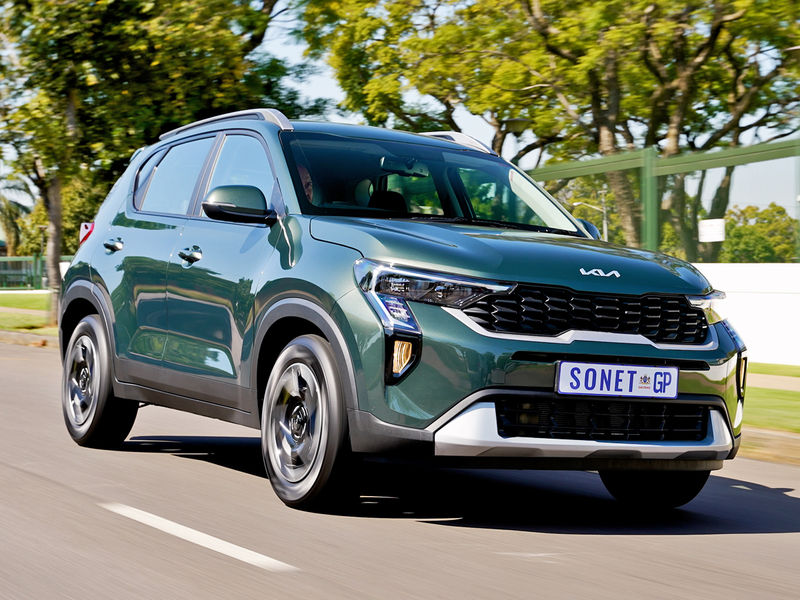
Interestingly, Kia SA returned to the top 10 in July 2025, with the South Korean brand’s sales surging 53.7% month on month to 1 891 units (almost a quarter of which came via the rental channel) – its highest figure since November 2022. Mahindra SA closed out the table, dropping a place to 10th with sales decreasing 2.8% month on month to 1 441 units. Ford and Mahindra were thus the only 2 brands in the top 10 to lose sales month on month in July.
Meanwhile, Renault SA (1 320 units) again had to be content with 11th place, while BMW Group SA – which includes the BMW and Mini brands – slipped 2 spots to 12 (with a Naamsa-estimated 1 249 units). Nissan (1 190 units) stayed in 13th, while Omoda & Jaecoo (1 069 units) and Jetour (717 units) likewise held steady in 14th and 15th, respectively.
1. Toyota – 12 694 units
2. Suzuki – 6 257 units
3. Volkswagen Group – 5 738 units
4. Hyundai – 3 161 units
5. Ford – 2 877 units
6. GWM – 2 436 units
7. Isuzu – 2 427 units
8. Chery – 2 160 units
9. Kia – 1 891 units
10. Mahindra – 1 441 units
SA’s sales outlook for the rest of 2025
What’s next for South Africa’s new-vehicle market? Well, with July’s effort “driven by improving consumer confidence, favourable credit conditions and a steady recovery in disposable incomes”, Naamsa says the South African Reserve Bank’s recent decision to again reduce the repo rate by 25 basis points “will further inject much-needed stimulus into the economy”.
“Encouragingly, household credit extension has continued to improve, while consumer sentiment is rebounding – especially among middle- and upper-income groups. The implementation of pension reforms has also unlocked additional liquidity for big-ticket purchases such as vehicles. This positive trend is further reinforced by improved logistics performance, a more stable electricity supply and a sustained demand for high-spec, cost-effective vehicles across market segments,” says Naamsa.
- ALSO READ: Chinese brand JMC revived in South Africa
NADA’s Cohen believes the influence of Chinese brands in the local market will continue to grow in the latter part of the year, pointing to the fact financial institutions are now showing “confidence in these brands by offering white-labelled finance packages”.
“The rapid rise of Chinese and Asian brands reflects a shift in buyer preferences toward affordability and value. It’s a trend we expect to intensify as more brands enter the market,” explains Cohen.
- ALSO READ: New Volvo ES90 locked in for South Africa
Meanwhile, WesBank’s Gaoaketse maintains “there remains a direct correlation between the [interest] rate-cutting cycle and the upturn in new-vehicle sales”, adding that the local market “should continue to expect growth if interest rates remain lower”.
Gaoaketse furthermore suggests there is scope for another cut before the end of the year: “With inflation well within target, an additional cut would allow the industry to potentially show double-digit growth for the year, spurring consumer and business confidence”.
“While the new-vehicle market remains buoyant, consumers should remain vigilant with existing and future indebtedness. Savings on existing debt will provide relief elsewhere in household budgets but may best be spent reducing overall levels of debt in the longer term,” he cautions.
Related content
10 best-selling ladder-frame SUVs in H1 2025
Ryan Bubear

Having written about everything from sport and politics to crime, Ryan eventually settled on motoring. For well over 15 years, he's been penning articles – both online and in print – about the broader automotive industry, though he's particularly fascinated by vehicle-sales statistics. A freelance writer and editor, Ryan has owned a 1971 Austin Mini Mk3 for 20-plus years.