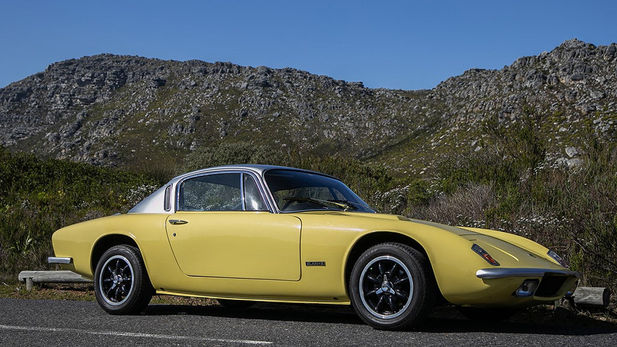
Lotus Cars founder and renowned design engineer Colin Chapman was known for making his sports- and racing cars as light as possible. We travel back in time to 1970 to sample one such example in the shape of the seductive Lotus Elan +2.
If you think about Lotus, lightweight sports- and race cars should come to mind first. That is until recently, when the company launched the supremely powerful and -expensive Eletre electric SUV.
The iconic British (now Chinese-owned) company has a rich racing history, and that has also been the case with its road cars. South African car buyers haven’t had access to many Lotus models, due to a multitude of reasons, but some examples were imported to South Africa, officially and privately.
But back in the swinging ’60s, Lotus achieved numerous on-track successes, one being the Lotus-Ford Type 38 with which the team took the win at the 1965 Indianapolis 500 (yes, that was 60 years ago).
Furthermore, when Goodwood Estate (the UK’s Mecca of motorsport) published an article in which it named its best F1 cars of the 1960s, there were 2 Lotus cars on the list: the 25 and the 18.
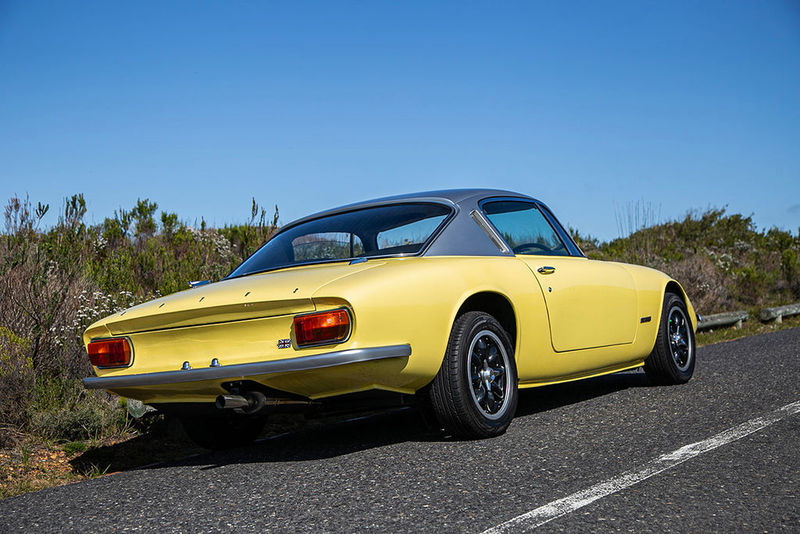
It was during those years that the Lotus Elan road car was developed and released. There were various versions, including a drop head coupe, fixed head coupe, a racing version and then also this subject of this drive, the +2. As can be assumed from its name, it offered 2 additional (albeit tiny) seats in the rear.
Details of the Lotus Elan +2
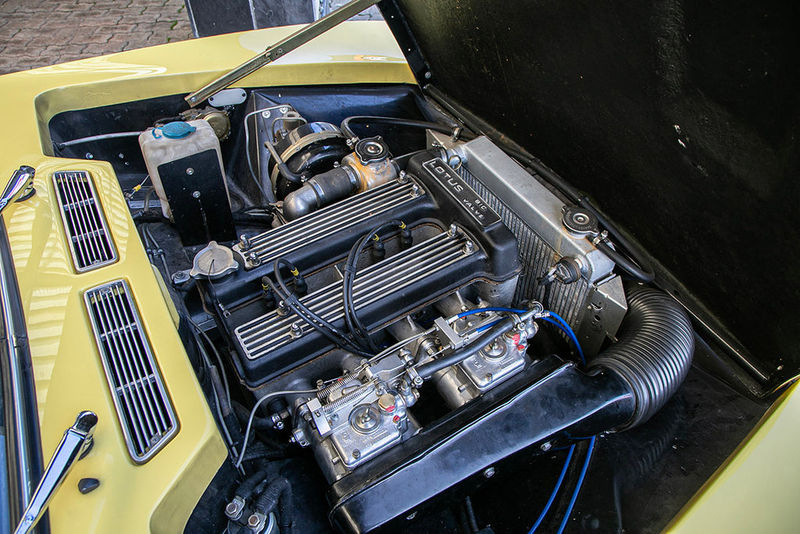
The chassis of the Elan was manufactured from mild steel and the body mounted on top of it was made of fibreglass. Under the lightweight bonnet is a 1.6-litre Lotus twin-camshaft, 4-cylinder petrol engine.
It develops 88 kW at 6 000 rpm and 146 Nm of torque at 4 000 rpm, but seeing as the Elan +2 only weighs 890 kg, I would soon discover that it delivers ample performance. This is evidenced by road tests at the time with testers managing a 0-97 kph time of below 8.0 sec and a top speed of 193 kph.
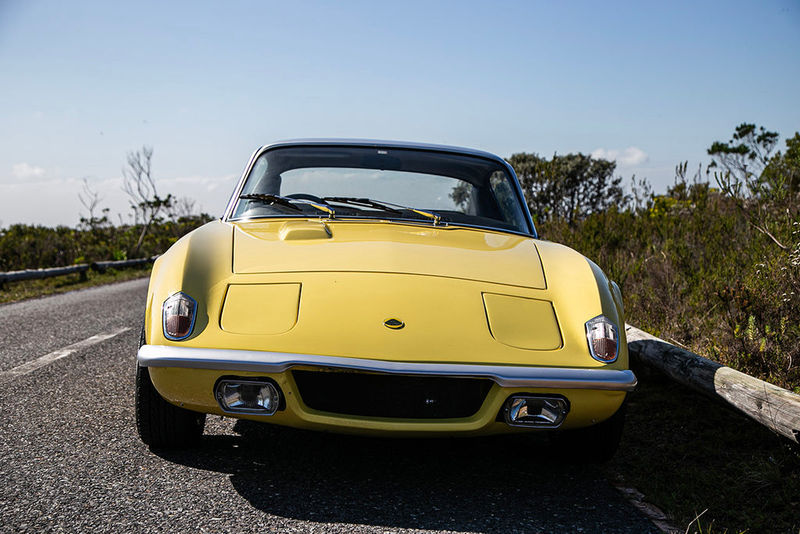
As I approach the Elan, 2 elements of the venerable British coupe stand out above everything else: the compact size of the car, as well as the general, flowing design. This example’s paintwork also seems to be in excellent condition, which further contributes to its classic and attractive stance.
The 2-tone paintwork (with the yellow bodywork and silver top and bumpers) makes it stand out even more. The sloping front and rear ends perfectly “connect” with each other on either end of the cabin. Although this might give a visual impression that it is a lengthy car, in real life it is quite dinky.
Specifications:
- Model: 1970 Lotus Elan +2
- Engine: 1.6-litre, 4-cylinder, petrol
- Power: 88 kW at 6 000 rpm
- Torque: 146 Nm at 4 000 rpm
- Transmission: 4-speed manual, RWD
- Weight: 890 kg
- 0-100 km/h: 8.0 sec
- Top Speed: 193 kph
Behind the wheel of the Lotus Elan
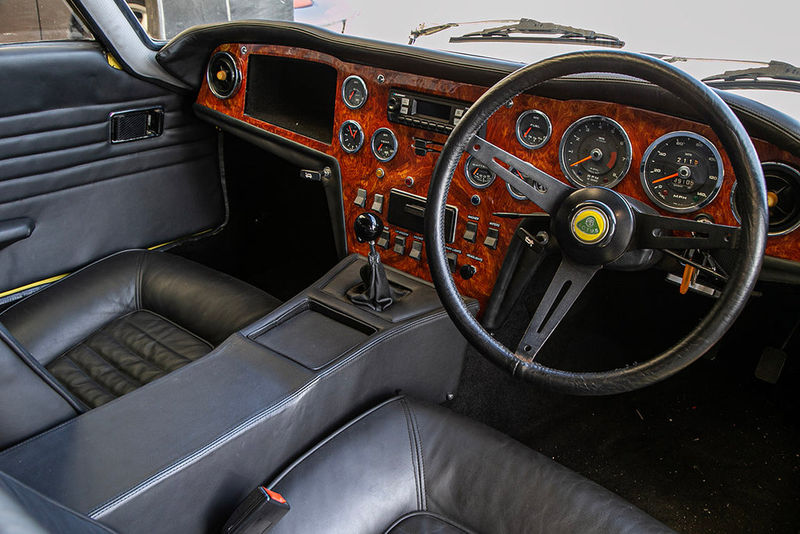
When you get seated in the Elan, you notice the relatively small size of the cabin. It takes you back to the late-’60s, from the instruments to the thin-rimmed steering wheel and the almost oversized gear knob. You sit close to the floor which, in turn, is close to the road – the ideal driving position for a sportscar!
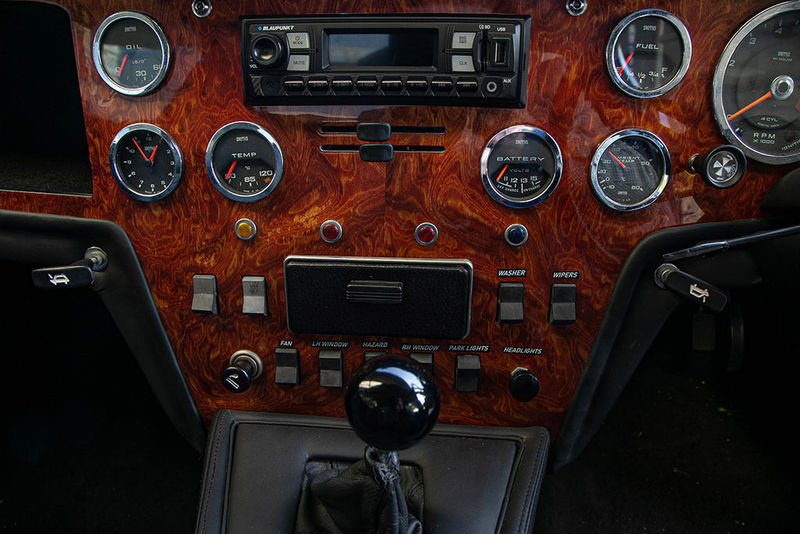
There are numerous dials and gauges nestled in the expansive walnut trim inlay below the dashboard, they indicate the temperatures of the fluids, the time, battery voltage, fuel level and so on.
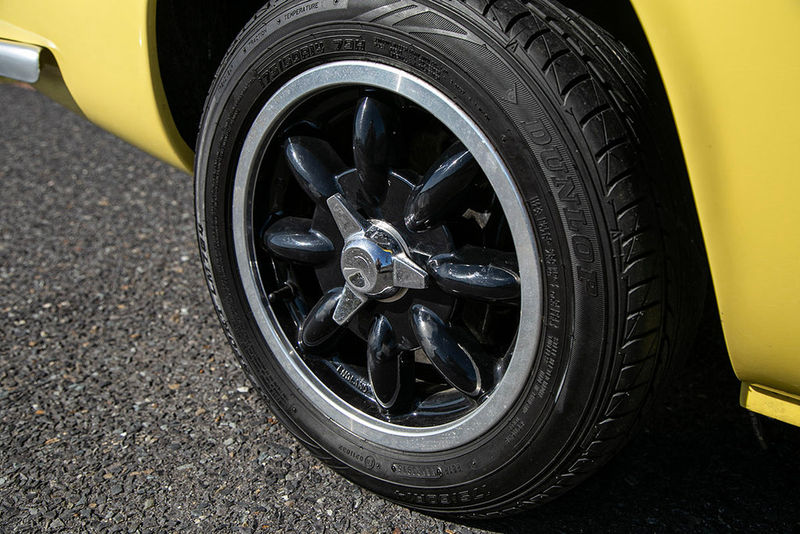
The compact nature of the Lotus Elan +2 is also evident in the size of the sportscar’s wheels and tyres. All four corners are equipped with modest 175/60 R14 tyres – but that is all you need when your car weighs only 890 kg! If you think there is no grip, you are very much mistaken.
When you squeeze the accelerator pedal a little harder, it is obvious the engine is revvy. Some finetuning of the carburettor must still be done, as in traffic you can sense that it only wants to “clear its throat”.
As I head up Ou Kaapse Weg, the Lotus feels light and nimble. It honestly feels as if the Elan +2 wraps itself around you, much more so than in many modern cars. You sit close to the door and windscreen, which also makes you feel much more “involved” in the driving experience than in other cars.
For one particular corner, I brake quite hard and the ol’ Lotus’ stoppers do a better-than-expected job of brushing off speed quickly. The 4-speed gearbox offers another layer of pure mechanical interaction with the car: the shift throws are relatively short, while each change is notably mechanical in feel.
If you can heel and toe with your feet, even to a moderate level – the pedals are perfectly positioned for this task. The steering wheel provides a great level of feedback, and although I didn’t push the car to its limit, I could feel the feedback increasing with speed, which is exactly what an enthusiast would want.
As I head back to where my drive began (at the MotoVillage dealership in Tokai, Cape Town, which lent us this car), I switch on the headlights to enjoy the sight of them popping up – hmm, the coup d’grace.
Summary
It is hard not the like the Lotus Elan +2. The additional space in the rear allows you to also add luggage for a longer trip, but at the same time, the car can accommodate a pair of young passengers to enjoy the trip with you. It’s not a ponderous classic car, but light, nimble and surprisingly sprightly. It is a sportscar in the true sense of the word and a car that only those in the know will appreciate and recognise.
Search for a classic car listed for sale on Cars.co.za
Find exclusive car-themed merchandise at the SentiMETAL Shop
Related content:
Mercedes-Benz 230S Fintail Estate: Classic Drive
Lancia Delta HF Integrale: Classic Drive
Mercedes-Benz (W123) 280E: Classic Drive
Porsche 944 Cabriolet: Classic Drive
Mercedes-Benz 280SL ‘Pagoda’: Classic Drive