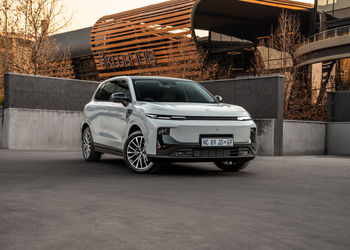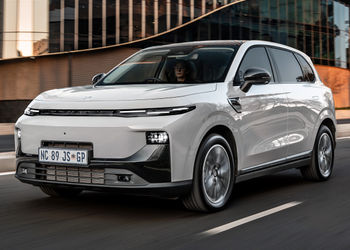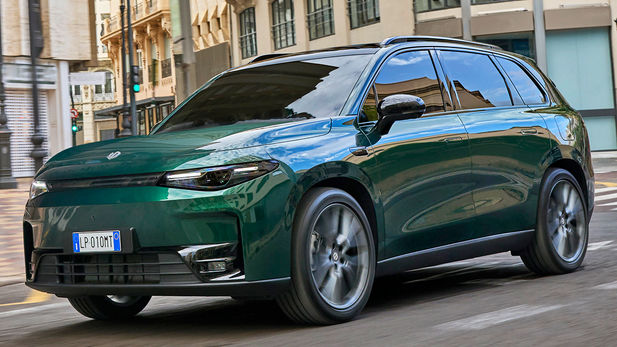
Every legacy car company has a Chinese industry partner. And for Stellantis, it’s Leapmotor. The Chinese car brand is now available from your local Stellantis dealer, but can its C10 REEV rival GWM and Chery’s PHEVs?
Leapmotor is a big deal for Stellantis. Why? Although Stellantis sells 8 brands in South Africa, the hybrid and electric drive options have been absent. Leapmotor solves that with an interesting product.
If you want the benefits of electric drive, without the range anxiety issues, hybridity is the only solution. But most of the hybrids available in South Africa have been simple self-charging hybrids, which tend to be either light on fuel or very light on performance.
Plug-in hybrids (PHEVs) are better than simple hybrids. But what about a PHEV, which only uses electric power to drive the wheels? Enter the Leapmotor C10 REEV. It uses a simple petrol engine to charge its battery pack. That means the drive wheels are always electrically powered, for the smoothest, most consistent performance.
Leapmotor’s C10 REEV has a 50-litre fuel tank and 28.4 kWh battery pack, which can be plugged-in for recharging. The big win is that although it has a low-output 1.5-litre petrol engine, driving performance is always responsive. How? Because the battery pack and electric motor set-up is rated for a constant 158 kW peak power output.
Why the C10 REEV range extender make sense
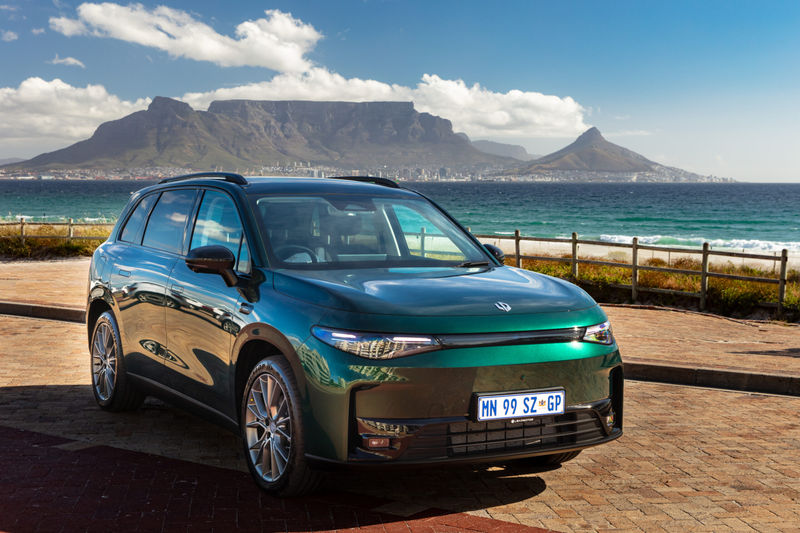
Suppose you want the acceleration benefit of an electric motor’s instant torque, and you desire the promised ultra-low fuel consumption of a hybrid. In that case, you need to be able to plug in.
But even PHEVs have their weaknesses, because the petrol engines that drive them still do too much work driving the wheels. And many of these engines are turbocharged, which means they have added complexity and long-term maintenance needs.
China is unquestionably the leader in global battery car technology. Chinese engineers believe in the range-extender hybrid (REV) approach, which drives the wheels with battery power and electric motors. Only using the onboard petrol engine as a constant output generator to charge the battery when required.
Simple REV engines are better
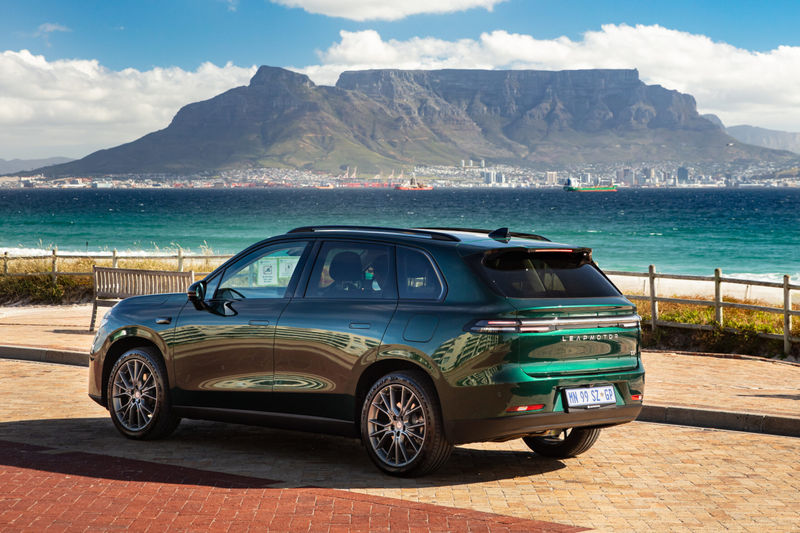
REVs are clever hybrid engineering. Since the system uses a battery pack or drive, and the petrol engine serves as a secondary function, functioning as a generator set, you can use a much simpler, lower-tech engine running at ideal generator specs.
Instead of dealing with inertia during pull-away and high rpm surges for overtaking, a REV engine never runs under strain. That means simpler engines, which are very under-stressed, should last a long time without maintenance issues because they function as constant output generators.
This is why Leapmotor uses a very low-output, simple, 1.5-litre naturally aspirated engine. It’s an Atkinson cycle engine, and if that sounds familiar, it’s because Toyota has been using Atkinson cycle petrol engines in its hybrids for a long time.
What makes an Atkinson cycle petrol engine different? These are low-power, high-efficiency petrol engines, which use advanced cam phasing to delay the intake valve closing. This shortens the compression stroke in comparison to the expansion stroke. The result? Atkinson stroke engines sacrifice power for efficiency, but that makes them ideal as onboard generators for any REV.
Like many Chinese cars, the C10’s avalanche of ADAS systems has good intentions. But the ADAS can become overwhelming, especially in South African driving conditions where pedestrians, animals, and other road users frequently do the unexpected, triggering too many interventions from the ADAS suite.
It’s big inside – but easy to park
Beyond its clever powertrain and drive system, the C10’s real benefit is its packaging. Chinese customers demand comfort and space, but they also spend most of their driving lives in some of the world’s worst traffic. So, they want all the room inside, without driving a vehicle with needlessly huge exterior dimensions.
Leapmotor’s interior architects have optimised the space utilisation. It might be rear-wheel drive, but because it’s an electric motor doing the driving, there’s no prop shaft tunnel ruining floorspace for the second row passengers.
The C10’s traditional 5-door station wagon/SUV proportions make it airy and roomy, unlike those silly sloping-roofline 5-door crossovers. The core load capacity numbers are good, with 435-litres of luggage space, which expands to 1410-litres with the rear seats folded.
We’d never recommend sleeping in your car, but the C10 does allow it if you need to. The front seatbacks recline completely. That means you can line them up with the rear seat bases, and create a huge, flat, load or chill area.
What does C10 REEV compete with?
The two C10 REEVs are both priced (just) below R800 000. The Style trim is R759 900 and Design is R799 900. Like any Chinese vehicle, the equipment levels are very comprehensive, with all manner of infotainment screen syncing and advanced ADAS systems being standard.
Total theoretical driving range, with a fully charged battery and brimmed 50-litre fuel tank, is 970 km. But is that good enough in a market where other Chinese PHEVs offer a lot more total system power?
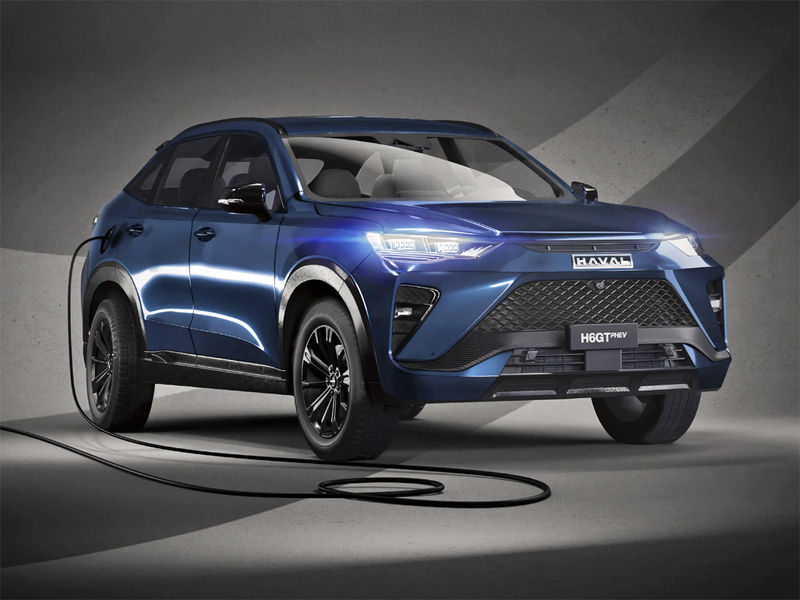
Haval’s H6 PHEV is the same price (R799 900) as the C10 REEV Design, but with enormous performance and less luggage space. GWM’s Haval sub-brand has proven hugely successful in South Africa. H6 PHEV combines a sleek sloping liftback design with a 321 kW PHEV powertrain, delivering more than double the C10’s power and performance.
Overtaking acceleration might be wildly superior to the C10, but the H6 GT PHEV’s luggage capacity isn’t, as its rearmost luggage compartment is 43 litres smaller.
With a 35.4 kWh battery pack and 55-litre fuel tank, the H6 GT PHEV is capable of a 1000 km theoretical driving range. In comparison to C10, the Haval offers near supercar acceleration.
Jaecoo J7 SHS
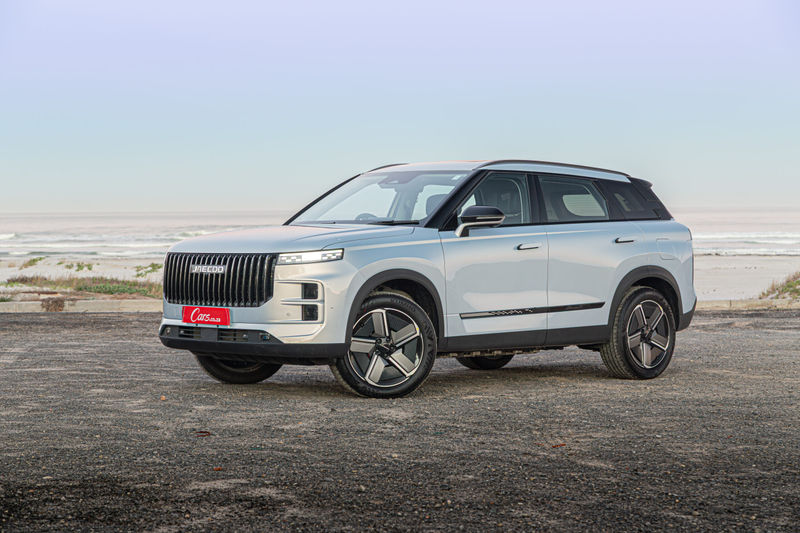
Has a similar shape and proportions to C10, but the 1.5 turbopetrol engine means there’s a lot more power available.
J7 SHS offers significantly more performance than the C10, with 255 kW of peak power compared to 158 kW, but the Leapmotor has a much larger battery, at 28.4 kWh versus the Jaecoo PHEV’s 18 kWh. Despite having a much smaller battery, thirstier turbopetrol engine, and similarly-sized fuel capacity, J7 SHS claims a better overall range of 1200 km. In the real world, the C10 should be more efficient, though. It’s bigger battery and naturally aspirated engine make that a reality of physics.
Cabin and luggage space are nearly equal. J7 SHS has 65-litres more luggage space in the back, but the C10’s total cargo space (with rear seats folded) is better by a significant 145-litres.
It’s challenging to ignore the performance advantages of Jaecoo’s J7 SHS at a price of R689 900, which significantly undercuts both the C10 variants.
Chery Tiggo 8 1.5 CSH PHEV Apex
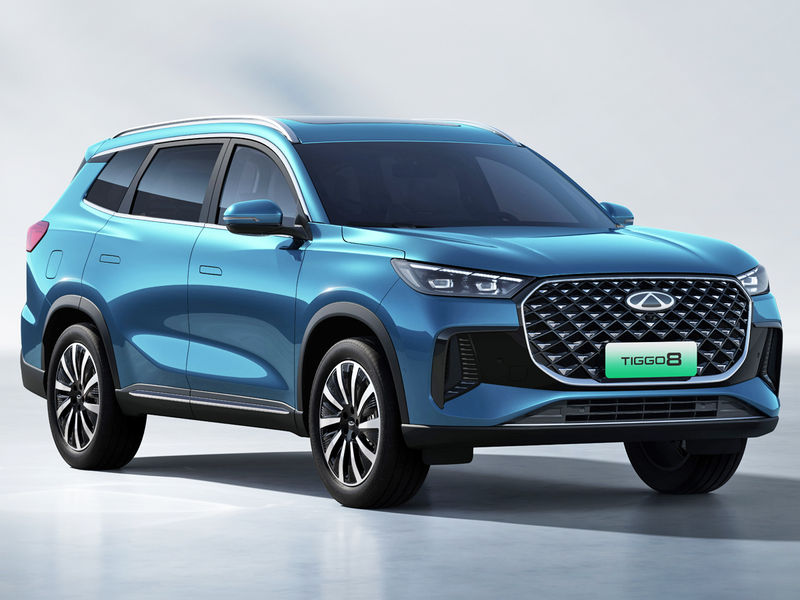
Uses the same powertrain as Jaecoo’s J7 SHS. That means it has 255 kW and an 18 kWh battery pack, delivering an outstanding balance of performance and hybridised driving economy.
Bigger in size than C10, but cheaper. This Tiggo 8 has 10 airbags, typically generous Chery equipment levels, and 7 seats. With the third-row seating folded down, Tiggo 8 PHEV’s luggage capacity is 59-litres better than C10. Drop the Tiggo 8’s second row, and its luggage space is a massive 1930 litres, dwarfing the C10’s total luggage capacity of 1410 litres.
Also rides on 19-inch wheels, which are an inch smaller than C10’s 20-inchers. That means the Tiggo 8 CSH PHEV has larger volume tyres with more sidewall cushioning, which makes a difference to real-world ride quality on coarse South African roads. The Tiggo 8’s price of R729 900 offers a lot more value than Leapmotor’s C10.
Cars.co.za

Providing you with the latest motoring news, new car releases and the simplest way to buy and sell cars.