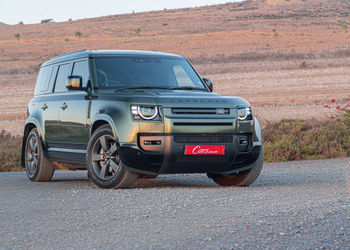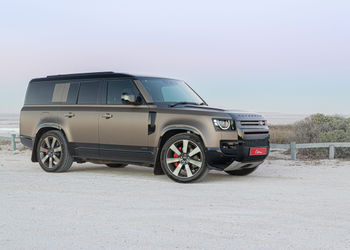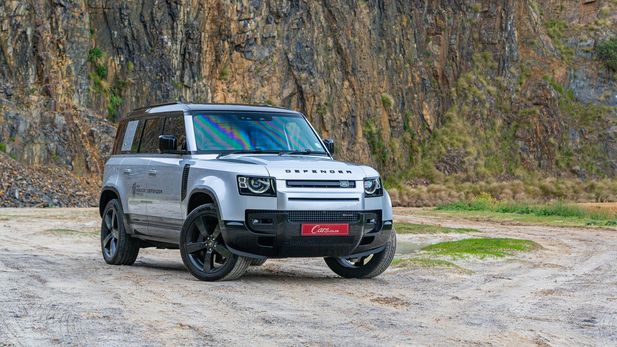
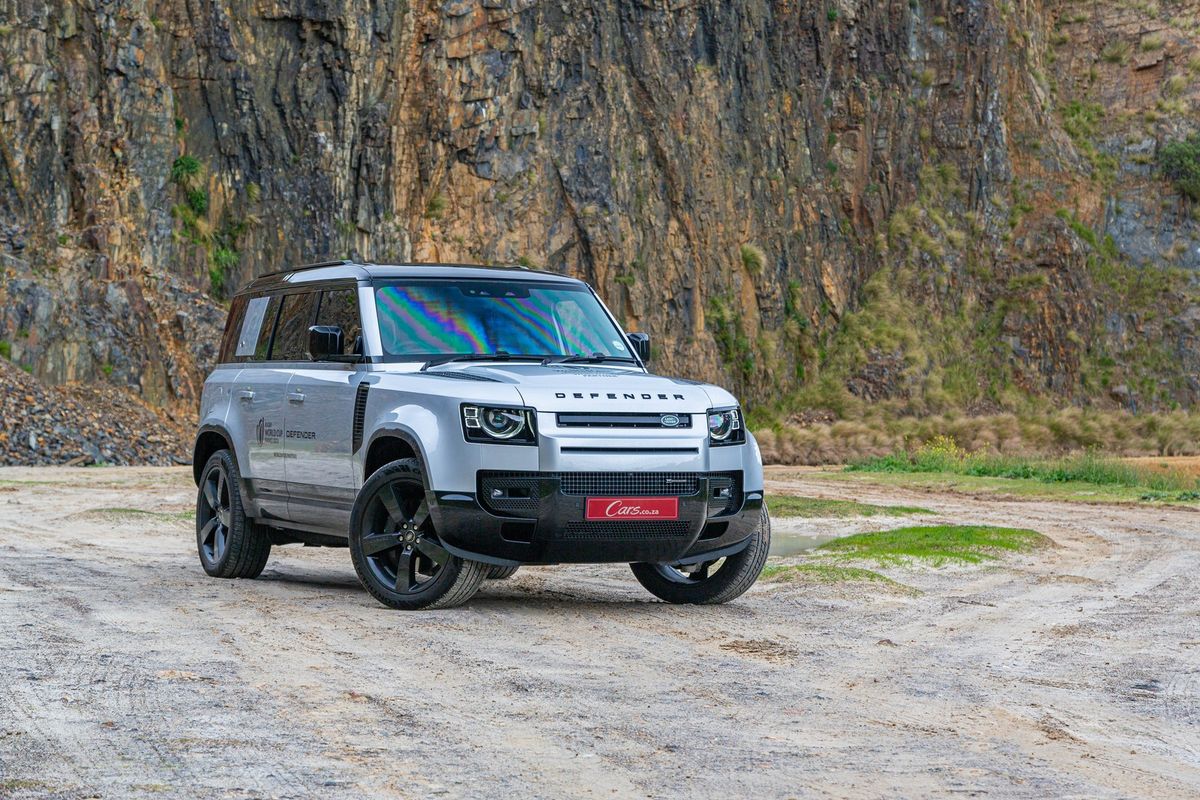
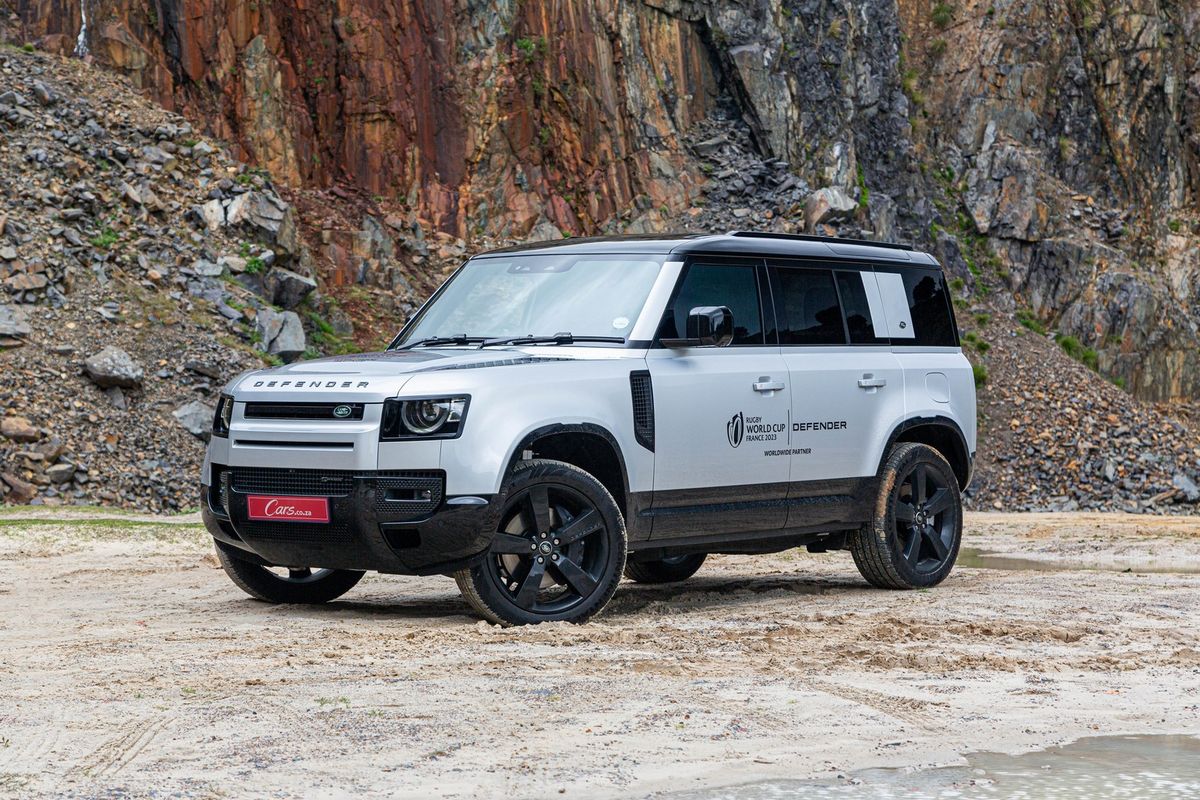
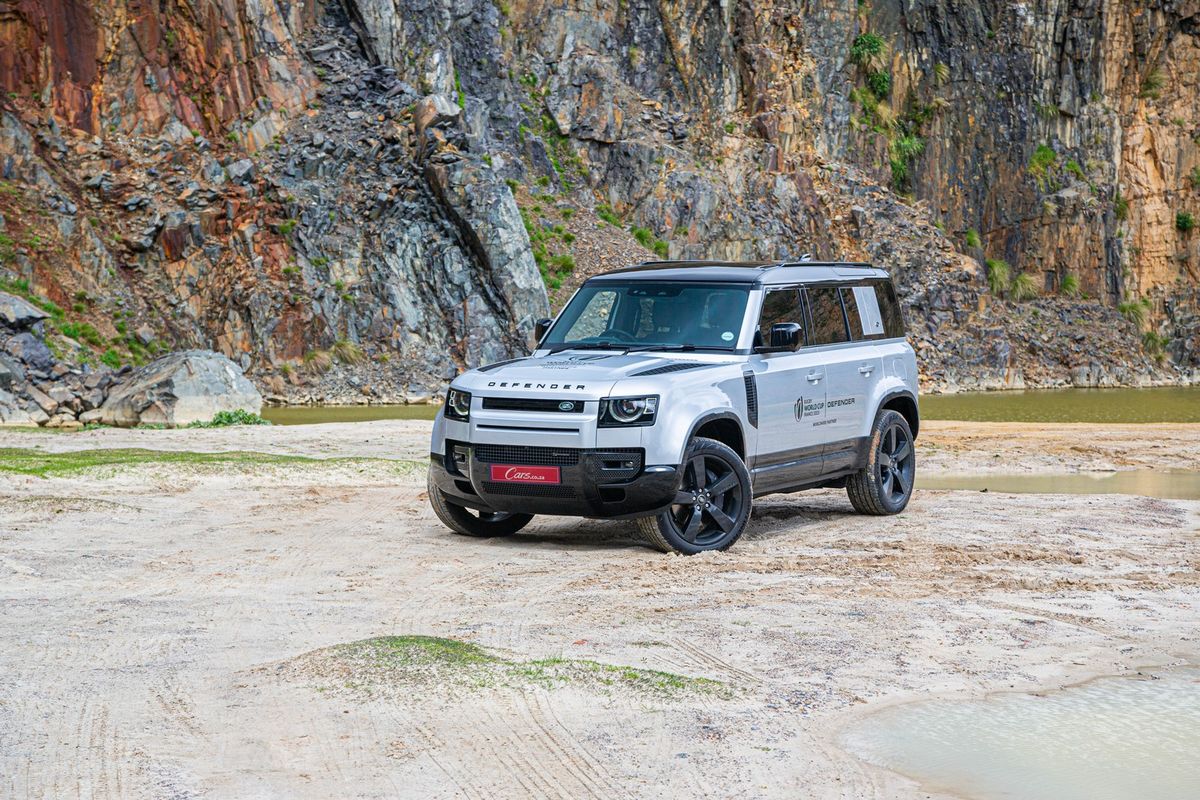
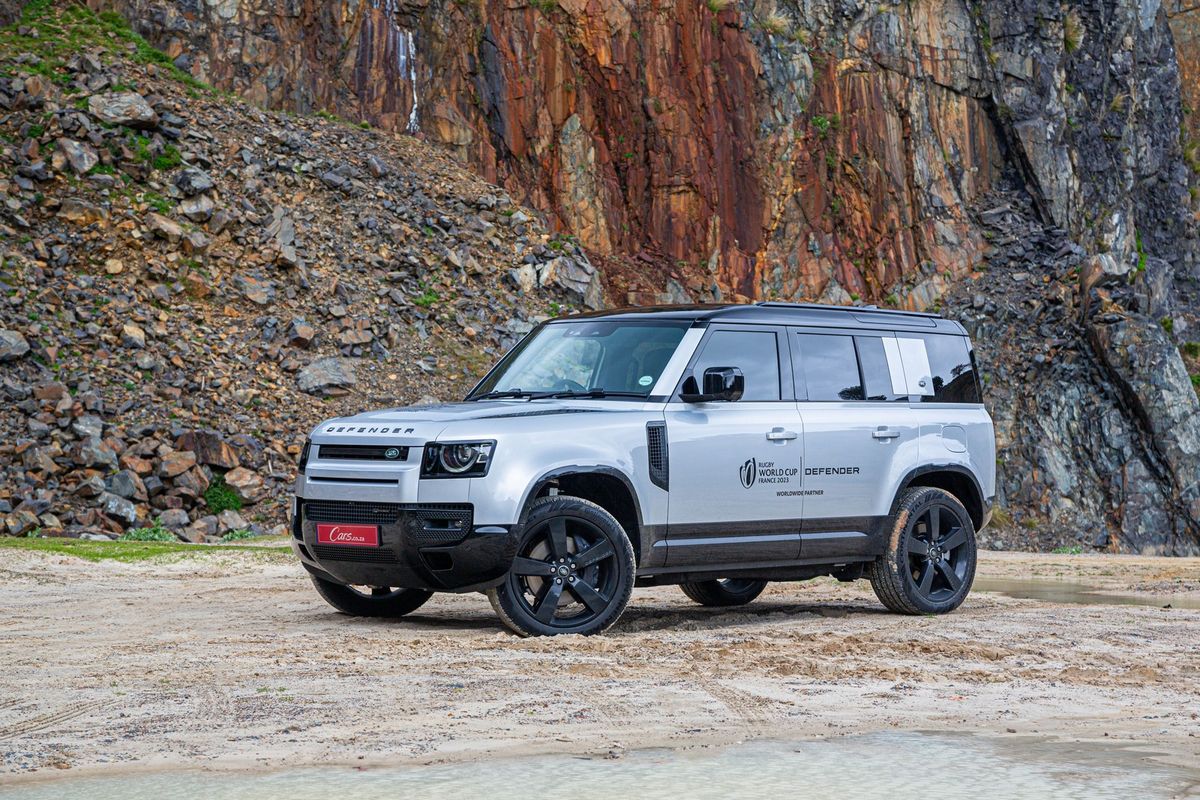
The Land Rover Defender PHEV (plug-in hybrid) offers premium SUV buyers a combination of petrol and electric power in addition to standout kerb appeal and notable off-road ability. Is this the ideal Defender derivative for city slickers?
We like: Performance, efficiency, retains the Defender’s renowned off-road capability
We don’t like: Price, its low carbon-emissions figure is of little benefit in our market
FAST FACTS
- Model: Land Rover Defender PHEV 110 P400e X-Dynamic HSE
- Price: R2 135 900 (October 2023)
- Engine: 2.0-litre turbocharged 4-cylinder petrol with electric motor and battery
- Power/Torque: 297 kW and 640 Nm
- Transmission: 8-speed automatic
- 0-100 kph: 6.1 (tested)
- Fuel consumption: 2.8 L/100 km (claimed)
- Luggage/Utility space: 857-1 946 litres
Serious about buying/selling?
Some dealerships regularly offer great deals. See our New Car Specials!
Looking to sell your car? Sell it on Cars.co.za for free
Where does the Land Rover Defender PHEV fit in?
The L663-series Land Rover Defender has been quite the success story for Jaguar Land Rover – globally and locally. Just take a casual glance at this year’s sales figures; you’ll notice the Defender substantially outsells every other model in its stable and we understand that almost every unit that gets shipped to South Africa is already spoken for; that’s right, they’ve been sold even before they roll off the carrier.
There’s a lot to like about the Defender. Not only does it look the part, but it perfectly balances the urban family car and extreme off-roader roles. Your Defender may never traverse the most punishing off-road trail in Namibia, but the reassurance that it could do it without breaking a sweat is a great selling point.
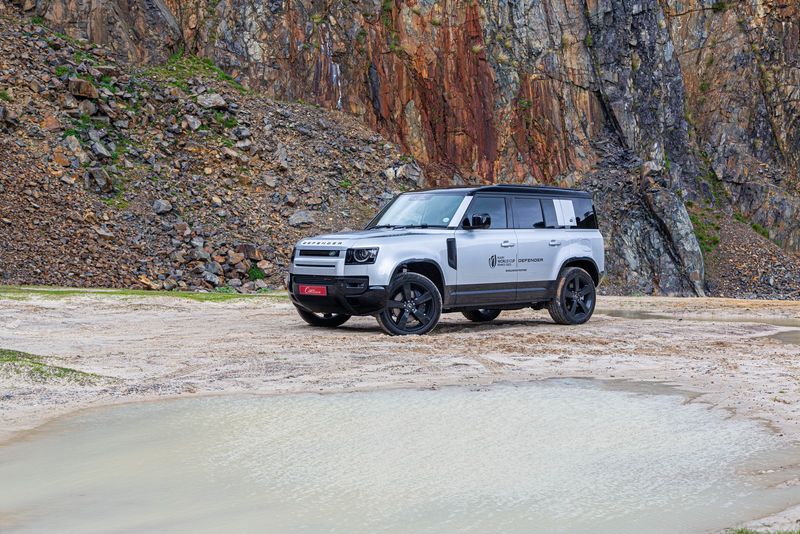
Plus, there’s plenty of variety in the range’s line-up, with 3 body styles: the 2-door 90, 4-door 110 and the 8-seater 130. As far as engines are concerned, there are turbopetrols and -diesels ranging from 4-cylinders to supercharged V8s, and now there’s a plug-in hybrid, which is the derivative on test here.
If you’re looking to buy a dedicated plug-in hybrid luxury SUV, there is a handful of offerings to choose from. If the off-road skillset is not mandatory, we’d suggest a Volvo XC90 T8 Twin Engine, BMW X5 50e and Porsche Cayenne e-hybrid. Budget permitting, you could also consider a Range Rover P460e.
Compare specs of Defender PHEV with those of the BMW X5 50e and Volvo XC90 T8 Twin Engine
How the Defender PHEV fares in terms of…
Design and Packaging

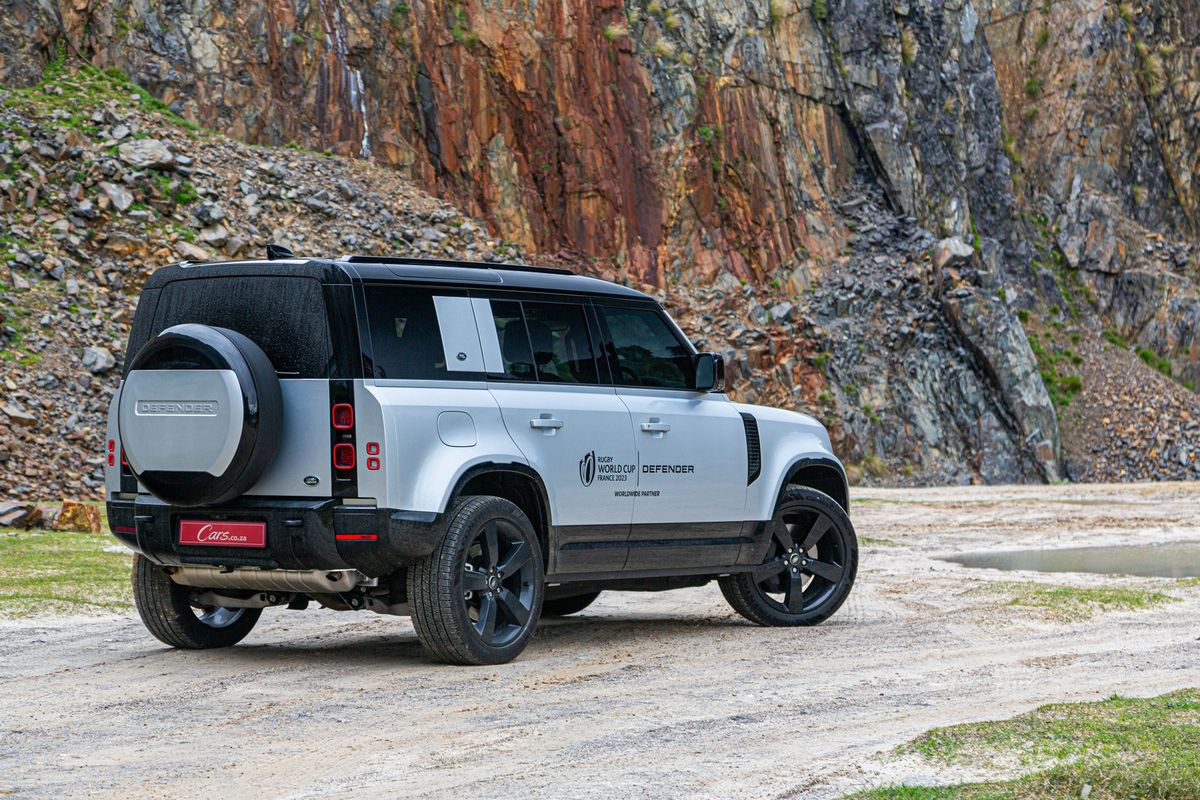
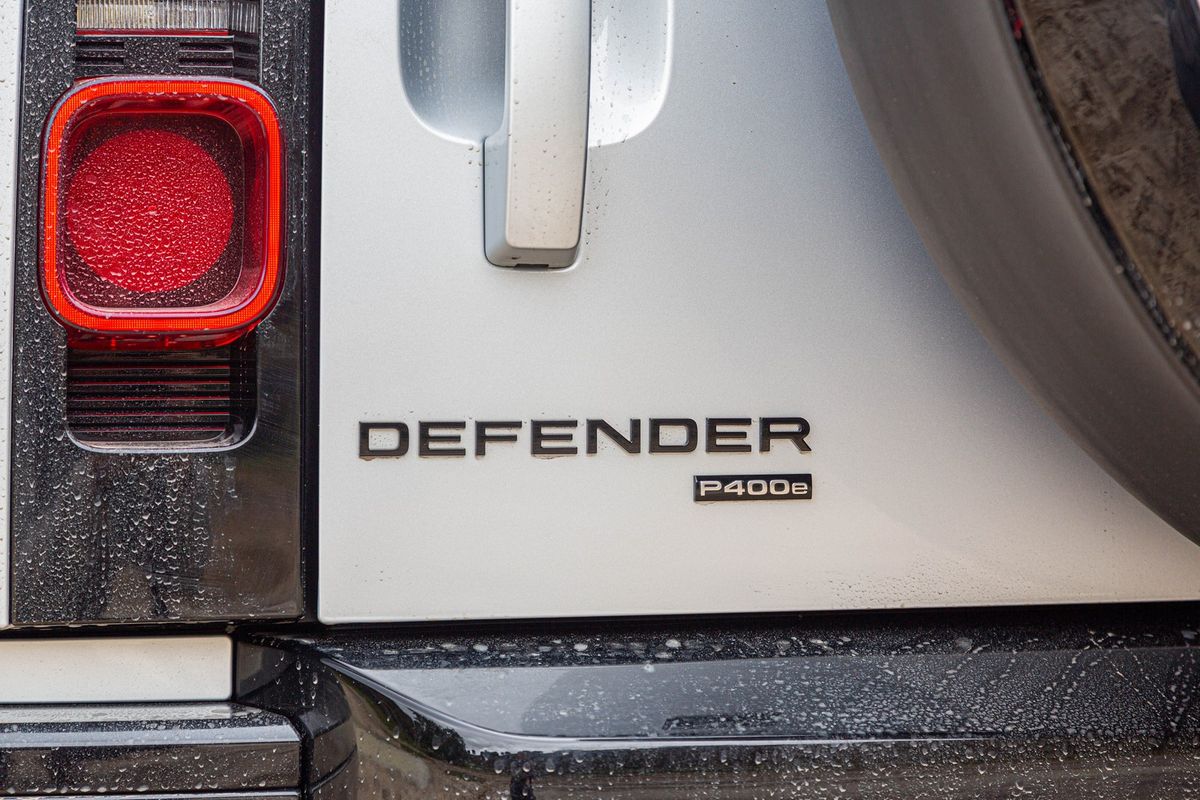
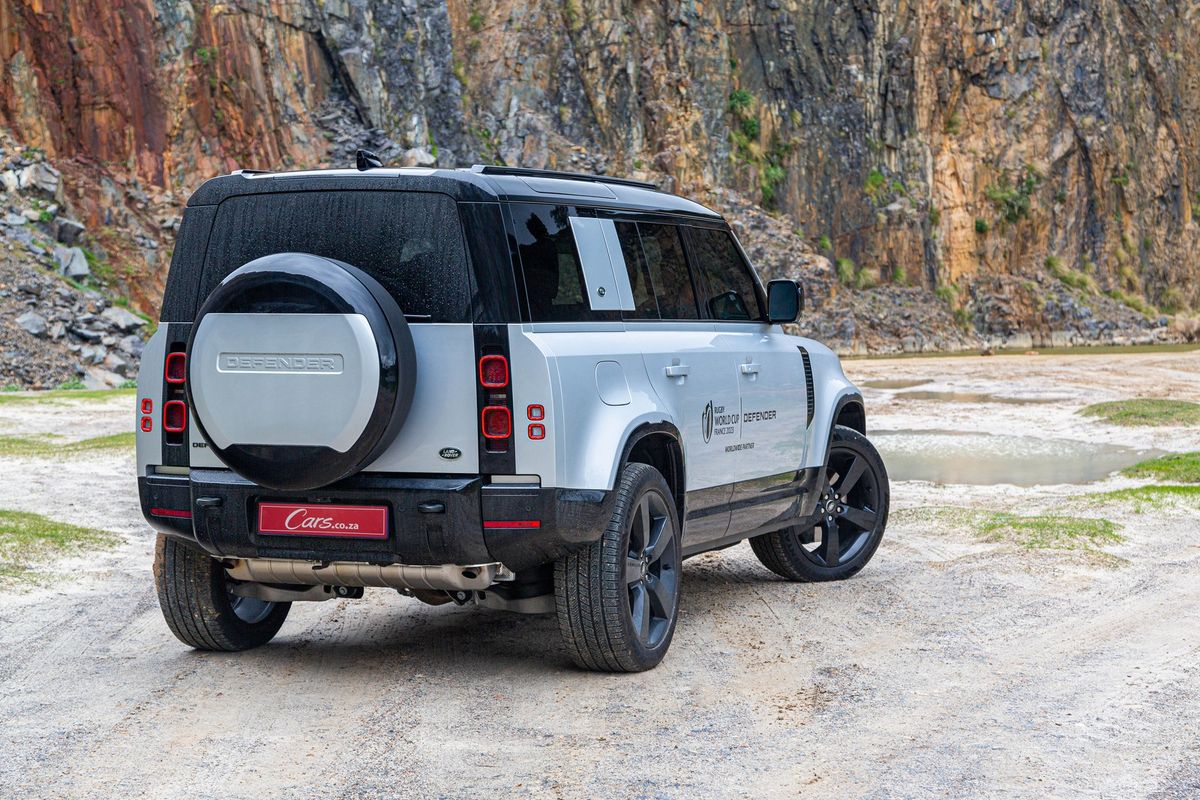
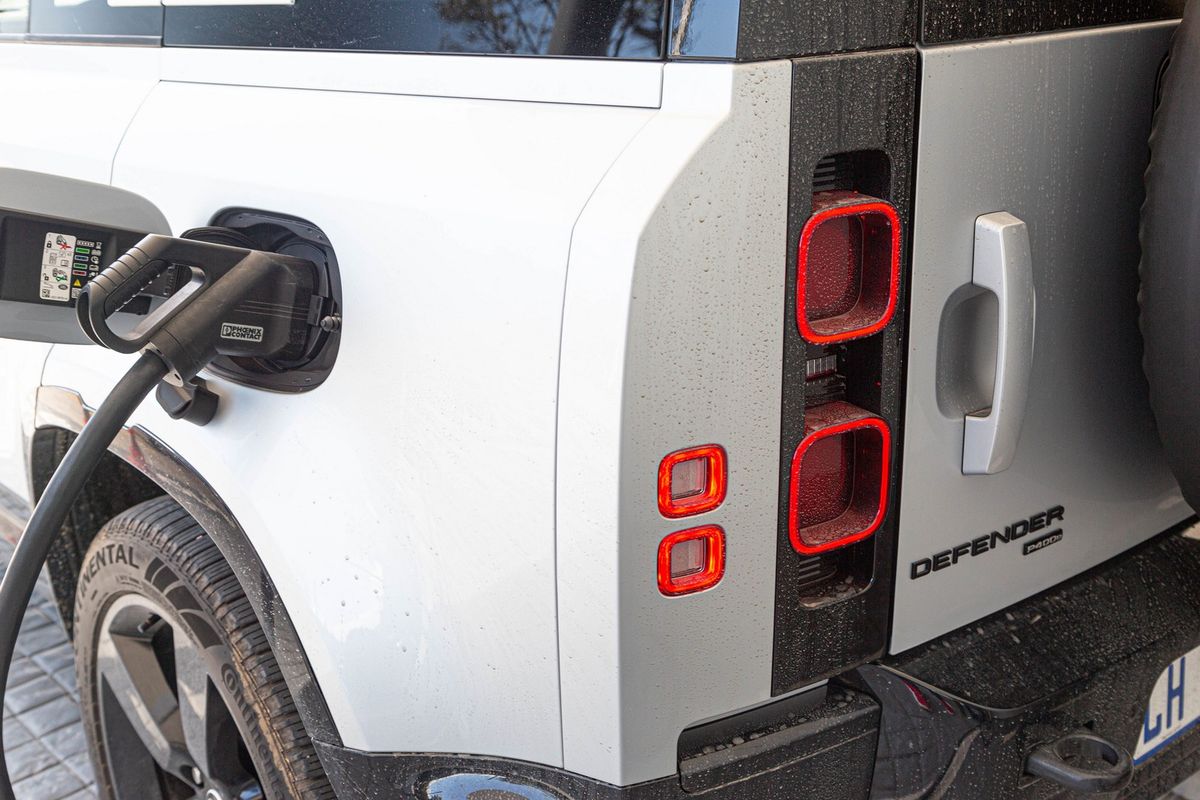
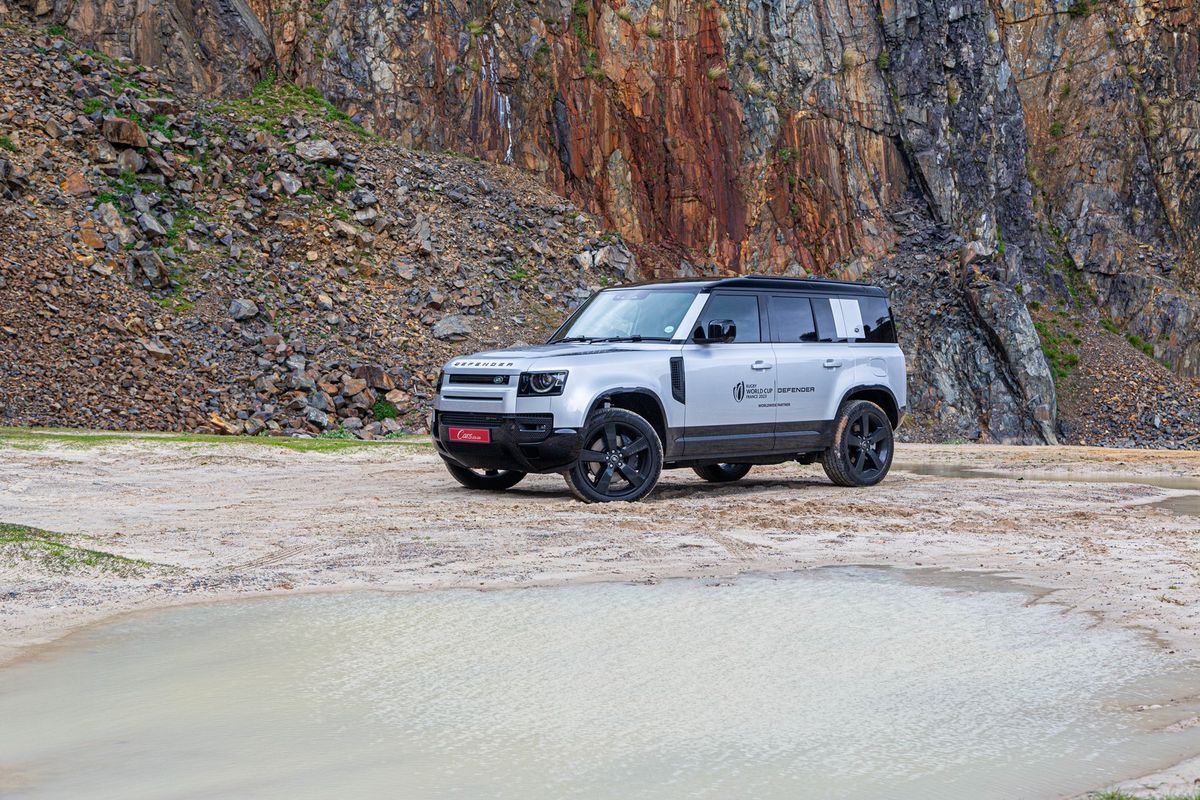
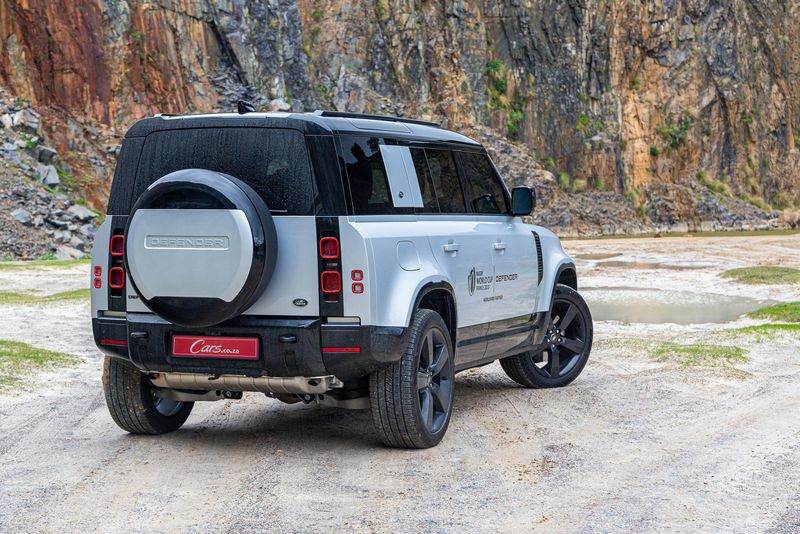
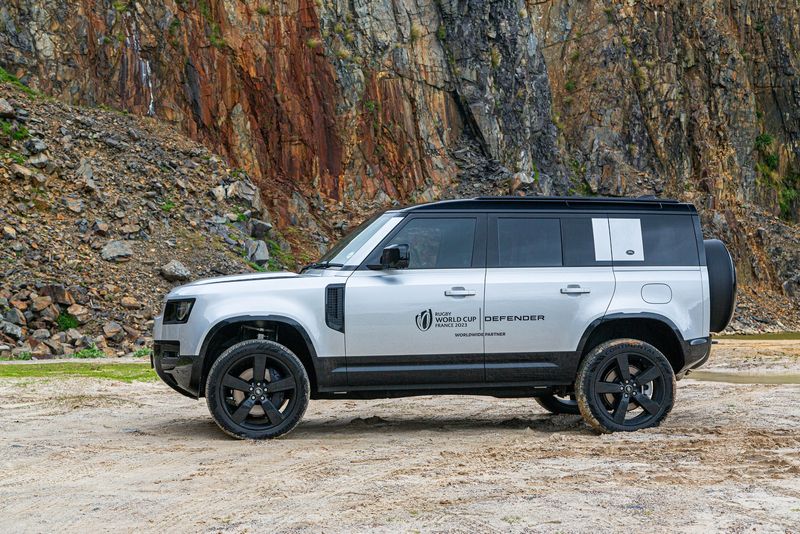
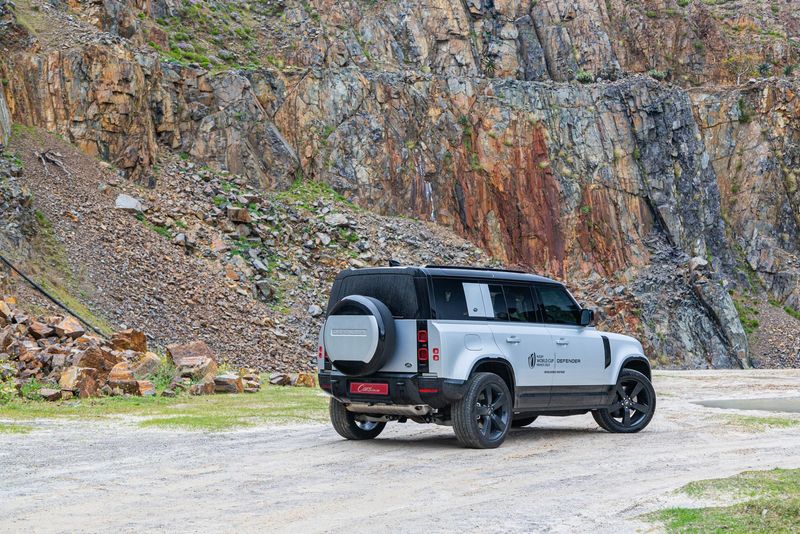
The P400e X-Dynamic HSE looks just like any other Defender 110 derivative, doesn’t it? Sure, but if you look closer, you’ll spot the subtle P400e badge on the tailgate and dual “filler flaps” – one on either side.
The PHEV derivative’s configuration does have its drawbacks. This version of the Defender 110 is 200 kg heavier than its ICE counterpart and its braked towing capacity is 3 000 kg; the D300, by comparison, has a rating of 3 500 kg. If you’re concerned about the PHEV hardware’s impact on luggage space, fear not – the P400e’s cargo-carrying capacity is unchanged thanks to the clever packaging of the battery.
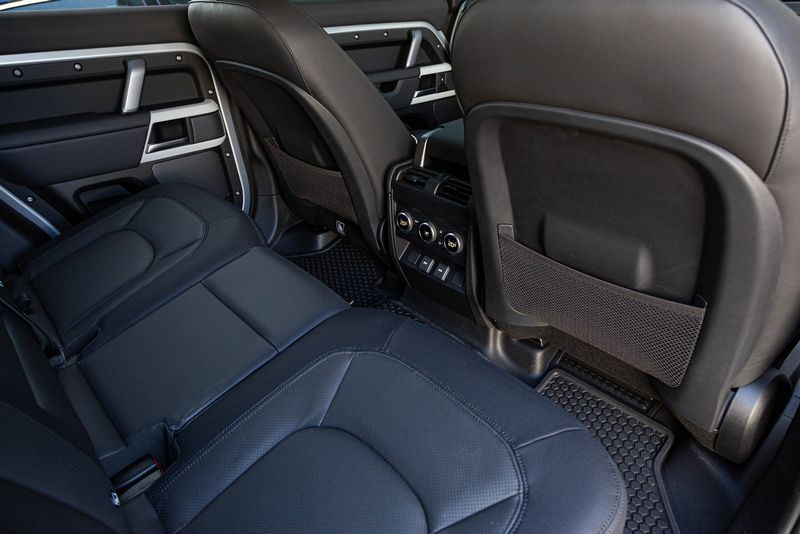
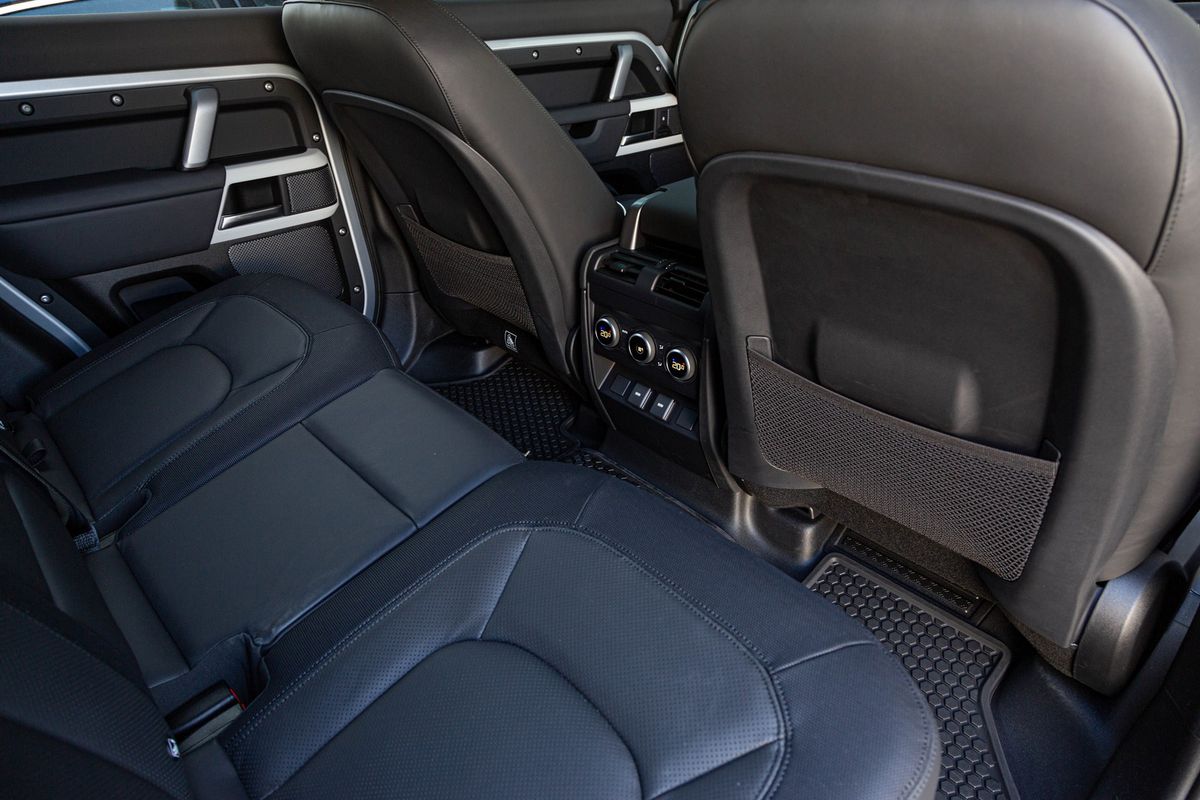
The Defender 110 is a sizeable premium SUV and, with a wheelbase of just over 3000 mm, there’s no shortage of luggage- and rear occupant space. Passengers seated at the back are availed generous head- and legroom, plus, depending on trim level, climate control dials and USB charging points.
Performance and Efficiency
The Defender PHEV is powered by a 2.0-litre 4-cylinder turbopetrol engine which produces peak power of 221 kW, as well as an electric motor that delivers another 105 kW. The total system outputs are 297 kW and 640 Nm of torque. Land Rover suggests the P400e offers eager performance and impressive economy; “the best of both worlds” sounds too good to be true, so we duly put the claim to the test.
When we reached our test strip, we set up our equipment to time the unit’s 0–100 kph acceleration. The best time of 6.1 sec was slower than the 5.6 sec claimed by Land Rover, but undeniably brisk for a vehicle that weighs 2.5 tonnes and, not to be too unkind, has the aerodynamic properties of a Chesterfield sofa.
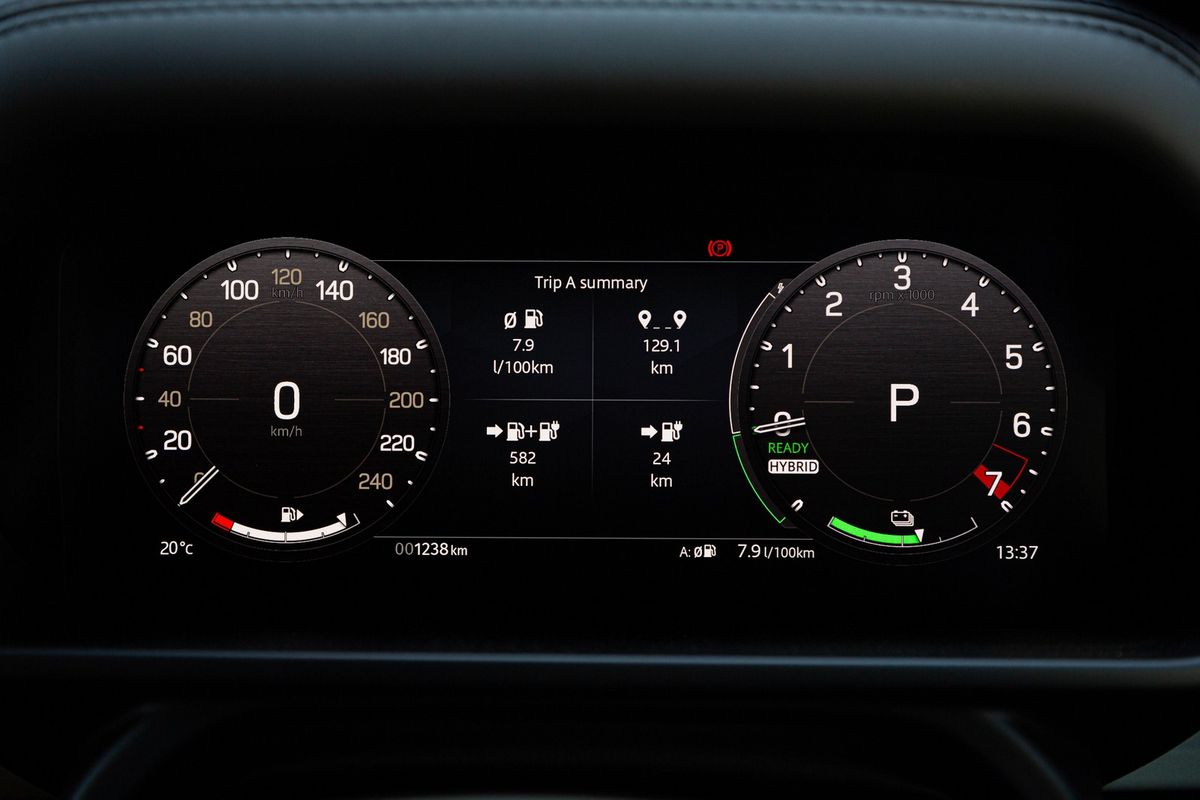
The claimed fuel consumption figures for the Land Rover Defender PHEV: 2.8 L/100 km (based on the WLTP cycle) and 3.3 L/100 km (based on the NEDC standard) also seemed rather ambitious, but after driving the P400e for a considerable amount of time (which included the performance testing), we saw indicated figures in the low 7L/100 km range. That “high” return shouldn’t be cause for concern, though.
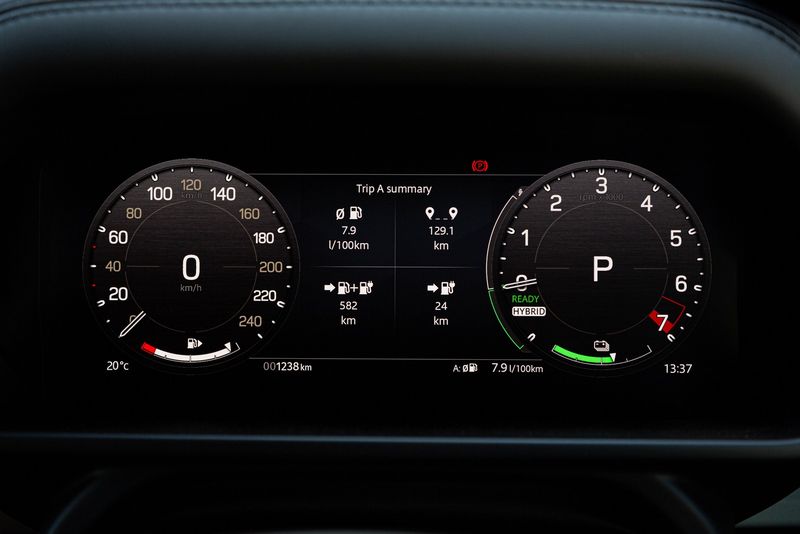
Why? Because if you owned a P400e, you’d probably plug it into a wall-mounted electrical outlet every night after driving it (to top up its 19.2 kWh hybrid battery). Assuming that you’ll usually be driving on urban roads, if you utilise the vehicle’s default hybrid mode, you could achieve 4.5 L/100 km, or better.
The real selling point is the reduction in emissions: 74g/km of CO2 means you’re exempt from the carbon emissions tax in Mzansi, but when an SUV costs in excess of R2 million, that saving is negligible. In other markets, where emissions legislation is far stricter, like in London, the PHEV setup makes more sense.
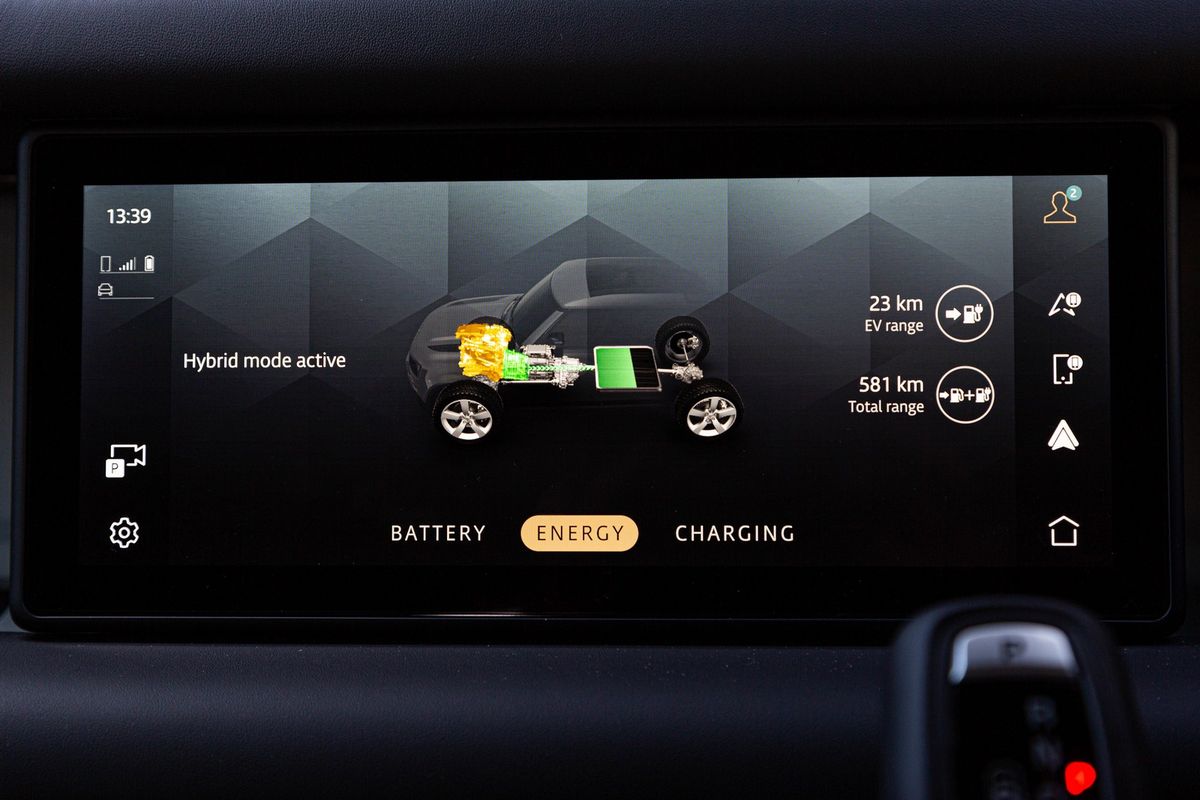
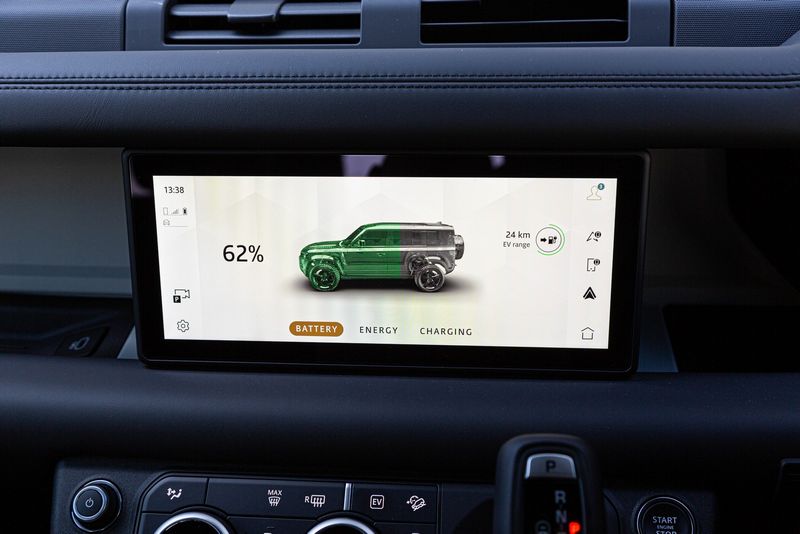
What is the Defender 110 P400e X-Dynamic HSE like to drive, however? The PHEV’s electric system is positioned between the engine and the 8-speed automatic transmission, unlike most plug-in systems, which see combustion power on one axle and electric on the other. When you start the Defender, you’re greeted by silence (if sufficiently charged, it will pull away on electric power). With a pure-electric range of around 45 km, the Defender PHEV is able to do short runs to the shops and back without the petrol engine needing to be brought into action and, yes, power/torque is directed to all 4 wheels throughout.
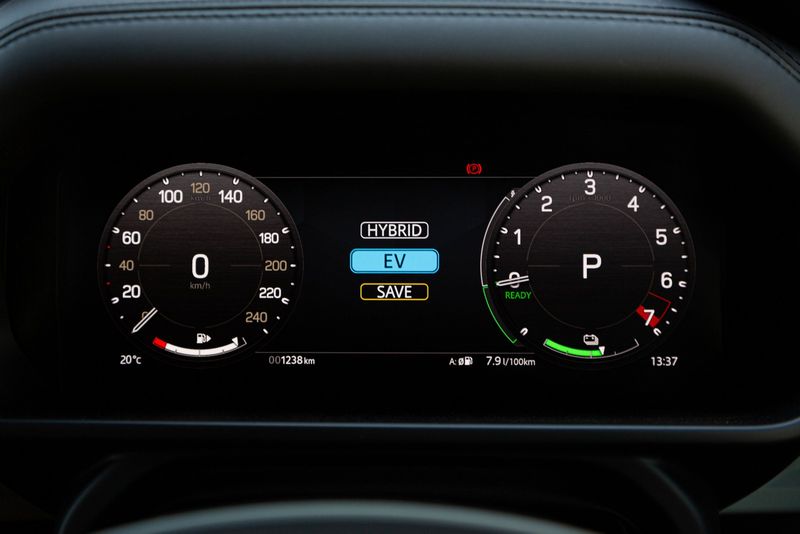
When you flatten the P400e’s accelerated pedal while the vehicle is operating in its default hybrid mode, the Defender thrusts forward and delivers brawny overtaking acceleration courtesy of a massive wave of torque (all of 640 Nm). We did this a few times to test the in-gear acceleration and although the test unit performed exceptionally, we did notice that the petrol engine didn’t sound all that refined. Having said that, the 8-speed automatic deserves praise for its ability to deliver intuitively timed and smooth ‘shifts.
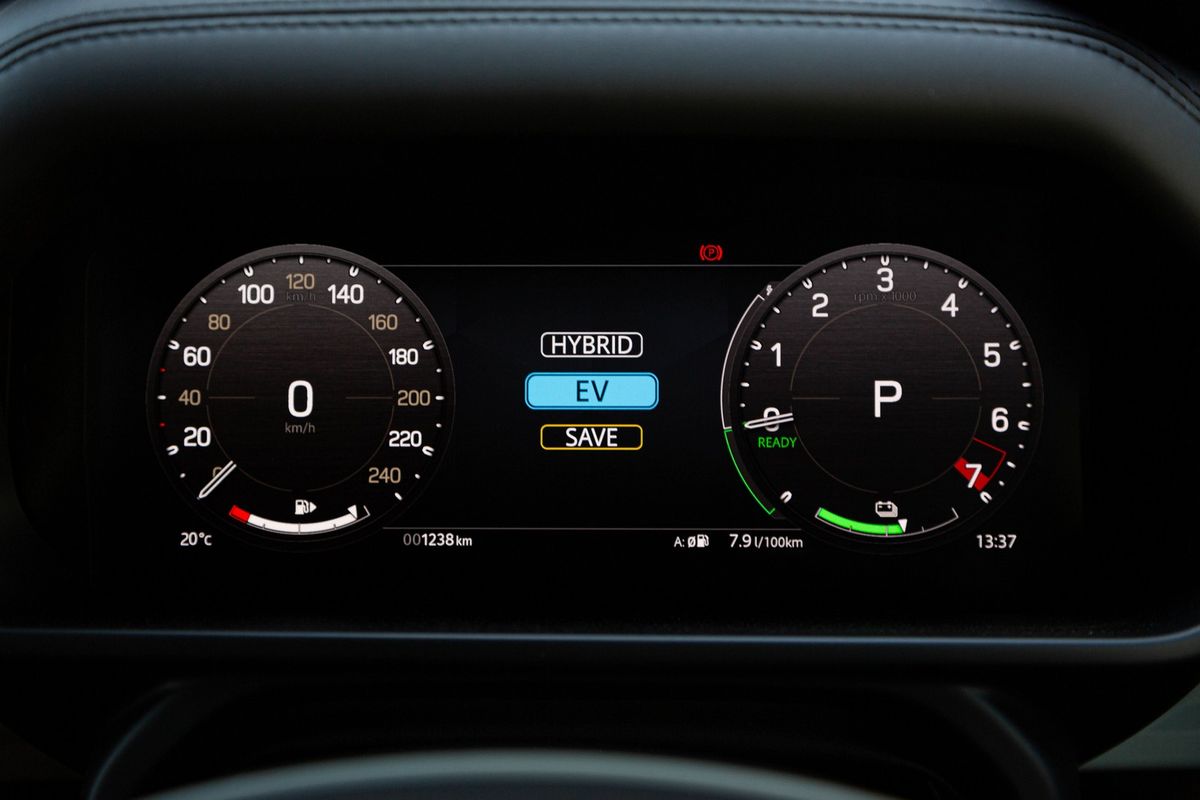
Even if you have no experience driving a PHEV, the Land Rover’s 3 drive modes are refreshingly simple to understand. There’s no need to radically change your driving style: Hybrid is the default and the mode you should use to maximise the economy and performance, EV is for pure-electric propulsion (until the battery runs out) and Save prioritises the use of the engine so that it can recharge the hybrid battery.
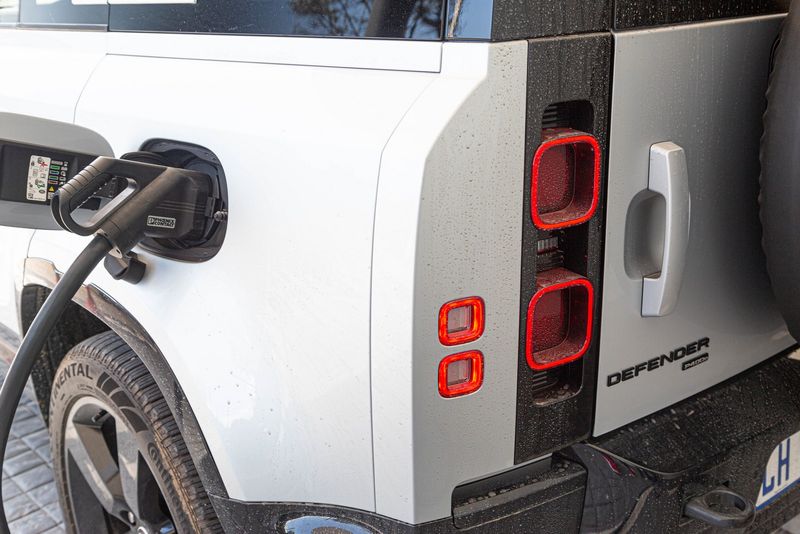
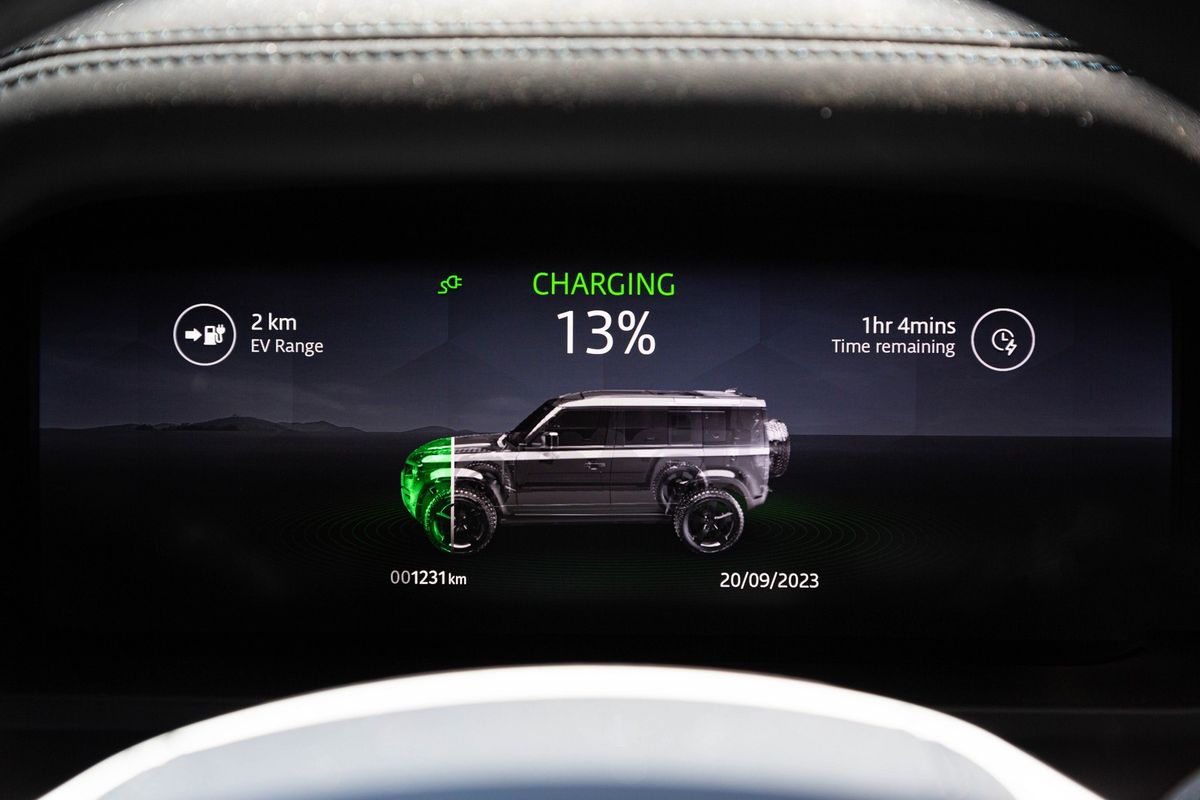
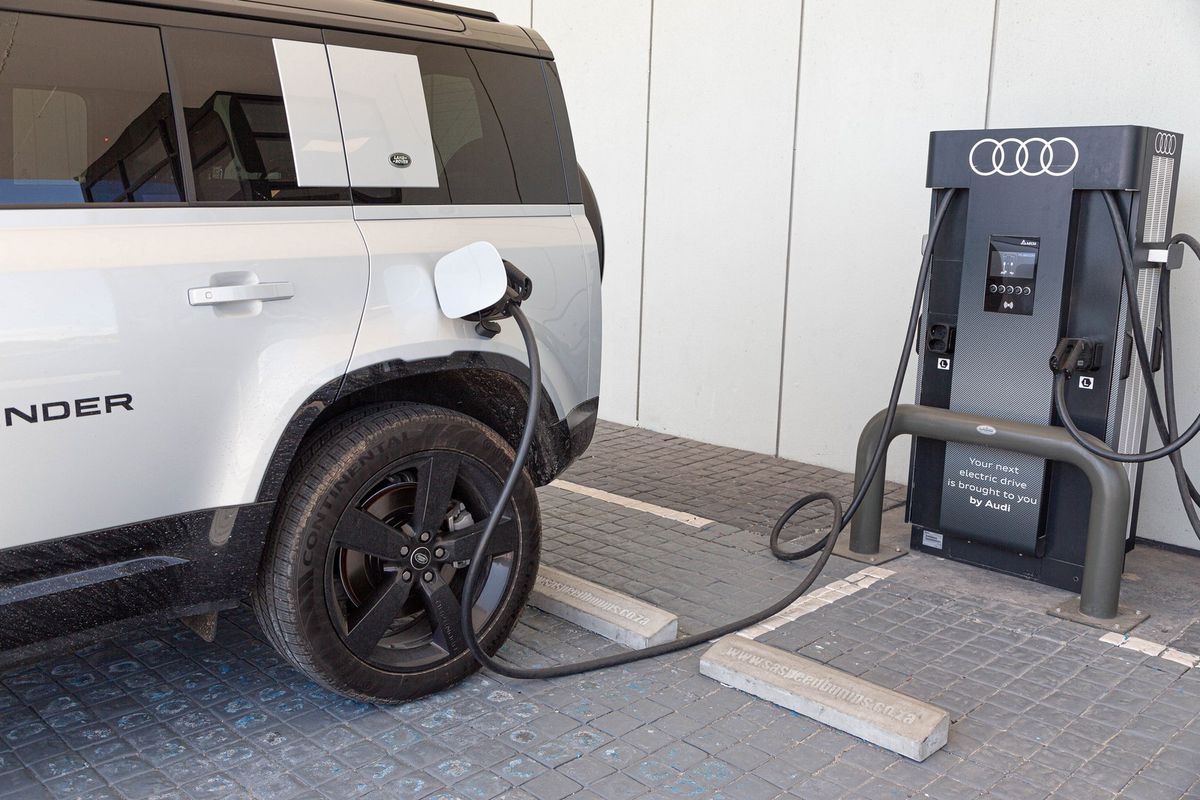
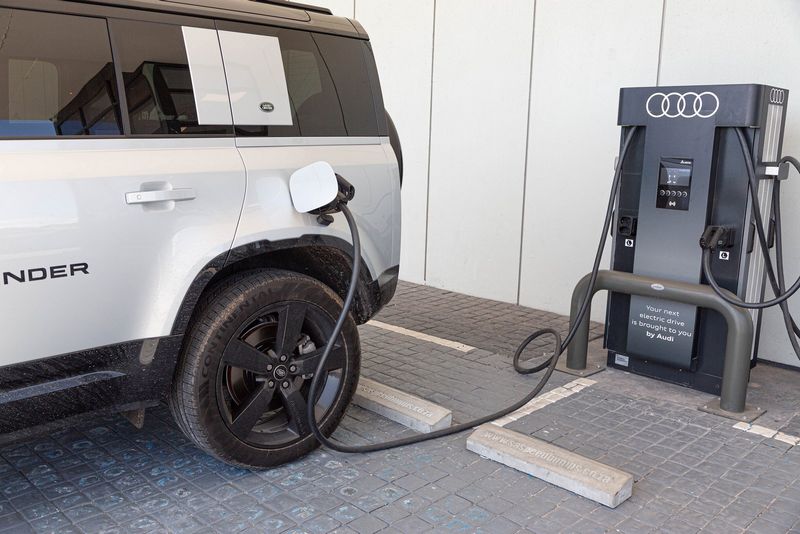
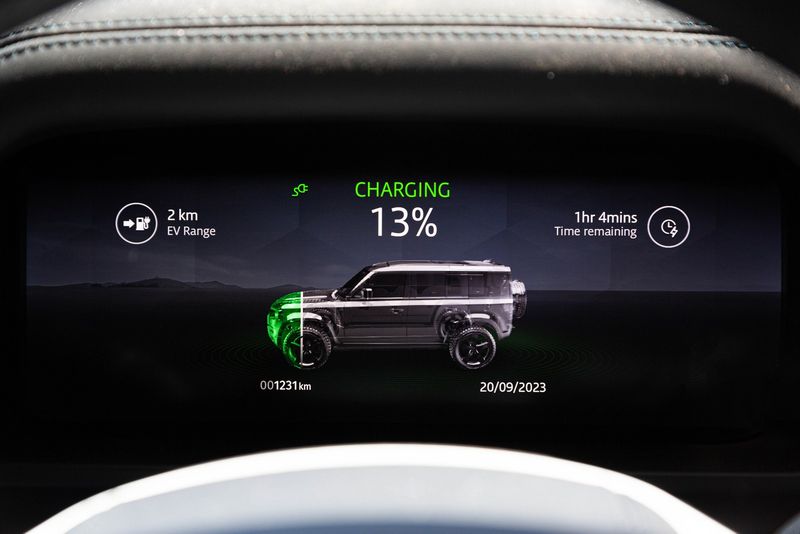
The P400e’s 19.2 kWh battery can be recharged from one of the several charging stations dotted around South Africa’s major urban centres (provided they aren’t subjected to load-shedding when you roll up) or from your home. As opposed to a battery-electric vehicle (BEV), a PHEV doesn’t have to be recharged, but if you want to achieve optimal fuel efficiency with it, it’s advisable to plug in as often as possible!
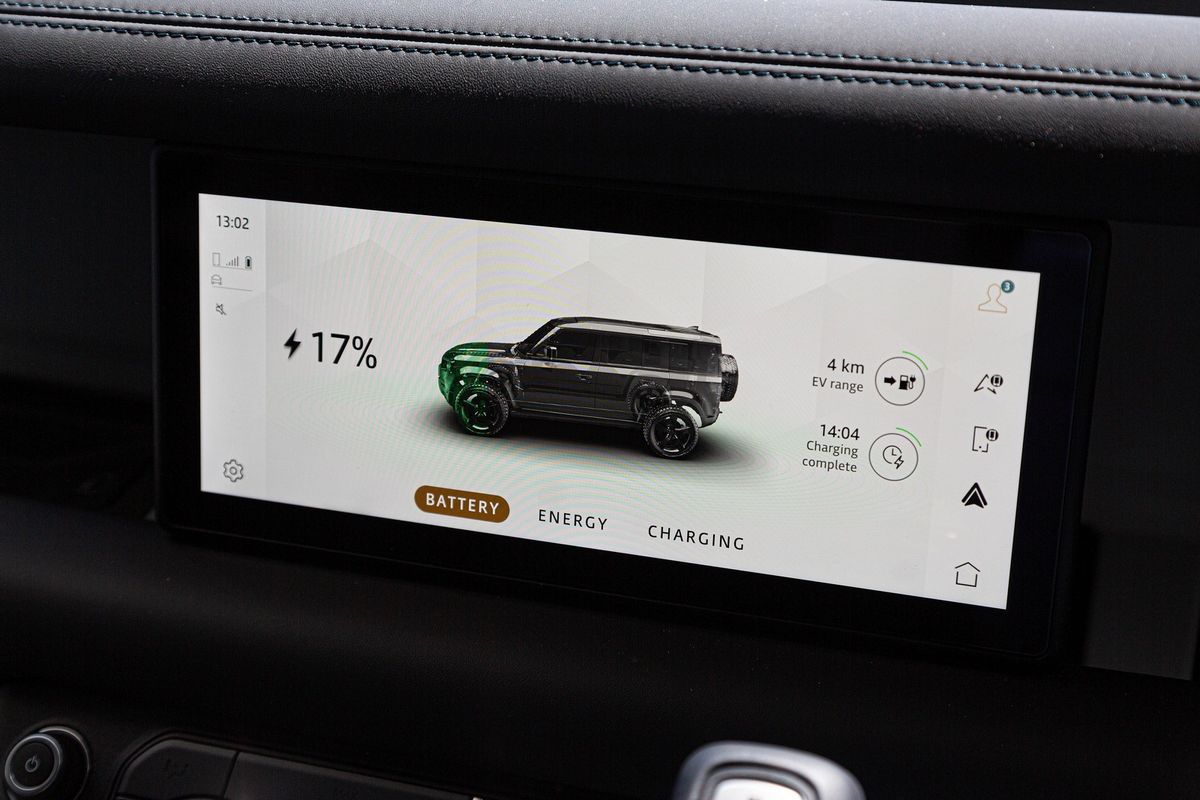
We used the 50-kW charger located near our office in Cape Town to recharge the Land Rover Defender PHEV. After the hybrid battery’s charge had nearly been depleted, it was restored to 80% capacity after being plugged in for about 45 minutes. Bear in mind that the vehicle will utilise regeneration to harvest energy when you apply the brakes or the vehicle is coasting. Don’t be surprised (like we were) when the rev needle suddenly falls to 0 as the P400e smoothly changes from ICE- to electric power while cruising!
Ride and Handling
Whereas BEVs carry a notable weight penalty because of their sizeable battery packs, the latter of which also impact their handling, braking and ride characteristics, the Land Rover Defender PHEV weighs only 200 kg more than its turbodiesel-powered sibling and we’re happy to report that it delivers a similar driving experience (well, powertrain aside) to that of the D300 derivative.
The Defender is bulky, but it has impressively direct steering, which makes it sufficiently wieldy (for a premium SUV). The ride quality is nicely balanced between comfort and poise, but we suspect you could improve on-road comfort by opting for smaller wheels with plumper tyres (20-inch alloys are standard).
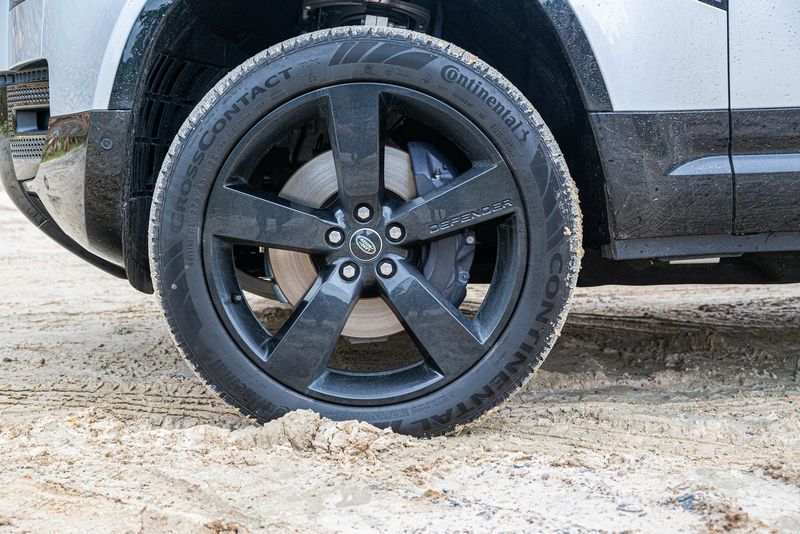
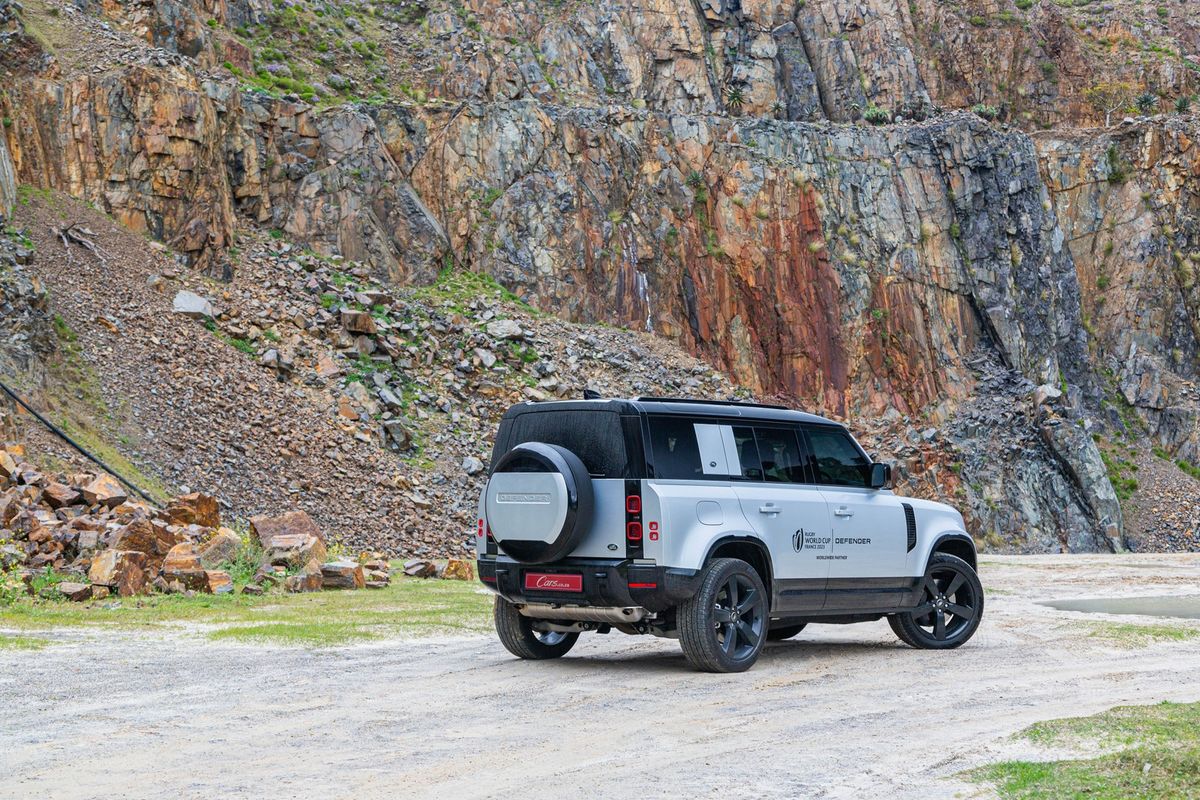
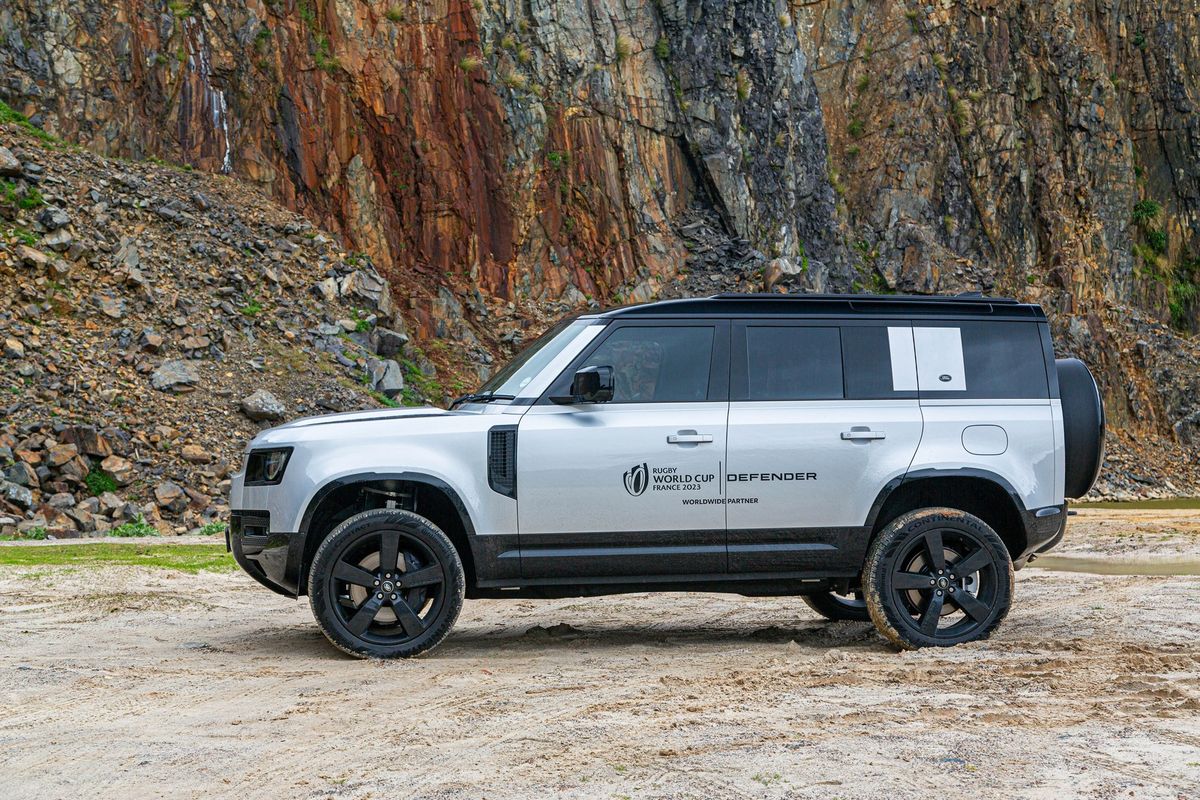
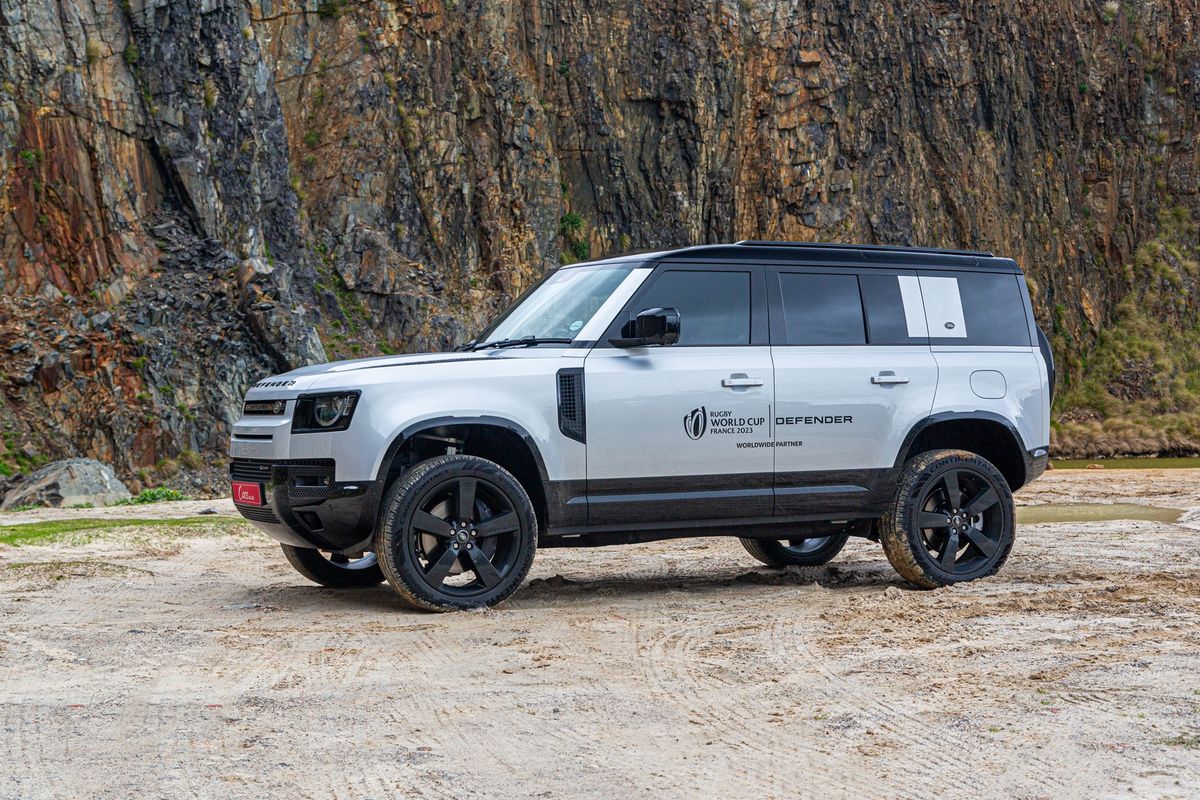
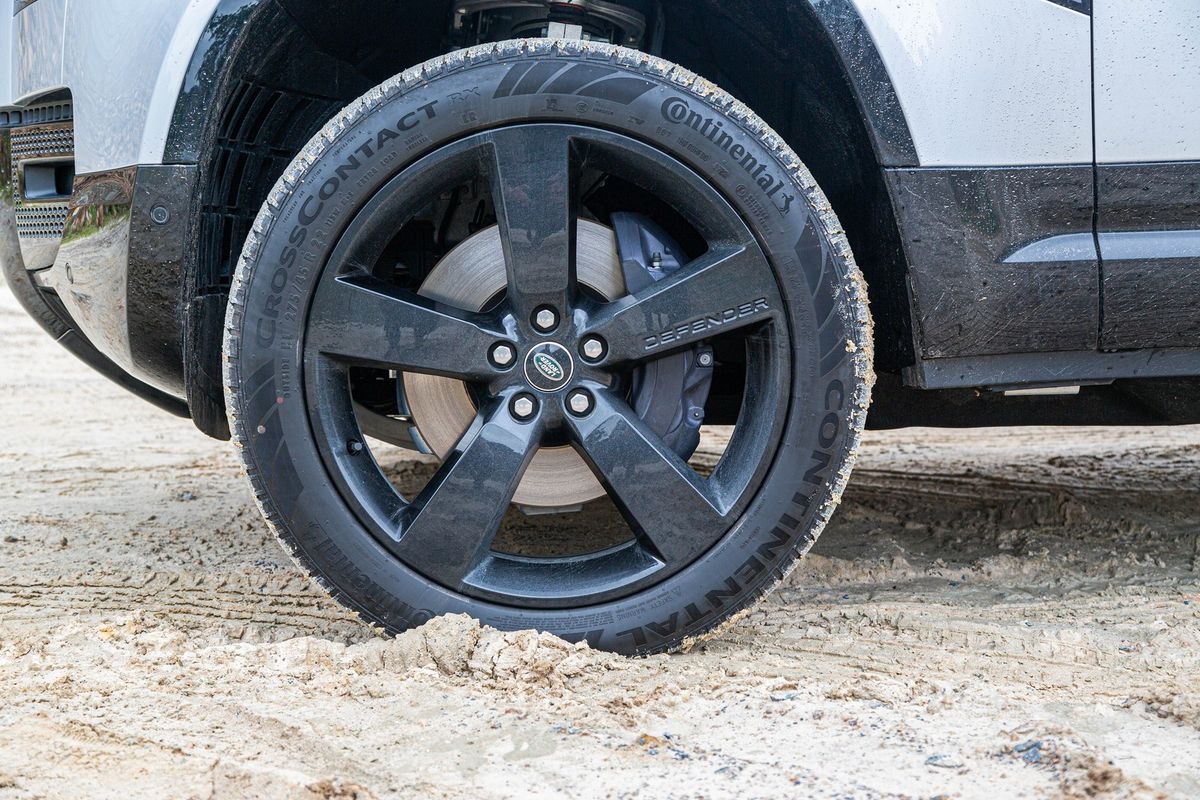
Our test unit, for example, was specified with 22-inch alloys shod with Continental Crosscontact 275/45 tyres, which did their bit to help soak up most of the ruts and bumps. What’s more, their sidewalls offer some cushioning from rock impacts if you venture off-road. The location for our photoshoot was an old quarry and it was quite eerie to drive through the rocky surrounds under electric power at low speed.
A Defender 110 (yes, even in PHEV guise) is expected to have go-anywhere capability and we found the test unit could crawl through soft sand and mud with ease. The air suspension can lift the vehicle to clear obstacles and wade through water and, when things get really challenging, you can call upon the terrain response modes, low range and differentials. And yes, it is possible to do all of this under electric power.
Comfort and Features
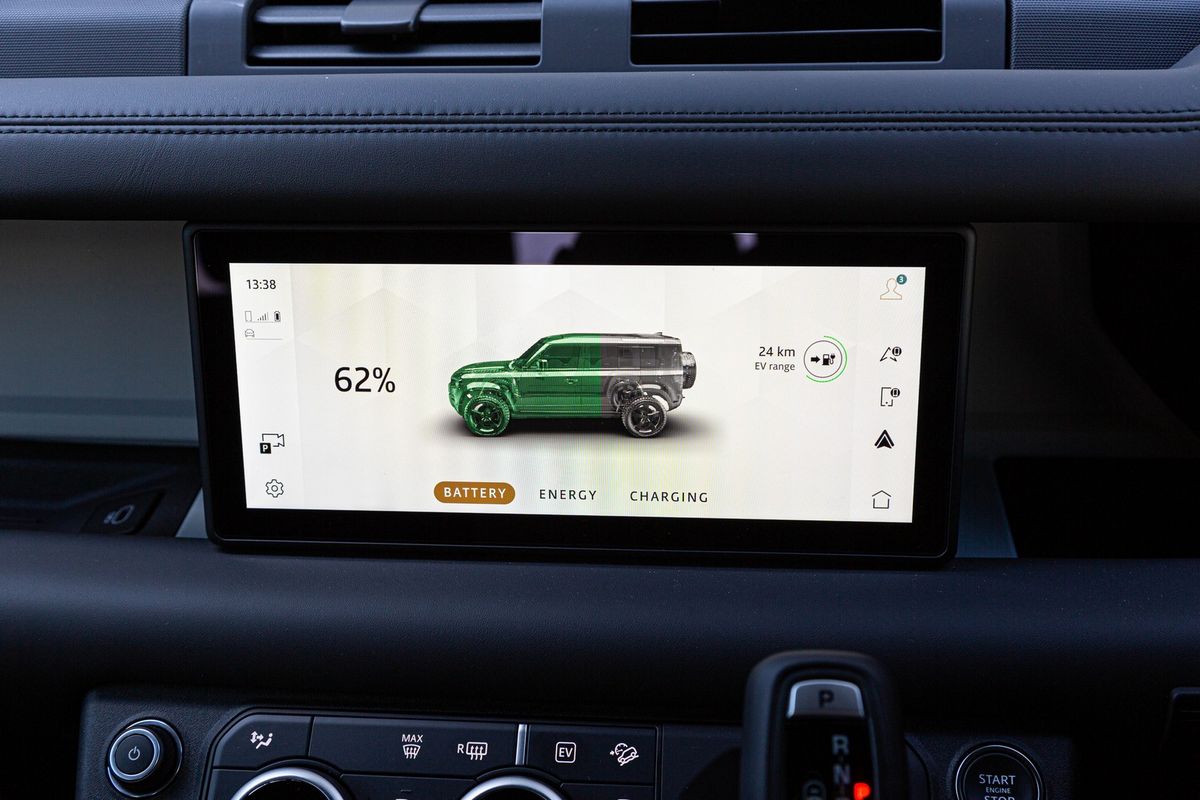
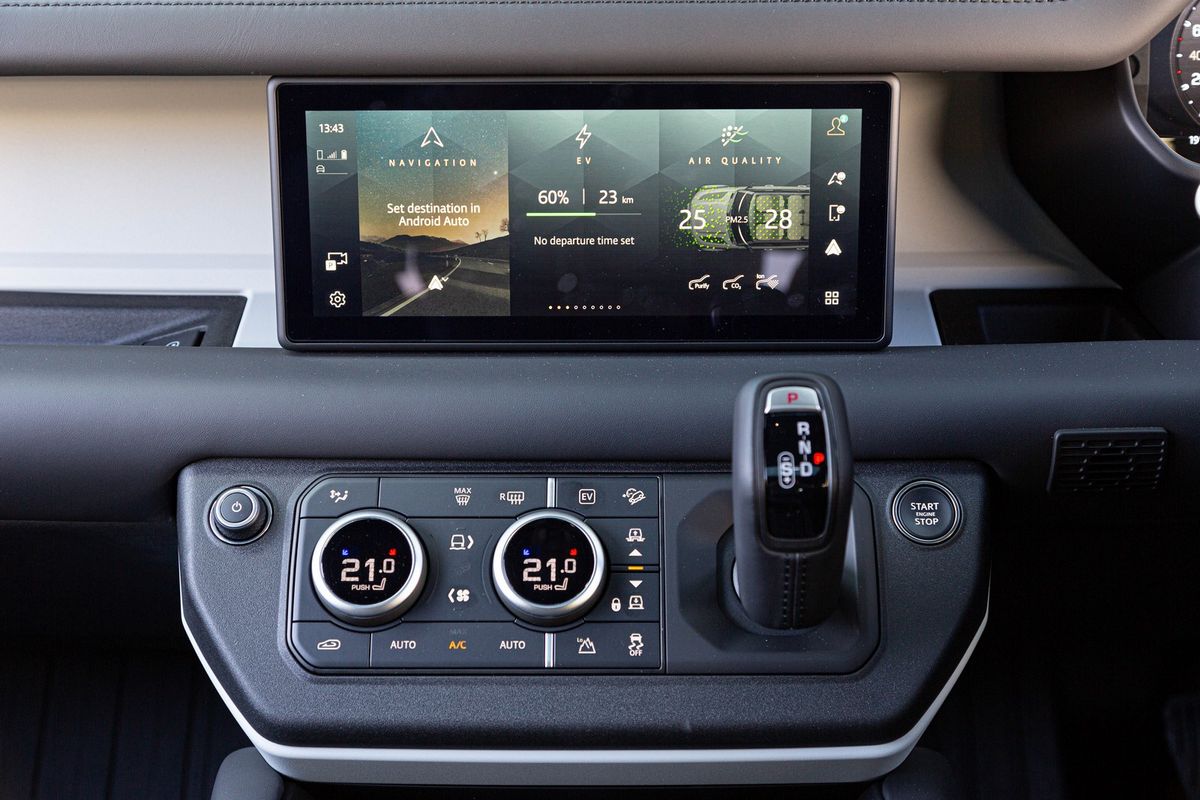
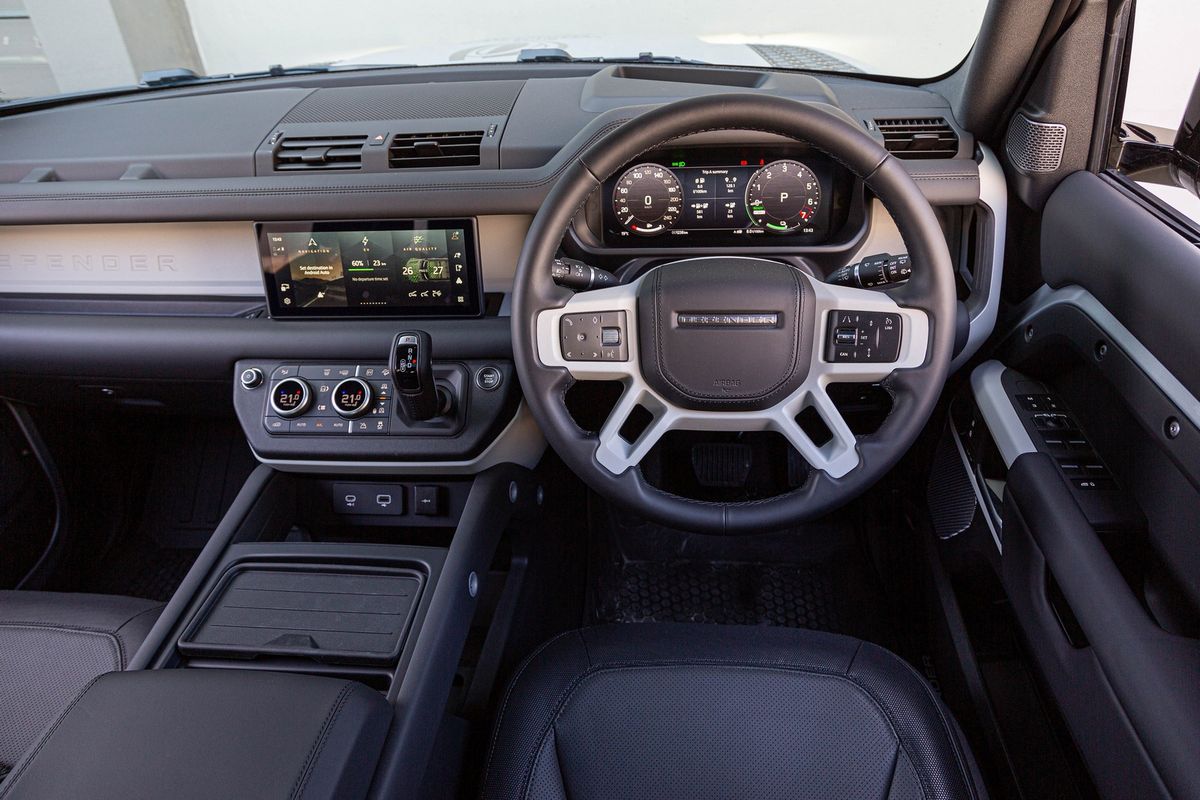
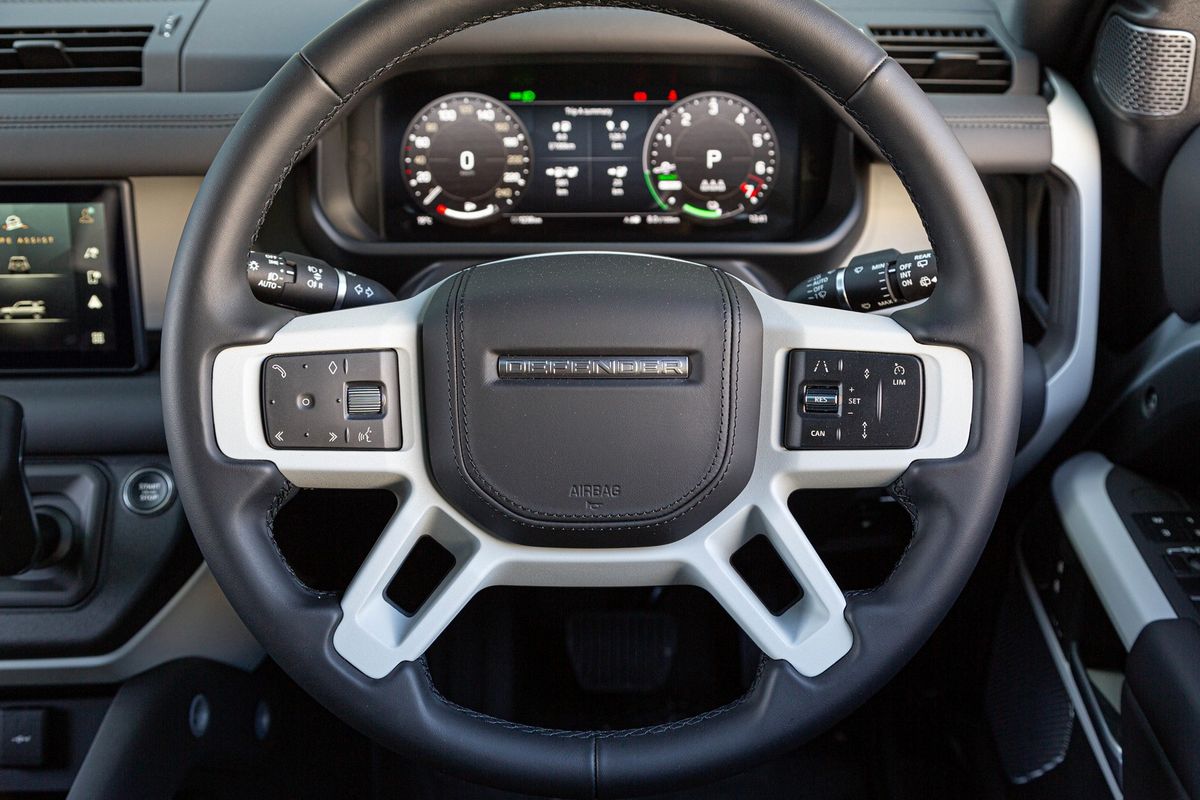
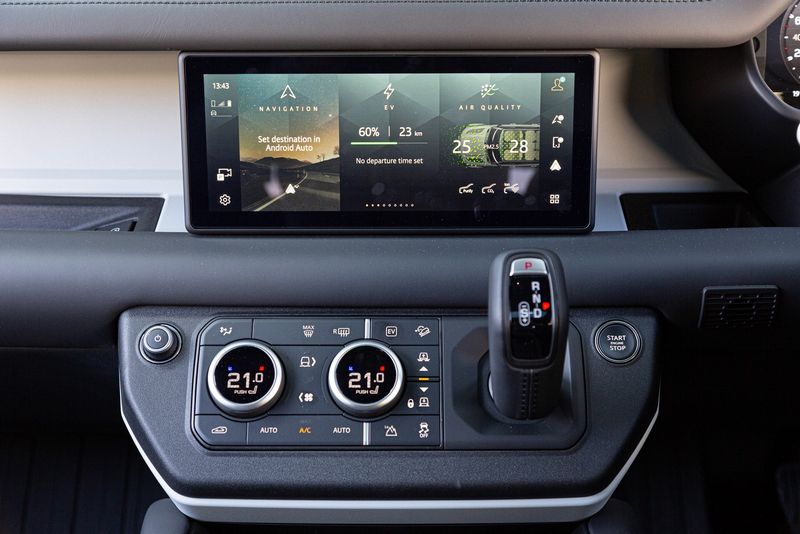
When you climb into the front of the Land Rover Defender PHEV’s cabin, you’ll most likely appreciate the raised – and superbly comfortable – seats, as well as the excellent all-round visibility. There’s very little to indicate that you’re not seated in an ICE derivative, other than the small EV mode button, a PHEV-specific readout on the infotainment screen and subtle tweaks to the digital instrument cluster’s display.

The Defender’s cabin is indeed a magnificent space to occupy – the layout combines rugged utilitarian elements with splashes of luxury. We love all the clever storage solutions and we can’t help but wonder why so few manufacturers offer proper rubber mats that stop dirt from getting clogged in the footwells.
At this price point (R2 million-plus), you get a lot of standard features for your money – as you should. The infotainment system is Android Auto/Apple CarPlay compatible, there are more USB charging ports than you might need, climate control, heated seats and sufficient semi-autonomous safety technology.
Land Rover Defender PHEV Price and After-Sales Support
| Defender 110 P400e X-Dynamic HSE | R2 135 900 |
This derivative comes with a 5-year/100 000 km maintenance plan; the vehicle warranty’s is valid for 5 years, while the hybrid battery is covered for 8 years.
Verdict
It’s no fluke that a Land Rover Defender 110 won the Premium SUV category of the 2020/21 Cars.co.za Consumer Awards and that the D250 SE County is a finalist in the 2023/24 programme. The model’s blend of all-road capability, advanced onboard- and drivetrain technology, plus all-road practicality, is deeply impressive and a wide array of engines and body types ensures there’s a Defender for almost every need. Our need is a turbodiesel Pangea Green 110 with the off-road pack (feel free to eWallet us).
While it’s great to experience the P400e X-Dynamic HSE’s advanced plug-in hybrid technology and how effectively it can be applied (by commuting while the vehicle utilises pure electric mode, for example), the PHEV derivative is not tailor-made for South African conditions, at least not as they are right now.
The Defender PHEV’s steep list price is its biggest drawback. Unlike those manufacturers that produce vehicles here in Mzansi, Jaguar Land Rover South Africa doesn’t benefit from receiving rebates on the duties levied on the vehicles that the firm imports. To make matters worse, the additional cost associated with the complexity of the PHEV powertrain (and its respective components) means that the P400e X-Dynamic HSE is a comparatively expensive proposition compared with its “simpler” ICE siblings.
Yes, the brisk electrically-assisted acceleration and promise of notably reduced fuel consumption are the major attractions, but consider that it will take some time to recoup the price difference between the PHEV- and the cheaper turbodiesel version. Unless our Government can offer car buyers an incentive to switch to new-energy vehicles (as other countries have) through reductions in import duty and/or ad valorem excise tax, there’s little reason (apart from sheer eco-mindedness) to switch to electric.
It’s a pity, as the Land Rover’s advanced powertrain makes sense if you’re spending the majority of your time driving in congested urban traffic. If you still want to explore the great outdoors from behind the ‘wheel of your Defender (especially in remote locations), turbodiesel power is still the way to go.
Related content:
How many Defenders have been sold in SA in 2023 so far?
David Taylor

Having contributed to multiple motoring titles as well helping run the public relations machine of the Johannesburg International Motor Show, Dave has experience in both sides of the motoring industry. He's based in the Western Cape and is responsible for the performance testing, photography & weekly YouTube news for Cars.co.za.