The Kia Sorento bridges the gap between an MPV and an SUV, but this latest version also pushes the model upmarket with added refinement, a more capable drivetrain and the latest safety features. South African consumers have tended to overlook 7-seater family cars that aren’t produced by the market’s premium brands – could this Korean offering change their minds?
We like: Powertrain’s performance/efficiency balance, excellent practicality and generous specification
We don’t like: Not an off-road-oriented family vehicle (which South Africans tend to prefer)
FAST FACTS
- Model: Kia Sorento 2.2 CRDi AWD SXL
- Price: R994 995
- Engine: 2.2-litre 4-cylinder turbodiesel
- Power/Torque: 148 kW/440 Nm
- Transmission: 8-spd dual-clutch auto
- Fuel consumption: 6.8 L/100 km (claimed)
- Load capacity: 187-616-821-2011 litres
Serious about buying?
Some Kia dealerships regularly offer great deals. See our New Car Specials here!
Search for a used Kia Sorento here
Where does the Kia Sorento fit in?
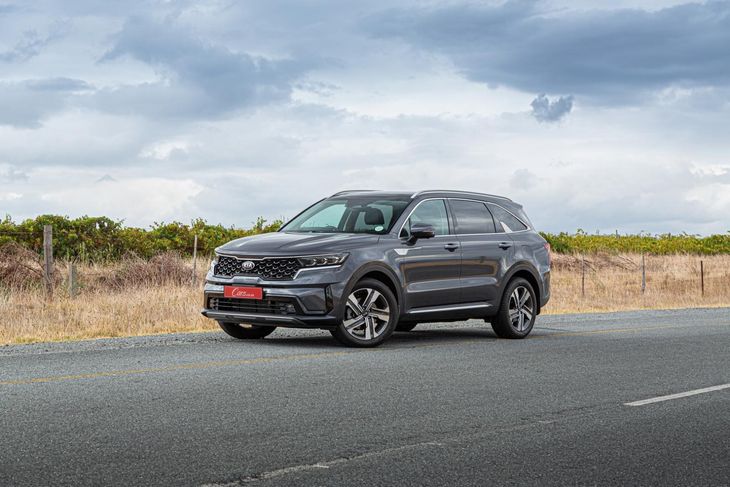
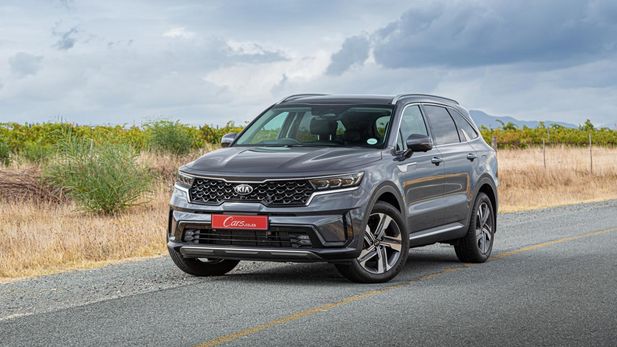
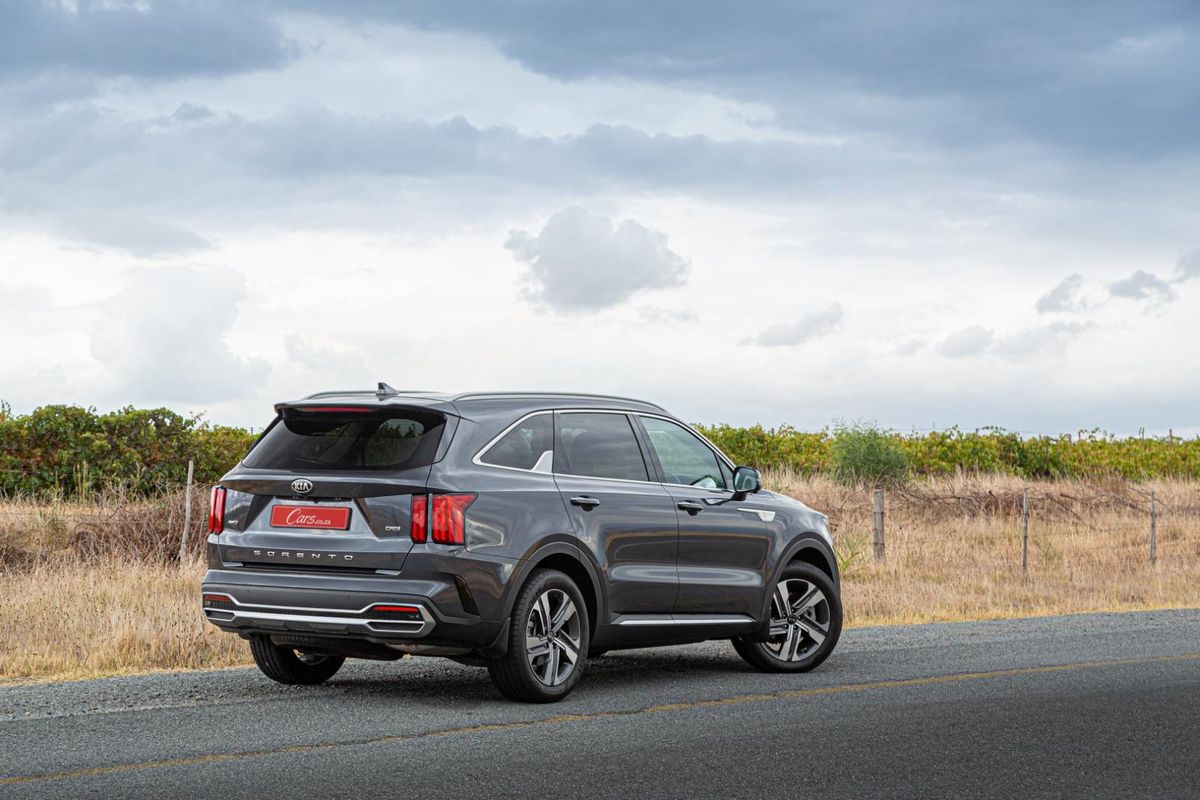
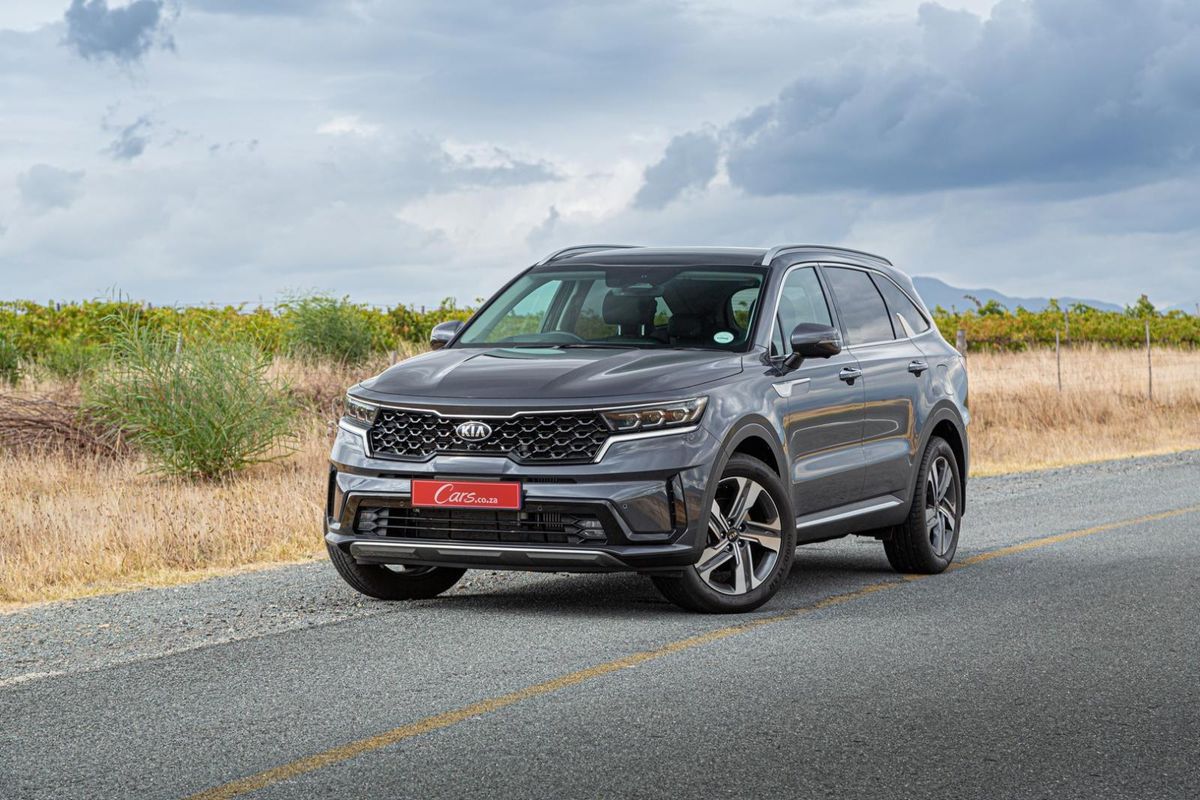
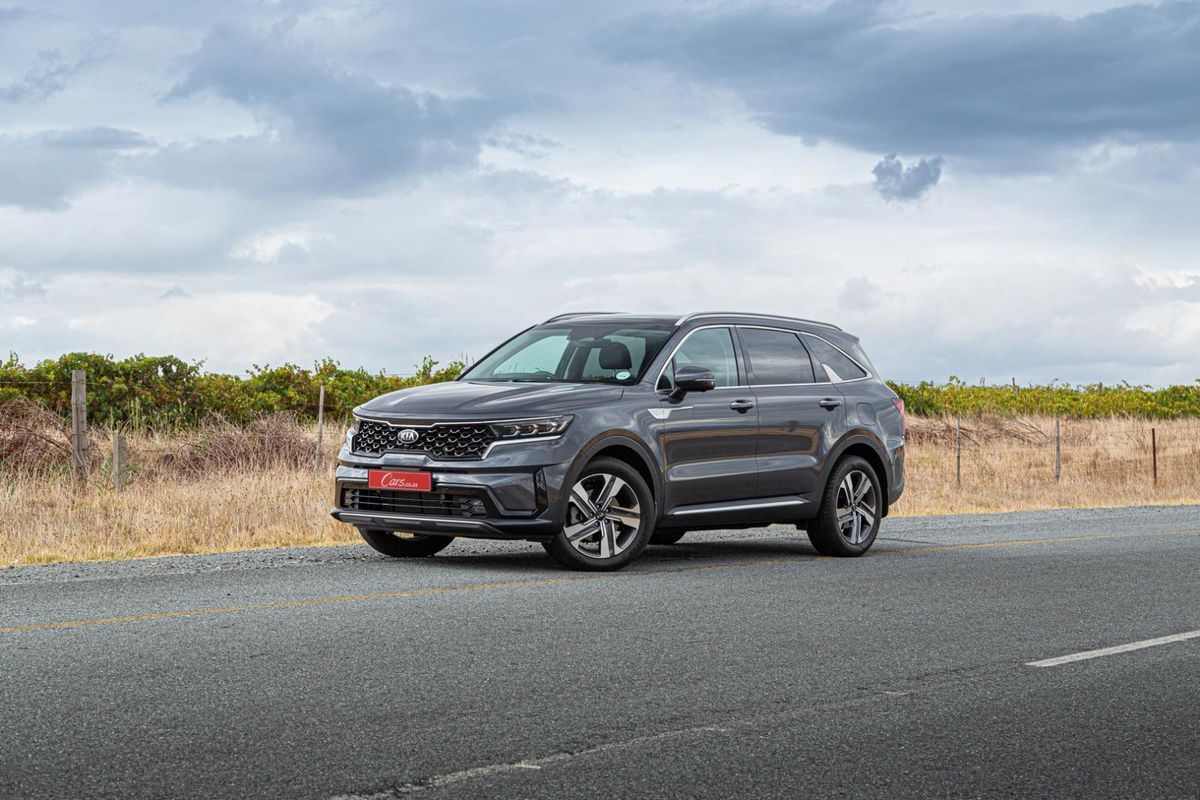
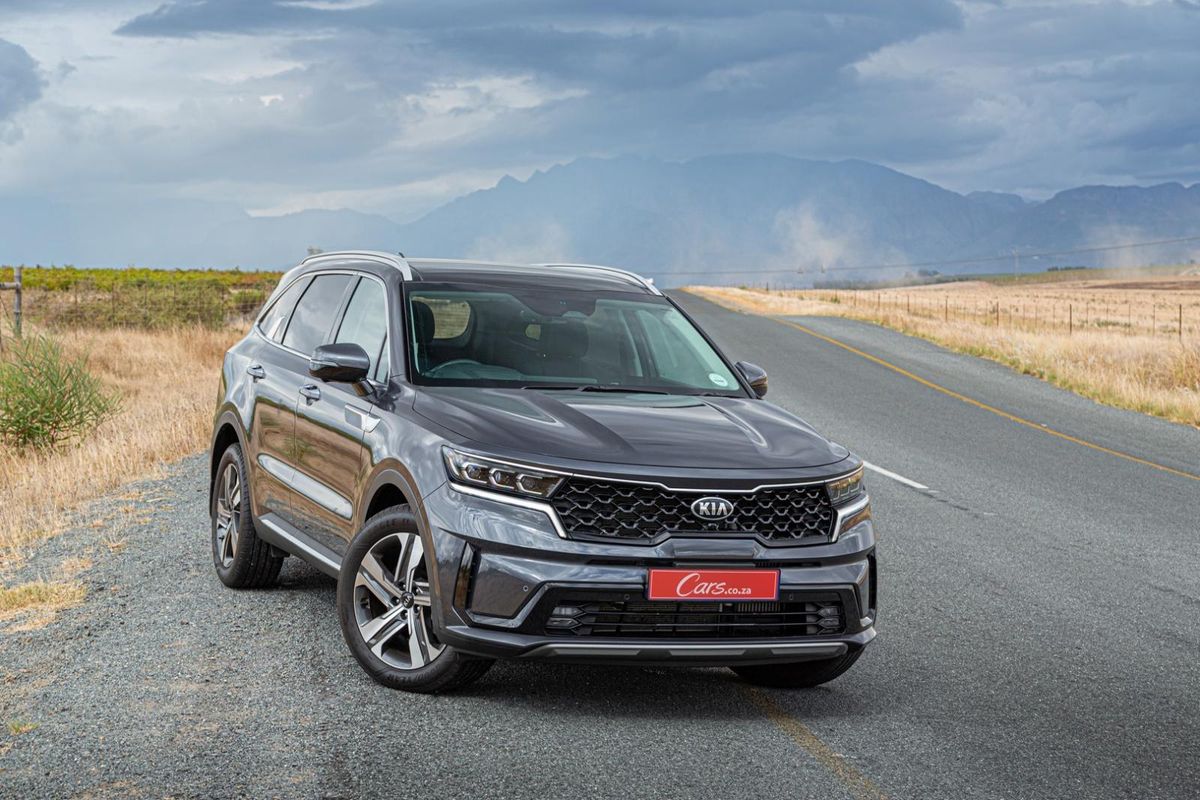
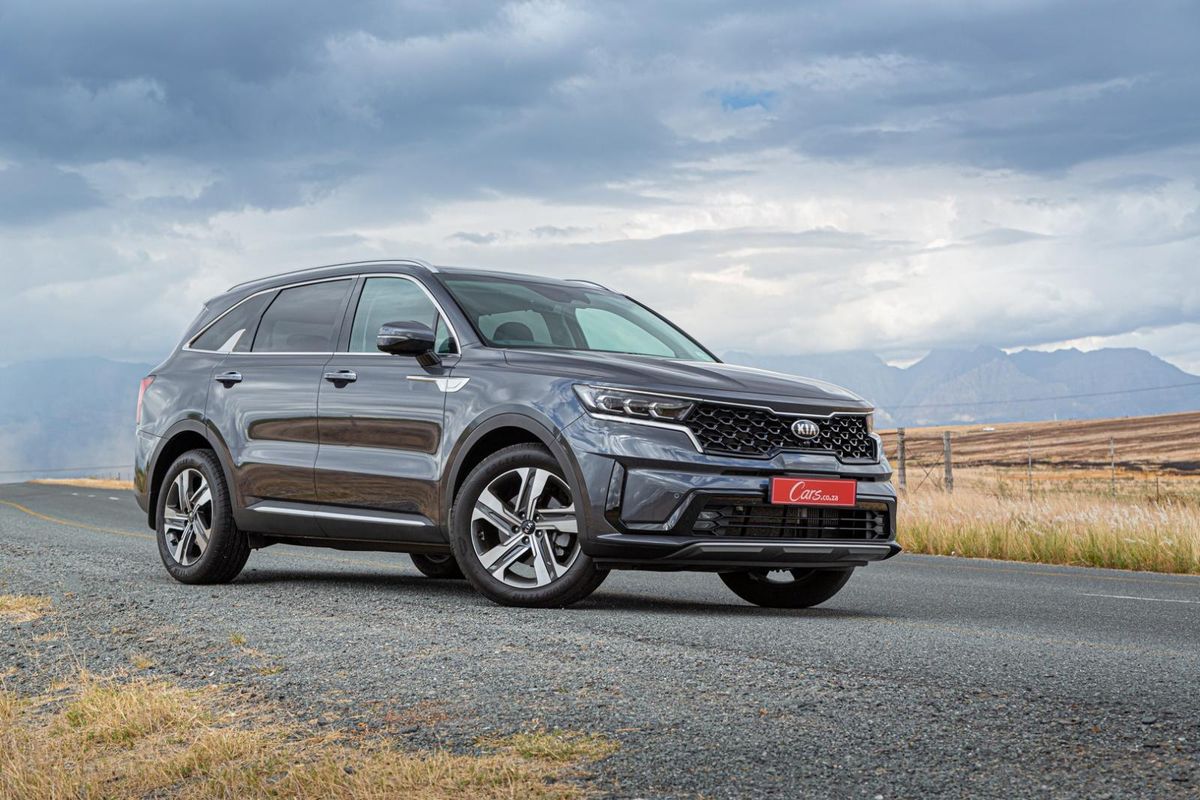
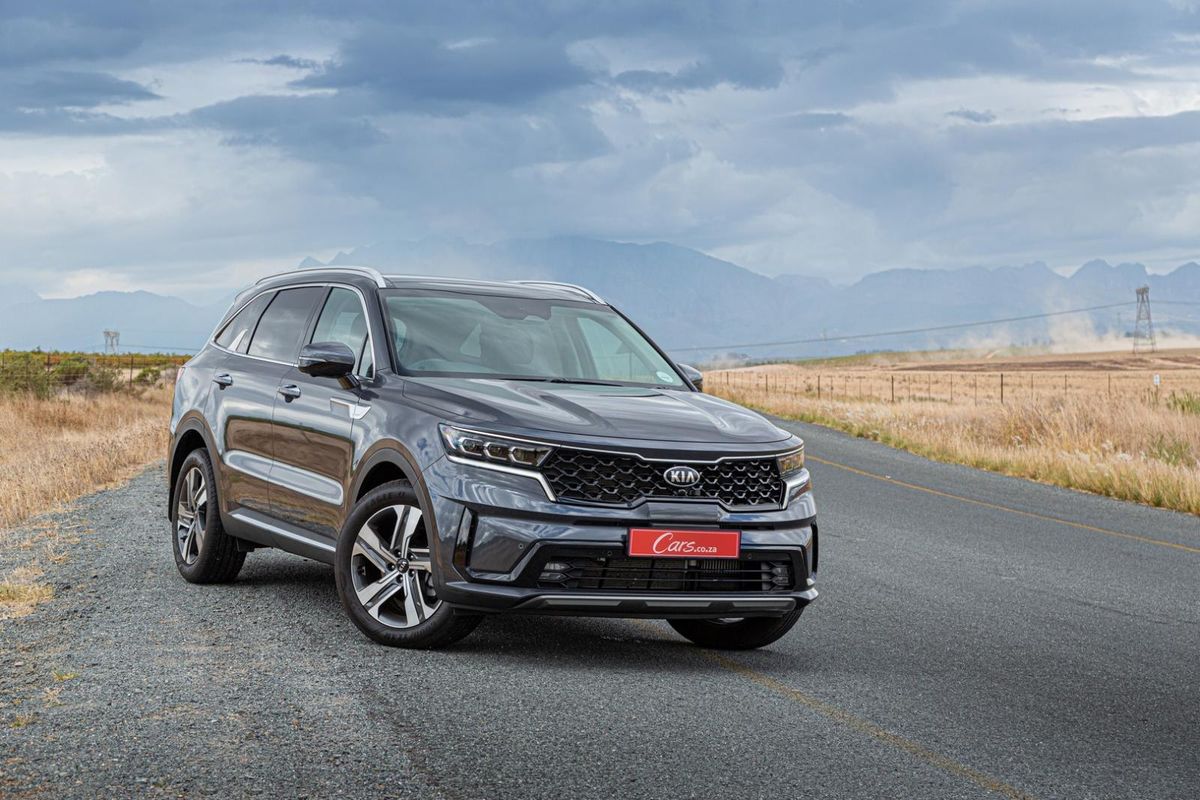
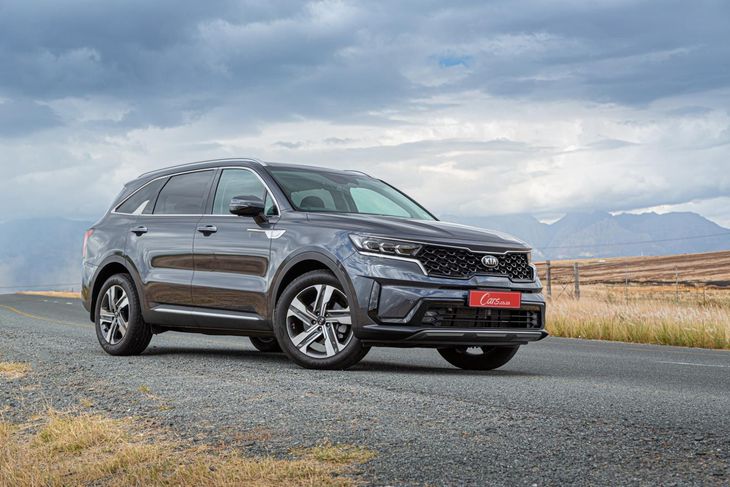
The new Sorento’s more squared-off, American-market-influenced design stands out in the segment.
The Kia Sorento sits in a tricky section of the South African new-vehicle market. It’s a large, 7-seater SUV with all-wheel drive (AWD), but it doesn’t offer the kind of outright off-road capability that outdoorsy South Africans believe they require to venture into the bundu (which explains why bakkie-based Adventure SUVs, especially the Toyota Fortuner, are so popular); the Kia also doesn’t have a badge on the nose that implies your social status is ahead of the curve…
This has led to the Korean model being somewhat of an underdog in its segment and the same can be said of its cousin, the Hyundai Sante Fe, with which the Sorento shares a platform. The Santa Fe actually runs the same drivetrain and seating configuration (7 seats), but there are a few differences in terms of the models’ interior space and ground clearance – compare them here.
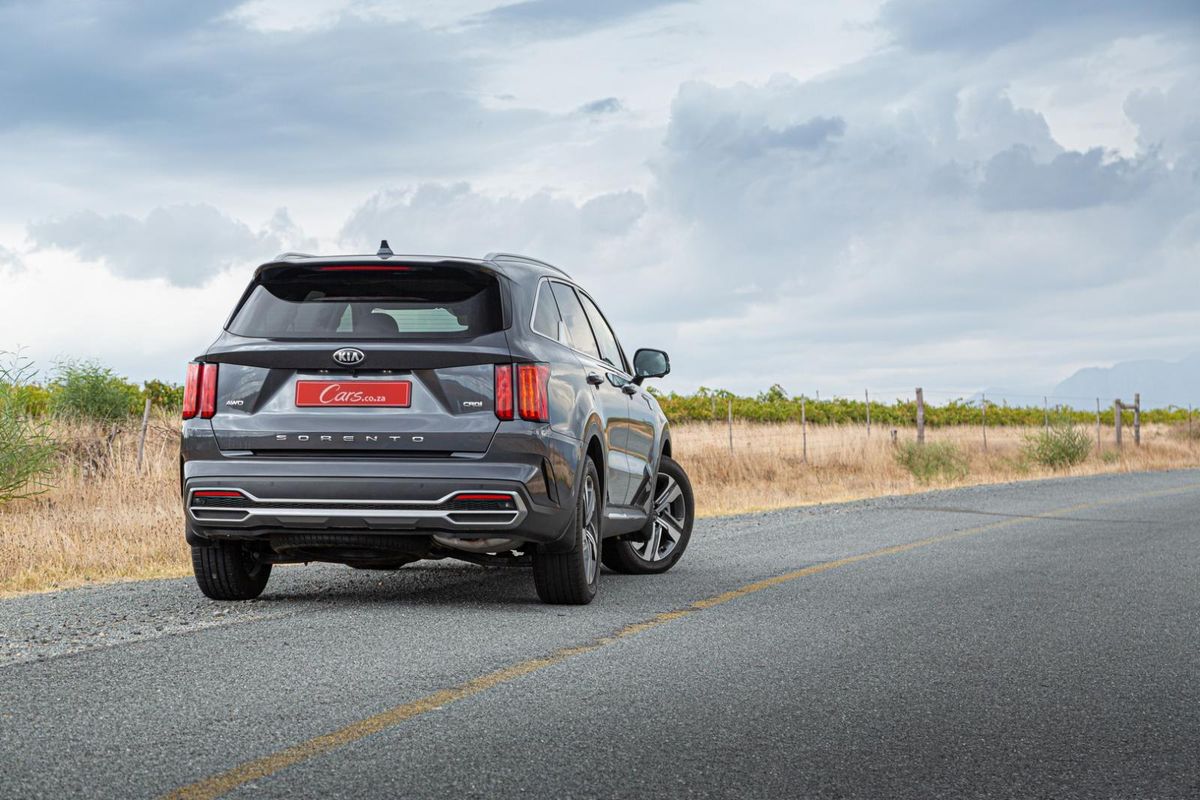
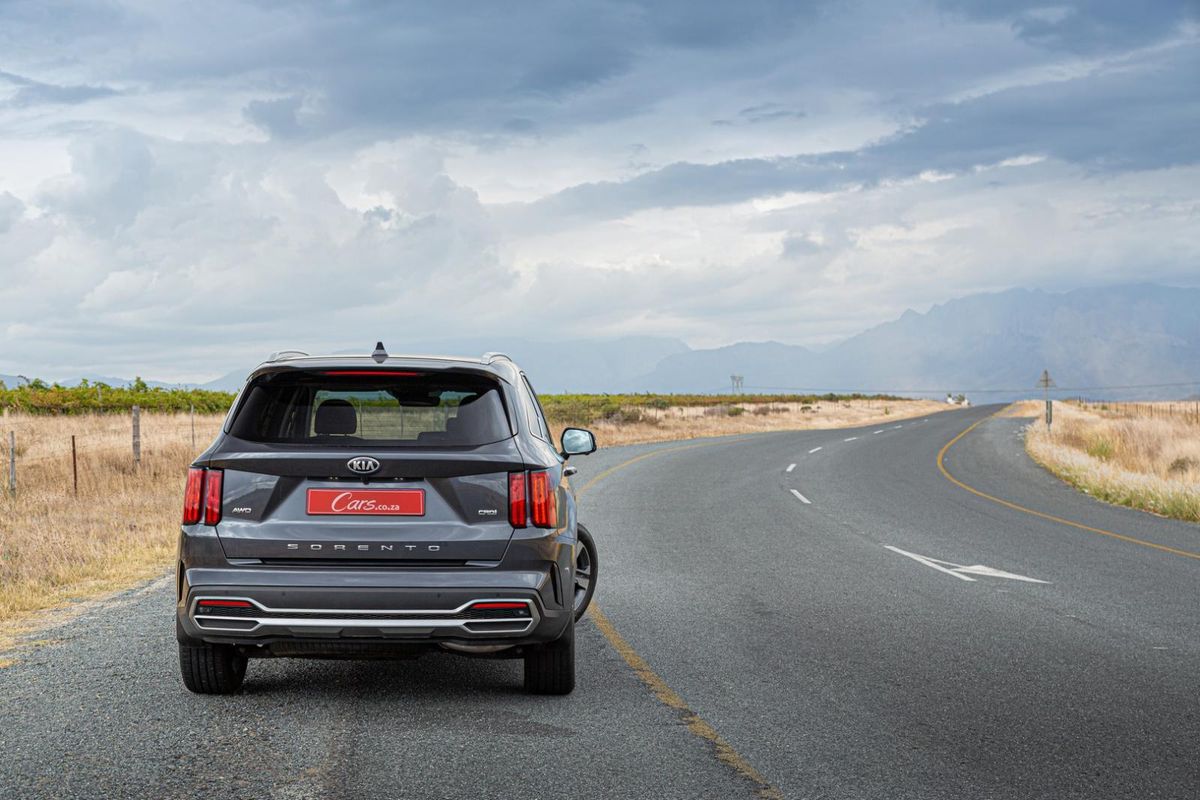
The biggest advancement of the 4th-generation model over its predecessor has to be the former’s eye-catching exterior design. The bland and understated Sorento is gone, it has been replaced with this Americanised design that boasts a bold face with a squared-off rear end in a (suitably bulky-looking) SUV shape. It makes a statement, even when parked next to the aforementioned German executive SUVs it is often passed over for.
How the Kia Sorento fares in terms of…
Practicality
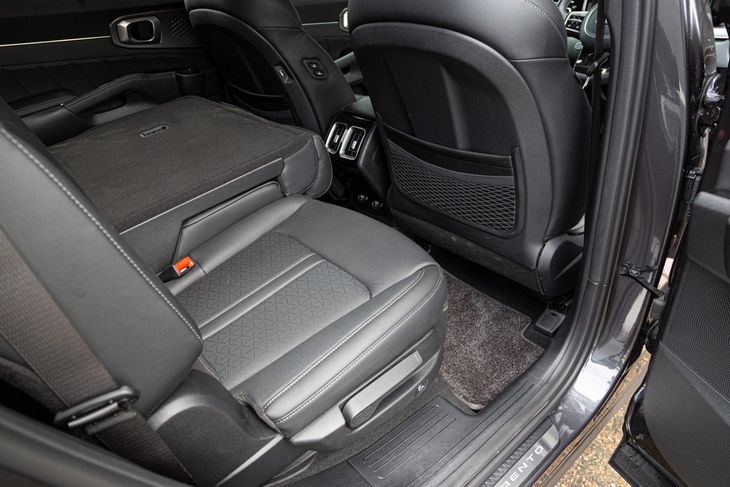
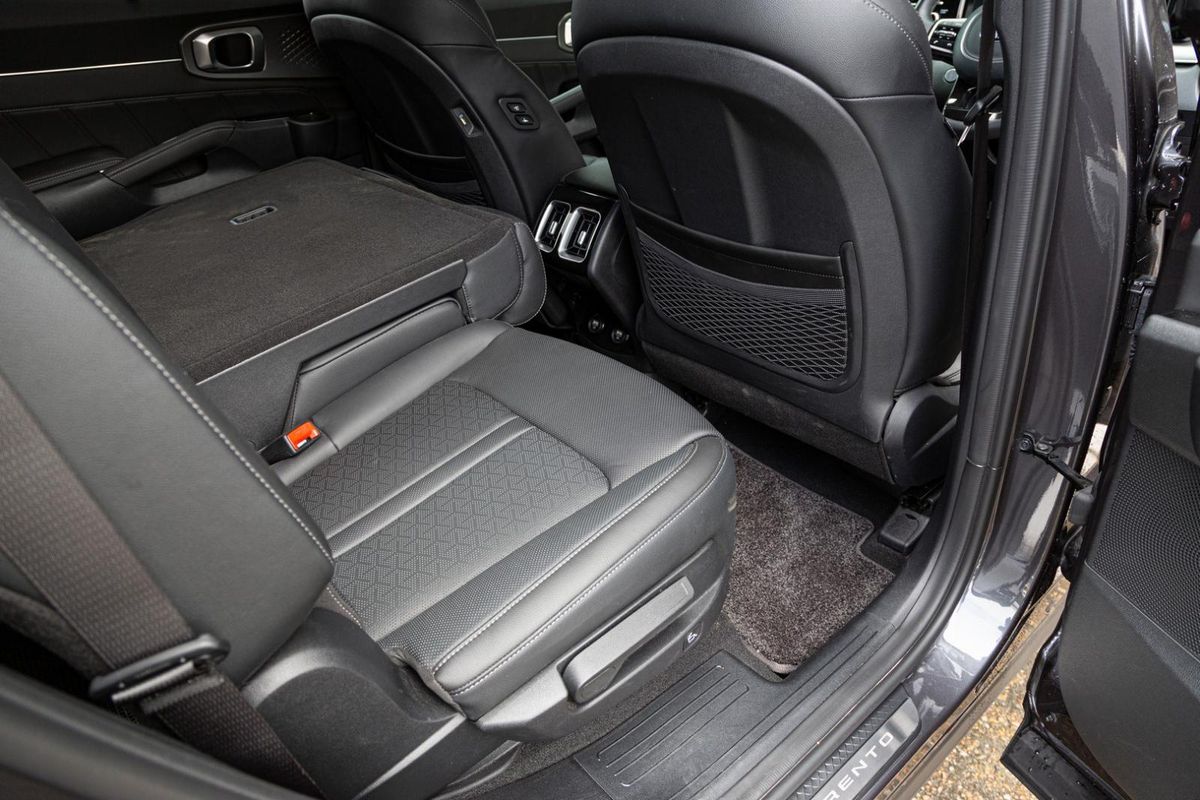
Plenty of rear legroom along with options to slide and recline the rear seats.
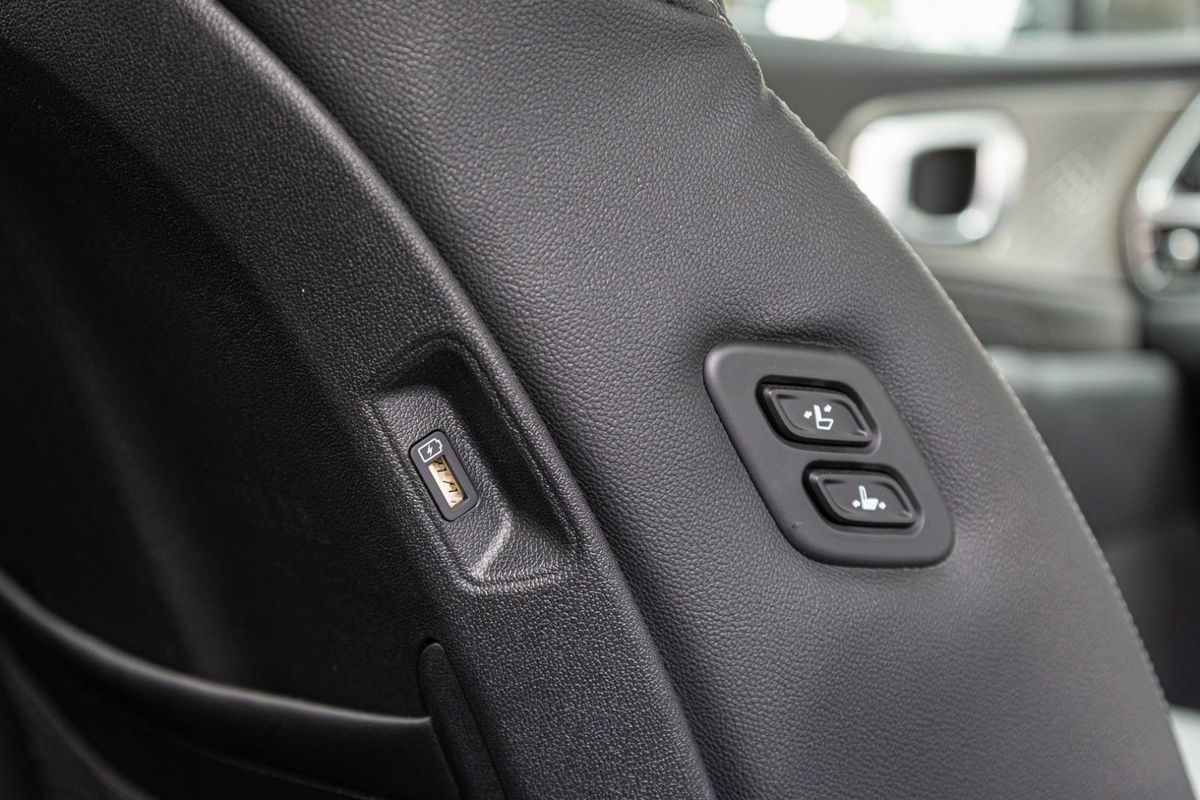
The Sorento is eminently practical! It’s a big SUV that can easily seat 7 people and offers reasonable luggage space, even when all seats are in use (in most cases, it’s likely to be used as a 5-seater – with a huge load bay). Folding the seats down is a cinch – you can fold the middle row flat with a lever next to the seat cushion or use buttons (located on the side of the backrest) to electronically fold and slide the row forward to provide easier ingress for the rearmost occupants.
In the large 7-seater SUV segment, the question South Africans tend to ask is: “Why not a Fortuner?” Considering the Toyota’s sales domination, it’s the answer to most people’s needs. So what advantages does the Kia offer in terms of practicality over a bakkie-based SUV? The Sorento is 4 810 mm long – just 15 mm longer than a Fortuner. Its wheelbase measures 2 815 mm, versus the 2 745 mm of its Japanese rival. Width also favours the Korean with 1 900 mm versus 1 835 mm, and while the Fortuner wins in terms of height (1 835 mm versus 1 700 mm), most of this disparity is accounted for by the difference in the models’ ground clearance… the Kia sits much lower (176 mm) than the Toyota (279 mm).
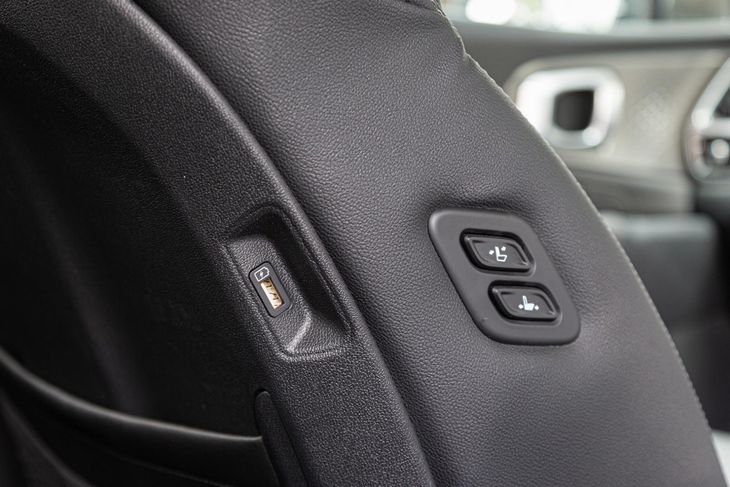
The 2nd-row can be electrically adjusted to ease access to the 3rd row. A USB is provided to charge the rearmost passengers’ devices.
Because of the Sorento’s superior dimensions, it offers better occupant space and greater load capacity than the Fortuner and that’s before you compare the Kia’s more car-like ride quality with that of the bakkie-based Toyota, which we’ll get to later. The Kia is even a little bigger than the Santa Fe inside, but probably not discernably so (their spec sheets suggest that the former has the advantage of a few extra millimetres here and there).
If you intend on towing big trailers (over 2.5 tonnes) the ladder-frame-based Fortuner is the more capable with a maximum tow capacity of 3.3 tonnes, but you’ll find most boats and even caravans are under the Kia’s 2.5-tonne max capacity.
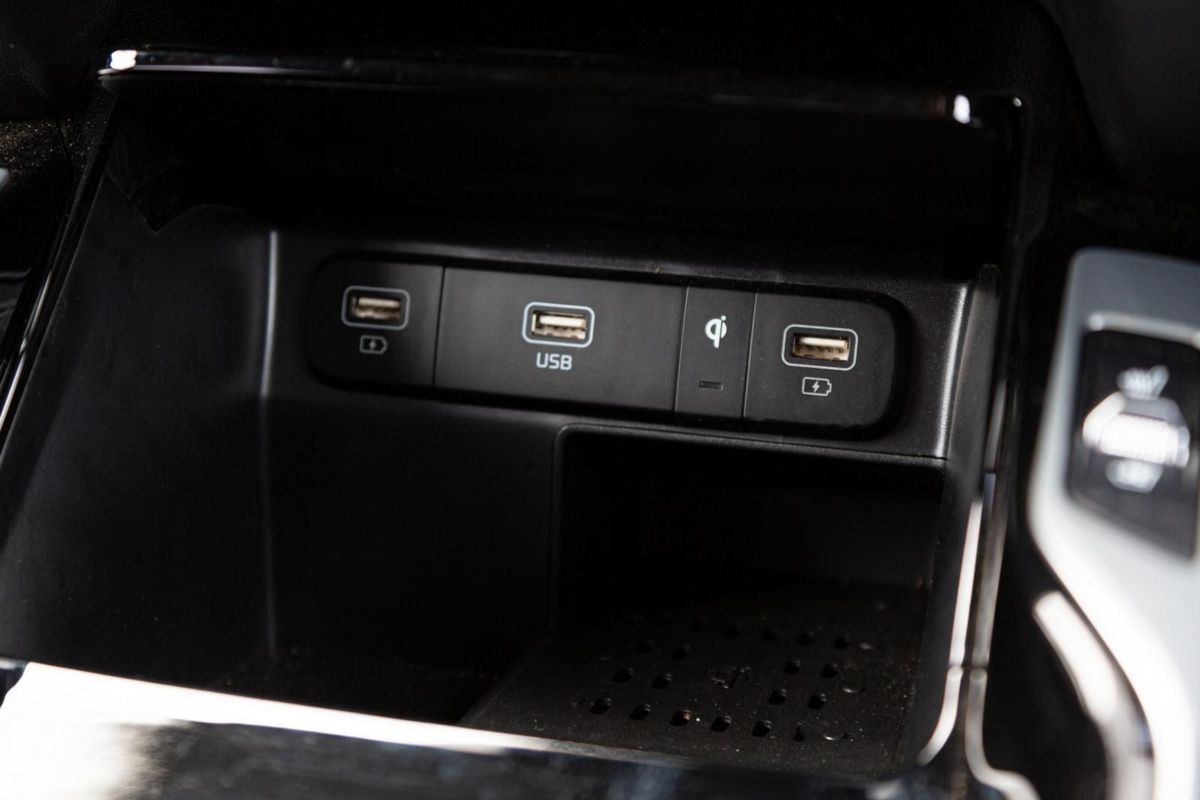
As for interior practicality, the central tunnel provides a lot of storage spaces, including 2 large drinks holders and a separate storage bin behind them. There is also a wireless charging space in front of the transmission selector to place your phone, while the door pockets (both front and rear) are large enough to hold 750-ml bottles with space beside them for other oddments.
Ride comfort
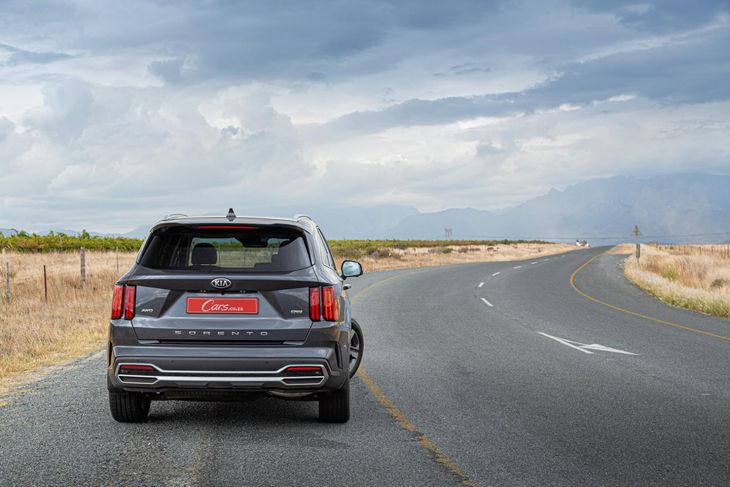
A big SUV that prioritises passenger comfort and cabin quietness above handling and suppleness.
This new-generation platform that underpins the Sorento heralds notable improvements. The SUV is quieter inside, feels steadier on the road and has better steering weight than it did before. That’s not to say it’s turned into a sportier SUV… Kia understands its target market demands comfort above any other vehicle characteristics. For a big vehicle, the Sorento feels quite easy to wield in the city (as opposed to an oversized “big rig” that seems oversized for its surroundings).
Suspension wise, the Sorento rides comfortably. The damping’s on the softer side, so you can expect a little more body roll than in a premium-badged equivalent model, but its ride is more forgiving over mixed surfaces. Over awkward bumps (such as manhole covers or expansion joints), it may knock or jolt a little more than expected, with the intrusions noticeable from within the cabin. It’s not something that upsets the overall ride quality, just something to expect and prepare for.
Meanwhile, the Kia’s chunky looks (it was designed to look perfectly at home on American freeways, we’d assume) telegraphs its handling characteristics. It’s not ponderous in the corners, but it does not “seek out apexes” either. Granted, you’re unlikely to want to carve up a mountain pass in the Sorento and that’s probably for the best, considering it feels a bit out of its depth when swaying from side to side. Still, it’s certainly better than its predecessor in this department.
Drivetrain refinement
The 2.2-litre turbodiesel and 8-speed auto transmission are an excellent combination.
The Sorento uses a 2.2-litre 4-cylinder turbodiesel engine in the South African market. The motor delivers peak outputs of 148 kW and 400 Nm of torque and is paired with an 8-speed dual-clutch (automatic) transmission. This aspect of the package is very underrated, because the 2.2 CRDi AWD SXL accelerates smoothly and shifts gears with precision. Suffice to say this is probably the best drivetrain configuration you’re likely to find in an SUV (of this size) at under R1 million.
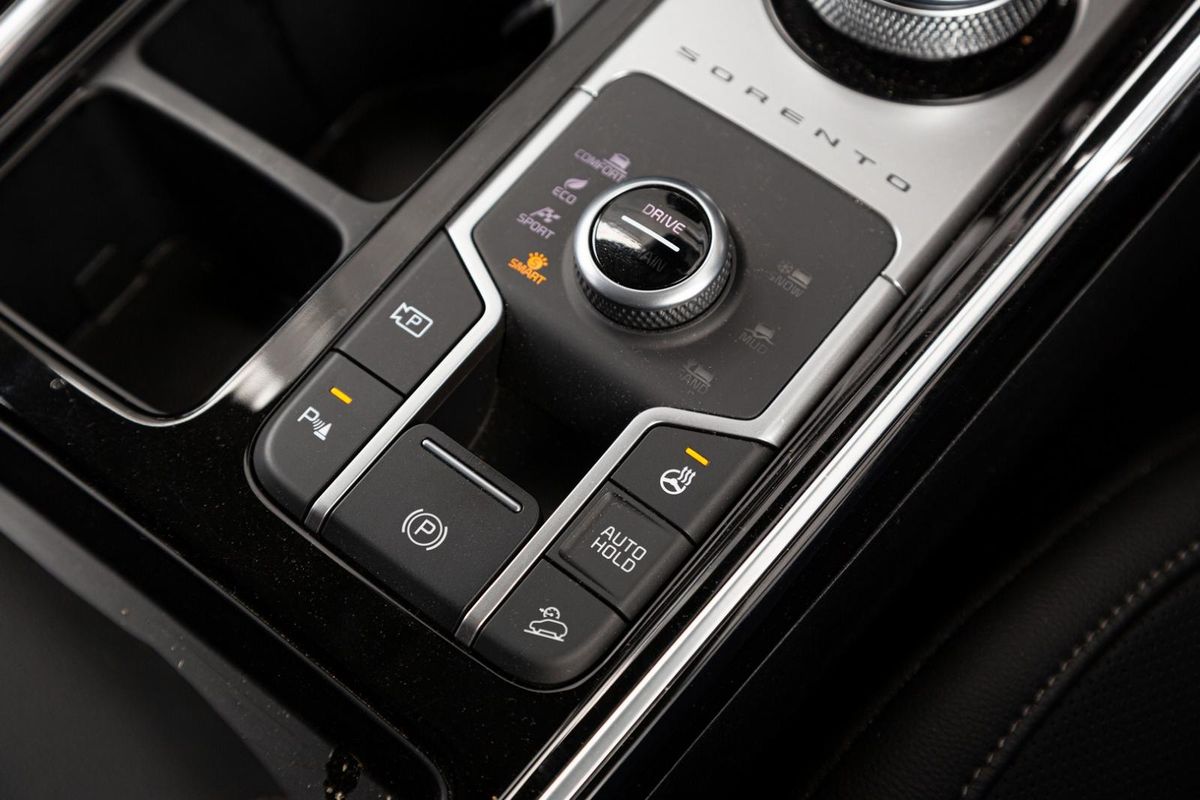
The engine always feels up to the task, irrespective of whether the Kia’s loaded up with people and their things or trundling on the daily commute. You can flit between drive modes via the rotary selector (located behind the transmission selector on the centre console), but for most situations, Comfort seems to be the most suitable mode. Smart mode adjusts the power delivery and transmission’s shift pattern based on your driving style, so you might find that more reactive to use, but Sport mode felt a bit too frantic for a family-friendly SUV and Eco mode seemed to dull the throttle response excessively.
All-wheel-drive modes are also available on the same selector via a downward press. You can then cycle through Snow, Mud and Sand modes, each of which will adjust the traction control system to best cope with the conditions selected. With only 176 mm of ground clearance, there’s not much in the way of serious off-roading that the Sorento will manage, but providing you don’t have to drive over obstacles, the 4×4 system will do its best to keep you unstuck.
Safety equipment & tech setup
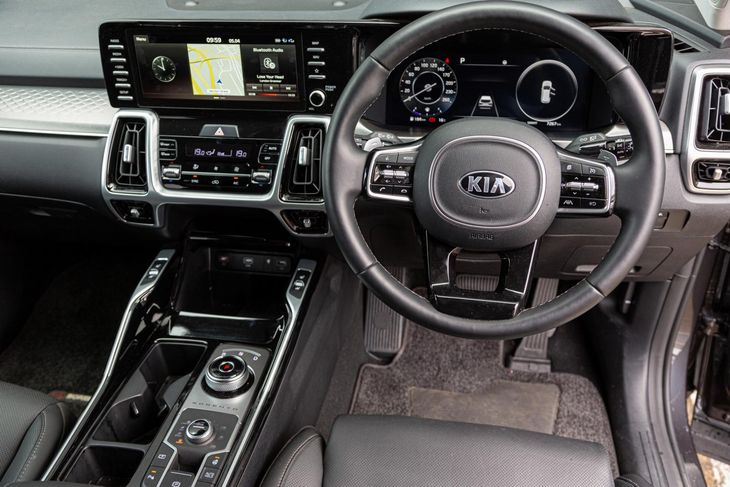
The Sorento is specced up with plenty of passive safety features and a competent infotainment system.
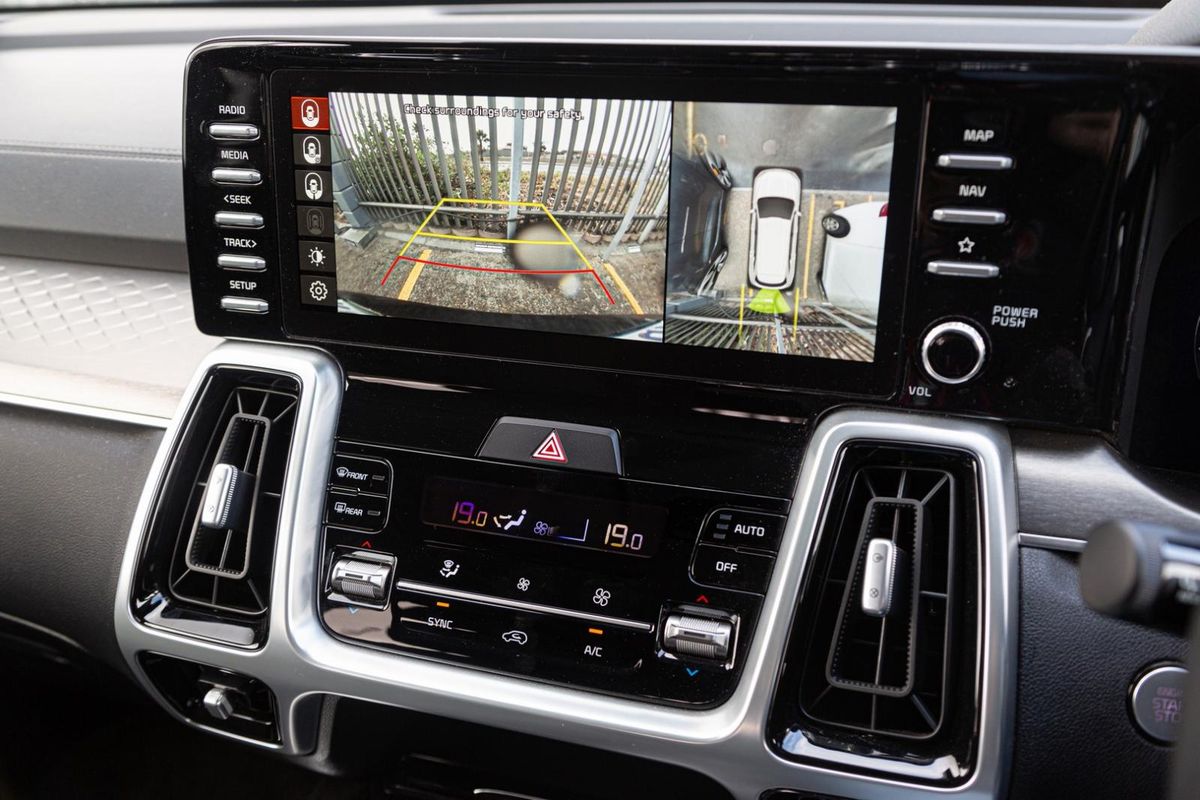
The test unit that was availed to us was the top-spec SXL derivative, that’s to say that its specification is as high as Kia offers in any model in SA – the 2.2 CRDi AWD SXL has excellent levels of safety equipment, for example. The standard array of 6 airbags, traction control and ABS and EBD are compulsory in this segment, but passive safety systems include lane-keeping assist, blind-spot monitor and adaptive cruise control. With such a big vehicle and Mzansi’s relatively narrow lanes, we found the lane-keeping assist a bit overeager to intervene, but it can be switched off when not required. Front and rear PDC is standard, as is a surround-view camera system.
As for the tech features, the Sorento is packed with standard features, but, to be fair, you’d expect that from a car that retails for about R1 million. You’ll probably want to weigh it up spec-for-spec against the equivalent Santa Fe derivative to see which features meet your requirements best – you can do that using our comparison tool here.
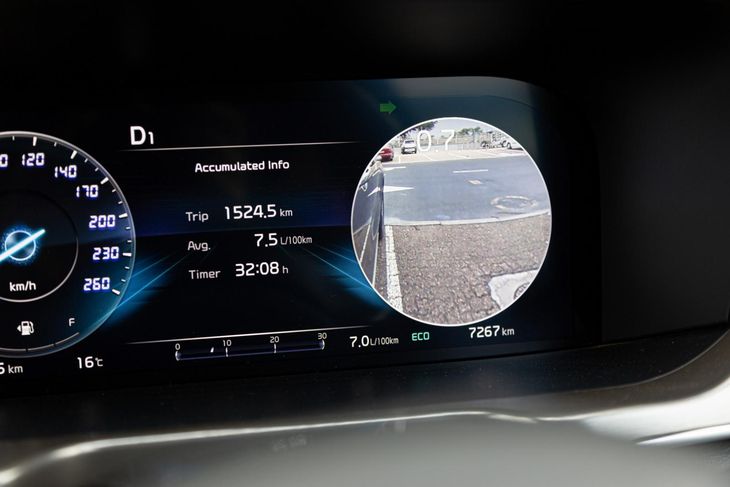
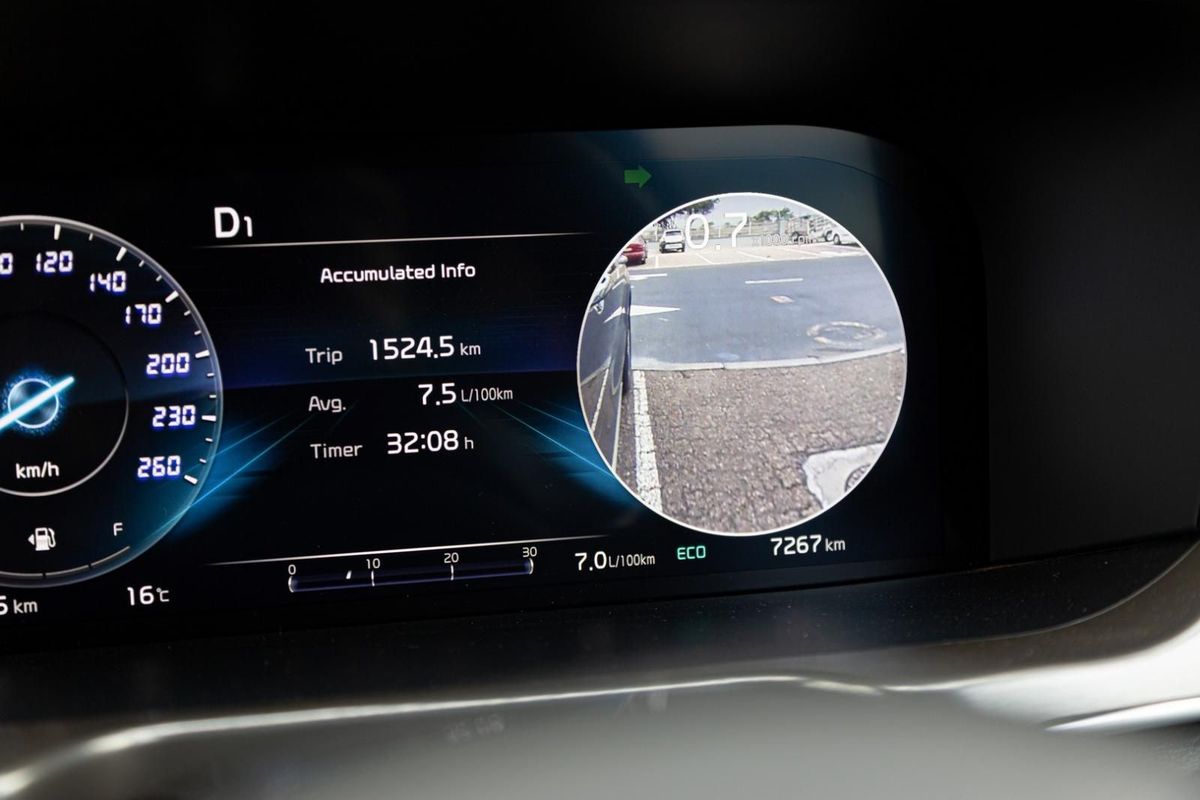
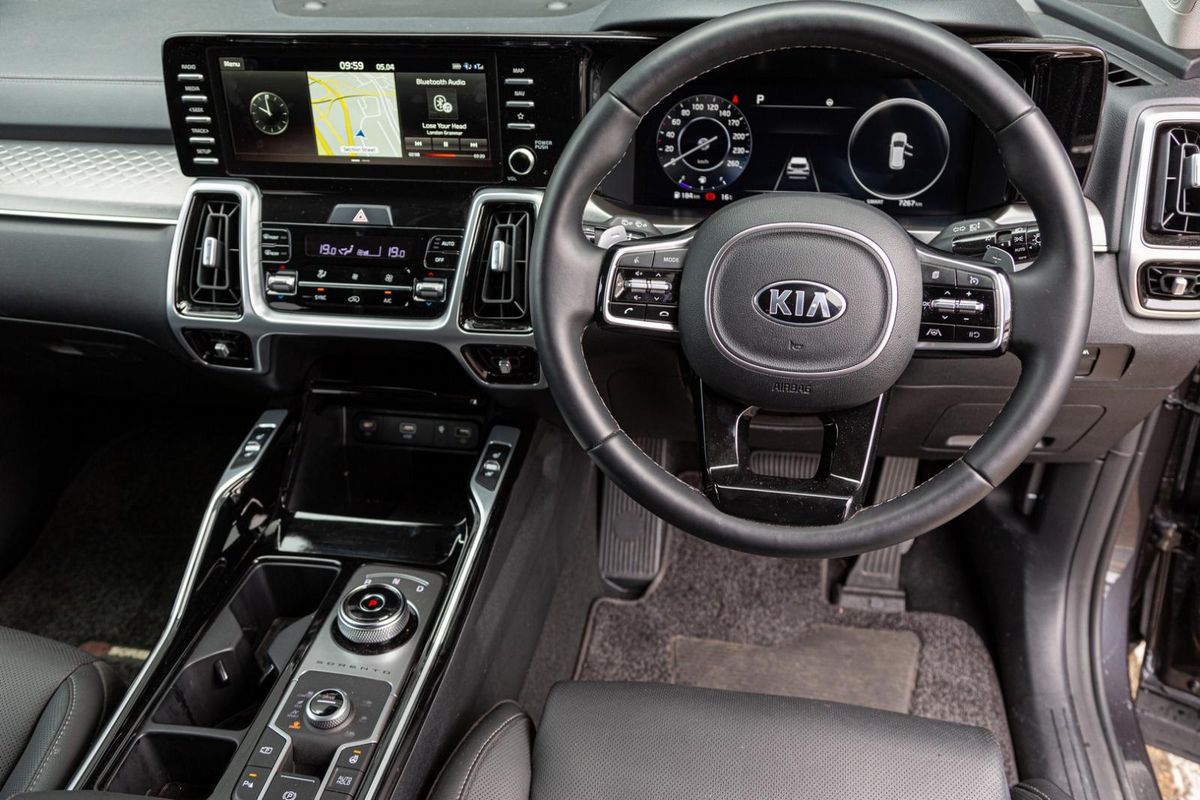
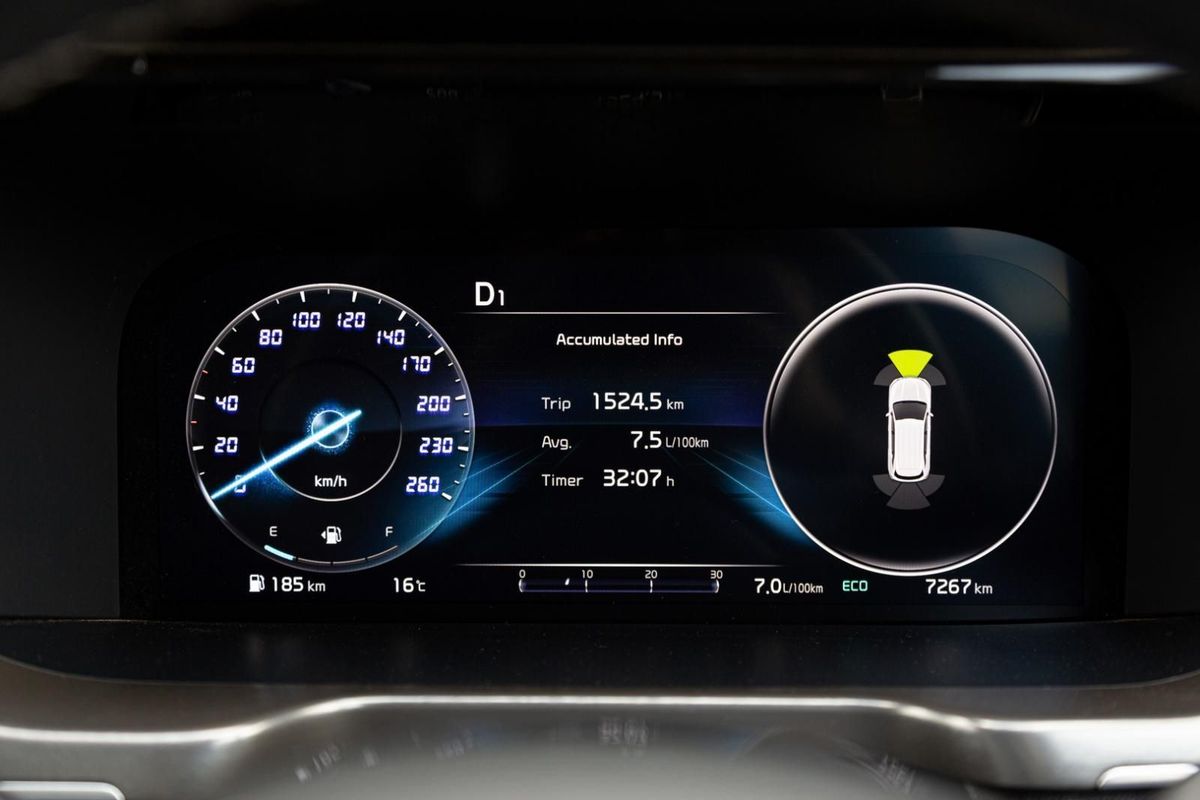
The Sorento’s all-digital instrument cluster offers a side-reverse view to take some stress out of lane-change manoeuvres.
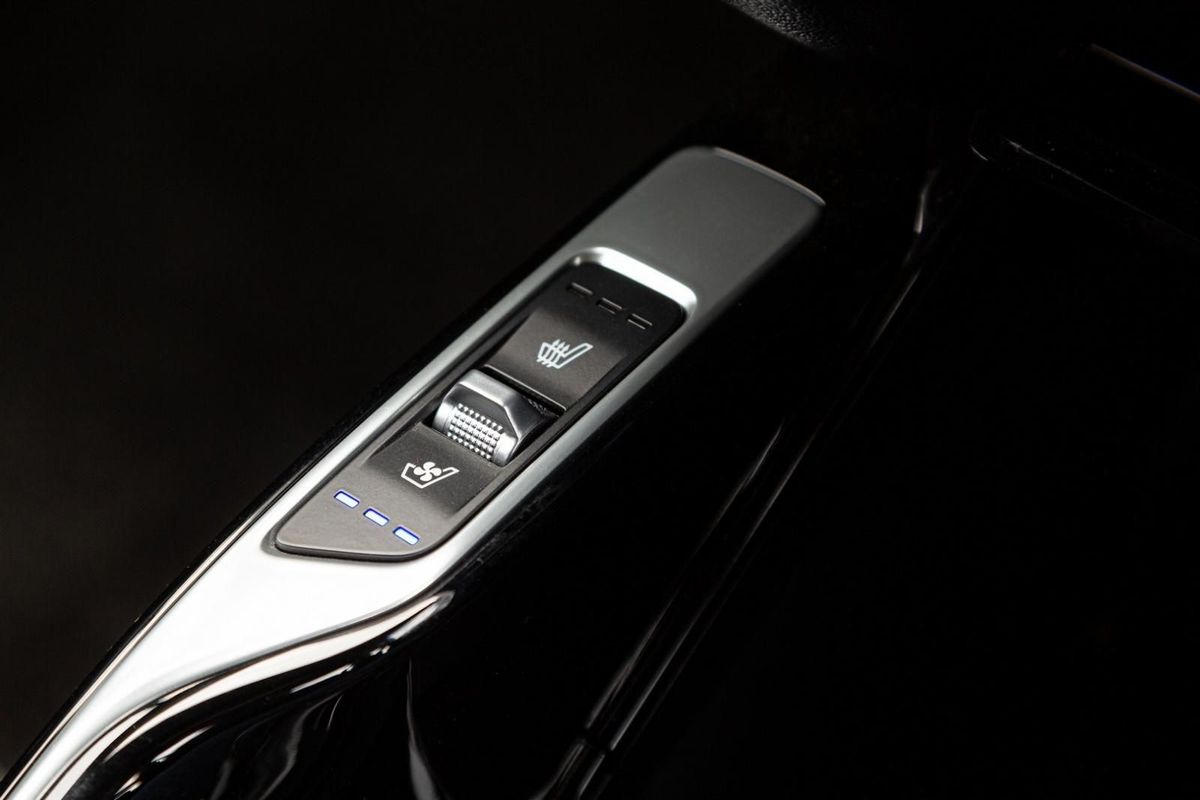
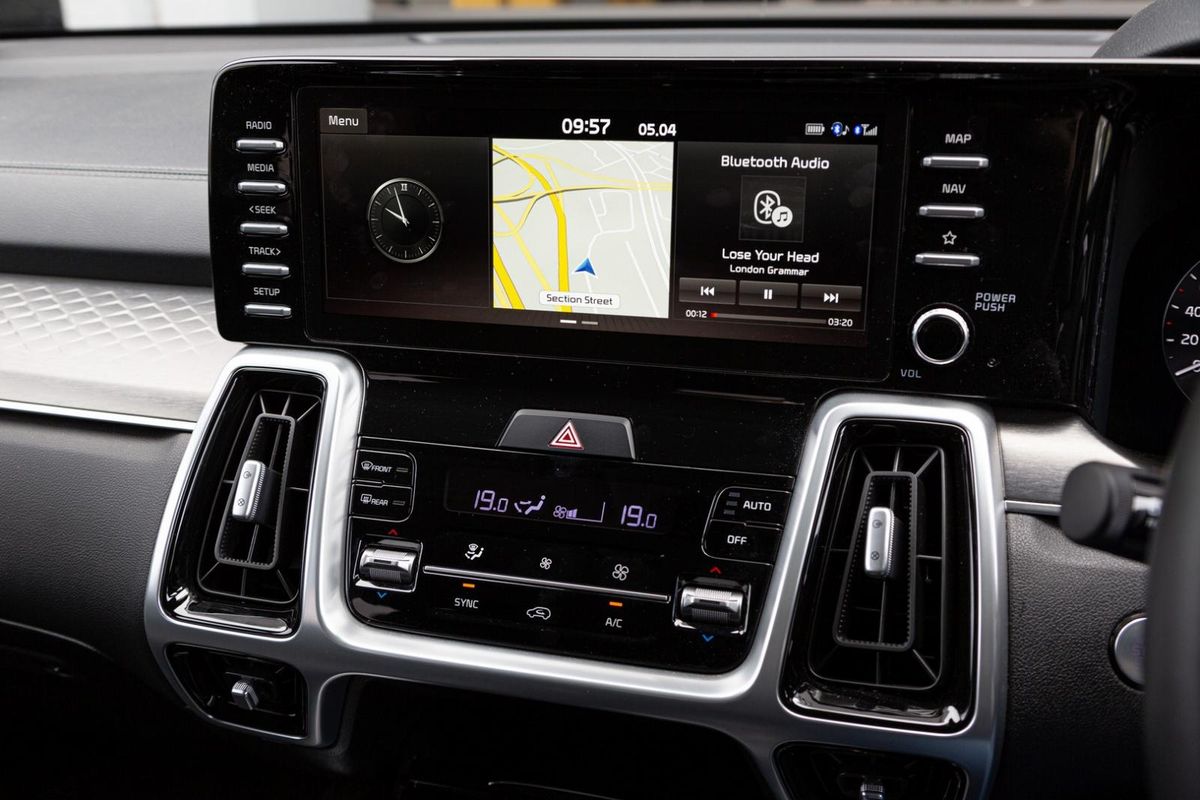
The touchscreen infotainment system (flanked by handy manual shortcut buttons) dominates the centre of the fascia, but other than using the native menu system to adjust car settings once in a while, we wirelessly connected via Android Auto or Apple Carplay and used our phone apps for navigation and communication, which works seamlessly. The heated and cooled seats are a nice touch for those hot months in summer and cold winter days too. You’ll also find an abundance of USB ports with 3 up front, 4 in the rear and another 2 in the final row, so there’s no chance of a device running flat… unless you forget your cables at home.
Kia Sorento pricing and after-sales support
The Kia Sorento is sold with a 5-year/unlimited km warranty (including roadside assistance) and a 6-year/90 000 km maintenance plan.
| 2.2 CRDi 7-Seater EX+ 2WD 8DCT | R809 995 |
| 2.2 CRDi 7-Seater EX+ AWD 8DCT | R849 995 |
| 2.2 CRDi 7-Seater SX AWD 8DCT | R914 995 |
| 2.2 CRDi 7-Seater SXL AWD 8DCT | R988 995 |
Verdict
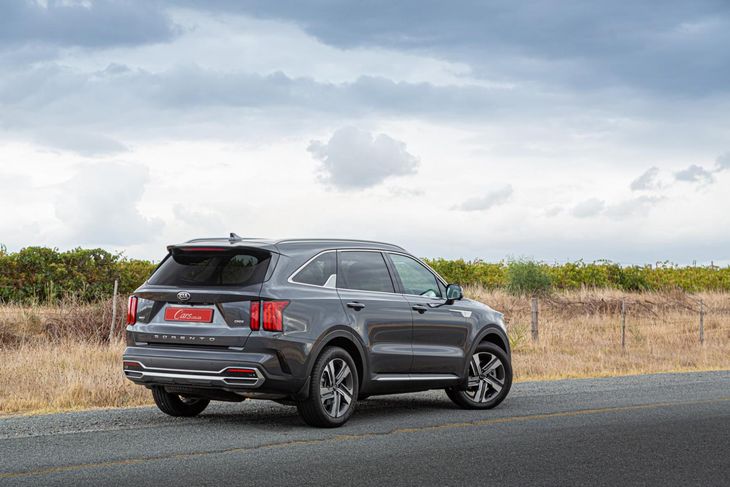
The Sorento is the perfect family car for most family excursions unless you need a serious off-roader.
The Kia Sorento certainly has a more distinctive appearance than the outgoing model… The majority of our testers felt the newcomer looked quite fetching in a “fills a parking bay rather amply” kind of way. It’s also better to drive and more practical than the previous-gen model. There’s loads of interior space for 7 passengers and the engine and transmission combination is a highlight, considering the motor’s relatively small capacity.
What’s more, the 2.2 CRDi AWD SXL is packed with several standard features that are only available on the options lists of European machinery at a similar price point. However, the Kia is most likely to vie for sales with off-road-oriented, bakkie-based Adventure SUVs. The Toyota Fortuner, Ford Everest and Isuzu MU-X are its primary rivals, but we think the Sorento offers far better road manners and a more comfortable ride – in a thoroughly modern, luxurious package.
It can’t however, match the aforementioned competitors in the off-roading department, so that needs to be taken into account if you really need a pukka 4×4. But for the purposes of travelling to and from the overwhelming majority of family holiday destinations in South Africa, the Sorento’s probably more than capable of traversing unsealed road surfaces. Given its superior sophistication compared to cab-on-chassis vehicles, Kia’s 7-seater offers good value for money.