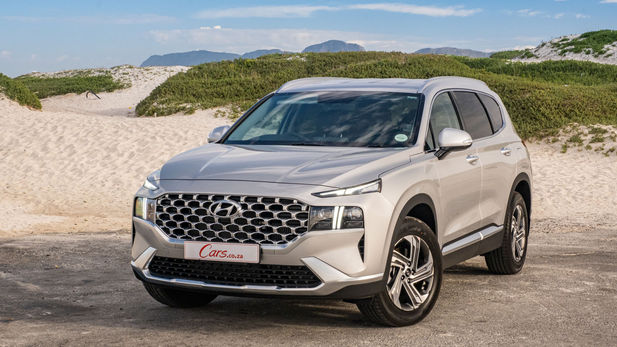
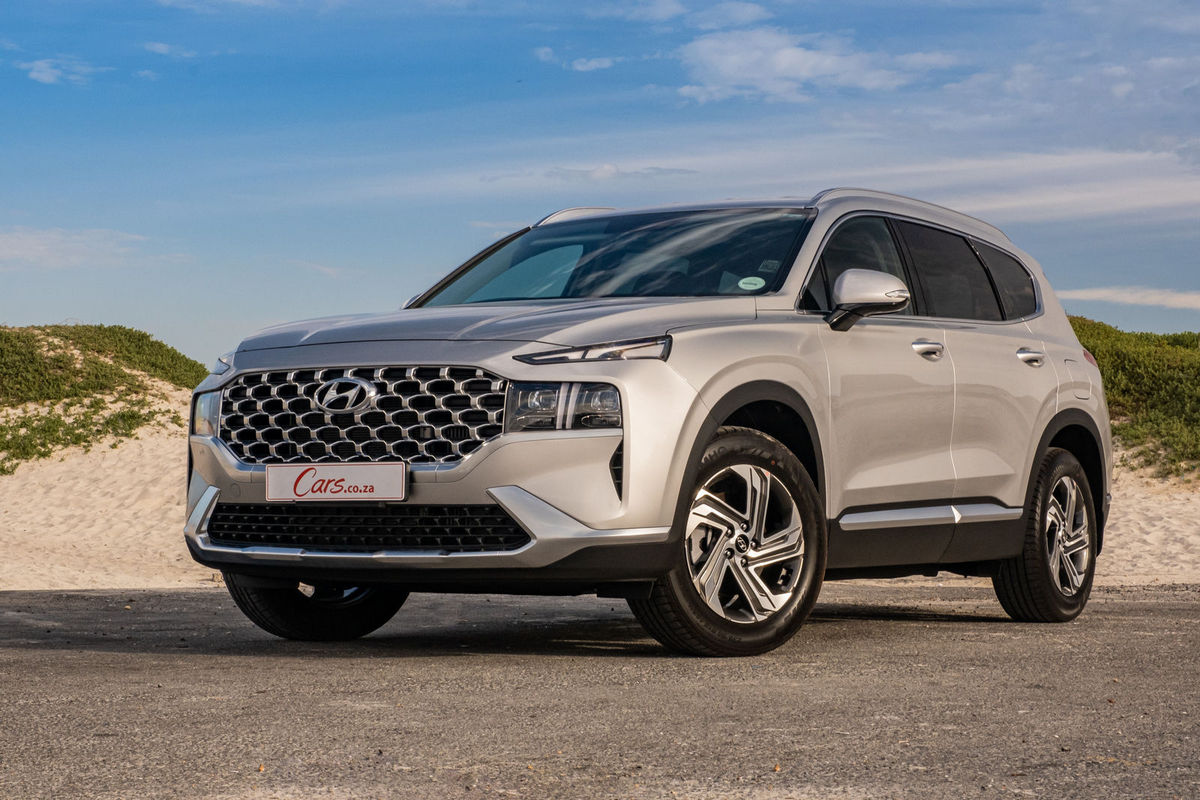
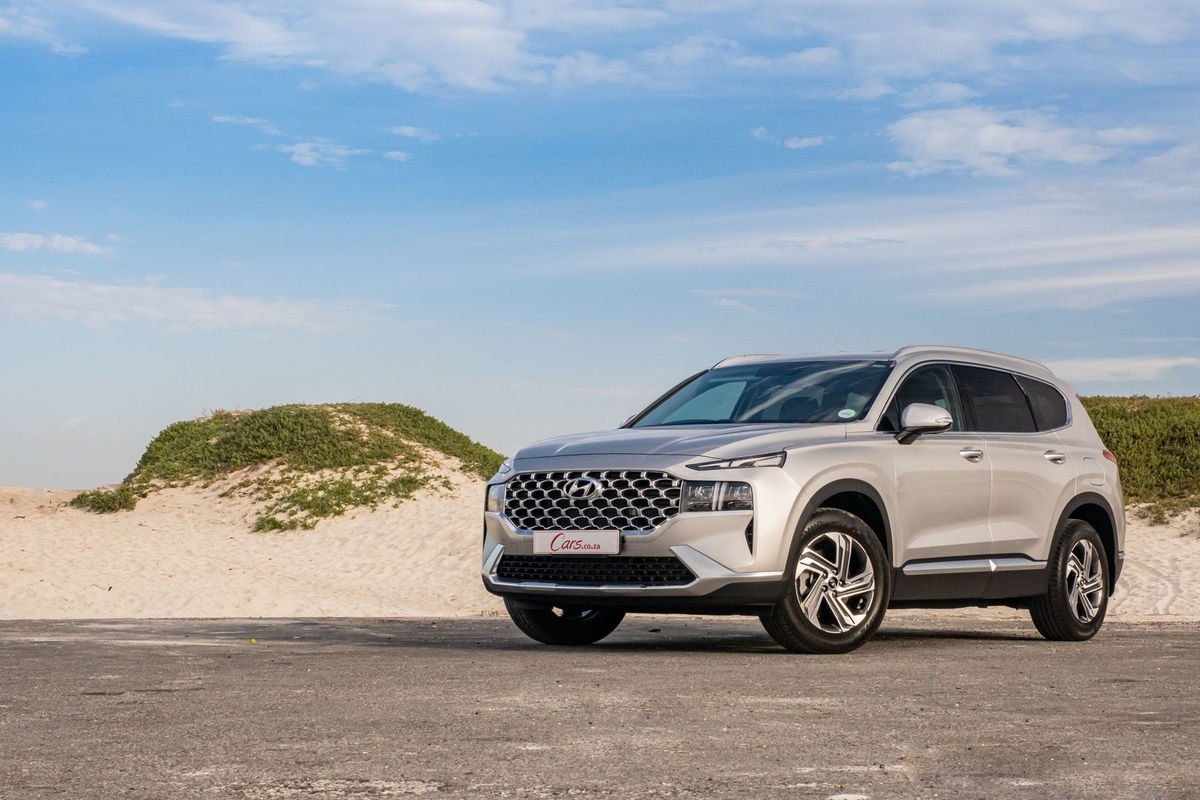

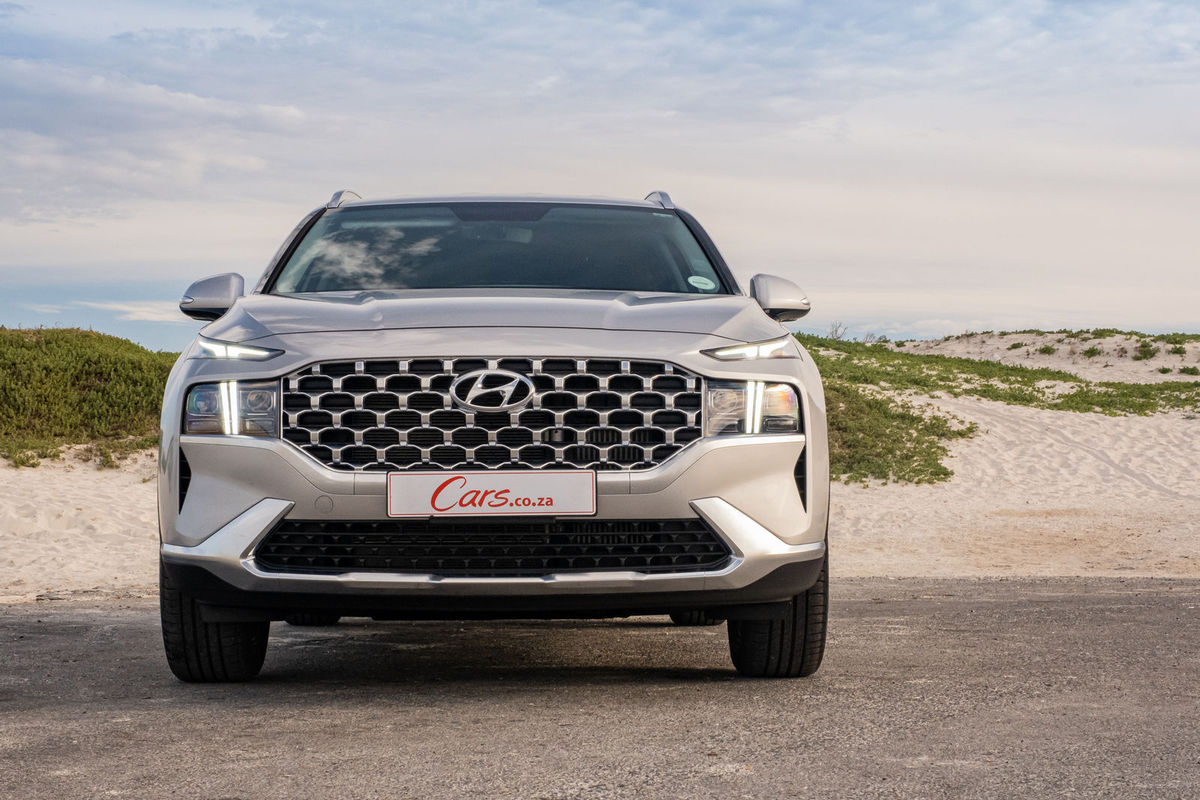

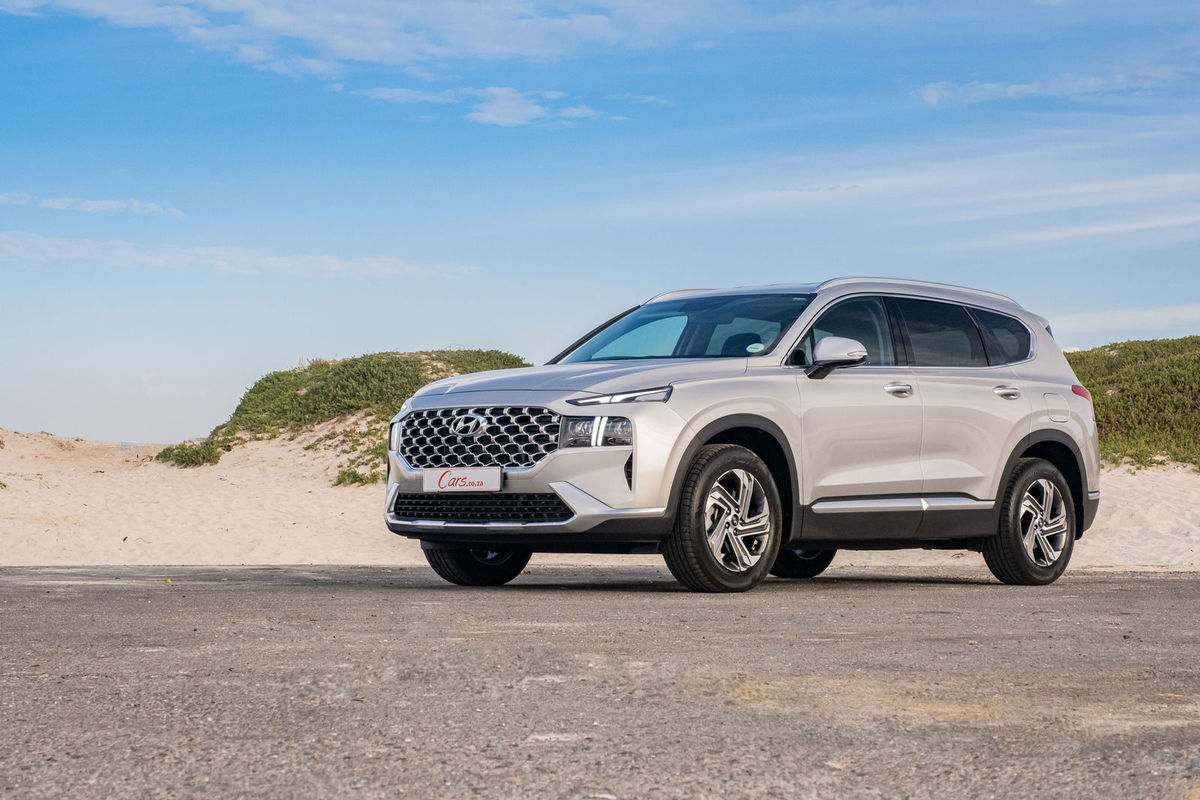
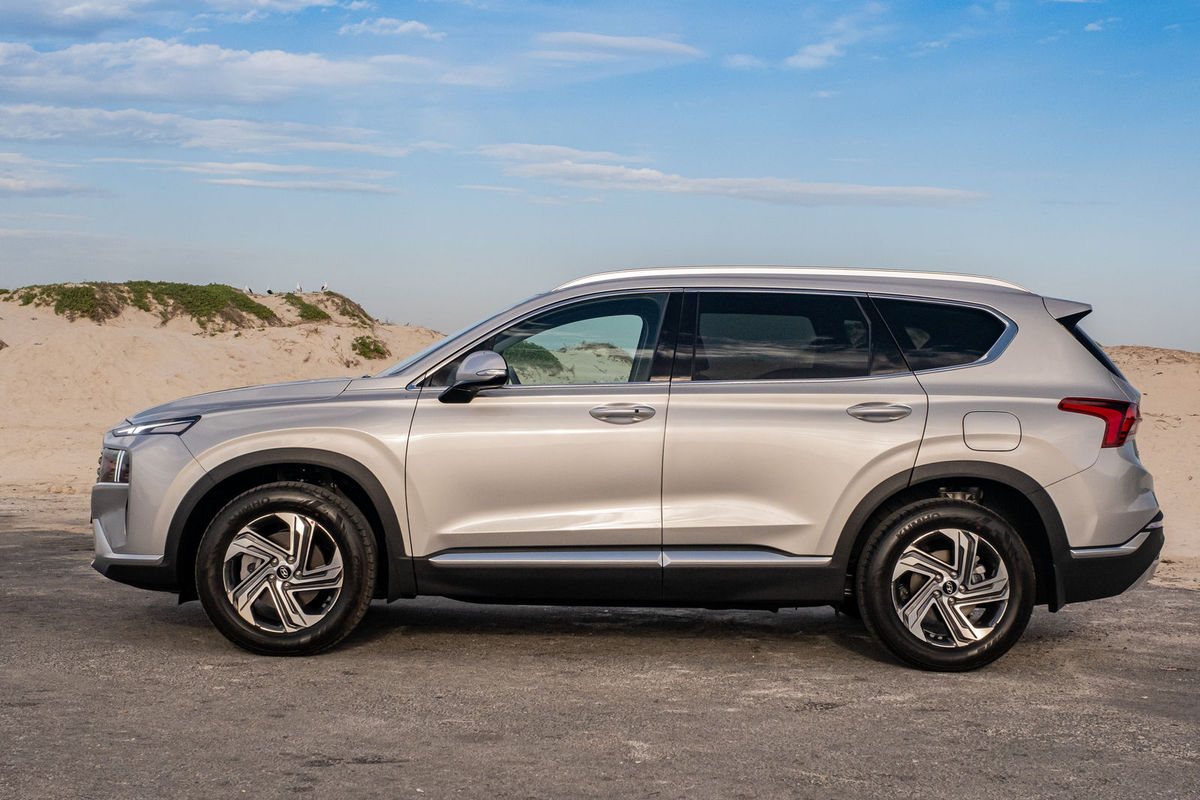

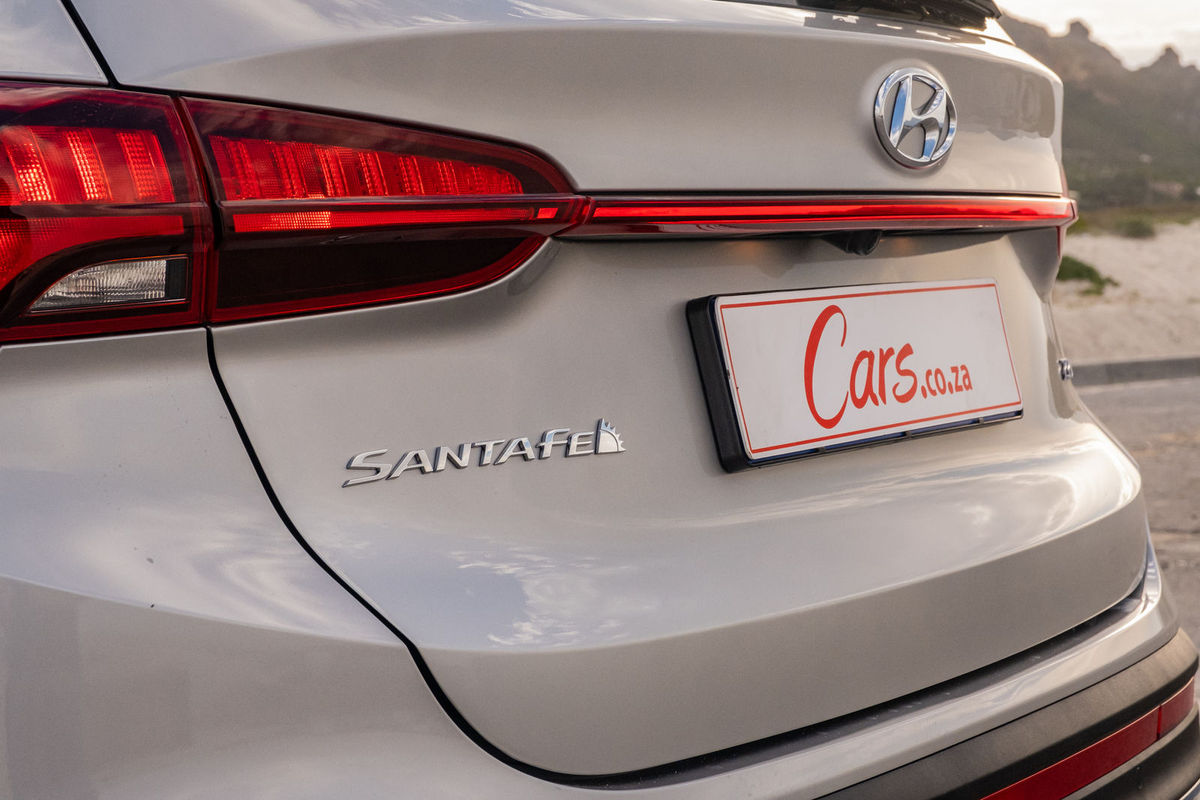
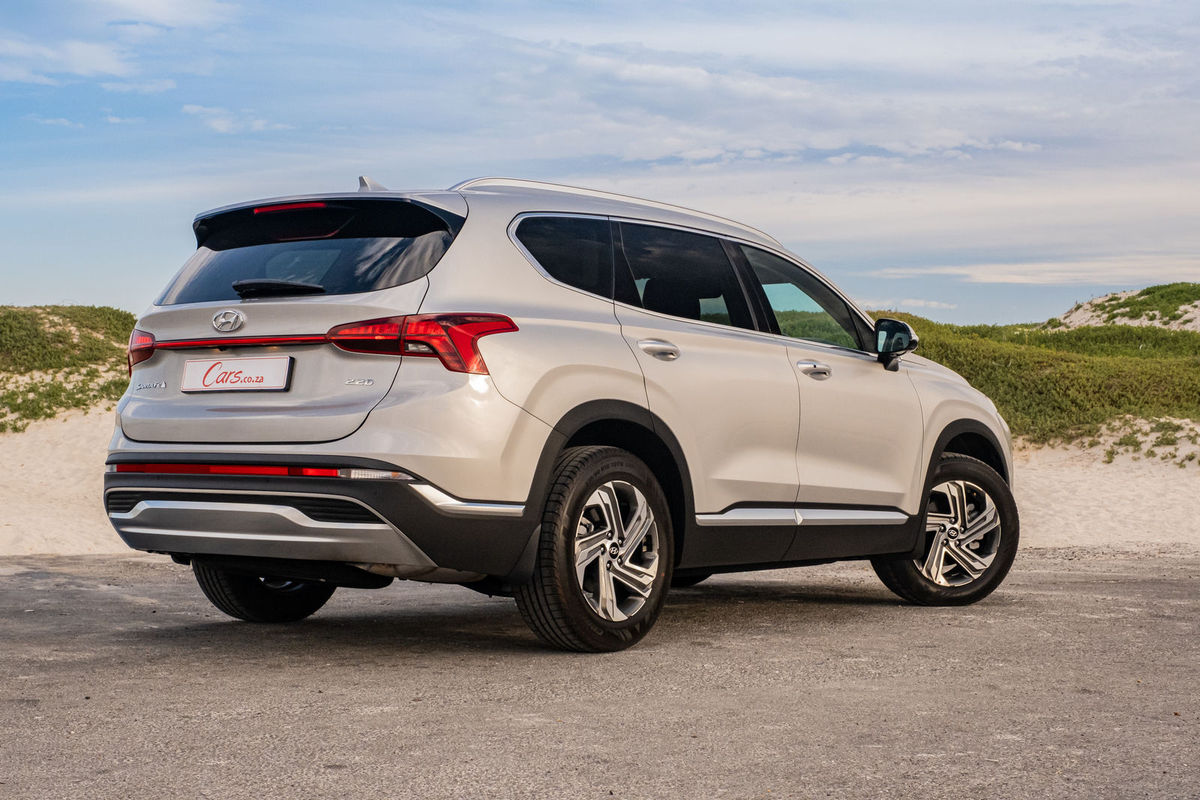


It’s fair to say that, to date, the Hyundai Santa Fe has not fulfilled its potential in the South African market – primarily because of local consumers’ predilection for cheaper, pure off-roaders such as the Toyota Fortuner. Could the recent facelift to the Korean model, which, to be fair, incorporates far more significant updates than the usual cosmetic tweaks and detail upgrades, enable the Santa Fe to finally make a notable impact on the sales charts?
We like: Cabin refinement, ride quality, space and practicality.
We don’t like: 3rd-row seats quite tight, perhaps too luxurious for serious off-roading
Fast Facts
- Model Tested: Hyundai Santa Fe 2.2D 4WD Elite
- Price as tested: R869 500 (July 2021)
- Power unit: 2.2-litre 4-cylinder turbodiesel
- Power/Torque: 148 kW/440 Nm
- Transmission: 8-speed automatic
- Fuel economy: 7.9 L/100 km (claimed)
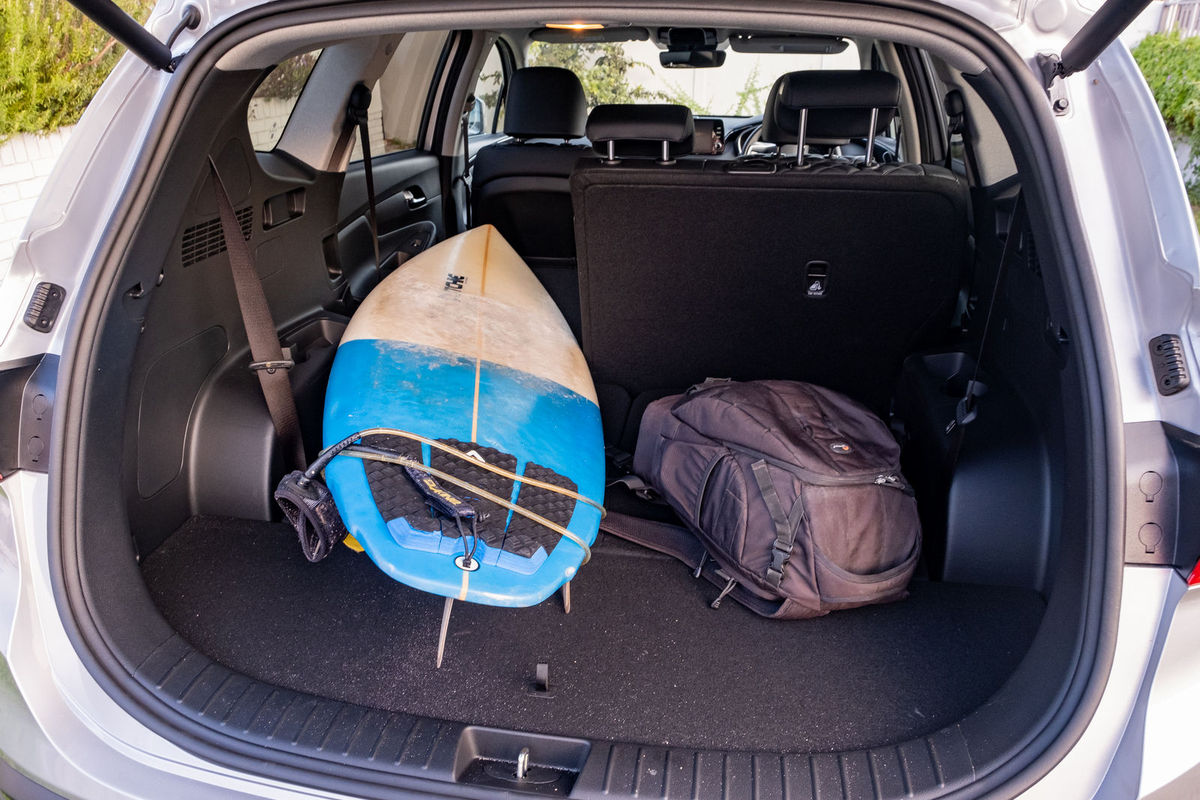
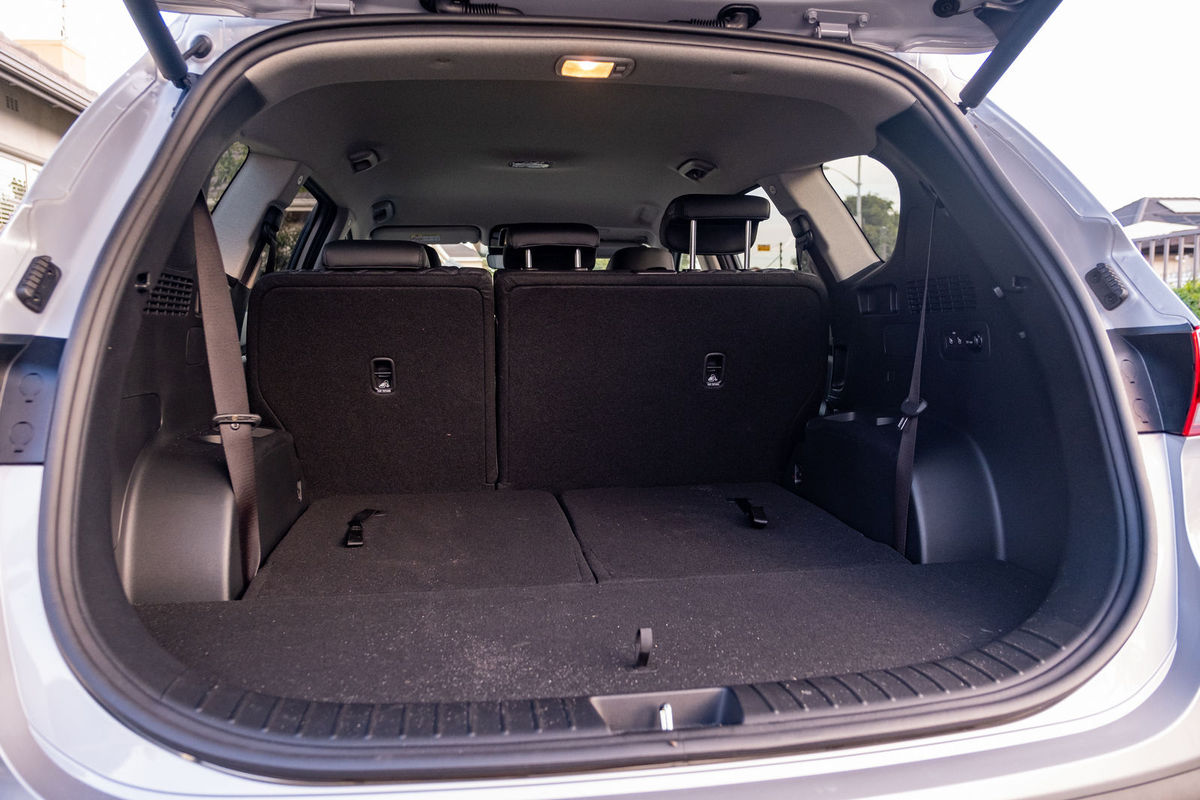
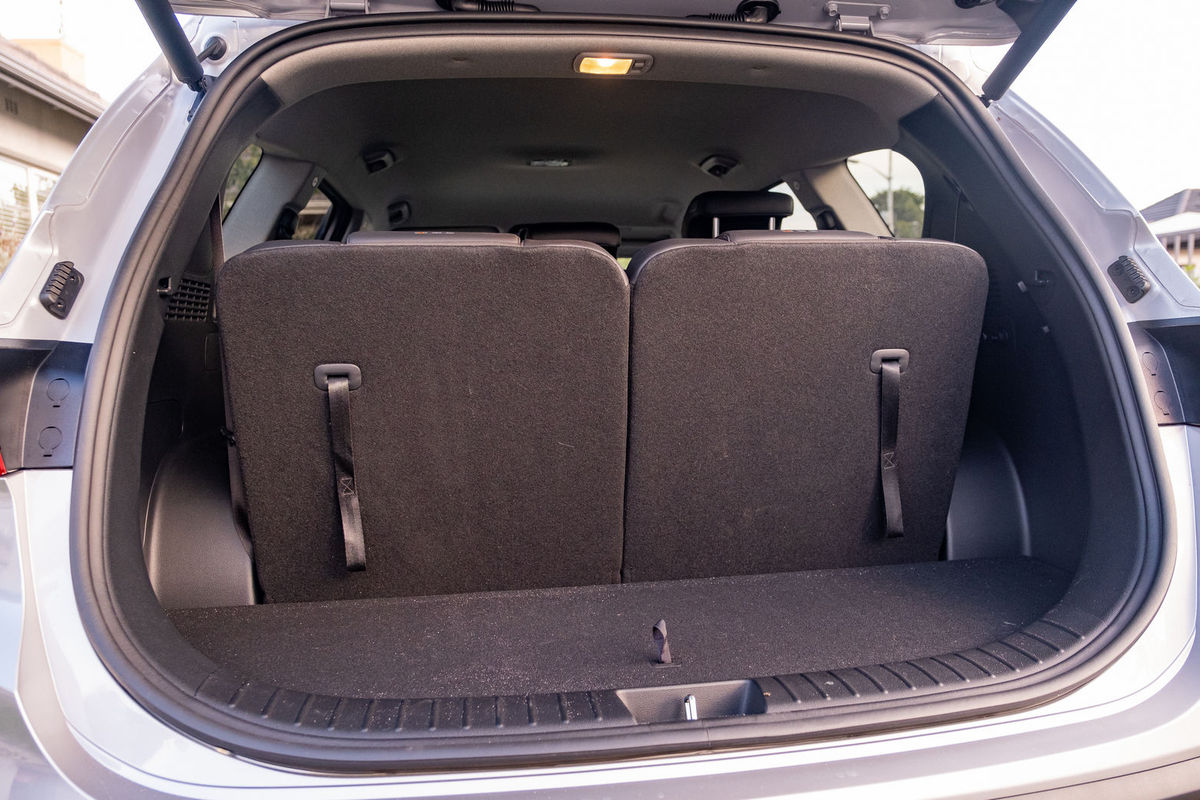
- Load space: 332/1 032/ 2 041 litres
What is it?
It’s rare that a facelift model incorporates a change of platform, but Hyundai has given its Santa Fe fresh underpinnings so that it aligns with its all-new Kia Sorento sibling, which, at the time this review was written, hadn’t arrived in Mzansi yet. It’s an all-encompassing facelift, in fact – this test unit felt like an entirely new car with an updated engine, more modern platform and a vastly reconfigured interior.
It was hard to fault the pre-facelift model, aside from the fact that South African buyers tend to favour more affordable and versatile bakkie-based SUVs such as the Toyota Fortuner and Ford Everest, even though – as luxury family vehicles – they cannot match the plushness or overall sophistication of the Korean offering. This “updated” Santa Fe lifts its game with even more premium finishes and comfort-oriented upgrades, but at a price point that straddles its bakkie-based Adventure SUV rivals and the outright Executive- and Premium SUVs, which all seem to start at R1 million nowadays.
How the Santa Fe fares in terms of…
Engine and performance
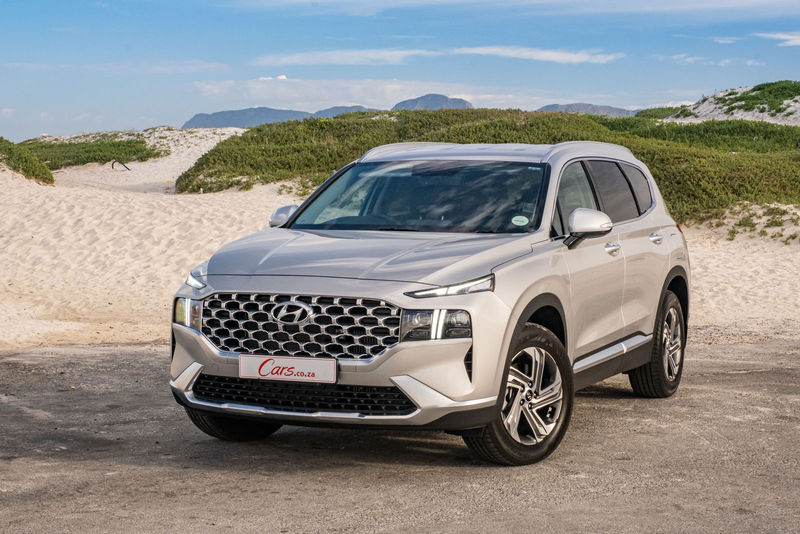
Under the bonnet is an improved 2.2-litre turbodiesel engine.
Under the bonnet of the Santa Fe is a familiar (but updated) version of its predecessor’s 2.2-litre 4-cylinder turbodiesel engine. The powerplant comes with a slight increase in power (6 kW) taking it up to 148 kW, while peak torque remains unchanged at 440 Nm. A new 8-speed dual-clutch automatic transmission has been installed, which performs impressively, with quick response times and smooth shifts. The engine feels well-suited to the 7-seater’s packaging and offers both adequate overtaking acceleration and acceptable efficiency…
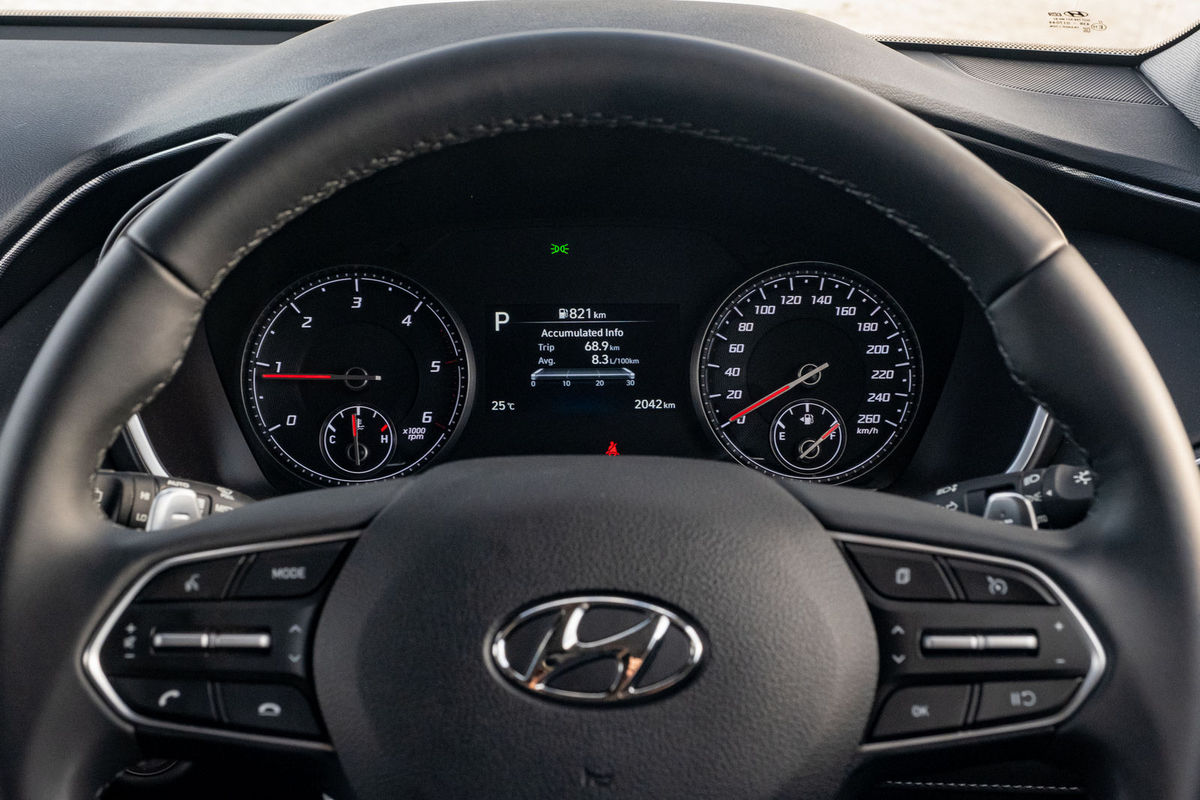
Indeed, the powertrain update has focused on improving the Santa Fe’s fuel consumption – Hyundai claims an average of 7.9 L/100 km, but the test unit’s indicated figure settled at 7.7 L/100 km during its 2-week tenure in our fleet. You can reasonably expect even better returns once the turbodiesel has loosened up a bit more and unlike us, you apply maximum throttle sparingly.
There are 4 driving modes (Comfort, Eco, Sport and Smart). Sport mode makes the 2.2D 4WD Elite rather excitable (the throttle response is ultra-sensitive and the ‘box shifts too aggressively), so we mostly switched between Comfort and Smart (the latter automatically adjusts powertrain settings based on the software’s analysis of your driving style), which gave the best balance for everyday driving.
There are off-road modes too (Snow, Mud and Sand), which make it easier to negotiate tricky terrain in the Hyundai by adjusting the vehicle’s traction control settings and all-wheel-drive characteristics to ensure torque is directed to the wheels that can make the best use of it (depending on the prevailing low-grip driving circumstances).
The performance figures are in line with the likes of the new Fortuner 2.8GD-6 4×4 VX and the Everest 2.0Bi-Turbo 4WD Limited, but the Santa Fe’s kerb weight is some 380 kg less than the Toyota’s and a significant 636 kg lighter than the Ford, so it feels more energetic in cut-and-thrust traffic, more long-legged on the open road and, ultimately, uses far less fuel than its bakkie-based Adventure SUV rivals. The Hyundai’s towing limits (750 kg for an unbraked trailer and 2 500 kg for a braked trailer) are admittedly slightly less than the 3-tonne maximum ratings of the Toyota and Ford.
Interior and Practicality
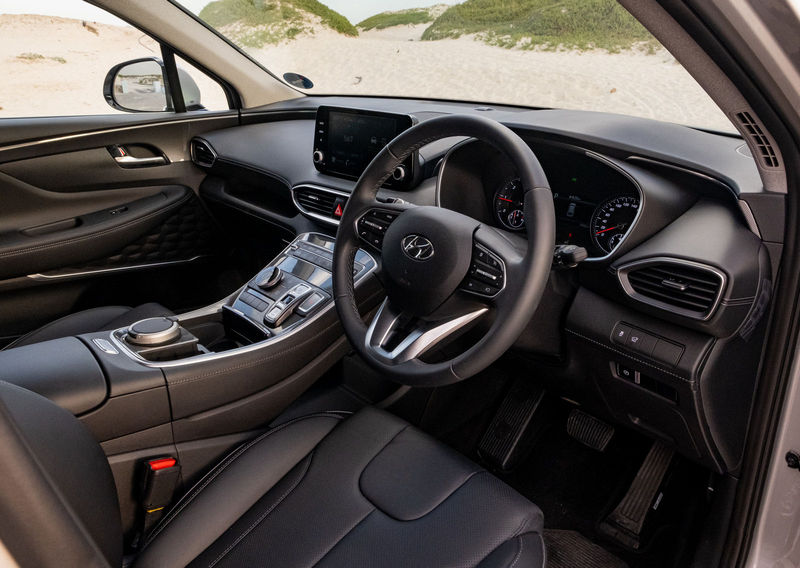
Inside, the materials are soft-touch with tight shut lines.
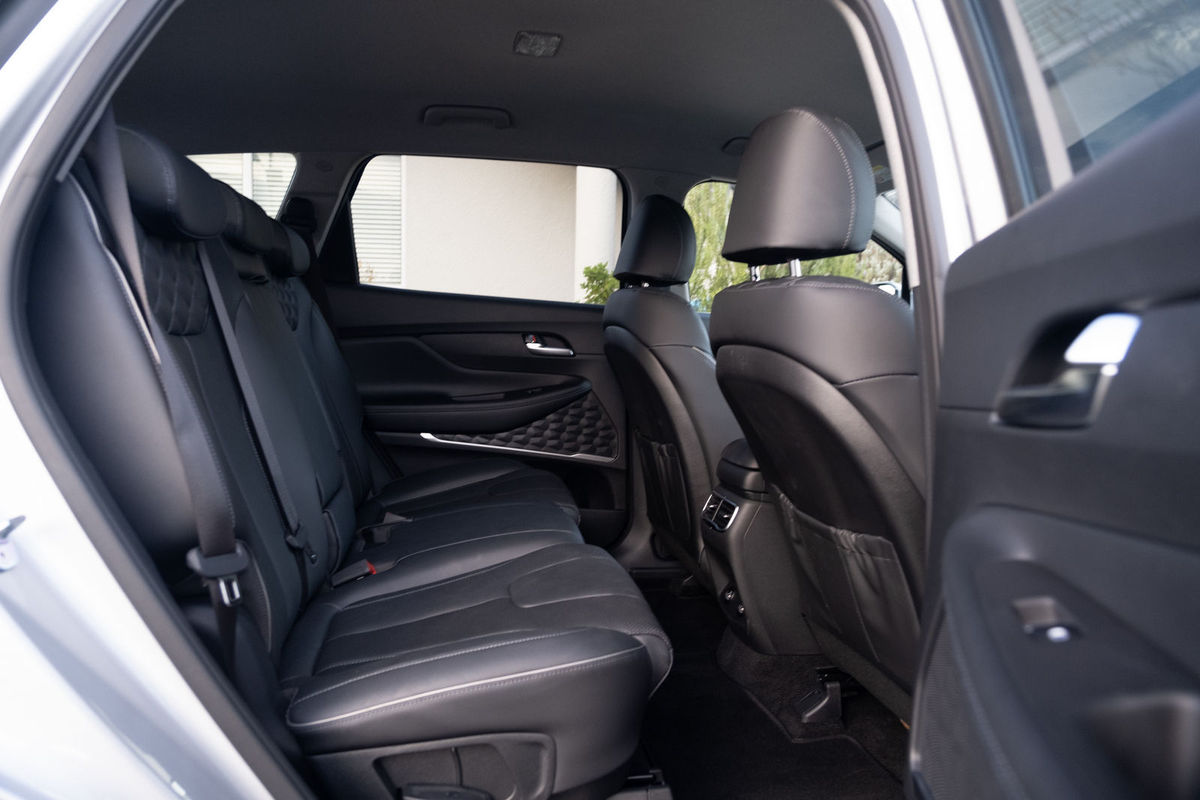
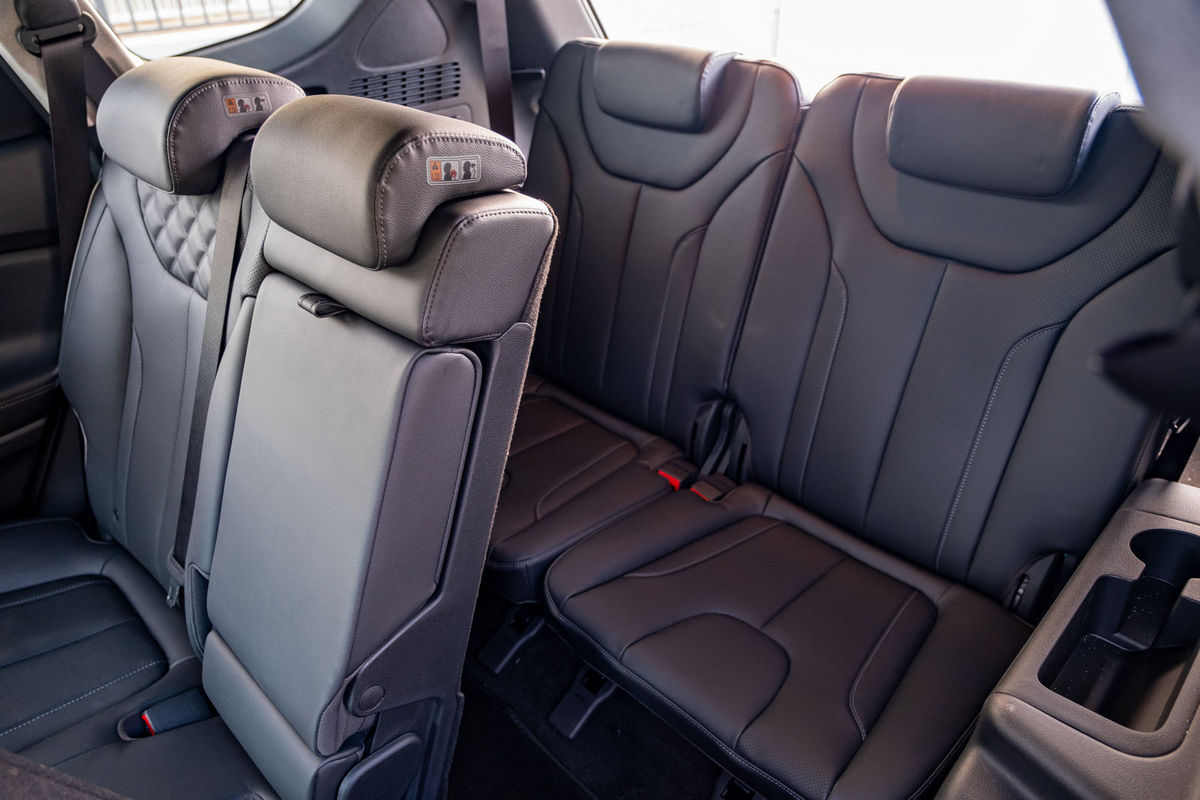
The Santa Fe is offered as a conventional 7-seater with the ability to fold the 2nd- and 3rd-row seats flat. If practicality is a top priority, the Santa Fe is an outright winner. With all the seats up, you still get 332 litres of cargo space in the load bay, which is more than you get in a Land Rover Discovery, although 3rd-row passengers are likely to feel a little squashed in – the rear bench is best suited for small children. In 5-seater mode, the luggage capacity expands to 1 032 litres and, with all the seats down, you get a massive 2 041 litres of load space (very similar to the biggest bakkie-SUV, the Everest).
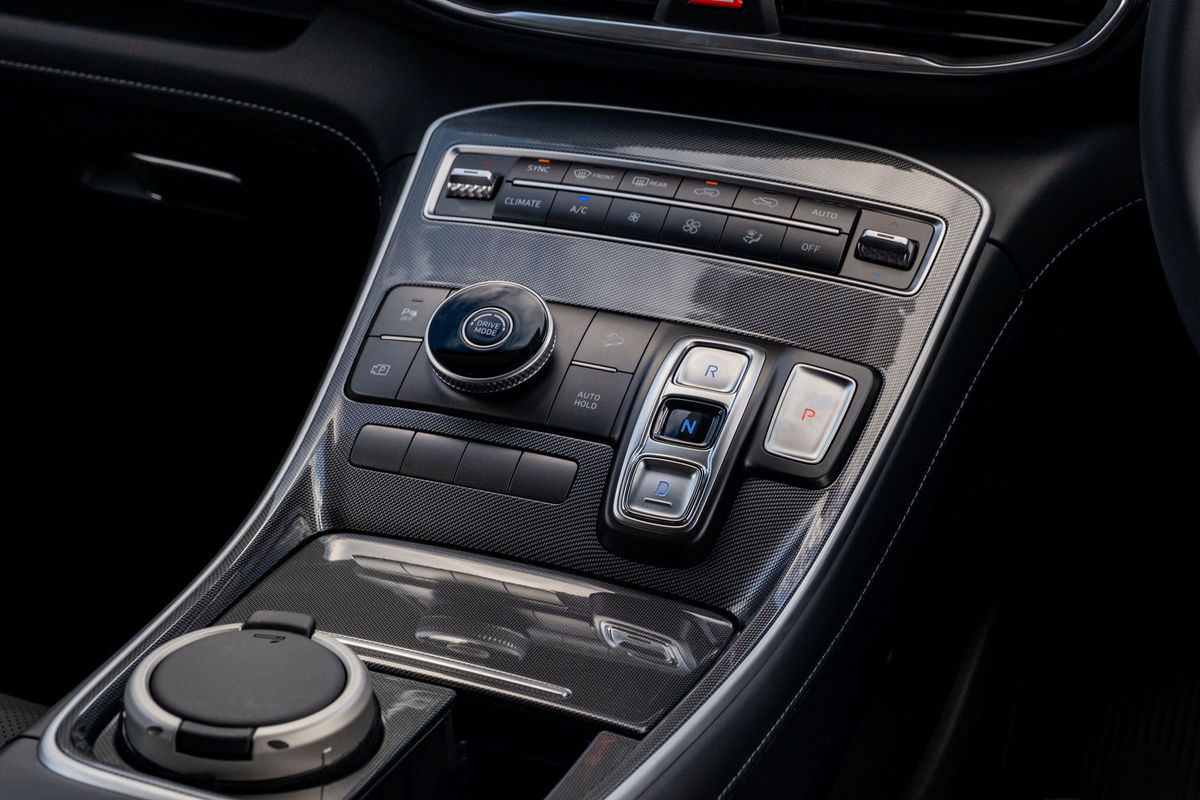
Meanwhile, the Hyundai’s interior has had a major revamp as part of the model’s facelift; the first update you’re likely to spot is the omission of a conventional transmission lever (it’s been replaced with dashboard-mounted selector buttons). The entire centre console has been shifted forward to form a slanted panel that’s more ergonomically positioned. What’s more, it offers extra storage space and a larger storage bin under the armrest. There’s a storage shelf under this panel, where you’ll find 2 USB ports and a 12V socket. There are 2 more USB ports in the rear (the total number of USB ports is 5).
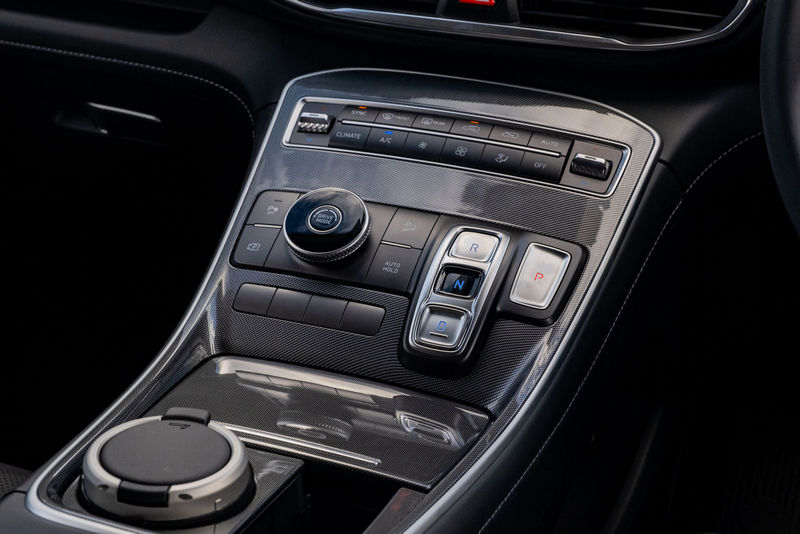
The transmission lever has been replaced with an L-shaped console that takes up less valuable storage room.
Leather is standard across the range, but the 2.2D 4WD Elite derivative features heated and cooled fronts in addition to electric adjustment for both driver and passenger. The seats are liberally padded and, consequently, very comfortable to occupy on long journeys. The whole ambience of the cabin is that of a luxury SUV: the shut lines are tight and the majority of the plastic surfaces are of the soft-touch variety. The Santa Fe might not have quilted leather everywhere, but there’s certainly enough of it to make the cabin feel special. What’s more, a panoramic sunroof is standard on the Elite version.
The 8-inch infotainment system sits atop the dashboard and is operated via touch with a few shortcut keys around the frame. It supports Apple Carplay and Android Auto screen-mirroring technology, while a clever wireless charging recess allows you to prop your phone up vertically in a slot just in front of the cupholders.
Driving comfort
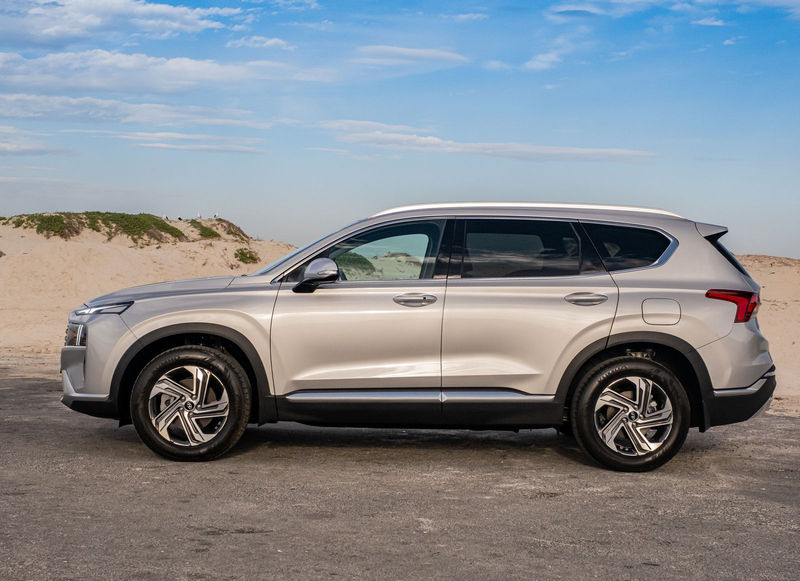
The 4×4-capable Elite gets extra ground clearance (205 mm), but it might be too “nice” to send through the real rough stuff.
It’s easy to tell that Hyundai has improved the sound insulation in the Santa Fe’s cabin. It’s extremely quiet with only a hint of wind and tyre noise at 120 kph. The steering is light (but responsive) and the Hyundai has decent road manners in the twisties. It’s not a sporty SUV by any means – it undeniably favours comfort over performance – but that’s probably what the model’s target market would prefer.
On gravel roads, the quietness in the cabin silences some of the knocks that the pliant suspension has to endure, but the Santa Fe appears to be capable of delivering a comfortable ride quality over the rough stuff too. It’s not going to negotiate a graded off-road course and the 205 mm of ground clearance is some way short of the Fortuner (279 mm) and Everest’s (225 mm), but the 7-seater’s more than adequate for every other occasion. After all, the Hyundai is certainly far more comfortable to drive (and be transported in) on the tarmac than the bakkie-based SUVs, which is a major boon.
Safety features
The Adventure SUV segment is no longer short-changed in terms of safety systems. The Santa Fe has had to keep up and now includes blind-spot monitoring, reverse parking collision avoidance, safe exit (warns you of approaching vehicles when trying to open the doors), front and rear parking sensors, a reverse-view camera and, for off-road driving assistance, hill-descent control and hill-start assistance.
Cruise control is available, but it would be good to see Hyundai offer adaptive cruise control, even just as an option. A total of 6 airbags are fitted as standard and the usual suite of ABS, EBD and stability control are all present and correct.
Pricing and after-sales support
There are currently only 2 Hyundai Santa Fe derivatives to choose from, the 2-wheel-drive Executive that’s priced at R769 500 and the 4-wheel-drive Elite at R869 500.
Hyundai has a particularly long warranty, which includes a 5-year/150 000 km cover on the vehicle and 7-year/200 000 km on the drivetrain. A 6-year/90 000 km service plan is included.
Verdict
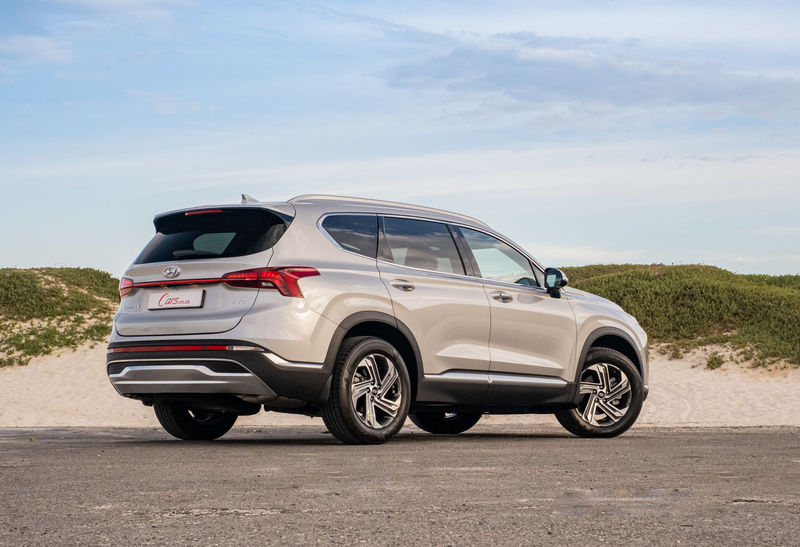
The Santa Fe is very nearly the perfect family SUV.
Just as the pre-facelift Santa Fe was difficult to fault, the vast array of updates to this model have only made the Hyundai more difficult to criticise. At its price point, not many SUVs offer this level of driving comfort with 7-seater capability and this much luggage space. It’s very nearly the perfect family SUV apart from its lack of pukka off-road credentials. To be fair, it’s most likely good enough for any family adventure off the beaten track, other than those where a low-range transfer case would be a pre-requisite. It is certainly well worth a look if you’re shopping at the top end of the bakkie-based SUV market.
Related content:
Hyundai Santa Fe (2021) Specs & Price
Hyundai Santa Fe (2021) Launch Review
Toyota Fortuner (2020) Specs & Price
Ashley Oldfield

Ashley has been riding or driving some sort of motorised vehicle since his 4th birthday when he got a Yamaha PW50. Equipped with years of racing experience, Ashley took up journalism and became a writer for some of South Africa’s best motoring magazines and online publications. He is SA’s first (and only) GT Academy winner having raced professionally overseas. He now serves as the Content Manager at Cars.co.za, putting his wealth of racing and driving experience to good use.