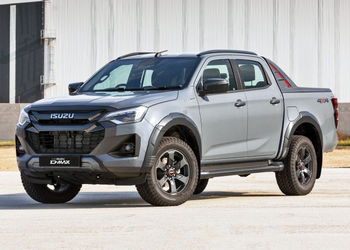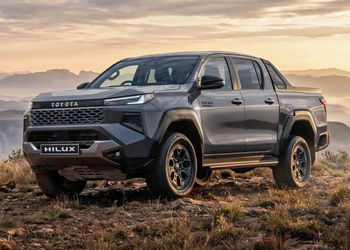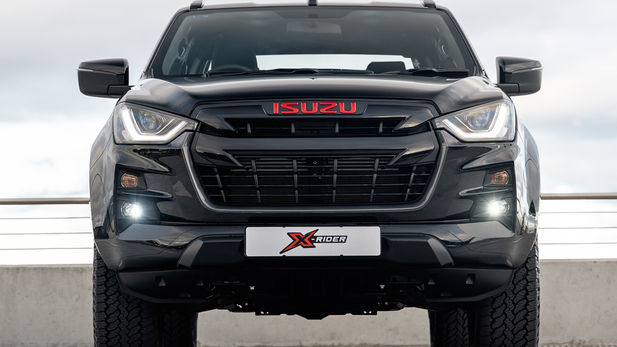
The Isuzu D-Max is a firm favourite on South African roads, but deciding between the punchy 1.9-litre and the muscular 3.0-litre turbodiesel models can be tricky. We weigh up purchase costs, real-world fuel consumption and performance to help you choose the right engine for your lifestyle.
The Isuzu D-Max is South Africa’s stealth success story. Built in the Eastern Cape, these bakkies are immensely popular and regularly rank among the bestselling model ranges in the local market.
While Toyota boasts a larger dealership network alongside the financial gravity-defying residuals of the Hilux, and Ford brings more technology and power to the table with the Ranger, Isuzu has become the default choice for buyers seeking a trusted alternative.
The local family vehicle market has evolved dramatically over the last decade, with double cabs now firmly established as the transport of choice for many middle-class households. However, with record-high diesel prices placing pressure on household budgets, buyers need to scrutinise their running costs more carefully than ever.
If you are eyeing a D-Max for family duty but worry about the fuel bill, we have compared Isuzu‘s two diesel engines to see how they stack up in the real world – and how your choice will impact your wallet.
Big or small? Rethinking engine capacity for the city

When looking at the competition, Toyota keeps the difference between its double-cab engine options tight, offering 2.4-litre and 2.8-litre variants with a narrow theoretical gap in performance and fuel consumption.
However, engine capacity alone does not tell the whole story. Real-world efficiency also relies on turbocharger design, mechanical friction and thermal efficiency.
Isuzu takes a different approach, offering a substantial 57% jump in displacement between its two double-cab powerplants: the 1.9-litre and the 3.0-litre. That is a massive gap in engine capacity, translating directly into big differences in performance, fuel consumption and overall running costs.
Search for your D-Max on Cars.co.za
The 1.9 Ddi: Punching above its weight
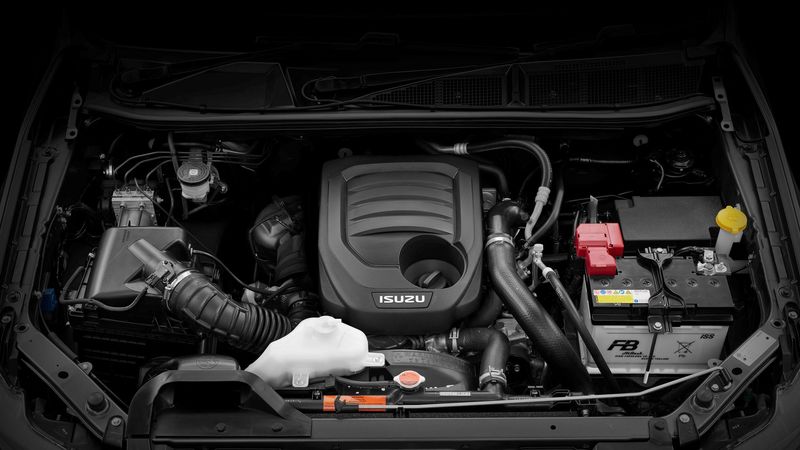
Isuzu‘s smallest engine is engineered with the rugged durability the brand is famous for. While Volkswagen pioneered small-capacity turbodiesels in South Africa when the original Amarok debuted with a passenger-car 2.0-litre engine, local buyers were initially sceptical. That first-generation Amarok proved, however, that advanced engineering could allow a smaller engine to compete with larger rivals.
Isuzu updated its 1.9 Ddi (used in the mu-X, too) with a larger turbo featuring an electric actuator to minimise turbo lag. Producing 110 kW and 350 Nm, the D-Max 1.9 does not chase headline power figures.
Smaller turbodiesels can suffer from low-speed lag because they rely on a specific volume and velocity of exhaust gas to spool the turbocharger. When paired with a heavy bakkie, there is inevitably more inertia to overcome from a standstill and during gearchanges.
The 3.0 Ddi: Built for longevity over raw power
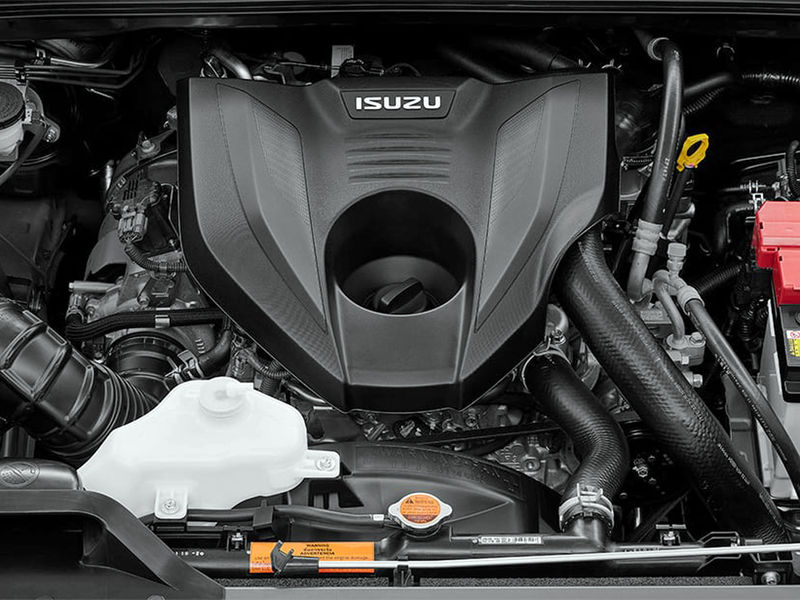
Displacing 3.0 litres, Isuzu’s four-cylinder diesel is one of the largest in its class locally, eclipsing Ford‘s 2.0-litre engines and Toyota’s 2.8-litre unit. Yet, it does not chase class-leading power density. For context, GWM’s newer 3.0-litre, four-cylinder diesel pushes out 170 kW and 620 Nm, whereas the Isuzu four-cylinder produces a more modest 140 kW and 450 Nm.
Why the discrepancy? Isuzu produces more diesel engines globally than almost any other manufacturer, meaning it certainly has the engineering prowess to extract higher outputs. Instead, the brand prioritises long-term durability and reliability. This is a crucial engineering philosophy given South Africa’s variable fuel quality. Isuzu’s conservative tuning is backed by decades of local operating data and extensive diesel sampling from across the country.
Search for your D-Max on Cars.co.za
Crunching the numbers: Which D-Max diesel wins?
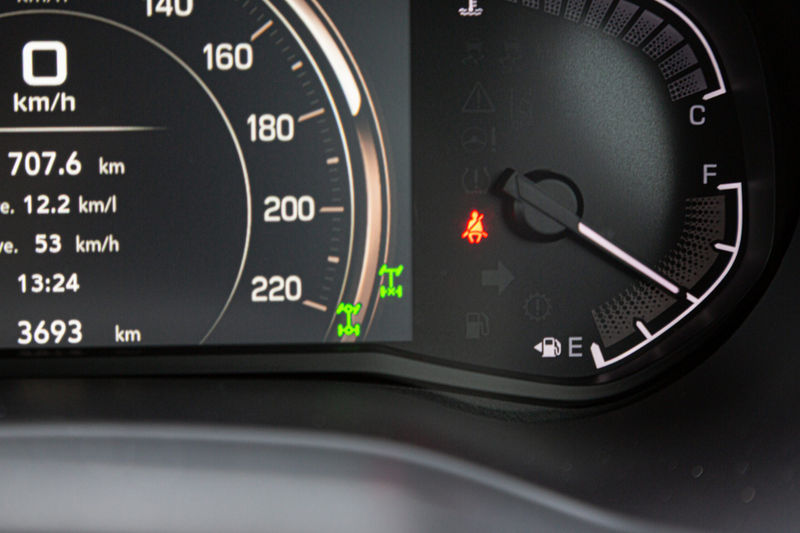
To put the two engines to a fair test, we can look at the popular X-Rider 4×2 automatic specification. The price difference between the 1.9 Ddi X-Rider 4×2 auto and its 3.0-litre counterpart is R101 660.
With all double-cab D-Max variants sharing a 76-litre fuel tank, filling up with 50 ppm low-sulphur diesel costs a significant sum.
- Isuzu D-Max 1.9 Ddi: Achieves an optimal claim of around 7.3 L/100 km, translating to a theoretical range of approximately 1 041 km on a single tank.
- Isuzu D-Max 3.0 Ddi: Manages an optimal claim of around 7.9 L/100 km, yielding a theoretical range of approximately 962 km.
If value for money and fuel efficiency are your main buying criteria, the 1.9 Ddi wins.
The verdict: Power-to-economy sacrifice
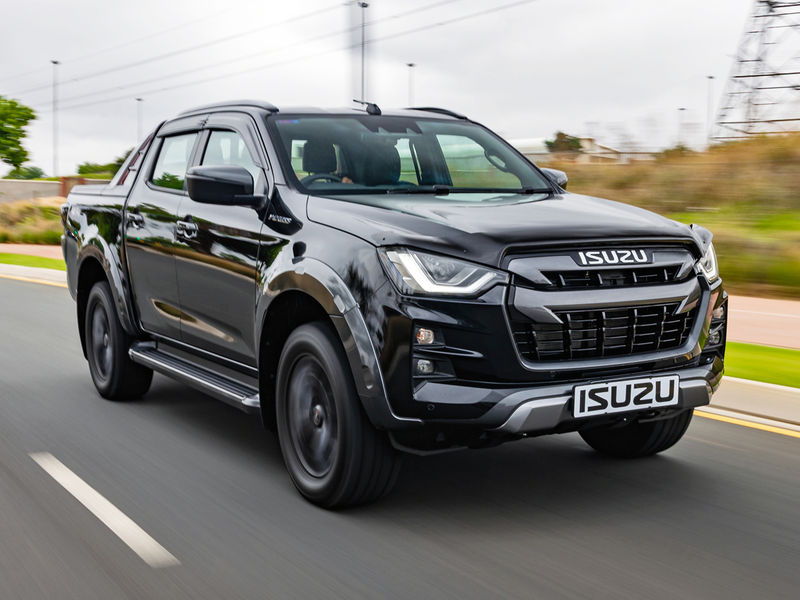
If your daily commute is strictly urban, with little to no towing and only occasional holiday road trips, the 1.9 Ddi makes a compelling case. Choosing the smaller engine yields a notable boost in fuel efficiency, traded against a drop in high-load performance.
For drivers who tow heavy loads regularly or demand effortless high-speed overtaking, however, the 3.0-litre’s extra grunt remains worth the higher running costs.
Yet, if you primarily use your double-cab as an urban runabout, the financial savings are hard to ignore. Pocketing the roughly R100 000 purchase-price difference between the 1.9 and 3.0 models gives you a massive buffer. That price gap is equivalent to roughly 40 full tanks of diesel – enough to cover about a year and a half of fuel for the average motorist.
For city-bound families who rarely tax their bakkie’s towing capacity, the Isuzu D-Max 1.9 Ddi strikes the smartest balance between purchase price and operational efficiency.
Lance Branquinho

Lance Branquinho is a Namibian-born writer and photographer who has won numerous motoring journalism awards. He once smuggled parts to South America, in a minor contribution to help Giniel de Villiers finish on the podium at the Dakar. He fears for the eventual collapse of the air-cooled Porsche 911 market – and keenly awaits, in vain, the return of the brand's 928.