The local double-cab bakkie market is more competitive than ever, with fresh contenders, new powertrains and updated stalwarts all vying for top honours. To kick off the multi-part 2026 Bakkie of the Year Shootout, 8 of South Africa’s most popular double cabs line up side by side on an open runway for an all-out quarter-mile drag race.
From heavy-hitting V6s and high-output turbopetrols to trusty 4-cylinder turbodiesels, the 2026 Bakkie of the Year Shootout line-up covers every sub-segment of the double-cab bakkie market. To ensure fair driver assignments across the fleet, the keys were drawn completely at random before the bakkies lined up across the tarmac. Let’s find out how they fared on the strip!
The contenders: Diverse engines & power outputs
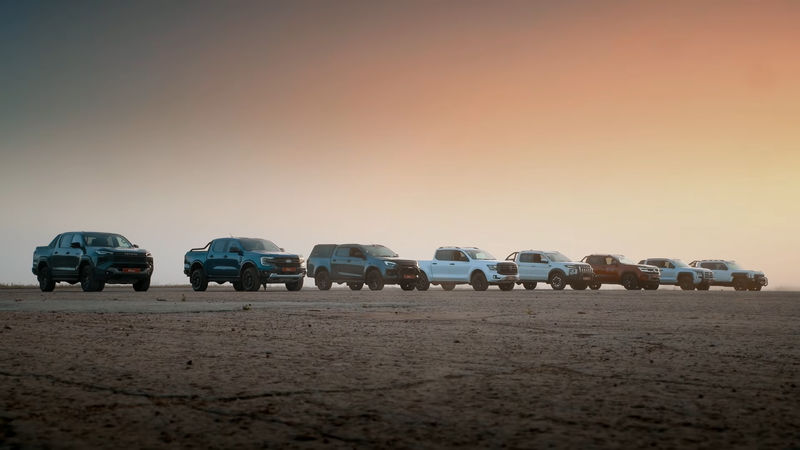
The starting grid features a massive variety of powertrains, ranging from lightweight efficiency to sheer cubic capacity.
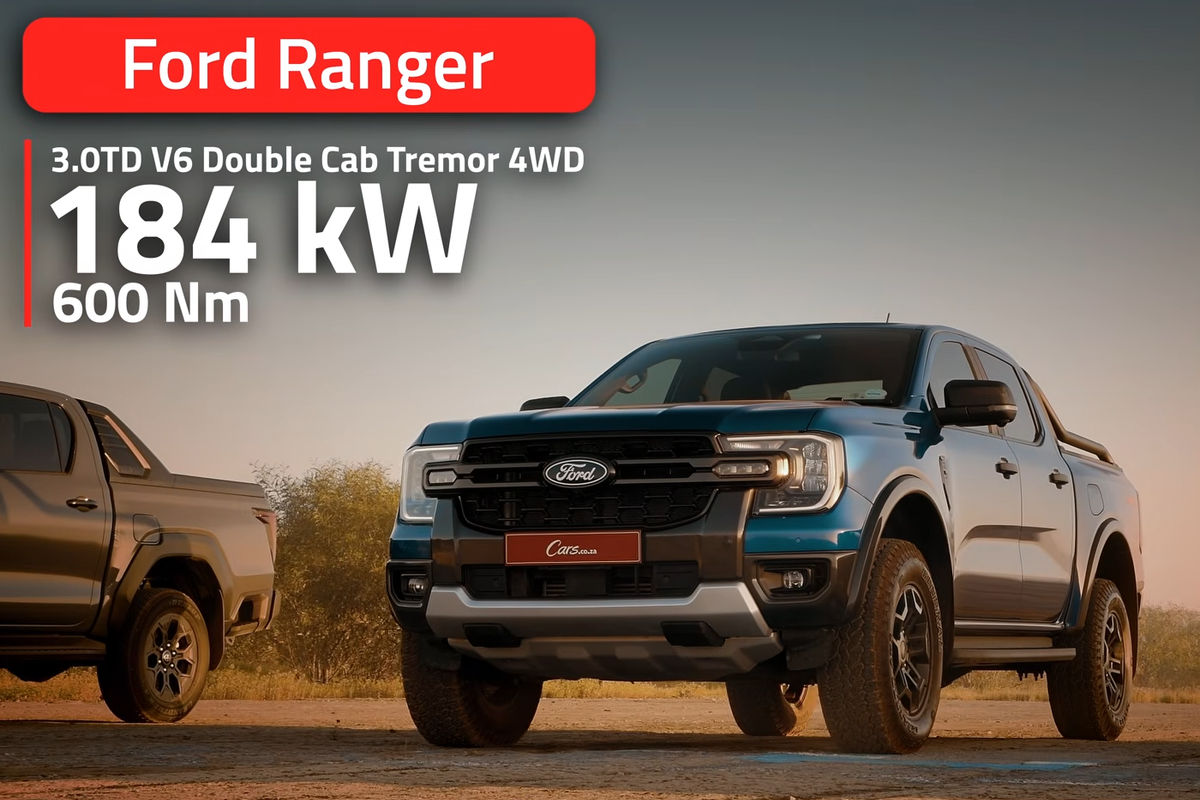
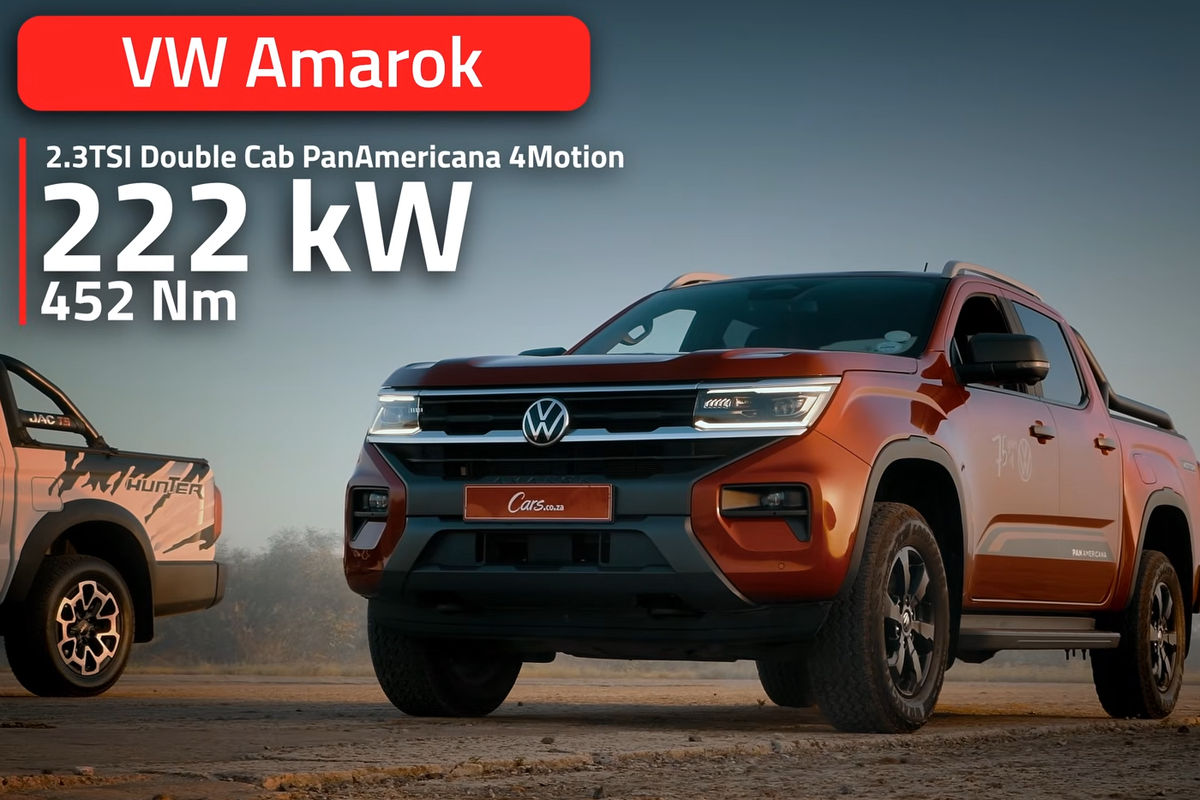
Representing the high-power petrol brigade is the Volkswagen Amarok 2.3 TSI PanAmericana, packing a 2.3-litre turbocharged petrol engine paired with a 10-speed automatic transmission. Generating 222 kW and 452 Nm of torque, its power-to-weight figures make it a formidable force on paper. Ford counters with the muscular Ranger V6 Tremor, bringing 3.0 litres of turbodiesel grunt to the table.
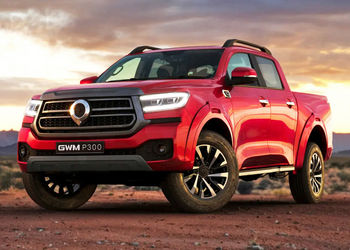
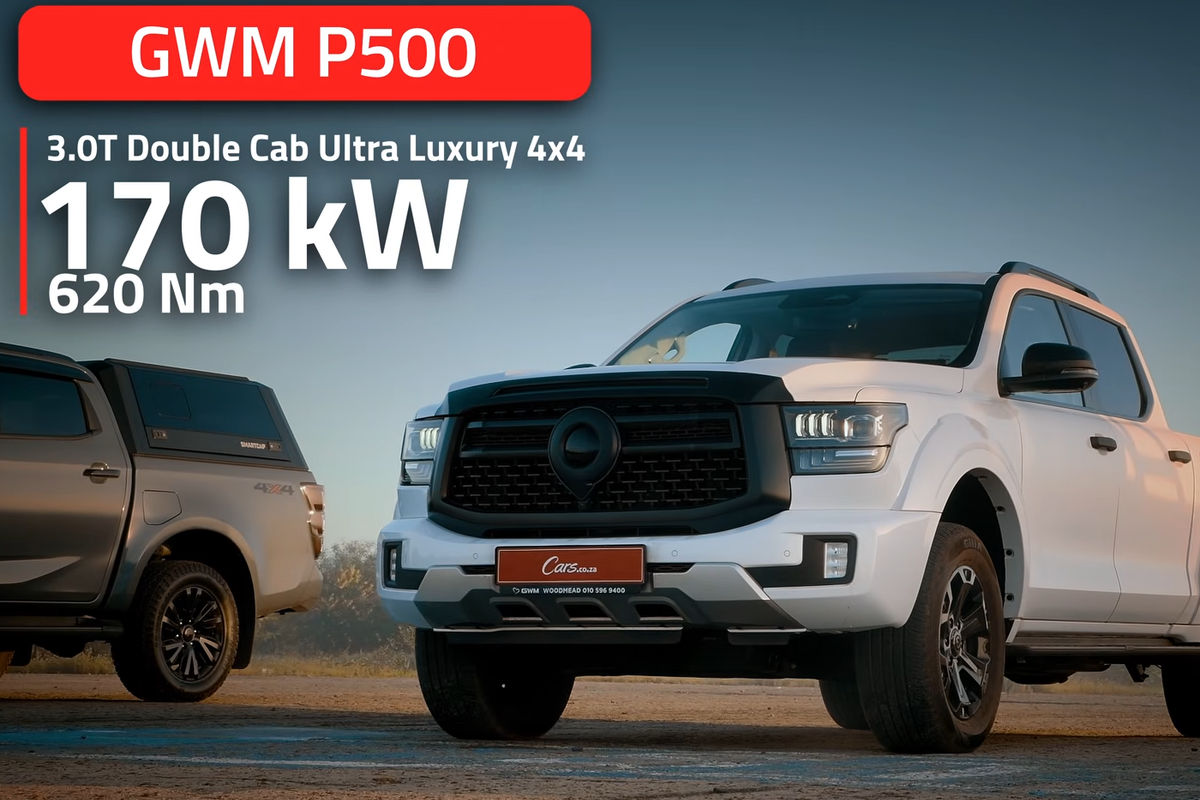
In the turbodiesel camp, the GWM P500 arrives with a new 3.0-litre diesel producing 170 kW and a massive 620 Nm of torque. Crucially, it is the only vehicle on the grid equipped with a factory launch-control system.
The remainder of the grid comprises popular 4-cylinder turbodiesel options:
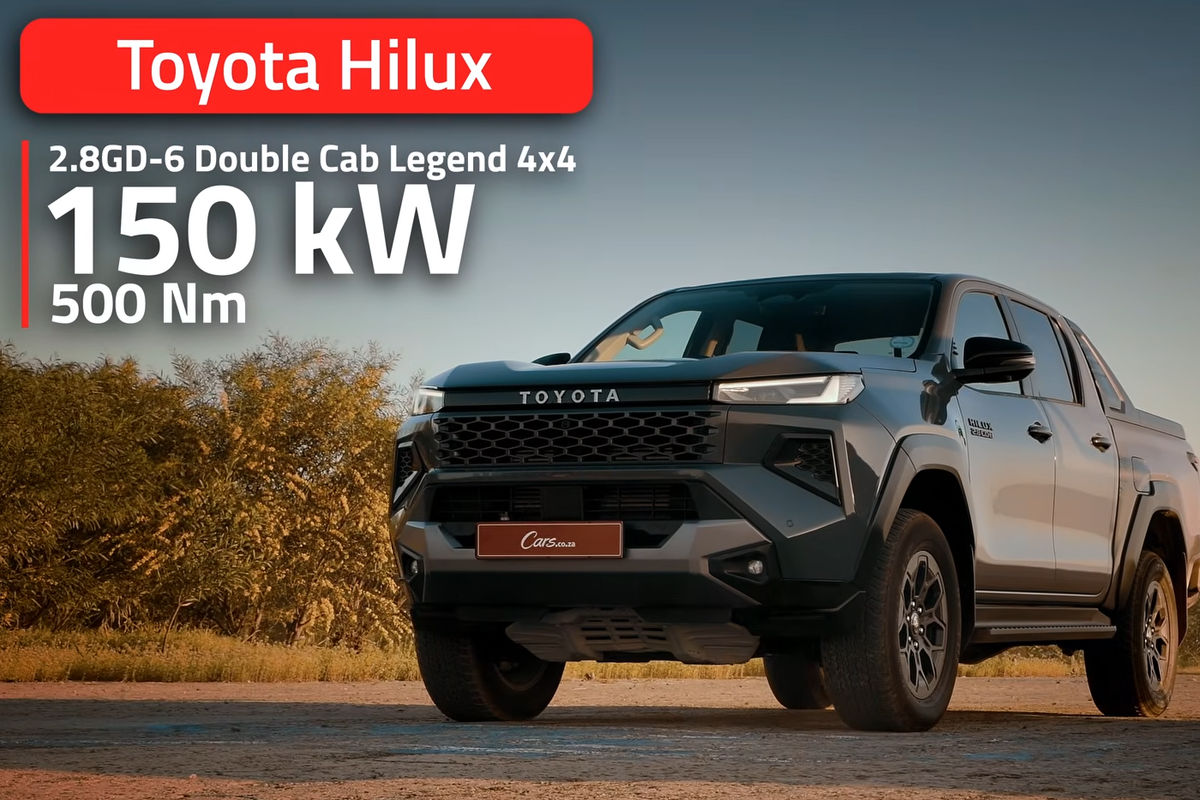
- Toyota Hilux 2.8 GD-6: 150 kW/500 Nm
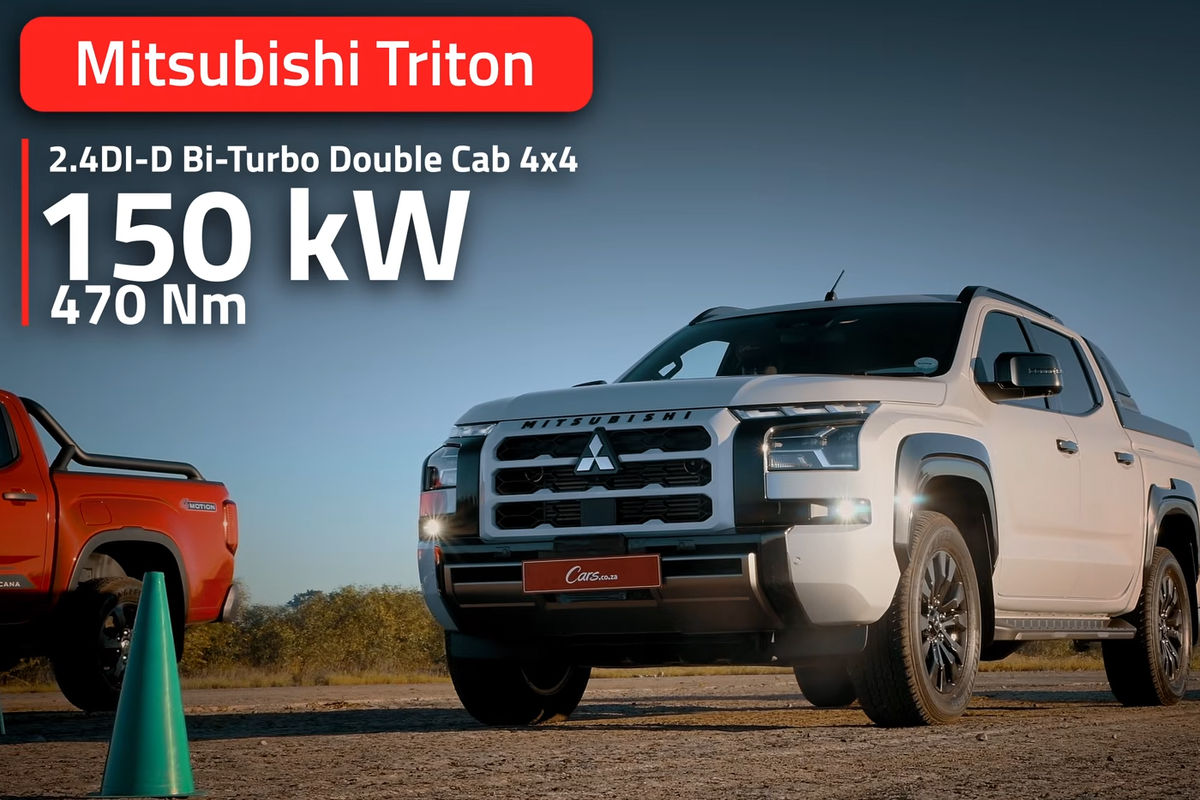
- Mitsubishi Triton 2.4 DI-D: 150 kW/470 Nm
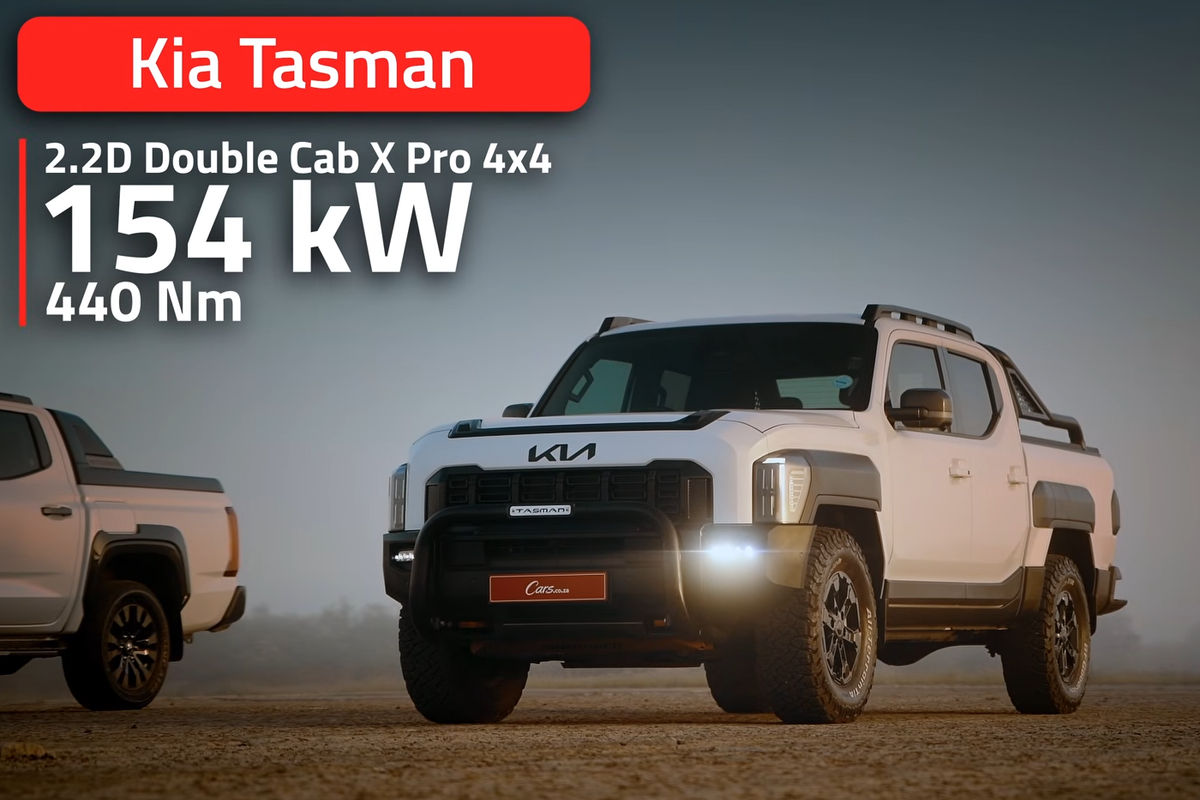
- Kia Tasman 2.2D: 154 kW/440 Nm
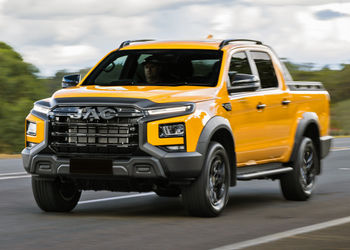
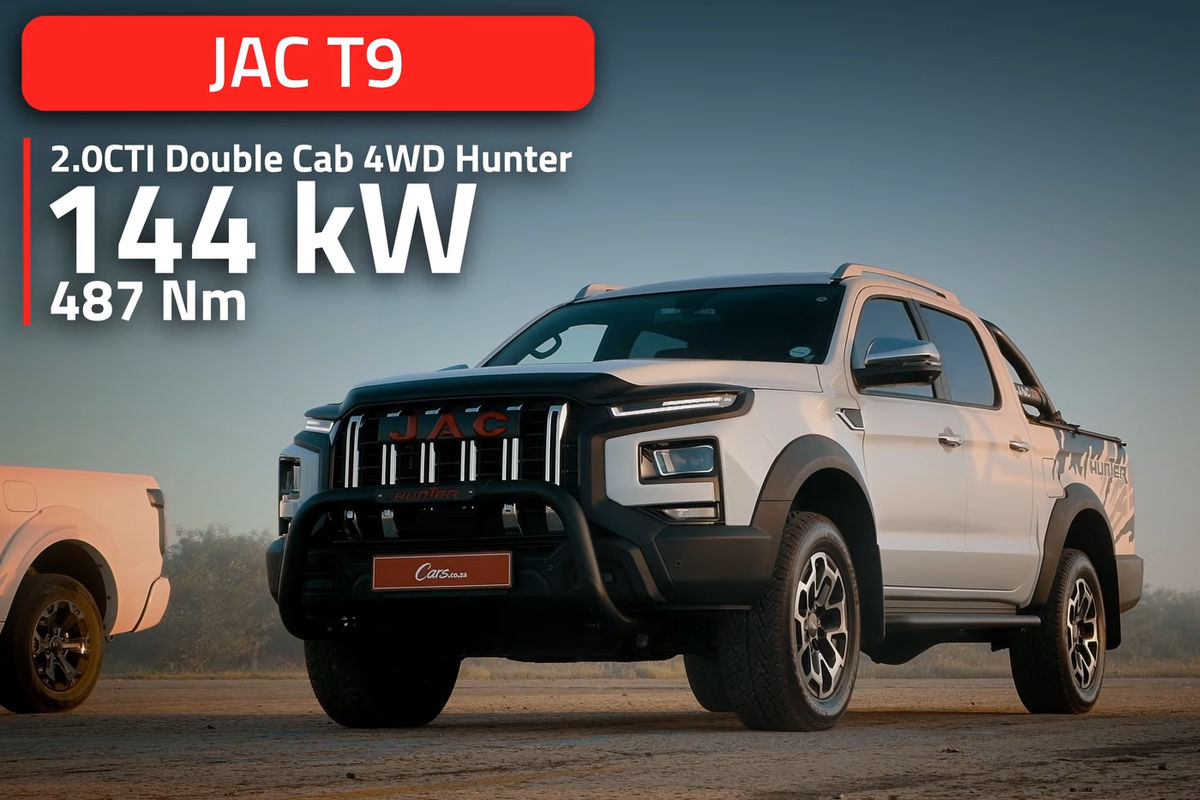
- JAC T9 2.0 CTI: 144 kW/487 Nm
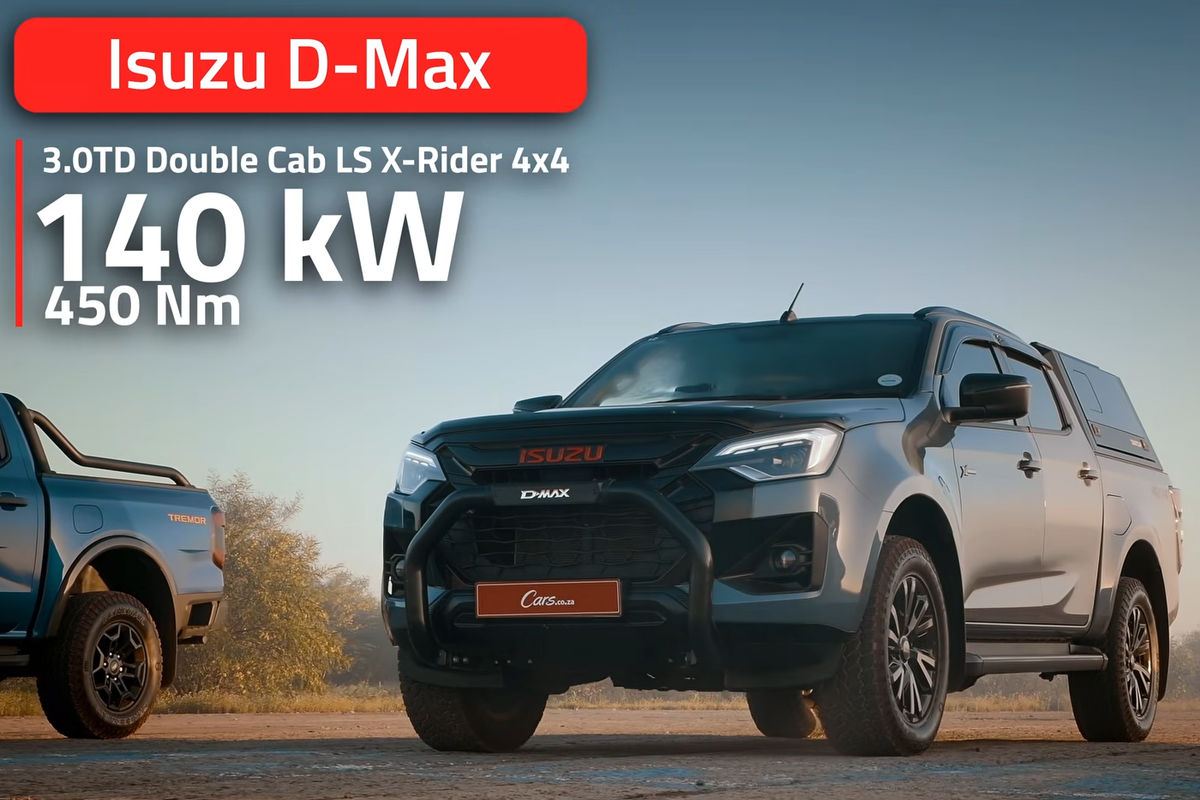
- Isuzu D-Max 3.0 DDI: 140 kW/450 Nm
Race 1: Launches, wheelspin & immediate gaps
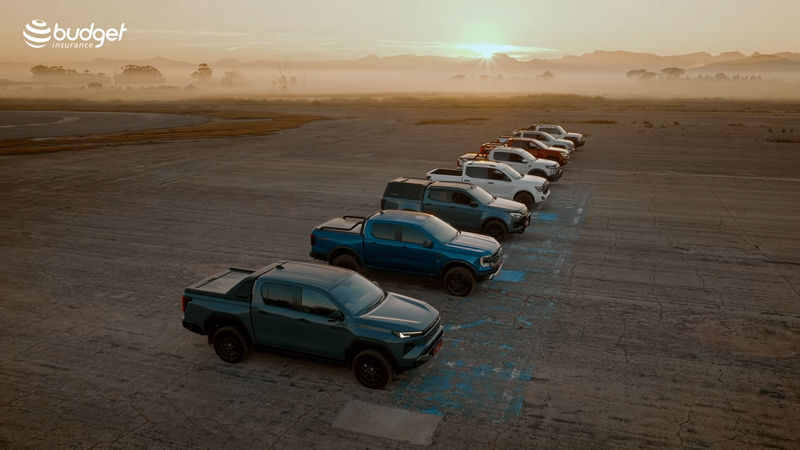
With 4H engaged, traction systems dialled back and left feet firmly on the brakes, all 8 double cabs launched simultaneously across the wide runway for the first of 3 runs.
Right off the line, traction played a huge role. The lighter JAC T9 and the Mitsubishi Triton made fantastic starts, surprising several higher-powered rivals off the line. However, once moving, the high-output engines quickly asserted their dominance.
The petrol-powered Amarok made full use of its high-revving power band to leap out ahead, while the V6 Ranger broke away from the mid-pack to chase it down. Farther down the strip, a fierce photo-finish battle developed for 3rd spot, with the Hilux, Triton, JAC T9, Tasman and Isuzu fighting for every inch of tarmac.
Race 2: Tactical adjustments & tight mid-pack battles
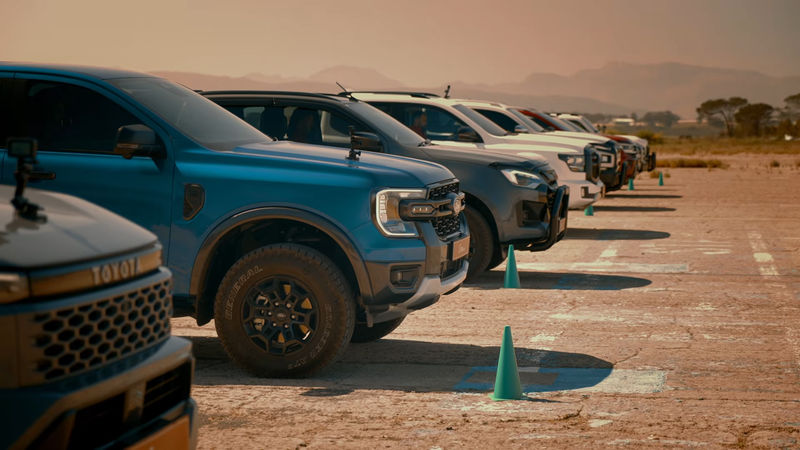
For the second run, drivers adjusted their launch tactics to keep their respective engines right in the meat of their powerbands.
Off the line, the Isuzu D-Max and Hilux got away cleanly, but the raw torque of the GWM P500 began to tell as its driver dialled in the launch procedure. Once again, the Amarok surged ahead to establish a clear lead, closely followed by the hard-charging V6 Ranger.
Behind the front-runners, the fight for 3rd place was even tighter than in the opening heat. The JAC T9 put in an exceptionally strong showing, potentially holding off a charging pack that included the Hilux, Triton, Tasman and P500, resulting in a dramatic finish across the line.
Race 3: The final drag strip decider
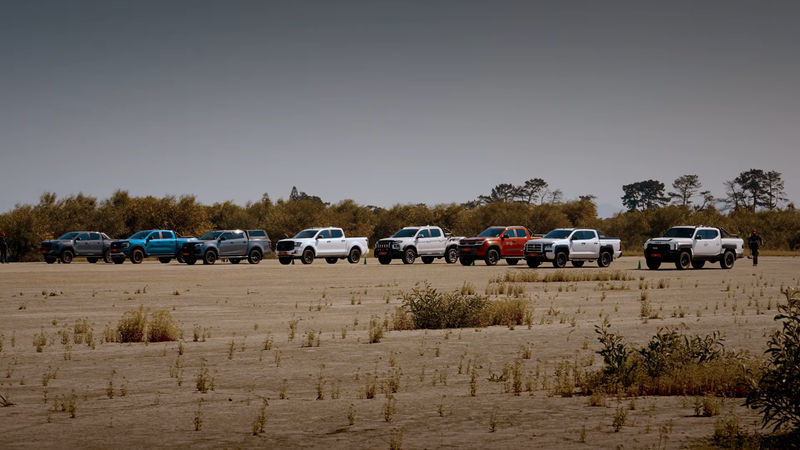
The 3rd and final run saw the best launches of the day. The Isuzu D-Max executed a flawless get-away, holding its bumper ahead of larger-engined rivals through the initial metres.
As the speed built down the strip, the hierarchy established itself once more at the sharp end of the field, but the real drama unfolded in the middle order. A thrilling, nose-to-nose duel erupted between the GWM P500 and the Toyota Hilux, while the Mitsubishi Triton and Kia Tasman engaged in a bumper-to-bumper tussle all the way to the finish line.
Which double-cab bakkie took ultimate honours on the runway, and how did your favorite double-cab perform across all 3 runs? Watch the full video to see the final results and exact finish order.
Cars.co.za
Providing you with the latest motoring news, new car releases and the simplest way to buy and sell cars.