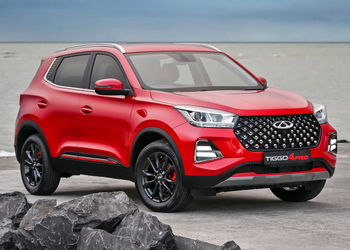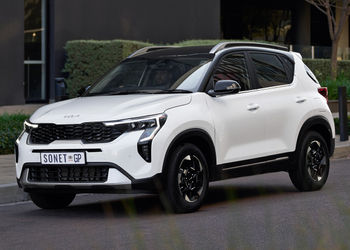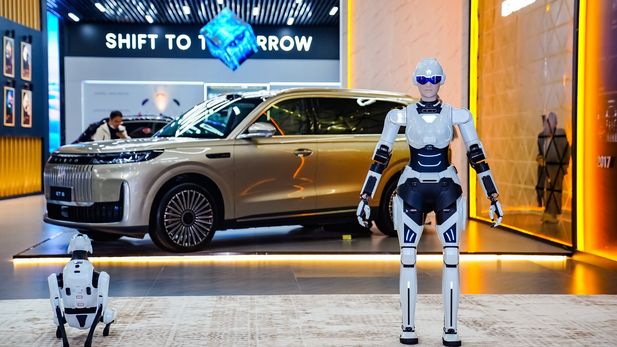
We recently travelled to Wuhu in China to look at Chery’s latest products … or so we thought. We returned home thinking about robots, chips, a little machine that calls its owners “mommy” and “daddy”, and a chairman who says his company isn’t really a car company any more…
To be honest, about a quarter of the way into the main presentation at the 2026 Chery User Summit, I started feeling a little uncomfortable. The event brought together more than 2 000 invited users, dealers and partners from over 130 countries and regions. I felt as though I was in a sci-fi film with an inevitably bad ending.
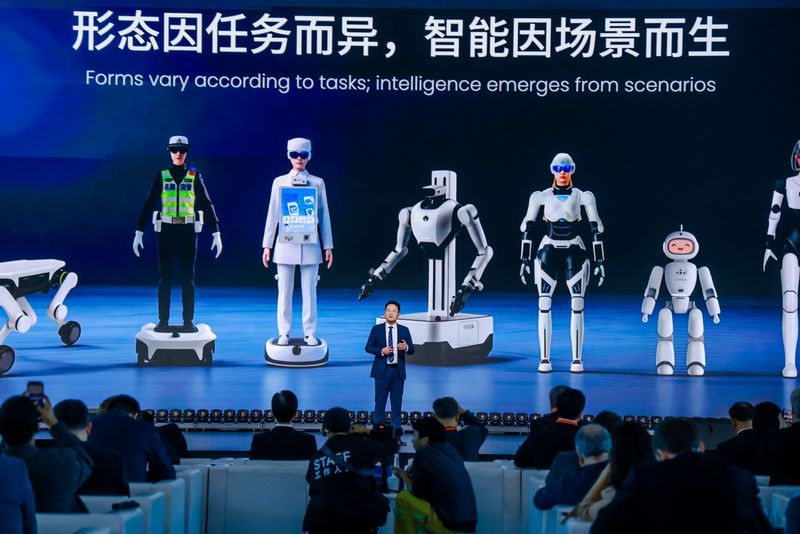
Somewhere between the extensive AI presentation and the second robot dance routine, I realised that cars had quietly slipped into the back seat. I had come to China expecting new metal. Admittedly, there was plenty of that during my week-long stay. But this year, the main summit’s headline acts were artificial intelligence, robots and computer chips. The man at the top made no secret of why.
“Chery is an AI tech company in the guise of an automaker,” said chairman, Yin Tongyue. That’s quite a statement from the engineer who was Chery’s very first technical director, when the company was formally founded in 1997.
From a borrowed platform to a global giant
To understand how far Chery has come, you have to go back to the beginning. Chery was set up in Wuhu in 1997, with funding from the Anhui provincial government. Its first car, the Fengyun, went into production at the end of 1999. It was a modest car that borrowed heavily from the SEAT Toledo. One was on display in Wuhu this year, covered in signatures. Standing next to it, surrounded by electric shooting brakes and humanoid robots, I found it hard to believe that all this staggering progress had taken less than 30 years!
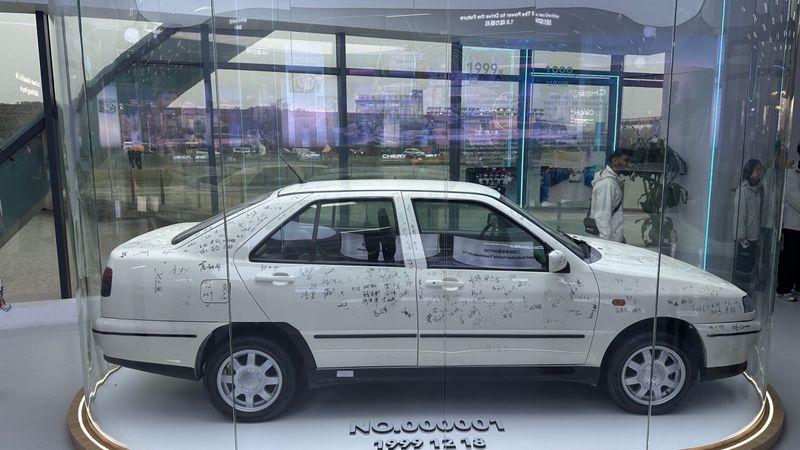
The Fengyun sold nearly 30 000 units. Chery started exporting in 2001, earlier than just about any other Chinese carmaker, and it has been the leading exporter of passenger vehicles among Chinese brands since 2003.
Today, the numbers are staggering. Chery’s own figures, as reported by industry publication Gasgoo, show that from January to October 2026 the group sold more than 2.5 million vehicles, roughly 70% of which (more than 1.75 million) were exported. According to a report by Bloomberg, Chery now accounts for close to 20% of all the cars China sends abroad. Increasingly, those exports are electrified – of the nearly one million new-energy vehicles (NEVs) Chery sold between January and October, more than 600 000 went overseas. That’s more than double the figure from a year earlier, by the way.
Overseas sales also pay the bills. As Australian publication CarExpert has reported, Chery Automobile’s half-year accounts show that overseas customers generated 69.1% of its revenue in the first half of 2026, up from 46.3% a year earlier.
China’s brutal car market
But it’s not all sunshine and roses for Chinese car brands, Chery included. Chery International president Zhang Guibing was frank about the state of his own industry. Speaking to Australian media, he estimated that around 90% of Chinese carmakers were losing money. His prediction was blunt: quite a number would surely disappear. He also admitted that he couldn’t say with certainty what tomorrow’s car would look like.
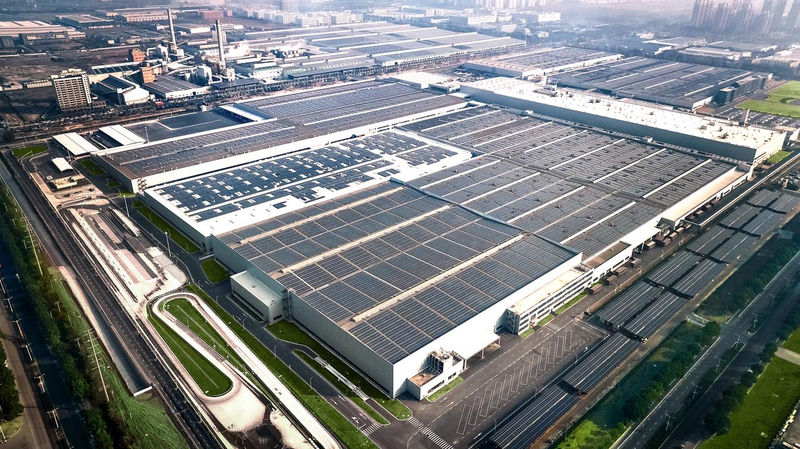
The figures back him up. The Bloomberg report states that China’s listed carmakers have lost around US$270 billion in stock-market value since their peak in September 2025, a drop of about 45%, even as the country’s car exports head towards 10 million vehicles this year. At home, retail sales fell for the 13th month in a row in October, and more than 100 brands are still fighting over the same buyers. One fund manager summed it up neatly for Bloomberg: “In China, they’re killing each other. Outside China, they’re killing the incumbents.”
Chery itself isn’t immune. CarExpert reports that Chery Automobile’s first-half net profit dipped 9% (foreign-exchange losses played a part), even as research and development expenses rose 28.3%. According to Bloomberg’s analysis, Chery made a profit of about US$1 318 per vehicle sold from January to September 2026. That’s better than BYD and Geely, but well behind Toyota (US$2 160) and Mercedes-Benz (US$3 892). On top of that, Beijing will cut the VAT export rebate for new-energy vehicles from 13% to 9% on 1 April 2027, adding further pressure on export margins.
That goes a long way towards explaining the direction of the summit. If cars are becoming commodities in an overcrowded market, then the value has to come from somewhere else: the intelligence inside them, the chips that run them and the wider system they plug into.
“AI can replace skills, not humanity”
Yin’s keynote wasn’t a product presentation. It was more of a peek into a future that appears nearer than most of us can imagine. The slides behind him talked about cars that won’t just run without fossil fuels, but will let owners trade energy and earn money from them. Another slide promised a car with a “brain” that understands you better: a smarter partner that gets to know you. Chery, he said, wants to be a playground for adventurers, a paradise for entrepreneurs and a holy land for new technologies. Its vision, summed up in one line, is to create greater value for human freedom.
Yin was also candid about Chery’s character. When it comes to safety and quality, he said, Chery has always been “timid like a mouse”, as he put it, in the way of an “old science and engineering man”. On innovation, however, it was “never satiated”.
Then came the lines that stuck with me. “AI can replace skills, not humanity, insight, strategic foresight and vision,” Yin said. “It can boost efficiency, but not human responsibility, judgement and warmth.”
Reassuring, right? But a moment later came the sting in the tail: “AI will replace those who refuse to embrace it, and the industries and enterprises that don’t adjust.”
It was a little chilling, to be honest. As I looked around at the hundreds of people in attendance, many of whom earn their living selling and servicing conventional cars, nobody looked particularly perturbed. To be fair to Yin, he also pledged to help Chery’s own staff learn new skills so they can embrace AI rather than be replaced by it.
CheryMind: the AI brain behind the machines
The centrepiece of the technology story was CheryMind, which Chery calls a “domain-specific foundation model designed for physical AI”. That needs some unpacking – it certainly did for me.
Most of us have now used an AI chatbot. They’re fairly good with words, but often clueless about the real world. Dr Gao Xinhua, who presented CheryMind, made exactly that point. General AI models can chat about almost anything, he said, but in a factory or on the road they lack precision, depth and reliability. “Physical AI” is different. It has to see, move, react and keep working safely in a messy world full of potholes, rain, glare and children chasing balls into the road.
So, as Dr Gao put it, Chery chose “a more difficult way” and built its own AI model. CheryMind doesn’t try to know everything. Instead, Chery says, it focuses on understanding physics and how the real world behaves. To teach it, the company has fed it almost three decades of its own know-how: engineering standards, design rules and safety regulations. It also draws on an enormous library of real-world driving and test data, gathered in freezing winters, scorching deserts, salty coastal air and on rough roads.
A model like CheryMind is meant to learn how the physical world behaves and support decisions in situations it hasn’t explicitly been programmed for. That’s the ambition: to move beyond a machine that has simply been told what to do. Call it wisdom if you’re feeling generous, or very well-informed prediction if you’re not. Either way, Chery wants to move from cold logic towards something that behaves more like judgement.
Importantly, CheryMind isn’t just a showroom party trick. According to Dr Gao, it’s already changing how Chery’s cars are designed, developed and built. He gave us an example: aerodynamic tweaks to a facelifted model. This is a complex engineering simulation job that used to take around 126 days. Using CheryMind, each engineer can now produce about 100 design proposals in half a day, and a team of six can finish the job in three days! That’s one forty-second of the time, Chery says. Where engineers once ran a calculation, waited hours for the result, tweaked the design and started again, the AI can now spot the problem itself, suggest fixes and keep going.
The same thinking runs through the rest of the business. According to Chery’s published figures, AI now supports more than 1 500 end-to-end business processes across more than 200 business scenarios. More than 400 company systems are connected, helping information flow between departments. Chery says more than 60 000 employees use CheryMind every day. “It’s not a pilot project, nor a demonstration,” Dr Gao stressed, but part of daily work. The point of it all, he said, is that Chery is becoming an AI-driven company.
And it doesn’t stop at cars. Chery says the same AI foundation supports its driverless robotaxi, Lingxiao passenger-carrying aircraft and AiMOGA robots. One brain, many bodies, with the potential to share data and model improvements. Chery says that reusing the intelligence can reduce development costs. Depending on your point of view, that’s either an engineer’s dream or we’re back at the opening scene of that science-fiction film with the inevitably bad ending…
Ziwei: why Chery is designing its own chips
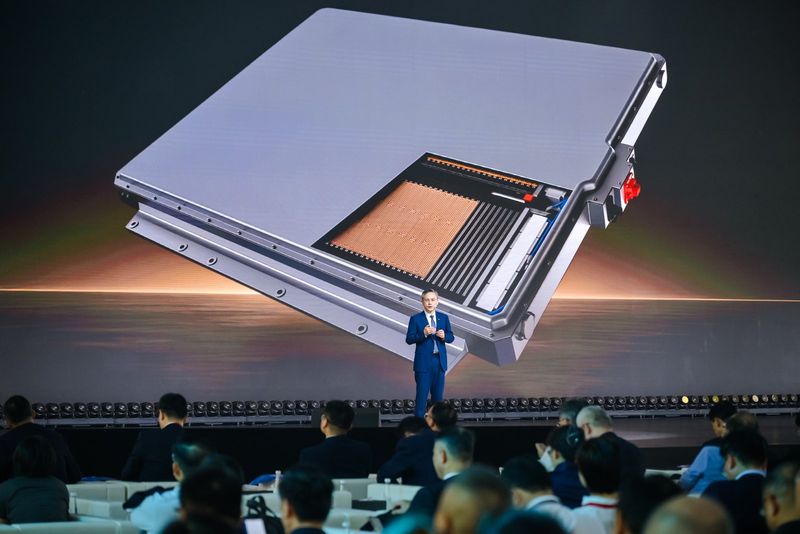
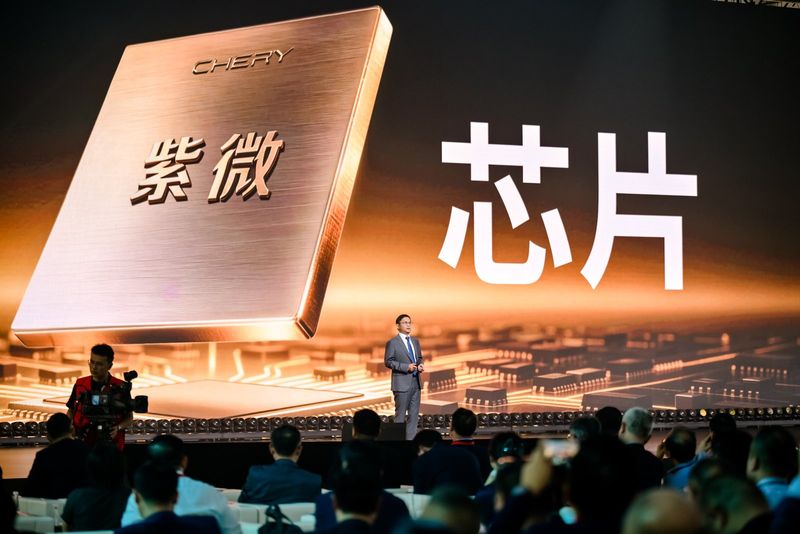
All that thinking needs hardware, so Chery has started designing its own chips. It calls them Ziwei. There are three families: one to act as the car’s central “brain”, one to make electric drivetrains more efficient (stretching range in the process), and one to control the car’s various systems. The first “brain” chip, the C100, is scheduled to launch in 2027. According to Chery, it’s designed to run big AI models inside the car itself, rather than relying on the cloud.
As with all claims like these, the real proof will come on the road. But in a world of trade tensions and chip shortages, the message is clear: if you design your own chips, you have more control over your future.
Meet Mobo, Chery’s home companion robot
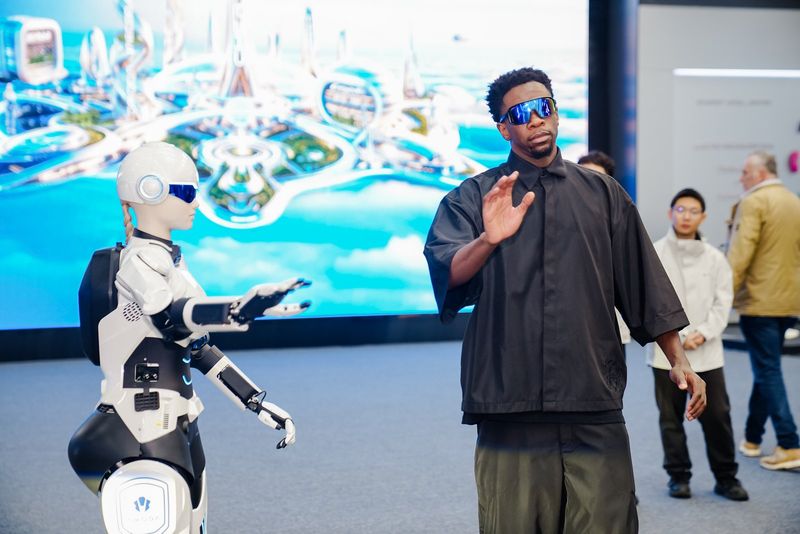
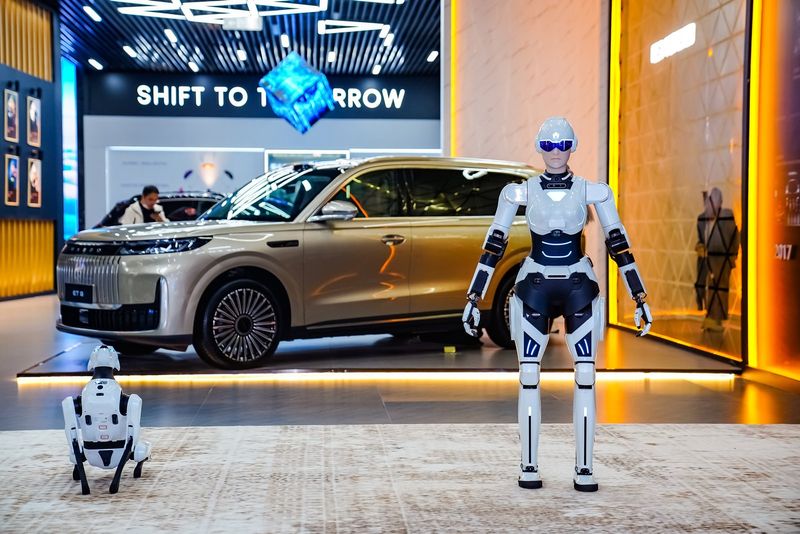
If CheryMind is the brain, AiMOGA is where it gets a body. Chery’s robotics brand was everywhere at the summit: its humanoid robot Mornine presented products, a robot “traffic officer” directed cyclists, and Argos, a four-legged robot dog, trotted around the venue and was often spotted being patted on the head by intrigued guests. Most of the robots it will release first have very specific jobs, such as traffic control or helping the frail and elderly.

The star of the show, though, was Mobo, AiMOGA’s first home companion robot, for which global pre-orders opened at the summit. Mobo is about 90 cm tall and, according to AiMOGA, is designed to play learning games with children, tell them stories and keep elderly family members company. A child companion robot was always the first step in AiMOGA’s plans, with household helpers to follow. I would not be surprised if, within a year or two, robots do more of the presentations on stage at the Chery Summit…
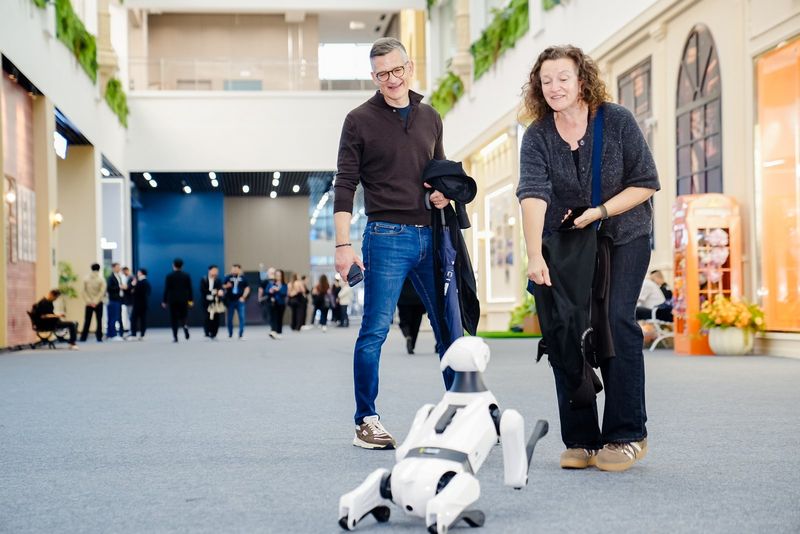
Mobo is undeniably cute. But it’s also where the summit started to unsettle me. In one demonstration, it called the human parents “mommy” and “daddy”, and I felt a chill I hadn’t expected. It’s one thing for a machine to read your child a bedtime story. It’s another for it to adopt the family’s language of belonging.
When Chery’s AI vision turns unsettling
Let me be honest: there were moments on this trip that felt properly dystopian. At event after event, much of the slick imagery on the enormous screens looked AI-generated to me. The handsome young man laughing on a sunset-lit sofa behind Yin during his keynote? I couldn’t help wondering whether he had ever existed.
Then there was the language. Chery executives described the company as the organiser of a new ecosystem, and even as the creator of a new species of intelligent machine. It’s as impressive as it is unsettling. When a company that started with a single sedan on a borrowed platform starts talking about creating new forms of “life”, you sit up and pay attention.
Driving the Chery Q on China’s open roads
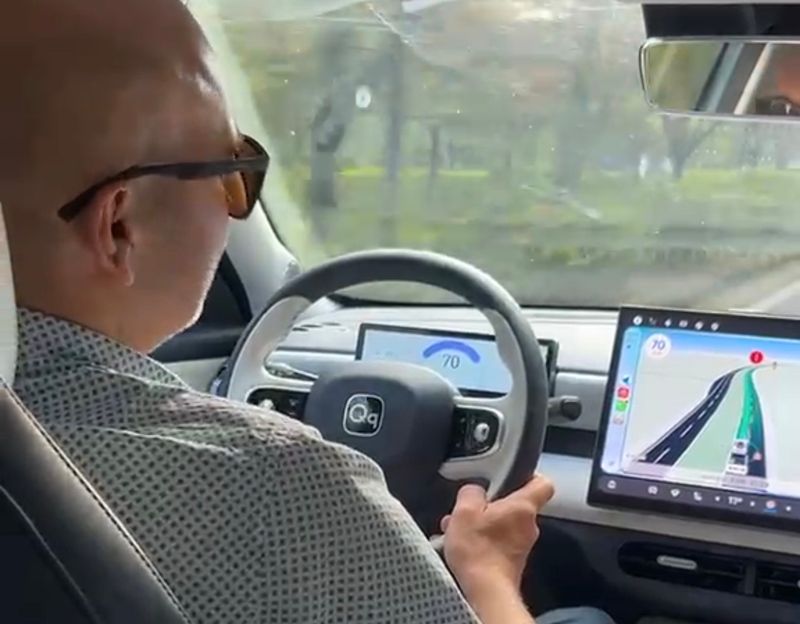
I’ve been to China several times, but I’ve always been limited to short drives in car parks and being shuttled between buildings by bus and train. This time, we were allowed to drive on public roads. The story of getting a temporary Chinese driving licence is simultaneously hilarious and boring. We watched safety videos at a traffic department, but ultimately it was mostly paperwork…
Driving in China has always seemed both daunting and exciting to me. That little road trip significantly changed how I see the country. Out on the roads around Wuhu, I discovered a side of China often overshadowed by headlines about its factories and tech prowess: genuine natural beauty, friendly people and excellent infrastructure, alongside the order and efficiency the country is known for.
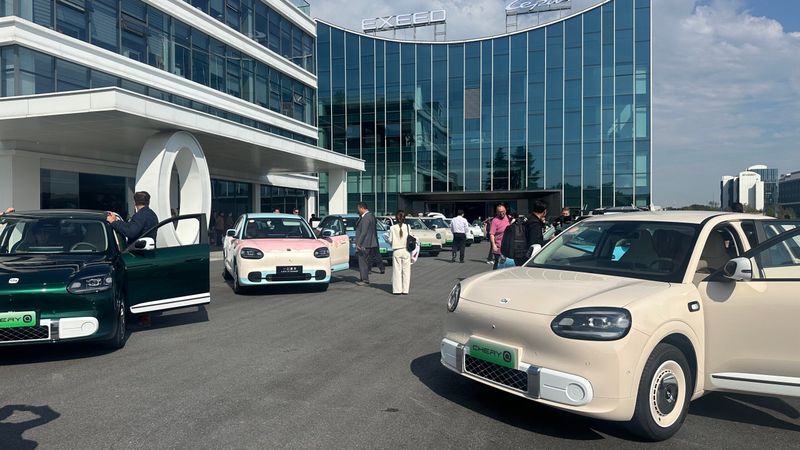
Our car for the day was the Chery Q, the compact electric car now on sale in South Africa from R349 900 and already selling up a storm. It’s hugely spacious; I doubt any rear passenger will ever use all the legroom on offer. It’s also comfortable on the open road. Chery quotes a range of up to 310 km on the WLTP test cycle for the South African model. Actual range will depend on conditions.
The road trip made me think that perhaps these two seemingly opposing worlds can coexist: the cold precision of machines designed, built and driven with the help of AI, and the warmth, curiosity and hospitality of the people who build them (for now). Yin himself seemed to be arguing for exactly that balance.
New Chery Group cars coming to South Africa
For all the talk of robots and chips, cars are still what Chery’s customers currently spend their money on, and the new-product wave shows no sign of slowing. Here’s what I saw and drove.
Omoda C4: hybrid production planned for Rosslyn
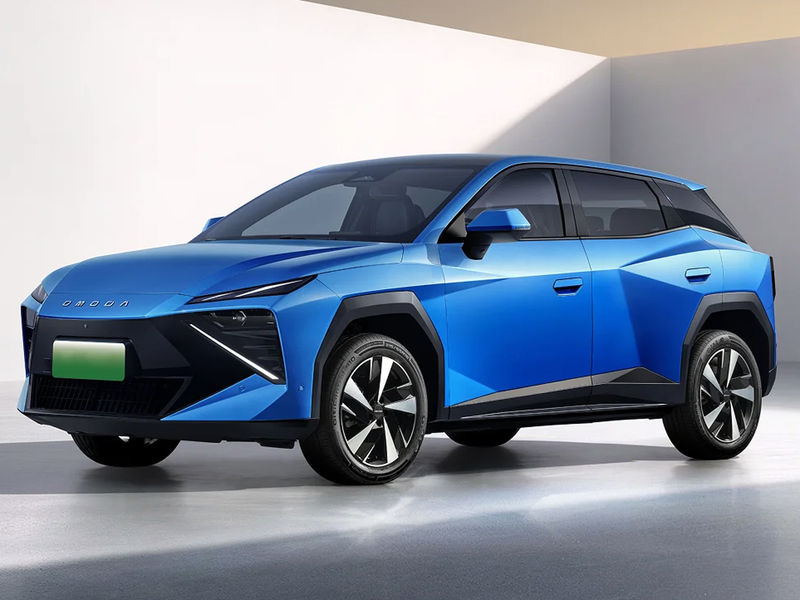
I had a good look at the attractive new Omoda C4, and its significance goes far beyond its size. According to Chery Group South Africa CEO, Tony Liu, the C4 is set to be the first model built at the group’s Rosslyn plant near Pretoria. Local production is scheduled for the third quarter of 2027. Imported units should arrive early in 2027. The first locally built C4s will be hybrids, with petrol and fully electric versions to follow.
The C4 is a compact crossover (4 424 mm long) that will be positioned below the C5, and it’s aimed squarely at younger buyers. In the metal, it’s a sharp-looking little SUV with (dare I say) Lamborghini-inspired lines. More importantly, it represents Chery’s move from importer to manufacturer in South Africa.
Chery Grootman: a locally named bakkie bound for Rosslyn
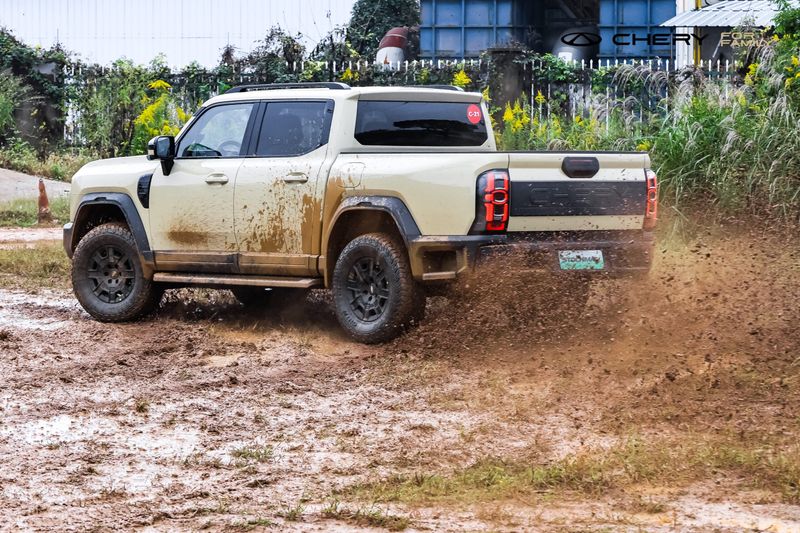
I also got behind the wheel of the Chery Grootman, Chery’s upcoming double-cab bakkie. Its name, chosen by South Africans in a public vote, comes from local slang that loosely means “big man”, with a sense of respect. The example I drove actually wore Stockman badges, the name it will carry in Australia.
The Grootman uses a plug-in hybrid system that pairs a 2.5-litre turbodiesel engine with electric assistance. Chery claims 350 kW and 800 Nm, around 100 km of electric-only range and a braked towing capacity of up to 3.5 tonnes. Other drivetrains have also been discussed, but the final South African line-up is still to be confirmed.
My time in it was limited to short stints on tar and a muddy, rutted test track in Wuhu, so it was hardly the toughest of evaluations. Still, first impressions are good. There wasn’t a creak or rattle from the cabin, it felt as solid as a good bakkie should, and the interior is a real highlight. The suspension is a touch firm on tar. Our well-used pre-production test unit also had some drivetrain vibration, which Chery says it’s still sorting out. The Grootman is due in showrooms in the first quarter of 2027, initially imported, with local production planned for Rosslyn.
Chery Tiggo X7 and Tiggo 7: two new SUVs for SA
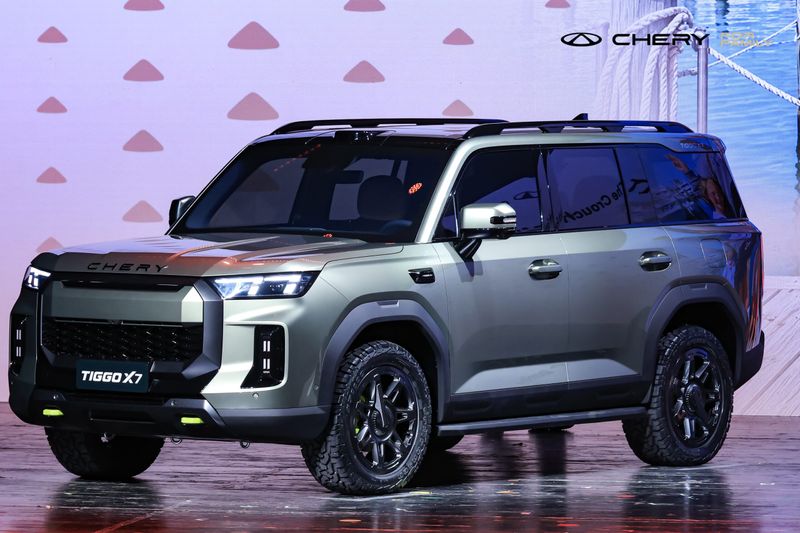
I also saw the new Chery Tiggo X7, the first of a new family of tougher-looking, X-badged Tiggos, alongside what Chery calls an “all-new” Tiggo 7. The X7 has chunkier, more squared-off styling, all-terrain tyres, roof rails and a raised ride height, although it’s still a regular SUV underneath, not a body-on-frame 4×4. It’s expected to share its engines with the Tiggo 7, which is sold here in turbopetrol and plug-in hybrid form.
Interestingly, the X7 isn’t quite finished yet. During the summit, I took part in a feedback session with the project team, who wanted honest opinions on the design. So expect a few changes on the production version. That shows how quickly Chery is willing to adapt, and how seriously it takes its export markets.
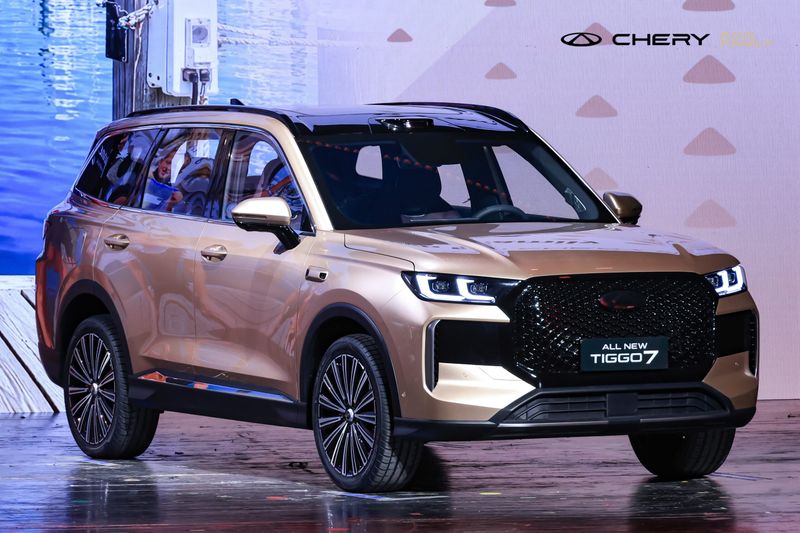
Both models are planned for South Africa. The X7 is expected in the third quarter of 2027, with the new Tiggo 7 possibly arriving a little sooner. Chery also used the summit to stage a public crash test of the current Tiggo 7. It was a confident move in a market where Chinese brands still have to keep proving their safety credentials.
Chery Tiggo V: the SUV that converts into a bakkie
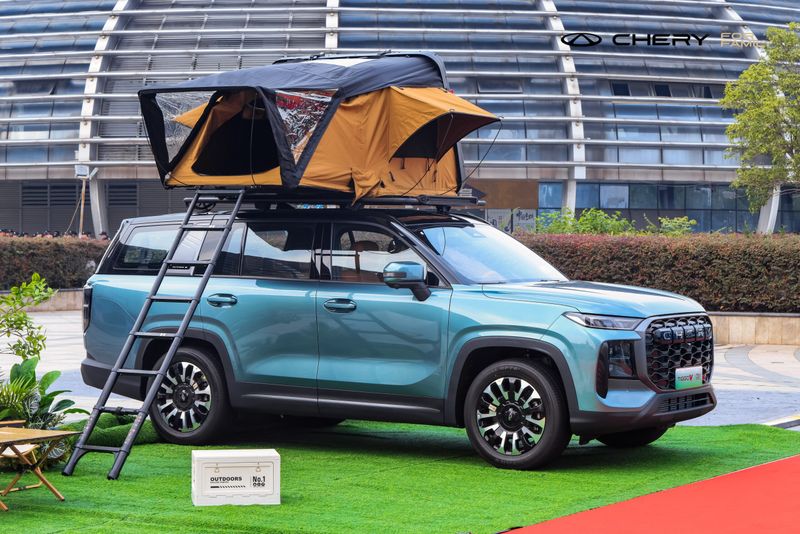
I had a brief drive of the Chery Tiggo V, a seven-seat SUV that can be converted into a double-cab-style bakkie. My experience was confined to a car park, so I can’t say much about how it drives yet. But I can tell you that it’s bigger than I expected, and very spacious inside.
As I explained in my detailed look at the vehicle, the conversion isn’t a quick Saturday-morning job. It needs two people and a couple of hours, and Chery recommends letting a dealer do it. So think of it as a roomy family SUV first, with the bakkie trick as a bonus.
The Tiggo V is due in South Africa in the first quarter of 2027.
Chery’s next wave: prototypes still under wraps
I also saw several prototypes that will come to market later, but they’re still under embargo, so all I can say is this: the wave isn’t letting up. Chery is expanding its stable of brands aggressively, and more of them could find their way to South Africa, or some of their models could be sold here under existing badges.
Exlantix ES GT: the one that stole my heart
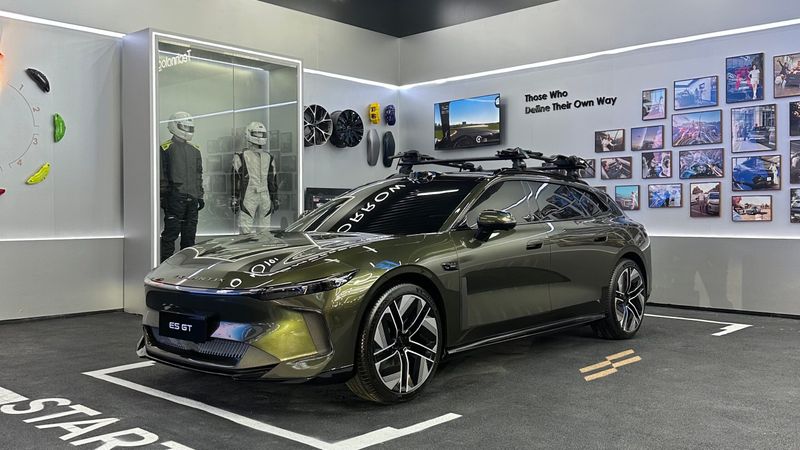
Which brings me to the car I can’t stop thinking about. Exeed is Chery’s upmarket brand. Exlantix is the name associated with its electrified models and used as the brand identity in some export markets. The design is stunning, the drivetrains are seriously potent, and the Exlantix ES GT is the jewel in the crown.
It’s a shooting brake (think sleek, low-slung, sporty estate) based on the ES sedan, with electric and range-extender versions previewed. According to Australian motoring title Chasing Cars, European information points to more than 400 kW for the most powerful three-motor electric version. Those are big claims that will need to be verified in real-world testing, but suffice it to say this car is super sexy. It stole my heart. In fact, several Chinese brands appear to be pushing sleek shooting brake designs as the next big thing. They have my full attention. I can only hope we start to see something other than crossovers gain momentum…
Chasing Cars reports that Exlantix is due to launch in Australia around the middle of 2027, led by the ES GT and ET SUV. New Zealand is also in its plans. In Australia, it will take on premium Chinese rivals such as Zeekr, Geely’s upmarket brand. That’s relevant to us because Zeekr’s website already lists South Africa as “coming soon”, and Geely has filed a raft of Zeekr trademarks here. If Zeekr comes, could Exeed and Exlantix follow as Chery’s answer? I certainly hope so.
Freelander 8: a familiar name, a very different SUV
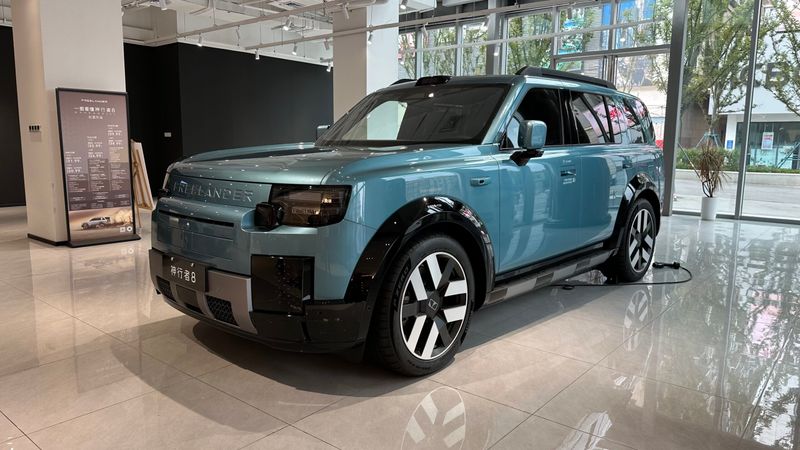
Then there’s Freelander, now a standalone brand that comes from Chery’s joint venture with Jaguar Land Rover. JLR owns the name and leads the design, while Chery supplies the technology and builds the cars in Changshu, China. The first model, the Freelander 8, was showcased at a dedicated Freelander event in Wuhu during the summit.
It’s a very big, very upmarket SUV. At 5 118 mm long, it’s longer and wider than a Land Rover Defender 110, though not as tall. In China, it’s sold as an electric vehicle with a petrol range extender, while one of the announced export versions is a twin-motor plug-in hybrid with claimed outputs of 460 kW and 662 Nm in Middle East specification.
According to CnEVPost, the brand reported more than 10 000 pre-orders within 48 hours of opening pre-sales in China. Such figures are typically based on refundable deposits, mind you, rather than completed sales. Right-hand-drive versions are planned, with Australia set to get it in 2027.
Local Chery CEO Tony Liu recently told us that the Chery Group is investigating the possibility of bringing Freelander to South Africa. Reading between the lines, I’m willing to bet good money it will come here.
Why South Africa matters to Chery
All of this ties back to Chery’s global strategy, and South Africa is a big part of it. In July 2026, Chery climbed to sixth place overall in the local sales charts with a record month. In October, the Tiggo 4 Cross (1 924 units) was again one of the country’s top-selling passenger cars, and the new Q became South Africa’s best-selling EV among the brands that report their sales to Naamsa.
And then there is the local manufacturing decision. Chery officially took over Nissan’s Rosslyn plant earlier this year and it aims to build 50 000 vehicles a year in the first phase, create nearly 3 000 direct and indirect jobs and reach 40% local content. Besides the Omoda C4 and Grootman, the plant is set to build a number of other products, including Jaecoo- and Jetour-branded ones.
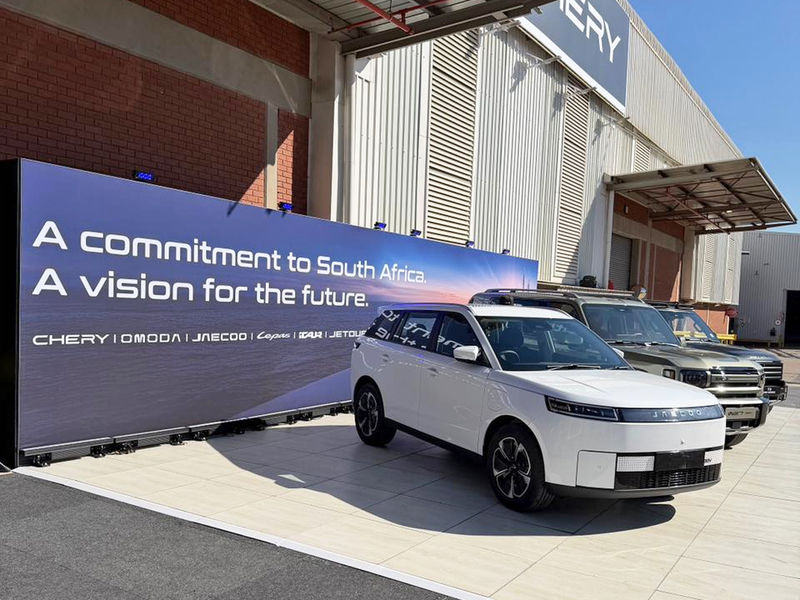
Why does that matter so much? Local manufacturing could give Chery access to South Africa’s Automotive Production and Development Programme incentives, subject to meeting the qualifying requirements. It could also reduce exposure to currency swings and shipping costs, while positioning Rosslyn as a potential export hub for the rest of Africa. It answers the question that sceptical South African buyers keep asking about the flood of new Chinese brands: are you here for the long haul? A brand that invests in a factory, keeps a workforce employed and develops local suppliers is much harder to dismiss as a fly-by-night importer.
It also fits neatly with what Yin said in his keynote about making Chery a truly global company. That, he said, is not merely about selling more products. It’s about taking part in local transformation and honouring commitments to local governments at its bases around the world, including creating jobs. Rosslyn is potentially a superb example. It will also bring uniquely South African challenges to test that philosophy.
There’s a lesson from history here, too. In a separate interview with Bloomberg, Zhang conceded that Chery has lost many battles overseas before, and that in some markets a poor understanding of local conditions forced it to retreat. South Africans will remember that Chery quietly left our market in 2018, before returning in 2021 in a far more determined way. This time around, Zhang told Bloomberg, Chery’s first question when entering a market isn’t about margins or sales volumes, but whether it can survive there for the long term. A factory in Rosslyn is about as clear a statement of that intent as you can get.

It won’t be cheap, mind you. Bloomberg quotes Geely’s chief executive as estimating that European production costs are, for now, 70% to 100% higher than in China. Localisation challenges such as economies of scale, supplier development and labour costs will matter here, too, although that estimate is not a South African cost comparison. With so many rivals at home reportedly losing money, a genuinely global footprint could be crucial to survival. Chery, which Bloomberg reports aims to sell cars in nearly all the world’s major markets except the US within the next year or so, is betting heavily that South Africa will be one of its anchors.
Chery’s connected future
So, what’s the bigger picture? Cars are still the things we buy. They’re what’s on the showroom floors, the monthly instalment and the thing in the garage. But AI, robots and chips are fundamentally changing the way those cars are designed, developed and built, and soon, how they fit into the rest of our lives.
Chery’s vision is of a hugely integrated system in which cars (each with a “brain” that understands its owner), home robots, the electricity grid and even flying taxis share intelligence and adapt to our personalities and habits. Imagine your car charging itself, selling power back to the grid and telling the robot at home that you’re running late, so it can read your child a story. That’s a future possibility, not an off-the-shelf system today. It’s thrilling and, frankly, a little frightening.
Chery started out in Wuhu with a car based on a borrowed platform. Less than 30 years later, it’s designing chips, building robots and developing an artificial brain it hopes will power them all. AI may never replace humanity, judgement and warmth, as Yin insists. But on the evidence of this summit, it’s already replacing a great deal else.
Hannes Oosthuizen

With the ultimate goal of spending his life writing about cars, Hannes studied journalism at the University of Stellenbosch. A brief stint as a sports editor for Paarl Post followed, before he joined CAR magazine in 2001. He eventually became the (youngest-ever) editor of CAR in 2011, a position he occupied for two years. During his career at CAR he became a member of the WCOTY (World Car of the Year) panel, wrote a book (Cranked Up: Confessions of a Petrolhead) and was named by the Mail & Guardian as one of the Top 200 South Africans to take to lunch in its 2008 Youth Day supplement, and by The Media magazine as one of the most influential media professionals under 40 (2012). He left CAR in 2013 to experience the \other\" side of the industry