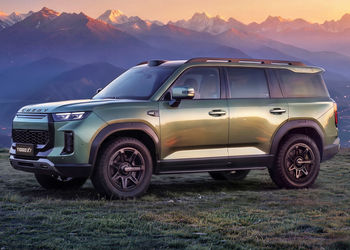
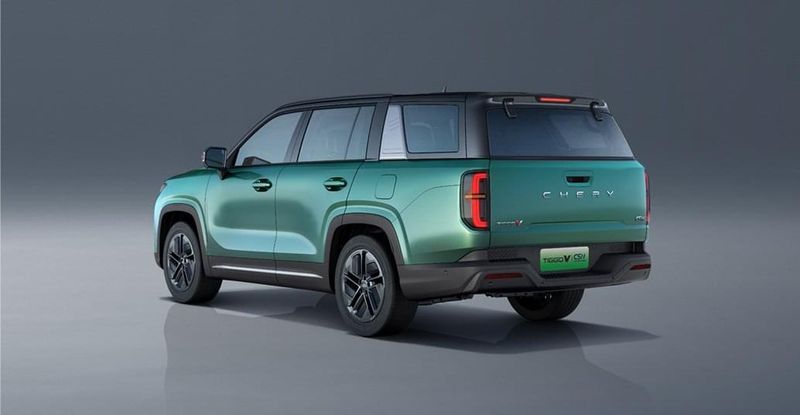
Due in South Africa during the first quarter of 2027, the Chery Tiggo V is a unique 7-seat SUV that converts into a double-cab bakkie. We have new details on this conversion process as well as the confirmed drivetrain line-up, plus we spent brief time behind the wheel.
Chery‘s shape-shifting Tiggo V is a 7-seat SUV that can be reconfigured into a double-cab-style bakkie and is due in South Africa during the first quarter of 2027. We had a brief taste of it in China and put a list of pointed questions to Chery about how the conversion actually works. The answers suggest that buyers should think of it as a roomy family SUV first, and a bakkie only occasionally.

Ever since the Tiggo V broke cover at Auto China 2026 in Beijing, it has been one of the most talked-about Chinese newcomers headed our way. Cars.co.za first spotted the Tiggo V on a transport carrier in South Africa back in May, alongside the Q city EV, and Chery has since confirmed that the model will be sold here. Chery pitches it as a “multi-purpose life space” built on a modular architecture: a family SUV, a spacious MPV-style people carrier or a bakkie-style utility vehicle, depending on how you configure it.
It is a compelling idea in a market that loves both SUVs and bakkies. In theory, you could own one vehicle that does both jobs. In practice, however, the details matter.
First impression of the Tiggo V: space, and lots of it
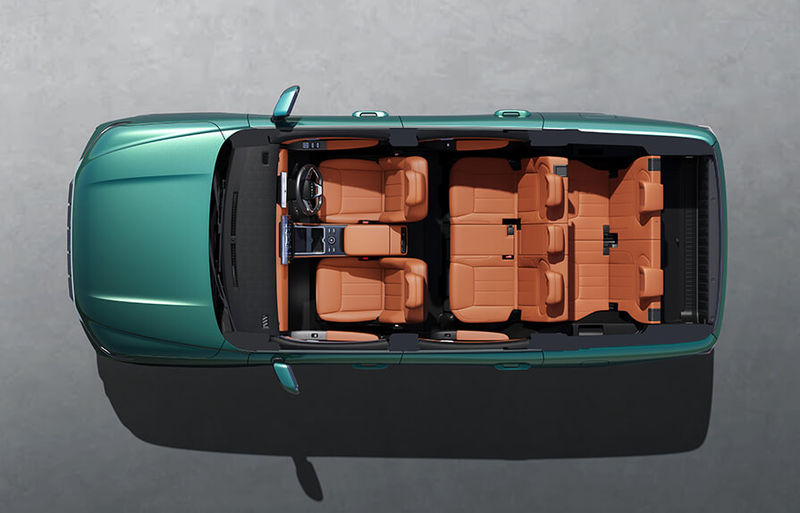
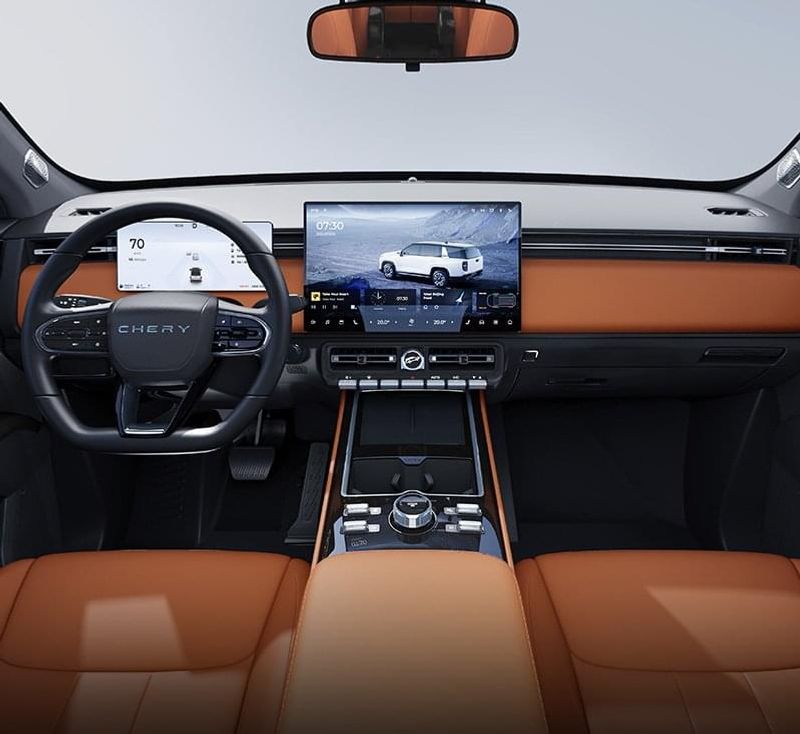
My time behind the wheel of the Tiggo V in China was brief and confined to a car park, at low speeds, so I can’t comment meaningfully on ride quality, refinement or performance. It is a unibody vehicle with multi-link rear suspension and first impressions are that it is refined, but that throttle sensitivity/mapping could be improved – there was too much of a delay in the power delivery.
What I can say with greater conviction is that it is a very spacious vehicle. The Tiggo V rides on a 2 800 mm wheelbase, which is the same as a Tiggo 9, but is about 200 mm longer, and it feels truly generous inside, with a boxy profile that frees up headroom and a claimed interior height of 1 297 mm. Space in the second row, particularly legroom, is enormous.
The second-row bench slides fore and aft. Chery says the third row can accommodate occupants up to about 1.7 metres tall, and the cabin is said to offer no fewer than 42 storage compartments. It is a properly practical people carrier.
And that, I’d argue, is how prospective buyers should approach it. If the Tiggo V makes sense to you as a spacious, feature-laden seven-seat SUV, on its price alone, then the ability to convert it into a bakkie should be viewed as a bonus, rather than the main reason to buy one.
How the Tiggo V conversion actually works
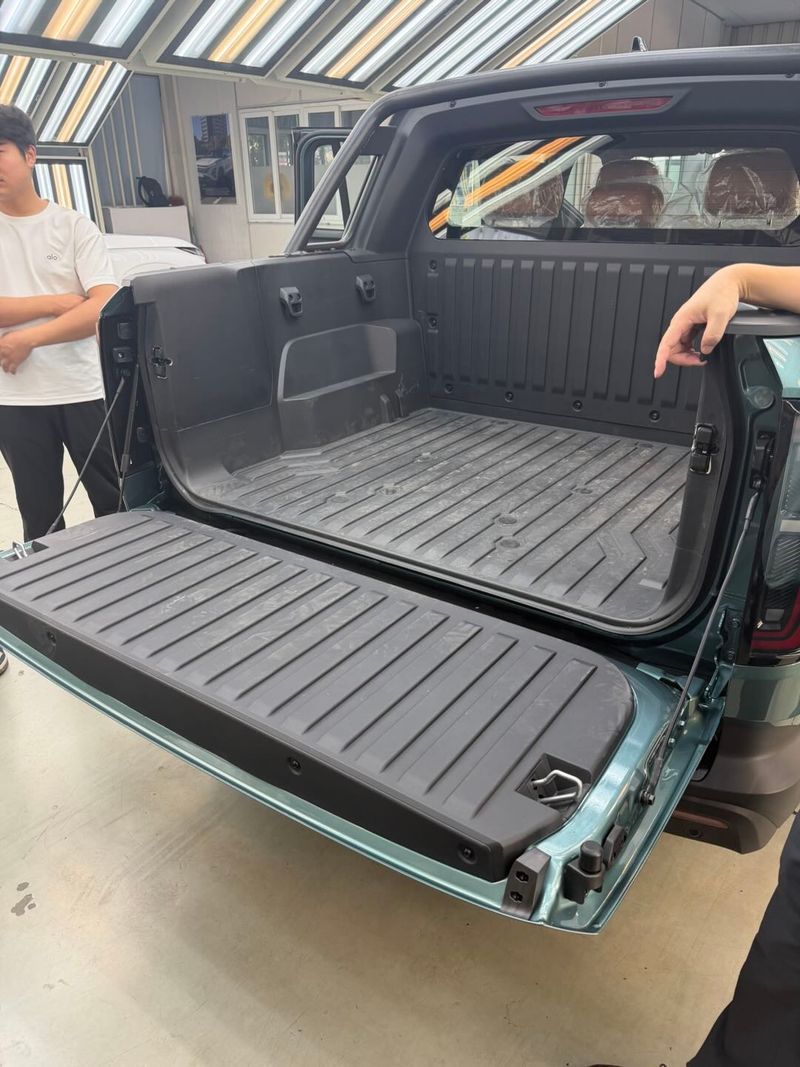
Much of the early excitement around the Tiggo V has centred on the idea of a vehicle you could turn into a bakkie, possibly to fetch a load of compost or move a fridge on a Saturday, and then switch back to SUV mode before church on Sunday morning. Some early reports suggested the rear section could be removed in around 45 minutes. Chery‘s own answers to our questions paint a more involved picture.
The rear assembly that is removed to create the load bay consists of two parts, which weigh 42.6 kg and 41.2 kg respectively, so you’re dealing with roughly 84 kg of bodywork. The rear cargo box, which is inserted to create the load bin, is a single solid piece, but Chery says some additional parts need to be assembled along with it.
There is no separate partition to close off the cabin. Instead, the rear bulkhead is integrated into the cargo box itself, so the cabin is sealed off as part of the same assembly. As the factory-supplied image shows, the bin looks sturdy and Chery says it is entirely waterproof. However, whichever configuration you are not using – the SUV rear section or the bakkie components – doesn’t stay on the vehicle; it has to be stored somewhere, which means you will need space for it in your garage.
The rear seats also have to come out. Chery confirms that in cargo-box mode, the rear seats must be removed (they are detachable), which is one more set of bulky items that need to find a home while the vehicle is in bakkie mode.
Not a one-person, at-home job
This is where the “Friday-to-Sunday” scenario starts to unravel. Chery says it does not recommend that owners perform the conversion themselves. Changing modes requires two people, and even when it is carried out by professionals, the job takes about two hours. Assume a similar amount of time to switch back.
Chery says its dealers will offer the conversion as a service, although a fee may be charged. Owners can do it themselves – an instruction manual will be supplied with the vehicle – although Chery describes the process as “relatively complicated” and advises against it.

So, rather than a quick weekend swap, think of the conversion as a booked dealer appointment, with two technicians, a couple of hours of workshop time, a possible service fee, and enough garage space at home to store roughly 84 kg of body panels plus a set of rear seats. Doing it twice in one weekend would therefore be a bit of a “faff”. It seems far better suited to owners who would switch to bakkie mode for an extended period – a holiday, a home renovation, specific leisure activity or a house move – than to those hoping for a 48-hour utility vehicle.
Bakkie mode: what can it carry?
In bakkie configuration, Chery claims a maximum payload of 500 kg, and an unbraked towing capacity of 750 kg. For context, that payload is about half of what a conventional 1-tonne double-cab bakkie is rated for, so this is a light-duty load-lugger. The load bay is also, naturally, not as large as that of a full-size double cab. The Tiggo V can tackle gradients of up to 30% at maximum payload.
Powertrains for the Tiggo V in South Africa

Chery has confirmed to Cars.co.za that the powertrain line-up for South Africa has been finalised. There will be a petrol-only variant using a 1.6-litre turbocharged engine and a 7-speed dual-clutch transmission (7DCT), as well as a plug-in hybrid (PHEV) variant pairing a 1.5-litre turbocharged engine with Chery’s dedicated hybrid transmission (DHT), part of the brand’s Super Hybrid (CSH) system.
Chery has not yet published power and torque figures for the Tiggo V. For reference, the 1.6T engine is rated at 137 kW and 275 Nm in the Chery Tiggo 8 Pro. Full specifications will be released closer to launch.
Pricing and launch
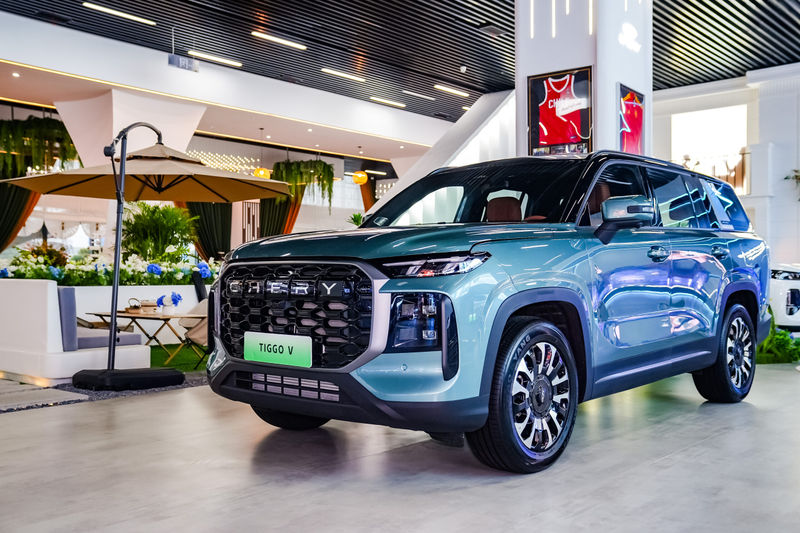
The Tiggo V is due in South Africa during the first quarter of 2027. Chery hasn’t announced pricing yet and says that a wide range of accessories will be offered.
Where the Tiggo V is priced will ultimately determine its success. If it is positioned attractively and makes sense as a spacious, family-friendly, practical SUV alone, it will be a strong proposition – and the bakkie conversion becomes a genuinely useful extra for the occasional big job. Just don’t plan your weekends around it.
Hannes Oosthuizen

With the ultimate goal of spending his life writing about cars, Hannes studied journalism at the University of Stellenbosch. A brief stint as a sports editor for Paarl Post followed, before he joined CAR magazine in 2001. He eventually became the (youngest-ever) editor of CAR in 2011, a position he occupied for two years. During his career at CAR he became a member of the WCOTY (World Car of the Year) panel, wrote a book (Cranked Up: Confessions of a Petrolhead) and was named by the Mail & Guardian as one of the Top 200 South Africans to take to lunch in its 2008 Youth Day supplement, and by The Media magazine as one of the most influential media professionals under 40 (2012). He left CAR in 2013 to experience the \other\" side of the industry