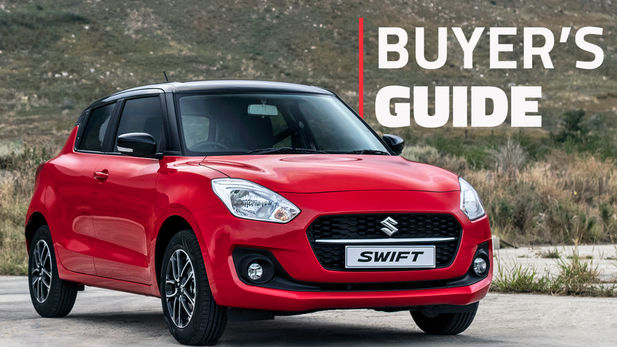
The A2L-series Suzuki Swift played a critical role in the Hamamatsu-based brand’s meteoric rise to prominence in South Africa. So, does this budget hatchback make for a smart used buy? Let’s examine the model’s strengths and weaknesses…
Suzuki Auto South Africa’s recent history is downright fascinating. In a remarkably short time, Suzuki’s wholly owned local division transformed itself from a relative bit-part player to a firmly established top-3 brand. The driving force of that rapid rise? None other than the A2L-series (3rd-gen) Suzuki Swift.
Serving as Suzuki Auto SA’s chief volume driver – and thus, in the firm’s words, its “bread-and-butter model” – this 3rd (global) iteration of the Swift regularly elbowed its way towards the top of the monthly list of SA’s best-selling new vehicles, functioning as the very backbone of the brand’s local line-up.
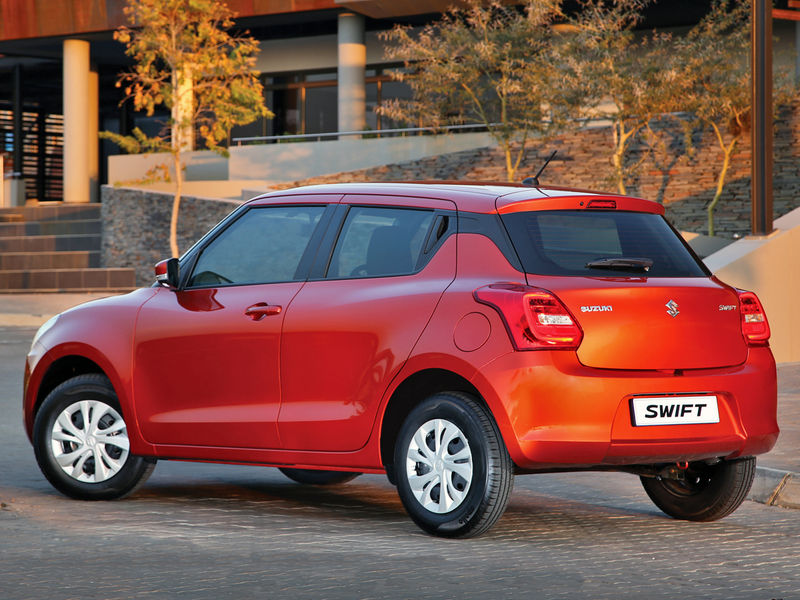
In 2022, for instance, the budget hatchback ranked 2nd on the list of Mzansi’s top-selling new passenger vehicles (behind only the Kariega-built Volkswagen Polo Vivo), with its impressive tally of 17 282 units seeing it rocket up the table from an already credible 6th place in the prior year.
Though Suzuki – a 6-time Budget Car champion, 2-time Entry-Level Car winner and 2-time Brand of the Year of the Cars.co.za Awards – saw sales of its hatchback slip 7.6% year on year to 15 974 units in 2023, the Swift nevertheless placed a strong 3rd in the passenger-vehicle rankings and was again SA’s best-selling imported vehicle. During its time on the local market, more than 66 000 units were sold.
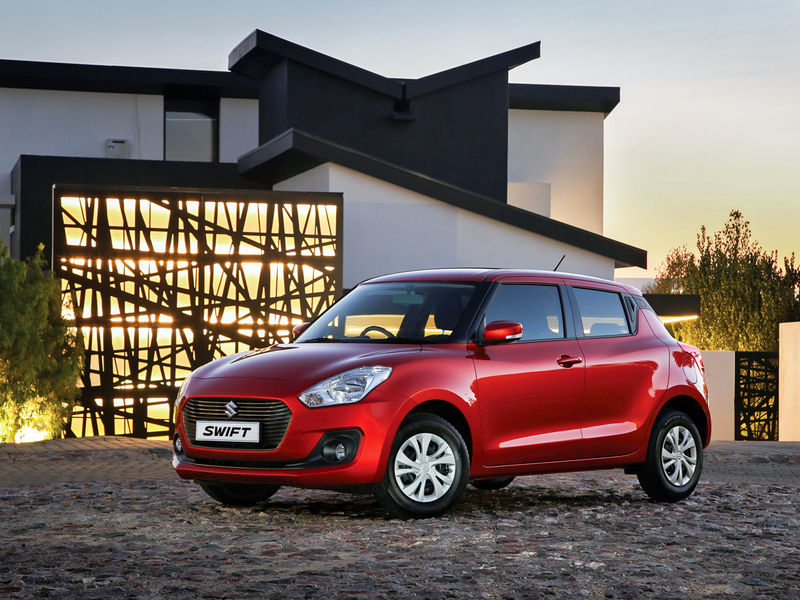
Built on Suzuki’s ubiquitous Heartect platform and available exclusively in the 5-door body style – note that the Dzire sedan dropped the “Swift” prefix in this generation – the A2L-series model offered locally was produced in Ahmedabad, India (Europe sourced its units from Japan). So, like the overwhelming majority of the firm’s wares in SA, the Swift came directly from manufacturing giant, Maruti Suzuki.
As an aside, we haven’t included the Swift Sport in this buyer’s guide since this standalone derivative – available in both manual and automatic guise – was imported from Japan rather than shipped over from the subcontinent. We do, however, plan on penning a separate guide on this characterful little warm hatch at a later stage.
Suzuki Swift model line-up in South Africa
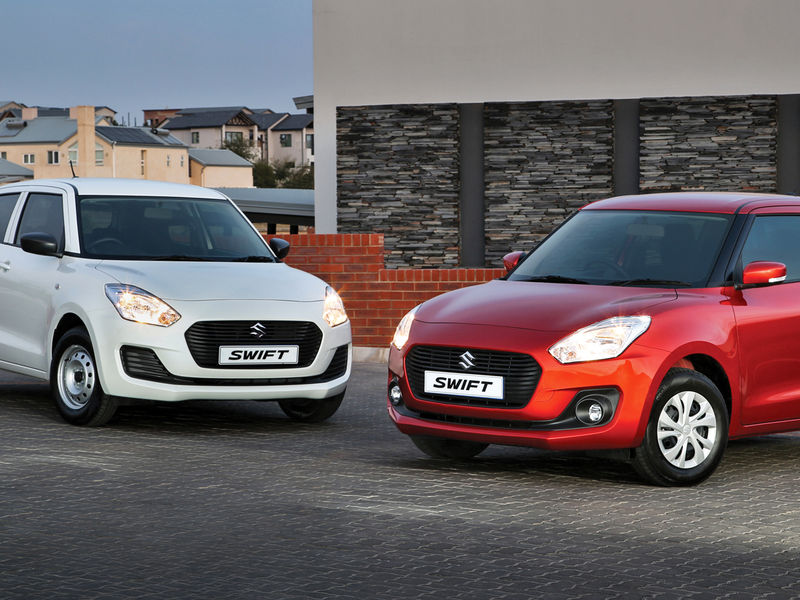
Revealed in Japan at the end of 2016 before making its European debut at the 87th Geneva International Motor Show in Switzerland in 2017, the 3rd-gen Swift finally arrived in South Africa in June 2018.
At launch, only 3 derivatives were available, each powered by the Japanese firm’s naturally aspirated 1.2-litre, 4-cylinder petrol engine (K12M), which drove the front wheels via either a 5-speed manual gearbox or an automated manual transmission (AMT) with the same number of cogs.
Initially, the line-up included just 2 trim levels.
- Swift 1.2 GA 5MT (61 kW/113 Nm)
- Swift 1.2 GL 5MT (61 kW/113 Nm)
- Swift 1.2 GL 5AMT (61 kW/113 Nm)
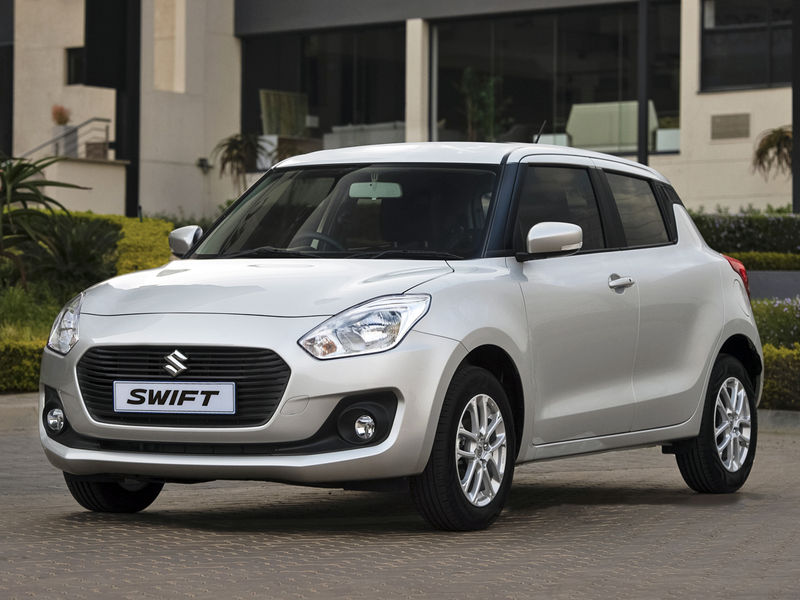
With the Swift Sport having touched down in July 2019, Suzuki Auto SA further expanded the range the following month by adding a pair of top-spec Swift 1.2 GLX derivatives, offered with either of the above-mentioned transmissions. GLX trim included items like automatic climate control (as opposed to manual aircon) and a 7.0-inch touchscreen infotainment system with Apple CarPlay and Android Auto.
- Swift 1.2 GLX 5MT (61 kW/113 Nm)
- Swift 1.2 GLX 5AMT (61 kW/113 Nm)
Then, in November 2019, the Swift 1.2 GL Special Edition arrived, set apart by its “European-style” grille, body decals, a blue roof spoiler, blue side-mirror caps, wind deflectors and a touchscreen system (though it curiously retained steel wheels with plastic covers rather than upgrading to alloys). The production run comprised 50 units finished in Arctic White and another 50 units finished in Silky Silver.
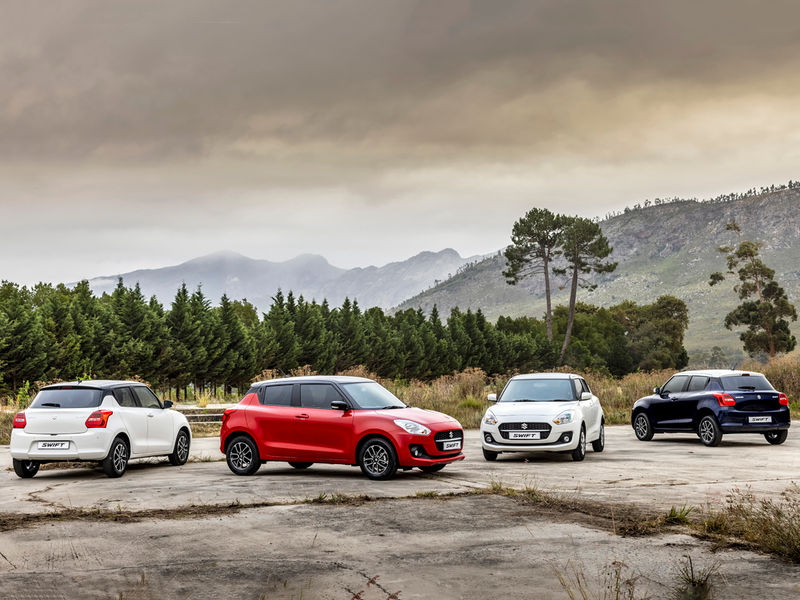
In April 2021, the facelifted Swift debuted in Mzansi, sticking with the atmospheric K12M engine, but gaining what Suzuki termed “minor” styling updates and a smattering of extra standard equipment. For instance, the base GA grade and mid-tier GL trim levels both scored rear parking sensors, while the range-topping GLX added a reverse-view camera feeding the touchscreen display.
Moreover, AMT-equipped variants gained a hill-hold assist function, while – perhaps most notably – electronic stability control (ESC) was made standard across the range. Buyers of GL and GLX derivatives were further afforded the option of a trio of dual-tone paint schemes. This 5-strong range soldiered on unchanged until October 2024, when the AOL-series Swift arrived to supplant it in South Africa.
What are the Suzuki Swift’s strengths?
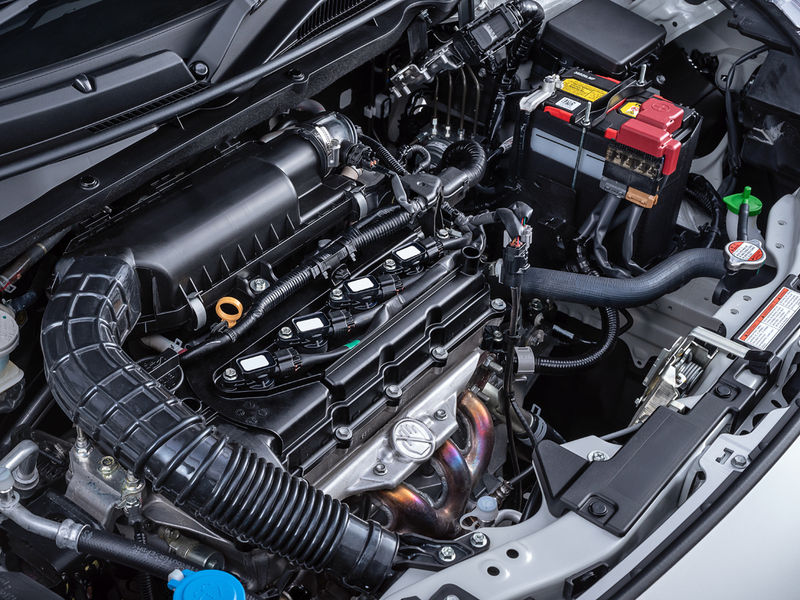
Fuel efficiency: Aided by a claimed kerb weight of under 900 kg, the A2L-series Suzuki Swift’s small-capacity petrol engine had the potential to return seriously budget-friendly fuel-economy figures. The Japanese automaker listed a combined consumption of just 4.9 L/100 km for all derivatives, a figure that was (somewhat unusually) entirely achievable with a modicum of effort.
Keep in mind, though, that the SA-spec Swift’s fuel tank was relatively small at 37 litres. As an aside, Suzuki’s 1.0-litre, 3-cylinder “Boosterjet” turbopetrol engine never made it to South Africa in the Swift, while we likewise did without the mild-hybrid and diesel powertrains offered in several overseas markets.
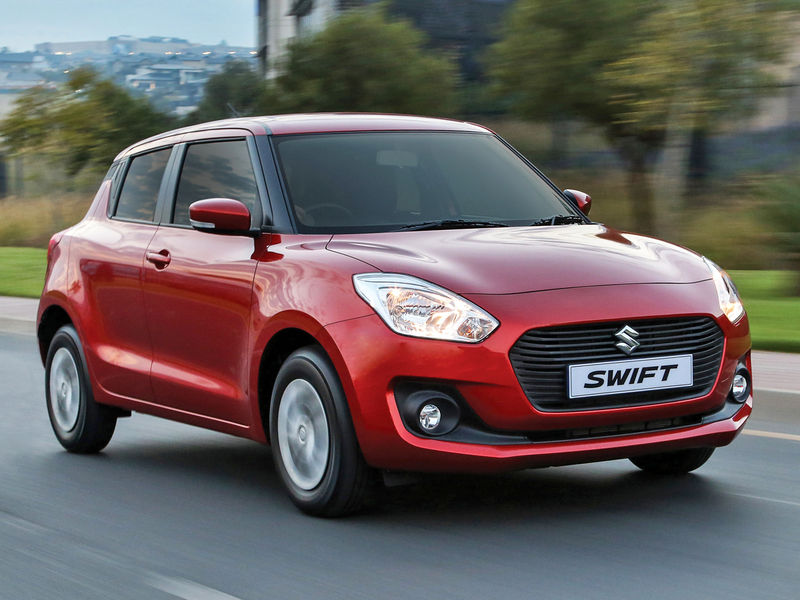
Great fun to drive: Budget cars have a reputation for being utterly bland to drive, but that certainly wasn’t the case with the Swift – or at least variants with manual ‘boxes. The rev-happy 1.2-litre motor – a well-proven engine that was carried over from the previous model – made the most of its decidedly modest outputs, benefitting from short gear ratios, a positive shift action and a distinct lack of lard.
As such, the Swift was an agile little car, composed and supple around town (and indeed on indifferent road surfaces), yet responsive and eminently keen to change direction when the mood struck. Note, however, that the aforementioned gearing meant the tachometer needle hovered at around the 3 000-rpm mark at 120 kph, which didn’t exactly make for the quietest cruising experience.
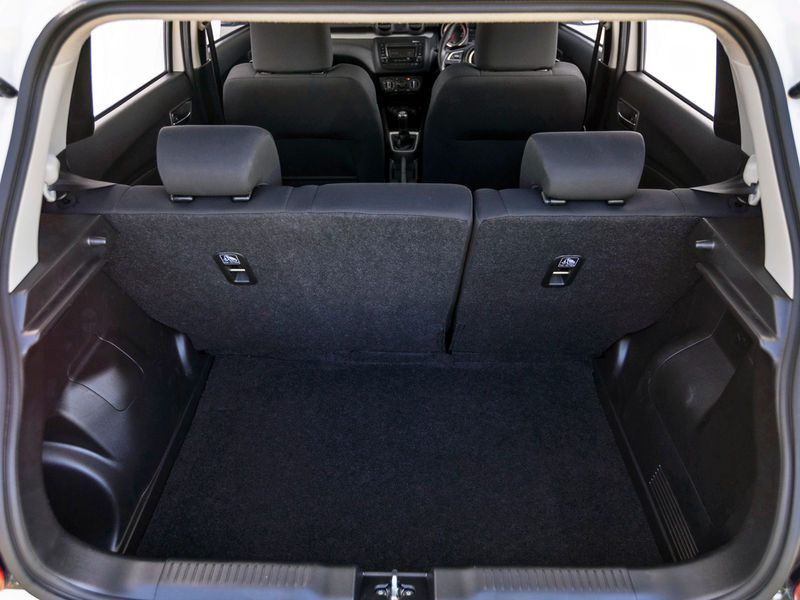
More practical than predecessor: Though the 3 840-mm long A2L-series (3rd-gen) model measured 10 mm shorter from nose to tail than its predecessor, its wheelbase was stretched by 20 mm (to 2 450 mm) and its width increased by 40 mm (to 1 735 mm). Thanks to this growth spurt, Suzuki’s designers managed to cram more space into the cabin, with rear passengers reaping the most significant rewards.
The enhanced practicality extended to the load bay, which grew by 58 litres generation-on-generation, to a claimed 268 litres. This 3rd iteration of the Swift further benefitted from a 60:40-split rear bench on all derivatives bar the base GA, which stuck with a single-piece item. In short, the Swift was a little larger and more practical than most similarly priced budget cars, effectively offering more space for the money.
What are the Suzuki Swift’s weaknesses?
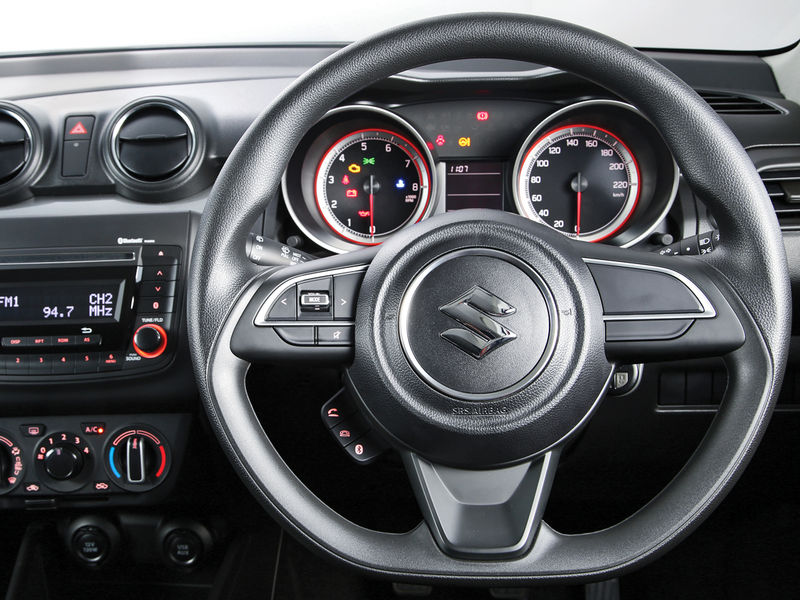
Pre-facelift lacked ESC: The AZG-series Swift (2011-2018) included derivatives sourced from both India and Japan, with the latter variants featuring 6 airbags and ESC (not to mention superior build quality). So, it was somewhat disappointing that the A2L-series model arrived without any form of stability control.
But let’s give credit where credit is due: Suzuki Auto SA put this right at the facelift, handing all variants ESC feature as part of the mid-cycle update. However, keep in mind that the SA-spec A2L-series Swift (excluding the Japanese-built Swift Sport, that is) was locally only ever offered with dual front airbags.
Isolated rust issues: As with the AZG-series Swift, we’ve noted some local instances of A2L-series units – plus a few other Indian-sourced Suzukis, it must be said – suffering from premature rust. This early oxidation could affect both the vehicle’s body and its chassis, with the latter not typically covered by the manufacturer’s warranty. So, make sure to inspect any potential used-car buy for early signs of rot.
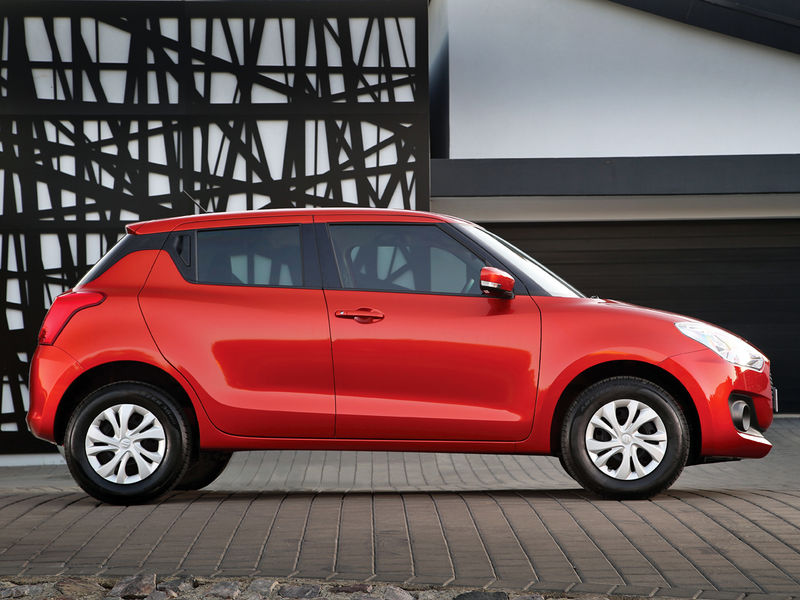
AMT the only “auto” option: To reiterate: in practice, the automated manual transmission – which is effectively a robotised manual gearbox and thus a more cost-effective option than a traditional torque converter – is a downright unsophisticated piece of kit, generally delivering painfully sluggish shifts.
Though the AMT was on offer throughout the A2L-series Swift’s local lifecycle, it’s perhaps telling that Suzuki Auto SA has swapped to a continuously variable transmission (CVT) for the current (March 2025) AOL-series Swift, despite the fact this model still features an AMT in India.
How much is a used Suzuki Swift in South Africa?
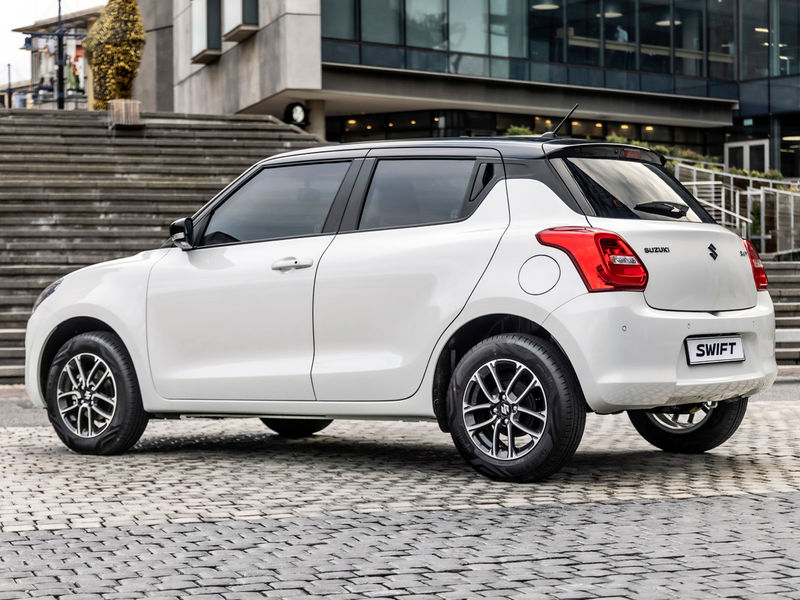
From launch, the 3rd-gen Swift came standard with a 5-year/200 000 km mechanical warranty and a 2-year/30 000 km service plan, with the latter featuring intervals of 15 000 km. Suzuki dealers offered a wide range of factory-backed accessories, from exterior styling components such as lips, spoilers, grille garnish and body decals to interior upgrades like a console-box centre armrest.
Approximately 80% of the A2L-series Suzuki Swift models listed on Cars.co.za at the time of writing were specified with a manual gearbox, while the mid-tier GL grade represented around 63% of all listings. The base GA came in at about 20%, while the range-topping GLX accounted for the remaining 17%.
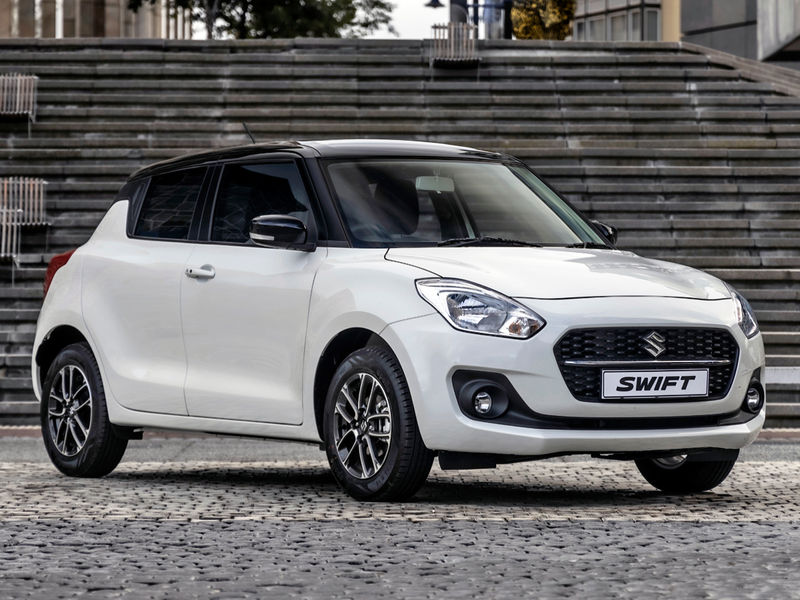
Indicated mileages ran from virtually zero (on new examples), through to 186 000 km achieved by a 2020 1.2 GL 5MT. Interestingly, the 2024 model year accounted for a whopping 45% of all listings.
- Below R150 000: Though just 6% of listings were priced below R150 000, all model years bar 2024 were represented here. Predictably, the entry-level GA grade dominated this space, with all but a single example featuring a manual gearbox.
- R150 000 to R200 000: A little over 40% of A2L-series Swifts listed were priced in this bracket, with refreshed models far more prevalent than pre-facelift examples. The overwhelming majority of used Swifts positioned here had under 10 000 km on their respective odometers.
- R200 000 to R250 000: This pricing category housed around 46% of listed 3rd-gen Swifts, with most from the final couple of model years. This was also where we found many of the GLX derivatives, along with a far higher-than-average concentration of AMT variants.
- R250 000 and up: Considering this gen’s pricing bookends were R213 900 and R272 900 when it exited SA’s new-vehicle market, spending upwards of R250 000 in the used space should get you into a virtually new model. For the record, the most-expensive example we found was a 2024 1.2 GLX fitted with various accessories and priced at R279 990.
Which Suzuki Swift derivative should I buy?
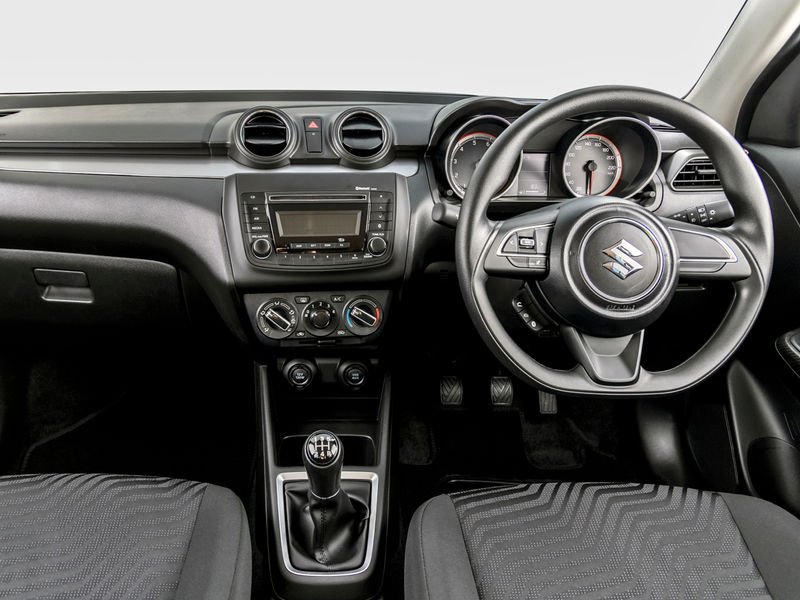
So, which A2L-series Suzuki Swift derivative is the pick of the bunch? Well, we’d first suggest steering well clear of AMT versions/shortlisting only manual-equipped examples. Then, we’d advise you to narrow your search to a facelifted example (should your budget allow, that is), since the mid-cycle update brought not only more standard kit but also the roll-out of electronic stability control.
That leaves us to decide only on trim level. Keep in mind that, in facelifted form, the entry-level GA made do with steel wheels, single-piece front seats (they didn’t have separate head restraints) and a decidedly rudimentary audio system (without mobile connectivity options), while also missing out on items such as front foglamps, electrically adjustable side mirrors and a tachometer.
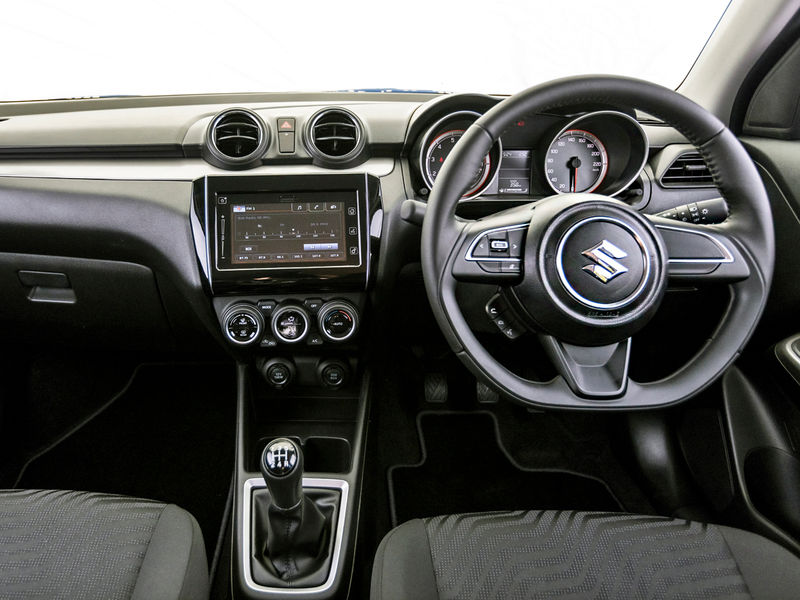
As such, we’d argue the mid-spec GL – which, rather handily, is seemingly the most prevalent grade on the used market – offered enough equipment to satisfy most requirements, upgrading to more versatile front seats and a CD player audio system (with Bluetooth), while also scoring various features missing from the GA spec sheet.
Of course, there’s also the flagship GLX, which added items such as 15-inch alloy wheels, a leather-trimmed steering wheel, a stop-start button, an upgraded climate-control system, a 7.0-inch touchscreen, driver’s seat-height adjustment and a luggage-compartment light.
Is the Suzuki Swift a worthwhile used purchase?
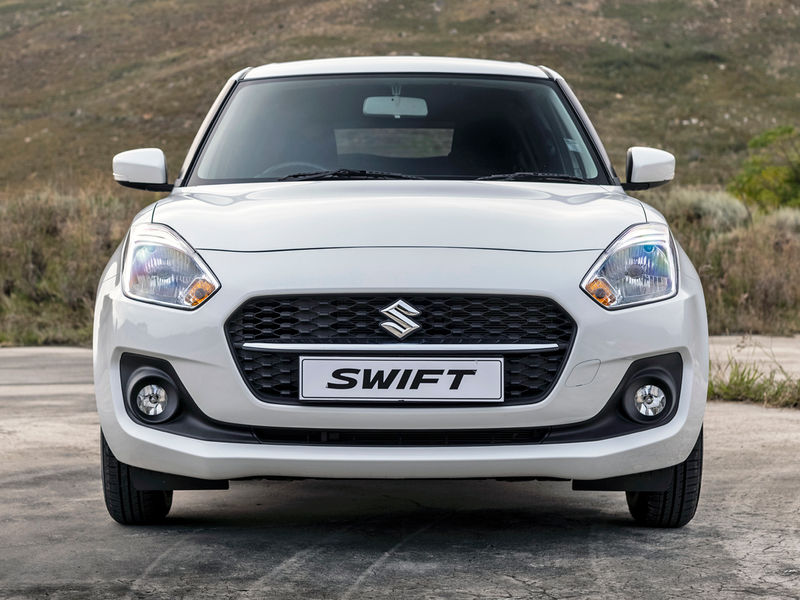
Since the Baleno compact hatchback was tasked with taking on the likes of the 6th-gen Volkswagen Polo hatch, the since-discontinued 7th-gen Ford Fiesta, the Hyundai i20 (IB- and BI3-series models) and the Renault Clio 4 and -5, the Swift was instead positioned in the so-called “sub-B-segment” space.
As such, its chief rival was the Kariega-built Volkswagen Polo Vivo (the only hatchback to regularly outsell the A2L-series Swift in the latter’s twilight years), while local buyers might also have considered the now-defunct B562-series Ford Figo, B52-series Renault Sandero or single-generation Toyota Etios and certainly the AI3-series Hyundai Grand i10.
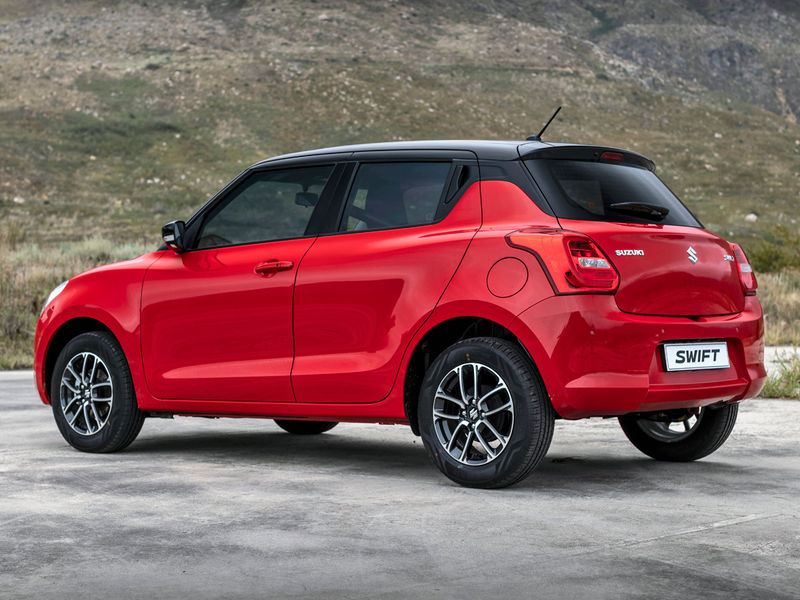
Still, when new, the A2L-series Suzuki Swift was particularly sharply priced, offering arguably unmatched value in its class and no doubt pinching several sales from the A-segment offerings below it. In fact, we might even go as far as suggesting it was something of a new-car bargain.
Providing polished driving dynamics, returning impressive fuel consumption and boasting a larger footprint than many similarly priced models, the 3rd-gen Suzuki Swift – in manual guise, that is – remains a budget-car winner on the used market today. After all, there’s a reason it served as the cornerstone of Suzuki’s recent success in South Africa.
Looking for a used Suzuki Swift to buy?
Looking to sell your car? You can sell it to our dealer network here
More buyer’s guides in this segment
Ford Figo (2015-2022) Buyer’s Guide
Hyundai Grand i10 (2014-2020) Buyer’s Guide
Renault Sandero (2014-2022) Buyer’s Guide
Toyota Etios (2012-2020) Buyer’s Guide
Frequently Asked Questions
What are the different Suzuki Swift models available in South Africa?
The 2025 Suzuki Swift in South Africa is available in three main derivatives: the GL, a new mid-tier GL+, and the top-end GLX.
What is the engine and performance of the new Swift?
The new Swift is powered by a Z-Series (Z12E) 1.2-litre, 3-cylinder petrol engine. This engine produces 60 kW of power and 112 Nm of torque, and is paired with either a 5-speed manual or a Continuously Variable Transmission (CVT).
What is the price of the new Suzuki Swift in South Africa?
The starting price for the 2025 Suzuki Swift is approximately R219,900, with the top-end GLX model priced around R284,900.
What safety features are standard on the 2025 Suzuki Swift?
Standard safety features across all models include six airbags, hill-hold control, ABS, electronic stability control (ESC), and ISOfix child-seat anchors.
What warranty and service plan are included with the Swift?
The vehicle comes with a 5-year/200,000 km warranty and a 2-year/30,000 km service plan.
Related Content
Suzuki Swift: Specs & Price (2025)
Suzuki Swift Review Articles
Suzuki Swift 1.2 GL Review (2018)
Suzuki Swift Sport Review (2019)
Suzuki Swift Sport Review (2016)
Suzuki Swift Comparison Articles
Suzuki Swift vs Hyundai Grand i10 (2023) What To Buy
Suzuki Swift vs Kia Picanto (2014) What To Buy
Suzuki Swift Sport (1st-, 2nd- & 3rd-gen): Classic Comparison
Suzuki Swift Buyer’s Guide