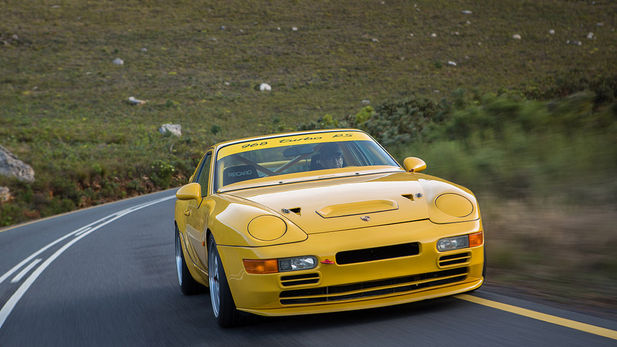
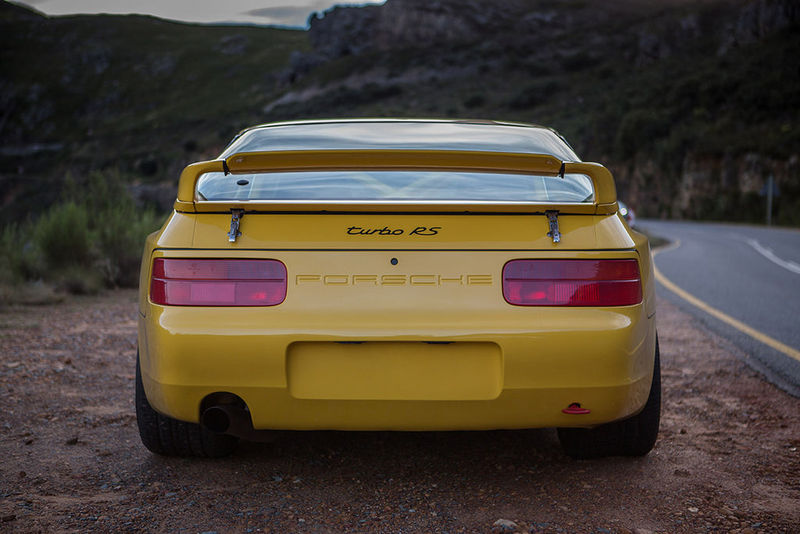
In the Porsche world, the RS badge is synonymous with the 911, but the Zuffenhausen-based brand once applied its RennSport magic to a car that wasn’t rear-engined! While this 968 Turbo RS was in Mzansi, we grabbed the chance to get behind its ‘wheel.
Right, so for the uninitiated, what does the RS in Porsche 968 Turbo RS mean? RS is the abbreviation for RennSport (Porsche’s motorsport division), and the brand’s RS products have grabbed headlines – and the attention of motoring enthusiasts – since the debut of the 911 2.7 Carrera RS in 1973. In the past decade, owners of RS-fettled Porsche 911s have seen the value of their cars appreciate spectacularly.
Indeed, these are special Porsches from both a mechanical and driving point of view and, in most cases, also in terms of the production numbers; since the 911 2.7 Carrera RS, only the 964-series 911 Carrera RS was produced in higher volumes. But the RS moniker hasn’t always been used exclusively to identify a 911 with a racing pedigree, for there is 1 exception to the rule that few are aware of – the 968 Turbo RS.
IMAGES: Charles Russell
During Porsche’s troubled times in the early 1990s, the 968 was launched to help keep the company afloat. But even this “new” model struggled, despite desirable models such as the Club Sport, Turbo and Turbo S. The latter, of which only 10 were produced in 1993, was the basis for one of the rarest cars in Porsche’s history, the 968 Turbo RS. As is the case with several low-volume, driver-focused cars, the idea came about when a few engineers discussed an outlandish idea, and then wondered: “What if?”
We get the full story from Gerd Schmid
To get the full story behind this piece of Porsche history, I had to email Porsche and then the individual contacts that were suggested with each reply. Finally, I was given the number of Gerd Schmid, a retired Porsche employee. However, Schmid isn’t just any ex-Porsche employee – as the former head of the Zuffenhausen-based company’s customer motorsport department, he had an illustrious career.
He was involved in numerous Porsche projects and was notably part of the team responsible for the 3.0 RSR, 934 and 935. In 1983, he started the customer programme for Group C, followed by a similar setup for those in the fortunate position to find themselves with a GT1 in their race team’s workshop.
In the years leading up to his retirement, he was instrumental in launching the Carrera Cup in several countries and regions, including the Middle East, Asia, Japan and Australia. However, in the early 1990s, he headed up the 968 Turbo S and Turbo RS projects, and this is what he had to say about the latter:
“We built 3 cars to comply with the regulations for the ADAC GT Cup at the time. There was a red, white and black example. Each of those cars was fitted with a 41-litre fuel cell for this 1 000 km race.”
“A 4th Turbo RS – finished in Speed Yellow – was also built for a customer. This was built with advanced modifications as the car was destined for racing in South Africa, outside the ADAC restricted limitations. The mechanical upgrades were a combination of the best parts Porsche had access to at the time.
Built to race in South Africa
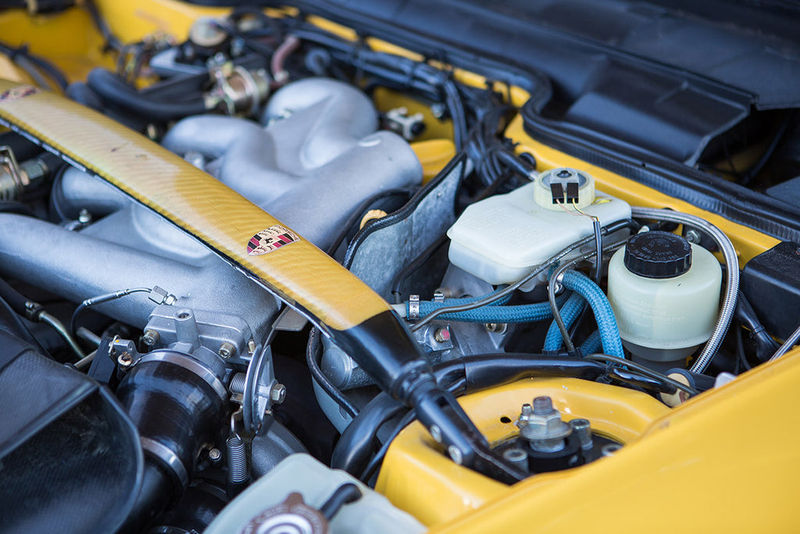
“The intake system and upper part of the engine were from a 944 Turbo, while the lower part of the engine and crankcase came from a 968. There were also a few parts especially designed for these cars. Bear in mind these cars were sold by the racing department, and not the sales division,” Schmid adds.
This is the most significant fact when it comes to the history of this specific Speed Yellow Turbo RS.
“The real Turbo RS was never homologated for the street. However, this Speed Yellow example was one of the 1st of two 968 Turbo S cars that were converted to RS specification.
“There was a lot of design and bodywork development at the time with the tuning company TechArt. Porsche later homologated these modifications for the street cars.
Specifications
- Model: 1993 Porsche 968 Turbo RS
- Engine: 3.0-litre, 4-cylinder, turbopetrol
- Power: 260 kW at 5 600 rpm
- Torque: 500 Nm at 3 000 rpm
- Transmission: 6-speed manual
- Weight: around 1 300 kg
- 0-100 kph: < 5.0 sec (approx)
- Top speed: 280 kph (approx)
“It was this single car that Porsche, TechArt and its 1st owner modified together. The other cars were standard 968 Turbo S units and then the three 968 Turbo RS race cars,” Schmid adds.
For all their uniqueness, the production run of these RS cars was short-lived. As Schmid pointed out, the car was extremely expensive at the time – a Turbo S cost DM 175 000, nearly DM 100 000 more than a 968 Club Sport; and secondly, the idea was to sell only a few.
However, it was Schmid’s final remark that possibly hits the nail on the head: “You must remember that during the early 1990s, when this project was born, Porsche was financially unstable.
“During this time, we created several special production cars; otherwise, we would probably never have created a Turbo S or Turbo RS. Everyone at Porsche loved the 911, but not the 968 (an evolution of the 944). As it happened, the 968 Turbo S, as tuned by the factory, was much faster than the 911 Turbo.”
Read our Air-cooled Porsche 911 Turbos: Classic Comparison
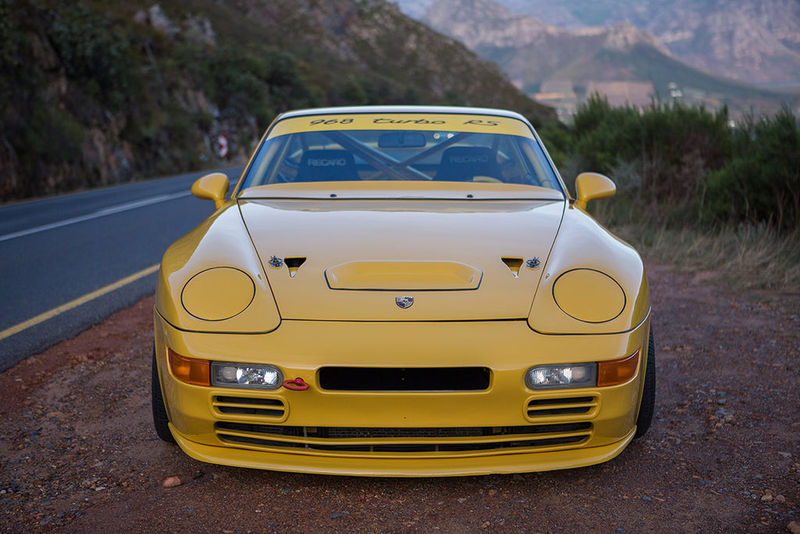
This car’s 1st owner, who was invited to the factory to see the car in production, immediately suggested a few tweaks. He wanted a wind deflector fitted at the bottom of the windscreen, which would hide the windscreen wipers and optimise the aerodynamic airflow over the car.
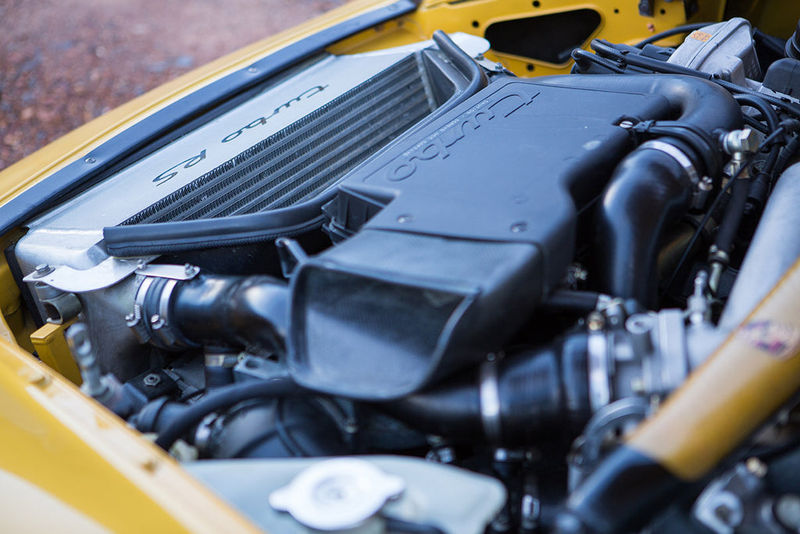
Apart from the pair of standard NACA ducts, a new bonnet was developed with a special airflow duct to aid cooling for the radiator and limit heat buildup in the engine bay.
First owner ‘suggested a few tweaks’
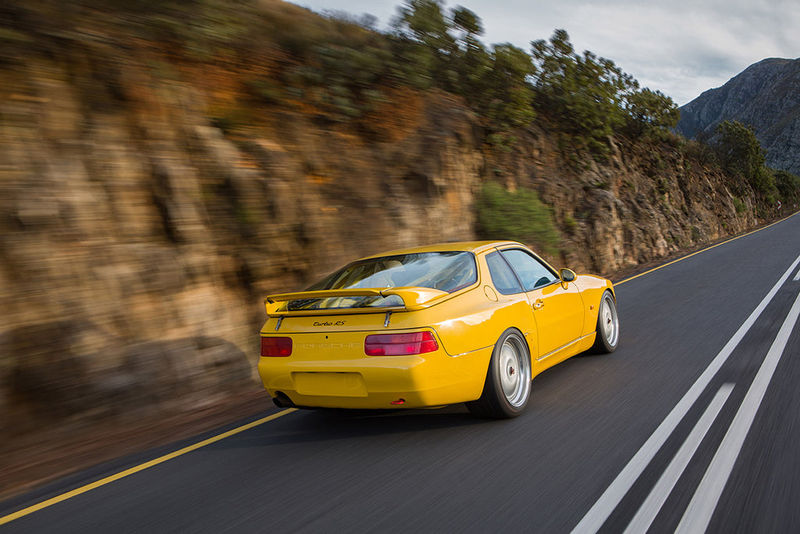
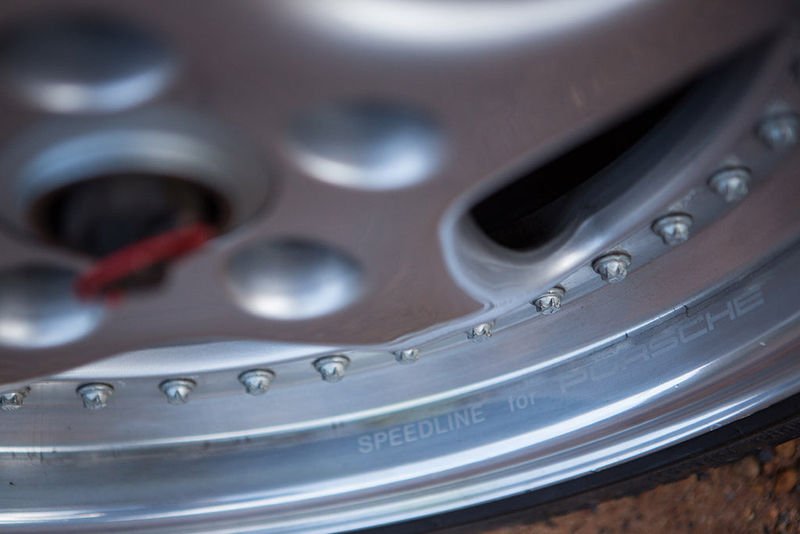
He also suggested a water-spray system be installed for the intercooler (which is operated from the cabin). Later, the headlights were removed and the lower lights were upgraded to offer dipped and high beam functions. Then there were those iconic 3-piece Speedline wheels that were standard on the car.
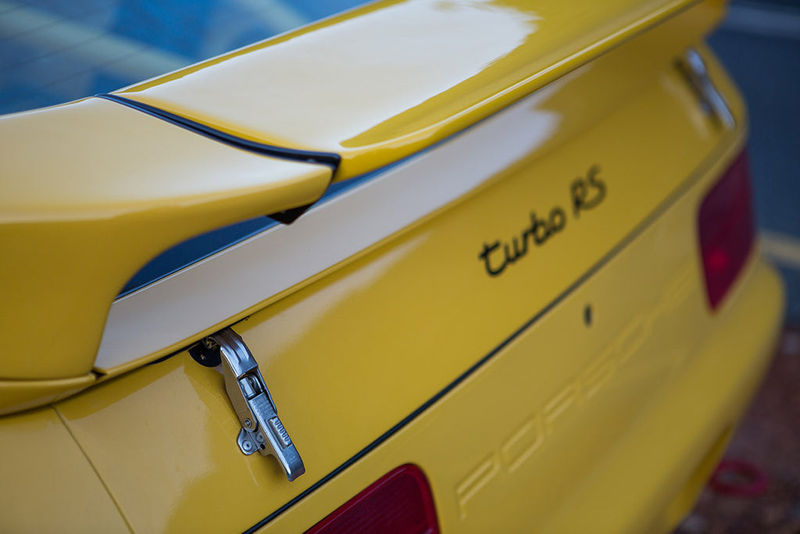
As this was not an official racing Turbo RS with the air restrictor, and with the additional modifications in place, it is safe to assume that the engine now produces more than the 260 kW of the Turbo RS. Bear in mind that the standard Turbo S delivered 224 kW/500 Nm and weighed just 1 370 kg.
At the time of my drive, this car belonged to a Porsche enthusiast in the Western Cape. The car demands attention differently from a 964- or 993-series 911 Carrera RS. In a world that has gone 911-crazy, the low stance of this race-ready, extremely rare 968 is surely more special than any 911 of its era.
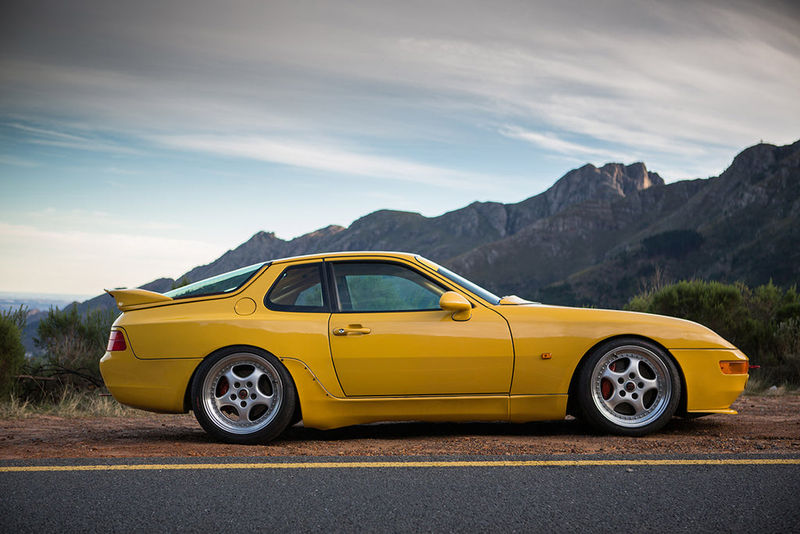
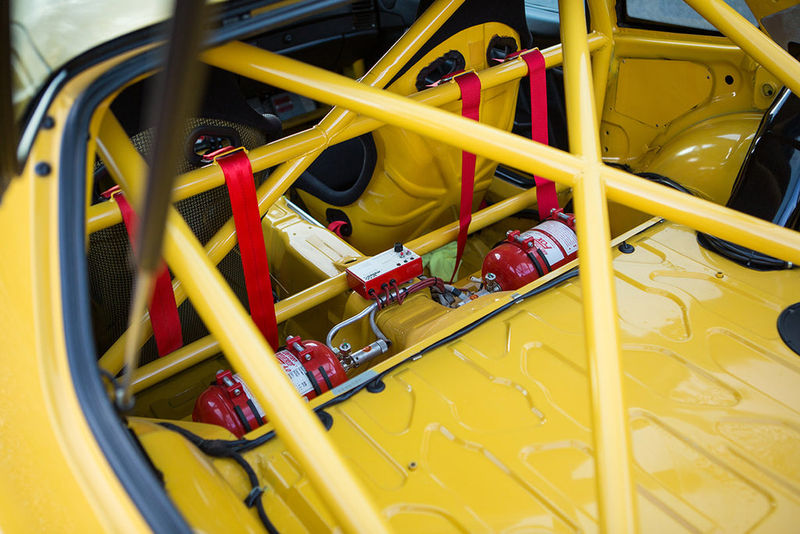
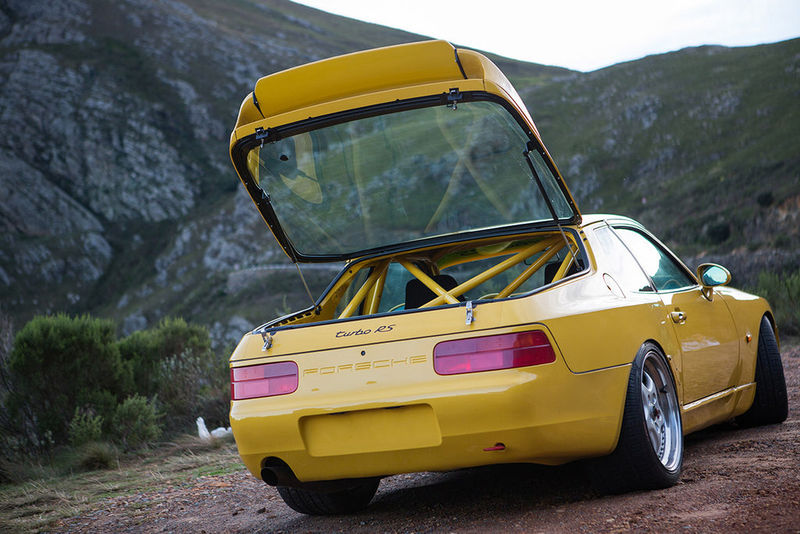
It looks every bit a race car (it weighs nearly 100 kg less than the Turbo S). The best view is undoubtedly when you open the rear hatch and see the fuel tank, pipework and thick crossmembers of the roll cage.
Tricky to get into a 968 Turbo RS…
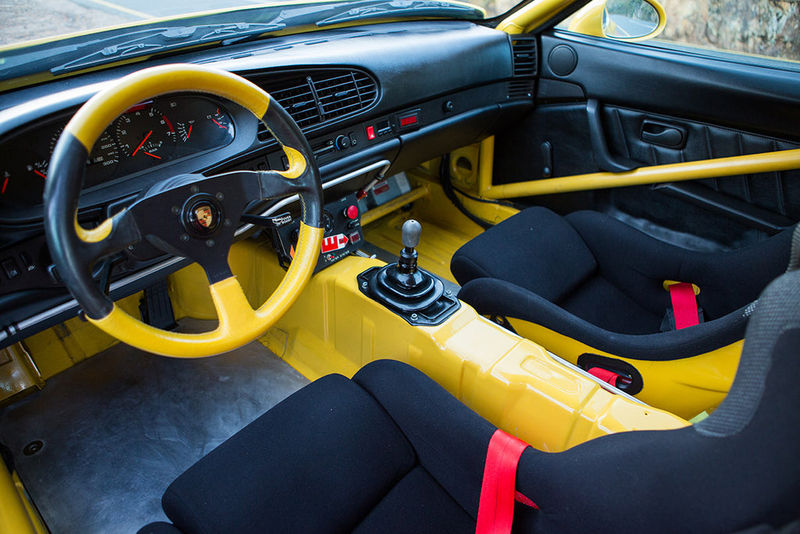
Getting into the driver’s seat is slightly trickier than in most iterations of the 911 Carrera RS, because 1 of the roll bars extends from the roof directly into the footwell, leaving the opening effectively cut in 2.
However, I paid close attention when its owner manoeuvred himself into the driver’s seat; you simply hold on to the roof and the top of the roll bar, lift your feet into the footwell and lean on the crossmember and slide into the bucket seat. Get it right, and it makes for a rapid and efficient ingress.
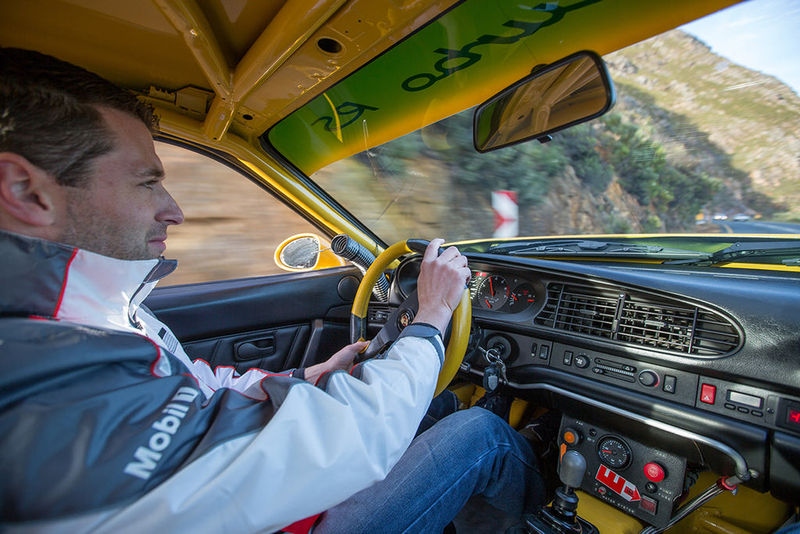
Once ensconced behind the ‘wheel, you feel as if you don’t need the 4-point harness – the seat hugs you from your thighs right up to your shoulders. With the harness clicked in, I take a moment to shift the gear lever through all the gates; the slick and solid feel is impressive… and would pay dividends later on.
There are very few creature comforts, apart from the ventilation system. To the left, above the steering wheel, is a ventilation pipe that channels fresh air into the cabin. And, when you look in the rear-view mirror and your view is dominated by yellow bars. I chuckled as the photographer opened the glovebox; it doesn’t even have enough space for a pair of racing gloves, as the roll cage runs through it as well.
Pulling away from a standstill isn’t the 968 Turbo RS’ forte. To master the manoeuvre, you do need to apply more throttle than you expect, but then off it goes. I’m instantly surprised by how tractable the engine is. Not wishing to disturb everyone before sunrise on this cold winter morning, I short-shift just below 3 000 rpm and the 968 takes it all in its stride. No tantrums, hissy fits or coughs and splutters.
Eminently tractable 4-pot motor
Porsche engineers regularly test vehicles on the Franschhoek Pass, and there are good reasons for the German sportscar brand to spend so much development time on that serpentine section of asphalt: the surface is near-billiard smooth, plus it offers 2 hairpins with a heady combination of faster corners.
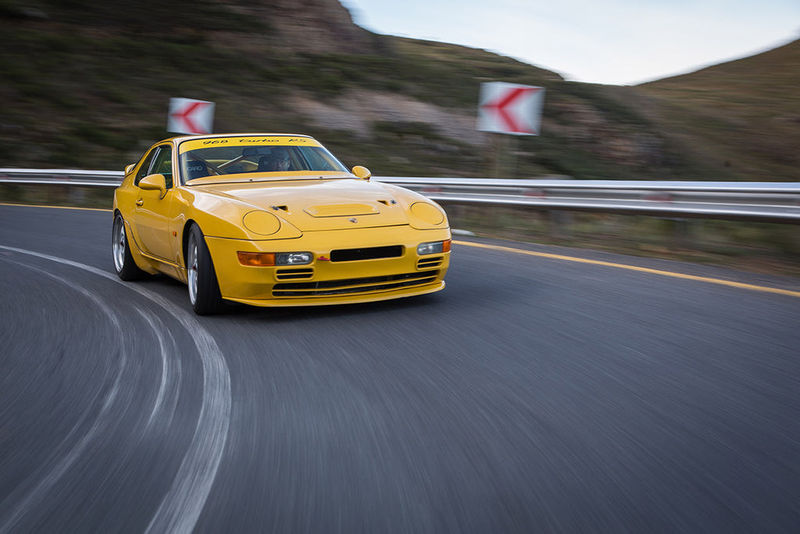
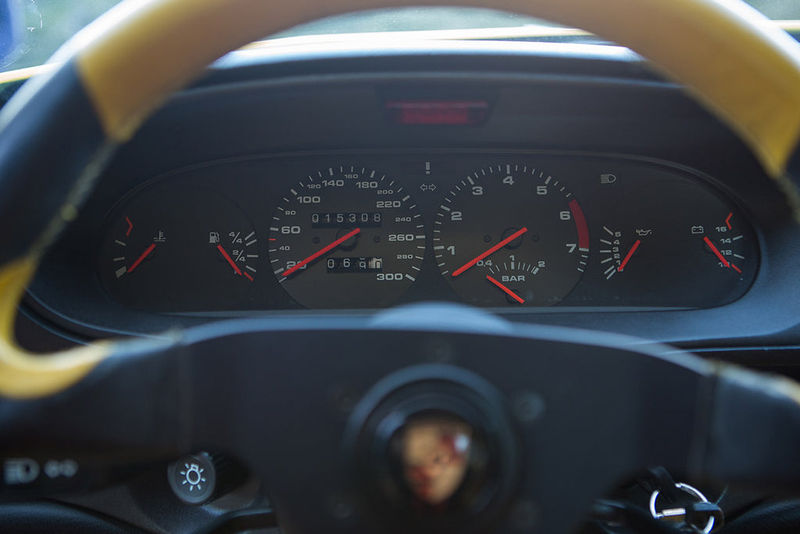
As I leave the outskirts of Franschhoek, I slowly squeeze the 968 Turbo RS’s long pedal deeper into the footwell, the engine gradually gains momentum as the crank speed climbs to 3 000 rpm, and then the large-capacity 4-cylinder engine’s sizeable, single turbo awakens… and boosts prodigiously. It makes the rev-counter needle swing to 6 000 rpm with unbridled gusto, at which point the shift indicator lights up. I change up, and the turbo’s onslaught continues unabatedly. This car is fast, even by modern standards.
The turbo boosts prodigiously
With the ambient temperature around 10°C, the Porsche spins its rear tyres in the first 2 gears, but as the air- and road temperatures increase, so do the grip levels. As I negotiate the first set of corners, it’s not the feedback from the steering that impresses me most, but what you feel through the driver’s seat.
I expected to experience some extreme tramlining (even on this smooth surface), but the 968 Turbo RS contends with camber changes with relative ease and any directional changes are calmly controlled.
The roll-cage, stiffer and lower suspension (20 mm lower than a 968 Clubsport) and race seats result in a car that feels like a track-honed tool. You can hear every little stone that gets flung up into the wheel arches, and every time you drive over rough or patchy tar, the driving experience it’s similar to running wide on the track in a GT3 Cup racer and wincing at the aural attack that goes on beneath the car.
Gearbox ‘right up there with the best’
When you push on, the gearbox comes to the party with a short throw… Once you are done with 1st to second, simply push the lever out of 2nd, let the spring bring it in line with 3rd gear and push it forward to select the next ratio. During the 1990s, people raved about the Honda NSX’s smooth and precise shift feel (it’s still revered!), but the ‘box in the 968 Turbo RS is right up there with the best; and, as a special touch, the car was delivered with the gearknob of a 962 race car. Now, that’s one cool accoutrement.
As this is a classic front-engined, rear-wheel-drive setup, testing the 968 Turbo RS’ handling limits is easier than in a 911 of the same vintage and representative specification.
In this 968-based road racer, the handling at (or just beyond) the limits of adhesion is more predictable than in a rear-engined 911 – the car’s back end will go light and gradually break away instead of suddenly snapping sideways. The limited-slip differential (with up to 75% lock) helps to put all that torque down.
Summary
Along with the 924 Carrera GT, the 968 Turbo RS is undoubtedly the most sought-after of Porsche’s front-engined cars.
When I asked Schmid about the abilities of the 968 Turbo RS, his reply explained the car… and its sad demise: “Because it was faster than a 911 Turbo, the board decided to stop any further work on the 968 Turbo S/RS project. From a technical standpoint, it was impressive, but the car was simply too pricey.”
No matter which way you look at it, the Porsche 968 Turbo RS deserves its famous RS badge as much as any 911 of the era – or thereafter. SUVs may make up the bulk of the German brand’s sales, but Porsche has always reserved the RS moniker for its most special road cars, and the 968 Turbo RS is one of them.
Search for a new or used Porsche listed for sale on Cars.co.za
Find exclusive car-themed merchandise at the SentiMETAL Shop
Related content:
Porsche 944 Cabriolet: Classic Drive
Porsche 911 (993) GT2 Clubsport ‘Evo’: Classic Drive
Martini Racing 911 Carrera RSR tribute: Classic Drive
Porsche 911 (993) GT2: Classic Drive
Porsche 911 (997) GTS vs GT3: Classic Comparison
Porsche 911 (930) Turbo vs (996) GT3: Classic Comparison
Porsche 911 Turbo SE ‘flat nose’: Classic Drive
Wilhelm Lutjeharms

A passionate car enthusiast from an early age, Wilhelm has been a motoring writer since 2006, having worked for more than 10 years at CAR magazine before turning to a full-time freelance career. He is also a contributing writer for UK, USA and European-based motoring titles.